
睡眠健康

Search documents
“失眠睡不着吃片褪黑素就能解决”是真的吗?
Yang Shi Xin Wen· 2025-12-16 21:35
Core Viewpoint - Melatonin is often perceived as a natural solution for insomnia, but its use carries significant health risks and is not a universal remedy for sleep disorders [2][6]. Group 1: Melatonin and Its Effects - Melatonin is a hormone secreted by the pineal gland, primarily increasing in production during the evening to promote sleep [4]. - Over-the-counter melatonin supplements are exogenous and act as "rhythm regulators," potentially effective for jet lag but not for insomnia caused by anxiety or other physical conditions [6]. - Long-term use of melatonin can suppress the body's natural production of the hormone, leading to rebound insomnia or dependency upon cessation [8]. Group 2: Risks of Self-Medication - Self-medicating with melatonin or combining it with other sleep aids, such as sedatives, can mask underlying conditions like depression or anxiety, delaying proper diagnosis and treatment [9]. - Anxiety and depression can exacerbate insomnia, and without addressing these root causes, sleep issues may persist, potentially leading to increased reliance on sleep medications [11]. Group 3: Recommendations for Sleep Improvement - For short-term insomnia, mild interventions like certain herbal supplements may be acceptable, but persistent symptoms lasting over two weeks should prompt a visit to a specialist for targeted treatment [12]. - A comprehensive approach to improving sleep includes timely medical consultation, adjustment of sleep habits, regular exercise, balanced diet, and emotional regulation [12][14].


喜临门获床垫行业首个《家具智能等级评定及标识》L4级认证
Zheng Quan Shi Bao Wang· 2025-11-04 10:55
Core Insights - The company Xilinmen (喜临门) announced that its smart sleep brand aise Baobao's "Baobao AI Mattress" series has achieved the L4 level certification, the highest grade under the national standard for smart furniture [1][2] Group 1: Certification and Standards - The "Baobao AI Mattress" series is the first in China to receive the L4 level certification under the national standard "Furniture Smart Level Assessment and Marking" (GB/T 46260—2025), which will be implemented on March 1, 2026 [1] - The national standard establishes a grading system for smart furniture, categorizing the intelligence level into four grades from L1 to L4, with L4 being the highest [1] Group 2: Product Features and Functionality - The L4 certification was awarded due to the mattress's upgrade from "passive response" to "active service," providing a comprehensive smart system throughout the sleep process [1] - The mattress features include pre-sleep massage and temperature control, real-time adjustment of support based on sleep posture, and detailed sleep reports upon waking, creating a complete service loop [1] Group 3: Research and Development - The company has accumulated over 100 million sleep data points since 2012 through its ongoing China Sleep Index research, ensuring the practicality and reliability of the aise Baobao series [2] - The product development involved over 100,000 user trials and iterations to refine the mattress [2] Group 4: Collaborations and Innovations - The company has established significant collaborations in the sleep health sector, including a joint research center with Tsinghua University focusing on physical interventions for sleep disorders [2] - Collaborations with top research institutions such as the National Sports Administration and Fudan University Hospital aim to integrate home health data with hospital treatment systems [2] - In August, the company signed an exclusive strategic cooperation agreement with Qiangnao Technology to launch the world's first smart mattress integrated with EEG monitoring technology, enabling full-cycle management from sleep monitoring to active intervention [2]

“脑健康青年基金-睡眠健康创新研究”项目启动
Bei Ke Cai Jing· 2025-11-03 07:59
Core Viewpoint - The "Brain Health Youth Fund - Sleep Health Innovation Research Project" has been officially launched to support research on innovative mechanisms of drugs, particularly focusing on dual orexin receptor antagonists, to address insomnia and enhance brain health in China [1][2]. Group 1: Project Overview - The project aims to fund 30 research topics, including 10 excellent projects and 20 outstanding projects, specifically targeting insomnia mechanisms and management [1]. - The initiative is backed by the Shanghai Medical Innovation Development Foundation and supported by Eisai China, emphasizing the importance of sleep health as a cornerstone of national brain health [1]. Group 2: Research Focus - The research will concentrate on three main areas: 1. Pathological mechanism studies exploring the relationship between dual orexin receptor antagonists and sleep-wake cycles, their impact on daytime functioning, and their role in comorbid patients [2]. 2. Clinical application of new insomnia medications, focusing on treatment optimization, long-term management, and medication strategies for comorbid populations [2]. 3. Addressing clinical practice challenges, such as medication use in patients with comorbidities and special populations [2]. Group 3: Talent Development - The project is designed to ignite innovation among young researchers under 45 years old with clinical experience or published research in the field of insomnia, aiming to cultivate outstanding talent in sleep health [1][2].
好好睡觉,才是最重要的事
首席商业评论· 2025-10-24 04:07
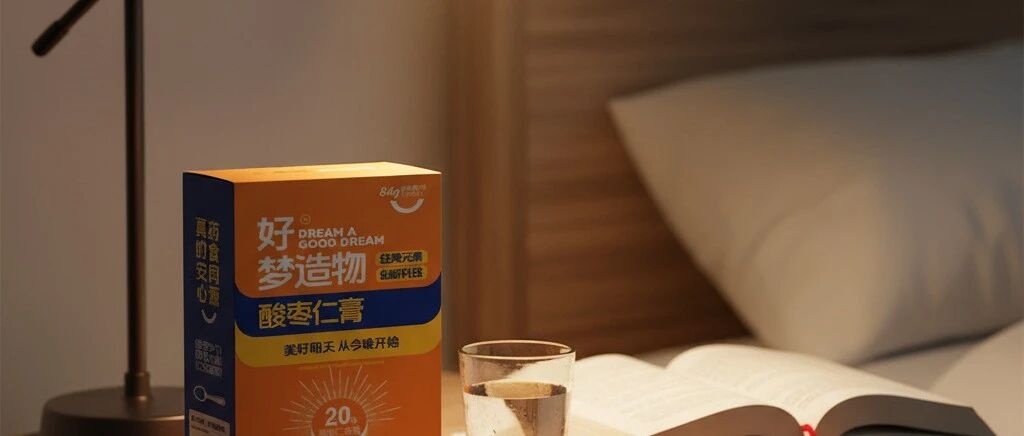
Core Viewpoint - The article emphasizes the importance of good sleep for overall health and well-being, highlighting that quality sleep is essential for physical recovery, mental clarity, and emotional stability [3][4]. Group 1: Importance of Sleep - Good sleep is compared to essential elements like air and water, indicating its fundamental role in daily life [3]. - Poor sleep can lead to fatigue, irritability, and a lack of focus, negatively impacting daily activities and overall mood [3][4]. Group 2: Product Introduction - The product "Good Dream Creation" features high-quality sour jujube seed paste, known for its calming and sleep-enhancing properties, and has been recognized in traditional medicine for centuries [6]. - The product contains 20% high-concentration sour jujube seed, along with GABA and theanine, enhancing its effectiveness [7][14]. Group 3: Unique Selling Points - The product combines traditional herbal wisdom with modern scientific elements, promoting the idea that sleep can also be nourishing [14]. - It is designed for long-term use, with no side effects or dependency, making it a safe choice for users [10][21]. Group 4: Target Audience - The product is suitable for adults experiencing sleep issues due to stress, anxiety, or aging, including middle-aged individuals, seniors, and occasionally sleepless youth [13]. Group 5: Usage Recommendations - It is recommended to take the product one hour before sleep for optimal results, allowing the active ingredients to take effect as the user prepares to sleep [17]. - Users may experience relaxation effects on the same night, but continuous use for at least a week is suggested for deeper benefits [19]. Group 6: Ingredients and Composition - The product includes a blend of beneficial ingredients such as sour jujube seed, lily, poria, longan, mulberry, dried tangerine peel, licorice, and GABA, among others [23].
别数羊了,到底怎样才能睡个好觉?
Hu Xiu· 2025-10-13 11:04
Group 1 - Sleep is essential for survival and has several important functions, including promoting growth and development, restoring energy, clearing metabolic waste, and maintaining cognitive function [2][4][5] - Sleep is crucial for immune function, as insufficient sleep can lead to increased susceptibility to illness [5] - Continuous and deep sleep is necessary for cognitive health; fragmented sleep can lead to rapid cognitive decline [8][10] Group 2 - Individuals have different sleep needs based on their unique characteristics; understanding one's own sleep requirements is important for optimal functioning [11][13] - Insomnia is a common issue, with symptoms ranging from occasional sleeplessness to chronic insomnia disorders, which can significantly impact daily functioning [12][23] - Sleep quality can be affected by various factors, including lifestyle habits, age, and underlying health conditions [16][19][22] Group 3 - Sleep duration and quality are linked to overall health; both excessive and insufficient sleep can increase mortality risk and other health issues [19][18] - The importance of maintaining a regular sleep schedule and healthy lifestyle habits, including diet and exercise, is emphasized for better sleep quality [53][54] - Various methods, such as cognitive behavioral therapy for insomnia (CBTI), can be effective in treating sleep disorders [44][45]
达利雷生上市首月美团搜索量激增 抗失眠新药加码布局即时零售
Zheng Quan Ri Bao Wang· 2025-09-23 07:11
Group 1 - The core product, Darilresib, launched by the company, has seen a significant increase in search volume, with over 160% growth in the past two weeks, making it a popular choice in the insomnia treatment market [1] - The drug addresses a pressing issue, as nearly 48.5% of adults in China experience sleep-related problems, according to the 2025 China Sleep Health Survey Report [1] - Darilresib operates as a dual appetite receptor antagonist, improving nighttime sleep quality and daytime functionality without altering sleep structure, and is not classified as a controlled substance, lowering the barrier for patient access [1] Group 2 - The company has streamlined its drug launch process, reducing the time from 8 months to just over 2 months, achieving an efficiency improvement of over 60% by directly importing the drug and completing packaging at its Hainan production base [1] - The collaboration with Meituan Buy Medicine has led to a deep partnership for the drug's launch, facilitating rapid distribution across multiple cities in China [1][2] - The product is available in two formats, 7 tablets and 20 tablets, to meet diverse patient needs, with plans to cover over 100 cities and thousands of 24-hour pharmacies [2]

达利雷生上市首月美团搜索量激增160%,抗失眠新药加码布局即时零售
2 1 Shi Ji Jing Ji Bao Dao· 2025-09-22 14:04
Core Insights - The new insomnia drug, Darilresin, from the company has gained significant attention, with a search volume increase of over 160% in the past two weeks, making it a popular choice in the insomnia treatment market [1] - Sleep health issues are prevalent in China, with nearly half (48.5%) of adults experiencing sleep difficulties, highlighting a substantial market opportunity for insomnia treatments [1] - Darilresin operates as a dual appetite receptor antagonist, improving nighttime sleep quality and daytime functionality without altering sleep structure, thus avoiding the sedation effects common in traditional insomnia medications [1] - The drug is not classified as a controlled substance, lowering the barriers for patient access [1] Company Initiatives - The company has streamlined its drug launch process, reducing the time from 8 months to just over 2 months by directly importing the drug and completing packaging at its Hainan production base, achieving over 60% efficiency improvement [1] - Collaborations with platforms like Meituan Buy Medicine have been established for deep cooperation in the drug's launch, facilitating rapid distribution across multiple cities [1] Market Demand - Major cities such as Shenzhen, Guangzhou, Beijing, Chongqing, and Wuhan are leading in search demand for the drug, with significant nighttime consumption patterns observed, peaking between 19:00 and 24:00 [2] - The platform has introduced two packaging options (7 tablets and 20 tablets) to cater to diverse patient needs, with ongoing efforts to expand coverage to over 100 cities and thousands of 24-hour pharmacies [2] - A sleep clinic has been launched in collaboration with Meituan Buy Medicine, offering online consultations with top-tier doctors, medication guidance, and 24-hour retail services [2]
柏林国际电子消费品展IFA举行 TCL首创“把冬奥赛场搬进IFA场馆”
Sou Hu Cai Jing· 2025-09-07 00:14
Core Viewpoint - TCL showcased its innovations in smart terminals, semiconductor displays, and renewable energy at IFA 2025, emphasizing its role as a global partner of the Olympics by creating a winter sports-themed exhibition area [1][3]. Group 1: Product Innovations - TCL introduced the fourth-generation Q10L Pro LCD TV and the world's largest 115-inch QD-Mini LED TV, focusing on visual health with features like eye protection and energy efficiency [3]. - The company presented a flagship smartphone and tablet with anti-glare, non-reflective, and flicker-free display technology, marking a significant advancement in visual health products [3]. - In the home appliance sector, TCL launched the C7 fresh air air conditioner, featuring an "AI sleep" function that utilizes innovative radar technology to enhance sleep quality [5][6]. Group 2: AI and Interactive Experiences - TCL's latest AI/AR glasses, including the world's smallest mass-produced full-color MicroLED waveguide AR glasses, attracted significant attention at the event [8]. - The company created an immersive experience with the AiMe robot, allowing users to engage with cutting-edge technology in a winter sports-themed environment [8]. Group 3: Market Position and Growth - TCL has been active in the European market for over 20 years, successfully transitioning from high-end markets in Europe and the US to a global presence [8]. - The company has seen continuous growth in overseas sales of its products, including TVs, air conditioners, refrigerators, and AR glasses, driven by innovation and deep consumer insights [8].


趣睡科技上半年营收、净利润同比双增长 持续构建睡眠全场景智能交互生态
Zheng Quan Ri Bao Wang· 2025-08-28 05:44
Core Insights - Chengdu Qusleep Technology Co., Ltd. reported a revenue of 146 million yuan in the first half of 2025, representing a year-on-year growth of 15.82% [1] - The net profit attributable to shareholders reached 16.78 million yuan, up 19.43% year-on-year, while the net profit excluding non-recurring items was 12.42 million yuan, showing a significant increase of 50.38% [1] Group 1 - Qusleep Technology focuses on innovative home products under its own brand, specializing in the research, design, production, and sales of high-quality, easy-to-install furniture and home textiles [1] - As a strategic partner in the sleep sector of Xiaomi's ecosystem, Qusleep Technology is enhancing its collaboration with Xiaomi's AI+ strategy, emphasizing sleep health scenarios and the integration of generative AI in smart home applications [2] - The company has launched several smart products aimed at improving sleep comfort and convenience, with strong market responses for products like smart music electric beds and smart bedside tables [2] Group 2 - The company experienced revenue and net profit growth despite market delays in consumer demand due to management expectations and policy adjustments, showcasing its strong product capabilities and management skills [2] - Looking ahead, Qusleep Technology plans to create a comprehensive smart interactive environment covering all sleep scenarios, aiming to increase the penetration rate of smart products and drive new growth in performance [3] - The company is also pursuing a global market expansion strategy, focusing on key markets in Europe, Southeast Asia, and Japan, leveraging its advantages in smart products and technology [3]
熬夜的时候,如果你的器官都在一个群里会聊什么?
Hu Xiu· 2025-08-09 11:20
Core Viewpoint - The article highlights the significant issue of sleep disorders, particularly in China, where over 300 million people are affected, emphasizing the detrimental impact of smartphone usage on sleep quality [70]. Group 1: Sleep Disorders Statistics - According to the World Health Organization, the global sleep disorder rate is as high as 27%, with China showing a particularly alarming situation where the insomnia rate among adults reaches 38.2% [70]. - More than 60% of the post-90s generation report feeling sleep-deprived, and over 60% of children and adolescents sleep less than 8 hours daily [70]. - The "2022 China Sleep Research Report" indicates that 64.75% of respondents sleep less than 8 hours, primarily due to smartphone usage and work-related pressures [70]. Group 2: Causes of Sleep Deprivation - The main reasons for reduced sleep duration include procrastination caused by smartphone or internet use, work and study time encroaching on sleep, and insomnia [70]. - The report notes that younger individuals, women, those with higher education, and unmarried groups exhibit more prevalent smartphone-related sleep procrastination behaviors [70]. Group 3: Recommendations for Healthy Sleep - The report advocates for the public to adopt the "118" healthy sleep concept, which suggests going to bed by 11 PM to ensure 8 hours of sleep [70].
