
科技农业

Search documents
云南高原菜展今日启幕
Xin Lang Cai Jing· 2025-12-25 22:30
Group 1 - The 11th High-Altitude Vegetable Exhibition in Yunnan Province will adopt a "dual exhibition area" model, starting on December 26, 2025, and lasting for five days [1] - The exhibition theme is "Spring City Seed Core, Yunnan Vegetable Fragrance," featuring activities such as field demonstrations, expert evaluations, and new product releases [1] - The event aims to promote the rapid dissemination and demonstration application of excellent vegetable varieties, new technologies, and research achievements [1] Group 2 - Yunnan has become a significant production base for "Southern Vegetables Northward" and "Western Vegetables Eastward," with Kunming as the core center for the vegetable industry in the province [2] - In 2024, Kunming's vegetable planting area is projected to be 2.3451 million acres, with a production volume of 5.2065 million tons and an agricultural output value of 9.976 billion yuan [2] - The exhibition will showcase 83 high-quality vegetable varieties, covering a diverse range from traditional improvements to specialty functions [2]
太原市晋源区:科技向新迎来“莓”好“丰”景
Xin Lang Cai Jing· 2025-12-23 14:58
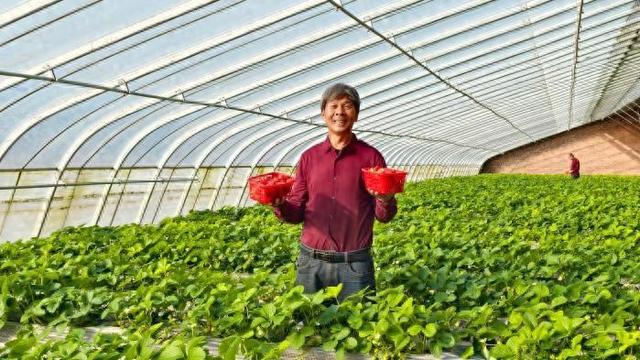
Core Insights - The article highlights the transformation of a saline-alkali land in Taiyuan's Wangguo Village into a modern agricultural zone, focusing on strawberry cultivation using advanced techniques and organic practices [1][5]. Group 1: Agricultural Practices - The greenhouse employs a composite nutrient substrate with organic matter content of 18% to 20%, significantly higher than the typical 1% to 3% found in ordinary soil, enhancing strawberry yield and quality [3]. - A digital smart system is integrated for efficient soilless cultivation and remote management, allowing operations like ventilation and temperature control to be managed via mobile devices [3][6]. - The strawberries, specifically the "Hongyan" variety, have a sugar content of 13% to 15%, with a harvest period extending from September to June, yielding approximately 5,000 to 6,000 pounds per greenhouse [6]. Group 2: Economic Impact - The modern agricultural park is projected to generate an annual income of 500,000 yuan per greenhouse, contributing to the local economy [6]. - The park aims to diversify its offerings by exploring leisure picking and educational experiences, promoting agricultural tourism and rural revitalization [8]. - Nearby strawberry cultivation bases are also contributing to the market, with nearly 300,000 pounds of local strawberries being harvested [8].

满地科技股份与源筑佐成签订谅解备忘录 以扩大在数字营销业务的销售额和客户群
Zhi Tong Cai Jing· 2025-12-19 12:11
Core Viewpoint - The announcement highlights a strategic collaboration between Mandi Technology Co., Ltd. and Hangzhou Yuanzhuo Zuocheng Technology Holdings Group Co., Ltd. aimed at enhancing business operations and marketing efforts [1] Group 1: Strategic Collaboration - Mandi Technology signed a memorandum of understanding with Yuanzhuo Zuocheng on December 19, 2025, to engage in strategic cooperation [1] - The collaboration will leverage various marketing platforms to maximize each party's core strengths in product sales and promotion [1] - Yuanzhuo Zuocheng will utilize advertising services provided by Mandi Technology to promote its agricultural products, enhancing brand influence and market position [1] Group 2: Company Background - Yuanzhuo Zuocheng is a significant player in the technology agriculture industry, focusing on modern agricultural practices [1] - The company manages a supply chain that includes products such as tea polyphenols, wax gourd, Hainan agarwood, mulberries, and fragrant nuts, with a total industrial base area exceeding 60,000 acres [1] - Its self-developed products, including tea polyphenols and wax gourd oil, have received positive market feedback and consumer recognition [1] Group 3: Business Diversification - Mandi Technology is actively seeking high-profit potential projects to diversify its business and provide returns to shareholders [1] - The memorandum is expected to enhance Mandi Technology's brand awareness and sales in the digital marketing services sector within China [1]
中经评论:抓住粮食增产创造的回旋空间
Jing Ji Ri Bao· 2025-12-18 00:08
Core Insights - China's grain production reached 14,297.5 billion jin this year, an increase of 1.2% or 167.5 billion jin from the previous year, ensuring food security while highlighting structural shortages in grain supply [1] - The structural contradictions in grain supply are linked to resource constraints, consumption upgrades, and planting habits, leading to an imbalance in grain varieties and insufficient high-quality grain supply [1][2] - Continuous optimization of grain planting structure is essential to address the imbalance in grain varieties, with significant progress seen in corn and soybean production [2] - The promotion of high-quality grain varieties faces challenges such as high technical barriers and market integration issues, necessitating a market-oriented approach to enhance quality and sustainability [3] - A dynamic balance between grain production increase and structural optimization is crucial for achieving long-term goals in food security and quality [4] Group 1: Grain Production and Security - China's grain production reached 14,297.5 billion jin, marking a 1.2% increase from last year [1] - Structural shortages in grain supply pose potential risks to food security despite high production levels [1] Group 2: Structural Issues in Grain Supply - The imbalance in grain varieties and insufficient supply of high-quality grains are major issues [1][2] - High dependency on imports for soybeans, exceeding 80%, remains a challenge for national food security [2] Group 3: Optimization Strategies - Continuous efforts are needed to optimize grain planting structure through various methods such as intercropping and improved varieties [2] - The promotion of high-quality grain varieties requires addressing technical challenges and ensuring market demand alignment [3] - A balanced approach between increasing production and optimizing structure is necessary to avoid reducing overall grain output [4]
从“土味”到“潮品”,农产品凭什么拿捏你的钱包?答案在这4招
Sou Hu Cai Jing· 2025-12-13 15:49
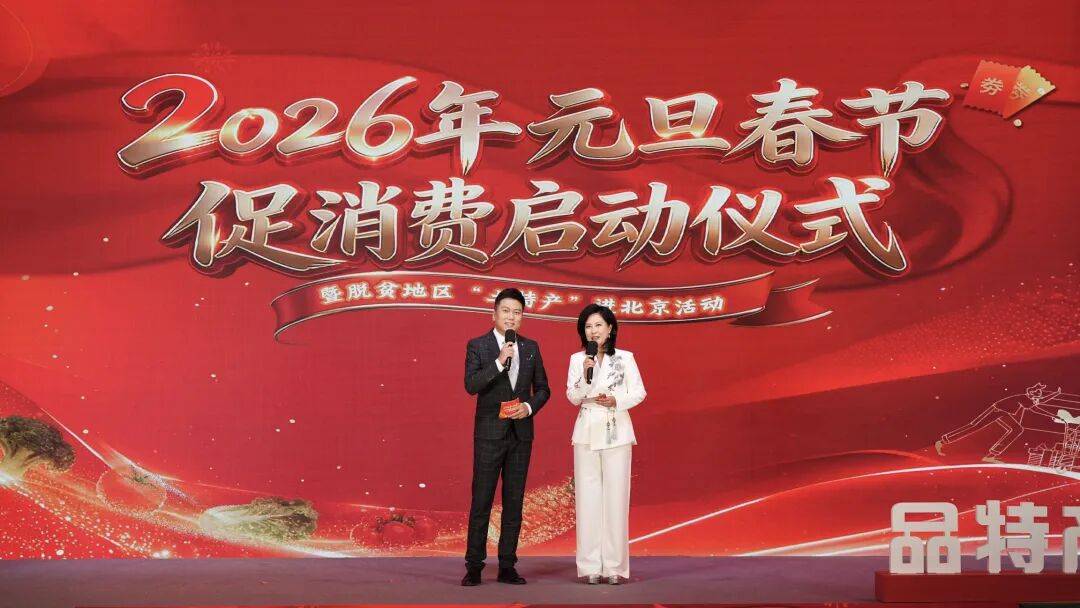
Core Viewpoint - The event "Taste Local Products, Seek New Year Flavor" aims to boost consumption during the New Year and Spring Festival through a combination of policy support and consumer engagement, highlighting a modern approach to agricultural promotion that goes beyond simple sales tactics [1][3]. Group 1: Brand Agriculture - Brand agriculture is evolving from merely selling local products to creating compelling narratives around them, transforming agricultural goods into branded experiences that resonate with consumers [5][7]. - The example of Fengjie navel oranges illustrates how storytelling can enhance product value, linking it to cultural heritage and emotional connections, resulting in a brand value exceeding 38 billion [7]. Group 2: Technology in Agriculture - Technological advancements in agriculture allow for precise customization of products based on consumer preferences, shifting from traditional farming to a model that responds directly to market demands [10]. - The case of Changping strawberries demonstrates how data-driven approaches enable farmers to cultivate specific varieties tailored to consumer tastes, enhancing transparency and trust in the production process [10]. Group 3: Quality Agriculture - Quality agriculture focuses on building consumer trust through transparency and traceability, exemplified by initiatives like "one fish, one code" for full sourcing information [12][14]. - The success of Jin Tang mushrooms showcases how stringent quality control and standardized production processes can elevate local products to national and international markets, creating a billion-dollar industry [14]. Group 4: Green Agriculture - Green agriculture emphasizes environmental sustainability as a key selling point, transforming products into symbols of ecological value and cultural significance [15][17]. - The promotion of Honghu lotus root and black bee honey highlights how narratives around natural origins and traditional practices can enhance product desirability, making consumers feel they are supporting a sustainable lifestyle [15][17]. Conclusion - The "Taste Local Products, Seek New Year Flavor" event reflects a new logic in agricultural consumption, where brand, technology, quality, and green practices work together to modernize and marketize the agricultural sector, igniting consumer engagement and revitalizing the industry [1][3].

“十五五”农业怎么干?增强粮食供给保障,强化科技装备支撑
2 1 Shi Ji Jing Ji Bao Dao· 2025-12-10 13:04
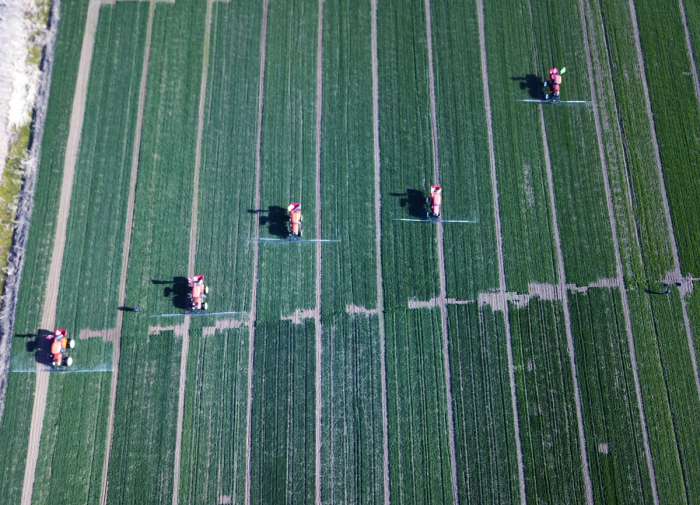
Core Viewpoint - The article emphasizes the importance of enhancing agricultural comprehensive production capacity and quality efficiency as a major task in building an agricultural power, highlighting five key tasks to achieve this goal [2][4]. Group 1: Key Tasks for Enhancing Agricultural Production Capacity - The five key tasks include: strengthening the supply guarantee capacity of important agricultural products, constructing a diversified food supply system, reinforcing farmland protection and quality improvement, enhancing technological support, and improving agricultural development quality and efficiency [2][4]. - The first task focuses on ensuring food security, with a projected national grain output exceeding 1.4 trillion jin in 2024, achieving a per capita grain availability of 500 kg [3][4]. Group 2: Measures for Grain Production and Supply - The article outlines measures to stabilize grain planting areas and enhance single crop yields, including optimizing the production layout and reinforcing production capacity by crop type and region [4]. - It also emphasizes improving grain storage, circulation, and processing capabilities, alongside developing infrastructure for grain logistics and initial processing [4]. Group 3: Agricultural Disaster Prevention and Technological Innovation - The article discusses the need to strengthen agricultural disaster prevention and mitigation capabilities, including enhancing monitoring and forecasting of meteorological disasters and improving irrigation infrastructure [5]. - It highlights the importance of agricultural technology innovation, advocating for a robust agricultural technology innovation system that integrates various research and educational institutions [7][8]. Group 4: Focus on Seed Industry and Agricultural Machinery - The article stresses the need for revitalizing the seed industry by promoting self-reliance in seed technology and protecting genetic resources [8]. - It also points out the necessity of addressing shortcomings in agricultural machinery, promoting high-quality development of agricultural equipment, and integrating machinery with agricultural practices [9].
中经评论:“四个农业”铺就农业强国路
Jing Ji Ri Bao· 2025-12-02 00:09
Core Viewpoint - The "Four Agricultural" concepts—Technology Agriculture, Green Agriculture, Quality Agriculture, and Brand Agriculture—are essential for addressing challenges in building a strong agricultural nation in China, as highlighted in the 15th Five-Year Plan proposal [1][4]. Group 1: Technology Agriculture - The overall level of agricultural technology innovation in China has entered the world's top tier during the 14th Five-Year Plan, with significant advancements in seed industry competitiveness [2]. - Challenges remain, such as low-level repetition and inefficient technology transfer, necessitating collaboration among over 800 agricultural research institutions and more than 120,000 researchers [2]. Group 2: Green Agriculture - Green agriculture is viewed as a revolutionary approach to agricultural development, emphasizing that farmland is not just a production resource but also an ecological asset [2]. - Despite improvements in environmental pollution and ecological degradation, the supply of green ecological products is still insufficient, prompting ongoing efforts to reduce chemical fertilizer and pesticide usage [2]. Group 3: Quality Agriculture - The focus is shifting from quantity to quality in agriculture, with an emphasis on producing high-nutrition, visually appealing, and flavorful products [3]. - Quality agriculture relies on standards, full-chain control, and risk management, encouraging the development of unique and high-quality agricultural products [3]. Group 4: Brand Agriculture - Branding is crucial for enhancing consumer trust and amplifying the value of agricultural products, with a shift towards more organized market entry strategies [3]. - There is a push to develop regional public brands and cultivate a mix of large and small product brands to enhance market competitiveness [3]. Group 5: Interconnectedness of the Four Agricultural Concepts - The "Four Agricultural" concepts are interrelated and must be implemented together to effectively promote agricultural development [4]. - A systematic approach is required, focusing on technology empowerment, ecological prioritization, quality enhancement, and market orientation to achieve comprehensive agricultural growth [4].
兴科技 延链条 搭场景——“农博会”上看现代化大农业的安徽实践
Xin Hua Wang· 2025-11-08 09:18
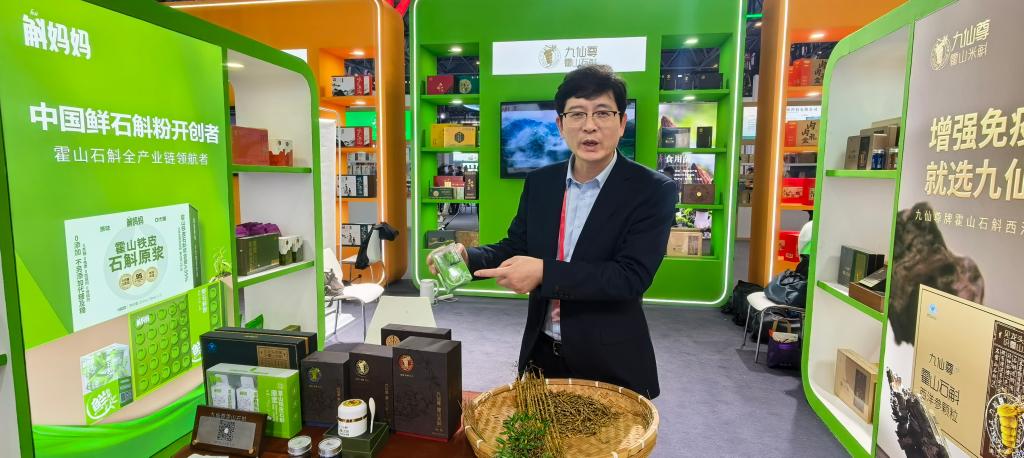
Core Insights - The article highlights the advancements in modern agriculture in Anhui province, showcasing the integration of technology, green practices, and quality improvements in the agricultural sector [1][2]. Group 1: Agricultural Innovations - The 2025 Anhui Green Food and Circular Agriculture Expo featured 16 high-end products representing the best of Anhui's green food industry, demonstrating significant progress in agricultural development [1][2]. - Jiuxianzun Houshan Dendrobium Co., a leading agricultural enterprise, has transitioned from 12 years of losses to a 57% increase in sales in the first three quarters of the year, with a single product exceeding 100 million yuan in sales [2][3]. - The company has developed various health food products from Dendrobium, including granules, extracts, tablets, and capsules, while also promoting agritourism [1][2]. Group 2: Industry Growth and Statistics - Anhui province has established nine national-level characteristic industrial clusters and boasts 5,195 green food products and 1,875 organic agricultural products [2][3]. - The total output value of the ten major green food industry chains in Anhui reached 1.12 trillion yuan, reflecting an 11% year-on-year growth [2][3]. Group 3: Sustainable Practices - Anhui Fengyuan Biotechnology Co. showcased biodegradable products made from agricultural waste, emphasizing the sustainable use of resources in agriculture [4]. - The company has developed new types of agricultural films from straw waste, which help in pest control and reduce the need for chemical fertilizers and pesticides [4]. Group 4: Digital Agriculture - The "Agricultural Data Cockpit" developed by Anhui Agricultural Reclamation Group covers over 450,000 acres of farmland, integrating various aspects of agricultural management into a digital platform [6]. - This platform allows for real-time monitoring of crop conditions and soil health, transitioning agricultural management from traditional methods to data-driven precision management [6].
“十五五”新蓝图·新机遇丨强基础补短板 农业加快迈向现代化大产业
Xin Hua She· 2025-11-05 01:50
Core Insights - The article emphasizes the importance of modernizing agriculture in China, particularly in the context of the "14th Five-Year Plan" and the upcoming "15th Five-Year Plan" [1][2][3] - It highlights the need to enhance agricultural production capacity and quality, aiming to transform agriculture into a modern large-scale industry [2][3][4] Agricultural Production and Modernization - China's grain production is expected to achieve another bumper harvest, with a total grain output surpassing 1.4 trillion jin last year, ensuring food security for 1.4 billion people [1][2] - The per capita grain availability in China has reached 500 kg, indicating a stable supply of staple food [1] - The self-sufficiency rate for soybeans increased by 4 percentage points from 2020, while the self-sufficiency rate for edible vegetable oil rose by nearly 5 percentage points [2] Challenges and Strategic Focus - Despite progress, challenges remain in agricultural modernization, including low production efficiency, insufficient industrial chain extension, and weak international competitiveness [2][3] - The "15th Five-Year Plan" prioritizes addressing agricultural issues, promoting urban-rural integration, and enhancing living conditions in rural areas [2][4] Technological Advancements - Technological progress is deemed crucial for agricultural modernization, with a contribution rate of 63.2% from agricultural technology by the end of last year [3] - The mechanization rate for crop farming has exceeded 75%, and the coverage rate for quality seeds is over 96% [3] Future Outlook - The development of agricultural technology will be emphasized, focusing on high-yield, high-quality varieties, efficient water-saving technologies, and advanced machinery suitable for hilly areas [4] - Cold chain logistics is identified as a significant shortcoming in the agricultural supply chain, with potential for growth driven by e-commerce [5] - Investments in cold chain logistics are expected to increase, enhancing the digitalization and industrialization of the sector [5]
现代农业产业园里话增收(迈向“十五五”的发展图景)
Ren Min Ri Bao· 2025-11-04 22:12
Core Insights - The article emphasizes the importance of enhancing agricultural production capacity and quality efficiency through modern technology and practices, aiming to transform agriculture into a modernized large-scale industry [1] Group 1: Technological Advancements - The introduction of the "Furun Tong" app has significantly improved yield estimation, with farmers like Liu Chun reporting an increase of over 300 jin per mu compared to previous years [2] - The use of drones for pesticide application has proven effective, covering over 1,000 mu in a single day, showcasing the efficiency of modern agricultural technology [2] - The establishment of a monitoring network has allowed for early detection of drought conditions, ensuring that crops remain healthy despite adverse weather [3] Group 2: Economic Impact - Liu Chun's income has increased significantly, with a projected net income of 150,000 yuan from 500 mu of land, thanks to improved yields and better market access [2] - The introduction of the "Fujin Rice" brand has allowed farmers to sell their produce at a premium, with prices potentially increasing by 1 yuan per jin compared to selling in bulk [3] - The agricultural mechanization rate in the region has reached 99.94%, and the contribution of agricultural technology to production has risen to 71% [3] Group 3: Future Aspirations - Farmers express a desire to enhance the recognition of "Fujin Rice" as a geographical indication product to achieve higher market prices [3] - There is a call for more training and support from technical experts to further leverage advanced technologies such as satellite remote sensing and AI pest identification [3] - Farmers are eager to participate in technology demonstration tours to learn about new agricultural techniques for the upcoming planting season [3]