端云协同

Search documents
23款App8款“使不动”:“五大派”围剿豆包手机 实测来了
Xin Jing Bao· 2025-12-10 06:25
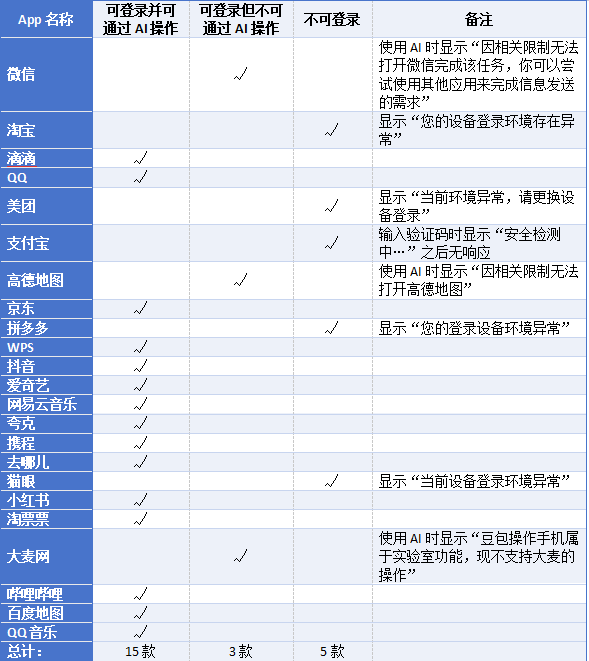
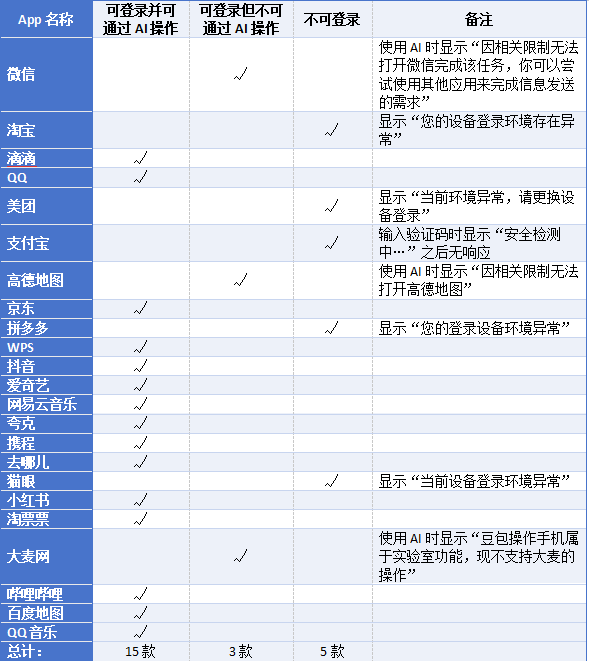
Core Viewpoint - The launch of Doubao mobile assistant has sparked significant attention in the tech industry, with discussions surrounding its functionality, security, and potential to disrupt existing internet business models [1]. Group 1: Functionality and User Experience - Doubao mobile assistant initially showcased cross-platform comparison and WeChat messaging capabilities, but faced restrictions after user reports of WeChat account issues [2][4]. - In a test involving 23 popular apps, 8 apps were restricted, 15 apps remained fully functional, and the assistant demonstrated practical capabilities such as closing ads and navigating app interfaces [2][3]. - The assistant can effectively handle user preferences and execute tasks with a degree of flexibility, such as navigating different apps when faced with restrictions [9][12][15]. Group 2: Technical Aspects - Doubao mobile assistant operates with INJECT_EVENTS permission, allowing it to execute tasks in the background without user interruption, which enhances user experience [16][17]. - The assistant's capabilities are built on a proprietary model optimized for mobile use, providing a competitive edge over other AI assistants [17][18]. Group 3: Industry Implications - The emergence of AI mobile assistants like Doubao poses challenges to existing app ecosystems, as they can bypass traditional ad revenue models, potentially diminishing the commercial value of apps [20][21]. - There is a need for a collaborative ecosystem among app developers to address the potential conflicts arising from AI assistants disrupting established business models [20][21].

23款App8款“使不动”:“五大派”围剿豆包手机,实测来了
Bei Ke Cai Jing· 2025-12-10 06:16
Core Viewpoint - The launch of Doubao mobile assistant has sparked significant attention in the tech industry, with discussions surrounding its functionality, security, and potential to disrupt existing internet business models [1][2]. Group 1: Functionality and Limitations - Initially, Doubao mobile assistant showcased cross-platform comparison and WeChat messaging capabilities, but faced restrictions after users reported issues with WeChat, leading to the removal of its automated WeChat functionality [2][4]. - Out of 23 tested apps, 8 were restricted from use, while 15 remained fully operational with AI capabilities. Notably, major apps from Tencent, Alibaba, Meituan, and Pinduoduo were among those affected [3][4]. - The assistant can effectively identify and close ads, navigate app interfaces, and handle user requests with a high success rate, demonstrating practical utility [7][8][10]. Group 2: User Experience and Flexibility - Doubao mobile assistant can adapt to unexpected situations by trying different methods to complete tasks, showcasing its flexibility in problem-solving [14][36]. - It can remember user preferences and make suggestions based on previous interactions, enhancing the user experience [34][35]. - The assistant's ability to operate in the background without user intervention allows for a seamless experience, which is a significant advantage over traditional app interactions [38][39]. Group 3: Technical Aspects and Permissions - The smooth operation of Doubao mobile assistant is attributed to its system-level permissions, specifically the INJECT_EVENTS permission, which allows it to execute tasks in the background [38][41]. - The assistant's capabilities are built on a proprietary model optimized for mobile use, providing it with advanced UI interaction abilities [39][40]. - Concerns have been raised regarding the potential for the assistant to breach app security measures, as its operation mimics user actions, which could lead to restrictions from various apps [41][44]. Group 4: Industry Implications and Challenges - The emergence of AI mobile assistants like Doubao poses a challenge to existing app ecosystems, as they could undermine traditional advertising and user engagement models [43][44]. - The need for a collaborative approach among app developers is emphasized to address the potential conflicts of interest arising from AI assistants disrupting established business models [45][46]. - Regulatory considerations regarding user privacy and data handling are crucial as the industry navigates the integration of AI technologies into everyday applications [47][48].
AI智能体与App的博弈:未来数字生态主导权之争
2 1 Shi Ji Jing Ji Bao Dao· 2025-12-08 22:59
Core Viewpoint - The conflict between AI systems and traditional applications is reshaping the digital landscape, highlighting a power struggle over data control and user interaction methods [1][2][5]. Group 1: Market Dynamics - The recent ban of Doubao Mobile Assistant by major apps indicates a significant shift in the competition between AI agents and native applications [1]. - The Chinese mobile internet advertising market has reached a trillion-level scale, with a substantial portion of revenue relying on user click behavior, which AI assistants threaten by automating tasks like price comparison and booking [2]. - The legal actions, such as Amazon's lawsuit against Perplexity AI for "illegally obtaining user data," underscore the battle for data sovereignty and control over user behavior data [2]. Group 2: Technological Challenges - Current technology standards lag behind, creating a regulatory dilemma where AI agents exploit existing system permissions, such as Android's accessibility services, originally designed for assisting disabled users [3]. - The mismatch of technological tools leads to a "cat-and-mouse game" between developers and platforms, complicating the regulatory landscape [3]. - Differences in data governance across economies force multinational tech companies to adopt regional adaptation strategies, increasing development costs for AI agents [3]. Group 3: Future Development Path - The next phase for AI phones is moving from "AI feature addition" to "AI native design," focusing on building a "cloud-edge collaborative" architecture [3][4]. - On-device AI capabilities will become standard, with advancements in NPU processing power and model miniaturization enabling local execution of large model inference tasks [4]. - Open and standardized interfaces for AI agents are essential, allowing developers to register their services as callable modules, thus maintaining business integrity while integrating into a unified AI framework [4]. Group 4: User Experience and Business Model Innovation - Personalization and situational awareness will be key differentiators for AI agents, enabling them to learn user habits and preferences for tailored services [4]. - The evolution of business models is necessary, as traditional in-app purchases and advertising methods will need to adapt to new mechanisms like "pay-per-task" and "AI service revenue sharing" [5]. - The ultimate goal of AI phones is not to eliminate apps but to transform their role from primary interfaces to backend service providers, creating a seamless and proactive user experience [5][6].
亿道信息“科技日”发布全栈AI战略 端云协同开启智能普惠新纪元
Zheng Quan Ri Bao Wang· 2025-12-04 12:46
Core Insights - The core theme of the event was "Edge AI Collaborative Cloud," showcasing the company's AI strategic layout from foundational technology to full-scene applications [1] Group 1: Strategic Vision - The company emphasized "Edge-Cloud Collaboration" as a key pathway for the large-scale implementation of AI, with a clear division of labor where edge devices handle real-time, high-frequency, and privacy-sensitive tasks, while the cloud manages complex computations and model training [1] - The company announced a strategic transformation from being a "product provider" to a "scene intelligence computing system builder," introducing an "AI Intelligence Computing Solution Matrix" covering six core scenarios: personal, family, enterprise, industrial, wearable, and robotics [1] Group 2: Application Solutions - In the personal computing sector, the company demonstrated an edge AI assistant capable of executing complex cross-application workflows through natural language commands, with its AI PC product featuring high computing power and ultra-thin design [1] - The AI BOX solution targets industrial pain points by significantly reducing the defect detection customization cycle from weeks to hours, facilitating a shift towards intelligent decision-making in industrial manufacturing [2] - In the enterprise market, the company showcased its full-stack AI computing products and "AI Intelligent Engine," which lowers deployment barriers through drag-and-drop development, accelerating digital transformation for enterprises [2] - Collaborative innovations with IDEA Research Institute in areas such as edge voice large models and federated learning frameworks aim to advance personalized edge intelligence towards a "one model per person" era [2]
亿道信息:全栈AI战略落地, 亿道科技日解锁AI生产力跃迁新范式
Quan Jing Wang· 2025-12-03 11:56
Core Insights - The event "Yidao Technology Day" showcased the company's focus on "Edge AI and Cloud Collaboration," highlighting its AI+ hardware matrix and full-scene application solutions [1] Group 1: AI Terminal Matrix and Value Proposition - The company adheres to the principle of "scenes define products," creating an AI terminal product matrix that spans key areas such as industrial, personal computing, and smart wearables, aiming to empower partners through technology, channels, and ecosystem [2] - The newly launched AI BOX solution addresses core pain points in industrial edge intelligence, achieving a millisecond-level closed loop for "perception-decision-execution," significantly reducing the custom development cycle from weeks to hours [2] - The flagship AI PC features up to 180 TOPS of edge computing power and a lightweight design, equipped with the "Xiao Yi AI Assistant" for natural language command execution [2] Group 2: Full-Scene Penetration and AI Accessibility - The company utilizes the "AESOF framework + AI atomic capabilities" to deeply integrate AI applications into six core scenarios, facilitating breakthroughs from technical demonstrations to large-scale implementations [3] - The AI PC's innovative features, such as "one-sentence photo editing," transform creative workflows, while the AI NAS solution provides a private, intelligent family data system [3] - The deployment threshold for the "Yidao Supercomputing AI Engine" has been reduced by over 70%, enabling business personnel to quickly establish dedicated AI workflows [3] Group 3: Strategic Partnerships and Ecosystem Development - The company emphasizes an open and collaborative ecosystem, working with chip giants like Intel and Qualcomm to enhance NPU performance and promote AISSD standards [4] - The development of a personalized federated learning framework in collaboration with IDEA Research Institute aims to explore personalized experiences [4] - The company is committed to making advanced intelligent technologies accessible and fostering a prosperous intelligent future through global partnerships [4]
具身觉醒:AI 从感知到行动的能力跃迁
Tai Mei Ti A P P· 2025-12-02 10:10
本文摘自《云栖战略参考》,这本刊物由阿里云与钛媒体联合策划。目的是为了把各个行业 先行者的技术探索、业务实践呈现出来,与思考同样问题的"数智先行者"共同探讨、碰撞, 希望这些内容能让你有所启发。 具身智能,正成为 AI 革命的核心共识与下一站锚点。当 AI 技术从数字世界迈向物理世界,硬件恰是 这场跃迁中智能体与物理环境交互的关键载体。这一趋势,正沿着三条核心赛道加速落地,并呈现出技 术复杂度和成熟度的差异。 智能硬件以智能手机、PC、AI 眼镜为代表,从设备工具升级为场景伙伴,依托成熟的端云协同架构、 实时数据处理能力与轻量化模型部署,实现多模态智能交互并 提供更多场景化服务,正迈向规模化落 地阶段;智能驾驶系统,在端到端大模型驱动下正逐步实现局部自主决策,并开始展现出超越预设规则 的自主应变能力,但模型泛化性与安全性仍需持续优化,对高弹性算力集群与多源异构数据融合也提出 更高要求;机器人技术突破门槛最高,算力层面需构建云边端深度协同的架构,数据层面需解决多模态 真实场景数据的采集、合成与处理的问题,模型层面则要同时兼顾复杂推理与运动控制,当前核心是突 破从实验室原型到产业落地的关键跨越。 尽管当前三大领域 ...

中科创达:公司在AIBOX领域推出搭载NVIDIADriveAGX芯片的产品 提供200TOPS的AI算力与205GB/s的传输带宽
Xin Lang Cai Jing· 2025-11-30 16:08
Core Viewpoint - The company has launched a new AIBOX product equipped with NVIDIA Drive AGX chip, providing significant AI computing power and bandwidth for applications in the automotive sector [1] Group 1: Product Launch and Features - The AIBOX product offers up to 200 TOPS of AI computing power and 205 GB/s of transmission bandwidth [1] - It enables the smooth operation of a 7B large model on the edge [1] - The AIBOX works in conjunction with the Droplet AIOS to create a "soft and hard collaborative" product and technology combination [1] Group 2: Technological Integration - The company has developed a comprehensive solution leveraging its HiAgent and Kouzi platforms, along with its operating system technology [1] - In the smart automotive sector, the company introduced an AI cockpit solution that features real-time interaction between the vehicle and cloud systems, achieving a 500 ms voice feedback response time [1] - The solution includes multimodal recognition and recommendation capabilities, enhancing user interaction experience [1] Group 3: Advanced Features - The GUIAgent, developed in collaboration with Volcano Engine based on the Mass platform, can autonomously plan, infer, and execute UI interaction operations [1] - This significantly improves the interaction experience within the cockpit [1]

地瓜机器人发布云端一站式开发平台,一句话实现机器人应用开发与部署|最前线
3 6 Ke· 2025-11-24 09:34
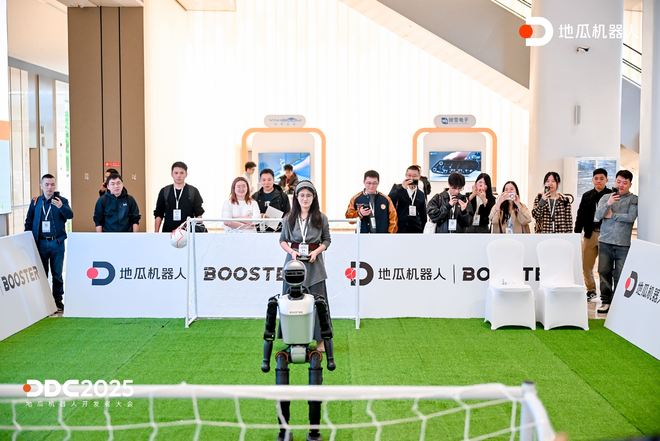
Core Insights - DDC 2025 announced the launch of the S600 robot development platform, expected to be released in Q1 2026, which aims to enhance the capabilities of embodied intelligence robots [1][4] - The company introduced a one-stop development platform that integrates a data closed-loop system, an embodied intelligence training ground, and agent development services, facilitating faster deployment of robotic applications [1][4] Development Infrastructure - The company has built a comprehensive end-to-end development system to address the dual challenges of computing power deployment and development efficiency in robot development [2] - On the edge side, the company has established two product series, Xuri and RDK, based on an optimized BPU computing architecture to meet varying computing power needs [2] One-Stop Development Platform - The one-stop development platform features a soft-hard integration and end-cloud architecture, providing three core services: a data closed-loop system, an embodied intelligence training ground, and agent development services that enhance development efficiency [4][5] - The S600 platform boasts a processing power of 560 TOPS (INT8), significantly outperforming mainstream platforms by over 2.2 times in complex decision-making scenarios [5] Standardization and Modularization - The company focuses on extracting common points from various scenarios to create standardized technical components, rather than providing complete "plug-and-play" solutions [5] - The development of standardized tools for data collection, annotation, generation, simulation, and testing aims to support diverse needs while allowing for personalized user creativity [5] Market Position and Growth - The company is strategically focusing on three main areas: mass-produced robotic products, emerging robotic applications, and future general-purpose embodied intelligence robots [6] - Over the past year, the company has seen a 180% increase in product shipments and a 200% growth in customer numbers, collaborating with over 60 industry partners [6]

野村:AI应用的“革命”会在苹果下一个大模型吗?
美股IPO· 2025-11-12 10:19
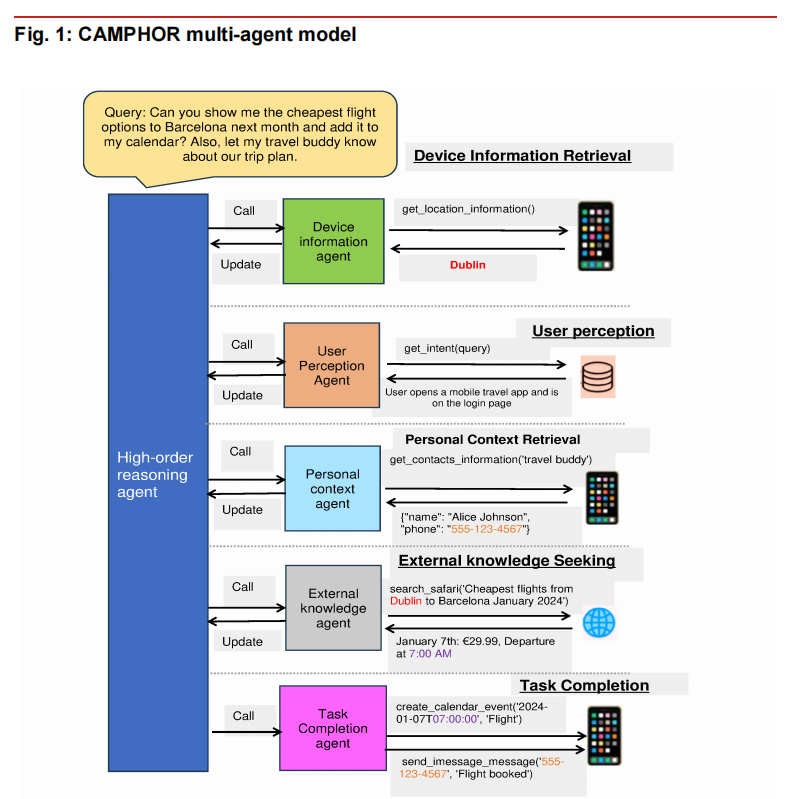
Core Insights - Apple's AI strategy focuses on a revolutionary "edge-cloud collaborative" agent framework, utilizing Google's 1.2 trillion parameter cloud model as a "high-order reasoning brain" to coordinate five specialized agents operating on devices [1][3][5] - This hybrid architecture aims to address the core pain points of current AI applications by securely and efficiently utilizing personal data while leveraging powerful cloud computing [3][4][6] Group 1: AI Strategy and Framework - The strategy is not merely about acquiring a larger language model but about integrating it into a broader "collaborative agent model" framework [6] - The cloud-based super model acts as a high-order reasoning agent, interpreting complex user commands, while local edge agents execute tasks, optimizing resource usage [6][18] - An offline backup solution is designed to ensure basic functionality when the device is offline or for simple queries [6] Group 2: CAMPHOR Model and User Experience - The CAMPHOR model consists of a cloud-based high-order reasoning agent and five specialized edge agents that work together to perform tasks beyond the capabilities of traditional LLMs [8][9] - The five edge agents include: - Personal Context Agent: Searches user data for context [10] - Device Information Agent: Retrieves device-related data [11] - User Perception Agent: Accesses recent user activity [12] - External Knowledge Agent: Gathers data from external resources [13] - Task Completion Agent: Executes tasks using device applications [14] - This model allows for personalized and seamless service by effectively utilizing data that pure cloud LLMs cannot access [18] Group 3: Future Implications and Market Outlook - Successful implementation of this strategy could signify the large-scale application of edge AI, leading to a new hardware upgrade cycle starting in 2026 [4][20] - Key areas for technological advancement include personalized privacy protection, improved response performance, and expanded personal data integration from various sources [20][21][22] - The future winners in the AI space will be those who can achieve efficient, low-power, and secure computing on the edge while building a cohesive hardware-software ecosystem [23] - Apple's developments indicate the potential arrival of truly intelligent personal assistants, with hardware innovation being foundational to this evolution [24]


AI应用的“革命”会在苹果下一个大模型吗?
Hua Er Jie Jian Wen· 2025-11-11 08:14
Core Insights - Apple's AI strategy is evolving towards a revolutionary "edge-cloud collaborative" agent framework rather than merely pursuing larger language models [1][2] - The integration of a powerful cloud model, rumored to be Google's 1.2 trillion parameter model, is central to Apple's approach, which aims to efficiently and securely utilize user data [1][2] - This strategy, if successful, could signify the large-scale practical application of "edge AI," enabling highly personalized and context-aware tasks that current cloud-based LLMs cannot achieve [1][3] Group 1: Collaborative Agent Model - The framework combines a cloud-based "high-order reasoning agent" with multiple specialized "edge agents" running on devices, optimizing resource usage by compressing data for transmission [2][3] - A backup offline solution is designed to ensure basic functionality when the device is offline or handling simple queries [2] Group 2: CAMPHOR Model - The CAMPHOR model consists of a cloud-based high-order reasoning agent and five specialized edge agents, working together to perform tasks beyond the capabilities of traditional LLMs [3][6] - The five edge agents include: - Personal Context Agent: Searches user data for context [3] - Device Information Agent: Retrieves device-related data [3] - User Perception Agent: Accesses recent user activity [3] - External Knowledge Agent: Gathers data from external resources [3] - Task Completion Agent: Executes tasks using device applications [3] Group 3: Future Opportunities - The integration of external knowledge access positions the model as a frequently used daily tool, indicating the imminent application of "edge AI" in real-world scenarios [7] - Anticipated advancements in personalization and privacy protection will be crucial for utilizing personal data while ensuring user privacy [8] - Significant improvements in instant response performance will require enhancements in wireless communication, processing power (GPU), and memory bandwidth [9] - The expansion of personal data sources, including wearables, will broaden service applications into health and training recommendations [9] - The future winners in the AI space will be those who can achieve efficient, low-power, and secure computing on the edge while building a cohesive hardware-software ecosystem [9]