经济刺激计划

Search documents
日本经济:打击一波接着一波
Jin Rong Shi Bao· 2025-11-25 02:59
Group 1 - The economic performance of Japan's new Prime Minister, Sanae Takaichi, is described as "bleak," with concerns over her comments regarding Taiwan and a massive stimulus plan of 21.3 trillion yen, which has drawn comparisons to the UK's "Truss storm" and raised fears of increasing debt undermining Japan's fiscal foundation [1] - The Japanese financial market experienced a rare "triple kill" with significant declines in stocks, bonds, and currency, as the 30-year government bond yield reached a historical high, the yen approached the critical level of 160 against the dollar, and the Nikkei 225 index erased all gains since Takaichi took office, indicating growing investor distrust and concerns about Japan's economic outlook [1] - Experts warn that Takaichi's comments on Taiwan could further complicate Japan's economy, as China is Japan's largest trading partner, and disruptions in supply chains could severely impact Japanese industries [1] Group 2 - Inflation remains a significant issue for Japanese citizens, with the core Consumer Price Index (CPI) rising by 3.0% year-on-year in October, marking the 50th consecutive month of increases, while real wages for workers have been declining, with a 1.4% drop in August, the largest decline in three months [2] - The U.S. tariff policy continues to weigh on Japan's economy, as a trade agreement reached in July resulted in a reduction of tariffs on Japanese imports to 15%, which, while lower than previously threatened rates, is still significantly higher than earlier levels this year [2] - Takaichi's poor performance is dragging down Japan's economy and financial markets, with potential further erosion of investor confidence leading to increased selling of yen-denominated assets [2]
一句话,重创日本经济!
Jin Tou Wang· 2025-11-24 10:35
Economic Impact - Japan's economy is facing significant challenges, with the Nikkei 225 index dropping over 4,000 points since November, a decline of more than 7% [1] - The tourism sector, a crucial pillar of Japan's economy, has been severely impacted, with 500,000 travel tickets canceled following travel warnings issued to Chinese tourists [2] - The reliance on Chinese tourists is highlighted, as they accounted for 30% of inbound visitors pre-pandemic, with a consumption share of 36.8% in 2019 [2][3] Financial Market Reactions - The Japanese yen has reached a 10-month low against the US dollar, trading at over 156 yen per dollar [2] - The bond market is experiencing turmoil reminiscent of the 2008 financial crisis, with 10-year government bond yields surpassing 1.8%, the highest since 2007 [1] Dependency on China - Over 1,400 products in Japan have more than half of their supply sourced from China, indicating a dependency level twice that of the US and six times that of Germany [4] - Despite government efforts to subsidize companies to reduce risk, there has been a lack of response, as alternatives like Vietnam do not match China's efficiency and quality [4] Education Sector Challenges - Chinese students represent a significant portion of Japan's international student population, with 123,000 expected in 2024, making up 36.7% of total international students [5] - The potential decline in Chinese students poses a survival threat to Japanese language schools and universities, as they struggle to find alternative sources of students [5] Seafood Export Issues - Japan's seafood exports to China have been halted, leading to a significant loss of revenue, with exports to China amounting to approximately 4 billion yuan in the first half of the year [5] Economic Policy Concerns - The Japanese government has introduced a massive economic stimulus plan worth 21.3 trillion yen, raising concerns about the reliance on debt to fund this initiative [6] - Japan's debt-to-GDP ratio exceeds 260%, the highest among major economies, causing investor anxiety and contributing to capital flight from Japan [6] Public Sentiment and Protests - Public dissatisfaction is growing, with a recent poll showing nearly equal support for and against Prime Minister Kishi's controversial statements regarding Taiwan [7] - Protests have emerged, with citizens demanding the retraction of statements that could harm Japan-China relations and calling for adherence to peace principles [7]
“举债投资”给日本刺激计划添变数
Sou Hu Cai Jing· 2025-11-24 04:01
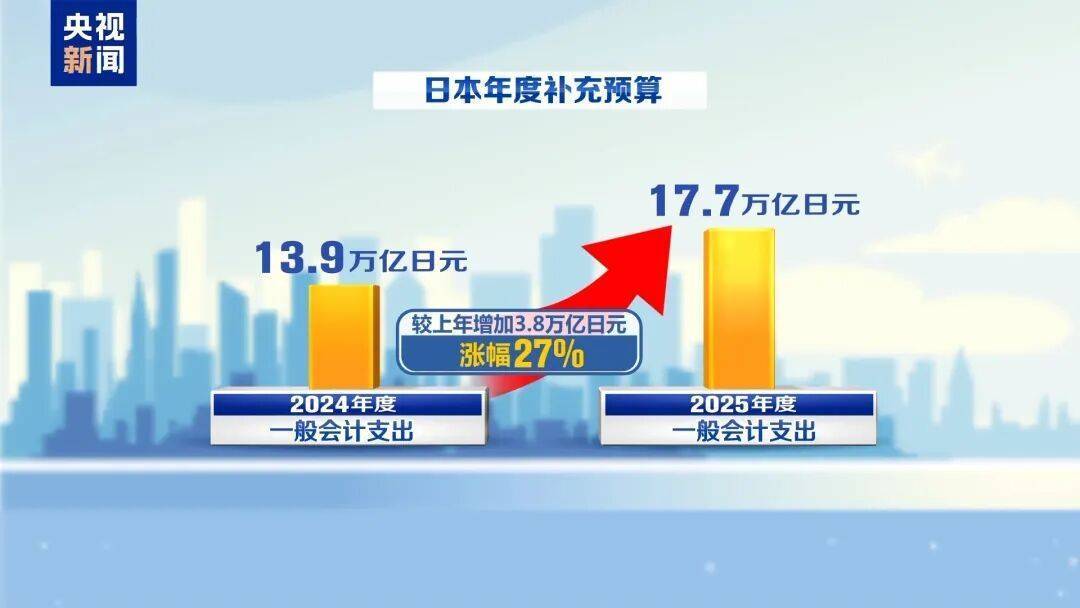
Core Viewpoint - The Japanese government has approved a comprehensive economic plan worth 21.3 trillion yen to stimulate the economy and support consumers affected by inflation, marking the largest economic stimulus since the pandemic began [1][2]. Economic Measures - The economic plan includes 17.7 trillion yen in general account spending, a 27% increase from the previous year's 13.9 trillion yen, 2.7 trillion yen in tax cuts, and 900 billion yen in special account spending [1]. - A budget of 2 trillion yen is allocated for local priority support subsidies, allowing local governments to plan the use of these funds autonomously [1]. - The plan provides approximately 3,000 yen in subsidies per person through rice vouchers and shopping coupons, along with 500 billion yen to subsidize residents' electricity and gas bills for the first three months of the next year [1]. Inflation Context - As of October, inflation in Japan has exceeded the Bank of Japan's 2% target for 43 consecutive months, with real wages declining for over two years [2]. - The government's price relief measures are expected to lower the overall inflation index by an average of 0.7 percentage points from February to April next year [2]. Debt Concerns - The economic plan requires approval from the National Diet, and it is anticipated that the stimulus measures will rely heavily on debt financing, with expected government bond issuance exceeding last year's 6.69 trillion yen [2]. - Concerns about public debt expansion have intensified, with the 10-year Japanese government bond yield nearing 1.8%, the highest since 2008, and the 30-year yield surpassing 3.3% [2]. Market Reactions - The spending plan has led to significant declines in Japanese bonds and currency, raising fears of uncontrolled capital flight, reminiscent of the 2022 UK bond market crisis [3]. - Experts express skepticism about the effectiveness of the stimulus measures in addressing fundamental inflation issues, suggesting that injecting large amounts of funds into an already price-pressured market may exacerbate inflation [3][4]. Future Outlook - The Japanese government is expected to finalize the legislative details of the economic plan in the coming weeks, with phased implementation starting in early 2026 [5]. - A broader growth strategy covering 17 target industries is still pending, indicating that the current stimulus may not represent the end of significant government spending [5].
大米类价格上涨40%,市场担忧日本财政恶化
Sou Hu Cai Jing· 2025-11-22 09:42
Core Viewpoint - Japan is facing escalating inflation and economic challenges, prompting the government to implement a record-scale economic stimulus plan, which raises concerns about further deterioration of public finances [1][2][6]. Economic Measures - The Japanese government has approved a comprehensive economic strategy amounting to approximately 21.3 trillion yen (about 96.56 billion RMB), marking the highest general account expenditure for the supplementary budget since 2022 [2][4]. - The supplementary budget for the fiscal year 2025 is expected to reach around 17.7 trillion yen, reflecting a 27% increase compared to the previous year's budget [4]. Inflation and Consumer Impact - The core Consumer Price Index (CPI) in Japan rose by 3.0% year-on-year in October, continuing a trend of increasing prices for over 50 months, with significant price hikes in essential goods like rice (up 40.2%) and eggs (up 13.6%) [10][12][15]. - A survey indicated that over 99% of respondents felt the burden of rising prices, with 81.6% experiencing significant pressure [15]. Market Reactions - The Japanese stock market has experienced volatility, with the Nikkei 225 index dropping by 2.40% on November 21, reflecting market skepticism towards the government's economic policies [21]. - The depreciation of the yen has led to increased import prices, further exacerbating inflationary pressures [17]. Structural Economic Issues - Japan's economy is grappling with structural challenges, including high national debt, persistent inflation, and declining real wages, which contribute to weak domestic demand and market confidence [18][20]. - The government's economic measures are viewed as a temporary fix that does not address the underlying issues of fiscal health and productivity [20].

日本社会担忧受高市拖累,上千民众在首相官邸前抗议,高呼“不要让日本陷入危险”
Huan Qiu Shi Bao· 2025-11-21 22:52
Group 1 - Japan's Prime Minister Kishi Sanae's remarks on Taiwan have sparked strong criticism domestically and internationally, with China demanding a retraction of these statements [1][2][3] - Economic indicators in Japan are showing signs of decline, with a reported 3% increase in prices, raising concerns about the potential negative impact on the economy due to deteriorating Japan-China relations [1][5] - The Japanese government is facing pressure to modify its defense policies, including discussions on amending the "Three Non-Nuclear Principles" and increasing defense spending, which has raised alarms among neighboring countries [1][8] Group 2 - The Japanese economy is experiencing anxiety as various sectors are affected by the fallout from Kishi's comments, leading to the cancellation or postponement of multiple events involving Japanese artists and athletes in China [5] - A significant economic stimulus plan amounting to 21.3 trillion yen (approximately 135.4 billion USD) has been introduced by the government to address economic challenges, but concerns about fiscal deterioration are growing [6] - The market sentiment is deteriorating, with fears that Kishi's statements could lead to a loss of policy credibility, prompting potential sell-offs of Japanese assets by international investors [6]

【环球财经】日本拟推出新一轮经济刺激计划
Xin Hua Cai Jing· 2025-11-21 11:15
由于超大规模经济刺激计划令财政风险加剧,市场对日本财政状况恶化的担忧不断上升,近日日本债市 长债收益率不断冲击历史高点。日本野村综合研究所研究员木内登英指出,日本首相高市早苗坚持积极 财政政策的鲜明态度将助长日元贬值倾向、推动物价进一步上涨,令日本国债和货币的可信度大打折 扣。 (文章来源:新华财经) 本轮经济刺激计划主要包括三大内容。"生活安全保障及物价对策"预计花费11.7万亿日元;"危机管理 投资及成长投资"将投入7.2万亿日元;"强化防卫及外交"拟支出1.7万亿日元。 应对物价上涨的具体措施包括:下调汽油税和柴油税;扩大冬季电费及燃气费补贴范围;增加对地方政 府的转移支付,鼓励其发放大米票、消费券;向育儿家庭发放补贴,不满18岁的孩子每人2万日元;提 高个人所得税征税门槛,增加低收入人群收入。 新华财经东京11月21日电 日本政府内阁会议21日通过决议,决定推出财政总规模达21.3万亿日元(1美 元约合156日元)的新一轮经济刺激计划。 根据内阁府公布的文件,日本政府拟通过编制补充预算安排财政支出17.7万亿日元,此外的减税规模为 2.7万亿日元。为落实该计划,日本政府将尽快编制本财年补充预算案,提交 ...
日本,开始渡劫
盐财经· 2025-11-21 10:10
Core Viewpoint - Japan's economy is currently facing significant challenges, with a consensus among key economic leaders on the urgency of addressing market dynamics [2][3]. Economic Performance - Japan's GDP contracted by 0.4% in Q3, marking a year-on-year decline of 1.8%, the first negative growth since Q1 2024 [6][11]. - The decline in GDP is attributed to weak personal consumption growth of only 0.1%, a 1.2% drop in export growth, and a significant 9.4% decrease in housing investment [8][18]. Market Reactions - Following the announcement of economic challenges, the Japanese yen weakened, and bond yields surged, with the 10-year bond yield reaching 1.76%, the highest since June 2008 [3][4]. - The Nikkei 225 index experienced a sharp decline, dropping over 2% and falling below 49,000 points on November 21 [5]. Government Response - Prime Minister Kishi's administration announced a substantial economic stimulus plan amounting to 21.3 trillion yen, which includes 17.7 trillion yen in general account spending, representing a 27% increase from the previous government's budget [19][21]. - This stimulus plan has raised concerns about its impact on Japan's fiscal health, leading to further market volatility [19][20]. Trade Relations - Japan's export growth is under pressure, particularly in the automotive sector, due to a new trade agreement with the U.S. that imposes a 15% tariff on Japanese cars [14][16]. - China has become Japan's largest trading partner, accounting for approximately 20% of Japan's exports, making the current political tensions particularly concerning for Japan's economic stability [23][34]. Political Climate - The new Prime Minister's assertive political stance has led to increased tensions with China, which could have negative repercussions for Japan's economy, especially in tourism and trade [26][28]. - The potential decline in Chinese tourists, who represent a significant portion of Japan's inbound tourism, could further strain the economy, with estimates suggesting a 25.1% drop could reduce GDP by approximately 0.36% [31][34].



日本内阁批准了21.3万亿日元的经济刺激计划
Hua Er Jie Jian Wen· 2025-11-21 03:41
市场有风险,投资需谨慎。本文不构成个人投资建议,也未考虑到个别用户特殊的投资目标、财务状况或需要。用户应考虑本文中的任何 意见、观点或结论是否符合其特定状况。据此投资,责任自负。 风险提示及免责条款 日本内阁批准了21.3万亿日元的经济刺激计划。 ...
汇市股市同步承压,内外因素加剧“抛售日本”潮
Sou Hu Cai Jing· 2025-11-21 02:04
Core Viewpoint - The ongoing sell-off in Japanese government bonds signals significant concerns regarding the country's fiscal health, exacerbated by a proposed large-scale economic stimulus plan exceeding 20 trillion yen, which could further strain Japan's finances [1][2]. Group 1: Market Reactions - Japanese government bond yields have surged, with the 10-year yield reaching 1.8%, the highest since 2008, and the 40-year yield hitting a historical peak of 3.695% [2]. - The Nikkei 225 index has experienced substantial declines, erasing most gains since the new Prime Minister's election, indicating investor anxiety [2]. - The Japanese yen has weakened against the dollar, falling below 157 yen per dollar, reflecting market instability [2]. Group 2: Government Actions and Plans - The government is preparing a supplementary budget of at least 25 trillion yen to support economic recovery and protect households from rising prices, which is expected to lead to increased issuance of long-term bonds [2][4]. - Recent discussions between government officials and the Bank of Japan focused on maintaining communication regarding market conditions, although no specific currency discussions were held [3]. Group 3: Investor Sentiment and Concerns - Investors are increasingly worried about the fiscal risks associated with the proposed stimulus, fearing that it may necessitate further bond issuance [4]. - The recent cancellation of the annual "primary balance" target and proposed changes to corporate governance have heightened investor concerns, contributing to market volatility [4]. - Analysts warn that if the government's credibility is undermined, a broader sell-off of Japanese assets could ensue, reflecting a growing perception of economic chaos [6].
消息称日本的经济刺激计划规模将达42.8万亿日元,包括私营部门的投资
Sou Hu Cai Jing· 2025-11-20 02:20
格隆汇11月20日|据市场消息,日本政府正处于编制一项价值21.3万亿日元经济刺激方案的最后阶段。 日本的经济刺激计划规模将达到42.8万亿日元,其中包括私营部门的投资。 【免责声明】本文仅代表作者本人观点,与和讯网无关。和讯网站对文中陈述、观点判断保持中立,不 对所包含内容的准确性、可靠性或完整性提供任何明示或暗示的保证。请读者仅作参考,并请自行承担 全部责任。邮箱:news_center@staff.hexun.com ...