
绿色技术

Search documents
2025年 中国为世界经济增长贡献重要力量
Yang Shi Wang· 2026-01-01 03:28
Core Viewpoint - The global economy is expected to experience a slowdown in growth in 2025, with ongoing pressures from trade, investment, and supply chains, amidst geopolitical tensions that create uncertainty for recovery [1][4]. Group 1: Economic Growth and Trends - The United Nations report indicates that global economic growth expectations for 2025 are significantly lower than previous years, with a notable decline from 2.9% in 2024, reflecting an overall slowdown in economic momentum [4]. - The international trade sector is under pressure due to uncertainties in trade policies and rising tariffs, leading companies to delay investment decisions, which in turn affects global supply chains [4]. - Emerging markets and developing economies are showing relative resilience due to internal demand and growth potential, while the digital economy and green technology investments are becoming key drivers for future growth [5]. Group 2: Geopolitical Dynamics - The relationship between the US and Europe is undergoing structural adjustments, revealing increasing complexities in areas such as industrial policy, trade rules, and energy transition, which puts additional pressure on the multilateral trade system [6]. - Germany's Chancellor has indicated that Europe must prepare for fundamental changes in its relationship with the US, reflecting a desire for greater strategic autonomy in the face of external uncertainties [6]. Group 3: Global Cooperation and Challenges - The UN Secretary-General emphasizes the need for enhanced global cooperation to coordinate trade policies, stabilize investment environments, and promote peace negotiations, which are essential for achieving sustainable development goals [7]. - Despite the resilience of the global economy, the slowdown in growth dynamics and ongoing geopolitical tensions continue to create uncertainty for development, necessitating dialogue and cooperation among nations to address these challenges [7].

联合国前副秘书长索尔海姆接受《环球时报》专访:“全球治理倡议将成为世界未来发展的重要基石”
Huan Qiu Shi Bao· 2025-12-28 22:58
Core Viewpoint - The article discusses China's global governance initiative, which aims to establish principles that promote equality among nations and enhance international cooperation amidst a changing geopolitical landscape [1][2]. Group 1: Global Governance Initiative - China's global governance initiative emphasizes five core principles: sovereign equality, adherence to international law, multilateralism, a people-centered approach, and action-oriented strategies [1]. - The initiative has garnered widespread recognition from various countries, including major global South nations like India, Brazil, South Africa, and Indonesia, as well as support from several European countries [1][2]. Group 2: Challenges in Global Governance - There is a significant disparity between legal sovereignty and actual power dynamics, with strong nations often overshadowing weaker ones in terms of influence and rule-making [2]. - The existing international system, particularly institutions like the United Nations, is seen as outdated and not reflective of the current global power structure, necessitating deep reforms [3]. Group 3: Future of International Institutions - New international platforms such as the Shanghai Cooperation Organization and the Asian Infrastructure Investment Bank are viewed as essential supplements to traditional institutions, providing a voice for developing countries [3]. - The shift in global power dynamics indicates that developing nations will play a crucial role in future international rule-making, necessitating their active participation in multilateral dialogues [3]. Group 4: Sustainable Development and International Law - The core challenge of sustainable development is rooted in domestic policy discrepancies among nations, which complicate international cooperation [4]. - The article highlights that while major economies are advancing green transitions, the absence of U.S. participation does not hinder progress, as other nations can still lead initiatives [4]. Group 5: Perspectives on Future International Affairs - The outlook for 2026 suggests that China will continue its steady development and lead in global green initiatives, while the U.S. may struggle with internal divisions and declining relative power [6]. - Other regions, particularly India and Europe, are expected to accelerate their development and strategic autonomy, with hopes for peace in conflict areas like Ukraine and Gaza [6].
两大金融领域论坛同日在沪召开 探讨科技金融体系构建与绿色金融实践路径
Zheng Quan Shi Bao Wang· 2025-12-15 06:21
Group 1: Technology and Financial Integration - The "14th Five-Year Plan" period is crucial for achieving socialist modernization, requiring the consolidation of advantages and breaking through bottlenecks to gain strategic advantages in international competition [2] - The construction of a technology finance system is essential for efficient resource allocation and the transformation of technological achievements into productive forces [2] - Financial institutions need to build a multi-tiered technology finance market and enhance risk management innovation to support early-stage technology enterprises [2][3] Group 2: Trends in Technology Finance - Technology finance is shifting from merely supporting services to strategic leadership, with a focus on top-level design and institutional supply [3] - The emergence of disruptive technologies is pushing the boundaries of technology finance, necessitating a shift from resource-driven to quality-driven services [3] - Commercial banks are evolving from traditional fund providers to comprehensive service partners throughout the enterprise lifecycle [3] Group 3: Green Finance Development - The Fourth Green Finance Forum emphasized the need to transition green finance from policy-driven to market-driven approaches, focusing on carbon market mechanisms [5] - The development of carbon assets and the enhancement of carbon market vitality through financing and trading tools are critical for sustainable growth [6] - The demand for green low-carbon investment in China over the next 30 years is projected to reach 487 trillion yuan, indicating significant investment opportunities [6] Group 4: Industry Practices and Innovations - Various enterprises showcased their achievements in green technology innovation, reflecting their commitment to national green development strategies [7] - The Green Finance Forum has evolved into a significant annual event, addressing pressing issues in green finance and aligning with national strategies since its inception in 2022 [7]
刘世锦:加强金融强国建设,用现代化金融体系为制造强国、消费强国提供服务
Xin Lang Cai Jing· 2025-12-12 05:51
Core Insights - The conference emphasized the importance of identifying, cultivating, and leveraging growth advantages in the context of profound changes in economic conditions [1][3] Group 1: Growth Advantages - The first advantage discussed is the "catch-up potential," which remains stable from both demand and technology perspectives, requiring a humble and willing attitude to learn for significant growth at lower costs and shorter timeframes [1][3] - The second advantage is the "new technological revolution," where China has a relatively small gap in digital and green technologies, allowing it to either catch up or lead in certain fields [1][3] - The third advantage is the "super-large market economy," which encompasses all categories of industries classified by the United Nations, providing a larger innovation network and more sources of innovation [1][3] Group 2: National Strengths - Based on these three advantages, the next step is to promote the construction of three national strengths: manufacturing, consumption, and financial power [2][4] - The emphasis is on building a modern financial system to support the manufacturing and consumption power of the country [2][4]
研判2025!中国果胶行业发展历程、市场政策、产业链图谱、供需现状、市场规模、竞争格局及发展趋势分析:食品饮料市场需求占比超70%[图]
Chan Ye Xin Xi Wang· 2025-12-10 01:43
Core Insights - The demand for pectin is increasing due to the growth of the food and beverage industry, with applications in dairy products, jellies, beverages, and baked goods, as it gradually replaces synthetic colloids to meet consumer health demands [1][10] - The market size for pectin in China is projected to reach 1.036 billion yuan with a demand of 12,300 tons by 2024 [1][10] - The pectin industry is experiencing a shift towards high-value applications in pharmaceuticals and cosmetics, expanding its market potential [1][10] Industry Overview - Pectin is a complex natural polysaccharide primarily composed of D-galacturonic acid, found in the cell walls of various fruits such as citrus peels and apple pomace [2][4] - The industry has evolved since the reform and opening up, with significant production growth driven by the food and beverage sector [6][7] Market Policies - Recent policies emphasize food safety and quality control, requiring pectin manufacturers to enhance their production and management practices [7][8] Industry Chain - The upstream of the pectin industry includes raw material suppliers like citrus peels and apple pomace, while the downstream encompasses applications in food, pharmaceuticals, and cosmetics [8][10] - China is a major producer of apples and citrus, providing ample raw materials for pectin production, with apple production expected to reach 51.285 million tons and citrus production 67.915 million tons in 2024 [8][10] Current Development - The food and beverage sector is the primary market for pectin, accounting for over 70% of its applications, with the industry benefiting from the overall growth in food manufacturing [10][11] Competitive Landscape - The pectin market features both international giants and local players, with companies like CP Kelco and DSM dominating high-end segments, while local firms focus on mid to low-end products [11][12] - Leading domestic companies such as Guangzhou Lemon Biotechnology Co., Ltd. and Zhejiang Guoyuan Kangpin Biotechnology Co., Ltd. are advancing technology and achieving import substitution [13][14] Future Trends - The pectin industry is expected to adopt greener extraction methods and diversify product offerings to meet various application needs, driven by health trends and stricter environmental regulations [14]

海外视点丨中国过去一年在海外清洁技术领域投资800亿美元
Sou Hu Cai Jing· 2025-12-09 13:36
Core Insights - Chinese companies have committed approximately $80 billion in clean technology investments overseas in the past year to find new markets for excess supply [1] - Since the beginning of 2023, China's total overseas direct investment in green technology has exceeded $180 billion [1] - The report highlights that China leads the supply chain in key minerals processing, solar panels, and batteries, with overseas investments in clean energy infrastructure creating markets for these products [1] Investment Trends - Southeast Asia remains the preferred destination for Chinese clean technology manufacturing investments, while the Middle East and North Africa are the fastest-growing investment regions [2] - Chinese companies are increasingly favoring large projects that integrate upstream and downstream supply chains, with notable projects including Longi Green Energy's $8.28 billion green hydrogen project in Nigeria and CATL's $6 billion battery factory in Indonesia [2] Strategic Opportunities - Emerging economies are motivated by the desire not to miss out on the technological revolution, as China is at the forefront of technology and innovation [2] - The report indicates that 75% of China's low-carbon overseas direct investments are directed towards Asia, the Middle East, Africa, and Latin America [1]
金砖国家青年代表:以创新协作共建可持续发展未来
Zhong Guo Xin Wen Wang· 2025-12-04 10:58
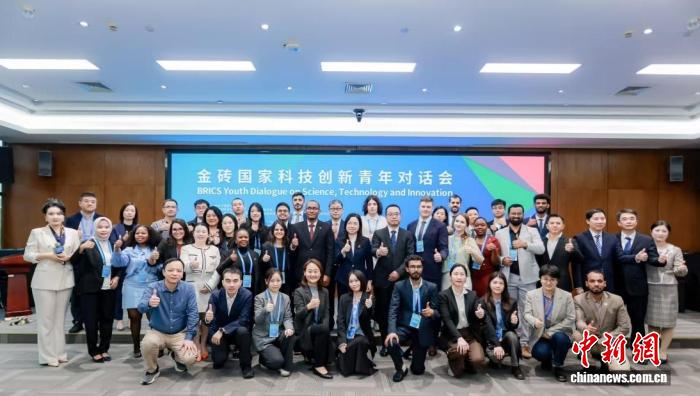
Group 1 - The 2025 BRICS Youth Dialogue on Science and Technology Innovation was held in Xiamen, emphasizing the role of youth as a bridge for cooperation in technological innovation among BRICS nations [1][2] - The dialogue focused on the theme "Youth Leading Technological Innovation to Create a Shared Future," with participation from approximately 40 representatives from BRICS countries, including Brazil, China, Ethiopia, India, Indonesia, Russia, South Africa, and the UAE [2] - The National Youth Federation of China highlighted its efforts in promoting youth participation in technological innovation and the implementation of global youth development action plans to empower youth development projects [2] Group 2 - Youth representatives proposed new paths for technological innovation collaboration, emphasizing the importance of policy support for youth innovation and the need for capacity building and digital skills dissemination [2][3] - The establishment of inclusive and equitable principles and mechanisms for cross-border incubation and joint innovation was advocated, with a focus on strategic dialogue and multilateral cooperation in fields such as artificial intelligence, biotechnology, green technology, and advanced manufacturing [3] - Indonesian students studying in China expressed their commitment to leveraging their experiences to facilitate cooperation between Chinese enterprises and Indonesia, particularly in promoting green transformation and addressing environmental issues [3][4]
专访丨期待携手中国深化城市文保与发展合作——访马来西亚马六甲历史城区(鸡场街)工委会主席颜天禄
Xin Hua She· 2025-11-30 07:11
Core Insights - The chairman of the Malacca Historical City (Jonker Street) Committee, Yian Tianlu, expressed the desire for deeper cooperation between Malaysia and China in the preservation and development of historical urban areas, drawing inspiration from Nanjing's experience in protecting its ancient city walls [1][2] Group 1: Urban Heritage Preservation - Yian highlighted Nanjing's ancient wall protection as a model for Malacca, emphasizing the potential for collaboration in heritage conservation between the two cities [1] - The preservation of the traditional residential area of Xiaoxihu in Nanjing, which integrates intangible cultural heritage workshops and addresses local residents' living challenges, serves as a sustainable model for Malacca's urban renewal efforts centered around Jonker Street [2] Group 2: Cultural and Historical Connections - Malacca and Nanjing share a strong historical connection through the Maritime Silk Road, with significant potential for collaboration in researching Zheng He culture and protecting the Baba Nyonya and Jinling cultures [2] - Malacca has established friendly relations with 31 historical cultural districts in China, including Nanjing's Confucius Temple and Qinhuai Scenic Area, and plans to enhance cooperation with Haikou in cultural tourism, trade, and heritage protection [2] Group 3: Ecological and Technological Insights - Yian expressed admiration for Nanjing's ecological initiatives, particularly in endangered species protection, and noted that Malaysia could learn from China's practices in ecological restoration and monitoring [3] - There is potential for deeper exchanges between Malaysia and China in smart city development, AI applications, and green technologies, as many Chinese cities are advancing towards intelligent development [3] Group 4: Cultural Exchange and Peace Promotion - Malacca, as a multicultural historical city, plays a vital role in promoting peace and cultural exchange, embodying the spirit of harmony advocated by Zheng He during his maritime expeditions [3]
江苏省标杆孵化器三分之一在苏州
Su Zhou Ri Bao· 2025-11-28 00:33
Core Insights - Jiangsu Province's Science and Technology Department announced the list of benchmark incubators for 2025, with 13 incubators from Suzhou included, making a total of 24 benchmark incubators in the city, accounting for nearly one-third of the province's total [1] - The newly added 13 benchmark incubators in Suzhou cover strategic emerging industries such as artificial intelligence, green technology, and embodied robotics, contributing to the city's industrial upgrade and innovation [1] Group 1 - Suzhou leads the province in both the number of newly added and total benchmark incubators, indicating a strong position in incubator development [1] - The benchmark incubators in Suzhou have formed a matrix development pattern that supports "high-precision" industries, providing robust momentum for industrial upgrades [1] - Notable incubators include the Su University Tian Gong AI Industry Incubator, which has nurtured 120 companies, including 17 high-tech enterprises and 3 listed companies [1] Group 2 - The Qingyuan Science and Technology Green Technology Incubator, backed by Tsinghua University's Environmental College, has a precise incubation system that has successfully incubated 67 companies, with 64% being technology-based SMEs and 31% high-tech enterprises [1] - The Kunshan Embodied Robotics Industry Incubator employs a collaborative model involving government, industry, academia, and research, attracting 25 high-level talent enterprises [1] - The city’s Science and Technology Bureau aims to build a high-quality incubation ecosystem aligned with the "14th Five-Year Plan" goals, promoting innovation and development [2]
中国企业专利百强榜出炉:华为、腾讯前三 OPPO、百度入榜
Feng Huang Wang· 2025-11-26 12:04
Core Insights - The "Top 100 Patent Innovation Rankings of Chinese Enterprises 2025" was recently released by the Zhongce Intellectual Property Research Institute, highlighting Huawei, State Grid, and Tencent as the top three companies in patent innovation [1] Group 1: Patent Innovation Rankings - The ranking focuses on industries such as artificial intelligence, green technology, and smart living, analyzing the number of innovative patents applied for and published by Chinese enterprises over the past five years [1] - The top 10 companies in the patent innovation rankings include Huawei, State Grid, Tencent, China National Petroleum, Midea, Southern Power Grid, Gree, OPPO, BOE Technology Group, and Baidu [1] Group 2: Invention Patent Authorization Rankings - In the invention patent authorization rankings, State Grid holds the first position, while Huawei and Tencent are ranked second and third, respectively [1] Group 3: Huawei's Patent Licensing Revenue - Huawei's Vice President and Head of Intellectual Property Department, Fan Zhiyong, stated that the company's patent licensing revenue is expected to reach approximately $630 million (around 4.46 billion yuan) in 2024 [1] - As of the end of 2024, over 2.7 billion 5G devices have received patent authorization from Huawei in the cellular standards domain, and more than 1.2 billion consumer electronic devices have received authorization in the Wi-Fi domain [1]
