能源安全新战略

Search documents
老树何以发新枝——“深入践行能源安全新战略”系列纪录片第二集
Zhong Guo Neng Yuan Wang· 2025-12-26 09:10
Core Viewpoint - The article emphasizes the importance of energy security as a strategic issue for national economic and social development, highlighting China's progress in building a new energy system under the guidance of the "Four Revolutions, One Cooperation" strategy [1] Group 1: Company Overview - Pingzhuang Coal Industry has evolved from a small coal producer to a large state-owned enterprise under the National Energy Group, celebrating 66 years of development [2] - The company embodies the spirit of "practical work, dedication, innovation, and striving for excellence," continuously adapting to the energy transformation [3] Group 2: Technological Innovation - Pingzhuang Coal Industry is collaborating with Northwest A&F University on revolutionary research regarding lignite and coal gangue, aiming to industrialize and scale up coal-based nanocarbon hydrogen fuel technology [5] - The company has established innovation studios across its enterprises, fostering a culture of technological transformation and innovation [7] Group 3: Sustainable Development - Pingzhuang Coal Industry is transitioning from underground to open-pit mining, extending the service life of its mining operations by 17 years and implementing key technologies for resource recovery [8] - The company has two coal mines listed as national-level green mines and five as regional-level green mines, demonstrating its commitment to sustainable practices [8] - A distributed photovoltaic power generation project with a capacity of 2×6 megawatts is under construction, showcasing the company's efforts in renewable energy [8]
用实绩实效彰显使命担当
Xin Lang Cai Jing· 2025-12-23 19:08
Core Insights - The meeting of central enterprise leaders emphasized the importance of Xi Jinping's recent directives, which outline expectations and responsibilities for central enterprises in the context of China's modernization and national rejuvenation efforts [1][2][3] Group 1: Economic Contributions - Central enterprises have achieved a total asset value exceeding 90 trillion yuan, significantly supporting the national economy through high-quality development [1] - The agricultural bank highlighted the critical role of finance in the national economy, committing to enhance service delivery and operational effectiveness [3] Group 2: Technological Innovation - The China Aerospace Science and Technology Corporation plans to deepen research in cutting-edge technologies to advance towards becoming a space power [2] - The State Grid Tianjin Binhai Power Supply Company has developed innovative technologies, such as a robot for live-line work, showcasing the integration of technology and industry [3][5] Group 3: Industry-Specific Developments - The China National Petroleum Corporation reported a significant increase in shale oil production, surpassing one million tons, underlining its role in energy security [5] - The China Chang'an Automobile Group achieved over one million annual sales in new energy vehicles, reflecting the success of its reform initiatives [4] Group 4: Strategic Directions - Central enterprises are urged to focus on their primary responsibilities and optimize the layout of state-owned economies to enhance overall effectiveness [3] - The emphasis on integrating party leadership with operational management is seen as essential for achieving high-quality development and fulfilling responsibilities [5]

中央企业负责人会议12月22日至23日在京召开
Zhong Yang Ji Wei Guo Jia Jian Wei Wang Zhan· 2025-12-23 15:05
Group 1 - The central enterprises have achieved significant milestones, with total assets surpassing 90 trillion yuan, supporting the overall economy through high-quality development [1] - The emphasis on technological innovation has led to substantial advancements in various industries, with central enterprises playing a crucial role in ensuring stable supply of essential products [1] - Central enterprises are recognized as backbone and pillar entities in the national economy, actively serving national strategies since the 18th National Congress of the Communist Party [1][2] Group 2 - The importance of deepening reforms in state-owned enterprises is highlighted as a key to enhancing their vitality and competitiveness [4] - The energy sector, particularly China National Petroleum Corporation, is focusing on enhancing domestic oil and gas supply capabilities while advancing new energy initiatives [5] - The integration of party leadership with production and operations is deemed essential for achieving high-quality development and fulfilling responsibilities [5]

习近平总书记重要指示为做好中央企业工作指明方向
Xin Hua She· 2025-12-23 14:28
Core Insights - The important instructions from General Secretary Xi Jinping provide clear direction for central enterprises to enhance their contributions to national development and modernization efforts [1][2][3] Group 1: Central Enterprises' Role and Achievements - Central enterprises have seen their total assets exceed 90 trillion yuan, significantly supporting the national economy through high-quality development [1] - The achievements in technological innovation and emergency response have strengthened the stability of essential product supplies [1] - The central enterprises are recognized as the backbone of the national economy, actively serving national strategies and contributing to industrial safety and technological advancement [2] Group 2: Future Directions and Responsibilities - Central enterprises are urged to deepen their reform efforts to enhance their operational vitality and address underlying developmental issues [5] - The focus on integrating technological and industrial innovation is emphasized, with a commitment to enhancing domestic energy supply capabilities and expanding into new energy sectors [4][5] - The importance of aligning corporate governance with the Party's leadership is highlighted as essential for achieving high-quality development and fulfilling responsibilities [6]
用实绩实效彰显使命担当——习近平总书记重要指示为做好中央企业工作指明方向
Xin Hua She· 2025-12-23 14:20
Core Insights - The important directives from General Secretary Xi Jinping provide clear guidance for central enterprises to enhance their contributions to national development and modernization efforts [1][2][3] Group 1: Central Enterprises' Role and Responsibilities - Central enterprises have reached a total asset value of 90 trillion yuan, significantly supporting the national economy through high-quality development [1] - The emphasis on technological innovation and emergency response capabilities highlights the commitment of central enterprises to national interests and public welfare [1][2] - Central enterprises are expected to better serve the national agenda, focusing on high-quality economic development and social responsibility [2][3] Group 2: Industry-Specific Developments - The aerospace sector, represented by the China Academy of Launch Vehicle Technology, aims to deepen research in cutting-edge technologies to achieve the goal of becoming a space power [2] - The mechanical industry, as a backbone of the real economy, is tasked with ensuring industrial safety and promoting technological advancements [2] - The automotive industry, particularly China Changan Automobile Group, is focused on reforming its mechanisms to enhance competitiveness and develop core technologies [4] Group 3: Energy Sector Initiatives - China National Petroleum Corporation has achieved significant oil production milestones, emphasizing energy security and the need for a balanced approach to development and safety [4] - The company is committed to enhancing domestic oil and gas supply capabilities while expanding into renewable energy and international cooperation [4] Group 4: Governance and Leadership - Strengthening the leadership of the Communist Party is deemed essential for the success of central enterprises, ensuring that political and operational responsibilities are aligned [5]
中国华能煤炭产量连续4年破亿吨
Zhong Guo Dian Li Bao· 2025-12-15 07:54
责任编辑:于彤彤 今年以来,中国华能坚持以习近平新时代中国特色社会主义思想为指导,深入践行"四个革命、一个合 作"能源安全新战略,坚决扛起能源保供政治责任,所属22处生产矿井以起步就加速的顶格标准和满格 状态,紧紧围绕高质量发展核心任务,充分释放先进产能,全力以赴保安全、促生产、稳供应,煤炭产 量稳居央企第三、全国第七,为国家能源安全与经济社会发展保驾护航。 截至12月12日,中国华能集团有限公司煤炭产量连续4年突破1亿吨。 ...

【学习贯彻党的二十届四中全会精神】加快建设新型能源体系
Jing Ji Ri Bao· 2025-12-15 01:55
Group 1 - The core viewpoint emphasizes the necessity of accelerating the construction of a new energy system to ensure energy security and promote high-quality development in China [1][2][3][4] - The new energy system is seen as a strategic choice to safeguard energy security and gain an advantage in global power dynamics, especially in the context of geopolitical and climate challenges [3][4] - Achieving carbon peak and carbon neutrality goals is a critical pathway that requires a significant transformation of the energy system, moving away from fossil fuels [4][5] Group 2 - The construction of a new energy system is based on a solid foundation, with historical achievements in energy reform and development since the 18th National Congress of the Communist Party of China [5][6] - The new energy system aims to gradually establish non-fossil energy as the main supply source while maintaining fossil fuels as a backup, ensuring a stable energy supply [6][7] - The development of a new power system is crucial, focusing on the integration of various energy sources and enhancing the flexibility and resilience of the power grid [11][12] Group 3 - Key tasks for the "14th Five-Year Plan" period include increasing the share of renewable energy supply, improving the clean and efficient use of fossil energy, and constructing a new power system [10][11][12] - Emphasis is placed on promoting green and low-carbon energy consumption across various sectors, including transportation, buildings, and industry [12][13] - Accelerating energy technology innovation and establishing a robust energy market system and pricing mechanism are essential for supporting the transition to a new energy system [13][14]
加快建设新型能源体系
Jing Ji Ri Bao· 2025-12-14 22:46
Core Viewpoint - The article emphasizes the importance of accelerating the construction of a new energy system in China as a strategic decision to ensure energy security and promote high-quality development in the context of global energy transformation [1][2]. Group 1: Significance of Accelerating the New Energy System - Accelerating the construction of a new energy system is a necessary requirement for advancing the energy revolution and building an energy powerhouse [2]. - It is a strategic choice to ensure energy security and gain an advantage in major power competition, especially given the complex global energy landscape influenced by geopolitical factors and climate change [3]. - Achieving carbon peak and carbon neutrality goals is essential, as nearly 90% of carbon emissions in China are due to fossil fuel combustion, necessitating a shift to a low-carbon energy system [4]. Group 2: Current Foundations for New Energy System Construction - China has made significant progress in energy reform and development, establishing a solid foundation for the new energy system, including becoming the world's largest producer of solar panels and wind power equipment [5]. - The country has built the largest clean power supply system globally, with renewable energy installations expected to surpass coal power by 2024 [5]. Group 3: Basic Requirements for New Energy System Construction - The new energy system aims to gradually establish non-fossil energy as the main supply source, with fossil energy serving as a backup [6]. - A new power system is crucial for supporting high proportions of renewable energy, requiring the development of a flexible and intelligent grid [7]. - Advocating for green and smart energy consumption is essential, especially with the integration of digital technologies into the energy sector [8]. Group 4: Key Tasks for Implementing the New Energy System - Increasing the share of renewable energy supply is a priority, with a focus on diverse energy sources and the development of clean energy bases [10]. - Enhancing the clean and efficient use of fossil energy while controlling its consumption is necessary to ensure energy security [11]. - Constructing a new power system that promotes coordinated development of energy sources, grids, loads, and storage is vital [12]. - Promoting green and low-carbon energy consumption across various sectors, including transportation and buildings, is essential for achieving energy transition goals [13]. - Accelerating energy technology innovation and strengthening the energy market system and pricing mechanisms are critical for supporting the new energy system [14].
署名文章︱国家能源局发展规划司:加快建设新型能源体系
国家能源局· 2025-12-09 11:35
Core Viewpoint - The article emphasizes the importance of accelerating the construction of a new energy system and building an energy powerhouse as central tasks for high-quality energy development in China, guided by the principles set forth by the Communist Party and recent strategic directives [3][4][5]. Group 1: Principles for New Energy System Construction - The construction of a new energy system must adhere to the principle of comprehensive leadership by the Party, ensuring that energy development aligns with national strategies and maintains a correct direction [4]. - The concept of prioritizing people's needs is crucial, focusing on improving energy supply quality and ensuring equitable access to energy resources for all citizens [5]. - The strategy emphasizes self-reliance in energy security, advocating for a robust domestic energy supply system to mitigate external uncertainties [6]. - A green and low-carbon development approach is essential, with a focus on transitioning to non-fossil energy sources and achieving carbon neutrality goals [7]. - Innovation is highlighted as the primary driving force for energy development, with a call for technological advancements to lead the energy sector [8]. - Deepening energy system reforms is necessary to enhance market efficiency and governance structures [9]. Group 2: Achievements During the 14th Five-Year Plan - Significant improvements in energy security and supply resilience were achieved, with total energy production reaching approximately 5 billion tons of standard coal, a nearly 40% increase over the past decade [10]. - The transition to a greener energy structure was marked by a doubling of non-fossil energy consumption, which now accounts for about 20% of total energy consumption [11]. - Technological advancements in energy production and equipment have led to a notable increase in the modernization of the energy industry, with significant breakthroughs in nuclear power and renewable energy technologies [12]. - The establishment of a comprehensive energy market system has been initiated, enhancing market dynamics and participation from various stakeholders [13]. - International cooperation in energy has been strengthened, with significant projects and partnerships established globally, contributing to a more stable energy supply chain [14]. Group 3: Strategic Planning for the 15th Five-Year Plan - The 15th Five-Year Plan aims to establish a clean, low-carbon, safe, and efficient new energy system, focusing on energy security, economic feasibility, and technological innovation [15]. - Optimizing the spatial layout of energy resources and infrastructure is a priority, with plans for distributed energy development and enhanced energy base construction [16]. - The transition to a green and low-carbon energy system will be accelerated, with specific targets for non-fossil energy consumption by 2030 [16]. - Building a resilient energy supply chain is essential, with a focus on enhancing domestic oil and gas production and establishing a robust energy reserve system [17]. - Advancements in energy technology are prioritized, with a focus on both hard and soft innovations to support the new energy system [18]. - Legal and regulatory frameworks will be strengthened to support high-quality energy development and market reforms [19]. - International cooperation will be expanded to ensure the stability of global energy supply chains and promote sustainable energy development [20].


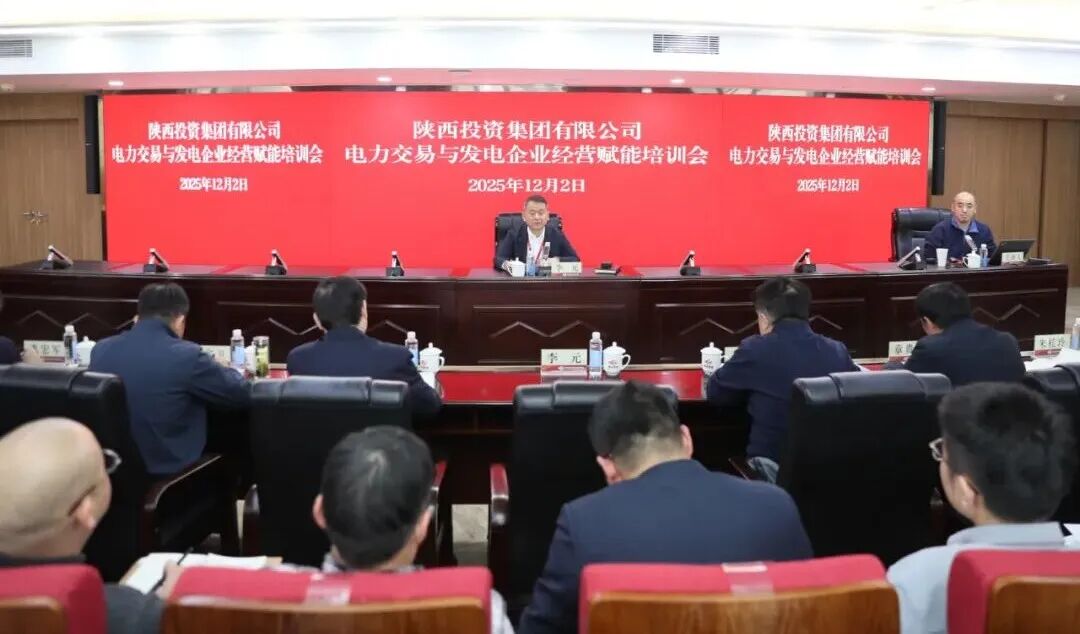
陕投集团举办电力交易与发电企业经营赋能培训会
Xin Lang Cai Jing· 2025-12-02 11:59
Core Viewpoint - The training session organized by Shaanxi Investment Group aims to implement the national energy security strategy and support the province's energy industry transformation and upgrade [1][5]. Group 1: Training Objectives and Content - The training featured Dr. Zhu Zhizhong, an expert from the National Development and Reform Commission, who provided insights on the electricity market operating environment, production-sales coordination, investment strategies, trading logic, and technical practices [3][7]. - The session aimed to equip Shaanxi Investment Group with authoritative and practical policy interpretations and operational guidelines to better adapt to the new electricity system construction [3][7]. Group 2: Strategic Directions and Goals - The meeting emphasized the need to scientifically formulate the "14th Five-Year Plan," focusing on three main directions: expanding installed capacity, enhancing coal-electricity coordination, and transforming energy services [4][8]. - The group is encouraged to actively participate in market competition, adopting a new business philosophy centered on electricity marketing, ensuring safety in production, and controlling costs as a regulatory measure [4][8]. - The company aims to establish a comprehensive marketing model that prioritizes efficiency and maximizes overall benefits, while also enhancing its core competitiveness in the energy sector [4][8]. Group 3: Commitment to Energy Supply Security - The meeting highlighted the importance of fulfilling the group's responsibility for energy supply security, treating the stable supply of energy, electricity, and heat as a major political task [4][8]. - A multi-faceted supply guarantee system is to be constructed, integrating stable coal production, active thermal power generation, clean energy collaboration, and technological empowerment [4][8]. Group 4: Participation and Attendance - The training session was conducted in a hybrid format, with approximately 400 participants, including department heads and relevant personnel from the group headquarters and Shaanxi Energy and Hydropower [5][9].