
脑机接口技术

Search documents
戴上四川造“脑机接口”头盔是什么感觉?记者实测丨健康科代表
Xin Lang Cai Jing· 2026-01-31 16:27
一款形似"星球大战"头盔的"四川造"脑机接口设备,能为老年人提供便捷的认知障碍筛查。只需戴上头 盔,便可在短时间内评估未来认知障碍风险,助力实现"早发现、早干预"。 近日,川观新闻"健康科代表"栏目记者在成都西部脑谷,体验由四川大学华西医院国家老年疾病临床医 学研究中心特聘研究员江宁教授团队研发的老年认知健康管理系统。 应用进展方面,该系统已在四川完成1万例以上社区人群筛查。江宁教授所在的国家老年疾病临床医学 研究中心(华西)研究发现,55岁以上社区居住的老年人群中,轻度认知障碍的比例已经远超预期。 有望年内走进社区与家庭 "轻度认知障碍是老年痴呆的前期阶段,初期症状轻微,患者及家人往往难以察觉,等到出现明显症状 前往医院时,多已错过最佳干预时期。"江宁教授表示,该系统正是老年认知健康管理闭环的前端关键 环节。 对于公众关心的上市及使用场景问题,江宁教授表示,此次探访的第四代非侵入式脑机接口设备,预计 今年面向医疗机构供应,由医疗机构为患者提供筛查服务。他补充道,"未来我们会陆续推出可在家庭 使用的筛查设备,让老年认知健康筛查更便捷。" 记者体验脑机接口筛查 专家提醒风险超80%需专业介入 戴上这个类似《星球 ...
华南脑控董事长李远清:未来或考虑在南沙开展成果转化和产业布局
2 1 Shi Ji Jing Ji Bao Dao· 2026-01-30 07:54
Core Insights - Brain-computer interface (BCI) technology is gaining attention due to demonstrations by Neuralink, with Chinese company Huazhong Brain Control (Huazhong) exploring new paths for commercialization [1] - Huazhong has developed non-invasive BCI technology that has quickly transitioned to market, with applications in elderly care, mental health, and more [1] - The Greater Bay Area's geographical and policy advantages are facilitating Huazhong's collaborative development [1] Company Developments - Huazhong's chairman, Li Yuanqing, stated that multiple non-invasive BCI products have been launched, covering various fields such as elderly care, mental health, military aerospace, public safety, cultural entertainment, and education [1] - The company has introduced products like brain-controlled mice, wheelchairs, and the first non-drug wearable mindfulness meditation device in China, which has received top ratings on Amazon [1] - Li highlighted the significant population of elderly individuals and those with mental health issues in China, indicating a vast market for BCI technology [1] Industry Context - The Greater Bay Area's educational, medical, and industrial chain advantages have empowered Huazhong, allowing for efficient R&D to production processes [2] - The South China region, particularly Nansha, is seen as a promising area for development due to its strategic location and strong innovation ecosystem [2] - Nansha's strategic emerging industries have increased their GDP contribution to 37.8%, with R&D investment intensity rising to 5.48% and a 21.5% annual growth in high-tech enterprises, totaling 1,310 [2]
强脑科技古月现场演示脑机接口仿生手 感慨“心态及生活质量被改变”
Xin Lang Cai Jing· 2026-01-29 13:09
Core Viewpoint - The event "Praise for China's Economy - Entrepreneur Night" was held on January 29 in Beijing, highlighting advancements in technology that improve the lives of disabled individuals, particularly through the work of Zhejiang Qiangnao Technology Co., Ltd. and its CEO Han Bicheng [1][6]. Group 1: Event Overview - The "Praise for China's Economy - Entrepreneur Night" featured notable figures including Han Bicheng, the founder and CEO of Zhejiang Qiangnao Technology, who received recognition for his contributions [1][6]. - The event was attended by prominent industry leaders such as Gao Dekang, chairman of the Bosideng Group, and Yin Ye, CEO of BGI Group, who witnessed the honors presented [1][6]. Group 2: Technological Impact - The event showcased the advanced brain-machine interface technology developed by Qiangnao Technology, which has significantly transformed the lives of disabled individuals [3][8]. - Gu Yue, a beneficiary of the bionic hand technology, shared his personal experience of losing his left hand in an accident in 2018 and how he was introduced to Qiangnao's intelligent prosthetics in 2019 [3][8]. - Gu Yue demonstrated the capabilities of the bionic hand, which can be controlled intuitively without surgical implantation, allowing him to perform various tasks such as lifting weights and playing the piano [3][8]. Group 3: User Experience and Benefits - Gu Yue reported that he uses the bionic hand for daily activities like typing, cooking, and drinking, indicating a significant improvement in his quality of life [5][10]. - The technology has assisted over 10,000 individuals with upper or lower limb disabilities, enabling them to live and work normally [5][10]. - Gu Yue expressed that the most significant change has been in his mindset and quality of life, stating he now feels like a "normal person" and is no longer afraid of public scrutiny [5][10].


强脑科技韩璧丞:希望帮助肢体残疾人“重新长出手脚”
Xin Lang Cai Jing· 2026-01-29 13:03
Core Insights - The event "Praise for China's Economy - Entrepreneur Night" was held on January 29 in Beijing, where Han Bicheng, founder and CEO of Zhejiang Qiangnao Technology Co., was honored [1][5] Company Overview - Qiangnao Technology focuses on brain-computer interface technology, aiming to bridge the gap between advanced technology and everyday life [3][7] - The company targets approximately 5 million individuals with physical disabilities in China, many of whom have become socially isolated due to the loss of limbs [3][7] Product Development - Qiangnao Technology has developed a neural-controlled prosthetic that has successfully helped users regain functionality, exemplified by a user who, after 27 years, was able to grasp a cup [3][7] - The company has also created a sleep aid product after five years of development, which has reportedly improved sleep for users who have struggled for decades [3][7] Future Vision - The company envisions using brain-computer interface technology to assist more individuals, including helping disabled individuals walk again, enabling children with autism to speak, and aiding those with Alzheimer's to delay memory loss [3][7][8] - Han Bicheng emphasized that the goal is not to create opportunities but to restore daily life interrupted by fate [4][8]

2025年海南规上工业增加值增长9.9% 位列全国第二
Zhong Guo Xin Wen Wang· 2026-01-28 10:14
Core Viewpoint - In 2025, Hainan Province's industrial added value above designated size is expected to grow by 9.9%, ranking second in the nation and exceeding the national growth rate by 4 percentage points [1]. Group 1: Industrial Growth and Achievements - Hainan's industrial added value growth of 9.9% positions it second nationally, with high-tech manufacturing value increasing by 28.1% [1]. - The digital economy's core industry revenue is projected to exceed 240 billion yuan, with significant projects in semiconductor packaging and chip design driving growth in the electronic information manufacturing sector [1]. - The province has successfully doubled the value of goods benefiting from processing and value-added policies, surpassing 11.5 billion yuan [2]. Group 2: Innovation and Development Initiatives - Hainan has established a petrochemical industry innovation consortium and recognized the "Deep Sea No. 1" as a national leading intelligent factory [2]. - The province has seen a 25% increase in newly approved drug numbers and a 40% increase in Class III medical devices [2]. - Hainan has launched the "Haiyidui 3.0" version, enhancing the "no application, immediate enjoyment" reform, and has cultivated 17 national-level specialized and innovative "little giant" enterprises [2]. Group 3: Focus Areas for Future Development - Hainan aims to solidify its advantageous industries by developing high-end chemical new materials and expanding the processing of strategic mineral resources [3]. - The province is focusing on the biopharmaceutical sector by promoting local production of international innovative drugs and medical devices [3]. - Hainan is also targeting the digital economy, emphasizing the development of advanced semiconductor packaging and high-performance servers [3]. Group 4: Future Industry Cultivation - Hainan is planning to implement a three-year action plan for biological manufacturing and explore intelligent applications related to deep-sea exploration and tourism [4]. - The province supports innovations in brain-machine interface technology and hydrogen energy applications [4].
收评:沪指震荡小幅上涨0.27% 黄金、石油等资源周期股集体大涨
Xin Hua Cai Jing· 2026-01-28 07:39
Market Overview - A-shares showed mixed performance on January 28, with the Shanghai Composite Index and Shenzhen Component Index slightly up, while the ChiNext Index experienced a small decline. The Shanghai Composite Index closed at 4151.24 points, up 0.27%, with a trading volume of 13,655 billion yuan [1] - Resource stocks led the market, particularly gold stocks, with Sichuan Gold achieving four consecutive trading limits, and China National Offshore Oil Corporation rising over 6% to a new high [1] - The total trading volume in the Shanghai and Shenzhen markets reached 29.7 trillion yuan, an increase of 70.4 billion yuan compared to the previous trading day [1] Sector Performance - Key sectors that performed well included precious metals, oil and gas extraction, steel, combustible ice, rare earth permanent magnets, and coal [2] - Conversely, sectors that saw declines included photovoltaic equipment, medical services, education, recombinant proteins, avian influenza, and Sora [2] Institutional Insights - According to Jifeng Investment Advisors, the A-share market is expected to continue a volatile consolidation pattern in February, with support from policies and valuations, while facing pressure from profit verification. They recommend focusing on cyclical sectors, technology growth, and defensive assets [3] - CITIC Construction highlighted the booming commercial aerospace industry, particularly the advancements in reusable rocket technology, which are expected to drive significant growth in the satellite communication market, projected to grow from $25.2 billion in 2025 to $83 billion by 2035, with a compound annual growth rate of approximately 13% [3] Company Updates - Amazon Web Services (AWS) announced a price increase of approximately 15% for its EC2 machine learning capacity blocks, marking the first price hike in about twenty years. This adjustment reflects the high demand for AI computing resources and the increasing scarcity of supply [4] - Haizhou Intelligent, a subsidiary of Suzhou Keda, announced a price adjustment for certain products, with increases ranging from 10% to 30%, effective March 1, 2026. This adjustment affects a range of products including storage series, front-end cameras, and servers [8]
国家药监局:《采用脑机接口技术的医疗器械范式设计与应用规范运动功能重建》等2项医疗器械行业标准立项
Mei Ri Jing Ji Xin Wen· 2026-01-28 06:04
Core Viewpoint - The National Medical Products Administration (NMPA) has approved the establishment of two industry standards for medical devices utilizing brain-computer interface (BCI) technology to promote high-quality development in this sector [1] Group 1: Regulatory Developments - The NMPA has initiated the revision of two key standards: "Design and Application Specifications for Medical Devices Using Brain-Computer Interface Technology for Motor Function Rehabilitation" and "Reliability Verification Methods for Invasive Devices Using Brain-Computer Interface Technology" [1]
【新华社】植入人脑之后,脑机接口技术将如何改变我们的生活?
Xin Hua She· 2026-01-28 02:46
Core Viewpoint - The development of brain-machine interface (BMI) technology in China has reached a new stage, enabling paralyzed patients to control devices like wheelchairs and computers using their thoughts, with significant clinical trial advancements reported in 2025 [3][4][5]. Group 1: Technological Advancements - The Chinese Academy of Sciences has made breakthroughs in invasive brain-machine interfaces, allowing patients with severe disabilities to perform tasks such as controlling a wheelchair and interacting with robotic devices [3][4]. - A second prospective clinical trial demonstrated a paralyzed patient controlling a powered wheelchair and a robotic dog using only their thoughts, showcasing the potential of BMI technology [3][4]. - The first prospective clinical trial in June 2025 involved a patient who lost limbs due to an electrical accident, successfully controlling a computer cursor with their thoughts [4]. Group 2: Clinical Trials and Applications - A multi-center clinical trial for semi-invasive BMIs showed significant results, with 32 patients able to control pneumatic gloves for fine motor tasks after implantation [4]. - The invasive BMIs are classified as Class III medical devices in China, requiring clinical trials to prove safety and efficacy before market approval [5]. - Current clinical applications focus on motor, language, and sensory functions, with ongoing research to enhance the effectiveness of these devices [4][5]. Group 3: Future Development and Challenges - To achieve scalable applications, the industry must prioritize safety and effectiveness, minimizing surgical trauma and enhancing data collection and transmission capabilities [5][6]. - The establishment of industry standards is crucial for the development of BMIs, with ongoing efforts to create a regulatory framework and evaluation methods [8]. - The Chinese government is actively promoting the BMI industry through policy initiatives aimed at fostering innovation and creating a supportive ecosystem for technology development [8]. Group 4: Broader Implications - The long-term vision for BMIs includes their potential to serve as a new economic growth point and to empower the general public, beyond just aiding patients with severe disabilities [7][9]. - The future of brain science and BMI technology is expected to be a significant growth area, with foundational research enhancing application effectiveness [8]. - The industry is encouraged to develop "killer applications" that could lead to widespread adoption of BMI technology, similar to the smartphone revolution [9].
脑机接口技术未来如何普惠大众
Xin Lang Cai Jing· 2026-01-27 22:08
Core Insights - Brain-computer interface (BCI) technology in China has made significant advancements, allowing paralyzed patients to control devices using their thoughts, marking a new phase in clinical applications [1][2] Group 1: Clinical Advancements - In December 2025, a clinical trial demonstrated that a paralyzed patient could control an electric wheelchair and a robotic dog using only their thoughts [1] - The first prospective clinical trial in June 2025 showed a patient with amputated limbs controlling a computer cursor through BCI [1] - A recent trial involved 32 patients with cervical spinal cord injuries, successfully enabling them to control pneumatic gloves for fine motor tasks [2] Group 2: Product Development Challenges - Invasive BCIs are classified as Class III medical devices in China, requiring clinical trials to prove safety and efficacy before market approval [3] - Current BCI systems are transitioning from laboratory exploration to clinical application, but no products have yet been approved for sale [3] - Key factors for developing scalable BCI products include minimizing surgical trauma and ensuring effective data collection and transmission [3][4] Group 3: Future Prospects - The industry anticipates that BCI technology could evolve into a new economic growth point, potentially benefiting the general public [6] - Establishing industry standards is crucial for the development of the BCI sector, with recent standards being published since 2025 [6] - The Ministry of Industry and Information Technology and other governmental bodies have issued guidelines to accelerate the innovation and development of the BCI industry [7]
植入人脑之后,脑机接口技术将如何改变我们的生活?
Zhong Guo Jin Rong Xin Xi Wang· 2026-01-27 13:40
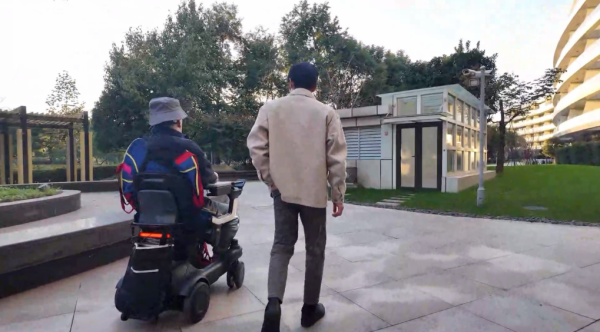
新华财经北京1月27日电 (记者董雪)让瘫痪患者用"意念"控制电脑光标、轮椅、机器狗……过去一年 来,我国脑机接口技术迈入植入人脑的新阶段,密集涌现出一批突破性进展。 作为"十五五"规划建议锚定的六大未来产业之一,脑机接口技术旨在通过在脑与机器之间建立信息通 道,实现生物智能与机器智能的协同交互。截至目前,它与人脑的交互发展到了什么程度?怎样才能成 为规模化应用的成熟产品?未来能否给大众带来普惠? "意念"控制电脑光标、轮椅 2025年12月,中国科学院脑科学与智能技术卓越创新中心联合复旦大学附属华山医院等单位,发布了脑 机接口临床试验的新进展:一位因颈髓损伤而四肢瘫痪的患者,仅凭"意念"控制,即可坐着电动轮椅在 小区里遛弯,也能指挥机器狗取外卖。 "这是我们的第二例前瞻性临床试验。之后的第三例前瞻性临床试验进一步拓展了脑机接口的功能,患 者能控制机械臂完成喝水、进食等动作。"中国科学院脑科学与智能技术卓越创新中心研究员赵郑拓 说。 此前,该团队在2025年6月发布第一例前瞻性临床试验,在脑机接口的帮助下,一位因高压电事故四肢 截肢的患者实现了"意念"控制电脑光标。 记者采访了解到,对于需要植入人脑的脑机接口 ...