超级应用

Search documents
京东的“他她它”App藏不住了!实测后:这个AI产品暴露了京东的野心
AI前线· 2025-09-26 12:07
Core Insights - JD.com is integrating AI technology into its ecosystem through a new app called "Ta Ta Ta," aiming to create a super application that combines various services and AI content communities [2][3][4]. Group 1: Product Features - The "Ta Ta Ta" app officially launched after a public beta in May, featuring a digital assistant, AI social circles, and smart hardware connectivity [3][4]. - The app demonstrates a strong integration with JD.com's internal services, functioning as a prototype for a super app [5]. - Users can interact with the digital assistant, which remembers previous conversations and provides tailored recommendations, such as medical advice and food delivery options [5][7][9]. Group 2: AI Capabilities - The app includes an "AI Circle" feature, allowing users to create personalized AI entities for interaction, and offers a "soul matching" function for one-on-one AI interactions [10]. - The digital assistant connects various services, including JD.com’s food delivery, health, and financial services, enhancing its utility as a comprehensive agent [12]. - The underlying technology, Joy AI, is noted for its superior reasoning capabilities, with models ranging from 3 billion to 750 billion parameters [13]. Group 3: Future Prospects - JD.com plans to expand the app's capabilities by potentially allowing external agents to join, enriching the functionality [13]. - The app aims to bridge online and offline experiences, enabling users to control physical devices through the app, fostering a two-way data sharing environment [13]. - JD.com envisions the "Ta Ta Ta" app as a key entry point in its strategy to build a trillion-dollar AI ecosystem over the next three years [17].



高德的野心:成为一个超级高德
美股研究社· 2025-09-20 14:21
Core Viewpoint - Uber's market value has surpassed $200 billion, demonstrating the potential of a one-stop travel and lifestyle service platform, which has yet to be realized in the domestic market [3][16]. Group 1: Market Potential and Competition - The domestic local lifestyle service market, with a retail sales total approaching 50 trillion yuan by 2024, lacks a comparable platform to Uber, indicating a significant market opportunity [3]. - The local lifestyle service sector is entering a new expansion cycle starting in 2025, driven by the growth of online consumption from the food delivery wars [3][8]. - The competitive landscape in the domestic travel sector is intense, limiting players' ability to build cross-domain ecosystems, which presents an opportunity for Gaode [17]. Group 2: Gaode's Strategic Moves - Gaode has launched a group buying business in collaboration with Taobao and Ele.me, aiming to create a "super platform" for travel and consumption [3][9]. - Gaode's advantages include nearly 900 million monthly active users, synergy with Alibaba's ecosystem, and a robust AI service [11]. - The introduction of the "Street Ranking" feature aims to establish a more credible lifestyle service credit system by leveraging real user navigation behavior [12][14]. Group 3: User Engagement and Growth - The integration of group buying into Gaode's platform is expected to enhance user trust and engagement, positioning Gaode as a hub connecting online and offline services [14][19]. - Gaode's "Street Ranking" has already seen significant user engagement, with over 40 million users utilizing the feature on its launch day, indicating strong market interest [21]. - The monthly active users of Taobao Flash Purchase have increased by 200% since its launch, reflecting consumer demand for integrated services [26]. Group 4: Future Outlook - The trend towards super apps in China's internet industry suggests that Gaode's development into a comprehensive lifestyle service platform is a natural progression [23][25]. - With a growing middle-income population and increasing consumer purchasing power, Gaode has ample room for expansion in the lifestyle service market [27][29]. - If Gaode successfully integrates travel and consumption services, it could unlock a new market potential worth hundreds of billions [29].


张小珺对话OpenAI姚顺雨:生成新世界的系统
Founder Park· 2025-09-15 05:59
Core Insights - The article discusses the evolution of AI, particularly focusing on the transition to the "second half" of AI development, emphasizing the importance of language and reasoning in creating more generalizable AI systems [4][62]. Group 1: AI Evolution and Language - The concept of AI has evolved from rule-based systems to deep reinforcement learning, and now to language models that can reason and generalize across tasks [41][43]. - Language is highlighted as a fundamental tool for generalization, allowing AI to tackle a variety of tasks by leveraging reasoning capabilities [77][79]. Group 2: Agent Systems - The definition of an "Agent" has expanded to include systems that can interact with their environment and make decisions based on reasoning, rather than just following predefined rules [33][36]. - The development of language agents represents a significant shift, as they can perform tasks in more complex environments, such as coding and internet navigation, which were previously challenging for AI [43][54]. Group 3: Task Design and Reward Mechanisms - The article emphasizes the importance of defining effective tasks and environments for AI training, suggesting that the current bottleneck lies in task design rather than model training [62][64]. - A focus on intrinsic rewards, which are based on outcomes rather than processes, is proposed as a key factor for successful reinforcement learning applications [88][66]. Group 4: Future Directions - The future of AI development is seen as a combination of enhancing agent capabilities through better memory systems and intrinsic rewards, as well as exploring multi-agent systems [88][89]. - The potential for AI to generalize across various tasks is highlighted, with coding and mathematical tasks serving as prime examples of areas where AI can excel [80][82].

美国SEC主席:链上资本市场和AI代理金融即将问世,将鼓励而非扼杀
Hua Er Jie Jian Wen· 2025-09-11 08:09
Core Viewpoint - The SEC is shifting its regulatory strategy towards supporting innovation in the cryptocurrency sector, moving away from a strict enforcement approach to provide clearer rules and support for financial innovation, particularly in digital assets [1][3]. Group 1: Regulatory Changes - SEC Chairman Paul S. Atkins criticized past enforcement practices that suppressed the cryptocurrency industry, stating that this approach harmed U.S. jobs, innovation, and capital [1][3]. - The new initiative, termed "crypto project," aims to modernize securities regulations to support the migration of markets to blockchain technology, providing clear guidance for innovators [3][4]. Group 2: Clarification of Regulatory Boundaries - Atkins emphasized that most cryptocurrencies are not securities, and the SEC will work to clarify these boundaries to reduce legal uncertainties for market participants [4]. - The SEC will ensure that entrepreneurs can raise funds on-chain without facing endless legal risks, and will support the innovation of "super apps" trading platforms that can offer multiple services under a single regulatory framework [4]. Group 3: Future Financial Landscape - Atkins forecasted the emergence of on-chain capital markets and "AI agentic finance," where autonomous AI agents will execute trades and manage risks at unprecedented speeds while ensuring compliance with securities laws [5]. - The combination of AI and blockchain technology is expected to enhance market efficiency, reduce costs, and democratize access to strategies previously available only to large Wall Street firms [5]. Group 4: International Perspective - Atkins acknowledged the progress made by international counterparts, particularly praising the EU's Markets in Crypto-Assets (MiCA) regulation as a comprehensive framework for digital assets, suggesting that the U.S. can learn from it [6]. - Despite this, he reaffirmed the commitment to ensure that the U.S. remains a leader in creating an environment that supports financial innovation [6].
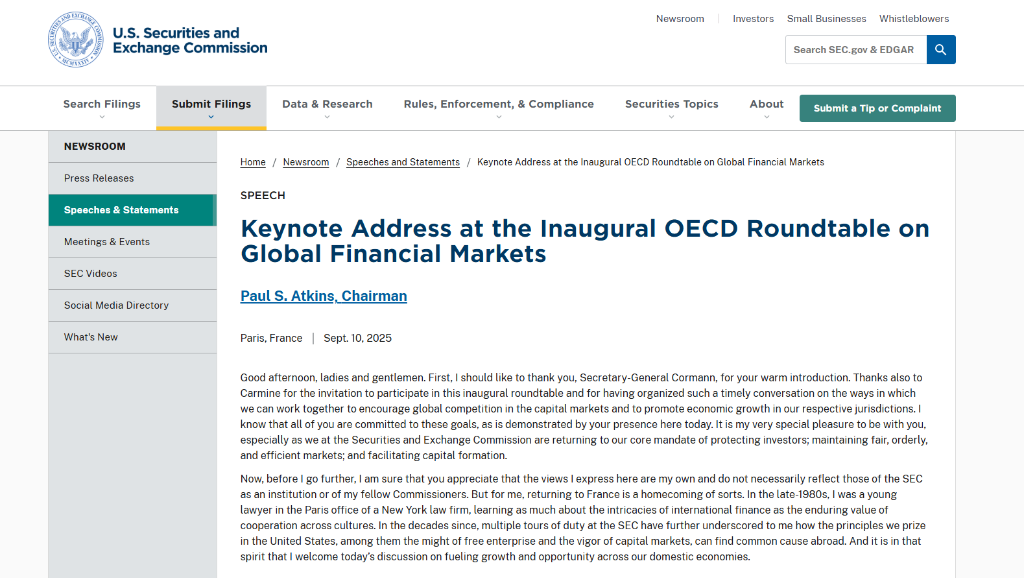
美 SEC 主席:多数代币并不属于证券,为链上融资扫除法律不确定性
Xin Lang Cai Jing· 2025-09-10 12:35
Core Insights - The SEC Chairman Paul S. Atkins outlined the "Project Crypto" reform plan at the inaugural OECD Global Financial Markets Roundtable, focusing on the regulatory framework for cryptocurrencies [1] Group 1: Regulatory Clarity - The plan aims to clearly define whether crypto assets are classified as securities, indicating that most tokens do not fall under this category [1] - It seeks to eliminate legal uncertainties surrounding on-chain financing [1] Group 2: Enhanced Functionality - The initiative allows for super-apps to operate under a single regulatory framework, enabling functionalities such as trading, lending, and staking [1] - It promotes diverse custody solutions, providing investors and platforms with more choices [1]
苹果在AI时代落伍了?马斯克的诉讼打了很多人的脸
Sou Hu Cai Jing· 2025-09-01 04:20
Core Viewpoint - Elon Musk's AI company xAI has filed a lawsuit against Apple, accusing the company of violating antitrust laws by favoring its own AI partner OpenAI, which is seen as a competitor to xAI and its generative AI applications [2][6][9]. Group 1: Lawsuit Details - xAI claims that Apple's preferential treatment of OpenAI and ChatGPT hinders the growth and innovation of competing generative AI applications [2][6]. - The lawsuit reflects a broader concern about Apple's control over the app ecosystem, which some believe stifles competition and innovation in the AI space [6][10]. - Musk's legal action comes amid ongoing tensions between him and Apple CEO Tim Cook, which have been characterized as a "cold war" since Musk's acquisition of Twitter (now X) [3][5]. Group 2: Political and Industry Implications - The lawsuit has reinvigorated discussions around antitrust legislation in Congress, with Republican Senator Marsha Blackburn using Musk's claims as a rallying point for renewed legislative efforts against Apple [5][10]. - The ongoing legal battle highlights the potential risks for Apple, as it faces scrutiny not only from competitors but also from lawmakers who are concerned about the company's market dominance [9][10]. - Musk's vision for X as a "super app" akin to WeChat is seen as a direct challenge to Apple's ecosystem, which he believes is being protected by its partnership with OpenAI [6][9].


马斯克掀AI反击战!状告苹果与OpenAI合谋打压竞争
Jin Shi Shu Ju· 2025-08-26 01:31
Core Viewpoint - Elon Musk's AI startup xAI has filed a lawsuit against Apple and OpenAI, accusing them of illegally hindering competition in the AI sector [2][3]. Group 1: Allegations Against Apple and OpenAI - The lawsuit claims that Apple's collaboration with OpenAI allows ChatGPT to benefit from billions of user prompts, giving it a significant competitive advantage [2]. - xAI alleges that Apple has lowered the ranking of competing chatbots in its App Store to protect its smartphone monopoly [2]. - The lawsuit describes Apple and OpenAI as "monopolists" conspiring to suppress fair competition, with xAI posing a threat to their dominance [3]. Group 2: Implications for the AI Industry - The lawsuit emphasizes that Apple is becoming a major distribution channel for AI models, which are reshaping industries and the global economy [3]. - Musk's legal pressure may compel Apple to avoid unfair practices, potentially allowing xAI to secure distribution agreements similar to those of OpenAI [3]. - The lawsuit also highlights that AI poses a "survival threat" to Apple's business, as it fears competition from "super apps" that integrate multiple functions [3]. Group 3: Context and Comparisons - The lawsuit draws parallels to the U.S. Department of Justice's antitrust case against Google, where the court found that Google illegally monopolized the traditional search market [4]. - Apple has acknowledged that advancements in technology could threaten its dominance, with executives suggesting that the iPhone may not be necessary in the future [4]. - The case is expected to scrutinize Apple's potential AI partnerships and their implications for competition in the market [4].
优步(UBER.US)FY25Q2电话会:二季度取得丰硕的自动驾驶成果 预计三季度将延续强劲表现
智通财经网· 2025-08-07 06:52
Group 1 - Uber achieved record highs in user numbers and usage frequency in Q2 FY25, with nearly 30 billion consumer visits to the app over the past 12 months, and a strong 18% growth in trip volume and total bookings [1] - Adjusted EBITDA and free cash flow reached historical highs, indicating robust financial performance [1] - The company is optimistic about increasing the proportion of consumers active in both Mobility and Delivery services, currently less than one-fifth [1] Group 2 - The company expects strong performance to continue into Q3, with total bookings projected to grow by 17% to 21% and adjusted EBITDA growth in the low to mid-thirty percentage range [2] - User growth rate remains healthy at 15%, with a quarterly increase of 10 million in core platform users and 6 million in Uber One members [4] Group 3 - The company is focusing on cross-platform promotional strategies, finding that users who engage in both Mobility and Delivery services have a 35% higher retention rate and generate three times the total bookings and profits compared to single-service users [3] - Uber One membership has reached 36 million, with members spending three times more than regular users, highlighting the importance of this program [3][6] Group 4 - The company is expanding its autonomous vehicle (AV) operations, partnering with Waymo and WeRide, and launching exclusive services in Atlanta [1][7] - The deployment of AVs is still in early stages, but initial results show that Waymo vehicles are performing well, completing more trips daily than 99% of human drivers [6][8] Group 5 - The company is committed to returning capital to shareholders, with a $20 billion stock buyback authorization announced, representing about 12% of its market value [10] - The company plans to use approximately 50% of its free cash flow for buybacks, indicating a long-term strategy to reduce share count [10] Group 6 - The company is exploring partnerships with OEMs for AV development, believing that it is well-positioned to secure collaborations due to its strong demand and balance sheet [8][12] - The company is also focused on externalizing its technology capabilities, particularly in advertising and AV data collection, which could enhance market entry for AVs [13]

Uber(UBER) - 2025 Q2 - Earnings Call Transcript
2025-08-06 13:00
Financial Data and Key Metrics Changes - In Q2 2025, Uber achieved all-time highs in trips and gross bookings, both increasing by 18% [5] - Adjusted EBITDA, GAAP operating income, and free cash flow also reached new highs [5] - The company anticipates continued strong performance in Q3, projecting high teens growth in gross bookings and low to mid-30s growth in EBITDA [5] Business Line Data and Key Metrics Changes - The introduction of lower-cost products, such as Moto in developing markets, contributed to over $1.5 billion in gross bookings, growing by 40% [22] - The premium business surpassed $10 billion, growing by 35%, while the reserve business grew by 60% [22] - Uber One membership grew by 6 million quarter over quarter, reaching 36 million members, with members spending three times more than single business consumers [25][12] Market Data and Key Metrics Changes - In the top 10 markets, only about 20% of consumers aged 18 and older use Uber on a monthly basis, indicating significant room for audience expansion [24] - The average Waymo vehicle deployed on Uber's network is busier than 99% of human drivers in terms of completed trips per day [29] Company Strategy and Development Direction - Uber is focusing on enhancing cross-platform engagement, with fewer than one in five consumers currently active across both mobility and delivery [6] - The company is investing in autonomous vehicle (AV) partnerships and expanding operating zones, with significant deployments planned in the US and internationally [7] - A new $20 billion share repurchase authorization was announced to enhance shareholder value [7] Management's Comments on Operating Environment and Future Outlook - Management expressed confidence in continued audience growth and the positive impact of pricing adjustments on consumer behavior [54] - The company is optimistic about the future of AVs, with ongoing partnerships and a focus on commercialization [28][46] - Management highlighted the importance of a barbell strategy in mobility, targeting both low-cost and premium offerings [78] Other Important Information - Uber's advertising business is growing rapidly, separating audience and fulfillment capabilities [80] - The company is exploring data licensing opportunities within AV, aiming to assist in faster market entry for AVs [81] Q&A Session Summary Question: Follow-up on platform initiatives and consumer behavior - Management acknowledged the complexity of executing cross-platform promotions and emphasized the importance of targeted marketing to enhance consumer experience [11] Question: Insights on audience growth and durability - Management attributed audience growth to the introduction of lower-cost products and noted that only 20% of potential consumers are currently engaged [24][22] Question: Update on autonomous vehicle rides and partnerships - Management confirmed that Waymo vehicles are performing well, with high utilization rates, and expressed excitement about ongoing partnerships with various AV players [29][46] Question: Discussion on pricing growth deceleration and consumer response - Management reported positive consumer responses to pricing adjustments, with increased transaction growth observed in July [54] Question: Clarification on buyback strategy and execution - Management explained that the $20 billion buyback is part of a multi-year plan, with a commitment to return a significant portion of cash flow to shareholders [58][59]
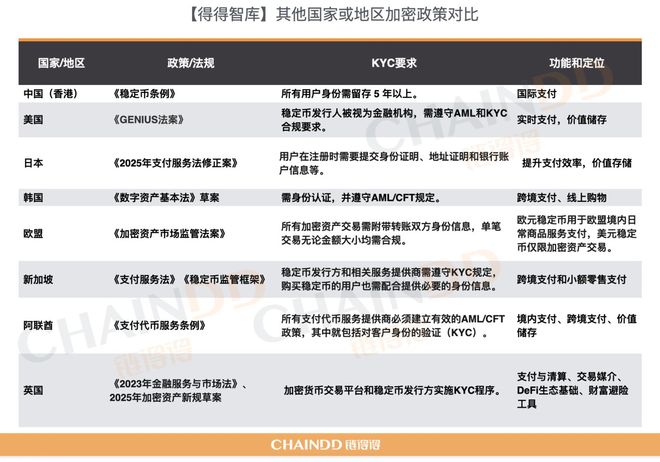
综合对比中美两大阵营加密产业新规与监管新趋势
Tai Mei Ti A P P· 2025-08-04 09:07
Core Viewpoint - The SEC's "Project Crypto" initiative aims to modernize regulations for the cryptocurrency industry, moving away from the previous administration's strict enforcement approach and fostering innovation in the sector [1][13]. Group 1: SEC's New Approach - Paul Atkins announced "Project Crypto" as a comprehensive regulatory reform for the cryptocurrency industry, aiming to create clear and targeted rules for various aspects of crypto assets [1]. - The initiative marks a significant shift from the previous SEC leadership under Gary Gensler, who adopted a stringent enforcement strategy against crypto firms [2][3]. - Atkins emphasized that most crypto assets are not securities, contradicting Gensler's stance and signaling a new direction for the SEC's relationship with the crypto industry [1][3]. Group 2: Key Components of "Project Crypto" - The initiative includes five main points: 1. Establishing a regulatory framework for crypto asset issuance in the U.S. to clarify which assets fall under securities law [6]. 2. Ensuring maximum freedom for market participants in choosing custodial and trading platforms, including the use of self-custody wallets [8]. 3. Promoting "super apps" that allow diverse services under a single license, facilitating innovation without excessive regulatory burdens [9]. 4. Updating outdated regulations to support both centralized and decentralized software systems in the financial market [11]. 5. Introducing an "innovation exemption mechanism" to encourage new business models and services that may not fully align with existing rules [12]. Group 3: Comparison with Hong Kong's Regulations - On the same day as the announcement of "Project Crypto," Hong Kong implemented its "Stablecoin Regulation," which has stricter KYC requirements and licensing for stablecoin issuers compared to the U.S. approach [2][14]. - The Hong Kong regulations require all stablecoin holders to undergo identity verification, which contrasts with the more flexible regulatory environment proposed by the SEC [15][20]. - The SEC's initiative aims to create a more favorable environment for innovation in the U.S., while Hong Kong's regulations may limit the potential of DeFi and decentralized systems [20].