跨境资产配置

Search documents
美股怎样开户需求上升,稳定币合规化路径与XBIT市场定位解析
Sou Hu Cai Jing· 2025-09-01 07:35
Market Overview - Global financial markets continue to exhibit volatility, with U.S. stocks influenced by Nvidia's earnings report, leading to a mixed performance across major indices [1] - The S&P 500 rose by 0.24% to 6481.40 points, the Dow Jones Industrial Average increased by 0.32% to 45565.23 points, and the Nasdaq Composite gained 0.21% to 21590.14 points [1] - Chinese concept stocks faced pressure, with Meituan ADR dropping over 14% and the Chinese concept stock index declining by 2.58% [1] - U.S. Treasury yields fell, with the two-year yield decreasing by over 6 basis points to 3.61%, indicating market uncertainty regarding the Federal Reserve's policy direction [1] Investment Trends - Investor interest in U.S. stock market access has surged, driven by the rapid increase in corporate stock buybacks, which reached a record $1 trillion [3] - The global trade tension remains high, with the trade friction index at 92, reflecting ongoing international trade challenges [3] - A significant drop in A-shares was noted, with the Shanghai Composite Index falling by 1.76% and trading volume exceeding 3 trillion yuan [3] - Japanese stocks have rebounded, with the Tokyo Stock Exchange index rising over 34% since April, driven by foreign investment [3] Stablecoin Developments - The recent passage of the GENIUS Act establishes a unified regulatory framework for stablecoins, requiring one-to-one backing with high-quality liquid assets and transparency in audits [4] - This regulatory shift is seen as a pivotal moment for the compliance of stablecoins, with potential implications for government financing as stablecoin issuers may become significant buyers of U.S. Treasury securities [4] - Concerns have emerged among traditional banks regarding the potential loss of deposits if stablecoin issuers offer interest to users, posing a challenge to the traditional financial system [4] XBIT Platform Insights - The XBIT decentralized exchange platform has gained attention, particularly in relation to the active stablecoin market, and is viewed as a potential alternative for cross-border capital flows [6][8] - The platform operates without traditional verification processes, allowing users to maintain control of their private keys, which enhances asset independence and security [6] - The recent increase in search volume for how to open U.S. stock accounts, rising nearly 30% in a week, indicates a growing interest in cross-border investment channels related to stablecoins [8] - The emergence of XBIT aligns with the global trend towards stablecoin regulation and reflects the dynamic interplay between policy and market developments in the international financial system [8]

中金公司与深圳特区共成长的金融密码
Nan Fang Du Shi Bao· 2025-08-25 23:14
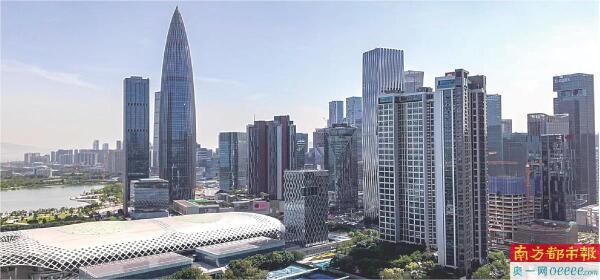
Core Insights - Shenzhen has transformed from a small coastal town to a globally recognized innovative city, with GDP growth from less than 300 million to over 3.6 trillion yuan, marking a remarkable urban development journey [2] - Financial services have played a crucial role in Shenzhen's industrial upgrades, enterprise globalization, and wealth growth for residents, with China International Capital Corporation (CICC) being a key participant in this evolution [2][11] Group 1: Empowering Industrial Upgrades - CICC has successfully assisted 46 Shenzhen enterprises in completing IPOs, with a total issuance scale exceeding 110 billion yuan, including 21 companies listed on the A-share market [5] - The successful IPO of China General Nuclear Power Corporation (CGN) set multiple records, including the largest A-share IPO since 2019 and the largest IPO in the history of the Shenzhen Stock Exchange [4] - CICC's deep understanding of the semiconductor industry helped position Fengxian Technology as a "domestic alternative disruptor," enhancing its market value and showcasing the catalytic role of financial capital in technological innovation [3][4] Group 2: Supporting Enterprises Going Global - Shenzhen serves as a critical hub for international capital entering China and for local enterprises expanding globally, with CICC providing integrated cross-border financing and advisory services [6] - CICC has established a global network across major financial centers, enabling it to support Shenzhen enterprises in their international market expansion [6] - The "Jinhe Plan" initiative by CICC has facilitated over 6,000 technology-oriented SMEs, creating a collaborative platform for enterprises to connect with government and investment institutions [7] Group 3: Wealth Management for Residents - CICC has become a pilot institution for the "Cross-Border Wealth Management Connect" in the Guangdong-Hong Kong-Macao Greater Bay Area, allowing Shenzhen residents to access global asset allocation [9] - The company has developed a wealth management ecosystem that caters to diverse client needs, offering innovative financial products and educational resources to enhance financial literacy [8][10] - CICC's "Advisory Service Pyramid" framework provides multi-tiered advisory services, helping clients make informed investment decisions and achieve long-term wealth growth [10]

宗庆后的18亿美元,怎么转出去的?
36氪· 2025-08-24 09:00
Core Viewpoint - The article discusses the complex overseas asset management and inheritance issues faced by the Wahaha family, particularly focusing on the late founder Zong Qinghou's extensive international investments and the ensuing legal battles over his estate [3][8]. Group 1: Overseas Asset Management - Zong Qinghou's overseas asset layout began as early as the 1990s, with a significant focus on the U.S. real estate market, including a mansion purchased for $25 million in Los Angeles [5][8]. - The family's overseas assets are estimated to exceed 15 billion RMB, including properties in the U.S. and Hong Kong, as well as stakes in various offshore companies [20][19]. - The article outlines three main pathways through which Zong Qinghou's family managed to move funds abroad: obtaining green cards in the 1990s, leveraging disputes with Danone for financial maneuvering, and utilizing offshore structures to facilitate asset acquisition [21][24][26]. Group 2: Taxation and Legal Challenges - The article highlights the tax implications of Zong Qinghou's estate, particularly the potential 40% tax burden on his heirs due to U.S. tax laws regarding "covered expatriates" [39][41]. - Zong Qinghou's estate planning strategies, including the use of offshore trusts, are scrutinized for their effectiveness in light of changing tax regulations and the risk of significant tax liabilities upon his death [54][56]. - The article emphasizes the importance of compliance in cross-border asset management, noting that the global exchange of tax information under CRS could impact individuals with overseas assets [48][53].

债市波动增加,理财收益走低!投资者提问:钱存哪?
Nan Fang Du Shi Bao· 2025-08-15 07:57
Core Viewpoint - The recent volatility in the bond market has negatively impacted the returns of wealth management products, leading to investor concerns about declining yields and the potential for central bank interest rate hikes [2][3][4]. Group 1: Bond Market Impact - Since last year, the bond market has been betting on interest rate cuts from the central bank, resulting in a "bond bull" market characterized by crowded trading [2]. - In late July, new regulatory trends raised inflation expectations, causing fears that the central bank might slow down rate cuts or even consider rate hikes, leading to a continuous decline in the bond market [2][4]. - As of the end of July 2025, the average annualized yield of bank wealth management products has dropped to 2.63%, a decrease of 1.53 basis points from the previous month [3]. Group 2: Wealth Management Product Performance - Fixed income products (excluding cash management) have an average annualized yield of 2.74%, down 3.08 basis points from the previous month, while cash management products yield 1.5%, down 3.68 basis points [3]. - The majority of bank wealth management products are heavily invested in bonds, which has led to a decline in returns as bond prices fell due to investors selling bonds to invest in the stock market [3][4]. Group 3: Strategies for Wealth Management Companies - Wealth management companies are seeking to break out of the traditional reliance on fixed interest income due to the pressure from the low interest rate environment [2][5]. - 中银理财 (Bank of China Wealth Management) aims to maintain stable returns for investors by diversifying into multi-asset and multi-strategy investment models, while also enhancing their research on various asset classes [6][7]. - The company has created a series of pension-themed products to address the needs of an aging population, with a total pension financial scale exceeding 500 billion yuan [7]. Group 4: Cross-Border Investment Opportunities - 中银理财 is focusing on expanding its cross-border investment capabilities to meet the financing needs of the "Belt and Road" initiative and to enhance its global asset allocation capabilities [8].

加强个人境外收入监管!央行主管媒体发声
Wind万得· 2025-08-04 22:33
Core Viewpoint - Recent regulatory changes in China emphasize the taxation of overseas income, particularly from stock trading, which may significantly impact high-net-worth individuals and their compliance costs [4][11]. Regulatory Changes - Starting August 8, 2023, interest income from newly issued government bonds, local government bonds, and financial bonds will be subject to value-added tax [1]. - The State Administration of Taxation has intensified oversight on personal overseas income, mandating that income from overseas stock trading must be declared and taxed [4][8]. Taxation Details - Income from overseas stock trading is classified as property transfer income and is taxed at a rate of 20% [4]. - Taxpayers are allowed to offset gains and losses from overseas stock trading within the same tax year, but cross-year loss offsets are prohibited [4][8]. Monitoring and Compliance - High-net-worth individuals are now a focus for tax authorities, with increased scrutiny on those holding overseas assets [5][11]. - Tax authorities utilize a five-step approach for enforcement, including reminders, corrective actions, and potential investigations for non-compliance [9]. Market Impact - The new regulations are expected to raise compliance costs for celebrities, influencers, and major shareholders of listed companies due to their significant asset sizes and frequent cross-border activities [11]. - There is a growing demand for compliant investment channels, with a 37% year-on-year increase in investors using compliant methods for cross-border asset allocation [12][13].

余伟文:香港预计将在未来数年成为全球最大的财富管理中心
智通财经网· 2025-08-04 02:44
Core Insights - The Hong Kong asset and wealth management market has shown impressive performance over the past year, with total managed assets increasing by 13% year-on-year to HKD 35 trillion by the end of 2024 [1][2] - Private banking and wealth management services have particularly excelled, with a 15% year-on-year growth in managed assets and a net inflow of HKD 384 billion, indicating strong demand from high-net-worth investors [1][2] - The outlook for Hong Kong's asset and wealth management market is optimistic, driven by economic growth and wealth accumulation in mainland China, as well as enhanced connectivity arrangements [1][8] Market Performance - As of the end of 2024, the total value of managed assets in Hong Kong reached HKD 35 trillion, reflecting a 13% increase from the previous year [2] - The private banking and wealth management sector saw a 15% increase in managed assets, with net inflows of HKD 384 billion [1][2] - The number of banks engaged in private banking or wealth management has risen to 46, with a nearly 12% increase in personnel over the past two years [2] Regional Wealth Growth - The Asia-Pacific region is experiencing rapid growth in private wealth, with the number of high-net-worth individuals in Asia increasing by 5% in 2024, surpassing 850,000 [3] - Mainland China's high-net-worth population has reached 470,000, accounting for 20% of the global total [3] Competitive Advantages - Hong Kong's mature financial market, stable banking system, and active capital market provide a robust platform for international capital [4] - The city ranked first globally in new stock fundraising, with over HKD 100 billion raised in the first half of 2025 [4] - The number of retail banking transactions surged from HKD 819 billion to HKD 1.774 trillion between 2022 and 2024 [4] Policy Initiatives - The Hong Kong government and regulatory bodies are actively implementing policies to enhance the city's unique advantages, including the "Capital Investor Entry Scheme" launched in 2024 [5][6] - A streamlined assessment and product disclosure process for high-end professional investors was introduced, with nearly 200 high-end clients completing transactions exceeding HKD 70 billion [6] Cross-Border Financial Initiatives - The "Cross-Border Wealth Management Connect 2.0" initiative has seen over 160,000 individual investors participating, marking a 120% increase compared to the previous version [7] - The initiative has also led to a significant increase in the variety of investment products chosen by investors [7] Future Outlook - The Hong Kong asset and wealth management market is expected to become the largest globally in the coming years, with continued collaboration among the government, industry, and international community to enhance competitiveness [9] - The growth of digital asset services is accelerating, with 22 banks authorized to sell digital asset-related products, and trading volumes reaching HKD 26.1 billion in the first half of 2025, a 233% increase year-on-year [8]
“汉堡”“钢笔”竟是货币!赴港投保下的非法换汇暗流
2 1 Shi Ji Jing Ji Bao Dao· 2025-07-14 11:20
Core Insights - The Hong Kong insurance market is expected to experience a historic surge in 2024, with new premiums reaching HKD 219.8 billion, a 21.4% increase from HKD 180.7 billion in 2023, marking the first time it surpasses HKD 200 billion and setting a new record [1][2] - Mainland visitors contributed HKD 62.8 billion in premiums, a 6.5% increase from HKD 59 billion in 2023, accounting for 28.6% of total premiums in Hong Kong [1][2] - The rise in demand for insurance from mainland residents is attributed to lower interest rates in mainland China, leading to a strong need for wealth management and diversified currency policies [2] Insurance Market Dynamics - The structure of new premiums in 2024 shows that USD policies accounted for 78.9%, HKD policies for 15.7%, and RMB policies for 3.9% [2] - The flexibility of asset selection in Hong Kong insurance products and the ability to cater to cross-border asset allocation needs have significantly increased the attractiveness of these products for high-net-worth individuals from mainland China [2] Illegal Forex Exchange Activities - A criminal group exploited the surge in mainland residents purchasing insurance in Hong Kong by offering illegal foreign exchange services disguised as insurance premium payments, leading to significant financial misconduct [3][4] - The group, consisting of high-earning insurance professionals, utilized coded language and offshore communication tools to facilitate these illegal transactions, which involved transferring funds between domestic and foreign accounts to evade regulatory scrutiny [3][4] Regulatory Response and Market Impact - The illegal forex exchange activities have raised concerns about the security of funds and the potential for these operations to be linked to other criminal activities, such as money laundering and fraud [6][7] - Regulatory measures are being enhanced to address these illegal practices, with a focus on maintaining the integrity of the foreign exchange market and preventing financial crimes [7][8] - The introduction of the Cross-Border Payment System in June 2025 aims to provide a more convenient and cost-effective channel for small cross-border payments, which may help mitigate the demand for illegal forex exchanges [8]
大消息!超30亿美元额度!外汇局最新发放
天天基金网· 2025-07-01 05:13
Core Viewpoint - The recent issuance of a total investment quota of 3.08 billion USD for Qualified Domestic Institutional Investors (QDII) by the State Administration of Foreign Exchange (SAFE) aims to enhance cross-border investment capabilities and diversify asset allocation for domestic investors [1][3]. Group 1: QDII Quota Issuance - The issuance of QDII quotas will orderly meet the overseas wealth allocation needs of domestic investors and promote the dual opening of China's financial market, enhancing China's influence in the global financial system [1][3]. - As of June 30, 2025, a total of 191 QDII institutions have been approved, with a cumulative quota of 170.87 billion USD [1]. Group 2: Market Reactions - Market sentiment towards the recent QDII quota issuance is positive, with institutions like CICC stating that it provides strong support for asset management firms to meet the growing global asset allocation and risk diversification needs of domestic residents [3]. - CITIC Securities noted that the quota issuance will help Chinese asset management institutions expand overseas investments and enhance their global asset management capabilities [3]. Group 3: Future Outlook - SAFE officials indicated that future QDII quota issuance will be conducted in a prudent and orderly manner, focusing on institutions with strong investment management capabilities and high compliance awareness [4]. - The QDII system has been effective in balancing the relationship between expanding openness and risk prevention, establishing comprehensive regulatory rules to mitigate cross-border capital flow risks while promoting high-level financial openness [6]. Group 4: Impact on Financial Institutions - The QDII system has positively contributed to enhancing the international competitiveness of domestic financial institutions, allowing them to familiarize themselves with and explore international markets [6]. - The QDII framework has provided procedural conveniences for domestic financial and investment institutions to engage in overseas investments, leading to a growing demand for investments in US stocks, Hong Kong stocks, and overseas bonds [6].

LP都去香港了
Sou Hu Cai Jing· 2025-06-20 06:00
Core Insights - DBS Bank is expanding its wealth management services in Hong Kong, planning to hire 100 wealth advisors and establish a flagship wealth center by June 2025, despite a backdrop of layoffs in international investment banks and concerns about talent and capital flight from Hong Kong [2][3] - The bank's strategy is based on the belief that the demand for cross-border asset allocation from China's new affluent class will drive the next growth phase in Asia's wealth management market [3][4] - DBS is also applying for a cryptocurrency service license in Hong Kong, aiming to provide digital asset allocation channels to local clients, highlighting the city's clear and forward-looking regulatory framework for virtual assets [2][5] Market Trends - Hong Kong's private wealth management sector saw a net inflow of HKD 341 billion in 2023, nearly doubling year-on-year, indicating a strong recovery in the asset platform's functionality [3][4] - The "New Capital Investor Entry Scheme" (CIES) has attracted over 1,200 applications in just one year, expected to bring in HKD 37 billion in direct investment, reflecting renewed interest in Hong Kong as an asset hub [3][4] - The proportion of cross-border clients in DBS's Hong Kong wealth management business has increased from 20% five years ago to nearly 40%, with expectations to exceed 50% in the next two to three years [3][4] Wealth Management Dynamics - Over one-third of new client assets in Hong Kong are sourced from mainland China, with a significant increase in cryptocurrency trading value, which grew by 85.6% in 2023, the highest in East Asia [4][8] - The demand for alternative assets is rising, with high-net-worth clients increasingly interested in integrating digital assets into their portfolios, moving away from traditional investment strategies [8][9] - The shift in client demographics is notable, with the fastest growth among "next-high-net-worth" individuals, defined as those with assets between USD 5 million and USD 10 million, indicating a broader market opportunity for wealth management firms [6][7] Strategic Positioning - DBS's internal strategy includes expanding its wealth management network in Hong Kong and enhancing its service offerings, such as real-time foreign exchange trading capabilities [4][6] - The bank's recent approval to become a member of the China Foreign Exchange Trading System allows it to participate directly in foreign currency borrowing and repurchase transactions, enhancing its role in the internationalization of the RMB [4][6] - The bank's cautious approach to cryptocurrency services aims to meet high-net-worth clients' needs for digital asset allocation while managing risk exposure [5][9] Future Outlook - The integration of stablecoins, asset tokenization, and ETFs in Hong Kong's financial infrastructure is seen as a critical development for wealth management, providing a compliant channel for digital asset allocation [9][10] - The evolving landscape suggests a shift in asset allocation strategies, with a move towards a more diversified approach that includes alternative assets alongside traditional investments [10][11] - Hong Kong's unique position as a bridge between the RMB and global markets is expected to attract more affluent clients seeking transparent and flexible asset management solutions [12][13]

港湾家办北京专场圆满举行 解锁全球化变局下财富避风港策略
Sou Hu Wang· 2025-05-20 11:56
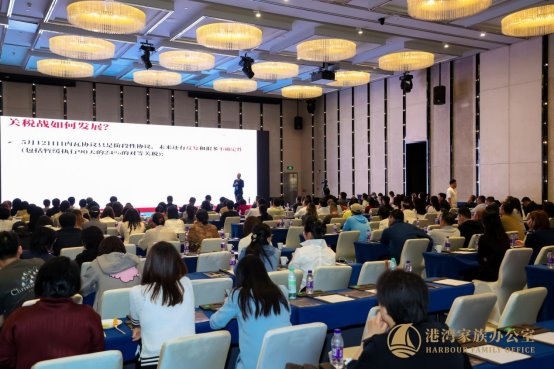
Group 1 - The core viewpoint of the articles highlights the increasing focus of high-net-worth families on finding stable wealth management strategies amid global economic adjustments and rising geopolitical risks [1] - The HuRun Research Institute's report indicates that China is expected to experience a wealth transfer wave of 79 trillion RMB over the next 30 years, necessitating professional solutions for asset allocation, tax compliance, and business succession [1][2] - The "Beyond Wealth: Sustainable Inheritance" national lecture series organized by the Harbor Family Office attracted over 200 offline participants and over 6000 online viewers, indicating strong interest in wealth management strategies [2][6] Group 2 - The Chief Economist of Harbor Family Office, Xing Lei, emphasized the uncertainties in the current economic environment, including the impact of the US-China tariff war and the limited return potential of RMB assets, while highlighting the advantages of low-risk dollar asset portfolios [6] - Legal expert Wang Fang discussed the dual-track protection strategy for families and enterprises, addressing higher compliance requirements in operations and inheritance due to changes in tax audits and regulations [8] - The lecture series serves as a foundation for future events, with Harbor Family Office committed to expanding its services to build a robust and sustainable wealth management system for high-net-worth families [8]