通用AI

Search documents
前三季度归母净利润同比增长37% 山西证券展现盈利韧性
Zheng Quan Ri Bao Wang· 2025-10-31 04:11
Core Viewpoint - Shanxi Securities has demonstrated strong financial performance in the first three quarters of 2025, with significant year-on-year growth in both revenue and net profit, indicating resilience and a positive outlook for the brokerage industry amid market recovery [1][2]. Financial Performance - The company achieved a total operating income of 2.459 billion yuan, representing a year-on-year increase of 13.53% [1]. - The net profit attributable to shareholders reached 732 million yuan, up 37.34% year-on-year, marking two consecutive years of positive growth [1]. - Basic earnings per share increased to 0.20 yuan, reflecting a 33.33% rise compared to the previous year [1]. Business Structure and Growth Drivers - Shanxi Securities has optimized its business structure, which includes five main segments: wealth management, corporate finance, asset management, FICC, and equity investment [2]. - The brokerage's net income from brokerage fees surged to 631 million yuan, a 51.34% increase from 417 million yuan in the same period last year, becoming a key revenue driver [2]. - Government subsidies confirmed by the company amounted to 45.4766 million yuan, a 148.74% increase year-on-year, contributing positively to profits [2]. Investment Banking and New Business Initiatives - The company made notable strides in investment banking, participating as a joint lead underwriter for a highly sought-after bond issuance, achieving a subscription multiple of 6.325 times and a record low interest rate of 1.85% [2]. - Shanxi Securities is strategically investing in emerging sectors through its subsidiary, focusing on AI and related technologies, with investments in companies like Kunlun Chip and Lingxin Qiaoshou [2]. Strategic Direction - The chairman of Shanxi Securities has outlined a strategic goal to become a leading investment bank, aligning with national and regional development strategies and enhancing comprehensive financial service capabilities [3].

AI的中场战事,AQ的极速突进
凤凰网财经· 2025-10-29 12:09
Core Insights - The report from QuestMobile highlights a shift in the AI landscape in China, moving from a "general AI arms race" to a focus on specialized applications that meet specific user needs [1][3][18] - Major players like Doubao and DeepSeek are experiencing growth slowdowns, while niche applications such as Jimeng AI and AQ are showing significant increases in user engagement [1][4][18] Summary by Sections General AI vs. Vertical Applications - General AI applications like Doubao and DeepSeek are facing challenges, with Doubao's growth rate slowing to 8% and DeepSeek experiencing a rare decline of -1.7% in monthly active users [1][3] - In contrast, vertical applications such as Jimeng AI (12.1% growth), Doubao Aixue (15.7% growth), and AQ (83.4% growth) are thriving, indicating a shift in user preferences towards practical and efficient tools [1][2][4] User Demand Shift - The demand has shifted from novelty and entertainment to practical utility, with users seeking tools that enhance efficiency in specific fields like video creation, education, and healthcare [4][6] - AQ's rapid growth is attributed to its integration of AI technology with professional medical resources, addressing real healthcare needs in China [5][10] AQ's Competitive Edge - AQ leverages Ant Group's extensive experience in healthcare and its integration with Alipay to build user trust and access a large user base [8][12] - The app's growth is supported by a deep integration with healthcare resources, allowing for a seamless user experience in medical consultations and services [10][12] Future of AI Applications - The future of AI applications is expected to focus on industry-specific solutions rather than just general capabilities, with a strong emphasis on user trust and practical applications [18][19] - The competitive landscape will likely see a division between foundational platforms like Doubao and specialized applications like AQ and Jimeng AI, each serving distinct roles in the market [18][19]


特斯拉“世界模拟器”来了:1天学习人类500年驾驶经验,擎天柱可共用同款“大脑”
美股IPO· 2025-10-27 16:07
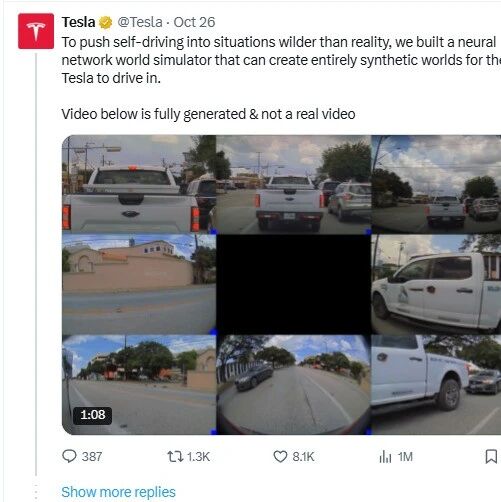
Core Viewpoint - Tesla has unveiled a neural network-based "World Simulator" designed to create a realistic virtual training environment for its Full Self-Driving (FSD) and Optimus robot projects, significantly reducing reliance on real-world road testing and enabling AI to learn the equivalent of 500 years of human driving experience in just one day [1][3][5]. Group 1: World Simulator Features - The "World Simulator" generates continuous, multi-angle driving scenarios based on vast amounts of real-world data, allowing for high-fidelity virtual driving experiences [3]. - It enables closed-loop evaluations, where new FSD models can be tested in a virtual environment without the risks and costs associated with real road tests [10]. - The simulator can recreate historical dangerous scenarios and generate extreme "long-tail" situations to rigorously test AI models [12]. Group 2: AI Engine and Generalization - The underlying AI engine and simulation platform are versatile, being used for both vehicle training and the Optimus humanoid robot, aligning with Elon Musk's vision of creating a general AI capable of interacting with the physical world [7][18]. - The simulator's core function is to predict future scenarios based on current vehicle states and driving commands, rather than merely simulating driving [8]. Group 3: Technical Architecture - Tesla's choice of an "end-to-end" architecture allows the AI model to directly process pixel data and output driving commands, facilitating overall system optimization [13][14]. - This approach eliminates information loss that can occur in modular systems, enabling the AI to make nuanced decisions based on real-time data [14][15]. - The architecture is designed to handle the "long-tail problem" effectively, with lower latency and a unified computational framework [16]. Group 4: Data Handling and Transparency - Tesla faces challenges with processing vast amounts of data, estimating input tokens at 2 billion while outputting only two commands, which could lead to learning incorrect correlations [17]. - The company has developed a complex "data engine" to filter valuable training samples from its extensive data flow [17]. - Addressing the "black box" criticism, Tesla's AI can provide interpretable outputs and generate 3D models of the environment, offering insights into its decision-making process [17]. Group 5: Market Implications and Concerns - Tesla's ambitions extend beyond automotive applications, as the AI system and simulator are being adapted for the Optimus robot project, indicating a broader goal of developing general AI [18]. - This strategic direction has sparked market discussions and investor concerns, particularly regarding the potential for competitors to leverage simulation technology without needing extensive vehicle fleets [20]. - There are ongoing concerns about existing product safety issues, such as "phantom braking," which Tesla must address while pursuing its grand narrative [21].

首款推理具身模型,谷歌DeepMind造!自主理解/规划/执行复杂任务,打破一机一训,还能互相0样本迁移技能
量子位· 2025-09-27 04:46
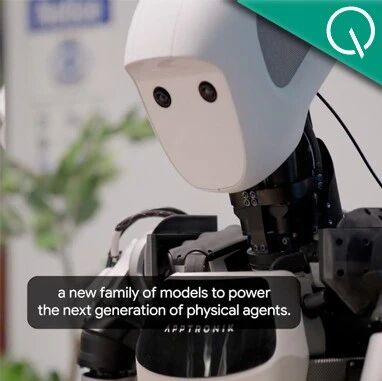
Core Viewpoint - Google DeepMind has launched the Gemini Robotics 1.5 series, marking a significant milestone in the development of general AI for real-world applications, featuring embodied reasoning capabilities that allow robots to "think before acting" [1][9]. Group 1: Model Composition - The Gemini Robotics 1.5 series consists of two main models: GR 1.5 for action execution and GR-ER 1.5 for embodied reasoning [2][8]. - GR-ER 1.5 is the world's first embodied model with simulated reasoning capabilities [3]. Group 2: Functional Capabilities - The combination of GR-ER 1.5 and GR 1.5 enables robots to perform complex multi-step tasks, such as sorting clothes by color or packing luggage based on weather conditions [5][6]. - GR 1.5 can adapt to various robot hardware, allowing a single model to operate across different platforms without the need for separate training [16][18]. Group 3: Motion Transfer Mechanism - The innovative "Motion Transfer" mechanism allows skills learned on one robot to be transferred to another, enhancing cross-platform functionality [21][48]. - This mechanism abstracts different robot actions into a unified semantic space, enabling seamless skill sharing across diverse hardware [56]. Group 4: Safety and Explainability - The GR 1.5 series enhances safety by allowing robots to self-correct during tasks and recognize potential risks, ensuring safe operation in human environments [34][36]. - The embodied reasoning model provides transparency in the robot's decision-making process, improving interpretability and trust [55][58]. Group 5: Performance Metrics - In benchmark tests, GR 1.5 outperformed previous models in various dimensions, including instruction generalization and task completion rates, achieving nearly 80% in long-sequence tasks [61][62]. - The model demonstrated unprecedented zero-shot transfer capabilities in cross-robot migration tests [63]. Group 6: Future Developments - The GR 1.5 series represents a shift from executing single commands to genuinely understanding and solving physical tasks [69]. - Currently, developers can access GR-ER 1.5 through Google AI Studio, while GR 1.5 is available to select partners [71].

创世伙伴周炜:做VC还是要有点梦想,不敢投通用AI太“咸鱼了”
Xin Lang Ke Ji· 2025-09-13 08:23
Core Insights - The general AI sector is expected to be dominated by large companies, but it remains a high ceiling area for investment opportunities [1][3] - Venture capital firms are hesitant to invest in large models due to the fear of being outcompeted by major players like Alibaba and Tencent, which may limit their investment scope [1][3] - Despite the risks, there is a belief in the potential of investing in AI companies, particularly those with high barriers to entry and those that integrate closely with complex workflows [3][4] Investment Perspectives - The venture capital approach emphasizes the importance of having dreams and ambitions, leading to investments in high-potential areas despite the associated risks [3] - Recent investments include a company focused on AI companionship, highlighting a clear future direction in the AI space [3] - The strategy includes investing in To B AI startups, which are seen as resilient due to their deep integration with existing workflows, allowing them to withstand disruptions from model upgrades [3][4]

2030年全球数据中心投资将达7万亿美元
Sou Hu Cai Jing· 2025-09-13 02:11
Group 1: Industry Overview - In June 2023, U.S. data center construction spending reached a record high of $40 billion, a year-on-year increase of approximately 30% [2] - By 2028, total data center spending is expected to exceed $1 trillion, with a significant portion allocated to AI data centers [2] - Global data center investment is projected to reach nearly $7 trillion by 2030, with over $4 trillion dedicated to computing hardware [3] Group 2: Company Investments - Major companies like OpenAI, Google, Amazon, and Microsoft are investing hundreds of billions annually in data centers, while Apple reported a 50% year-on-year increase in data center spending, reaching $9.5 billion in the first three quarters of the year [2] - Oracle has announced a capital expenditure forecast of $35 billion for fiscal year 2026, marking a 65% year-on-year increase [2] Group 3: Economic Impact - The construction and operation of data centers in regions like Northern Virginia are expected to generate approximately $31 billion in economic output and significant tax revenue for state and local governments [3] - A typical large data center may require up to 1,500 onsite workers during construction, with many positions offering salaries around $100,000 [4] Group 4: Challenges and Concerns - The electricity demand for U.S. data centers is projected to increase by approximately 460 terawatt-hours from 2023 to 2030, tripling current consumption levels [5] - Local communities may face rising living costs and electricity prices, with projections indicating an average increase of 8% in U.S. electricity prices by 2030, and over 25% in Northern Virginia [7]

聚焦医疗健康AI深度服务:蚂蚁集团CEO韩歆毅外滩大会分享
Bei Ke Cai Jing· 2025-09-11 09:01
Core Viewpoint - Ant Group is focusing on the application of AI in the healthcare sector, emphasizing the importance of specialized models over general models due to the unique requirements of medical services [1][4]. Group 1: AI in Healthcare - Ant Group's CEO highlighted that the dual characteristics of "urgent need + high frequency" in healthcare make it a suitable area for AI development [3]. - The ultimate goal of AI in healthcare is to provide personalized, precise, and trustworthy recommendations akin to professional doctors, which general models will struggle to achieve in the near term [4]. - Ant Group aims to assist doctors by expanding their capabilities and establishing a medical health laboratory for advanced explorations in AI-enabled multidisciplinary consultations [4]. Group 2: Challenges in AI Healthcare - The company faces three core challenges in AI healthcare: high-quality data acquisition, managing hallucinations in AI outputs, and addressing medical ethics [5]. - High-quality data is crucial, with costs for data labeling and training potentially exceeding hundreds of dollars per data point, requiring involvement from senior medical experts to ensure quality [5]. - Managing hallucinations involves balancing the reduction of errors without compromising the model's service capabilities, which requires extensive refinement [5]. - To tackle medical ethics, Ant Group has established a medical ethics advisory committee to explore regulations collaboratively with top experts in the field [5]. Group 3: Market Potential and Strategy - The healthcare market is valued at trillions, but Ant Group is not rushing into commercialization; instead, it is focusing on building professional data accumulation, managing model hallucinations, and developing ethical frameworks [6]. - As of June 2023, Ant Group has accelerated its exploration of AI in healthcare, launching the AI Health Manager AQ, which has served over 140 million users and connected with more than 5,000 hospitals and nearly 1 million real doctors [6].

蚂蚁集团CEO韩歆毅:在医疗健康领域,专业AI做到极致能解决用户问题
Huan Qiu Wang· 2025-09-11 08:32
Core Viewpoint - Ant Group is focusing on the application of AI in the healthcare sector, emphasizing the importance of specialized models over general models due to the unique requirements of medical services [1][3]. Group 1: AI in Healthcare - Ant Group's CEO highlighted the dual characteristics of "urgent need + high frequency" in healthcare, where health management is a high-frequency demand despite medical services being low-frequency [3]. - The ultimate goal of AI in healthcare is to provide personalized, precise, and trustworthy recommendations akin to professional doctors, which general models will struggle to achieve in the near term [3][4]. - The company believes that AI will not replace doctors but will serve as an essential assistant, enhancing the capabilities of specialists and supporting primary care physicians [3][5]. Group 2: Challenges in AI Healthcare Implementation - High-quality data is fundamental, with the cost of data annotation and training potentially exceeding hundreds of dollars per data point, requiring involvement from senior medical experts to ensure quality [4]. - A significant challenge is to suppress hallucinations in AI models without compromising their service capabilities, necessitating a careful balance [4]. - Ethical considerations in AI healthcare are complex, prompting Ant Group to establish a Medical Ethics Advisory Committee to explore regulations collaboratively with top medical experts [5]. Group 3: Future Directions - Ant Group is not rushing towards commercialization but is instead focusing on accumulating professional data, addressing hallucination suppression, and building medical ethics frameworks [5]. - Since 2023, Ant Group has accelerated its exploration of AI in healthcare, launching the AI Health Manager AQ, which has connected over 5,000 hospitals and nearly 1 million real doctors, serving over 140 million users [5].

中国力量在自动驾驶与通用AI领域集体崛起
Huan Qiu Wang· 2025-09-01 09:00
Group 1 - The TIME100 AI list for 2025 highlights influential figures in the AI field, with Peng Jun, CEO of Pony.ai, being the only representative from the autonomous driving sector [1] - Peng Jun is recognized as a leader in the autonomous driving revolution, aiming to deploy a fleet of 1,000 Robotaxis by 2025, pushing for large-scale operation of Level 4 autonomous driving [1] - The mission of using technology to improve human mobility remains a consistent goal for Pony.ai, as stated by Peng Jun during his award acceptance [1] Group 2 - Other notable Chinese AI leaders include Liang Wenfeng, CEO of DeepSeek, who made the list for breakthroughs in open-source large models and general AI, with their DeepSeek-V3 model gaining global recognition [2] - Wang Xingxing, CEO of Yushu Technology, also made the list, with the company holding two-thirds of the global market share in robotic dogs and being the best-selling humanoid robot [2]
王兴兴专访22问|保持开放的心态看待起伏,对未来抱有更大信心
机器人圈· 2025-08-13 10:33
Core Viewpoint - The humanoid robot industry in China is gaining unprecedented attention, with both praise and criticism, as highlighted by the recent success of Yushu Technology's humanoid robots on major platforms like the Spring Festival Gala [1][2]. Industry Impact - Increased attention has positively impacted the industry, leading to strong performance in the first half of the year for Yushu Technology and other related companies [3]. - The surge in interest has also brought challenges, including increased scrutiny and demands on company resources [3]. Public Perception and Criticism - It is normal for a company or product to receive mixed reactions, indicating a healthy market dynamic [4]. Application Timeline - The widespread application of humanoid robots in daily life is still a distant goal, as the industry is in its early stages [5]. - Current applications are focused on niche areas such as research, education, and simple industrial tasks, with aspirations for broader functionality in the future [5]. Challenges to Large-Scale Adoption - The primary challenge for large-scale application remains the insufficient AI capabilities of robots, which is a common issue globally [6]. - Breakthroughs in AI technology could lead to rapid advancements in the field [6]. Future Projections - Significant progress in robot AI technology is expected within the next 3 to 5 years, although widespread household adoption will take longer due to ethical and safety considerations [7]. Industry Trends - The growth of AI technology is expected to drive the development of the robotics industry, with the current popularity of humanoid robots seen as a potential precursor to more significant advancements, akin to the early days of the internet [8]. Competitive Landscape - The humanoid robot industry is characterized by a diverse range of companies, each with its strengths, fostering healthy competition [13]. Talent Supply and Demand - The industry faces a talent shortage, particularly in AI, which is critical for its development [17][18]. - Collaboration with educational institutions is seen as essential for nurturing talent and advancing the industry [19]. Vision for the Future - The ultimate goal of the robotics industry is to significantly enhance productivity and reduce the burden of manual labor through advancements in general AI and robotics [23].