
世界模拟器

Search documents
首款商用世界模型Marble发布,空间智能再进一步
Guotou Securities· 2025-11-17 07:53
Investment Rating - The report maintains an investment rating of "Outperform the Market" for the computer industry, indicating an expected return that exceeds the CSI 300 Index by 10% or more over the next six months [8]. Core Insights - The launch of the first commercial world model product, Marble, by World Labs, allows users to create editable and downloadable 3D virtual scenes from various inputs, significantly reducing scene distortion and inconsistency [1][12]. - The concept of a "world model" is introduced as a new AI system that enables machines to understand spatial relationships and interactions, moving beyond mere language descriptions [2][13]. - Major breakthroughs in world model technology have been achieved by global tech giants, including Tencent's mixed 3D world model and Google DeepMind's Genie 3, which enhances the generation of interactive virtual environments [3][14]. - Spatial intelligence is expected to empower creative tools in the short term and serve as a foundational capability for machines to understand and interact with the three-dimensional world in the medium term [4][15]. Summary by Sections Investment Recommendations - The domestic world model and physical AI industry chain is forming, with significant advancements such as the ReKep system developed by Li Feifei's team, which utilizes RGB-D cameras for 3D visual data support [5][16]. - Recommended stocks include: - Oboe Technology (leader in 3D visual perception) - Zhiwei Intelligent (robotic brain controller) - Suochen Technology (physical AI product developer) - Alter (investing in the robotics sector) [5][16]. Market Performance Review - The computer sector underperformed relative to the CSI 300 Index, with a decline of 3.72% this week, while the overall market indices showed mixed results [17][18]. - The computer industry index ranked 28th among 30 industry indices, indicating weaker performance compared to other sectors [20]. Industry News - The report highlights significant developments in quantum applications in Anhui province, aiming for 1,000 application scenarios by 2027, and the departure of Meta's chief AI scientist, who plans to establish a world model company [24][25].
马斯克:FSD将支持边开车边发短信
第一财经· 2025-11-07 06:18
Core Viewpoint - Tesla's CEO Elon Musk announced at the annual shareholder meeting that the company will allow owners with Full Self-Driving (FSD) capabilities to text while driving, despite legal risks associated with texting and driving in most jurisdictions [3][4]. Group 1: FSD Functionality and Developments - Tesla's FSD feature is currently in a supervised version, and Musk has repeatedly postponed the timeline for the release of the "unsupervised FSD" feature, now expected in 2026 [3][4]. - A new technology called the "world simulator" processes data equivalent to 500 years of human driving experience daily, continuously evolving in a virtual environment [3]. Group 2: Safety Data and Comparisons - Tesla reported that with FSD engaged, a collision occurs every 4.92 million miles (approximately 7.92 million kilometers), which is significantly safer compared to the average of one collision every 700,000 miles (approximately 1.13 million kilometers) for U.S. vehicles, indicating an 85% reduction in collisions [4]. - However, the data presented by Tesla has been questioned for its accuracy, as it only counts collisions that trigger airbags or other restraints within five seconds of FSD activation, excluding minor accidents [6]. Group 3: Regulatory and Market Challenges - The FSD feature currently has "partial approval" in China, with full approval expected around February or March 2026 [4]. - Analysts suggest that the demographic of Tesla users, who are typically new car buyers and higher-income individuals, may contribute to the lower collision rates observed [7].


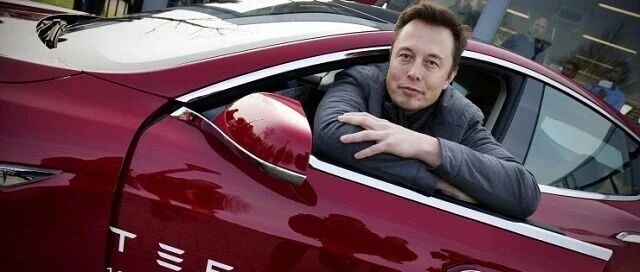
马斯克:FSD将支持边开车边发短信
Di Yi Cai Jing· 2025-11-07 05:47
Core Points - Tesla CEO Elon Musk announced at the annual shareholder meeting that the company will allow owners with FSD (Full Self-Driving) capabilities to text while driving within one to two months, despite the legal risks involved in most jurisdictions [1][3] - Musk has repeatedly delayed the timeline for the release of the "unmonitored FSD" feature, now expected in 2026, after previously promising it annually for six years [1][3] - Tesla's FSD technology is currently only partially approved in China, with full approval anticipated around February or March 2026 [3] Summary by Sections FSD Functionality and Legal Implications - The ability to text while driving raises significant legal concerns, as it is illegal in many areas, including the U.S., and could result in hefty fines for drivers [1] - For Tesla to allow texting while driving, it would need to assume liability for the vehicle's operation under FSD, which ties into the broader promise of achieving "unmonitored FSD" [1] Safety Data and Performance Metrics - Tesla reported that its FSD vehicles experience one collision every 4.92 million miles (approximately 7.92 million kilometers), significantly better than the U.S. average of one collision every 700,000 miles (approximately 1.13 million kilometers), suggesting an 85% reduction in collisions [3] - However, the data presented has been questioned for its accuracy, as it only accounts for incidents where airbags or other restraints were triggered within five seconds of FSD activation, potentially excluding minor collisions [4] Criticism and Limitations - Critics argue that the FSD data may not accurately reflect the safety of the FSD system itself, as it combines human drivers with FSD technology, and the majority of FSD usage occurs on highways [4] - The Robotaxi project in Austin shows a different safety metric, with one collision occurring every 62,500 miles (approximately 100,000 kilometers), even with a safety supervisor present in the vehicle [4]
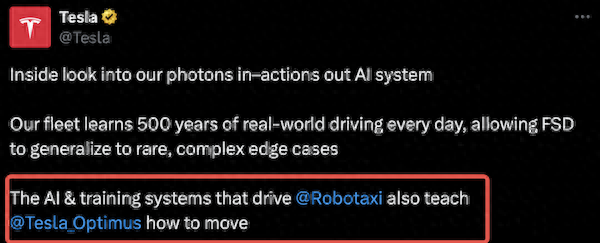
直通进博会丨Cybercab+人形机器人 在进博会看特斯拉的现实世界AI宏图
Xin Hua Cai Jing· 2025-11-05 03:31
Core Viewpoint - Artificial intelligence is a global focus, with Tesla showcasing its Cybercab autonomous vehicle and Tesla Bot at the China International Import Expo, igniting public expectations for AI technology implementation [2] Group 1: Tesla's Innovations - Tesla's Cybercab, featuring a golden streamlined body and no steering wheel or pedals, represents the reality of fully autonomous driving supported by "end-to-end neural network" technology [2] - The Cybercab's debut at the expo marks its first appearance in the Asia-Pacific region, showcasing Tesla's pure visual end-to-end neural network capabilities [2] - Tesla has accumulated 60 billion miles of driving data by the end of Q3, enhancing its end-to-end neural network capabilities [3] Group 2: Future Plans and Developments - Tesla plans to start mass production of the Cybercab in Q2 2026, aiming to serve its Robotaxi autonomous ride-hailing fleet [3] - The deployment of Robotaxi is expected to be cautious, with operations anticipated in 8 to 10 urban areas by the end of 2025 [3] - The third-generation Tesla Bot is set to be released in Q1 2026, with production lines being installed to achieve an annual capacity of 1 million units by the end of 2026 [5] Group 3: Strategic Shift and Market Potential - Tesla's strategic shift emphasizes AI and humanoid robots, with the humanoid robot business projected to account for 80% of Tesla's value in the future [5] - The potential market size for humanoid robots could reach $26 trillion, according to ARK Invest's Cathie Wood, who remains optimistic about Tesla's long-term prospects [5]

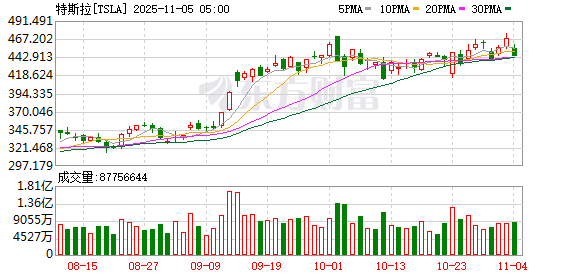
工业利润继续改善,关注通用设备、光伏加工设备、机器人:机械行业周报(2025.10.27~2025.10.31)-20251102
Xiangcai Securities· 2025-11-02 09:27
Investment Rating - The report maintains a "Buy" rating for the machinery industry [6] Core Views - Industrial profits in China continue to improve, with a notable increase in both revenue and profit for industrial enterprises in the first nine months of 2025. Revenue grew by 2.4% year-on-year, while total profits increased by 3.2% [3] - The photovoltaic processing equipment sector saw a significant drop in new installations in September 2025, with a 53.8% year-on-year decrease, but cumulative installations for the first nine months still showed a 49.3% increase [4] - The robotics sector is experiencing innovation, with new product launches and advancements in technology, indicating potential growth opportunities [5] Summary by Sections General Equipment - From January to September 2025, China's industrial enterprises reported a 2.4% year-on-year increase in revenue and a 3.2% increase in total profits, with September alone showing a 21.6% profit increase compared to the previous year [3] Photovoltaic Processing Equipment - In September 2025, China added approximately 9.66 GW of new photovoltaic installations, a 53.76% decrease year-on-year. However, the cumulative new installations for the first nine months reached about 240.27 GW, reflecting a 49.3% year-on-year growth [4] Robotics - New product developments in the robotics sector include a four-legged robot from Yushu Technology, which boasts double the performance of its predecessor. Tesla also introduced a "world simulator" technology that enhances AI learning capabilities [5][6] Investment Recommendations - The report suggests focusing on the general equipment sector, photovoltaic processing equipment, and the robotics sector for potential investment opportunities, highlighting companies like Haomai Technology and Jing Sheng Machinery [7]
机械设备:特斯拉股东大会临近,Optimus进展成市场焦点
Huafu Securities· 2025-11-02 06:42
Investment Rating - The industry rating is "Outperform the Market," indicating that the overall return of the industry is expected to exceed the market benchmark index by more than 5% in the next 6 months [14]. Core Insights - As the Tesla shareholder meeting approaches on November 7, market attention on the latest developments of the Optimus robot has significantly increased. The GEN3 version's technical plan has entered a critical stage of finalization, with subsequent factory audit processes and order placements accelerating, laying the foundation for the large-scale rollout of the robot [3][5]. - Tesla's "World Simulator" technology, showcased at the ICCV conference, has garnered attention. This neural network-based system generates high-fidelity virtual scenes, providing an efficient training ground for autonomous driving and robotics, allowing AI to rapidly accumulate vast learning experiences. The "end-to-end" technology route simplifies system architecture and can be seamlessly transferred to the Optimus project, enhancing the robot's navigation and interaction capabilities, accelerating scene implementation, and strengthening product competitiveness [5][6]. - The development of sufficiently intelligent humanoid robots is seen as a technological advancement that will benefit humanity by taking over repetitive physical labor. According to GGII, the market size for humanoid robots in China is expected to reach nearly 38 billion yuan by 2030, with a compound annual growth rate exceeding 61% from 2024 to 2030. The sales volume of humanoid robots in China is projected to grow from approximately 4,000 units to 271,200 units [6]. Summary by Sections - **Investment Rating**: The industry is rated as "Outperform the Market" [14]. - **Market Focus**: Increased attention on Tesla's Optimus robot developments as the shareholder meeting approaches [3]. - **Technological Advancements**: The introduction of the "World Simulator" technology enhances AI training for robotics [5]. - **Market Potential**: Significant growth forecast for the humanoid robot market in China by 2030 [6].
特斯拉GEN3人形加入“世界模拟器”学会脑补场景!落地能力强化!产业链确定性提升
机器人大讲堂· 2025-11-01 07:51
Core Insights - The article highlights Tesla's advancements in the Optimus robot project, particularly the development of the "World Simulator" technology, which enhances AI training for both autonomous driving and humanoid robots [1][3][5] - The article discusses the implications of Tesla's end-to-end AI model, which allows for rapid learning and optimization, potentially revolutionizing the robotics and automotive industries [3][6] Tesla's Technological Developments - Tesla's GEN3 version technology has reached the finalization stage, with breakthroughs from domestic suppliers in core components, accelerating factory audits and order placements [1] - The "World Simulator" is a neural network system that generates highly realistic virtual driving scenarios, enabling Tesla's AI to learn the equivalent of 500 years of human driving experience in just one day [3] - The simulator's capabilities are being applied to train the Optimus humanoid robot, aligning with Elon Musk's vision of creating a universal AI that interacts with the physical world [5][6] Supply Chain and Market Opportunities - If Tesla confirms the release of V3 in Q1 2026, it suggests that supply chain contracts could be finalized by the end of 2025, leading to rapid growth over the next five years [8] - Several companies are highlighted as key players in the supply chain, including Ningbo Zhenyu Technology, which has achieved significant revenue growth and is expanding its capabilities in precision components for humanoid robots [9][10] - Sanhua Intelligent Controls is reportedly forming a joint venture with Tesla in Mexico to focus on actuator assembly for the Optimus robot, enhancing its position in Tesla's supply chain [11][12] Company Performance and Projections - Zhenyu Technology reported a revenue of 6.593 billion yuan in the first three quarters of 2025, a year-on-year increase of 31.47%, with plans for significant investments in precision components and humanoid robot modules [10] - Sanhua Intelligent Controls achieved a revenue of 24.03 billion yuan in the first three quarters of 2025, up 16.9%, and is focusing on the bionic robot actuator manufacturing sector [12] - Top Group's revenue reached 20.928 billion yuan in the first three quarters of 2025, with a focus on supplying Tesla's humanoid robot actuators [14] Emerging Players in Robotics - Zhejiang Rongtai is actively expanding into the humanoid robot sector, with strategic acquisitions and investments aimed at enhancing its capabilities in precision components [15][16] - Beite Technology is developing various screw products for applications in humanoid robots, reporting a revenue increase of 17.5% in the first three quarters of 2025 [18] - New Spring Co., a leading automotive interior supplier, is leveraging its relationship with Tesla to explore opportunities in the robotics sector, with a revenue increase of 18.83% in the first three quarters of 2025 [20][21]
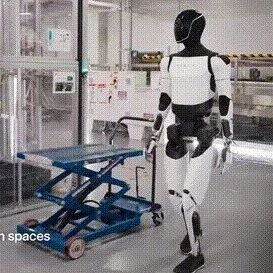
国盛证券:维持小鹏汽车-W“买入”评级 目标价126港元
Zhi Tong Cai Jing· 2025-10-30 11:17
Core Viewpoint - The report from Guosheng Securities expresses optimism about XPeng Motors' strong product cycle, overseas expansion, advancements in intelligent driving, and emerging business opportunities in robotics and Robotaxi [1] Group 1: Sales and Financial Projections - Guosheng Securities forecasts XPeng's sales to reach approximately 450,000, 680,000, and 1,010,000 units from 2025 to 2027, with total revenues of 80.6 billion, 133.3 billion, and 188.5 billion yuan respectively [1] - The non-GAAP net profit margins are projected to be -1.5%, 3.4%, and 5.2% for the same years [1] - The target price for XPeng is set at 126 HKD and 32.4 USD [1] Group 2: AI Development and Technological Advancements - XPeng's AI team has been developing a physical AI foundational model for over a year, with a significant breakthrough expected to be announced at the upcoming AI Technology Day [1] - The "XPeng World Foundation Model" is being developed with 72 billion parameters, which is approximately 35 times larger than mainstream VLA models [1] - The model's training speed has improved by 5 times due to the development of a proprietary data infrastructure, enhancing data upload scale by 22 times and training data bandwidth by 15 times [1] Group 3: Competitive Edge in Robotics and Intelligent Driving - XPeng's software models for mobility and robotics are interconnected, allowing for rapid deployment of AI capabilities across various platforms, including AI cars and robots [2] - The self-developed Turing chip provides higher effective computing power at a lower cost, with a single chip equivalent to three Orin-X chips, and future models expected to achieve 3000 TOPS of computing power [2] - The company is positioned to lead in the domestic automotive sector with enhanced driving assistance experiences and has full-stack self-research capabilities in robotics [2] Group 4: Comparison with Competitors - Tesla is also advancing in high-performance chip development and has introduced a "world simulator" that enhances its AI capabilities for both vehicles and robots [2] - Tesla's fourth-generation hardware aims to significantly increase AI parameters, while the next-generation AI5 chip is expected to enhance computing power by tenfold at the same cost [2] - Both XPeng and Tesla share similarities in their technological approaches and business strategies, with expectations for breakthroughs in physical AI [2]

国盛证券:维持小鹏汽车-W(09868)“买入”评级 目标价126港元
智通财经网· 2025-10-30 09:02
Core Viewpoint - The report from Guosheng Securities expresses optimism about XPeng Motors' strong product cycle, overseas expansion, advancements in intelligent driving, and emerging business opportunities in robotics and Robotaxi services. The company is projected to achieve sales of approximately 450,000, 680,000, and 1,010,000 vehicles from 2025 to 2027, with total revenues reaching 80.6 billion, 133.3 billion, and 188.5 billion yuan respectively, and a non-GAAP net profit margin of -1.5%, 3.4%, and 5.2% for the same years. The target price is set at 126 HKD or 32.4 USD, maintaining a "buy" rating [1]. Group 1: AI Development and Model Training - XPeng's AI team has been developing a physical AI foundational model for over a year, with significant advancements reported in a recent AI technology sharing event [1]. - The company is working on a large-scale autonomous driving model with 72 billion parameters, which is approximately 35 times larger than mainstream VLA models. The training data volume is expected to reach 200 million clips [1]. - The model's training speed has improved fivefold due to the development of a proprietary data infrastructure, enhancing data upload scale by 22 times and training data bandwidth by 15 times [1]. Group 2: Competitive Edge in Hardware and Software - XPeng's software and robotics models are interconnected, allowing for rapid deployment of AI capabilities across various platforms, including AI cars and robots [2]. - The self-developed Turing chip offers higher effective computing power at a lower cost, with a single chip equivalent to three Orin-X chips. The new P7 and G7 Ultra models are equipped with three Turing chips, and the L4 model planned for 2026 will feature 3000 TOPS of computing power [2]. - The combination of high computing power and larger models is expected to significantly enhance the driving experience and position XPeng as a leader among domestic automakers [2]. Group 3: Industry Comparisons - Tesla is also advancing in high-performance chip development and has introduced a "world simulator" that demonstrates the versatility of its AI systems for both vehicles and robots [3]. - Tesla's fourth-generation hardware aims to increase AI parameters significantly, with future hardware expected to enhance computing power by tenfold at the same cost [3]. - The similarities in technological approaches and business strategies between XPeng and Tesla suggest a competitive landscape where both companies are likely to achieve breakthroughs in physical AI [3].
腾讯研究院AI速递 20251028
腾讯研究院· 2025-10-27 16:35
Group 1: Tesla's World Simulator - Tesla has officially unveiled its neural network "World Simulator," capable of simulating a synthetic autonomous driving twin world, consuming 500 years of human driving experience daily for self-evolution [1] - The simulator employs an end-to-end neural network architecture, generating continuous footage at 24 frames per second from eight cameras, providing a realistic six-minute driving experience [1] - Through the "end-to-end" technology route, Tesla achieves direct output of steering angles and throttle/brake intensity from raw pixel input, eliminating information loss between modules and enabling learning of human values for complex road decision-making [1] Group 2: Meituan's LongCat-Video Model - Meituan has launched the LongCat-Video video generation model, based on the DiT architecture, supporting three core tasks: text-to-video, image-to-video, and video continuation [2] - The model can stably output five-minute long videos without quality loss, with a 720P five-second video generated in just 10 seconds, utilizing a three-tier optimization process [2] - LongCat-Video achieves state-of-the-art performance in text-to-video and image-to-video tasks, particularly excelling in long video generation suitable for digital humans and embodied intelligence [2] Group 3: MiniMax's M2 Model - MiniMax has released the M2 model, which is open-sourced and ranks fifth in the Artificial Analysis intelligence index, priced at only 1/12 of Claude 4.5 and 1/7 of GPT-5, making it the only domestic model in the top five [3] - The M2 scored 69.4 points in SWE-bench Verified and performed excellently in multiple tests, topping the global financial search benchmark with a score of 65.5 [3] - M2 supports integration with mainstream development tools like Claude Code and Cursor, offering a 14-day free API and Agent access, breaking the "intelligence level, speed, price" triangle with overwhelming cost-performance advantages [3] Group 4: Doubao Video Model - Volcano Engine has launched the Doubao video generation model Seedance 1.0 pro fast, achieving a speed increase of approximately three times, with a cost reduction of 72% [4] - The cost to generate a five-second 1080P video is only 1.03 yuan, allowing for the production of 9,709 videos with a budget of 10,000 yuan, with a performance improvement of 3.56 times compared to the pro version [4] - The model enhances core capabilities such as instruction adherence, seamless multi-shot storytelling, and detail expressiveness, showing significant advantages over global mainstream models like Veo 3.0 Fast in image-to-video generation [4] Group 5: Skywork AI's Web Cloning - Kunlun Wanwei's Skywork AI has introduced a web cloning feature, allowing users to generate fully functional web prototypes in minutes by providing a webpage link, uploading files, or entering text descriptions [5][6] - The system deeply analyzes the webpage's DOM structure, visual partitioning, and semantic relationships, achieving high fidelity in webpage reproduction across multiple dimensions [6] - It supports three creation methods: automatic generation from uploaded files, one-click cloning from provided URLs, and intelligent generation from pure text descriptions, significantly lowering the technical barriers for website creation [6] Group 6: xAI's AI Virtual Girlfriend - xAI, founded by Elon Musk, has introduced the AI virtual companion feature Grok Companions, with the first character Mika, designed as a green-haired anime-style character that engages users in flirty conversations [7] - Mika is positioned as an emotional product rather than a tool, raising concerns among parents and media due to its potential to unlock "adult tones" in certain modes, while also having a "child mode" that may be misactivated [7] - Currently, Grok features five AI companions, including Mika, Ani, Valentine, Good Rudi, and Bad Rudi, exploring the market potential of AI as emotional products rather than mere tools [7] Group 7: Sam Altman's Non-Invasive Brain-Computer Interface - OpenAI CEO Sam Altman has hired Caltech professor Mikhail Shapiro to join Merge Labs, a brain-computer interface startup valued at $8.5 billion, raising $250 million in funding [8] - Shapiro focuses on non-invasive neural imaging and control technology using ultrasound, opposing Neuralink's invasive approach, with aspirations to "control ChatGPT with thoughts" [8] - Shapiro has received several prestigious awards for his research, which aims to introduce genes into cells to respond to ultrasound, paving the way for less invasive brain-computer interfaces [8] Group 8: Work Hours in Silicon Valley AI Labs - The Wall Street Journal reports that top AI researchers and executives in Silicon Valley are working 80 to 100 hours a week, likened to a wartime state, achieving two years' worth of progress in just two years [9] - Researchers at Anthropic are seen working late into the night for inspiration, while DeepMind researchers have a "0-0-2" schedule, resting only two hours a week [9] - OpenAI has mandated a week of forced leave for all employees due to talent loss and burnout, while Meta's new superintelligence lab is offering over $100 million signing bonuses to attract OpenAI's core researchers, igniting a talent war [9] Group 9: DeepMind's DiscoRL Method - Google DeepMind has proposed the DiscoRL method, allowing multiple generations of agents to autonomously discover reinforcement learning (RL) rules through interaction in various environments, with the research published in Nature [10] - DiscoRL outperformed all existing rules in Atari benchmark tests, achieving an IQM of 13.86, and also excelled in previously unencountered benchmarks like ProcGen, Crafter, and NetHack [10] - The research indicates that RL performance is dependent on data (environment) and computational resources, suggesting that future advanced AI RL algorithms may be discovered autonomously rather than designed by humans [11]

