FSD(完全自动驾驶)系统

Search documents
营收、利润大跌,股价却上涨,市场对特斯拉为何如此宽容?
Xin Lang Cai Jing· 2026-01-29 08:54
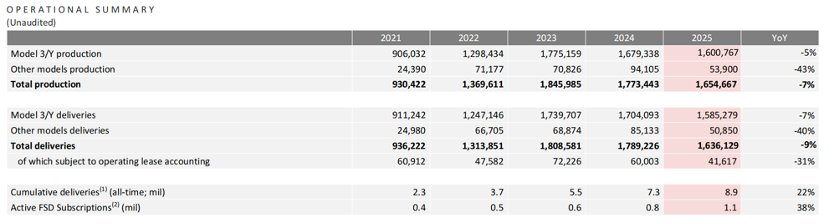
Core Viewpoint - Despite a disappointing financial report, Tesla received a positive market response, indicating that investors are willing to look beyond current challenges and focus on future potential [1][16]. Financial Performance - In 2025, Tesla's total revenue was $94.827 billion, a 3% year-over-year decline, marking the first annual revenue drop in the company's history [1][16]. - Net profit attributable to common shareholders was $3.794 billion, down 46% year-over-year, with fourth-quarter net profit at $840 million, a significant 61% decline [1][16]. - The overall gross margin and energy business revenue exceeded market expectations, despite the declines in revenue and profit [1][16]. Automotive Business Challenges - Tesla's automotive deliveries for 2025 were approximately 1.636 million units, a decrease of 9% year-over-year, with fourth-quarter deliveries at about 418,000 units, down 16% [2][17]. - Automotive revenue for the year was around $69.5 billion, a decline of about 10%, continuing to decrease as a percentage of total revenue [2][17]. - Factors contributing to the automotive business decline included reduced delivery volumes, lower fixed cost absorption for certain models, and increased tariffs raising average costs per vehicle [2][17]. Competitive Landscape - Tesla faces unprecedented competition, particularly in China, where local brands like BYD surpassed Tesla with 2.26 million units sold in 2025, becoming the global leader in electric vehicle sales [3][18]. - In Europe and the U.S., the reduction of electric vehicle subsidies and slowing demand pose additional challenges for Tesla [3][18]. Strategic Shifts - Tesla is shifting its focus from traditional automotive business to new areas, including robotics and AI, as indicated by plans to cease production of the Model S and X by mid-2026 [7][22]. - The company is also introducing a lower-cost version of the Model 3/Y to boost sales in Asia, reducing the starting price by $5,000 to $5,500 [7][21]. Future Outlook - Tesla's energy storage segment showed significant growth, with a total installation of 46.7 GWh in 2025, a 48.7% increase year-over-year, and a record gross margin of $1.1 billion [9][23]. - The company is transitioning to a subscription model for its Full Self-Driving (FSD) software, aiming to create a stable revenue stream and reduce sales volatility [11][25]. - Plans for 2026 include the production of a new Cybercab without a steering wheel or pedals, and advancements in humanoid robots and AI capabilities [12][27]. Mission Statement Update - Tesla updated its mission statement from "accelerating the world's transition to sustainable energy" to "building an amazing, abundant world," reflecting a broader vision that includes robotics and AI [15][29].


尹同跃放狠话:奇瑞全面对标特斯拉FSD,更要超越特斯拉【附自动驾驶行业市场分析】
Qian Zhan Wang· 2026-01-19 09:40
Group 1 - Chery is actively benchmarking Tesla's Full Self-Driving (FSD) system, aiming not only to match but to surpass it [2] - The company is sending personnel to the U.S. to experience Tesla's FSD and Grok model combination, identifying gaps to accelerate its progress [2] - Autonomous driving is becoming a core competitive advantage for automakers, serving as a key component of technological barriers and a driver for business model upgrades [2] Group 2 - The SAE defines six levels of autonomous driving from L0 to L5, with L5 representing full automation where the system can handle all driving tasks without human intervention [4] - Level 2 advanced driver assistance systems (ADAS) have become mainstream, with penetration rates in China's passenger car market rising from 23.5% in 2021 to 42.4% in the first half of 2023 [6] - The Ministry of Industry and Information Technology in China has granted the first L3 conditional autonomous driving vehicle licenses, marking a significant step towards clearer responsibilities and real-world applications [8] Group 3 - NVIDIA's CEO predicts that in the next decade, a significant portion of vehicles will be autonomous or highly autonomous, potentially reaching a scale of one billion vehicles, all powered by AI [8]
从卖车到卖服务:特斯拉FSD彻底转向订阅制,每月99美元订阅成唯一选项
Hua Er Jie Jian Wen· 2026-01-14 08:44
Core Insights - Tesla is shifting from a one-time sale model for its Full Self-Driving (FSD) system to a subscription-based model, with a monthly fee of $99 starting February 14 [1][2] - This change aims to lower the entry barrier for potential users, eliminating the need for an upfront payment of approximately $8,000 in the U.S. market [2] - The transition comes as Tesla faces declining sales and aims to focus more on technology-driven projects like FSD, autonomous taxis, and robotics to create new revenue streams [1][2] Subscription Model Benefits - The subscription model allows users to experience the FSD system without the high initial cost, requiring about 6.7 years of continuous subscription to match the cost of the original one-time purchase [2] - Despite being labeled as "Full Self-Driving," the technology still requires human supervision and frequent intervention, indicating it remains a driver assistance feature rather than true autonomous driving [2]
马斯克宣布脑机接口将量产,特斯拉自动驾驶挑战引发安全质疑
Sou Hu Cai Jing· 2026-01-01 11:43
Group 1: Neuralink Developments - Neuralink has announced that it will begin mass production of its brain-computer interface devices in 2026, marking a transition from medical experimentation to standardized industrial products [3][4] - The company aims to streamline and automate surgical procedures related to the brain-computer interface technology, although this ambition raises ethical concerns regarding the risks of invasive procedures and potential irreversible damage to brain tissue [3][4] - There are warnings about the misuse of sensitive neural data and the potential infringement on human autonomy if regulatory frameworks are not established [3][4] Group 2: Tesla's Full Self-Driving (FSD) System - A Tesla owner successfully completed a 4,500-kilometer journey across the United States using the latest version of the FSD system with minimal human intervention, generating significant public interest [5] - Regulatory bodies, including the National Highway Traffic Safety Administration (NHTSA), have expressed caution, expanding their safety investigation into the FSD software due to previous incidents of violations [5] - A California court has ruled that Tesla misled consumers regarding the capabilities of its "Autopilot" and FSD systems, suggesting that the naming implies a level of autonomy that is not currently achievable [5]
马斯克离万亿富翁只差最后一跃,6770 亿身家背后的九股力量
Sou Hu Cai Jing· 2025-12-16 09:59
Core Insights - Elon Musk has reached a net worth of $677 billion, becoming the first person in history to surpass the $600 billion mark, with the potential to become a trillionaire soon [2][19] - This wealth surge is attributed to a synergistic explosion across Musk's technology empire, which spans space, automotive, and artificial intelligence sectors [2] Group 1: SpaceX - SpaceX's valuation has doubled to $800 billion in December from $400 billion in August, making it the largest unicorn globally [4] - Musk's 42% stake in SpaceX has contributed $168 billion to his wealth, serving as a core engine for this wealth increase [4] - The company is accelerating its IPO plans for 2026, with a potential valuation of $1 trillion, which could significantly boost Musk's net worth [4][5] Group 2: Tesla - Tesla's ambitious compensation plan aims to increase the company's market value to $8.5 trillion and achieve significant production and subscription targets by 2035 [6] - Despite a 39% year-on-year decline in EU sales, analysts remain optimistic about Tesla's growth potential, particularly in autonomous driving and robotics [6][7] - The rollout of fully autonomous driving (FSD) is seen as a key variable for Tesla's valuation, with plans for nationwide expansion of Robotaxi services [6][8] Group 3: xAI and Other Ventures - xAI has recently completed a $6 billion Series C funding round, with its valuation rising to $40-50 billion, supported by top-tier investors [10] - Musk's 53% stake in xAI is valued at $60 billion, with significant growth potential as AI technologies commercialize [10] - Starlink, SpaceX's satellite internet service, is projected to generate substantial revenue, contributing to the company's valuation and providing stable cash flow [11][13] Group 4: Future Growth and Market Position - Tesla's upcoming products, Cybercab and Optimus robots, are expected to launch in 2026, marking a shift from an automotive manufacturer to a technology platform [14][16] - The integration of X (formerly Twitter) and Neuralink into Musk's ecosystem is seen as a strategic advantage, despite their current lack of significant revenue [16] - Musk's wealth growth has outpaced that of other billionaires, with a staggering increase from $24.6 billion in March 2020 to $677 billion by December 2025 [19][17]
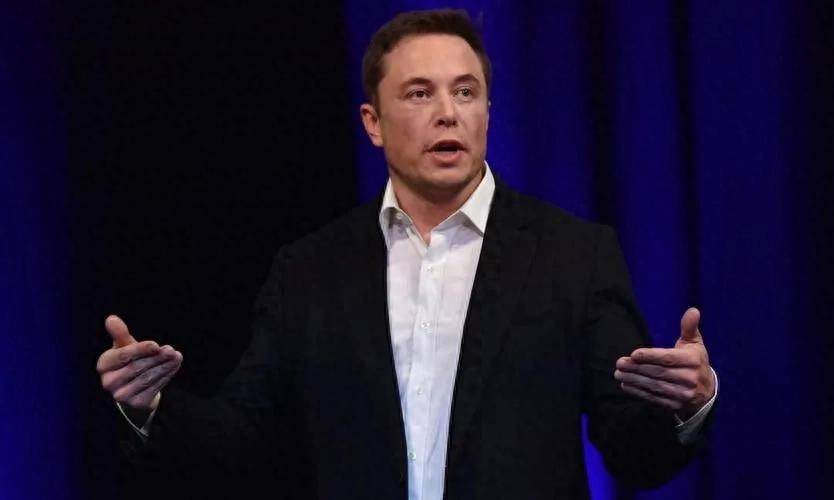
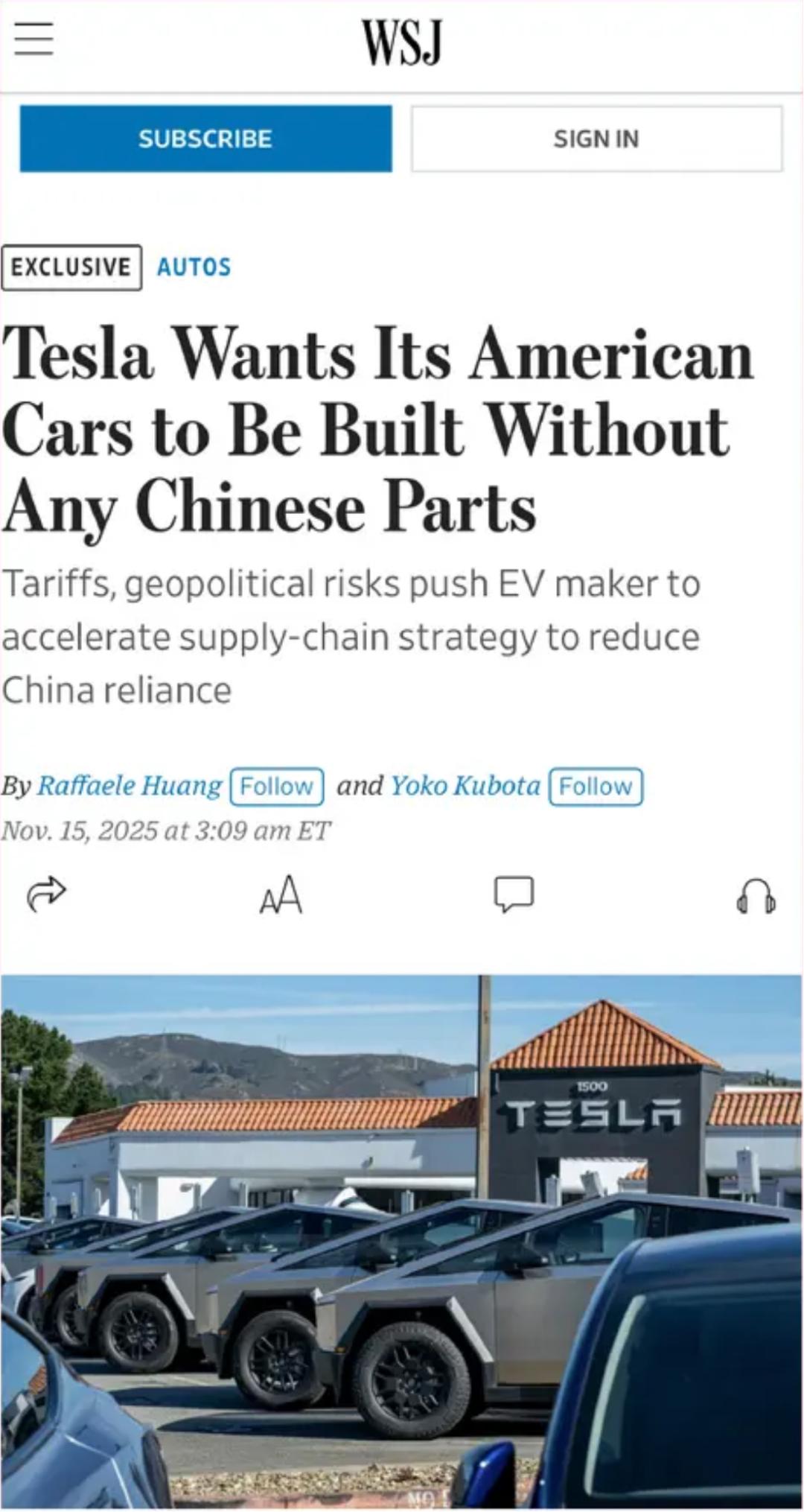
高管紧急回应“去中国化”,特斯拉会滑落为二三线品牌吗?
3 6 Ke· 2025-11-26 11:23
Core Viewpoint - Tesla is at a critical crossroads, facing significant challenges in the Chinese market, where its market share is declining and sales growth is slowing, prompting a controversial decision to eliminate Chinese components from its supply chain for U.S. factories [1][5]. Group 1: Market Performance - Tesla's sales in China have seen a dramatic decline, with combined sales of Model Y and Model 3 dropping to 26,006 units in October 2025, a year-on-year decrease of 35.76% and a month-on-month decrease of 63.64%, marking the lowest since November 2022 [6]. - The production data reflects a similar downward trend, with Tesla's production in China falling below 60,000 units in October 2025, a significant drop from previous years [9]. - The decline in sales and production is attributed to reduced consumer demand and potential production adjustments due to model updates, leading to longer delivery times for customers [9][13]. Group 2: Consumer Sentiment and Brand Image - Consumer complaints regarding product quality have surged, with nearly 4,000 complaints on platforms like Black Cat Complaints, highlighting issues such as material degradation and warranty disputes [14][19]. - The perception of Tesla among consumers is shifting, with a noticeable decline in brand loyalty and enthusiasm, as consumers now have more competitive options in the growing Chinese EV market [13][28]. Group 3: Strategic Shift and Financial Impact - Tesla's strategic focus appears to be shifting towards AI and related technologies, as indicated by CEO Elon Musk's comments on prioritizing AI development over traditional vehicle manufacturing [19][20]. - The company's R&D expenses surged by 56.9% to $1.63 billion in Q3 2025, while profitability metrics worsened, with net income dropping by 37% to $1.373 billion, indicating financial strain from heavy investments in new business areas [27]. - The transition to a "de-China" supply chain strategy may lead to increased production costs and inefficiencies, further complicating Tesla's competitive position in the market [36]. Group 4: Competitive Landscape - Tesla faces intense competition from domestic brands, with its sales lagging significantly behind leading competitors like BYD, which sold seven times more vehicles in October 2025 [28]. - The penetration rate of new energy vehicles in China reached 57.2%, with domestic brands accounting for 77.9%, highlighting the increasing competitiveness of local manufacturers [33]. - In the emerging AI and autonomous driving sectors, Tesla is contending with formidable rivals, including Xiaopeng Motors and Baidu, which are advancing rapidly in these fields [33][36].
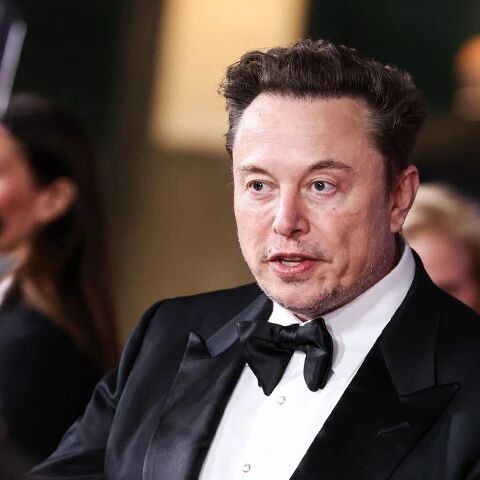
世界首富还不够,马斯克又要了1万亿
36氪· 2025-11-07 10:18
Core Viewpoint - Elon Musk has received a potentially $1 trillion compensation package, which is unprecedented in human business history, amidst significant challenges faced by Tesla, including a 45% drop in European sales and a halved profit in the first quarter [5][7][8]. Group 1: Compensation Structure - The $1 trillion compensation is contingent upon Musk increasing Tesla's market value from $1.5 trillion to $8.5 trillion, representing a 466% increase [14][15]. - The compensation is divided into 12 milestones, each tied to specific performance targets, including achieving a market cap of $2 trillion and selling 1 million Optimus humanoid robots [17][18]. - Achieving these targets is described as "extremely challenging," with analysts suggesting that even partial success could yield Musk hundreds of billions [20][24]. Group 2: Shareholder Sentiment - Despite skepticism from professional investors, including Norway's sovereign fund, 75% of shareholders voted in favor of Musk's compensation plan, viewing it as a necessary gamble to retain his leadership [9][10][28]. - Retail investors expressed strong support for Musk, equating his leadership with Tesla's identity, leading to a "faith vote" rather than a purely rational business decision [28][39]. Group 3: Strategic Implications - The compensation package is seen as a strategic investment in Tesla's future, emphasizing its transition from an automotive company to a leader in AI and robotics [57][58]. - Musk's vision includes the potential for a market dominated by humanoid robots, with predictions of billions of units sold by 2030, which could justify the ambitious market cap target [44][45]. - The plan signals a broader industry shift towards AI and robotics, positioning Tesla at the forefront of this transformation [57][58].
世界首富还不够,马斯克又要了1万亿
Sou Hu Cai Jing· 2025-11-07 04:40
Core Points - Elon Musk has received a potentially $1 trillion compensation package, which is considered the most expensive in business history [5][12] - The approval of this package comes at a time when Tesla is facing significant challenges, including a 45% drop in European sales and a halving of profits [6][10] - Despite skepticism from professional investors, retail shareholders overwhelmingly supported the package, viewing Musk as integral to Tesla's identity and future [22][33] Company Performance - Tesla's current market value is $1.5 trillion, and Musk's compensation is contingent upon increasing this to $8.5 trillion, a 466% increase [12][15] - The compensation is divided into 12 milestones, each requiring specific performance targets, including achieving a market cap of $2 trillion and selling 1 million humanoid robots [13][14] - Analysts have noted that even achieving a few of these milestones could result in Musk earning hundreds of billions, raising concerns about the feasibility of the targets [18][20] Shareholder Sentiment - Retail investors are more focused on Musk's vision and past successes than on corporate governance principles, leading to a 75% approval vote for the compensation package [32][50] - The sentiment among shareholders is that without Musk, Tesla's stock would plummet, prompting them to support the package as a means to retain his leadership [33][50] - The vote reflects a belief in Musk's ability to turn ambitious visions into reality, despite the risks involved [47][50] Strategic Implications - The $1 trillion package is seen as a strategic investment in Tesla's future direction towards AI and robotics, rather than just a salary [49][50] - Musk's focus on humanoid robots and autonomous vehicles positions Tesla as a leader in these emerging markets, with potential for significant market share [38][49] - The approval of this compensation plan signals a commitment to ambitious technological advancements, which could reshape the automotive and tech industries [49][50]
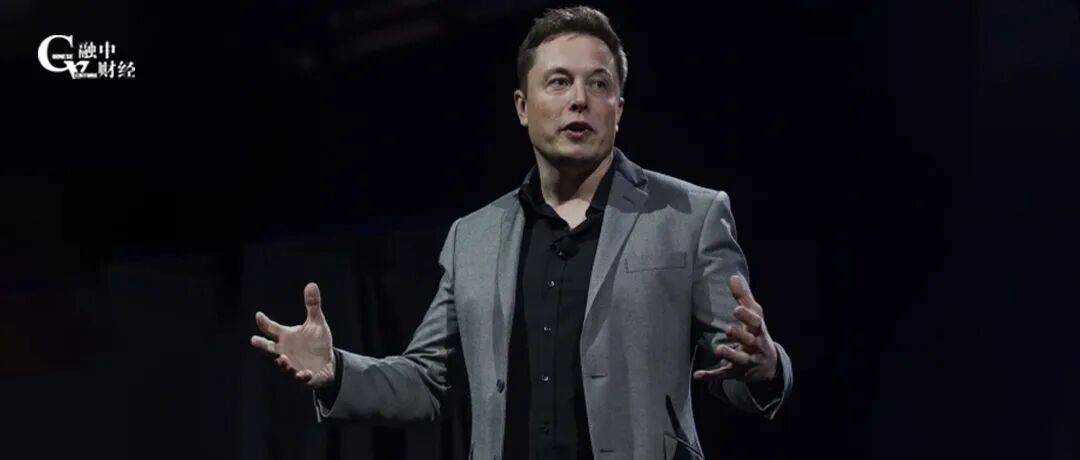
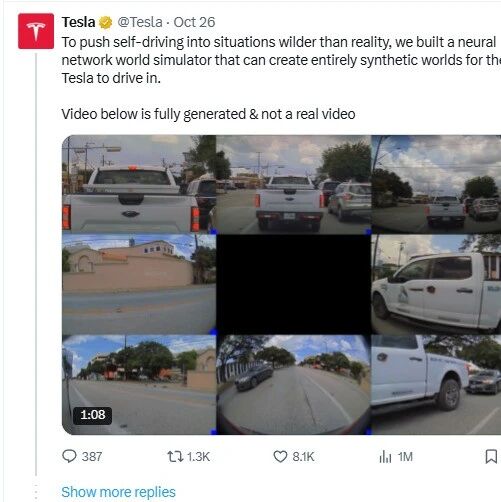
特斯拉“世界模拟器”来了:1天学习人类500年驾驶经验,擎天柱可共用同款“大脑”
美股IPO· 2025-10-27 16:07
Core Viewpoint - Tesla has unveiled a neural network-based "World Simulator" designed to create a realistic virtual training environment for its Full Self-Driving (FSD) and Optimus robot projects, significantly reducing reliance on real-world road testing and enabling AI to learn the equivalent of 500 years of human driving experience in just one day [1][3][5]. Group 1: World Simulator Features - The "World Simulator" generates continuous, multi-angle driving scenarios based on vast amounts of real-world data, allowing for high-fidelity virtual driving experiences [3]. - It enables closed-loop evaluations, where new FSD models can be tested in a virtual environment without the risks and costs associated with real road tests [10]. - The simulator can recreate historical dangerous scenarios and generate extreme "long-tail" situations to rigorously test AI models [12]. Group 2: AI Engine and Generalization - The underlying AI engine and simulation platform are versatile, being used for both vehicle training and the Optimus humanoid robot, aligning with Elon Musk's vision of creating a general AI capable of interacting with the physical world [7][18]. - The simulator's core function is to predict future scenarios based on current vehicle states and driving commands, rather than merely simulating driving [8]. Group 3: Technical Architecture - Tesla's choice of an "end-to-end" architecture allows the AI model to directly process pixel data and output driving commands, facilitating overall system optimization [13][14]. - This approach eliminates information loss that can occur in modular systems, enabling the AI to make nuanced decisions based on real-time data [14][15]. - The architecture is designed to handle the "long-tail problem" effectively, with lower latency and a unified computational framework [16]. Group 4: Data Handling and Transparency - Tesla faces challenges with processing vast amounts of data, estimating input tokens at 2 billion while outputting only two commands, which could lead to learning incorrect correlations [17]. - The company has developed a complex "data engine" to filter valuable training samples from its extensive data flow [17]. - Addressing the "black box" criticism, Tesla's AI can provide interpretable outputs and generate 3D models of the environment, offering insights into its decision-making process [17]. Group 5: Market Implications and Concerns - Tesla's ambitions extend beyond automotive applications, as the AI system and simulator are being adapted for the Optimus robot project, indicating a broader goal of developing general AI [18]. - This strategic direction has sparked market discussions and investor concerns, particularly regarding the potential for competitors to leverage simulation technology without needing extensive vehicle fleets [20]. - There are ongoing concerns about existing product safety issues, such as "phantom braking," which Tesla must address while pursuing its grand narrative [21].
马斯克最怕的事发生:中国无人出租车定价比特斯拉便宜47%
Sou Hu Cai Jing· 2025-08-01 04:41
Core Viewpoint - Shanghai has issued demonstration operation permits for smart connected vehicles to eight companies, including Xiaoma Zhixing, which has launched a driverless Robotaxi service, highlighting differences in technology routes, business models, and implementation strategies compared to Tesla [1] Group 1: Technology Route - Xiaoma Zhixing's Robotaxi utilizes an L4 autonomous driving solution, focusing on "predictive capabilities" to enhance decision-making similar to human drivers, suitable for China's dense traffic environment [3] - Tesla relies on extensive user fleet data to iteratively improve its Full Self-Driving (FSD) system, aiming for a gradual transition from L2 to L4, but still requires human supervision [3] Group 2: Business Model - Xiaoma Zhixing adopts a "regional pilot" strategy, initially operating in specific areas of Pudong with a pricing model of "14 yuan starting + 2.7 yuan/km," closely aligned with traditional ride-hailing services [4] - Tesla plans a global Robotaxi network with a subscription service and a "car owner shared fleet" concept, though specific pricing details have not been disclosed [4] Group 3: Implementation Challenges - Xiaoma Zhixing is closely aligned with Chinese regulations, gradually expanding its testing range, but may face capacity issues during peak times due to limited vehicle numbers [5] - Tesla encounters a more complex global regulatory environment, needing to adapt its technology to various traffic rules and address the debate over lidar versus non-lidar approaches [5] Group 4: Overall Perspective - Xiaoma Zhixing exemplifies a pragmatic approach to autonomous driving in China, while Tesla continues its legacy of disruptive innovation [6] - Future competition may evolve into a long-term contest between these two technological routes, with user experience and safety records becoming critical factors [6]