金融改革创新

Search documents
姜波:推进金融改革创新 引导更高水平外资金融机构集聚湾区
Zheng Quan Shi Bao Wang· 2025-08-30 09:35
Group 1 - The core viewpoint emphasizes the ongoing efforts to enhance financial cooperation between the mainland and Hong Kong-Macau, driving financial reform and innovation in the Greater Bay Area [1] - The level of openness for Hong Kong-Macau has been further improved, allowing Hong Kong-Macau banks to operate card services in the mainland and lowering the standards for Hong Kong-Macau financial institutions to invest in mainland insurance companies [1] - Financial support policies for the Greater Bay Area have been introduced, including the "Nansha 30 Measures" which provide policy support in cross-border finance, green finance, technology finance, and shipping finance [1] Group 2 - The focus is on dual openness to enhance international competitiveness, encouraging high-level foreign financial institutions to gather in the Bay Area and supporting mainland financial institutions to utilize Hong Kong-Macau platforms for global outreach [2] - The aim is to improve financial service convenience through expanded "equivalent recognition" policies and optimized cross-border arrangements, targeting financial resource allocation in key sectors [2] - Strengthening risk prevention measures is crucial to maintain financial stability, with an emphasis on regulatory cooperation and the establishment of systems to mitigate systemic financial risks [2]
金融改革创新的里程碑
Jin Rong Shi Bao· 2025-08-29 02:31
Core Insights - The establishment of Special Economic Zones (SEZs) in China marked a significant step towards opening up the economy and reforming the financial sector [1][4] - SEZs have served as experimental grounds for broader economic reforms, particularly in financial regulation and market mechanisms [3][4] Group 1: Economic Policy and Financial Reform - SEZs implemented tax incentives such as reductions in corporate income tax and tariffs to lower operational costs for businesses, attracting foreign investment [2] - The financial sector became a focal point for reform, with SEZs allowing the entry of foreign banks and insurance companies, and pioneering new financial services like securities and trusts [2] - Shenzhen was the first to establish a foreign exchange adjustment center in 1985, which laid the groundwork for national foreign exchange market reforms [2] Group 2: Institutional Innovation and Market Mechanisms - The SEZs have been instrumental in accumulating experience in financial supervision and market mechanisms, which have been replicated in broader national policies [3] - The establishment of Shenzhen Development Bank in 1987 marked the beginning of shareholding reform in banks, while the Shenzhen Stock Exchange, founded in 1990, became a vital platform for financing state-owned and private enterprises [3] - The introduction of B-shares allowed foreign investment in the stock market, paving the way for subsequent programs like QFII and QDII [3] Group 3: Globalization and Financial Innovation - SEZs continue to play a crucial role as hubs for international financial cooperation, with areas like Qianhai in Shenzhen and Hengqin in Zhuhai focusing on cross-border financial initiatives [3] - Initiatives such as digital currency trials and cross-border wealth management have emerged from SEZs, positioning them at the forefront of financial technology [3] - The practices developed in SEZs have enhanced China's influence in global financial governance and supported the internationalization of the Renminbi [3][4]
央行上海总部:优化金融促消费举措
Zhong Zheng Wang· 2025-08-20 11:50
Core Viewpoint - The People's Bank of China Shanghai Headquarters emphasizes the need for greater efforts in financial reform and innovation to support the construction of Shanghai as an international financial center and a globally influential technology innovation hub [1] Financial Reform and Innovation - The meeting calls for proactive engagement in pioneering and breakthrough tasks, focusing on forward-looking and innovative research [1] - There is a strong emphasis on the implementation of a comprehensive monetary policy package to guide financial institutions in increasing support for key areas [1] Financial Support and Consumption - The meeting highlights the need to optimize financial measures to promote consumption and expand the use of the Renminbi in cross-border transactions [1] - It also mentions the importance of deepening foreign exchange business reforms in banks and improving corporate exchange rate risk management services [1] Financial Risk Management - A mechanism for financial safety coordination is to be established to continuously prevent and mitigate risks in key areas and institutions [1] - The central bank will conduct ratings of financial institutions and support early correction of financial risks [1] Technological Empowerment - The use of technology is emphasized to enhance the effectiveness of financial stability and regulatory responsibilities [1]
人民银行上海总部:扩大人民币跨境使用
Bei Jing Shang Bao· 2025-08-20 10:21
Core Viewpoint - The People's Bank of China (PBOC) Shanghai Headquarters emphasizes the need for greater efforts in financial reform and innovation to support the construction of Shanghai as an international financial center and a globally influential technology innovation hub [1] Group 1: Financial Reform and Innovation - The meeting calls for proactive engagement in pioneering and breakthrough tasks, focusing on forward-looking and innovative research [1] - There is a strong emphasis on the implementation of a comprehensive monetary policy package to guide financial institutions in increasing support for key areas [1] Group 2: Financial Support and Services - The PBOC aims to optimize financial measures to promote consumption and expand the use of the Renminbi in cross-border transactions [1] - There is a plan to deepen the reform of bank foreign exchange operations and improve corporate exchange rate risk management services [1] Group 3: Risk Management and Financial Stability - The establishment of a financial safety coordination mechanism at the Shanghai headquarters is highlighted to continuously prevent and mitigate financial risks [1] - The PBOC will conduct ratings of financial institutions and cooperate in early correction of financial risks [1] - The use of technology is emphasized to enhance the effectiveness of financial stability duties [1]
央行上海总部:引导金融机构加大对重点领域的支持力度 优化金融促消费举措
Di Yi Cai Jing· 2025-08-20 09:47
Core Viewpoint - The People's Bank of China (PBOC) Shanghai Headquarters emphasizes the need for greater efforts in financial reform and innovation to support the construction of an international financial center in Shanghai and accelerate the establishment of a globally influential technology innovation hub [1] Group 1: Financial Reform and Innovation - The meeting calls for proactive engagement in pioneering and breakthrough tasks, focusing on forward-looking and innovative research [1] - Implementation of a comprehensive monetary policy package is essential to guide financial institutions in increasing support for key areas [1] - Financial measures to promote consumption will be optimized, and the use of the Renminbi in cross-border transactions will be expanded [1] Group 2: Risk Management and Financial Stability - A financial safety coordination mechanism will be established to continuously prevent and mitigate financial risks [1] - The PBOC will conduct ratings of financial institutions and support early correction of financial risks [1] - Technology will be leveraged to enhance the effectiveness of financial stability duties [1]
央行营管部:保持贷款持续平稳增长
Xin Hua Wang· 2025-08-12 05:55
Group 1 - The People's Bank of China (PBOC) emphasizes the need to maintain economic stability while promoting high-quality development in the capital city [1] - The PBOC plans to implement a prudent monetary policy to create a favorable financial environment for the recovery of the real economy, focusing on increasing loans to the real economy [1][2] - The PBOC aims to issue no less than 150 billion yuan in policy funds throughout the year to support financial institutions in boosting their lending to the real economy [2] Group 2 - The PBOC highlights the importance of coordinating financial policies with fiscal and industrial policies to ensure stable credit growth [2] - The focus will be on enhancing financial support for key areas such as infrastructure, small and micro enterprises, and high-tech industries [2] - The PBOC is committed to monitoring and mitigating financial risks, particularly in the real estate sector, to ensure a stable and healthy market [3]


最新自贸区制度创新指数出炉,广东前海排首位、南沙位列第三
2 1 Shi Ji Jing Ji Bao Dao· 2025-07-28 03:50
Core Insights - The "2024-2025 China Free Trade Zone Institutional Innovation Index" was released by Sun Yat-sen University, ranking 57 free trade zones across the country, with Guangdong Qianhai, Shanghai (Pudong), and Guangdong Nansha leading the list [1][2] Group 1: Rankings and Changes - The top ten free trade zones in terms of institutional innovation are Guangdong Qianhai, Shanghai (Pudong), Guangdong Nansha, Shanghai (Lingang), Tianjin, Beijing, Fujian Xiamen, Chongqing, Sichuan Chengdu, and Jiangsu Suzhou [1] - Notable changes in rankings include Chongqing rising by 2 positions and Jiangsu Suzhou improving by 3 positions compared to the previous year [1][2] - Jiangsu's overall ranking improved significantly, with Suzhou and Lianyungang free trade zones both experiencing notable upward movements [2] Group 2: Index and Evaluation - The average score for the 2024-2025 China Free Trade Zone Institutional Innovation Index is 77.40, an increase from 75.90 the previous year, indicating steady progress in institutional innovation [1] - The index evaluates five dimensions: trade facilitation, investment liberalization, financial reform and innovation, government function transformation, and legal environment [1] Group 3: Institutional Innovation and Development - Guangdong Qianhai's leading position is attributed to national strategic guidance, a strong economic base, an international environment, and technological innovation from Shenzhen [2] - Shanghai (Pudong) has become a model for high-quality economic development driven by institutional innovation after over a decade of development [2] - Jiangsu's strong development momentum and solid industrial foundation have significantly contributed to its free trade zone's institutional innovation [2][3]
“走好中国特色金融发展之路”
Ren Min Ri Bao· 2025-06-23 21:50
Group 1 - The article emphasizes the importance of finance as the core of modern economy and its role in national stability and development [2][4][16] - It highlights Xi Jinping's innovative financial strategies during his tenure in Fujian, which laid the groundwork for China's unique financial development path [1][6][7] - The establishment of financial institutions and reforms in Fujian, such as the creation of the Xiamen International Bank, played a crucial role in supporting local economic growth [27][28][30] Group 2 - The article discusses the relationship between finance and the real economy, asserting that financial stability is essential for economic prosperity [16][22] - It outlines the significance of rural financial services in poverty alleviation and economic development, showcasing successful case studies in Fujian [23][24][26] - The focus on technological innovation and its integration with financial services is highlighted as a key area for future growth [19][21] Group 3 - The article mentions the need for continuous financial reform and innovation to address deep-seated issues within the financial system [29][34] - It stresses the importance of maintaining financial security and risk management as fundamental themes in financial work [35][36] - The development of a credit culture and the promotion of a financial system that serves the people are emphasized as essential for achieving a financial strong nation [36][37]
陆家嘴论坛今日启幕 金融新政发布窗口打开
Shang Hai Zheng Quan Bao· 2025-06-17 19:24
Core Insights - The 2025 Lujiazui Forum is set to address current global economic challenges and promote financial reform and international cooperation [2][3] - The forum serves as a significant platform for the Chinese government to announce important financial policies [3] - It aims to foster global dialogue and collaboration among financial leaders and experts from various countries [4] Group 1: Forum Overview - The Lujiazui Forum has become one of China's most authoritative financial forums since its inception in 2008, marking a significant impact on the global financial landscape [1] - The theme for the 2025 forum is "Financial Opening and Cooperation in the Context of Global Economic Changes," focusing on high-quality development [2] - The 2025 China International Financial Expo, held concurrently, features the largest number of participating institutions and showcases China's financial reform achievements [1][2] Group 2: Policy Signaling - The forum is recognized as a key platform for the release of major financial policies by national financial management departments [2][3] - Anticipated announcements include significant policies to support the construction of Shanghai as an international financial center [3] Group 3: Global Dialogue - The forum gathers government officials, scholars, and financial executives from over 10 countries, facilitating discussions on global financial trends and challenges [4] - It includes eight plenary sessions focused on financial opening and cooperation [4] Group 4: Innovation and Development - The forum will host specialized sessions on topics such as reinsurance market development, fintech, and financial law [4] - It aims to enhance the role of Shanghai as a financial hub and promote high-level financial openness [4]

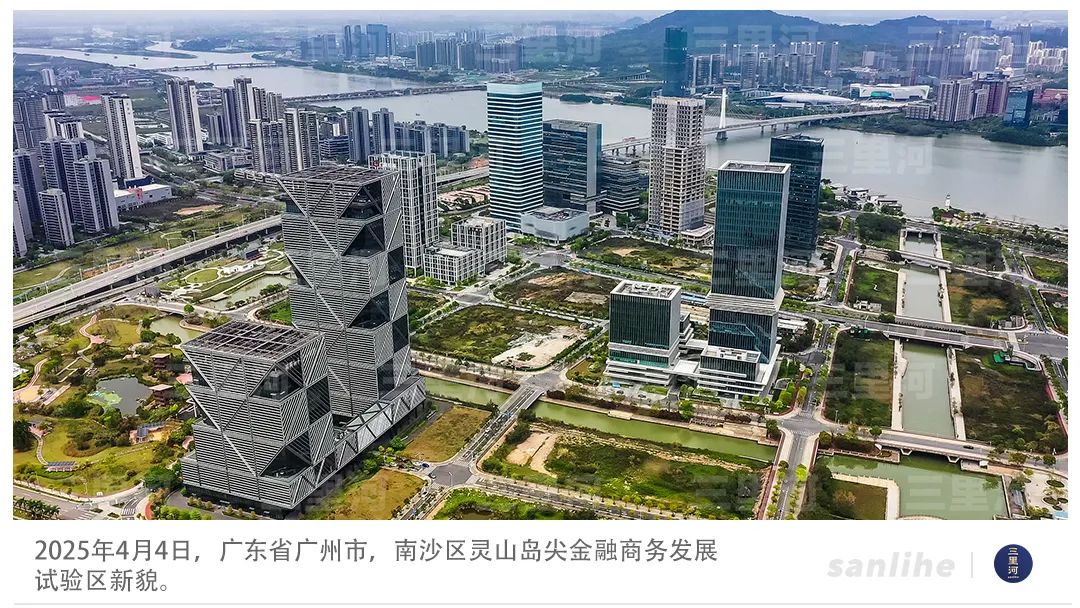
南沙再获政策“大礼包” 打造金融对外开放高地
Zhong Guo Xin Wen Wang· 2025-05-17 13:52
Core Viewpoint - The recent release of the "Nansha Financial 30 Measures" aims to enhance financial support for Nansha, positioning it as a key financial hub in the Guangdong-Hong Kong-Macao Greater Bay Area and a demonstration window for financial openness in China [1][4]. Group 1: Key Measures - The "Nansha Financial 30 Measures" includes 30 key initiatives across six areas: improving financial services for innovation and entrepreneurship, enhancing financial services for social welfare, developing specialized financial services, promoting financial market connectivity in the Greater Bay Area, facilitating cross-border financial innovation, and refining financial regulatory mechanisms [3]. - Emphasis is placed on supporting technology innovation, high-end manufacturing, digital industries, marine industries, and future industries through financial means [3]. - The measures also focus on financial service modernization and digitalization, including policies for capital settlement and cross-border insurance transactions to meet the needs of residents and businesses in the Greater Bay Area [3]. Group 2: Historical Context - The "Nansha Financial 30 Measures" is not the first national-level financial support policy for Nansha; previous initiatives include the "Nansha Financial Reform 15 Measures" in 2014 and the "Overall Plan for Deepening Comprehensive Cooperation in the Greater Bay Area" released by the State Council in 2022 [4]. - These policies have progressively established Nansha as a key area for financial reform and innovation [4]. Group 3: Strategic Importance - Nansha's geographical advantages, being centrally located within the Greater Bay Area and close to Hong Kong and Macau, provide a unique opportunity for economic development [5]. - The financial sector in Nansha has grown significantly, with the financial industry's value added to GDP increasing from nearly zero in 2015 to approximately 10% in 2024 [6]. - Nansha has attracted a diverse range of financial institutions and has been designated as a pilot area for high-level cross-border trade and investment openness [6]. Group 4: Future Outlook - The national government has high expectations for Nansha to become a leading area for financial reform and openness, marking it as the only district to receive national-level financial policies three times [8]. - The "Nansha Financial 30 Measures" is expected to empower further financial innovation and openness, facilitating the integration of financial markets in the Greater Bay Area and contributing to the construction of a strong financial province in Guangdong [8].