高水平开放

Search documents
人民日报连发6篇“钟才平”:解读2026年经济大方向的四大信号
Sou Hu Cai Jing· 2026-01-18 11:16
Core Viewpoint - The series of articles by "Zhong Caiping" published at the beginning of 2026 aims to set the tone for the economic outlook and provide guidance for development during the critical start of the "14th Five-Year Plan" period, emphasizing confidence and clarity in policy direction [1][3]. Group 1: Economic Outlook and Policy Direction - The articles highlight the resilience and strength of the Chinese economy, asserting that it can withstand significant challenges, thereby establishing a foundational tone of "seeking progress while maintaining stability" for the year [3][4]. - The emphasis on "pragmatism" and "tailored approaches" in economic work reflects a commitment to learning from past experiences and providing precise guidance for local governance [4][6]. Group 2: Key Strategies for Economic Growth - The focus on expanding domestic demand and improving livelihoods is identified as a priority, with strategies including enhancing consumer income and optimizing investment in infrastructure and public services [6][9]. - The articles advocate for a dual approach of boosting both consumption and investment, with specific measures to increase residents' income and support new consumption trends [6][7]. Group 3: Open Economy and International Cooperation - The commitment to high-level openness is reiterated, with an emphasis on quality over quantity in international trade and investment, aiming to create a mutually beneficial environment for both domestic and foreign enterprises [7][9]. - The articles outline four key areas for enhancing openness: expanding the domestic market, deepening supply chain cooperation, optimizing the investment environment, and promoting the Belt and Road Initiative [7][9]. Group 4: Guidance for Stakeholders - The articles serve as a practical guide for individuals, businesses, and local governments, emphasizing the importance of stable expectations, accurate direction, and a realistic mindset in pursuing long-term development [9]. - Stakeholders are encouraged to focus on domestic demand and cooperative opportunities, aligning with government support for new consumption and innovative production sectors [9].

中国驻美国大使谈中美关系:无论是关税战、贸易战、科技战,还是产能战、资源战、地缘战,都是损人害己的死路绝路
Xin Lang Cai Jing· 2026-01-17 16:38
Core Viewpoint - The speech emphasizes the importance of cooperation and development amidst global uncertainties, highlighting the need for multilateralism and mutual respect in international relations [3][4][5]. Group 1: International Relations - The global trend towards peace, development, and cooperation remains unchanged despite rising instability and uncertainty [3][4]. - The historical logic of mutual benefit in Sino-American relations persists, indicating that dialogue is preferable to confrontation [5][6]. - The principles of mutual respect, peaceful coexistence, and win-win cooperation are essential for a stable Sino-American relationship [6]. Group 2: Economic Development - China's economy is projected to grow by around 5% in the past year, contributing over 30% to global economic growth [7]. - The total trade surplus for China exceeded 1 trillion USD for the first time, showcasing its role as both a major exporter and importer [7][8]. - China is committed to high-quality development and high-level opening up, with significant opportunities in emerging industries such as new energy and biotechnology [7][8]. Group 3: Foreign Investment - China has reduced its foreign investment negative list to 29 items and is providing zero-tariff treatment to products from least developed countries [8]. - The number of newly established foreign-invested enterprises in China increased by 16.9% year-on-year, indicating growing foreign confidence [8]. - The potential for cooperation between Chinese and American companies in strategic emerging industries is significant, with a focus on mutual benefits [8].
中国驻美国大使:中方对发展中美关系有诚意但讲原则,在捍卫主权安全发展利益的大是大非问题上,没有丝毫妥协余地
Xin Lang Cai Jing· 2026-01-17 05:22
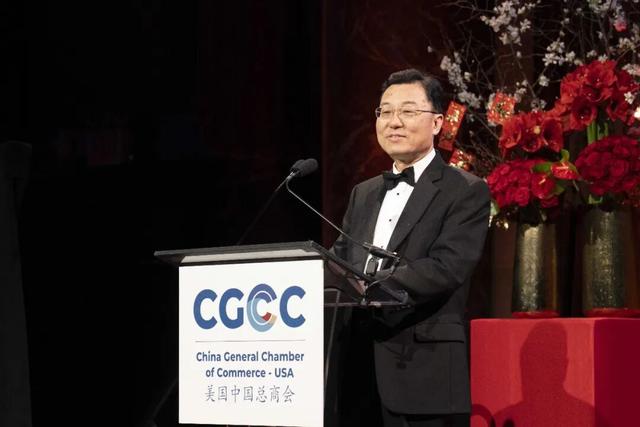
Core Viewpoint - The Chinese Ambassador to the U.S., Xie Feng, emphasized China's sincerity in developing U.S.-China relations while firmly upholding its sovereignty and security interests, indicating no room for compromise on major issues [2]. Group 1 - Xie Feng highlighted that regardless of the evolution of U.S.-China relations, the historical logic of mutual benefit from cooperation and mutual harm from conflict remains unchanged [4]. - He expressed hope that both sides would work towards implementing the important consensus reached during the recent summit between the two countries' leaders, aiming to expand cooperation and eliminate obstacles [4]. - Xie Feng reiterated China's commitment to high-quality development and high-level openness, stating that a continuously progressing and open China will bring new opportunities to the world [4]. Group 2 - The Ambassador noted that U.S. companies and Chinese enterprises can explore cooperation potential to facilitate more pragmatic projects [4]. - He stressed that cooperation should be mutual and reciprocal, urging the U.S. government to provide an open, fair, and non-discriminatory environment for Chinese investments and operations in the U.S., including visa and entry facilitation [4]. - The award ceremony recognized several companies for their significant contributions to U.S.-China economic growth, cultural exchange, and community engagement, with approximately 300 attendees from various sectors [4].

中美关系合则两利斗则俱伤
Xin Lang Cai Jing· 2026-01-17 04:23
转自:京报网_北京日报官方网站 【#中美关系合则两利斗则俱伤#】#中国驻美大使谢锋谈中美关系#中国驻美国大使谢锋15日在美国中国 总商会2026年农历马年颁奖晚宴上致辞表示,中方对发展中美关系有诚意但讲原则,在捍卫主权安全发 展利益的大是大非问题上,没有丝毫妥协余地。谢锋强调,不管中美关系如何演变,双方合则两利、斗 则俱伤的历史逻辑不会改变。希望美方与中方相向而行,以实际行动落实两国元首釜山会晤重要共识, 拉长合作清单,排除干扰障碍,推动中美关系稳定健康可持续发展。谢锋指出,不管外部环境如何变 化,中国致力于高质量发展、高水平开放的战略抉择不会改变。他说:"中国的发展是开放的发展,一 个持续进步不断开放的中国将给世界带来更多新机遇。"中美两国企业完全可以深挖合作潜力,促成更 多务实合作项目。谢锋强调,合作应是双向的、互惠的,美国政府也应为中国企业在美投资运营提供开 放、公正、非歧视的环境,包括提供签证、入境便利等而不是设置障碍。当天的颁奖晚宴活动表彰了对 中美经济增长、文化交流和社区参与作出重要贡献的多家企业,约300名来自中美工商界等领域人士出 席。(新华社 视频 中国日报) ...
中国外贸“成绩单”照见经济潜能
Ren Min Ri Bao· 2026-01-16 10:17
Group 1 - The total import and export value of China is expected to exceed 45 trillion yuan by 2025, marking a historical high and showcasing the immense potential of the Chinese economy [1] Group 2 - The driving force behind foreign trade lies in the transition to new and superior products, with significant growth in exports of green products and industrial robots, indicating a shift towards higher quality production [2] - China is the world's second-largest consumer and import market, having imported over 18 trillion yuan last year, highlighting the vast market space and positive growth expectations [2] - China's foreign trade network is expanding, with trade relations established with over 240 countries and regions, emphasizing the diversification of trade partnerships [2] Group 3 - High-quality development and high-level openness in China are expected to inject more stability and positive energy into global economic development [3]
中国外贸“成绩单”照见经济潜能(今日谈)
Ren Min Ri Bao· 2026-01-15 22:08
Core Insights - China's total import and export value is expected to exceed 45 trillion yuan by 2025, marking a historic high and showcasing the immense potential of the Chinese economy [1] Group 1: Supporting Factors for Foreign Trade - The shift towards new and superior products is evident, with net exports of industrial robots and strong growth in exports of green products like the "new three samples," alongside traditional home appliance companies expanding into overseas markets [2] - China's status as the world's second-largest consumer and import market is highlighted, with imports exceeding 18 trillion yuan last year, indicating significant market space and growth expectations [2] - The expansion of trade partnerships with over 240 countries and regions, including deep cooperation with Latin American countries in manufacturing and agriculture, reflects the increasing diversification of China's foreign trade [2] Group 2: Economic Impact - High-quality development and high-level openness in China are expected to inject more stability and positive energy into global economic development [3]
上海:聚焦“奋力再跳”,持续稳定商务经济增长
Zheng Quan Shi Bao Wang· 2026-01-15 12:20
Core Viewpoint - The Shanghai Municipal Government emphasizes five key areas to enhance business operations and economic growth in the city by 2026 [1] Group 1: Economic Growth - Focus on "striving for a leap" to maintain stable business economic growth, prioritizing domestic demand and boosting consumption [1] - Stabilize the foreign trade foundation while accelerating structural transformation and innovative development [1] - Create new advantages to attract foreign investment, ensuring stability and optimization of foreign capital [1] Group 2: Supply Chain and Services - Enhance the hub function by strengthening global supply chain management capabilities [1] - Improve comprehensive services for enterprises going global and enhance resource allocation for bulk commodities [1] Group 3: High-Level Opening - Expand high-level openness driven by national strategies, promoting institutional openness [1] - Support the high-level operation of the Eastern Hub International Business Cooperation Zone [1] - Ensure effective service and support for the upcoming 9th China International Import Expo [1] Group 4: Service Industry Development - Accelerate innovation and development in the household services and catering industries [1] - Promote the professionalization and standardization of household services, and encourage diversification and branding in the catering sector [1] Group 5: Quality Development and Safety - Focus on coordinating high-quality development with high-level safety, implementing multiple measures to maintain safety standards [1] - Enhance management and service capabilities under open conditions, optimizing the supply system for staple foods suitable for mega cities [1] - Ensure safety production in the business sector [1]
中国经济以“内在连续性”从容应对外部挑战——访法国丝路商学院教授阿祖莱
Xin Hua Wang· 2026-01-11 08:34
Core Insights - The article emphasizes China's ability to maintain internal continuity while responding to external challenges, particularly through expanding domestic demand and high-quality growth [1][2]. Group 1: Economic Stability and Growth - China is enhancing its stability by expanding domestic demand and providing support to the global economy through high-quality growth and high-level openness [1][2]. - The country is not relying on short-term stimulus but is focusing on upgrading consumption structures, with significant growth in sectors like new energy vehicles, cultural products, health industries, and high-quality services [2]. Group 2: Innovation and Supply Chain Transformation - China is transitioning from a "scale + cost" advantage to an "innovation + efficiency" advantage, with new growth engines emerging in artificial intelligence, semiconductors, robotics, green energy, and biotechnology [2]. - The country benefits from institutional advantages in innovation policy, including rapid resource mobilization, flexible pilot mechanisms, and high collaboration between local governments and enterprises [2]. Group 3: Global Trade and Investment - In the context of rising uncertainty in global trade and investment, China is committed to high-level openness, which includes further easing market access and improving the business environment [2]. - Companies like Tesla and Schneider Electric have thrived in China by aligning with the country's focus on electric vehicles, digitalization, advanced manufacturing, and energy transition, contributing to China's role as a global innovation and production hub [2]. Group 4: Future Contributions to Global Economy - China's contributions to the world economy extend beyond growth momentum to include structural transformation and green development, particularly through investments in renewable energy, energy storage, and electric vehicles [3]. - The country is significantly lowering the cost barriers for global green technologies, enabling more countries to participate in energy transitions, which will have a profound impact on the world economy [3].
龚正与8位专家代表座谈交流,听取对上海推动高质量发展的建议
Di Yi Cai Jing· 2026-01-07 13:25
会上,与会专家结合国际国内形势,立足上海实际,积极建言献策。第十四届全国政协经济委员会副主 任尹艳林提出,上海需要从增强消费拉动力、培育壮大新质生产力、推动长三角一体化发展等方面着 手,确保"十五五"开好局起好步。国务院发展研究中心副主任张琦提出,上海需要以高水平开放融入开 放合作与全球化,示范引领全国开放发展。中国科学院脑科学与智能技术卓越创新中心学术主任蒲慕明 提出,要重视渐进式、增量式的创新,培育引进更多在各领域处于"最活跃时期"的科学家。上海社会科 学院原院长张道根表示,上海要强化"四大功能",发挥制度"创新引擎"作用,更好引领、带动、服务、 支撑全国经济高质量发展。上海市宏观经济学会会长王思政建议,激发长三角高端产业协同效应,夯实 沿江沿海先进制造业产业带,培育激发新质生产力,增强国际竞争力。上海对外经贸大学教授黄建忠提 到,要促进货物贸易调结构、促平衡、优模式,推动服务贸易机制创新、优化网络,加快国际贸易中心 迭代升级。携程集团首席执行官孙洁建议,完善重大文化基础设施建设,打造品牌地标和全球超级旅游 目的地,有效激发旅游消费潜力。国泰海通证券研究所所长路颖提到,上海要通过资本市场赋能实体、 制度性 ...
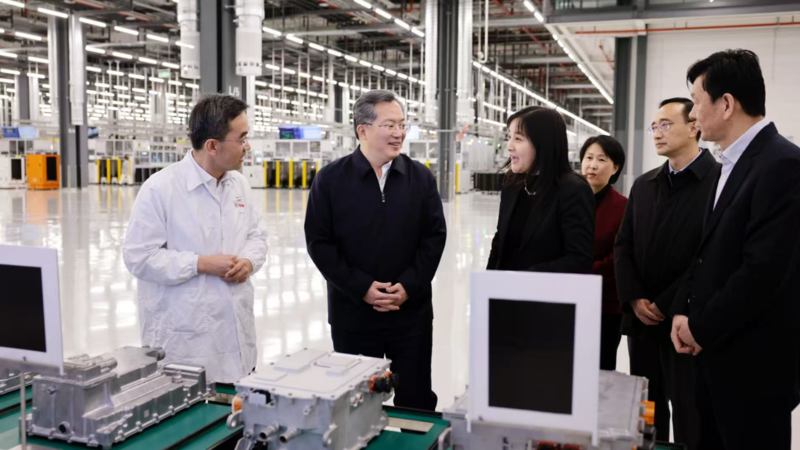
范波调研苏州市外资企业发展工作
Su Zhou Ri Bao· 2026-01-06 00:21
Group 1 - The core message emphasizes the importance of foreign investment in China's modernization and economic integration, highlighting the need for a conducive business environment in Suzhou [5] - The city aims to enhance its competitive edge by promoting innovation and attracting high-end projects, particularly in sectors like biotechnology and advanced manufacturing [4][5] - The local government encourages foreign enterprises to reinvest profits and establish R&D centers, aiming to create a market-oriented and law-based business environment [5] Group 2 - The visit to Bosch's new energy vehicle components and autonomous driving R&D base showcases the city's commitment to supporting advanced technology and manufacturing [4] - At Samsung Electronics, the focus is on enhancing manufacturing capabilities to boost global market competitiveness [4] - The engagement with Johnson & Johnson and Eli Lilly highlights the city's push for innovation in the biopharmaceutical sector, encouraging these companies to expand their investments in Suzhou [4]