AI平权

Search documents
当消费遇上AI|手术机器人和AI医生正大举进军医院,人类专家会被替代吗
Di Yi Cai Jing· 2025-05-25 11:39
Group 1: AI in Clinical Diagnosis - Artificial intelligence is transforming clinical diagnosis from experience-based medicine to data-driven approaches, enhancing personalized treatment [1][3] - AI technologies, such as digital twin doctors, are being integrated into medical teams, allowing for modeling and simulation of patient data to improve diagnosis and treatment [3][12] - A deep learning model for CT myocardial perfusion imaging has been developed to accurately assess myocardial ischemia, providing valuable quantitative metrics for doctors [6][7] Group 2: AI in Surgical Procedures - AI-assisted surgical robots are being utilized for remote surgeries, breaking geographical barriers and allowing for complex procedures to be performed from a distance [8][9] - The development of AI systems for pre-surgical planning is enabling surgeons to visualize and simulate operations, improving precision and outcomes [11][12] - AI is expected to play a significant role in the future of smart hospitals, enhancing patient monitoring and treatment planning through digital twin technology [13] Group 3: Ethical Considerations and Future Implications - The integration of AI in healthcare raises ethical questions, particularly regarding data security and the role of AI in decision-making processes [18][19] - Experts emphasize that AI should serve as a "super assistant" to doctors, enhancing their capabilities rather than replacing them, especially in areas requiring empathy and moral judgment [19] - The future of healthcare is envisioned as a collaboration between AI and human doctors, where AI alleviates repetitive tasks, allowing doctors to focus on patient care [19]



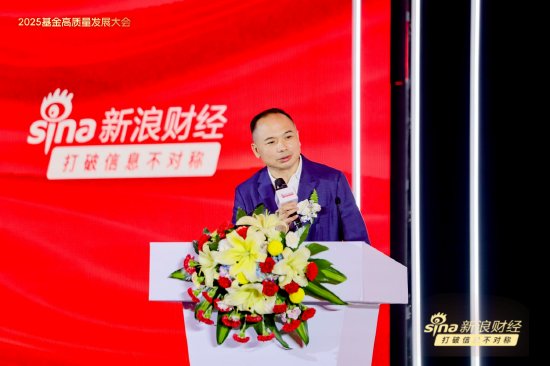
刘煜辉:如何在百年未有之大变局的惊涛骇浪立于不败之地?关键是“做好自己”(发言全文)
Xin Lang Ji Jin· 2025-05-24 03:34
Core Insights - The 2025 Fund High-Quality Development Conference was held in Shenzhen, focusing on new paths for the high-quality development of the fund industry [1] - Liu Yuhui, a member of the Chinese Chief Economist Forum, highlighted that current trade and tariff wars may indicate a shift in global order and balance [4][6] Economic Power Dynamics - The trade conflicts represent a final showdown between China's industrial power and the financial power of the US dollar, which were once aligned but have diverged significantly over the past 20 years [7] - By 2024, China's industrial manufacturing output is projected to account for 35% of global manufacturing, with expectations to rise to 45% by 2030 [7] - The technological density of China's supply chain is estimated to exceed 60%, as lower-end manufacturing has moved overseas to mitigate geopolitical risks [8] Currency and Trade Relationships - Increasingly, global economic activities are moving away from the US dollar, with examples including trade agreements between China and Saudi Arabia, and China and Brazil, utilizing currency swaps [9] - The US faces significant macroeconomic imbalances as a result of these shifts, threatening its ability to maintain economic stability [9][11] Inflation and Debt Issues - The US is experiencing severe debt imbalances, with a projected $12 trillion in interest payments this year, exacerbated by rising interest rates [12][13] - The high inflation rates in the US are leading to increased costs for foreign capital, further straining the US economy [11][12] Strategic Recommendations - China is positioned to leverage its strong industrial power and technological advancements to challenge the dominance of the US dollar [14] - The country aims to enhance openness, balance wealth distribution, and promote market-oriented reforms to solidify its economic advantages [15][16] - Investment strategies should focus on recognizing the ongoing strategic competition between China and the US, with gold being recommended as a stable asset during this period of transition [16][17]
价格进一步下探至千元以内 AI手机渗透率将进一步提升
Zheng Quan Shi Bao Wang· 2025-05-22 09:59
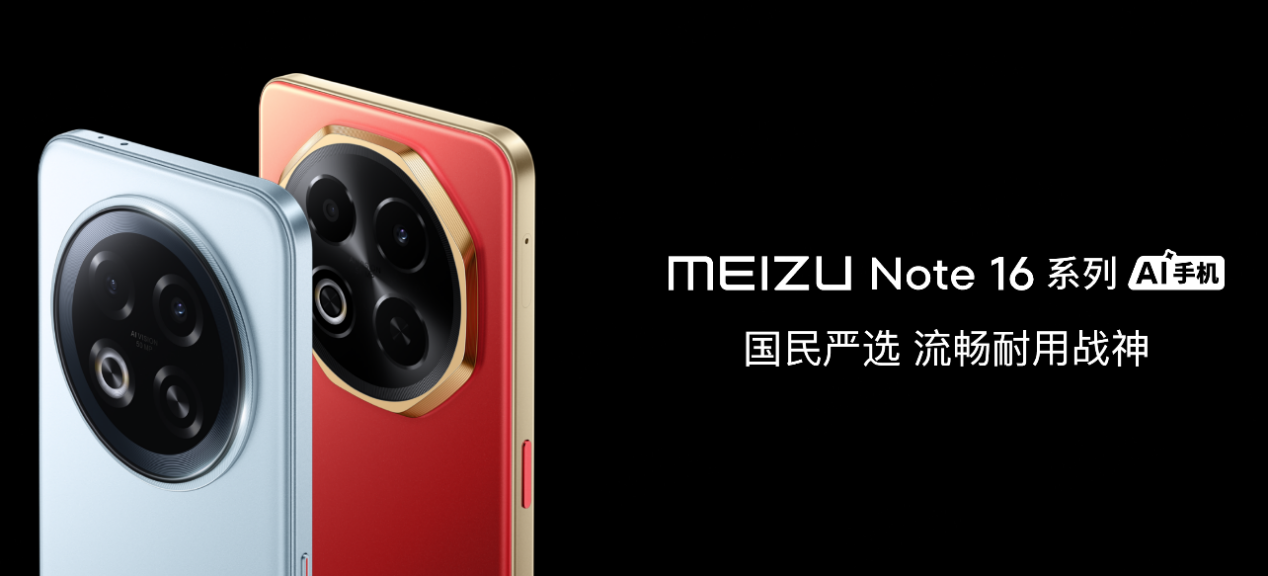
Group 1 - The rapid development of AI technology is leading to an increase in AI smartphone penetration and a decrease in prices, with the Meizu Note 16 series being the lowest-priced AI smartphone at 594.15 yuan [1] - The market has seen a shift towards AI smartphones in both high-end and mid-range segments, with prices now dropping below 1,000 yuan for several models, including those from OPPO and vivo [1] - The Meizu Note 16 series features the Flyme AIOS 2 operating system and integrates with Alibaba Cloud's Qwen-Omni model, offering various AI functionalities such as AI assistant and AI image recognition [1] Group 2 - There are significant differences in AI functionalities across different price segments, with high-end smartphones utilizing more powerful NPU chips for enhanced AI capabilities, while budget models rely more on cloud-based AI [2] - The chip is the most significant cost component in smartphones, with the Meizu Note 16 using a 6nm chip and the Note 16 Pro using a 4nm chip, indicating a trend towards more advanced technology in budget devices [2] - The demand for affordable AI smartphones is driving chip manufacturers like Qualcomm and MediaTek to develop mid-range and entry-level chips with AI capabilities [2] Group 3 - The trend of AI integration in smartphones is expected to continue, with an estimated 31.6% of new AI smartphones having NPU capabilities greater than 30 TOPS, projected to rise to 36.2% by 2025 [3] - The growth of AI functionalities in smartphones is positively impacting the performance of related companies, such as Sunlord Electronics, which is experiencing increased demand for components due to the rise in AI features [3] - Companies like Pengding Holdings are fully embracing AI, developing a comprehensive product matrix that includes AI smartphones and other AI consumer products, positioning themselves as key players in the global AI supply chain [4]


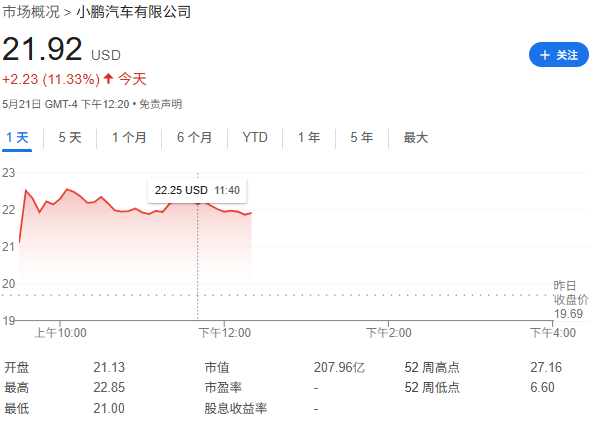
小鹏电话会:今年Q4将实现盈利,图灵芯片Q3放量,2026年推出人形机器人
Hua Er Jie Jian Wen· 2025-05-21 17:40
Core Viewpoint - Xiaopeng Motors has achieved significant growth in Q1 2025, becoming the top seller among new energy vehicle manufacturers both domestically and internationally, while making substantial advancements in AI and smart technology integration [1][3]. Sales Performance - In Q1 2025, Xiaopeng delivered 94,008 vehicles, marking a year-on-year increase of 331%, setting a new record for quarterly deliveries [3]. - The company expects Q2 2025 deliveries to reach between 102,000 and 108,000 units, representing a year-on-year growth of approximately 237.7% to 257.5% [8]. - Xiaopeng's overall gross margin reached a historical high of 15.6% in Q1 2025, with a significant reduction in net losses and over 3 billion yuan in free cash flow [3]. Technological Advancements - Xiaopeng has successfully developed its self-researched Turing chip, which is set to be mass-produced in Q3 2025, with claims of having 3 to 7 times the computing power of current mainstream automotive AI chips [7][8]. - The company is advancing towards L3 and L4 autonomous driving capabilities, with plans to launch a comprehensive AI model for automotive applications in 2025 [13][14]. Product Development - The MONA M03 has become the best-selling A-class electric sedan, with over 100,000 units delivered within eight months of its launch [4]. - New models, including the G7 and an upgraded P7, are set to be released in 2025, with the "Kunpeng" super electric vehicle expected to enter mass production in Q4 2025 [10][11]. AI Strategy - Xiaopeng is focusing on a comprehensive AI transformation, with initial successes across various domains, including AI-assisted driving, smart cockpit technology, and humanoid robots [6][21]. - The company aims to create a closed-loop AI system that integrates vehicles and humanoid robots, with the latter expected to be launched in 2026 [7][21]. Global Expansion - Xiaopeng's overseas sales surged by over 370% in Q1 2025, positioning it as the leading exporter of mid-to-high-end new energy vehicles from China [12]. - The company plans to expand its global presence significantly over the next three years, establishing over 40 new overseas stores [12].

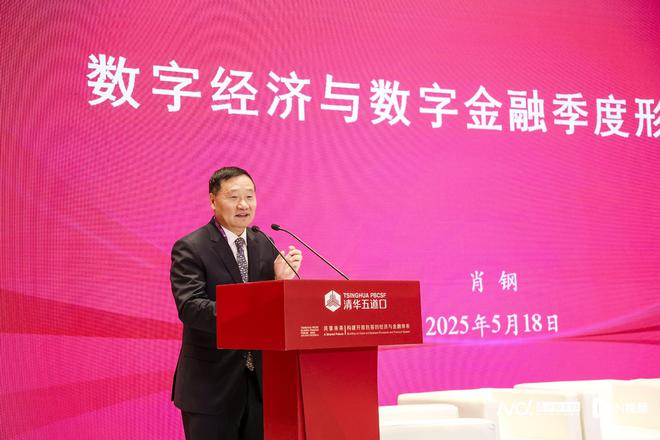
证监会原主席肖钢:建设高质量金融数据市场,核心是数据要素
Nan Fang Du Shi Bao· 2025-05-19 05:45
Core Insights - The digital economy in China has shown strong growth in Q1 2023, significantly supporting the macroeconomic outlook, with the core industries' added value growth rate exceeding 10%, notably higher than GDP growth [3][4] - Investment in core industries of the digital economy has also performed well, driven by policies and market demand recovery, particularly in emerging fields like artificial intelligence and humanoid robots [3][4] Digital Consumption - Digital consumption has experienced steady growth, with innovations in digital technology improving consumer experiences and driving online consumption, particularly in food and trade-in models [4] - The eastern region of China leads in digital economy metrics, contributing over 90% of revenue and net profit from A-share listed companies in core digital industries, indicating strong industrial clustering effects [4] Digital Finance - The emergence of AI models like DeepSeek has democratized access to AI capabilities for small and medium financial institutions, enhancing innovation and efficiency in the financial sector [5] - Financial institutions are focusing on optimizing technology investments, with a slowdown in growth for banking tech investments but increased intensity in securities sector investments [5] Policy Outlook - Recommendations for future development include improving the digital economy ecosystem, fostering collaboration between technology, industry, and finance, and establishing governance frameworks for generative AI applications in finance [6] - Emphasis on consumer rights protection in the AI era is crucial, with financial institutions needing to ensure the safety and compliance of AI technology usage [6]
“AI平权”至千元机 星纪魅族找到的差异化路径能否走通?
Mei Ri Jing Ji Xin Wen· 2025-05-14 13:49
Core Viewpoint - The smartphone industry is facing challenges due to market saturation and lack of innovation, but the emergence of AI presents new opportunities for manufacturers like Meizu to target underserved segments of the market [1][2]. Group 1: Company Strategy - Meizu, now under Xingji Meizu after being acquired by Geely, aims to leverage AI to differentiate itself in a competitive market dominated by larger players like Huawei and Xiaomi [2][3]. - The company has adopted an "All in AI" strategy, focusing on integrating AI capabilities into its mid-range and entry-level smartphones, particularly the newly launched Meizu Note 16 series [1][2]. - Meizu's approach emphasizes "AI equality," aiming to provide AI functionalities to users who have been overlooked by other manufacturers, such as blue-collar workers and older adults [1][3]. Group 2: AI Implementation - The AI features in Meizu's smartphones are designed to address practical needs, allowing users to perform tasks like ordering food or booking rides with simple voice commands [1][3]. - Meizu's Flyme AIOS 2 operating system has been upgraded to enhance task understanding and execution, enabling users to issue complex commands with minimal input [3][5]. - The company plans to utilize both local processing and cloud computing to deliver AI functionalities, although the reliance on cloud services raises concerns about cost [5][6]. Group 3: Cost Challenges - The implementation of AI in mid-range devices is heavily dependent on cloud services, which incurs significant costs, estimated at 1.2 to 1.5 cents per call to the cloud model [5][6]. - Meizu acknowledges the high costs associated with AI model training and cloud usage but believes that these costs will decrease over time as technology advances [5][6]. - The company is focused on improving user interaction experiences, particularly through voice commands, to enhance the value proposition of its AI offerings [5]. Group 4: Competitive Landscape - Other manufacturers, such as OPPO, Vivo, and Honor, are also integrating AI capabilities into their mid-range devices, which could challenge Meizu's strategy of focusing on cloud-based AI solutions [6]. - The potential for widespread adoption of AI in lower-priced smartphones suggests that Meizu's current path may face increased competition as the market evolves [6].
星纪魅族新品发布会:魅族 Note 16 系列与 Flyme AIOS 2 登场
Xin Hua Wang· 2025-05-14 07:58
Group 1 - Meizu Note 16 series focuses on high-quality smartphones at affordable prices, with the Note 16 Pro featuring a new boundary-less super antenna architecture and significant network performance improvements, including a 58% increase in 5G recovery speed and a 49% increase in no-network recovery speed [2] - The Note 16 Pro is the first smartphone to receive TÜV Rheinland's "three-proof quality" certification, with a Titan shield alloy structure enhancing drop resistance by 50% and passing a 1.8-meter drop test, achieving IP66/68 dust and water resistance [2] - The device is equipped with a 6.78-inch 1.5K high-resolution eye-care display, a peak brightness of 4500 nits, and a 144Hz refresh rate, along with a 6200mAh battery supporting 80W Super mCharge, allowing for a 50% charge in just 22 minutes [2] Group 2 - The Meizu Note 16 features a 6600mAh battery with a standby time of up to 48 days, and it incorporates a new instant smooth engine and a large integrated memory [3] - The device has received a five-star drop resistance certification from SGS and meets IP65 dust and water resistance standards, with a 6.78-inch FHD+ eye-care LCD display and a 120Hz refresh rate [3] - The launch event introduced the Flyme AIOS 2 operating system, which will be natively available on the Note 16 series, featuring the new OneMind engine for enhanced user experience [3] Group 3 - The event showcased Meizu's achievements in the AI field, promoting the "AI equality" concept, with successful products in smart glasses, AI smartphones, and smart cockpit businesses [4] - The company aims to continue its strategic direction of product innovation and expand its AI ecosystem globally [4]
星纪魅族推出低至594元的AI手机
news flash· 2025-05-13 08:19
Core Viewpoint - The Meizu Note series has achieved over 30 million sales, marking significant milestones in the company's history, with the launch of Meizu Note 16 Pro and Meizu Note 16 aimed at fulfilling the mission of AI equality in affordable smartphones [1] Group 1 - The Meizu Note series is recognized as a star product for the company, contributing to its historical achievements [1] - The launch event highlighted the importance of affordable smartphones in the era of AI [1] - The Meizu Note 16 Pro and Meizu Note 16 are positioned as solutions to meet the demands of the current market [1]
AI时代下的数智链主:趋势与展望
Sou Hu Cai Jing· 2025-05-06 08:28
Core Insights - The competition among digital chain leaders is inherently global, driven by the rapid advancement of AI and smart technologies, which are disrupting traditional chain leaders [2][3] - Digital and intelligent transformation is becoming a new trend in global production networks, with the potential to revolutionize human production and lifestyle [2][3] - The emergence of digital chain leaders, or "smart chain leaders," is crucial as they integrate material and data through AI, enhancing production capabilities and decision-making intelligence [3][5] Group 1: Impact of AI on Traditional Chain Leaders - The acceleration of intelligent transformation is leading to the replacement of traditional chain leaders, with smart chain leaders striving to be the first to achieve large-scale AI practical application [5][6] - The historical context shows that once AI surpasses certain thresholds, it can lead to disruptive changes across industries, as seen in examples like the evolution of Go and the automation of parking systems [6][7] - The urgency for businesses to embrace AI is palpable, with a growing anxiety among entrepreneurs to understand and leverage AI technologies [7][8] Group 2: Differentiation Between Digitalization and Intelligentization - Digitalization is recognized for its potential to enhance efficiency, but its benefits are often indirect and limited, while intelligentization can dramatically improve production efficiency [8][9] - The competition among smart chain leaders is global, as breakthroughs in intelligentization can lead to significant productivity gains, posing existential threats to traditional chain leaders [8][9] Group 3: Technical Routes and Responsibilities of Smart Chain Leaders - The debate over AI's development routes—AI hegemony versus AI equality—highlights the importance of smart chain leaders in driving industry-specific AI applications [9][10] - Smart chain leaders must undertake deep digitalization to align with intelligentization needs, moving beyond superficial digital efforts to detailed process digitization [12][13] - They also need to adapt to rapid AI iterations, engaging in a continuous learning process to remain competitive [13][14] Group 4: Long-term Process of Societal Digitalization - The journey towards societal digitalization is expected to be lengthy, with significant industry reshuffling akin to the impact of the internet on various sectors [15] - The development of general artificial intelligence (AGI) and industry-specific AI applications are critical areas for future focus, requiring collaboration among industry players to establish smart chain leaders [15]

申万宏源王胜:我们正站在中国资产长线上涨的前夜
晚点LatePost· 2025-04-09 15:09
Core Viewpoint - The article discusses the ongoing impact of the U.S.-China trade dispute, particularly the significant increase in tariffs, and questions the validity of the previously discussed revaluation logic for Chinese assets in light of these developments [1][5]. Market Reactions - Following the announcement of increased tariffs, global financial markets experienced a sharp decline, with the U.S. stock market losing over $6 trillion and the Hong Kong stock market erasing all gains for the year [1]. - The VIX index, a measure of market volatility, surged to 60 points, nearing levels seen during the COVID-19 pandemic and the 2008 financial crisis [2][3]. Chinese Market Outlook - Despite the trade tensions, there is a belief that the Chinese market can provide certainty to global investors, supported by government measures such as interest rate cuts and increased state investment in the stock market [5]. - Factors supporting the A-share market include stabilizing housing prices in major cities, progressive fiscal policies, and government initiatives to reduce competition among businesses [5][8]. Economic and Policy Factors - The gradual recovery of housing prices is expected to improve risk appetite among investors, while increased fiscal deficits will support macroeconomic recovery [8]. - The emergence of AI applications is anticipated to enhance productivity and create new demand, positioning private enterprises favorably in China's economic transformation [6][8]. Investment Strategies - Investors are advised to be patient and focus on valuation as a protective measure during periods of uncertainty [6][18]. - The shift from a financing market to an investment market in China is highlighted, with a significant increase in dividend payouts expected to attract long-term capital [19]. Future Market Dynamics - The article suggests that the current market volatility may lead to a reallocation of household savings into the stock market, similar to trends observed in previous bull markets [14][18]. - The potential for a long-term bull market is supported by the belief that the Chinese economy is on the verge of significant advancements, particularly in technology and manufacturing [10][12]. External Influences - The article notes that external factors, such as the U.S. trade policies and global economic conditions, will continue to influence the Chinese market, but the resilience of the Chinese supply chain is emphasized [6][10]. - The role of foreign capital is also discussed, with passive funds showing interest in Chinese stocks despite active funds withdrawing, indicating a complex sentiment towards the market [20].