单边主义

Search documents
特朗普宣布一个大消息,印度人都不敢相信
Sou Hu Cai Jing· 2025-10-18 12:17
Group 1 - The core issue revolves around the escalating trade tensions between the US and China, with the US attempting to pressure China into concessions through various means [1][3][5] - The Trump administration is reportedly establishing a Ukraine Victory Fund, funded by new tariffs on Chinese goods, to support Ukraine in its conflict [3][7] - China's response has been swift and firm, with the country implementing countermeasures without prior notification to the US, catching the US off guard [5][12] Group 2 - The proposed sanctions by Republican Senator Lindsey Graham suggest imposing tariffs as high as 500% on goods from countries purchasing Russian energy, which could significantly increase costs for US consumers [10][12] - Trump's strategy appears to be leveraging European allies to exert pressure on China, using the Ukraine conflict as a pretext for trade negotiations [12][14] - China's official stance emphasizes dialogue and negotiation as the only viable solution to the Ukraine crisis, rejecting the notion that trade wars can yield winners [16][18]

商务部连续三年发布报告详解美国履行WTO规则义务情况,最新版讲了什么?
第一财经· 2025-10-18 08:29
Core Viewpoint - The article discusses the 2025 report by China's Ministry of Commerce on the United States' compliance with WTO rules, highlighting the unilateral measures taken by the U.S. government and their negative impact on the multilateral trade system [3][6][14]. Summary by Sections U.S. Trade Policies - The report emphasizes that the U.S. has deviated from its claimed policy stance and WTO rules, acting as a disruptor of the multilateral trade system and engaging in unilateralism [3][6]. - Since 2017, the U.S. has adopted a series of unilateral and protectionist measures under the "America First" principle, including the introduction of "reciprocal tariffs" in 2025, which violate core WTO values [6][9]. Impact on Global Trade - The unilateral tariff measures are expected to shrink global trade volume by 1% by 2025, equivalent to erasing 4% of expected growth, according to the World Bank [9]. - The International Monetary Fund has indicated that these measures pose significant risks to global economic growth, especially in a context of already weak growth [9]. Multilateral Trade System Challenges - The U.S. has been accused of placing domestic law above international rules, obstructing the normal functioning of the WTO, and threatening the survival and development of the multilateral trade system [11][12]. - The U.S. has repeatedly blocked the selection of appellate body members in the WTO, leading to a paralysis of the dispute resolution mechanism [11]. Call for Cooperation - The report urges the U.S. to adhere to its commitments and return to a rules-based multilateralism, emphasizing the need to eliminate unilateral measures like "reciprocal tariffs" [14][15]. - China expresses its commitment to working closely with other nations to uphold the multilateral trade system and participate in WTO reforms, aiming for a more predictable and inclusive global economy [15][16].

商务部连续三年发布报告详解美国履行WTO规则义务情况 最新版讲了什么?
Di Yi Cai Jing· 2025-10-18 03:47
Core Viewpoint - The report by the Chinese Ministry of Commerce highlights the U.S. failure to adhere to WTO rules, emphasizing unilateral measures such as "reciprocal tariffs" that undermine the multilateral trade system [1][2][3] Summary by Sections U.S. Unilateral Actions - The report indicates that the U.S. has deviated from its claimed policy positions and WTO rules, acting as a disruptor of the multilateral trade system and engaging in unilateralism [2][3] - Since 2017, the U.S. has adopted a series of unilateral and protectionist measures under the "America First" principle, including the introduction of "reciprocal tariffs" in 2025, which violate core WTO values [3][4] Impact on Global Trade - The unilateral tariff policies, particularly the "232 tariffs" on imports like steel and aluminum, are seen as a misuse of national security concepts, violating WTO non-discrimination principles and creating significant uncertainty in the global automotive industry [5][6] - The World Bank estimates that U.S. unilateral tariff measures could lead to a 1% decline in global trade volume by 2025, equivalent to erasing 4% of expected growth [6][7] Threats to Multilateral Trade System - The report outlines that the U.S. has placed domestic law above international rules, obstructing the normal functioning of the WTO and threatening its survival and development [7][8] - The U.S. has repeatedly blocked the selection of appellate body members, leading to a paralysis of the dispute resolution mechanism, and has failed to comply with WTO rulings in a significant number of cases [7][8] Call for Cooperation and Reform - The report urges the U.S. to adhere to its commitments and return to a rules-based multilateralism, emphasizing the need to eliminate unilateral measures like "reciprocal tariffs" to maintain the authority and integrity of the multilateral trade system [9][10] - China expresses its commitment to working with other members to promote the WTO's role in global governance and to achieve a more equitable and inclusive economic globalization [9][10]
商务部连续三年发布报告详解美国履行WTO规则义务情况,最新版讲了什么?
Di Yi Cai Jing· 2025-10-18 03:41
Core Viewpoint - The report highlights the unilateral measures taken by the new U.S. government, such as "reciprocal tariffs," which are seen as violations of WTO rules and detrimental to the multilateral trade system [2][5][10] Summary by Relevant Sections U.S. Trade Policy - The report indicates that the U.S. has shifted towards unilateralism and protectionism since 2017, blaming domestic issues on "unfair trade" and using globalization as a scapegoat for its failures [5][8] - The U.S. has implemented various unilateral measures, including the "232 tariffs" on steel and aluminum, which are viewed as a significant departure from WTO principles [6][7] Impact on Global Trade - The unilateral tariffs are expected to reduce global trade volume by 1% by 2025, equivalent to erasing 4% of expected growth, according to World Bank estimates [7] - The uncertainty created by U.S. trade policies is likely to lead to a decline in global merchandise trade volume by 1.5% in 2025, as per WTO predictions [7] Multilateral Trade System Challenges - The U.S. is accused of undermining the multilateral trade system by prioritizing domestic law over international rules, which poses a serious threat to the survival and development of the WTO [8][9] - The U.S. has obstructed the selection of appellate body members in the WTO, leading to a paralysis of the dispute resolution mechanism [8] Call for Compliance and Cooperation - The report urges the U.S. to adhere to WTO rules and eliminate unilateral measures like "reciprocal tariffs" to restore authority and effectiveness to the multilateral trade system [10] - China emphasizes the importance of multilateralism and cooperation, advocating for a return to a rules-based international trading system that benefits all parties involved [10][11]

美关税压力下 南非汽车业加速新能源转型
Yang Shi Xin Wen Ke Hu Duan· 2025-10-18 02:31
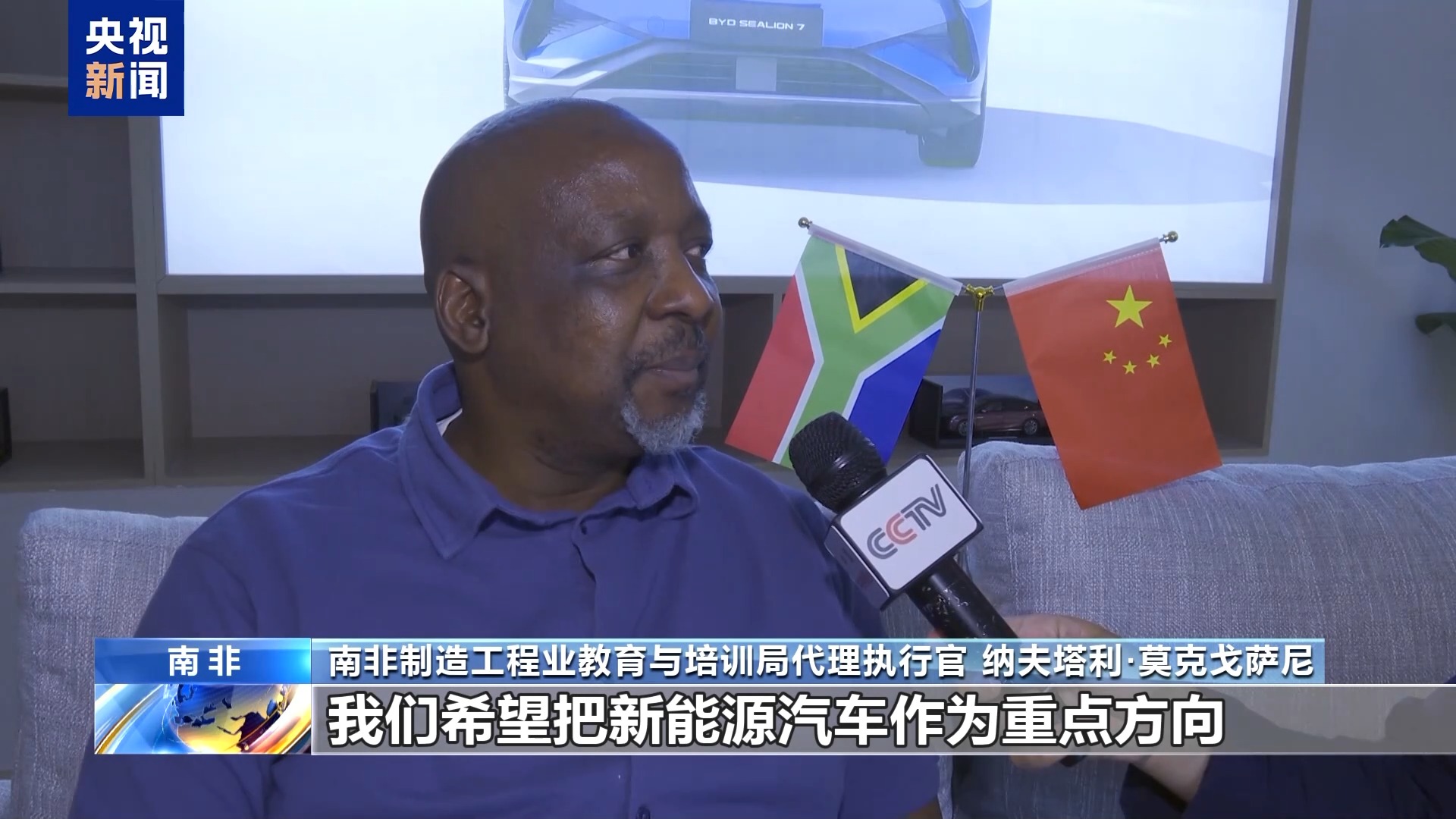
Group 1 - The South African automotive industry is facing unprecedented pressure due to the 30% tariffs imposed by the U.S. on most goods from South Africa since August, prompting the industry to seek new growth opportunities amidst the global shift towards new energy vehicles [1] - The opening of a flagship Chinese electric vehicle store in Johannesburg has generated significant attention, symbolizing the entry of new energy vehicles into South Africa and indicating a shift in the automotive sector towards new growth drivers under external pressures [1] Group 2 - The South African Manufacturing Engineering Education and Training Authority aims to focus on new energy vehicles, ensuring that the domestic workforce is equipped with the necessary skills for maintenance and support of these vehicles [3] - Local educational and training institutions are collaborating with automotive companies to establish a talent system for the repair, inspection, and safety training of new energy vehicles, ensuring sustainable development capabilities for the future [3] Group 3 - The CEO of Global South Media Network highlighted that the U.S. is moving away from international consensus by implementing unilateral tariffs, which undermines diplomatic dialogue [5] - In response to unfair external pressures, South Africa is embracing green development opportunities with a more open approach, emphasizing the importance of equal and mutually beneficial cooperation to effectively address unilateralism challenges and to take control of its development destiny in the global industrial transformation [5]
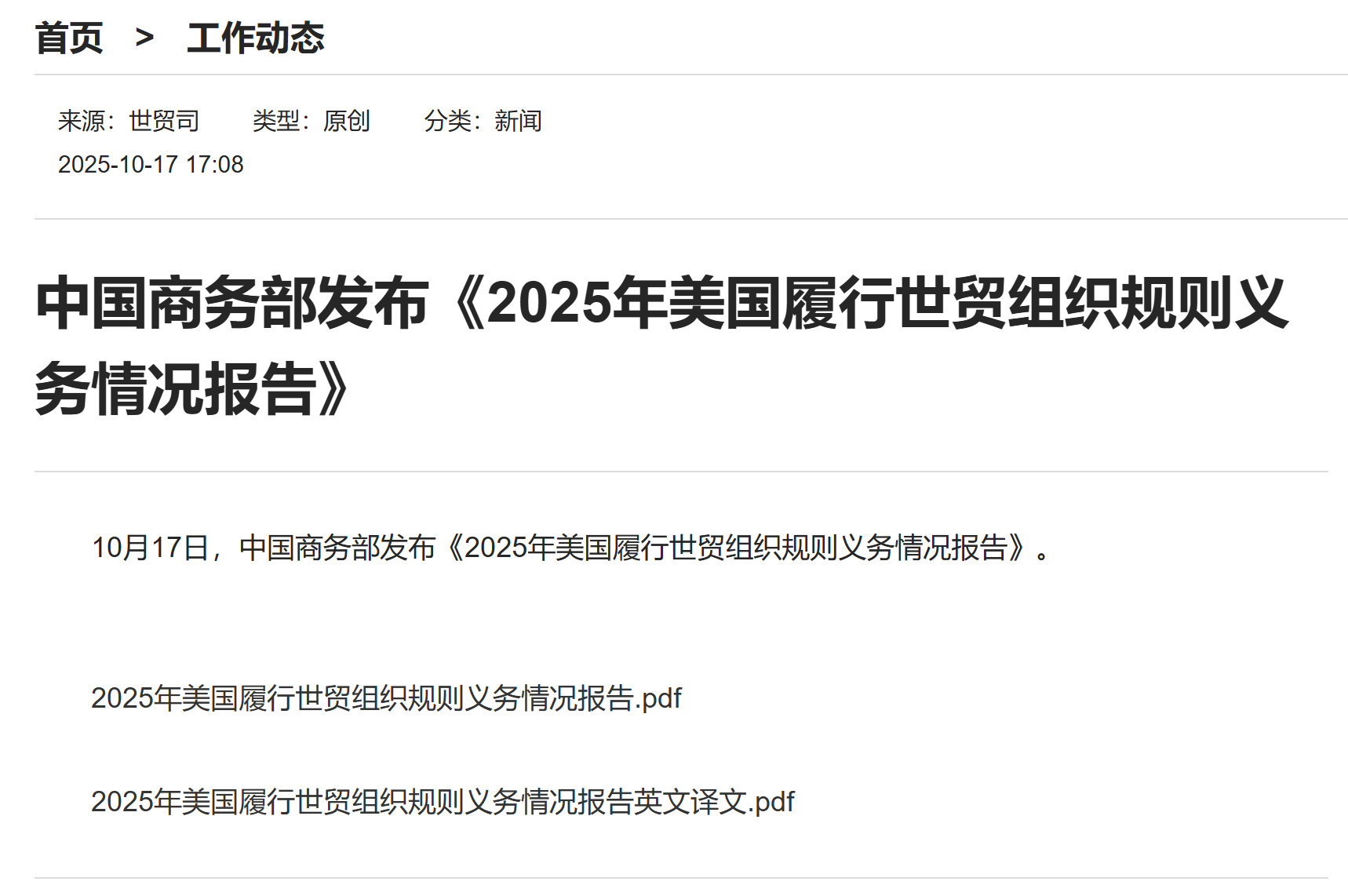
商务部连续第三年发布美国履行世贸组织规则义务情况报告
2 1 Shi Ji Jing Ji Bao Dao· 2025-10-17 11:34
Core Viewpoint - The report highlights concerns regarding the United States' compliance with World Trade Organization (WTO) rules, emphasizing that the U.S. has engaged in unilateralism and protectionism, undermining the multilateral trade system [4][5]. Summary by Sections Overall Evaluation of U.S. Compliance - The report evaluates the U.S. compliance with WTO obligations from four aspects, stating that as a key founder and beneficiary of the multilateral trade system, the U.S. should lead by example in adhering to rules [4]. - The U.S. has been accused of ignoring WTO rules and member expectations, engaging in economic bullying and unilateral measures that severely impact the multilateral trade system [4]. Concerns Raised by China - The Chinese Ministry of Commerce has expressed ongoing concerns about the U.S.'s trade policies, including trade bullying and manipulation of industrial policies, which disrupt global supply chains [4]. - The 2025 report continues to express serious concerns over the U.S.'s discriminatory policies and the escalation of unilateral measures, including the introduction of "reciprocal tariffs" and the initiation of a global trade war [4]. Importance of Multilateral Trade System - The WTO is described as the cornerstone of economic globalization and international trade, relying on member compliance with obligations and mutual cooperation [5]. - The report aims to urge the U.S. to correct its policies, comply with WTO rules, and eliminate illegal measures such as "reciprocal tariffs," promoting a more equitable and inclusive global economic environment [5].
美国践踏多边贸易规则的代价不菲|专家热评
Di Yi Cai Jing· 2025-10-17 09:55
Core Viewpoint - The report from China's Ministry of Commerce highlights the significant issues arising from the United States' violations of multilateral trade rules, portraying the U.S. as a disruptor of the multilateral trade system and emphasizing the need for adherence to WTO regulations [1][4]. Group 1: U.S. Trade Practices - The report systematically lists the serious problems caused by the U.S. in undermining multilateral trade rules over the past year, including unilateralism and manipulation of industrial policies [1][4]. - The U.S. has faced widespread criticism from its trade partners, with over 30 WTO members expressing dissatisfaction with its unilateral tariff increases [3]. - The U.S. has shifted from being a builder and promoter of the multilateral trade system to a proponent of unilateral protectionism, which has severely damaged its international reputation [4]. Group 2: Economic Impact - The World Bank estimates that U.S. unilateral tariff measures could lead to a 1% reduction in global trade volume by 2025, equivalent to erasing 4% of expected growth [5]. - New tariffs may increase annual household expenses in the U.S. by $2,500, with 92% of tariff costs ultimately borne by American consumers [5][6]. - The effective tariff rate in the U.S. has reached its highest level since the Smoot-Hawley Tariff Act of 1930, contributing to rising costs for American families and businesses [6]. Group 3: Recommendations - The report urges the U.S. to eliminate its "reciprocal tariffs" and abandon unilateralism and protectionism, advocating for a return to compliance with multilateral trade rules [6].
美国财长无端指责中方谈判代表,商务部:严重歪曲事实
Sou Hu Cai Jing· 2025-10-16 12:31
Core Viewpoint - The recent comments from U.S. Treasury Secretary Becerra regarding Chinese Vice Minister Li Chenggang's statements and actions in Washington highlight escalating tensions in U.S.-China trade relations, particularly concerning shipping costs and global supply chain stability [1][3]. Group 1: U.S. Position - U.S. Treasury Secretary Becerra described Li Chenggang's remarks as "provocative" and criticized his uninvited presence in Washington, indicating a lack of respect [1]. - Becerra referenced Li's statement that if port transportation costs were addressed, China could cause global chaos, reflecting concerns over potential disruptions in international trade [1]. Group 2: China's Response - Chinese Ministry of Commerce spokesperson He Yongqian countered that the U.S. comments misrepresented the facts, emphasizing that Li Chenggang's visit was aimed at discussing U.S.-China economic relations and addressing U.S. restrictions on Chinese shipbuilding [3]. - He noted that China has been proactive in negotiations regarding the U.S. Section 301 investigations and has proposed cooperation, but the U.S. has maintained a negative stance, leading to China's defensive countermeasures, including special port fees on U.S. vessels [3]. - He characterized the U.S. actions as unilateralism and protectionism, which harm Chinese industries, increase inflation in the U.S., and negatively impact U.S. port competitiveness and employment [3]. - He expressed hope that the U.S. would recognize its errors and return to constructive dialogue [3].
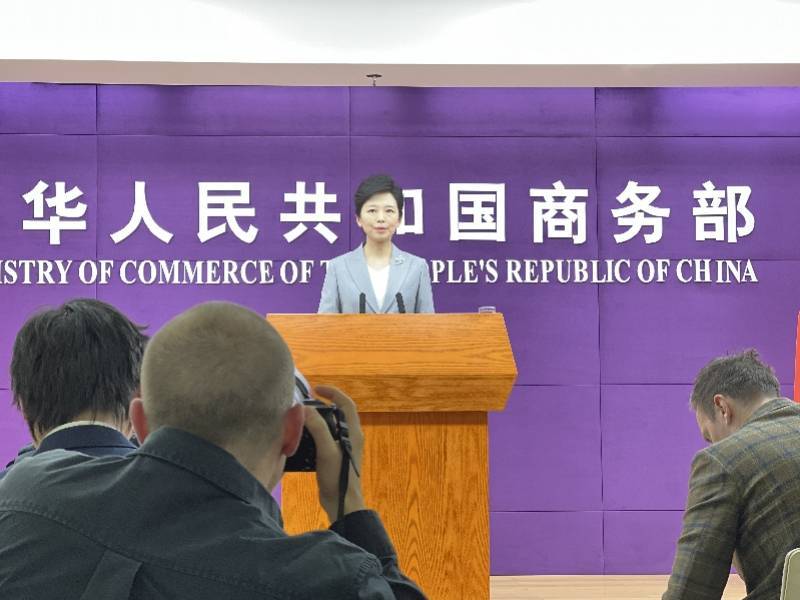
美财长无端指责我谈判代表,商务部驳斥:严重歪曲事实
Guan Cha Zhe Wang· 2025-10-16 10:10
Core Viewpoint - The Chinese Ministry of Commerce strongly criticizes the U.S. for its unilateral and protectionist measures against China's shipbuilding industry, asserting that these actions harm both Chinese interests and global supply chain stability [1][2]. Group 1: U.S. Actions and Responses - The U.S. Treasury Secretary's comments regarding Chinese Vice Minister Li Chenggang's statements are described as a serious distortion of facts [1]. - Li Chenggang's visit to the U.S. was aimed at discussing the implementation of agreements made during the talks between the two countries' leaders, focusing on trade relations and the U.S. Section 301 investigations [1]. - China has been actively engaging with the U.S. regarding the 301 investigations, maintaining a constructive stance and proposing cooperation suggestions, despite the U.S. maintaining a negative attitude [1]. Group 2: Impact of U.S. Measures - The U.S. Section 301 investigations and restrictions are characterized as typical unilateralism and protectionism, which significantly damage China's related industries and could increase inflation in the U.S. [2]. - These U.S. measures are noted to disrupt global supply chain stability and create chaos in the global shipping industry [2]. - China's countermeasures are described as passive defensive actions necessary to maintain a fair competitive environment in international shipping and shipbuilding markets [2]. Group 3: Call for Dialogue - China expresses hope that the U.S. will recognize its erroneous actions and return to the correct path of dialogue and consultation [3].
英国将11家中国实体纳入制裁名单,含数家半导体公司
是说芯语· 2025-10-16 06:42
Core Viewpoint - The UK government has imposed sanctions on 11 Chinese entities, citing their support for Russian energy and military industries, reflecting a tightening of economic measures against Russia amid the ongoing Ukraine conflict [1][4][10]. Summary by Sections Sanctions Announcement - On October 15, the UK government announced sanctions against 11 Chinese entities for allegedly supporting Russian energy and military sectors [1][4]. - This move is part of a broader strategy by Western allies to increase economic pressure on Russia due to the ongoing conflict in Ukraine [1]. Chinese Entities Listed - The newly sanctioned Chinese entities include: - Shandong Baogang International Port Co. Ltd - Shandong Haixin Port Group Co. Ltd - Shandong Jingang Port Co., Ltd - Shandong Yulong Petrochemical Company - National Pipeline Group Beihai Liquefied Natural Gas Co. Ltd - Shenzhen JLFY Technology Co., Ltd - Sure Technology (Hong Kong) Company Ltd - Msuntech Electronics (Group) Co., Limited - Horsway Tech (HK) Co., Limited - Izzition E-Technology Co. Ltd - YW NL E-Commerce Company [5][6]. Chinese Government Response - The Chinese embassy in the UK strongly opposed the sanctions, labeling them as unilateral actions without international legal basis, which harm the legitimate rights of Chinese enterprises [3][7]. - China urged the UK to correct its actions and withdraw the sanctions, emphasizing that normal cooperation between Chinese and Russian enterprises should not be disrupted [9][10]. Analysis of UK’s Motives - Analysts suggest that the UK's sanctions may serve multiple purposes, including diverting domestic issues, appeasing the US, and addressing industrial concerns [10]. - The ongoing sanctions against Chinese entities reflect deepening divergences between the UK and China regarding policies on Russia and export controls [10].