
战略性新兴产业

Search documents
维信诺:公司聚焦AMOLED业务
Zheng Quan Ri Bao Wang· 2026-01-09 13:11
Group 1 - The company, Visionox (002387), focuses on AMOLED business, which is a significant part of the new display industry and an essential component of the electronic information industry [1] - The new display industry is classified as a strategic emerging industry in China and is crucial for the country's high-quality development [1]

中国华能:2025年战新产业营业收入预计达1049亿元
Zheng Quan Shi Bao Wang· 2026-01-09 12:25
Core Insights - The core viewpoint of the article highlights the expected growth in revenue for China Huaneng in the strategic emerging industries sector by 2025, indicating a significant shift in the company's focus and potential market positioning [1] Group 1 - By 2025, China Huaneng's revenue in the strategic emerging industries is projected to reach 104.9 billion yuan [1] - The revenue share from these industries is expected to increase by 14.2 percentage points compared to 2022 [1]

国务院国资委:2025年前11个月央企战新产业营收突破11万亿元
Zheng Quan Shi Bao Wang· 2026-01-09 12:13
Core Insights - The State-owned Assets Supervision and Administration Commission (SASAC) held a meeting on January 9 to discuss the deepening and enhancement of state-owned enterprise reforms [1] - Li Zhen, a member of the SASAC Party Committee and Deputy Director, reported that by November 2025, the operating revenue of central enterprises in strategic emerging industries is expected to exceed 11 trillion yuan [1] Group 1 - The meeting focused on the experiences and actions taken to reform state-owned enterprises [1] - The emphasis was placed on the performance of central enterprises in strategic emerging industries [1] - The projected revenue growth indicates a significant expansion in this sector [1]
苏美达拟4亿控股蓝科高新 加码高端装备提升核心竞争力
Chang Jiang Shang Bao· 2026-01-09 00:53
Core Viewpoint - The acquisition of a 16.92% stake in Blue Science High-Tech by Sumida is a strategic move to enhance its position in the high-end equipment manufacturing sector and strengthen its market share in strategic emerging industries [1][2]. Group 1: Acquisition Details - Sumida plans to purchase 60 million shares of Blue Science High-Tech from its controlling shareholder, China National Machinery Group, for a total price of 403 million yuan, which translates to 6.71 yuan per share [2]. - Following the transaction, Sumida's stake in Blue Science High-Tech will increase to 21.72%, making it a controlling subsidiary and included in Sumida's consolidated financial statements [2]. Group 2: Strategic Significance - The acquisition is not merely a stock transaction but represents a dual strategy of vertical integration and complementary technology resources, enhancing Sumida's capabilities in the petrochemical and marine engineering equipment sectors [2]. - This move is part of Sumida's broader strategy to create a synergistic development model that combines clean energy, green shipping, and high-end equipment [2]. Group 3: Financial Performance - Sumida has shown consistent growth in its financial performance, with net profits increasing from 5.46 billion yuan in 2020 to an expected 11.48 billion yuan in 2024, reflecting double-digit growth rates [3]. - In the first three quarters of 2025, Sumida reported revenues of 87.423 billion yuan, a year-on-year increase of 0.52%, and a net profit of 11.04 billion yuan, up 10% from the previous year [3]. Group 4: Market Expansion - In the first half of 2025, Sumida's electromechanical equipment exports grew by 41% to 240 million USD, with significant operations in Uzbekistan and Malaysia [4]. - The domestic market contributed 27.51 billion yuan, accounting for approximately 50% of the company's total revenue, indicating a strong foothold in the local market [4]. Group 5: R&D Investment - Sumida has consistently increased its R&D investment, totaling 2.076 billion yuan over the past five years, which has led to significant innovations and the acquisition of 65 patents, including 12 invention patents [5].


擘画“十五五”国资央企布局产业升级新路径
Xin Lang Cai Jing· 2026-01-08 21:03
Core Viewpoint - The article emphasizes the critical phase of building a modern industrial system in China during the "14th Five-Year Plan" period, highlighting the role of state-owned enterprises (SOEs) in optimizing layout and restructuring national industrial competitiveness [1]. Group 1: Optimizing Layout and Strengthening Foundations - The primary task during the "14th Five-Year Plan" is to maintain a stable proportion of manufacturing in the national economy while promoting its advancement towards high-end and cluster development [2]. - SOEs are expected to play a pivotal role in organizing the industrial and supply chains, optimizing domestic and international layouts, and ensuring the integrity and security of the industrial system [2]. Group 2: Dual-Driven Industrial Upgrade - SOEs must adopt a "dual-driven" approach to industrial upgrades, focusing on both the transformation of traditional industries and the cultivation of strategic emerging industries [3]. - The integration of AI, big data, and 5G technologies into production processes is essential for the transformation of traditional industries, alongside a commitment to green and low-carbon development [3]. - SOEs should proactively identify and invest in high-potential new sectors such as renewable energy and advanced materials, while also preparing for cutting-edge fields like quantum technology and biomanufacturing [3]. Group 3: Restructuring and Capital Empowerment - Strategic restructuring, professional integration, and high-quality mergers and acquisitions are vital for SOEs to optimize resource allocation and enhance core competitiveness [4]. - The goal of restructuring is to concentrate and synergize advantageous resources rather than merely aggregating them [4]. - State capital and various investment funds will play crucial roles in providing "patient capital" and "strategic capital" to support the modern industrial system [4]. Group 4: Expanding International Operations - SOEs are encouraged to conduct international operations in a regulated manner to enhance global competitiveness while focusing on quality and safety [6]. - The internationalization strategy should include strengthening global logistics to ensure supply chain security and promoting high-value products like new energy vehicles abroad [6]. - Risk management is critical, with SOEs required to adhere to overseas investment regulations and mitigate various operational risks [6].
股份行AIC异军突起 聚焦战略性新兴产业
Shang Hai Zheng Quan Bao· 2026-01-08 16:49
Core Insights - The establishment of AICs (Asset Investment Companies) under joint-stock banks marks a shift from state-owned banks' dominance to a more diversified development model in the industry [3][4] Group 1: Investment Activities - Joint-stock bank AICs, including Xingyin Investment, Zhaoyin Investment, and Xinyin Jintou, have successfully launched their first projects since opening in late 2025, focusing on strategic emerging industries such as semiconductors and new energy [1][2] - Xingyin Investment has invested over 6 billion yuan, targeting high-growth sectors and employing a "equity + debt" model to address financing needs across different cycles [2] - The investment projects primarily cover semiconductor, photovoltaic, lithium mining, and engineering plastics industries, with a focus on high transparency and quality listed company subsidiaries [2] Group 2: Differentiation from State-Owned Banks - Joint-stock bank AICs are characterized by their flexibility and market sensitivity, allowing them to effectively fill the financing gap for technology-oriented SMEs [3][4] - The investment logic, industry focus, and operational mechanisms of joint-stock bank AICs differ significantly from those of state-owned banks, which tend to focus on large state-owned enterprises and risk-averse investments [3][4] Group 3: Challenges and Recommendations - Joint-stock bank AICs face challenges such as a lack of experience in equity investment and risk management, necessitating the establishment of a risk management mechanism aligned with equity investment [5] - Experts suggest adopting a "dual GP + dual partnership" model to enhance collaboration between banks and industry capital, as well as implementing a long-term assessment mechanism to improve risk tolerance [5] Group 4: Role in Financial Services - The role of bank-affiliated equity investment is still in its infancy, serving more as a supplementary channel for diversified funding rather than a dominant force in the market [6][7] - Joint-stock bank AICs typically act as general partners (GPs) in investment funds, allowing for deeper involvement in project selection and risk management, which is crucial given their relatively limited capital compared to state-owned banks [7]



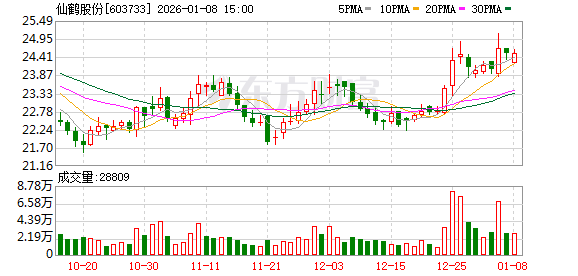
仙鹤股份:电解电容器纸广泛应用于5G通讯、新能源及汽车电子等领域
Zheng Quan Ri Bao· 2026-01-08 13:09
Core Viewpoint - The company, Xianhe Co., Ltd., emphasizes the significance of its electrolytic capacitor paper in various high-tech applications, including 5G communications and aerospace, while also highlighting its commitment to innovation and market opportunities [2]. Group 1: Product Applications - The electrolytic capacitor paper produced by the company is a key material widely used in 5G communications, industrial power supplies, new energy, and automotive electronics [2]. - The electrical insulation paper series has extensive and unique applications in industrial support and high-tech industries [2]. Group 2: Market Position and Strategy - The electrolytic capacitor serves as a fundamental electronic component, with downstream applications covering numerous high-end fields, including aerospace [2]. - The company's controlling shareholder, Zhejiang Xianhe Holding Group Co., Ltd., is investing in an aramid paper project, which is suitable for motor insulation and lightweight structural materials in the aerospace sector due to its high-temperature resistance and strength [2]. - This new material can synergize effectively with the company's existing electrical insulation materials and high-performance paper-based materials, providing customers with more comprehensive and higher-performance material solutions [2]. - The company will continue to monitor downstream technological trends and actively promote product innovation and industrial collaboration to seize opportunities in emerging markets [2].


陕西成立科技创新协同发展基金
Xin Hua Cai Jing· 2026-01-08 12:27
Core Viewpoint - The establishment of the Shaanxi Zhongying Xingsheng Technology Innovation Collaborative Development Fund, with a capital of 1 billion RMB, aims to support the development of strategic emerging industries in Shaanxi Province, focusing on technology-driven enterprises and key links in the industrial chain [1] Group 1: Fund Establishment and Purpose - The fund is a partnership led by Bank of China International Investment Co., Ltd. and Shaanxi Investment Fund Management Co., Ltd. [1] - It will focus on strategic emerging industries such as new materials and new energy, supporting technology-driven enterprises with original innovation capabilities in Shaanxi [1] Group 2: Broader Economic Impact - The fund is part of Bank of China's efforts to integrate resources from the Bank of China Group to serve local economic development in Shaanxi [1] - The bank aims to promote a virtuous cycle of "technology-industry-finance" by investing in technology enterprises and utilizing diverse financial products [1]
战新产业与未来产业领航,央企开辟增长“第二曲线”
Hua Xia Shi Bao· 2026-01-08 12:16
Core Insights - The article emphasizes the importance of the "14th Five-Year Plan" implementation period starting in 2026, focusing on enhancing core functions and competitiveness of state-owned enterprises (SOEs) to achieve world-class status [2] - The central government aims to accelerate industrial upgrades and foster new growth drivers through strategic investments in emerging industries such as artificial intelligence, biomedicine, and digital economy [2][3] Group 1: Industrial Upgrades and Strategic Focus - The State-owned Assets Supervision and Administration Commission (SASAC) is promoting a dual-track development model for SOEs, focusing on both traditional industry enhancement and the cultivation of new growth drivers [3] - Central enterprises are expected to invest in strategic emerging industries, with an annual investment growth rate exceeding 20% over the past five years, reaching 3.3 trillion yuan in fixed asset investments (excluding real estate) from January to November 2025 [3] Group 2: Technological Advancements and R&D Investment - Central enterprises have significantly increased R&D investment, amounting to 890.16 billion yuan from January to November 2025, with an R&D intensity of 2.62% [5] - Breakthroughs in key technologies have been achieved, such as the development of a world-first megawatt-level CO₂ thermal energy storage system and a 700-megawatt ultra-supercritical circulating fluidized bed boiler [5][6] Group 3: Collaborative Ecosystem and Mechanism Reforms - SOEs are moving away from isolated operations by forming innovation alliances and promoting collaborative development across the industrial chain, with 24 innovation alliances involving over 800 enterprises and institutions [7] - The SASAC plans to advance strategic and specialized mergers and acquisitions in 2026, focusing on sectors like new energy, integrated circuits, and biotechnology to enhance competitive advantages [8]

每日市场观察-20260108
Caida Securities· 2026-01-08 05:37
Market Overview - On January 7, the Shanghai Composite Index recorded a slight increase of 0.05%, marking its 14th consecutive day of gains, while the Shenzhen Component rose by 0.06% and the ChiNext Index increased by 0.31%[4] - The total trading volume in the Shanghai and Shenzhen markets exceeded 2.88 trillion yuan, an increase of 492 billion yuan compared to the previous trading day[1] Sector Performance - The market saw a mixed performance across sectors, with industries such as coal, electronics, telecommunications, machinery, and power equipment experiencing gains[1] - Over 2,100 stocks rose, accounting for approximately 40% of the total stocks traded, indicating a healthy market breadth despite some technical adjustment signals emerging[1] Investment Trends - The core sectors of the computing power industry, including photolithography machines and storage chips, are showing strong market certainty due to robust demand and technological advancements[2] - The cyclical sectors, such as energy, controlled nuclear fusion, coal, and lithium carbonate, are also highlighted as recent star sectors, suggesting a coherent investment logic along technology and cyclical themes[2] Fundraising Activity - From January 5 to January 7, 38 new public funds were launched, with a total of 77 funds planned for issuance in January 2026, indicating a significant increase in fundraising activity[14] - The first trading week of January is expected to see 48 new products launched, representing 62.33% of the total planned for the month, with equity products dominating the new fund landscape[14] ETF Trading Volume - The total trading volume of ETFs in both markets reached 480.618 billion yuan, with stock ETFs accounting for 186.7 billion yuan and bond ETFs for 167.924 billion yuan[15]