
生物制造

Search documents
资讯早班车-2025-12-29-20251229
Bao Cheng Qi Huo· 2025-12-29 02:03
Report Industry Investment Rating No relevant content provided. Core Views of the Report - In 2026, China will continue to implement a more proactive fiscal policy, expand fiscal spending, and optimize the government bond tool portfolio [2][14]. - The profit growth rate of large - scale industrial enterprises from January to November has slowed down, but the growth trend since August continues, and new kinetic energy industries are growing rapidly [2][14]. - The prices of domestic precious metals and base metals have risen collectively, with many varieties hitting new highs, while the price of palladium futures has fallen [3]. - The Baltic countries' natural gas reserves are extremely low, which may lead to supply problems during the cold season [9]. - The acquisition of autumn grains this year is at a record - high level, and the grain output has increased, mainly driven by the increase in corn production [10]. - The bond market is expected to remain volatile by the end of the year, and the direction of the market depends on policies and supply [21][22]. - The A - share market is expected to be a volatile market with structural opportunities, and the cycle sector, especially non - ferrous metals, is expected to continue to rise in 2026 [33][35]. Summary by Directory Macro Data Quick View - In Q3 2025, GDP grew by 4.8% year - on - year, down from 5.2% in the previous quarter [1]. - In November 2025, the manufacturing PMI was 49.2%, up from 49.0% in the previous month but down from 50.3% in the same period last year [1]. - In November 2025, the new social financing scale was 24885.00 billion yuan, compared with 8161.00 billion yuan in the previous month and 23288.00 billion yuan in the same period last year [1]. - In November 2025, CPI increased by 0.7% year - on - year, up from 0.2% in the previous month, and PPI decreased by 2.2% year - on - year, down from - 2.1% in the previous month [1]. - In November 2025, exports increased by 5.9% year - on - year, and imports increased by 1.9% year - on - year [1]. Commodity Investment Reference Comprehensive - The 2026 fiscal work will focus on six key tasks, including boosting consumption, increasing investment in key areas, and promoting employment [2][14]. - From January to November, the total profit of large - scale industrial enterprises was 66268.6 billion yuan, a year - on - year increase of 0.1%, but the profit in November decreased by 13.1% year - on - year [2][14]. - On December 26, 30 domestic commodity varieties had positive basis, and 38 had negative basis [3]. - The prices of domestic precious metals and base metals rose, with platinum futures hitting the daily limit, and palladium futures falling [3]. - The Guangzhou Futures Exchange adjusted the price limit and margin standards for platinum and palladium futures during the New Year's Day holiday [3]. - The London silver market is experiencing a severe physical squeeze, and the silver price may continue to rise [4]. Metals - The price of silver has risen sharply, with the international spot silver price breaking through $82 per ounce [5]. - Gold, silver, and platinum prices hit new highs on December 26, supported by geopolitical risks and a weak dollar [5]. - The price of gold jewelry has exceeded 1400 yuan, and the gold recycling market has shown a "polarized" situation [5]. - Several lithium iron phosphate manufacturers have announced production shutdowns for maintenance due to equipment maintenance and cost pressures [6]. - The CME will raise the margin requirements for gold, silver, and lithium futures after the close on December 29 [6]. - The price of silver has increased by 175% this year, and there are concerns about its impact on industrial development and potential price corrections [6]. - As of December 26, the SPDR Gold Trust's holdings increased by 0.27% to 1071.13 tons [7]. Coal, Coke, Steel, and Minerals - Chile's state - owned copper company and a lithium giant will merge their subsidiaries to develop lithium in the Atacama Salt Flats [8]. Energy and Chemicals - As of December 28, Xinjiang Oilfield's carbon dioxide injection exceeded 1 million tons, marking a key step in the large - scale application of CCUS technology [9]. - The natural gas reserves in the Baltic countries are extremely low, which may cause supply problems during the cold season [9]. Agricultural Products - As of now, the purchase of autumn grains has exceeded 200 million tons, 32 million tons more than the same period last year [10]. - China's grain output in 2025 was 1.43 trillion catties, a year - on - year increase of 1.2%, mainly driven by corn production [10]. - The South American soybean growing area has received good rainfall, which is beneficial to the growth of sown soybeans. The production of Malaysian palm oil from December 1 - 25 decreased by 9.12% month - on - month, and exports increased by 1.6% month - on - month [11]. - The prices of rice and eggs in Japan have reached record highs [11]. Financial News Compilation Open Market - This week, 6227 billion yuan of reverse repurchases will mature in the central bank's open market [12]. - On December 26, the Ministry of Finance and the central bank conducted treasury cash management commercial bank time - deposit tenders, with a total winning amount of 210 billion yuan [12]. - On December 26, the central bank conducted 930 billion yuan of 7 - day reverse repurchase operations, with a net investment of 368 billion yuan [12]. Important News - The 2026 National Two Sessions will be held in March, and the review of the "15th Five - Year Plan" draft is on the agenda of the National People's Congress [13][15]. - The National People's Congress Standing Committee passed a new version of the Foreign Trade Law, which will come into effect on March 1, 2026 [15]. - The central bank released the "China Financial Stability Report (2025)", aiming to maintain financial stability and create a suitable monetary and financial environment [17]. - The central bank will pay close attention to the real estate market and promote its stable and healthy development [18]. - The China National Venture Capital Guidance Fund has been officially launched, focusing on early - stage projects in key areas [18]. - Hainan Free Trade Port has launched the full - island customs closure operation, and relevant policies have achieved initial results [18]. - The central bank and the foreign exchange administration will promote cross - border corporate currency integration funds pool business nationwide [19]. - Hong Kong's economy is expected to maintain a good momentum in 2026 [19]. - The issuance scale of science and technology innovation bonds this year has reached 2.26 trillion yuan [19]. - The first industrial plant REITs project in the inter - institutional market has been listed [19]. - Vanke's second 3.7 billion yuan bond extension plan has not been approved [20]. Bond Market Summary - The inter - bank bond market has warmed up, with most interest - rate bond yields falling and treasury bond futures rising [21]. - In the exchange bond market, Vanke bonds generally rose, while industrial and financial bonds generally fell [22]. - The CSI Convertible Bond Index fell 0.04%, and the Wande Convertible Bond Equal - Weighted Index fell 0.23% [22]. - Most money market interest rates declined, and short - term Shibor rates mostly rose [23]. - Most bank - to - bank repurchase fixed - rate and silver - silver repurchase fixed - rate bonds fell [23][24]. - Most US Treasury yields fell, except for the 30 - year yield [24][25]. Foreign Exchange Market - The on - shore RMB against the US dollar closed at 7.0085, down 19 points from the previous trading day [26]. - The US dollar index rose 0.12%, and major non - US currencies showed mixed performance [26]. Research Report Highlights - In 2025, the bond market was a typical "sideways market", and investors faced challenges in a low - interest - rate environment [27]. - The steel industry may see continued improvement in supply and demand in 2026, and steel bond investment should focus on central and state - owned enterprises [27]. - Since mid - November, long - term bonds, especially ultra - long - term bonds, have been significantly adjusted, possibly due to banks' end - of - year duration constraints [28]. - The risk of systemic default of weak - region urban investment bonds in 2027 is limited, but there are valuation and liquidity risks [29]. - The issuance scale and duration of government bonds have increased this year, and the supply pressure on long - term bonds will remain high in 2026 [29]. - In the medium - to - long - term, the RMB may appreciate moderately in 2026, but one - sided bets should be avoided [29]. - Ultra - long - term bonds have certain allocation value in the long run [30]. Today's Reminders - On December 29, 210 bonds will be listed, 61 bonds will be issued, and 459 bonds will pay principal and interest [31][32]. Stock Market News - In the last three trading days of 2025, the A - share market is expected to be a volatile market with structural opportunities [33]. - In 2025, there were 528 double - digit stocks in the A - share market, mainly AI and merger - concept stocks [33]. - As of December 26, the highest return of public active equity funds reached 236.88%, and 72 funds had returns exceeding 100% [34]. - The A - share private placement market has recovered in 2025, with public and private funds investing over 41 billion yuan and achieving high floating profit ratios [34]. - Since 2025, the enthusiasm of A - share companies to list in Hong Kong has increased, and the "A + H" dual - listing model has seen explosive growth [35]. - The cycle sector, especially non - ferrous metals, has strong growth momentum in 2025 and is expected to continue to rise in 2026 [35].
中国科学技术大学副校长傅尧:推动科技与产业深度融合 助力科研成果从“书架”走向“货架”
Shang Hai Zheng Quan Bao· 2025-12-28 19:09
Core Viewpoint - The integration of technology and industry remains a challenge, requiring financial support and comprehensive empowerment to transition scientific achievements from laboratories to the market [1][3]. Group 1: Technology and Industry Integration Challenges - Historical trends indicate that technology has been a crucial driver of industrial upgrades, contributing nearly 80% to economic development [2]. - Despite significant advancements in China's technology sector, the difficulty of integrating technology with industry persists, often requiring substantial capital investment and a multidisciplinary approach [3]. Group 2: Establishment of the Technology Business School - The University of Science and Technology of China (USTC) established the Technology Business School to cultivate "five understandings" talents—those who understand technology, industry, capital, market, and management [4]. - The school aims to promote the deep integration of innovation chains, industrial chains, capital chains, and talent chains to enhance the efficient transformation of scientific achievements [4]. Group 3: Talent Development and Resources - The Technology Business School integrates resources from various departments, creating a systematic and professional talent training framework targeting both students and industry professionals [5]. - The faculty includes both leading scientists and experienced entrepreneurs, leveraging a strong alumni network to support talent development and the transformation of research outcomes [5]. Group 4: Achievements and Impact - The Technology Business School has funded 210 projects, resulting in the development of 249 prototypes and the establishment of 9 companies, generating over 6 million yuan in sales and securing significant investment intentions [6].
北交所策略周报:春季躁动关注未来产业,蘅东光元旦前上市-20251228
Shenwan Hongyuan Securities· 2025-12-28 08:15
Group 1 - The market sentiment is positive, with the North Exchange 50 index rising by 1.19% and the trading volume decreasing by 11.69% compared to the previous week [2][12][16] - Key market themes include commercial aerospace, Hainan "closure" theme, liquid cooling, lithium battery material price increases, and rising copper prices, indicating active thematic investments in future industries such as quantum technology, biomanufacturing, hydrogen energy, nuclear fusion, brain-computer interfaces, embodied intelligence, and sixth-generation mobile communication [12][13][14] - The report maintains a positive outlook on the North Exchange thematic market during the spring rally, emphasizing the importance of timing in thematic investments and highlighting specific stocks to watch, including Fujida, Xingtou Measurement and Control, and others in emerging technology sectors [13][14] Group 2 - The North Exchange saw one new stock listed this week, Jiangtian Technology, which had a significant first-day increase of 180.58% [26][7] - The report notes that the quality of new stocks on the North Exchange is expected to continue improving, with attention on the upcoming listing of Hengtong Light [14][26] - The new three-board market saw 10 new listings and 42 delistings this week, with a total of 5,956 companies currently listed [47][49]
1000亿资金进场,风险投资国家队要干件“大”事 | 马上评
Sou Hu Cai Jing· 2025-12-27 14:50
Core Insights - The National Venture Capital Guiding Fund has officially launched with an investment of 100 billion RMB, marking a significant entry into the market aimed at revitalizing the venture capital landscape in China [1][2][9]. Group 1: Fund Structure and Strategy - The fund is structured in a three-tier system: a national fund at the top, regional funds in the middle, and sub-funds and direct investment projects at the bottom, designed to leverage investments and stimulate the market [22][26]. - The national fund has a 20-year lifespan, significantly longer than traditional funds, allowing for more patient capital investment in long-term projects [24]. - The fund aims to invest at least 70% of its capital in seed and early-stage companies, focusing on hard technology sectors such as integrated circuits, artificial intelligence, and future energy [25][16]. Group 2: Market Impact and Objectives - The fund is designed to address the current "money shortage" in the venture capital market, which has been exacerbated by geopolitical factors and a preference for later-stage investments [13][14]. - By eliminating regional investment requirements, the fund allows capital to flow freely to the best projects regardless of location, promoting a unified national market [26][27]. - The initiative is expected to inject significant liquidity into the market, potentially leveraging the initial 100 billion RMB to generate up to 1 trillion RMB in total investment [22][20]. Group 3: Long-term Vision and Challenges - The fund represents a strategic commitment to nurturing innovation and technology in China, responding to the urgent need for investment in critical sectors to maintain competitiveness on a global scale [19][18]. - It acknowledges the high-risk nature of early-stage investments and aims to provide a supportive environment for startups, allowing for a higher tolerance for failure [14][27]. - The fund's establishment is seen as a necessary step to overcome existing barriers in the venture capital ecosystem, fostering a more dynamic and innovative entrepreneurial landscape [3][27].

21评论丨发挥引导基金带动作用,激活创新链条
Xin Lang Cai Jing· 2025-12-26 19:59
Core Viewpoint - The establishment of the National Venture Capital Guidance Fund marks a strategic initiative to support the construction of a modern industrial system and foster an autonomous innovation capital chain amid increasing international technological competition [1][2]. Group 1: Strategic Significance - The National Venture Capital Guidance Fund aims to inject confidence into the market by signaling long-term governmental support for innovation and entrepreneurship [2]. - It addresses market failures by providing initial funding for high-risk, long-cycle original technology projects, filling the gap left by market capital [2]. - The fund is designed to create an innovation network that promotes collaboration among various market entities, facilitating the flow of capital, knowledge, and management experience [2]. Group 2: Regional Fund Structure - The simultaneous establishment of three regional funds in Beijing-Tianjin-Hebei, the Yangtze River Delta, and the Guangdong-Hong Kong-Macao Greater Bay Area represents a strategic allocation of resources based on national priorities [2][3]. - Each region specializes in different aspects of innovation: Beijing-Tianjin-Hebei focuses on original innovation, the Yangtze River Delta excels in engineering and industrialization, and the Greater Bay Area is known for application and business model innovation [3]. - This structured approach aims to shorten the time it takes for technological achievements to transition from laboratories to market applications, contributing to the establishment of a unified national market [3]. Group 3: Long-term Investment and Risk Sharing - The 14th Five-Year Plan emphasizes the importance of building a modern industrial system and outlines strategic areas for future investment, including quantum technology and biomanufacturing, which require long-term funding and risk-sharing mechanisms [4][5]. - The National Venture Capital Guidance Fund is positioned as a key vehicle for this risk-sharing mechanism, particularly in critical technology sectors facing external pressures [5]. - The fund seeks to explore innovative institutional reforms to balance the acceptance of failure with the prevention of moral hazards, ensuring that investment decisions respect professional judgments while meeting policy objectives [5].
焦点访谈|生物制造,万亿赛道如何跑出“加速度”?
Yang Shi Wang· 2025-12-26 13:28
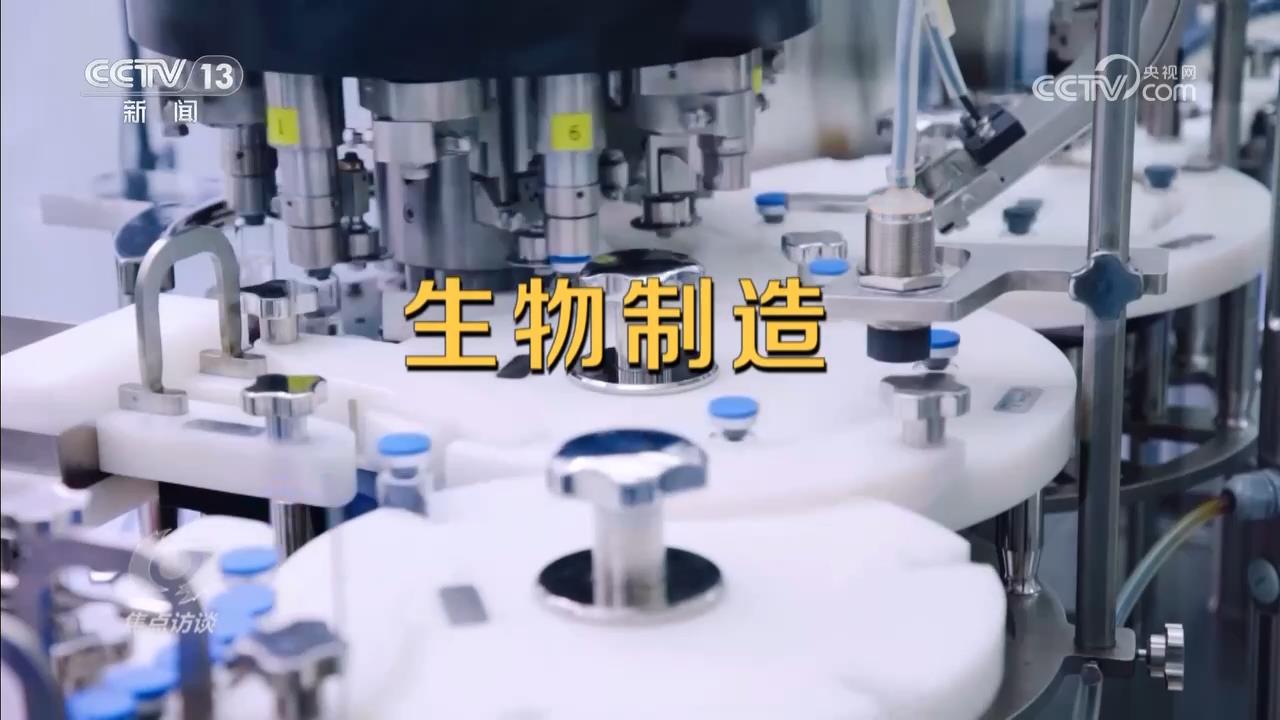
Core Concept - Biomanufacturing is identified as one of the six future industries in China's 14th Five-Year Plan, utilizing biological processes to produce materials and products from raw materials through the metabolic activities of microorganisms and cells [1][10]. Group 1: Definition and Process - Biomanufacturing involves using biological entities, such as microorganisms and plant or animal cells, to metabolize raw materials into desired products, integrating industrial biotechnology with engineering principles for large-scale production [3][5]. - The process is likened to "raising cells," where conditions such as temperature and pH are controlled to optimize the production of materials, fuels, food, pharmaceuticals, and chemicals [3][5]. Group 2: Applications and Benefits - The production of PHA (polyhydroxyalkanoates), a biodegradable polymer, exemplifies biomanufacturing's potential, with over 70 different types developed for use in everyday products, pharmaceuticals, and textiles [8]. - Biomanufacturing offers environmentally friendly production methods, with products like biodegradable straws expected to decompose within 9 to 12 months [8]. Group 3: Market Potential and Growth - The biomanufacturing industry in China reached a total scale of 1.1 trillion yuan during the 14th Five-Year Plan period, indicating significant growth potential [10]. - China's advantages include a unified large market and the world's most complete manufacturing system, which can facilitate the development of new fields such as bio-based materials and biopharmaceuticals [10]. Group 4: Technological Advancements - Recent breakthroughs in life sciences and synthetic biology, including gene sequencing and editing technologies, are being widely applied in biomanufacturing, transforming production methods and potentially impacting daily life [8][12]. - The establishment of national key laboratories and innovation platforms has positioned technological innovation as a driving force for the development of biomanufacturing [12]. Group 5: Infrastructure and Support - The construction of pilot-scale platforms is crucial for transitioning from laboratory research to production, with the Ministry of Industry and Information Technology announcing the first batch of biomanufacturing pilot capacity construction platforms [14]. - Regions like Changde are actively fostering biomanufacturing as a key industry, with plans for acceleration factories and supportive regulations to aid startup companies in scaling production [14][16]. Group 6: Investment and Market Development - Large enterprises and investment institutions are increasingly involved in the biomanufacturing sector, contributing to the entire industry chain from innovation to market application [16]. - The rapid development and market exploration in biomanufacturing reflect a significant shift towards sustainable production methods in various industries [16].
国家创业投资引导基金正式启动 预计撬动万亿级社会资本
Sou Hu Cai Jing· 2025-12-26 11:44
Core Insights - The National Venture Capital Guidance Fund has officially launched, with three regional funds established: Beijing-Tianjin-Hebei, Yangtze River Delta, and Guangdong-Hong Kong-Macao Greater Bay Area, managed by CICC Capital, State Investment and Development Corporation, and Shenzhen Capital Group respectively [1][4] Group 1: Fund Characteristics - Increased financial support: The fund utilizes long-term special national debt funding, with a total of 100 billion yuan contributed by the central government to leverage central financial resources [1] - More precise investment focus: The fund emphasizes "early, small, long-term, and hard technology" investments, targeting cutting-edge fields such as artificial intelligence, biopharmaceuticals, quantum technology, and 6G, with a lifespan of 15 to 20 years to match the long-term R&D needs of hard technology [1] - Enhanced fund operation model: The fund operates under a "mother fund + regional fund + sub-fund" model, aiming to mobilize social capital at a scale of trillions through substantial fiscal resources [2] Group 2: Management Mechanism - Improved management mechanism: The fund will be operated in a market-oriented manner by capable management institutions, with plans to explore a due diligence exemption mechanism and a full lifecycle assessment mechanism to enhance fund vitality and encourage long-term focus [3] Group 3: Regional Fund Focus - Yangtze River Delta Venture Capital Guidance Fund: This fund is jointly funded by national and multi-level state-owned assets from Shanghai, Jiangsu, Zhejiang, and Anhui, focusing on investments in artificial intelligence, quantum technology, hydrogen energy storage, biomanufacturing, embodied intelligence, and 6G, supporting original and disruptive technological innovations [4]

万亿元规模!“国家创业投资引导基金”首批区域基金完成注册,投资意向覆盖集成电路等
Sou Hu Cai Jing· 2025-12-26 10:17
Core Viewpoint - The National Venture Capital Guidance Fund has officially launched, aiming to attract a wide range of participants to form a fund scale of trillions of yuan, with a focus on early-stage investments and hard technology sectors [1][5]. Group 1: Fund Structure and Operation - The fund adopts a three-tier structure: "Fund Company - Regional Fund - Sub-fund," which is described as a "mother fund of mother funds" [6][8]. - The National Venture Capital Guidance Fund will operate under a company system, with a 20-year duration, allowing for a more patient investment approach [7][5]. - Sub-funds will operate under a market-oriented model, with an average scale not exceeding 1 billion yuan, and at least 70% of investments directed towards seed and early-stage enterprises [9][10]. Group 2: Investment Strategy - The fund emphasizes a "four investment" approach: investing early, investing small, investing long-term, and investing in hard technology [3][4]. - At least 70% of the fund's capital will be allocated to seed and early-stage companies, with individual investments capped at 50 million yuan for companies valued below 500 million yuan [4][5]. - The fund will have a 20-year lifespan, breaking away from the traditional 7-10 year investment cycle, which is particularly beneficial for long-cycle sectors like innovative pharmaceuticals [5]. Group 3: Regional Funds - Three regional funds have been established: Beijing-Tianjin-Hebei, Yangtze River Delta, and Guangdong-Hong Kong-Macao Greater Bay Area, each with a target scale exceeding 50 billion yuan [1][16]. - The Beijing-Tianjin-Hebei fund will be managed by China Investment Corporation's subsidiary, focusing on mobilizing central financial enterprises [13][14]. - The Yangtze River Delta fund will be managed by State Development Investment Corporation, aiming to gather various social capital to empower regional tech enterprises [14][15]. - The Guangdong-Hong Kong-Macao Greater Bay Area fund will be managed by Shenzhen Capital Group, encouraging diverse market participants to engage [15]. Group 4: Investment Focus - The funds will target key sectors such as integrated circuits, quantum technology, biomedicine, brain-computer interfaces, and aerospace [17]. - The investment strategy aligns with national planning documents, focusing on strategic emerging industries and future industries [5][12].
基本金属普涨 沪铜、贵金属续刷新高 碳酸锂涨逾8% 氧化铝涨超5%
Sou Hu Cai Jing· 2025-12-26 09:28
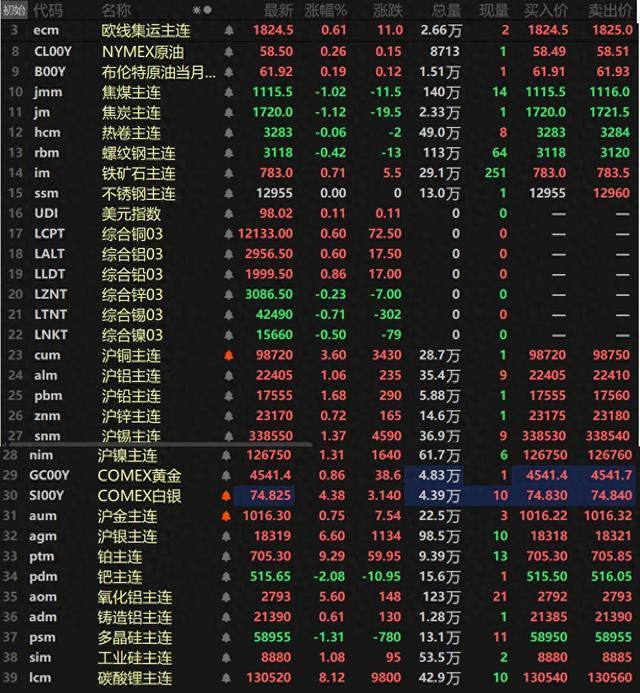
Metal Market - Domestic base metals collectively surged, with copper leading at a 3.6% increase, reaching a record high of 99,730 yuan/ton [1] - Aluminum rose by 1.06%, lead by 1.68%, tin by 1.37%, and nickel by 1.31%, while zinc increased by 0.72% [1] - Alumina futures saw a significant rise of 5.6%, hitting a peak of 2,830 yuan/ton, marking a new high since November 2024 [1] - Lithium carbonate futures skyrocketed by 8.12%, reaching 131,000 yuan/ton, a new high since November 2023 [1] - The black metal sector experienced a downturn, with stainless steel remaining stable at 12,955 yuan/ton, while iron ore rose by 0.71% [1] Precious Metals - COMEX gold increased by 0.86%, reaching a peak of $4,561.6/oz, continuing to set a historical high [2] - COMEX silver surged by 4.38%, hitting a record high of $75.495/oz [2] - Domestic gold rose by 0.75%, reaching a historical high of 1,023.96 yuan/gram, while silver increased by 6.6%, reaching 18,658 yuan/kg [2] - Platinum futures rose by 9.29%, reaching a historical high of 709.85 yuan/gram before slightly retracting [2] Macroeconomic Developments - The National Venture Capital Guiding Fund focuses on cutting-edge fields such as AI, biopharmaceuticals, quantum technology, and 6G, aiming to leverage trillions in social capital [5] - The fund will adopt a three-tier structure to attract local governments, financial institutions, and enterprises, with a focus on long-term investments [5] - The National Development and Reform Commission announced increased investment in early-stage projects in integrated circuits, AI, aerospace, and low-altitude economy [6][7] - As of November, China's total installed power generation capacity reached 3.79 billion kilowatts, a year-on-year increase of 17.1% [7] Oil Market - Both U.S. and Brent crude oil prices rose slightly, with U.S. oil up by 0.26% and Brent by 0.19% [13] - Oil prices are expected to face the largest annual decline since 2020, with Brent and U.S. crude projected to drop approximately 17% and 18%, respectively [13] - The U.S. Energy Information Administration (EIA) will release official inventory data, reflecting demand from the world's largest oil consumer [13]
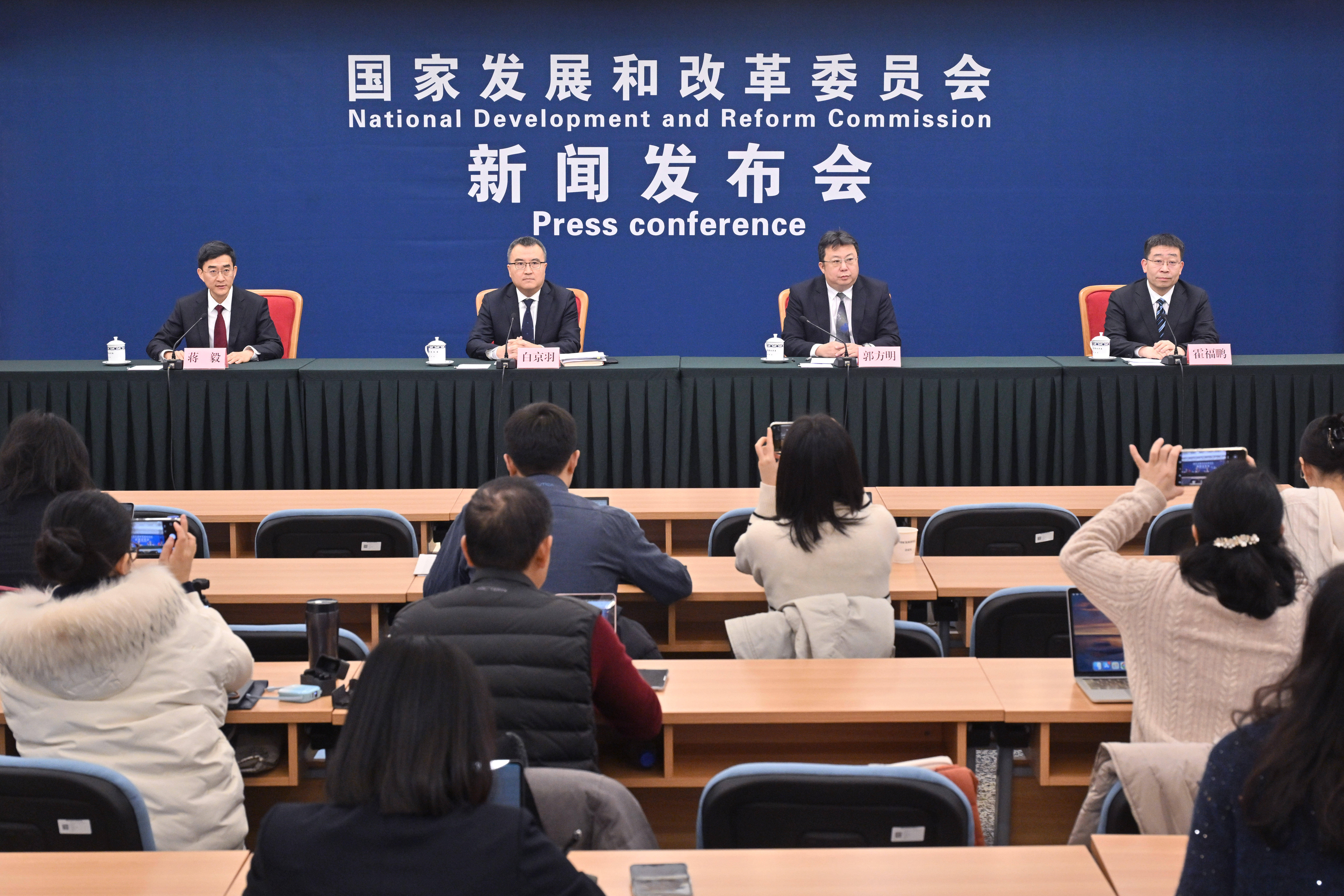
国家发展改革委:创业投资引导基金将加大对集成电路、人工智能、航空航天、低空经济、生物制造、未来能源等领域投资力度
Xin Hua Cai Jing· 2025-12-26 07:11
Core Viewpoint - The National Venture Capital Guidance Fund aims to gather various social capital to inject financial resources into emerging and future industries [1] Group 1: Investment Focus - The Guidance Fund will focus on early-stage projects and seed enterprises in key areas such as integrated circuits, artificial intelligence, aerospace, low-altitude economy, biomanufacturing, and future energy [1] - The fund aims to increase investment efforts in innovation and entrepreneurship active regions, encouraging participation from various financial institutions and private capital [1] Group 2: Support Services - In addition to financial support, the Guidance Fund will create a high-quality, comprehensive entrepreneurial investment service system [1] - A national comprehensive service platform will be established to provide portfolio companies with value-added services such as corporate governance, strategic planning, human resources, and industry cooperation [1] Group 3: Funding Structure - The Guidance Fund will utilize long-term special government bond funds, with a total fiscal contribution of 100 billion yuan at the national level [1] - The fund will actively encourage social capital participation at the regional fund and sub-fund levels [1]