
金融供给侧结构性改革

Search documents
央行重磅!
中国基金报· 2025-06-27 10:33
Core Viewpoint - The People's Bank of China (PBOC) emphasizes the need for a moderately loose monetary policy to support high-quality economic development and maintain stability in the financial market [1][2][5] Group 1: Monetary Policy and Economic Environment - The PBOC's monetary policy committee meeting highlighted the increased macroeconomic regulation and the effective release of loan market quotation rate reforms, resulting in historically low social financing costs [1][2] - The external economic environment is becoming more complex, with weakened global growth momentum and increased trade barriers, while domestic economic indicators show improvement [2][3] - The meeting proposed to enhance the intensity and effectiveness of monetary policy, ensuring liquidity remains ample and aligning social financing growth with economic growth and price expectations [3][4] Group 2: Financial Sector Support and Structural Reforms - The meeting discussed the importance of guiding large banks to support the real economy and encouraging small and medium-sized banks to focus on their core responsibilities [4] - Emphasis was placed on implementing structural monetary policy tools to support key areas such as technological innovation and consumption, while also addressing financing challenges for small and micro enterprises [4] - The PBOC aims to stabilize the real estate market by enhancing financial support for existing properties and land, while also improving the foundational financial systems in this sector [4] Group 3: Policy Implementation and Coordination - The meeting underscored the need for coordinated macroeconomic policies to enhance domestic circulation and effectively utilize both existing and new policies to stimulate demand and economic vitality [5] - The PBOC is committed to fully implementing the spirit of the 20th National Congress and the Central Economic Work Conference, focusing on high-quality development and modernizing the economy [5]

深市并购重组活跃度持续提升 政策赋能产业整合加速推进
Zheng Quan Ri Bao Wang· 2025-06-26 02:43
Group 1 - Tianyima plans to acquire 51% of Xingyun Kaiwu's shares for cash and 49% through share issuance, making Xingyun Kaiwu a wholly-owned subsidiary [1] - Since the implementation of the "Six Merger Rules," the Shenzhen Stock Exchange has seen 903 new merger and acquisition disclosures totaling 423.5 billion yuan, with significant asset restructurings increasing by 222% year-on-year [1] - The Shenzhen Stock Exchange aims to enhance regulatory services and support quality merger and acquisition projects to contribute to high-quality economic development [1] Group 2 - The merger and acquisition activity in the Shenzhen market has significantly increased, with a focus on core business and enhancing competitiveness [2] - Guosen Securities' acquisition of Wanhua Securities is a notable example of market-driven integration in the financial services sector, enhancing Guosen's market coverage in the Guangdong-Hong Kong-Macao Greater Bay Area [2] - The successful practice of market-driven mergers in the financial services industry demonstrates the importance of optimizing resource allocation and enhancing industry competitiveness [3] Group 3 - The continuous support from regulatory bodies and policy initiatives has contributed to the sustained heat in the merger and acquisition market [4] - The revised major asset restructuring management measures aim to simplify review processes and innovate transaction tools, facilitating resource integration for listed companies [4] - The China Securities Regulatory Commission is committed to improving the regulatory framework for listed companies to enhance their core competitiveness and operational performance [4] Group 4 - The ongoing policy support is expected to highlight the resource integration effects and strategic synergy value in the merger and acquisition market [5] - Future mergers are likely to focus on high-end manufacturing, new energy, and artificial intelligence, with an increase in cross-border mergers [5] - Innovative merger models, such as reverse mergers and spin-offs, may integrate with digital tools for more flexible resource allocation [5]

第五套标准重启!募资额缩水约11亿元,禾元生物上会胜算几何
Bei Jing Shang Bao· 2025-06-25 12:43
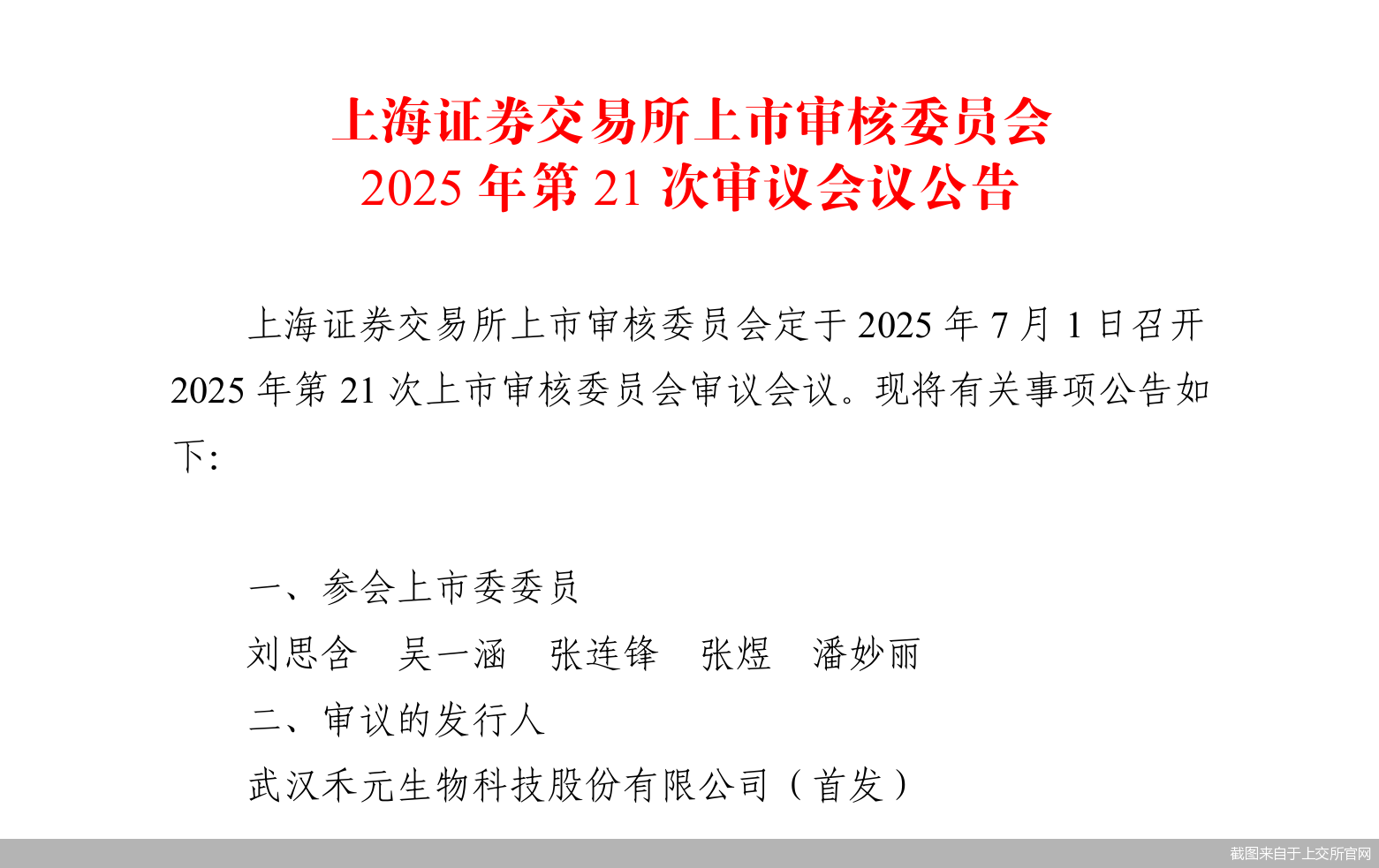
Group 1 - The first company to be reviewed under the restarted fifth set of standards for the Sci-Tech Innovation Board is Wuhan Heyuan Biotechnology Co., Ltd. (Heyuan Bio) [1][3] - Heyuan Bio is an innovative biopharmaceutical company known for its "rice-derived blood" technology and has established a unique plant expression system and two technical platforms [3][4] - The company has adjusted its fundraising target down by approximately 1.1 billion yuan, from an initial 3.502 billion yuan to 2.4 billion yuan, due to steady progress in R&D and business operations [5][6] Group 2 - Heyuan Bio's asset-liability ratio is projected to increase significantly in 2024, with ratios of 18.81%, 23.96%, and 43.37% for the years 2022 to 2024 respectively [6][7] - The company has not yet achieved profitability, with reported revenues of approximately 13.4 million yuan, 24.3 million yuan, and 25.2 million yuan for the years 2022 to 2024, and net losses of approximately 144 million yuan, 187 million yuan, and 151 million yuan for the same period [7] - Heyuan Bio's core product, HY1001, is expected to be approved for market launch soon, having completed its Phase III clinical trials with promising results [7][8] Group 3 - The recent policy changes by the China Securities Regulatory Commission aim to enhance the inclusivity and adaptability of the Sci-Tech Innovation Board, facilitating the listing of unprofitable companies [4] - Other companies currently in the review process under the fifth set of standards include Beixin Life, Hengrun Da, Sizherui, and Bibete, with some making faster progress than others [8][9]
促消费!央行等六部门发布19条举措加强金融支持
Wind万得· 2025-06-24 10:28
Core Viewpoint - The article discusses the joint issuance of guidelines by six departments, including the People's Bank of China, aimed at boosting and expanding consumption through financial support, emphasizing the importance of enhancing consumer capacity and optimizing financial services in various sectors [2][3]. Group 1: Overall Requirements - The guidelines stress the importance of financial services in supporting the real economy and enhancing consumer demand, integrating supply-side structural reforms with the strategy of expanding domestic demand [4]. - Financial institutions are encouraged to innovate and optimize financial products and services to meet diverse consumer financing needs [4]. Group 2: Enhancing Consumer Capacity - The guidelines propose measures to stabilize consumer expectations by increasing support for the real economy and coordinating financial policies with fiscal and industrial policies [5]. - There is a focus on supporting employment and income growth for residents, particularly for small and micro enterprises, to enhance consumer confidence [5]. Group 3: Financial Supply in Consumption Areas - Financial institutions are encouraged to provide targeted credit support to key consumption sectors, including retail, hospitality, and cultural services, to improve service quality [8]. - The guidelines highlight the importance of structural monetary policy tools to incentivize lending in service consumption sectors [8]. Group 4: Financial Support for Key Consumption Areas - The guidelines advocate for increased financial support for the recycling of old consumer goods and the promotion of new purchases, particularly in the automotive and home appliance sectors [11]. - There is a call to enhance financial services for service consumption, including personalized financial products for sectors like hospitality and elder care [12]. Group 5: Infrastructure and Supply Chain Support - Financial support is emphasized for the construction of consumer infrastructure, such as cultural and sports facilities, to enhance overall consumption capacity [13]. - The guidelines encourage financial institutions to support logistics and supply chain projects to reduce costs and improve efficiency in the distribution of goods [14]. Group 6: Optimizing the Consumption Environment - The guidelines propose improvements in payment services to enhance consumer experience across various payment methods [15]. - There is a focus on building a robust credit system to support consumer financing and protect consumer rights in financial transactions [16]. Group 7: Organizational Support - The guidelines call for enhanced coordination among local financial management departments and relevant industry authorities to effectively implement consumption support measures [17]. - There is an emphasis on monitoring and evaluating the effectiveness of financial support policies for consumption [17].

促消费!央行等六部门重磅发布
第一财经· 2025-06-24 10:02
Core Viewpoint - The article discusses the joint issuance of guidelines by six Chinese government departments aimed at enhancing financial support for consumption, thereby stimulating economic growth and improving consumer confidence [1][2][4]. Group 1: Overall Requirements - The guidelines emphasize the importance of financial services in supporting the real economy and enhancing consumer demand, aligning with the principles of Xi Jinping's thought [5]. - The approach combines the expansion of domestic demand with structural reforms in financial supply, aiming to create a virtuous cycle of production, distribution, circulation, and consumption [6]. Group 2: Enhancing Consumer Capacity and Demand - The guidelines propose measures to stabilize consumer expectations by strengthening financial support for the real economy and coordinating monetary and fiscal policies [7]. - Support for employment and income growth is highlighted, particularly for small and micro enterprises, to boost consumer confidence [7]. - The development of financial products tailored to individual pension needs and the expansion of commercial health insurance are encouraged to enhance consumer willingness [8]. Group 3: Financial Institution Support and Supply Expansion - Financial institutions are urged to improve their organizational structures and professional teams to provide efficient consumer financial services [9]. - The guidelines promote the use of structural monetary policy tools to support key service consumption sectors, with a focus on providing loans to various consumer industries [10]. - The issuance of bonds by qualified enterprises in cultural, tourism, and education sectors is encouraged to expand consumer credit [11]. Group 4: Supporting Key Consumption Areas - Financial institutions are encouraged to enhance support for the recycling of old consumer goods and the purchase of new ones, particularly in the automotive and home appliance sectors [13]. - The guidelines stress the importance of providing tailored financial products for service consumption, including hospitality, retail, and elder care services [14]. Group 5: Strengthening Financial Infrastructure and Circulation Systems - The guidelines advocate for financial support in building consumption infrastructure, such as cultural and sports facilities, to enhance consumer experiences [16]. - Financial institutions are encouraged to support logistics and supply chain projects to reduce overall consumption costs [17]. Group 6: Optimizing the Consumption Environment - Continuous improvement of payment services is emphasized, focusing on enhancing the efficiency of various payment methods [19]. - The establishment of a robust credit system in the consumption sector is encouraged to facilitate better financial services [20]. - Protection of consumer financial rights is highlighted, ensuring transparency and security in financial transactions [20]. Group 7: Organizational Support - Local financial management departments are urged to coordinate with relevant authorities to effectively implement the guidelines [21]. - The importance of monitoring and evaluating the impact of financial support policies on consumption is emphasized [21].

六部门:创新适应家庭财富管理需求的金融产品,提高居民财产性收入
财联社· 2025-06-24 09:34
Core Viewpoint - The article discusses the joint issuance of guidelines by six Chinese government departments aimed at enhancing financial support for consumption, thereby stimulating economic growth and improving consumer confidence [1][2]. Group 1: Overall Requirements - The guidelines emphasize the importance of financial services in supporting the real economy and enhancing consumer demand, aligning with the principles of Xi Jinping's thought [6]. - The approach combines supply-side structural reforms with the expansion of domestic demand, aiming to create a virtuous cycle of production, distribution, circulation, and consumption [6]. Group 2: Enhancing Consumer Capacity and Demand - The guidelines propose measures to stabilize consumer expectations by strengthening financial support for the real economy and coordinating monetary and fiscal policies [7]. - Support for employment and income growth is highlighted, particularly for small and micro enterprises, to boost consumer confidence [7]. - Financial products tailored to individual pension needs and commercial health insurance are encouraged to enhance consumer willingness to spend [8]. Group 3: Expanding Financial Supply in Consumption - Financial institutions are urged to improve their service capabilities in the consumption sector, focusing on innovative credit products and efficient loan processes [9]. - Structural monetary policy tools will be utilized to incentivize lending in key service sectors such as retail, hospitality, and education [10]. - The guidelines advocate for the development of bond markets to support financing in cultural, tourism, and educational sectors [10][11]. Group 4: Supporting Key Consumption Areas - Financial institutions are encouraged to provide diverse financing options for consumer goods, including trade-in services for old products [13]. - There is a focus on enhancing financial support for service consumption, particularly in areas like hospitality, retail, and elder care [14]. - New consumption models such as digital, green, and health consumption are to be explored and supported through financial innovation [14]. Group 5: Strengthening Financial Infrastructure - The guidelines call for financial support for the construction of consumer infrastructure, including cultural and sports facilities, to enhance overall consumption capacity [16]. - Support for logistics and supply chain projects is emphasized to reduce costs and improve efficiency in the commercial circulation system [17]. Group 6: Optimizing the Consumption Environment - Financial institutions are encouraged to enhance payment services across various consumer scenarios, improving the overall payment experience [18]. - The establishment of a robust credit system in the consumption sector is prioritized to facilitate better access to credit for consumers and businesses [19]. Group 7: Organizational Support - Coordination among local financial management departments and relevant industry authorities is essential for effective implementation of the guidelines [21]. - Monitoring and evaluation mechanisms will be established to assess the impact of financial support on consumption [21].

中国机构配置手册(2025版)之机构风险篇:破茧向新:行业整合下的金融风险与化解
Guoxin Securities· 2025-06-11 11:14
Investment Rating - The investment rating for the industry is "Outperform the Market" (maintained) [2] Core Insights - The financial supply-side structural reform is fundamentally reshaping the industry's operational logic, driving institutions to focus on core business capabilities and risk pricing efficiency, while eliminating inefficient capacities through market mechanisms [4][6] - The report outlines the transformation space and risk status across various sub-industries under the supply-side structural reform, highlighting the challenges faced by smaller institutions and the advantages held by larger entities [4][6] Summary by Sections Banking Sector - The banking industry is experiencing intensified differentiation and a reconstruction of the credit system, with a shift from scale expansion to high-quality operations [4] - Major state-owned banks and quality joint-stock banks are strengthening their systemic positions, while regional small and medium banks face significant challenges [4][6] Insurance Sector - The insurance industry is returning to its core protection essence, with regulatory measures guiding companies to enhance risk pricing capabilities [4][6] - Short-term profitability is under pressure, particularly for companies reliant on interest spread models [4] Securities Sector - The securities industry is undergoing a new landscape shaped by strict regulations and increased concentration, with smaller firms struggling to survive due to rising operational costs [4][6] - Leading firms are building barriers in wealth management and capital intermediary services through mergers and acquisitions [4] Trust Sector - The trust industry is being reshaped by the end of regulatory arbitrage, with a significant decline in financing and channel business scales [6] - Smaller trust companies are facing profitability and capital challenges, while larger firms are leveraging their resources to build new profit points [6] Leasing Sector - The leasing industry is transitioning from "quasi-loan" expansion to deep industrial services, with regulatory constraints impacting companies reliant on government financing [6] - Companies with industrial backgrounds are forming stable cash flow barriers in specialized fields [6] AMC Sector - The Asset Management Company (AMC) sector is refocusing on its core business of non-performing asset acquisition and disposal, with resources concentrating on leading national AMCs [6] - Local AMCs are facing profitability and capital adequacy pressures due to regional resource limitations [6]
稳妥发展线上贷款、提高线下办理效率——多举措助小微企业融资提质增效
Jing Ji Ri Bao· 2025-06-08 22:04
Group 1 - The core viewpoint of the news is the issuance of measures by the National Financial Regulatory Administration and eight other departments to improve financing efficiency for small and micro enterprises [1] - Small and micro enterprises face challenges such as lack of collateral and incomplete credit records, leading to information asymmetry and high loan costs [1] - The government aims to enhance financial supply-side structural reforms, encouraging banks and insurance institutions to develop differentiated and personalized products to meet the financial needs of various enterprises [1] Group 2 - The measures emphasize the development of online loans and the use of technology to improve credit approval and risk management models [2] - Large state-owned commercial banks have improved their service quality and efficiency for the real economy through digital transformation, resulting in rapid growth in loans to small and micro enterprises [2] - Innovative lending models, such as the "data intellectual property pledge loan" introduced by Haiyan Rural Commercial Bank, are being developed to support technology-driven small and micro enterprises [2]
刘鹏获准出任广东省联社副理事长、主任
2 1 Shi Ji Jing Ji Bao Dao· 2025-06-05 12:10
南方财经记者 庞成 广州报道 一位业内人士表示,刘鹏任职揭阳市期间,大力推动揭西农商银行风险化险工作,并取得阶段性成效, 牢牢守住不发生区域性、系统性金融风险底线,累积了丰富的地方金融治理经验。 值得注意的是,此前4月,广东省联社首度对外"官宣"其改革方向,受到外界瞩目。广东省联社在2024 年度报告中明确表示:"深入推进金融供给侧结构性改革。突出管理体制机制改革,严格按照省委、省 政府部署要求,积极推动改制组建农商联合银行工作。" 广东省联社是2005年以发起方式设立,由广东省内的4家地市农信社(农村商业银行)和95家县(市、 区)农信社(农村商业银行)自愿入股组成,主要履行行业自律管理和服务职能。截至2024年末,广东 省联社社员股东总数为81户。广东81家农商行总资产为4.80万亿元,实现账面财务收入1605.59亿元,实 现拨备前利润462.97亿元,净利润242.85亿元,缴纳税费123.78亿元。 6月5日,南方财经记者注意到,广东金融监管局发布的一则行政批复显示,核准刘鹏广东省农村信用社 联合社理事、副理事长、主任的任职资格。此前,刘鹏曾担任广东省揭阳市副市长一职,负责科技、工 业、商务、口岸、 ...
镇江农商银行创新参与“科创债篮子”交易
Jiang Nan Shi Bao· 2025-06-04 06:49
Core Viewpoint - The article highlights the successful implementation of the "high-grade financial technology innovation bond basket" by Zhenjiang Rural Commercial Bank, marking a significant step in enhancing financial resource allocation efficiency and supporting the real economy [1][2]. Group 1: Financial Innovation - Zhenjiang Rural Commercial Bank's financial market department has actively engaged in the "five major articles" of financial services, focusing on technology finance, green finance, inclusive finance, pension finance, and digital finance [1][2]. - The "financial technology innovation bond basket" is the first high-grade bond product in the market that concentrates on the technology innovation sector, aiming to control risks, stabilize returns, and ensure liquidity [2]. Group 2: Market Mechanism - The introduction of the "bond basket" trading mechanism by the China Foreign Exchange Trading Center in 2023 allows institutions to create various types of bond baskets, providing continuous buy and sell quotes for investors [1]. - This mechanism enhances trading efficiency and allows investors to select bond baskets that meet their specific needs, thereby facilitating strategic trading and index tracking [1]. Group 3: Strategic Goals - The initiative aligns with the central government's financial work meeting objectives, particularly in promoting technology finance to support the development of innovative enterprises [2]. - Zhenjiang Rural Commercial Bank aims to continuously improve its financial services for rural revitalization and contribute to the construction of a strong financial nation through innovation [2].