
产业链协同

Search documents
赵西君:补短板强协同建设长江经济带
Jing Ji Ri Bao· 2025-08-27 00:14
Core Insights - The Yangtze River Economic Belt has achieved a record high in foreign trade import and export value, reaching 8.31 trillion yuan in the first five months of this year, a year-on-year increase of 5.4%, accounting for 46.3% of the national total [1] - The region has transitioned from extensive growth to high-quality development under the principle of "coordinated protection and no large-scale development," becoming a significant engine for China's modernization [1] - Recent agreements and reports highlight collaborative efforts in technological innovation and high-quality development within the Yangtze River Economic Belt [1] Group 1 - The Yangtze River Economic Belt covers 11 provinces and cities, accounting for 21.4% of the national area, with population and GDP exceeding 40% of the national totals [1] - The region has seen significant improvements in water quality, with an increase in the frequency of sightings of endangered species such as the Chinese sturgeon and Yangtze finless porpoise [1] Group 2 - Challenges remain in the construction of the Yangtze River Economic Belt, including a lack of close cooperation among upstream and downstream enterprises and insufficient release of scale effects and collaborative innovation in emerging industrial clusters [2] - There are structural and trend pressures on ecological environment protection that have not been fundamentally alleviated, and the economic gap between upstream and downstream regions is significant [2] Group 3 - Future development requires breaking down administrative barriers, reshaping competitive advantages through industrial chain collaboration, and fostering new productive forces through green transformation [2] - Strengthening mechanism innovation is essential, including deepening provincial river and lake chief meetings, promoting legal and standardized construction, and establishing cross-regional industrial alliances [2] Group 4 - Enhancing deep collaboration in industrial chains is crucial, focusing on key core technology breakthroughs and the establishment of world-class manufacturing clusters [3] - A "zero tolerance" approach to ecological environment protection is necessary, with the establishment of monitoring systems and economic compensation for regions actively protecting the environment [3]
补短板强协同建设长江经济带
Jing Ji Ri Bao· 2025-08-26 21:56
Core Insights - The Yangtze River Economic Belt has achieved a record high in foreign trade import and export value, reaching 8.31 trillion yuan in the first five months of this year, a year-on-year increase of 5.4%, accounting for 46.3% of the national total [1] - The region has transitioned from extensive growth to high-quality development under the principle of "promoting major protection and avoiding major development," becoming a key driver of China's modernization [1] - There are ongoing challenges in the construction of the Yangtze River Economic Belt, including a lack of close cooperation among upstream and downstream enterprises, and significant economic disparities between regions [2] Economic Performance - The Yangtze River Economic Belt covers 11 provinces and cities, accounting for 21.4% of the national area, with a population and GDP exceeding 40% of the national totals [1] - The region has seen significant improvements in water quality and an increase in the frequency of rare and endangered species [1] Challenges and Solutions - There are structural and trend-related pressures on ecological environment protection that have not been fundamentally alleviated, and the quality of environmental improvement has not yet reached a turning point [2] - Future development requires breaking down administrative barriers, reshaping competitive advantages through industrial chain collaboration, and fostering new productive forces through green transformation [2] Industrial Collaboration - There is a need to enhance deep collaboration within the industrial chain, focusing on key core technology breakthroughs and the establishment of world-class manufacturing clusters [3] - The establishment of market-oriented innovation transfer centers and patent alliances is essential for promoting industrial upgrades and green transformations [3] Environmental Protection - A "zero tolerance" approach to ecological environment protection is necessary, including the establishment of a monitoring system and the use of advanced technologies for real-time ecological status monitoring [3] - Improving the ecological compensation mechanism and promoting green finance support systems are critical for fostering low-carbon, high-quality development [3]
美瑞新材(300848) - 2025年8月26日投资者关系活动记录表
2025-08-26 09:58
Group 1: Financial Performance - The company achieved operating revenue of 800.70 million yuan, remaining stable compared to the previous year [3] - The net profit attributable to shareholders reached 39.12 million yuan, reflecting a year-on-year growth of 25.25% [3] - As of June 30, 2025, the company reported a net cash flow from operating activities of 157 million yuan and a cash balance of approximately 400 million yuan [6] Group 2: Project Developments - The polyurethane industrial park project has commenced trial production, with some production units achieving stable operation and small-scale external supply [4] - The company has begun using self-produced isocyanate products from its Henan subsidiary, reducing reliance on external suppliers and controlling supply chain risks [5] - Two fundraising projects initiated in 2024 are currently under construction, with completion expected by June 2026 [8] Group 3: Strategic Initiatives - The company plans to increase capital investment in its Henan subsidiary to enhance its capital strength and alleviate liquidity pressure [5] - The investment aims to improve the overall competitiveness of the subsidiary and leverage synergies with the parent company's existing business [5] - The company is exploring new market opportunities in the robotics sector for its TPU products [7]
美瑞新材: 2025年半年度报告
Zheng Quan Zhi Xing· 2025-08-25 16:08
Core Viewpoint - The report presents the financial performance and operational highlights of Miracll Chemical Co., Ltd. for the first half of 2025, emphasizing growth in revenue and net profit while outlining the company's strategic focus on polyurethane new materials and functional chemical products. Company Overview and Financial Indicators - Miracll Chemical Co., Ltd. is a leading manufacturer of polyurethane new materials (TPU, PUR, PUD, PBS) and functional chemical raw materials (special isocyanates, special amines) with applications across various industries including consumer electronics, automotive, and green energy [4][5]. - The company reported a slight increase in revenue of 0.02% year-on-year, totaling approximately 800.7 million yuan, while net profit attributable to shareholders rose by 25.25% to approximately 39.1 million yuan [3][4]. Business Operations - The company operates two main production bases located in Yantai, Shandong, and Hebi, Henan, focusing on the production of polyurethane new materials and functional chemical raw materials respectively [4][5]. - The TPU product line accounts for over 90% of sales, with ongoing development in other products like PUR, PUD, and PBS, which are expected to grow rapidly [4][5]. Product Characteristics and Applications - TPU is highlighted for its excellent mechanical properties, temperature resistance, and environmental durability, making it suitable for a wide range of applications from consumer electronics to automotive components [4][5]. - The company is the only publicly listed entity in China primarily focused on TPU, establishing a competitive edge through quality and innovation [4][5]. Special Isocyanates and Amines - The company specializes in producing special isocyanates such as HDI, CHDI, and PPDI, which are characterized by their superior mechanical properties and stability, suitable for high-performance applications [6][7]. - The production of special amines (PNA, PPDA, CHDA) is also emphasized, with the company holding a leading position in global production capacity for these materials [8][9]. Market Position and Competitive Advantage - The company has established a strong market presence and competitive advantage through continuous technological innovation and a focus on high-quality, differentiated products [4][5][6]. - The strategic focus on upstream supply chain integration ensures a stable supply of high-quality raw materials, enhancing the company's resilience and competitive positioning in the market [12].
史丹利(002588) - 002588史丹利投资者关系管理信息20250825
2025-08-25 08:04
Financial Performance - The company achieved a revenue of 6.391 billion CNY in the first half of 2025, a year-on-year increase of 12.66% [3] - The net profit attributable to shareholders reached 607 million CNY, up 18.9% year-on-year [3] - Total product sales amounted to 2.1449 million tons, reflecting a 12.4% increase compared to the previous year [3] Business Segments - The compound fertilizer segment saw sales of 2.0041 million tons, a growth of 9.68% year-on-year [6] - The phosphoric chemical segment showed significant improvement, with the subsidiary, Songzi New Materials, achieving profitability starting in April 2025 [3] - The company maintained a stable gross margin in the compound fertilizer business despite a slight decline in sales volume in the second quarter [3] Profit Sources - The profit growth in the second quarter was primarily driven by a reduction in losses at Songzi New Materials by approximately 70 million CNY and the absence of asset impairment expenses from the previous year [4] - The phosphoric chemical segment contributed significantly to profits in the second quarter due to improved performance following the lifting of export restrictions in June [4] Market Position and Strategy - The company is positioned as a leading player in the compound fertilizer market, with an expected increase in market share over the next 1-2 years due to the exit of smaller competitors [7] - The company has optimized its distribution channels by eliminating secondary distributors and directly supplying village-level terminals, enhancing sales efficiency [8] Product Development - The company’s new product lines, particularly in horticultural fertilizers, have shown rapid growth due to expanded product offerings and effective e-commerce strategies [15] - The proportion of new fertilizers has exceeded 50%, with core products accounting for approximately 31% of total sales [6] Financial Health - The company has a cash reserve of 4.189 billion CNY, which supports daily operations, dividends, and potential acquisitions [11] - The company plans to maintain a stable dividend payout ratio of around 30% based on annual performance [17] Future Growth Points - Key growth drivers for the next three years include increasing market share in compound fertilizers, expanding the phosphoric chemical segment, and enhancing nitrogen and potassium resource allocations [19]

长安汽车上半年净利超22亿,应付账款及应付票据周转减少50天
Bei Ke Cai Jing· 2025-08-22 11:36
从销量来看,上半年长安汽车实现销量135.5万辆,同比增长1.6%;其中新能源汽车销量45.2万辆,同 比增长49.1%;海外销量29.9万辆,同比增长5.1%。 新京报贝壳财经讯(记者王琳琳)8月22日,长安汽车发布2025年半年报。2025年上半年实现营业收入 726.91亿元,同比下降5.25%;归属于上市公司股东的净利润为22.91亿元,同比下降19.09%。公司拟每 10股派发现金红利0.50元(含税)。 编辑 岳彩周 校对 穆祥桐 此外,长安汽车在半年报中提到,长安汽车落实国家部委要求,将供应商支付账期统一至60天内,保障 中小企业资金高效流转,助力产业链良好协同运行,推进产业高质量发展。2025年6月末,长安汽车应 付账款和应付票据余额合计较年初降低约31%,2025年1-6月应付账款及应付票据周转天数较2024年减 少50天(周转天数按应付账款和应付票据余额计算)。 ...

现场丨晋心向党、先锋筑梦 山西省党建品牌交流活动成功举办
Xin Lang Cai Jing· 2025-08-22 10:39
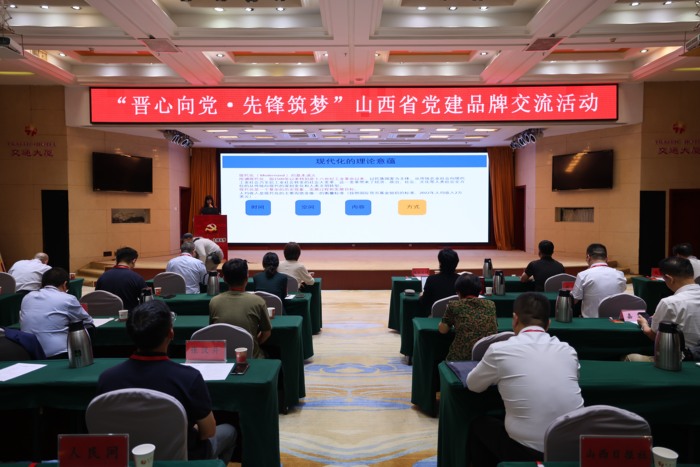
Core Points - The event "Jin Xin Xiang Dang, Xian Feng Zhu Meng" was held in Taiyuan, Shanxi Province, focusing on integrating party building with business development [2][11] - Over ten organizations participated, sharing experiences and discussing innovative paths for party building [2][11] Group 1: Party Building Practices - COFCO Coca-Cola Beverages (Shanxi) Co., Ltd. shared its "Red Cube Station" initiative, promoting collaborative party building with upstream and downstream enterprises, recognized as an advanced grassroots party organization in Shanxi [4][6] - China Resources Power's Xinzhou Company developed the "Runxin" brand, implementing a "1+3+N" management matrix to enhance energy supply and rural revitalization [4][6] - Shanxi Provincial People's Hospital integrated party building with medical services, establishing party member pioneer posts and volunteer services to improve healthcare access [4][6] Group 2: Cross-Industry Collaboration - A joint initiative was proposed by COFCO Coca-Cola, China Resources Power, and Shanxi Pengfei Group to deepen cross-industry cooperation through party building [8][9] - The initiative emphasizes leveraging strengths in beverage manufacturing, energy supply, and coal coking to explore innovation in new energy, materials, and consumption [9] - The organizations committed to social responsibility, focusing on education support, ecological protection, and poverty alleviation through collaborative public welfare activities [9] Group 3: Future Directions - The event facilitated mutual learning among different sectors, encouraging participants to adopt advanced practices in party building [11] - The Shanxi Jin Qin Group Consulting Training Center plans to establish a regular communication mechanism and organize joint party activities to strengthen collaborative efforts [11] - The successful event highlighted the diverse achievements of party building in Shanxi and aims to transform party work from isolated efforts to collaborative progress [11]



“智”造浆纸数字化 激活产业新动能
Zhong Guo Chan Ye Jing Ji Xin Xi Wang· 2025-08-22 00:46
Core Viewpoint - The digital transformation is significantly impacting the traditional pulp and paper industry, enhancing efficiency and creating new business models through technologies like big data, IoT, and AI [1][4]. Group 1: Digital Transformation in the Pulp and Paper Industry - The pulp and paper industry is undergoing a transformation driven by digital technologies, which are addressing pain points in production and supply chain processes [1][6]. - Companies like Xiamen International Trade Group Co., Ltd. (Guomao) are showcasing innovative digital solutions, such as the "Guomao Cloud Chain," to enhance supply chain efficiency [1][2]. - The "Guomao Cloud Chain" allows real-time data analysis for procurement teams, improving decision-making by providing insights into market prices, supplier capacity, and inventory [2][3]. Group 2: Challenges and Solutions - The traditional supply chain model in the pulp and paper industry faces challenges such as high communication costs and inefficiencies in procurement processes [3][4]. - Guomao has developed a self-service procurement platform, "Guomao Cloud Chain. Pulp and Paper e-Station," which streamlines the purchasing process and reduces communication costs [3][4]. - The digital platform integrates various functions, including product procurement, electronic signatures, and supply chain finance, significantly speeding up the order process [3][4]. Group 3: Industry Growth and Innovation - The application of digital technologies has led to increased operational efficiency and competitiveness for companies in the pulp and paper industry, resulting in market share expansion and sales growth [4][6]. - The "paper cup" industrial park project exemplifies how digital supply chain integration can enhance collaboration across the entire industry chain, leading to cost reductions and improved product quality [4][6]. - Companies are actively pursuing patent strategies in areas related to big data analysis, IoT applications, and supply chain finance to strengthen their market position [4][6]. Group 4: Collaborative Efforts in the Industry - The pulp and paper industry is witnessing collaborative innovation among various stakeholders, including leading companies, universities, and research institutions [6][7]. - Shandong Chenming Paper Group Co., Ltd. is investing in technology innovation and product upgrades, holding over 80 patents and focusing on high-end packaging and cultural arts applications [6][7]. - Universities like Jiangnan University are contributing to the industry by conducting research in fiber resource utilization and green pulping technologies, facilitating the transfer of research outcomes into practical applications [7].

【私募调研记录】宁泉资产调研华峰化学
Zheng Quan Zhi Xing· 2025-08-21 00:13
Group 1 - The core viewpoint of the article highlights the recent research conducted by Ningquan Asset on Huafeng Chemical, revealing a decline in revenue and net profit for the first half of 2025 [1] - Huafeng Chemical achieved a revenue of 12.137 billion yuan, a year-on-year decrease of 11.7%, and a net profit decline of 35.23% [1] - The company advocates for "anti-involution" in the spandex industry, focusing on differentiated competition, industry chain collaboration, and technological innovation to enhance competitiveness [1] Group 2 - The industry inventory stands at 50 days, while Huafeng Chemical's inventory is at 20 days, indicating intensified industry reshuffling and increased concentration as small capacities exit the market [1] - Huafeng Chemical maintains strong customer loyalty due to its product quality and technological advantages, with the spandex segment operating at full capacity [1] - The company expects to complete its asset restructuring by December 2026, with sales to the U.S. accounting for only 1% of its revenue [1] Group 3 - Huafeng Chemical is collaborating with Eastman to produce acetic acid, although the current investment scale is small and does not significantly impact the company's performance [1] - There are no new expansion plans, with a differentiated spandex capacity of 150,000 tons per year expected to reach full production by the end of 2026 [1] - The new capacity has a low investment per ton and features more economical, environmentally friendly, and efficient processes [1] Group 4 - The company will continue to improve its dividend distribution system, implementing a reasonable, sustainable, and stable dividend policy [1]

云南白药6.6亿元收购聚药堂,高负债率与低业绩承诺引关注
Bei Ke Cai Jing· 2025-08-18 11:44
Core Viewpoint - Yunnan Baiyao Group announced the acquisition of 100% equity in An Guo Shi Ju Yao Tang Pharmaceutical Co., Ltd. for a total consideration of 660 million yuan, aiming to expand its presence in the traditional Chinese medicine sector [1][2] Group 1: Acquisition Details - The acquisition involves cash payment and is structured through a share transfer agreement with existing shareholders of Ju Yao Tang [1] - The share transfer prices for the shareholders are as follows: 2.31 million yuan for 35% equity, 1.32 million yuan for 20%, 1.12 million yuan for 17%, and 924,000 yuan each for 14% equity held by two other shareholders [1] Group 2: Ju Yao Tang's Business Profile - Ju Yao Tang specializes in the production and sales of traditional Chinese medicine pieces, including toxic and directly consumable varieties, with a comprehensive product line of 1,567 types [2] - The company has a robust B2B online sales model with 100,000 registered users and 53,000 cumulative trading customers, primarily targeting pharmacies and clinics [2] Group 3: Strategic Implications for Yunnan Baiyao - The acquisition is expected to enhance Yunnan Baiyao's market expansion outside its current regions and improve its product pipeline with Ju Yao Tang's extensive offerings [2] - Ju Yao Tang's established online sales channels and customer base are anticipated to provide significant strategic synergies, improving operational efficiency in Yunnan Baiyao's traditional medicine supply chain [2] Group 4: Financial Performance and Commitments - Ju Yao Tang's projected revenue for 2024 is approximately 632 million yuan, with a net profit of about 69.33 million yuan [4] - The company has committed to lower net profit targets for the next three years compared to 2024, raising market speculation about future performance [3][6] - The financial commitments for 2025 to 2027 include revenue targets of approximately 624 million yuan, 616 million yuan, and 666 million yuan, with net profit targets of 66 million yuan, 59.7 million yuan, and 63.9 million yuan respectively [6] Group 5: Financial Health and Risks - As of March 31, Ju Yao Tang had total assets of approximately 747 million yuan and total liabilities of about 426 million yuan, resulting in a debt ratio of approximately 57.02% [6] - The high debt ratio may pose a challenge for Yunnan Baiyao in optimizing Ju Yao Tang's financial structure post-acquisition [6][7]
