
人工智能大模型

Search documents
四月经济数据刷屏!高技术制造业暴增10%,多项消费指标井喷式增长
Sou Hu Cai Jing· 2025-05-19 23:45
Economic Performance - In April, China's economy demonstrated significant resilience amid complex conditions, with major economic indicators showing stable and rapid growth [1] - The industrial added value for large-scale enterprises increased by 6.1% year-on-year and 0.22% month-on-month, marking a notable performance in monthly data since last year [1] - The service production index grew by 6.0% year-on-year, reaching the second-highest monthly growth rate this year [1] Domestic Demand - Positive changes were observed in domestic demand, with substantial sales growth in products related to the "old for new" consumption initiative, significantly supporting retail sales [1] - Retail sales of household appliances and audio-visual equipment surged by 38.8% year-on-year, continuing to accelerate this year [1] - Retail sales for cultural office supplies, furniture, and communication equipment increased by 33.5%, 26.9%, and 19.9% year-on-year, respectively, all exceeding the overall retail growth rate [1] Investment Trends - The effects of "two heavy" and "two new" policies are becoming increasingly evident, with investment in equipment and tools rising by 18.2% year-on-year from January to April, contributing 64.5% to total investment growth [1] - Investment in consumer goods manufacturing and equipment manufacturing grew by 13.4% and 8.2% year-on-year, reflecting the impact of industrial upgrading [1] Foreign Trade - China's foreign trade showed strong resilience, with total goods import and export value increasing by 2.4% year-on-year from January to April, accelerating by 1.1 percentage points compared to the first quarter [2] - Private enterprises' imports and exports rose by 6.8% year-on-year, outperforming the overall foreign trade situation [2] - Exports of electromechanical products grew by 9.5% year-on-year, indicating a positive trend [2] High-Tech Manufacturing - The added value of high-tech manufacturing above designated size increased by 10% year-on-year in April, with aerospace equipment manufacturing and integrated circuit manufacturing growing by 21.4% and 21.3%, respectively [2] - The added value of digital product manufacturing also achieved a 10% year-on-year increase [2] - Production of new energy products, such as electric vehicles and charging piles, rose by 38.9% and 43.1%, respectively, reflecting the deepening of green and low-carbon transformation [2] Real Estate Market - In April, housing prices in 70 large and medium-sized cities remained generally stable, with the year-on-year decline in first, second, and third-tier cities continuing to narrow [2] - The real estate market's transactions and prices are stabilizing, moving towards a recovery phase [2] Economic Resilience Factors - China's economic resilience is attributed to a stable economic foundation, numerous advantages, strong resilience, and significant potential [3] - The large-scale market, accelerated restructuring of the entire industrial chain, and continuous empowerment of new production factors provide systematic support for economic development [3] - Recent policy measures, including interest rate cuts and the establishment of new policy financial tools, aim to support technological innovation and expand consumption [3]
四月份经济韧性与结构性突破并存 向“新”特征更明显
Zheng Quan Shi Bao· 2025-05-19 18:00
Economic Performance - In April, the industrial added value above designated size increased by 6.1% year-on-year, and the service production index grew by 6.0% year-on-year, indicating stable and rapid growth in major economic indicators [1][2] - The retail sales of consumer goods increased by 5.1% year-on-year, with significant growth in the sales of home appliances and audio-visual equipment, which rose by 38.8% [2] - Fixed asset investment saw a month-on-month increase of 0.10%, reflecting a stable investment environment [1] Investment and Trade - The investment in equipment and tools from January to April increased by 18.2% year-on-year, contributing 64.5% to total investment growth [2] - Despite external shocks, China's total goods import and export volume grew by 2.4% year-on-year from January to April, accelerating by 1.1 percentage points compared to the first quarter [2] High-tech and New Energy Sectors - The added value of high-tech manufacturing increased by 10% year-on-year in April, with aerospace equipment and integrated circuit manufacturing growing by 21.4% and 21.3%, respectively [3] - Production of new energy products, such as electric vehicles and charging piles, surged by 38.9% and 43.1%, respectively, highlighting the rapid development of the green low-carbon transition [3] Policy and Future Outlook - Recent policy measures, including interest rate cuts and the establishment of new financial tools, aim to support technological innovation and expand consumption [4] - Analysts expect that as policy effects continue to manifest, consumption will strengthen, further supporting investment growth [4] - The economic operation is anticipated to improve moderately in May and June, with a focus on effectively utilizing existing policies [4]
付凌晖谈三个“不变”
Sou Hu Cai Jing· 2025-05-19 05:39
Core Viewpoint - The recent agreement between China and the U.S. to significantly reduce tariffs is expected to positively impact trade growth between the two countries and support global economic recovery [2]. Group 1: Economic Environment - The international environment remains complex and severe, with rising unilateralism and protectionism impacting global economic growth [2]. - Despite external pressures, China's economy maintains a long-term positive outlook, supported by coordinated macro policies and innovation [6]. Group 2: Trade Performance - In the first four months of the year, China's total goods import and export volume increased by 2.4%, with a notable acceleration in April, where the growth rate reached 5.6% [4]. - Exports in April alone grew by 9.3%, indicating strong performance despite external challenges [4]. Group 3: Trade Diversification - Although trade with the U.S. has declined, trade diversification efforts have led to increased imports and exports with ASEAN and Belt and Road countries, with ASEAN trade growing by 9.2% in the first four months [5]. - The ability of China's foreign trade to withstand external pressures reflects a solid industrial foundation and strong competitive advantages in the global supply chain [5]. Group 4: Policy Support - The government has enhanced support for foreign trade enterprises through policies such as export tax rebates and financial assistance, creating a favorable environment for trade development [5]. - The implementation of proactive macro policies has expanded market demand, boosted production, and supported innovation, contributing to a growing consumer base [6].


国家统计局:人工智能大模型、人形机器人等科技前沿领域实现突破 将进一步促进产业升级发展
news flash· 2025-05-19 03:02
Core Insights - The National Bureau of Statistics highlights breakthroughs in cutting-edge technology fields such as artificial intelligence large models and humanoid robots, which will further promote industrial upgrading and development [1] Group 1: Economic Growth and Innovation - There is a strong push for deep integration of technological innovation and industrial innovation, enhancing the transformation of technological creativity into social productivity [1] - The role of innovation in driving economic development is continuously increasing, injecting new momentum into the economy [1] Group 2: High-tech Industry Performance - The added value of high-tech manufacturing industries above designated size grew by 10% in April, outpacing the overall industrial growth by 3.9 percentage points [1] - The added value of the intelligent unmanned aerial vehicle manufacturing industry surged by 74.2% in April [1] - The production of new energy vehicles increased by 38.9% [1] Group 3: Future Prospects - Breakthroughs in artificial intelligence large models and humanoid robots are expected to further facilitate industrial upgrading and development [1]

国家统计局:我国经济有望保持总体平稳、稳中有进的发展态势
news flash· 2025-05-19 02:57
Economic Recovery - The economic recovery in China is supported by a solid foundation, with retail sales and service production indices growing by 4.7% and 5.9% respectively from January to April, showing a slight acceleration compared to the previous quarter [1] - Exports increased by 7.5% and industrial added value grew by 6.4% during the same period, indicating overall stability despite external shocks [1] Policy Support - The implementation of proactive macroeconomic policies has intensified, with significant contributions from equipment investment, which rose by 18.2% year-on-year from January to April, accounting for 64.5% of total investment growth [2] - Recent measures include reductions in reserve requirements and interest rates, along with the establishment of new policy financial tools to support technological innovation and consumption [2] Consumer Potential - Various regions and departments are actively promoting consumption through special initiatives, with retail sales in categories related to home appliances and cultural products contributing 1.4 percentage points to overall retail growth [2] - Service retail sales grew by 5.1% in the first four months, with domestic travel during the "May Day" holiday increasing by 6.4% year-on-year, indicating a strengthening consumer demand [2] Innovation and Industry Growth - There is a strong push for the integration of technological and industrial innovation, with high-tech manufacturing value added growing by 10% in April, outpacing overall industrial growth [3] - The production of smart drones surged by 74.2% and new energy vehicle output increased by 38.9%, reflecting advancements in key technology sectors [3] Overall Economic Outlook - Supported by multiple favorable factors, China's economy is expected to maintain a stable and progressive development trend [4]
携手钉钉,这家AI公司站上风口,大涨近10%!
Jin Rong Jie· 2025-05-16 11:54
Core Viewpoint - The stock price of Innovation Works (02121.HK) surged by 9.57% to HKD 4.58 per share, with a market capitalization of HKD 2.58 billion, following the announcement of a strategic partnership with Henry Group (03638.HK) and DingTalk, focusing on AI applications in financial services [1][2]. Group 1: Company Overview - Innovation Works is recognized as the first AI + manufacturing company, specializing in enterprise-level AI solutions for B-end clients across various sectors including steel metallurgy, energy, automotive, high-tech/3C, and finance [1]. - The company aims to enhance efficiency and facilitate intelligent transformation for clients through AI technologies in areas such as product quality control, process management, labor cost reduction, and safety management [1]. Group 2: Recent Developments - The strategic partnership with Henry Group and DingTalk is expected to inject growth momentum into Innovation Works and enhance its competitiveness in the AI financial services sector [1]. - DingTalk, a major SaaS platform under Alibaba (09988.HK), has been exploring AI applications in collaboration with third-party developers, which further validates Innovation Works' AI research capabilities [1]. Group 3: Financial Performance - For the fiscal year 2024, Innovation Works reported a revenue of RMB 1.222 billion, a significant decline of 30.2% year-on-year, and an adjusted net loss of RMB 117 million, although the loss has narrowed compared to the previous year [2]. - The company’s cash flow from operating activities showed substantial improvement, ending the period with cash and cash equivalents of RMB 1.205 billion, indicating strong liquidity that supports its share buyback initiative [2]. Group 4: Market Sentiment and Future Outlook - Following the announcement of a share buyback plan of up to RMB 100 million, funded by the company’s own resources, management's confidence in the company's future prospects is evident [2]. - Some institutions remain optimistic about the company's future, with Cathay Securities maintaining a "buy" rating and setting a target price of HKD 5.60, projecting revenues of RMB 1.472 billion, RMB 1.756 billion, and RMB 2.059 billion for 2025-2027 respectively [2].
加大投资、加快创新……国网山东电力全面落实新能源高水平消纳行动各项任务
Qi Lu Wan Bao· 2025-05-15 03:48
Core Viewpoint - The Shandong provincial government is implementing "Eight Major Actions" to promote high-level consumption of renewable energy, with a focus on collaboration among sources, networks, loads, and storage [1]. Group 1: Investment and Infrastructure - The company aims to increase investment to strengthen the foundation for renewable energy consumption by accelerating the construction of various voltage level power grid projects, including the Yanwei UHV and 500 kV highland and Bohai projects [3]. - A systematic transmission pattern of "East Electricity West Send" and "North Electricity South Send" will be established to enhance resource allocation and adaptability of the Shandong power grid, ensuring smooth grid connection and reliable delivery of renewable energy projects by 2025 [3]. Group 2: Optimization of Resource Utilization - The company is enhancing scheduling capabilities to ensure optimal utilization of various consumption resources, continuing the "Qingfeng Wanyang" initiative to support early grid connection and effectiveness of energy storage and flexible thermal power projects [3]. - The development of an AI-based intelligent scheduling system is underway to improve the control level of the grid in response to a high proportion of renewable energy [3]. Group 3: Innovation and Market Development - The company has established the first provincial-level virtual power plant service center in the country to support the large-scale development of virtual power plants, aiming to exceed 1 million kilowatts of regulation capacity within the year [4]. - Efforts are being made to deepen the inter-provincial electricity spot market construction to maximize the sale of surplus renewable energy between provinces, thereby expanding consumption pathways [4]. Group 4: Commitment to Policy Implementation - The company is committed to implementing the provincial government's decisions and fully executing the tasks of promoting high-level renewable energy consumption, coordinating projects, policies, and market measures to contribute to the construction of a green, low-carbon, and high-quality development zone in Shandong [4].
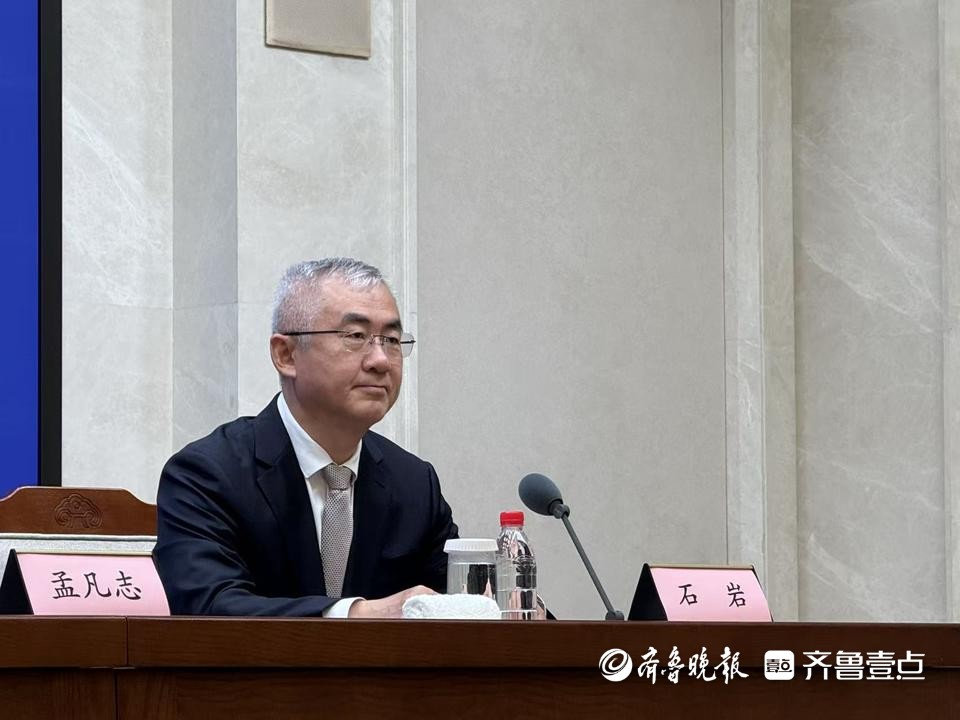
迈威生物与深势科技达成战略合作 打造生物药研发大模型平台
Zheng Quan Ri Bao· 2025-05-14 08:42
Core Viewpoint - Maiwei Biotech and DeepMind Technology have announced a strategic partnership to leverage their strengths in biopharmaceutical research and artificial intelligence to create a new paradigm for drug development [2][4]. Group 1: Company Strengths - Maiwei Biotech has significant advantages in ADC technology platform construction and the discovery of single/double antibody molecules, having established a complete industry chain from research and development to production [3]. - The company’s self-developed IDDC platform and Mtoxin toxin technology have been validated in multiple projects [3]. Group 2: Collaboration Details - The collaboration will focus on two main areas: the construction of a knowledge engine using the Uni-SMART multimodal scientific literature model to enhance research efficiency and the exploration of innovative targets through the RiDYMO® platform, which can significantly improve molecular simulation sampling efficiency [3]. - The partnership aims to combine Maiwei Biotech's ADC technology advantages with DeepMind's RiDYMO® platform to accelerate the discovery of drug molecules from concept to realization [3]. Group 3: Industry Impact - This collaboration is expected to shift biopharmaceutical research from an "experiment-driven" approach to a "computational-driven" model, enhancing research efficiency and providing better accessibility to innovative drugs for patients [4]. - The initiative aims to meet the unmet clinical needs globally by delivering more effective biopharmaceutical innovations [4].

安永报告:上市银行加减法并行,破低息差周期困局
Bei Jing Shang Bao· 2025-05-13 14:03
安永大中华区金融服务首席合伙人忻怡表示:"当前的低利率环境预计还将持续一段时期。银行业在进 入'低利率、低息差'周期的同时,还面临宏观环境的不确定性加大,国际上主要经济体增长动能偏弱、 地缘政治冲突持续、贸易冲突和金融市场波动加剧,国内有效需求不足、经济回升向好基础还不稳固。 复杂多变的环境对上市银行的经营发展带来重大挑战。面对挑战,上市银行一方面做加法:多元开源拓 展非息收入,优化营收结构;多渠道补充资本,夯实服务实体经济实力;融入国家战略,深耕'五篇大 文章',寻找业务发展新机遇。另一方面做减法:优化负债结构,降低负债成本;提升运营效率,控制 营业费用增长;加强风险管理,降低信用成本。" 具体来看,工农中建四家大型银行2024年末战略性新兴产业贷款余额合计超过人民币10万亿元,较上年 末增长22.62%;10家股份制银行2024年末对科技型企业贷款余额超人民币4.2万亿元,较上年末增长 21.93%。 北京商报讯(记者 宋亦桐)5月13日,安永发布《中国上市银行2024年回顾及未来展望》报告。该报告 深度分析了中国58家A+H股上市银行2024年度的经营业绩、资产质量、业务发展、经营模式等方面的 最新变化 ...
创五年新低!发力新方向
Zhong Guo Ji Jin Bao· 2025-05-13 09:37
5月13日,安永发布的《中国上市银行2024年回顾及未来展望》(以下简称《报告》)指出,银行业在 进入"低利率、低息差"周期的同时,复杂多变的宏观环境和地缘政治冲突给上市银行的经营发展带来重 大挑战,促使银行从规模导向转向价值创造。2024年,银行业通过深耕金融"五篇大文章",在传统金融 服务之外寻求新的业务增长点。 安永大中华区金融服务首席合伙人忻怡表示:"当前的低利率环境预计还将持续一段时期。展望2025 年,中国经济将继续回升向好,上市银行也将面临更多机遇,但不确定性和挑战犹存。上市银行需紧跟 政策导向,在服务实体经济和国家战略中,加速转型,寻求业务发展新突破;在全方位服务内需中打造 营收增长点,在穿越经济周期、保持战略定力和拥抱行业变革中,谋划出一条契合自身的高质量发展之 路。" 净息差持续下降 不过,随着今年一季度债券等金融市场的波动,以及全球贸易摩擦居高不下,42家A股上市银行2025年 一季度净利润同比减少1.09%,营业收入同比减少1.72%;2025年一季度末资产总额较2024年末增长 3.94%;加权平均不良贷款率为1.23%,较2024年末下降0.01个百分点;拨备覆盖率为237.99% ...