
低空经济

Search documents
职业教育教学焕新升级:重点增设低空经济等领域新专业,加强人工智能课程设置
Bei Jing Shang Bao· 2026-02-12 13:01
Core Viewpoint - The Ministry of Education's "Opinions on Deepening the Reform of Key Elements in Vocational Education" aims to establish an advanced standard system for vocational education by 2027, focusing on the development of high-skilled talent and addressing current educational shortcomings [1][3]. Group 1: Reform Objectives - By 2027, an advanced standard system for vocational education's majors, courses, teaching materials, teachers, and practical training will be established, creating a replicable and promotable new paradigm for teaching reform [3][4]. - The reform will include the dynamic adjustment of professional settings, focusing on high-skilled talent cultivation, and the establishment of a rapid response channel for new professional additions in emerging industries [3][4]. Group 2: Curriculum Development - The curriculum will be designed to align with industry upgrades and technological advancements, incorporating the latest standards and techniques into professional courses [4][6]. - There will be an emphasis on strengthening STEM education and general courses in artificial intelligence, while also integrating engineering and humanities courses into various professional fields [4][6]. Group 3: Teacher Development - The reform includes specific requirements for teacher capabilities, focusing on professional theory, practical skills, teaching abilities, and research capabilities, with a clear competency checklist for teacher training [6][7]. - A dual-flow mechanism for teachers and industry talent will be established, along with the introduction of industry mentors to enhance teaching quality [6][7]. Group 4: Implementation and Evaluation - The Ministry of Education will implement a high-skilled talent cluster training plan, focusing on key industries and ensuring that educational reforms are integrated into school assessments and funding allocation [6][7]. - Provincial education departments will be responsible for developing specific implementation plans, ensuring that the reform outcomes are effectively evaluated and integrated into the overall development of vocational schools [6][7].


中国将加快建立无人驾驶航空器责任保险强制投保制度
Zhong Guo Xin Wen Wang· 2026-02-12 12:38
Core Viewpoint - The rapid development of China's low-altitude economy has prompted the establishment of a risk protection system, specifically a mandatory insurance system for unmanned aerial vehicles (UAVs) [1][2] Group 1: Policy Objectives - By 2027, a preliminary mandatory insurance system for UAV liability will be established, with a continuous enrichment of low-altitude insurance products to better meet various application scenarios [1] - By 2030, a basic policy framework for low-altitude insurance will be formed, enhancing its role in ensuring the safe and healthy development of the low-altitude economy [1] Group 2: Policy Implementation - The policy emphasizes the need for support from low-altitude economic development planning at all levels to strengthen the insurance mechanism as a means of enhancing operational safety regulation and improving accident handling systems [1] - There will be a push to strengthen verification of insurance coverage for UAVs that are legally required to have liability insurance, along with the development of implementation measures and model clauses for mandatory insurance [1] Group 3: Service and Product Development - The policy aims to establish a comprehensive insurance product system covering the entire low-altitude industry chain, enhancing the supply and service capabilities for both UAVs and traditional manned aircraft [1] - Targeted insurance protection will be provided for various application scenarios, continuously enriching low-altitude insurance products and enhancing their protective role [2]
事关低空经济发展,重磅文件来了
Zhong Guo Ji Jin Bao· 2026-02-12 12:26
Core Viewpoint - The implementation opinion on promoting the high-quality development of low-altitude insurance has been released, emphasizing the importance of establishing a comprehensive low-altitude insurance system to support the safety and healthy development of the low-altitude economy [1][5]. Summary by Sections 1. Importance of Low-Altitude Insurance - Low-altitude insurance is crucial for ensuring the safety of low-altitude flight activities, providing risk protection for the manufacturing and operation of low-altitude aircraft, infrastructure construction, and various specialized services [4][10]. 2. Development Goals - By 2027, a preliminary mandatory insurance system for unmanned aerial vehicle (UAV) liability insurance will be established, with a continuous enrichment of low-altitude insurance products to meet diverse application scenarios [5][10]. - By 2030, a basic policy framework for low-altitude insurance will be formed, enhancing its role in ensuring the safety and health of the low-altitude economy [5][10]. 3. Policy Framework - The implementation opinion calls for integrating insurance into the overall planning and regulatory framework for low-altitude economic development, promoting the establishment of relevant laws and regulations [11]. - It encourages local governments to incorporate insurance into their low-altitude economic policies and to develop supportive measures tailored to local conditions [11]. 4. Insurance Mechanisms - The document advocates for the use of insurance mechanisms to enhance risk management within the low-altitude economy, particularly for manufacturers and operators of low-altitude aircraft [12]. - It emphasizes the need for major enterprises in the low-altitude industry chain to collaborate through insurance to reduce risk costs across the supply chain [8][12]. 5. Technological Integration - There is a push to utilize emerging technologies to facilitate convenient and intelligent online operations for insurance related to micro, light, and small UAVs [8][13]. - The establishment of a low-altitude insurance information platform is highlighted, aiming to integrate with low-altitude intelligent network systems for better data sharing and risk management [6][14]. 6. Service Optimization - The opinion stresses the importance of developing a comprehensive insurance product system covering the entire low-altitude industry chain, including research, manufacturing, and operational aspects [13]. - It aims to provide targeted insurance protection based on various application scenarios such as agriculture, logistics, and emergency management [13]. 7. Capacity Building - The document calls for enhancing the professional capabilities of insurance institutions to better identify and assess new risks associated with low-altitude operations [14]. - It encourages the cultivation of specialized talent within the insurance sector to improve risk assessment and product development [14]. 8. Organizational Coordination - A coordinated approach among relevant government departments is necessary to implement the low-altitude insurance initiatives effectively [16]. - The establishment of a regular communication mechanism is proposed to address challenges encountered during the promotion of low-altitude insurance [16].
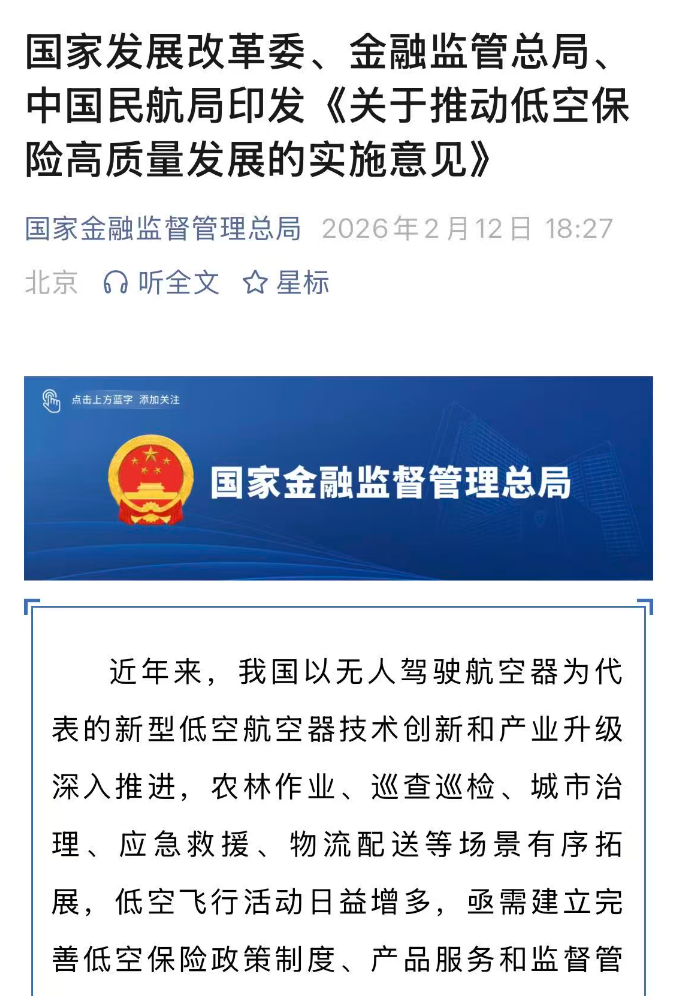
10亿募资剑指PEEK一体化!
Xin Lang Cai Jing· 2026-02-12 12:17
2月11日,新瀚新材公告称,为响应国家发展战略,把握特种工程塑料行业发展机遇,提升公司综合服 务能力,公司拟向特定对象发行A股股票募集资金总额不超过100,000.00万元。这笔资金将用于年产 8100吨高性能树脂、复合材料及其配套工程建设项目,年产5000吨氟酮及其配套工程建设项目,以及高 性能复合材料创新中心建设项目。 新兴应用场景将引爆需求 年产8100吨高性能树脂/复合材料项目是向下游延伸的关键一步。公司将直接生产PEEK树脂及其复合材 料。这意味着公司将从幕后走向台前,直接参与更高附加值的产品竞争。 人形机器人 根据东吴证券研报测算,2025-2030年全球人形机器人产量将从2.11万台激增至300万台。PEEK材料凭 借轻量化、高强度和耐磨性,已应用于电机、轴承、减速器等关键部件。根据国海证券研报,当人形机 器人销量突破1000万台时,预计将创造约401.94亿元的PEEK市场增量,这一数据凸显该领域对PEEK需 求的颠覆性拉动作用。 低空经济 中国民航局预测,2025年我国低空经济市场规模达1.5万亿元,2035年增至3.5万亿元。PEEK在无人机框 架、飞行汽车结构件中替代金属的优势显著。 新 ...

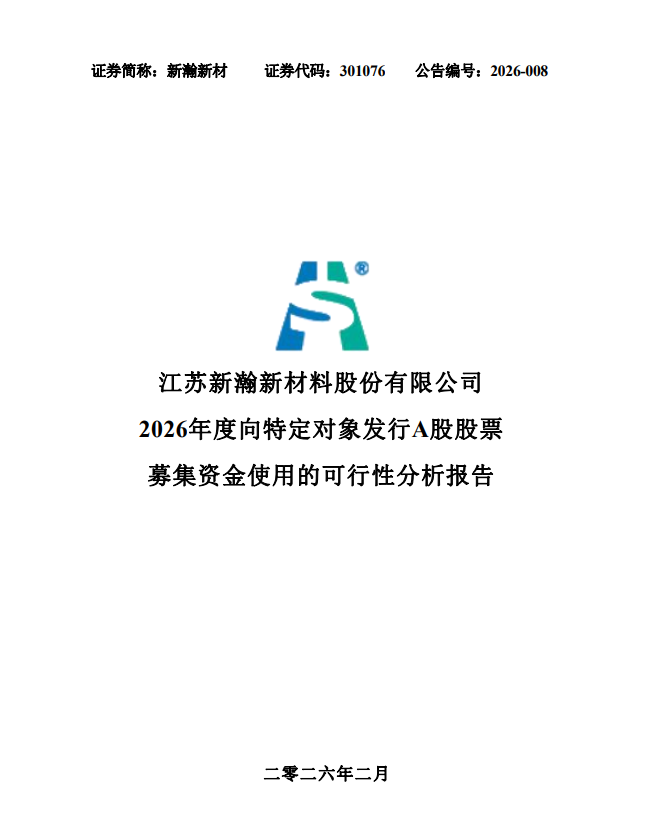
北方稀土:稀土产品价格波动主要受市场供需关系影响
Zheng Quan Ri Bao· 2026-02-12 12:16
Group 1 - The core viewpoint of the article highlights that Northern Rare Earth has established agreements with downstream companies for pricing, with the longest cycle being monthly and the shortest daily [2] - The price fluctuations of rare earth products are primarily influenced by market supply and demand dynamics, as well as market expectations [2] - The demand for rare earth products, particularly those related to magnetic materials, is expected to maintain a growth trend due to the development of downstream industries such as new energy, wind power, and low-altitude economy [2]

湖南郴州探索“空地一体化”智慧医疗物流新模式
Xin Lang Cai Jing· 2026-02-12 11:17
中国青年报客户端讯(刘振 中青报·中青网记者 刘昶荣)在湖南郴州第一人民医院中心院区与东西两院 之间,已经实现了无人机运输样本、药品等医疗物资,无人驾驶车配送院内物资。无人机将原本25-30 分钟运输时间,缩短到了8-12分钟,效率提升60%以上,无人驾驶车则将配送频次从每日2趟增至4趟。 截至目前,这样的高校运转模式已经持续了8个月。 无人机准 备运输检验标本。郴州市第一人民医院供图 据了解,医疗物流是郴州低空经济的率先突破方向。湖南省郴州市空域条件优越,适飞区域达95%,全 年可飞天数超260天,为低空经济发展提供了良好基础。 郴州市委、市政府积极融入国家战略,将低空经济纳入现代化产业体系重点培育,成立由市委书记、市 长牵头的工作专班,率先推出低空政务服务无人机"统飞"改革方案,推动低空经济从"分散粗放"向"集 约智能"转变。 目前,郴州在市第一人民医院开通的两条低空医疗物流专线,物流成本降低10%,院内配送成本下降 18%。通过资源整合,医院拆除南院静配中心,年节约运行费用21万元,未来推广至其他院区后,预计 年节约成本近100万元。 来源:中国青年报客户端 2025年3月,郴州市第一人民医院与顺丰集团 ...

职业教育精准对接重点产业 让人才与产业“双链”匹配
Jing Ji Guan Cha Wang· 2026-02-12 10:49
近日,教育部印发《关于深化职业教育教学关键要素改革的意见》(以下简称《意见》),这是自2015年 教育部《关于深化职业教育教学改革全面提高人才培养质量的若干意见》出台以来,在此出台的一份职 业教育教学改革的重要文件。 《意见》要求,聚焦高技能人才培养目标,加大专业设置调整优化的统筹协调力度,严格落实"红黄 牌"提示制度。利用大数据和人工智能精准预测关键领域人才培养供需情况,为专业动态调整提供科学 依据。探索建立新专业增设快速响应通道,面向新兴产业和未来产业,重点增设低空经济、人工智能、 高端装备、城市更新、民生紧缺等领域新专业。 上述领域的新增专业人才培养方向,高度契合了国家战略与产业急需。低空经济正成为新质生产力的重 要赛道,无人机物流、城市空中交通等应用快速兴起,急需掌握通信导航、飞行操控与运维技能的专门 人才;人工智能是科技革命核心驱动力,AI训练、算法应用、智能系统集成等岗位缺口巨大;高端装 备制造关乎制造业升级,涉及精密加工、智能检测等高技能工种;城市更新与民生紧缺领域则直面城镇 化提质与人口老龄化挑战,需要大量市政运维、康养护理、智慧社区管理等实用型人才。这些领域技术 迭代快、融合度高,对人才技能 ...
一图读懂|《关于推动低空保险高质量发展的实施意见》
Zhong Guo Min Hang Wang· 2026-02-12 10:48
图 图 关于推动低空保险 高质量发展的实施意见 近年来,我国以无人驾驶航空器为代表的新型低空航 空器技术创新和产业升级深入推进,农林作业、巡查巡 检、城市治理、应急救援、物流配送等场景有序拓展,低 空飞行活动日益增多,亟需建立完善低空保险政策制度、 产品服务和监督管理体系,保障人民群众生命财产安全。 为落实《中华人民共和国民用航空法》《无人驾驶航空器 飞行管理暂行条例》有关规定,加快建立健全低空保险政 策体系,近日,国家发展改革委、金融监管总局、中国民 航局印发《关于推动低空保险高质量发展的实施意见》 (以下简称《实施意见》)。 、总体要求和发展目标 总体要求: 以习近平新时代中国特色社会主义思想为指导, 全面贯彻党的二十大和二十届历次全会精神,坚持系 统谋划、重点突破、协同推进、稳步实施,加快形成 覆盖广泛、保障有力、服务专业、市场规范的低空保 险体系,更好服务低空经济安全健康发展。 发展目标: 到2027年,无人驾驶航空器责任保险强制投保制 度初步建立,低空保险产品不断丰富,更好满足 各类应用场景保障需求。 到2030年,低空保险政策框架基本形成,对低空 经济安全健康发展的保障作用持续增强。 SNA ST ...

解读|健全低空保险体系 筑牢安全发展基石
Zhong Guo Min Hang Wang· 2026-02-12 10:35
《关于推动低空保险高质量发展的实施意见》的出台,恰逢我国低空经济从技术验证与局部试点迈向规 模化、商业化发展的关键跃升期。面对航空器数量激增、运行环境日益复杂的现实背景,该文件以系统 化工作部署,精准回应新兴产业对系统性风险解决方案的迫切需求,为低空经济行稳致远筑牢市场化、 制度化的安全基石。 低空风险具有高度的飞行动态性、场景依赖性和技术关联性。当前,低空法律体系尚在构建过程中,责 任认定、损失评估与协同监管方式亟待创新。低空经济运营主体与保险业之间存在一定认知与业务隔 阂,传统航空保险的经验数据与风控模型在此面临"失灵",导致保险公司"不敢保、不会保、不愿保"。 同时,低空运营主体大多规模较小、分布分散、风险承受能力弱,运用金融工具管理风险的门槛较高, 风险量化与保险产品设计难度大。为此,文件从加快健全政策体系、推进强制投保制度、强化服务保障 体系、提升保险可持续经营能力四个方面,系统构建覆盖全链条、兼顾强制与创新、平衡安全与发展的 现代低空保险生态。 该文件的主要亮点体现在两大方面:一是强化保险服务保障体系,实现低空经济全场景全链条全覆盖。 根据文件要求,保险服务需贯穿低空经济"研发—制造—运营—基建" ...
解读|系统性保障护航低空经济高质量发展
Zhong Guo Min Hang Wang· 2026-02-12 10:35
Core Viewpoint - The development of the low-altitude economy is at a critical stage of transitioning from technological exploration to large-scale commercialization, with safety and risk assurance being essential for sustainable growth. The recent implementation of the "Implementation Opinions on Promoting High-Quality Development of Low-Altitude Insurance" by the National Development and Reform Commission, along with other regulatory bodies, aims to establish a comprehensive low-altitude insurance service system, which is crucial for the high-quality development of the low-altitude economy [1]. Group 1: Policy Framework - The primary task of the "Implementation Opinions" is to enhance the low-altitude insurance policy framework, creating a conducive institutional environment for standardized development through planning guidance, regulatory integration, and mechanism encouragement [2]. - The Opinions emphasize the inclusion of insurance in the overall planning and institutional construction of low-altitude economic development, encouraging local governments to formulate supportive policies tailored to their specific conditions [2]. - It mandates the integration of insurance mechanisms into the low-altitude safety regulatory system, using insurance as a tool to strengthen operational safety oversight and improve accident handling procedures [2]. Group 2: Mandatory Insurance System - A key highlight of the Opinions is the acceleration of establishing a mandatory liability insurance system to safeguard public safety in low-altitude operations, particularly for unmanned aerial vehicles [3]. - The Opinions propose strengthening management across the entire chain by incorporating mandatory insurance requirements into flight activity approval processes and developing related regulations for liability recognition and handling procedures [3]. - The establishment of this mandatory insurance system aims to effectively protect public safety and compel operators to enhance their safety management practices [3]. Group 3: Service Assurance - The Opinions focus on strengthening the service assurance system by optimizing insurance coverage across the entire industry chain and enhancing service applications, transitioning insurance from a "product supply" model to a "service empowerment" model [4]. - It calls for insurance companies to develop a comprehensive protection system covering research and development, manufacturing, flight operations, and infrastructure support, while also exploring innovative insurance products and services for new low-altitude risks [4]. - The Opinions advocate for targeted insurance coverage based on various application scenarios such as agricultural operations, low-altitude inspections, logistics, urban governance, and emergency management, ensuring precise alignment between service needs and insurance offerings [4]. Group 4: Sustainable Operational Capacity - The low-altitude economy presents complex risks and demands higher data and professional capabilities from insurance institutions, as outlined in the Opinions [5]. - It emphasizes the need to accelerate the construction of a low-altitude insurance information platform and develop a risk information-sharing database, utilizing big data and AI for precise risk pricing and monitoring [5]. - The Opinions also encourage insurance institutions to collaborate with manufacturers and operators of low-altitude aircraft to enhance their ability to identify and assess new risks, thereby improving the overall risk management quality [5]. Group 5: Organizational Support - To ensure the effective implementation of the Opinions, organizational support is reinforced through coordination, risk prevention, and promotional efforts, fostering a collaborative work environment [7]. - The Opinions specify that the National Development and Reform Commission will lead the establishment of a regular communication mechanism to guide local implementation and address challenges in advancing low-altitude insurance [7]. - It also encourages insurance institutions to enhance their risk control systems and consumer protection measures while promoting public awareness and understanding of low-altitude insurance [7].