
未来产业

Search documents
战新产业增加值占比大幅提升!地方国企“十五五”发展目标定了
Xin Lang Cai Jing· 2026-01-16 03:31
Group 1 - The core objective of the "14th Five-Year Plan" for local state-owned enterprises (SOEs) is to significantly enhance technological self-reliance, achieve rapid breakthroughs in key core technologies, and steadily increase the number of leading technology enterprises [1] - The focus for 2026 includes improving quality and efficiency, enhancing growth quality, and exploring growth potential while ensuring smooth economic circulation [1] - A total of 500 billion yuan in new policy financial tools has been fully allocated, supporting over 2,300 projects with a total investment of approximately 7 trillion yuan [1] Group 2 - The emphasis on stabilizing growth includes promoting major project implementation in urban renewal, affordable housing, and new infrastructure such as smart logistics and 5G IoT to stimulate consumption [2] - The State-owned Assets Supervision and Administration Commission (SASAC) aims to strengthen the role of SOEs in technological innovation, optimize the layout of state-owned capital, and enhance traditional industries while developing emerging pillar industries [2][3] - Key areas for SOE reform this year include deepening the "three systems" reform, improving innovation mechanisms, and establishing a regulatory model that balances state asset security with development vitality [3]

山西打造国家重要能源原材料基地
Zhong Guo Hua Gong Bao· 2026-01-16 02:16
Group 1 - The core viewpoint of the articles highlights Shanxi's strategic plan to optimize its development path by promoting high-value and material development of coal resources, extending the modern coal chemical industry chain, and expanding hydrogen energy and green fuel applications to establish a significant national energy raw material base [1][2] Group 2 - Shanxi aims to accelerate the innovation and application of new materials, focusing on high-end and cluster development, breaking through key material technologies, and expanding downstream applications to create a major domestic new materials industry cluster [1] - The province plans to actively layout future industries, emphasizing the development of hydrogen energy, quantum technology, and biomanufacturing [1] - To support the construction of the energy base, Shanxi will deepen reform efforts, establish a major task promotion mechanism, and focus on the integration of advanced materials, high-end equipment, and modern coal chemical industries across 13 clusters, cultivating around 30 industrial chains [1] Group 3 - Since the 14th Five-Year Plan, Shanxi's chemical industry has expanded significantly, enhancing its independent innovation capabilities and improving technology and equipment levels, forming an industrial system based on traditional coal chemical industries, with modern coal chemical industries as a key focus and supplemented by salt and fine chemicals [1][2] Group 4 - The continuous expansion of Shanxi's modern coal chemical industry provides a solid material foundation for the construction of a national energy raw material base, with current production capacities including 7 million tons/year of synthetic ammonia, 9 million tons/year of urea, 8.13 million tons/year of methanol, and others [2] - The capacity for natural gas production from coke oven gas has increased from 905 million standard cubic meters in 2019 to 2.941 billion standard cubic meters currently, with downstream diversified product routes established from coke oven gas and carbon-based new material industry chains [2] - The coal-based olefin project by China Coal Pingshuo Group has received approval from multiple government departments and is progressing steadily [2]
各地开年亮出先手棋
Jing Ji Ri Bao· 2026-01-16 01:17
Core Insights - Various regions in China, including Shanghai, Liaoning, and Hubei, are holding meetings to focus on developing new productive forces, enhancing business entities, and optimizing the business environment, indicating a strong commitment to high-quality development in the new year [1][2][4] Group 1: Regional Initiatives - Shanghai has prioritized optimizing the business environment for nine consecutive years, launching a plan with 26 specific measures to address issues like bidding and payment delays [1] - Liaoning's meeting on the first working day of 2026 focused on eight key areas for improving the business environment, establishing a closed-loop management mechanism for strict enforcement against violations [1] - Hubei's technology innovation conference aims to position the province as a hub for original innovation and high-quality development driven by technology [2] Group 2: Strategic Focus - The meetings emphasize the importance of early deployment and clear task lists, reflecting a proactive approach to addressing both external uncertainties and internal growth challenges [2][3] - Key topics include enhancing new productive forces, expanding business entities, and promoting high-level openness, with a focus on systemic support rather than isolated policy measures [4][6] Group 3: Investment and Economic Growth - Major project construction is highlighted as a key driver for stabilizing economic growth, with Yunnan declaring 2026 as a "Project Attack Year" and Shenzhen launching 222 new projects with a total investment of approximately 157.34 billion [8] - Investment strategies are shifting from government-led initiatives to a dual approach involving both government and private sector investments, emphasizing green energy and circular economy projects [8] Group 4: Social and Economic Stability - Regions are addressing economic and financial risks while ensuring safety in production and food security, with specific measures to prevent systemic financial risks and promote agricultural modernization [9] - Many areas are focusing on social welfare projects, including employment, education, and healthcare, to ensure a safety net for citizens while pursuing economic growth [9]
专线专用,绿电可直抵用户
Liao Ning Ri Bao· 2026-01-16 01:06
Core Viewpoint - The implementation of the "Liaoning Province Green Electricity Direct Connection Construction Implementation Plan (2025-2027)" aims to promote the integration of renewable energy production and consumption, facilitating cost reduction, carbon reduction, and sustainable development [1] Group 1: Green Electricity Direct Connection - Green electricity direct connection refers to the supply of renewable energy such as wind, solar, and biomass directly to a single electricity user without connecting to the public grid [1] - There are two types of direct connection: grid-connected and off-grid. Grid-connected systems allow for flexibility with "self-use and surplus electricity feeding into the grid," while off-grid systems operate independently but require higher technical standards [1] Group 2: Implementation Guidelines - The principle of "source determined by load" should be followed to scientifically determine the type and scale of renewable energy sources for green electricity direct connection [2] - For grid-connected green electricity direct connection, the annual self-use electricity from renewable energy should account for no less than 60% of the total available generation, and at least 30% of total electricity consumption, with a target of at least 35% before 2030 [2] - New renewable energy projects can apply for a model where "self-use is primary and surplus electricity is secondary," with the surplus electricity not exceeding 20% of the total available generation based on annual renewable energy consumption [2]
国资收入能否“跳一跳”,闵行消费券还发吗……这场询问会上代表抛出发展“必答题
Sou Hu Cai Jing· 2026-01-15 22:20
"区属国资委收入已经连续两年6600万元,今年能否实现奋力一跳?""在促进消费方面,政府能做什 么?""听说闵行在优化营商环境方面积极学习'杭州模式',现在进展如何?"1月14日,在闵行区七届人 大八次会议财政预算和经济发展专场询问现场,9位区人大代表直奔主题,带着调研中收集的发展难题 接连发问,先后提出近20个问题。闵行区相关部门负责人直面痛点,用翔实数据和具体举措逐一回应。 "这是第一次参加专场询问会,深切感受到各位代表心系闵行发展的高度责任感。2026年是'十五五'规 划开局之年,我们将充分吸纳代表建议,强化工作部署,鼓足干劲、赶前抓早,全力推动全年工作开好 局、起好步。"区委副书记、区长吴强表示,希望各位代表今后能一如既往关心监督支持政府工作,多 提宝贵意见,共同推动闵行高质量发展。 营商环境没有最好,只有更好。区人大代表谢芳向吴强提问:"闵行营商环境8.0版成效显著,但在政策 匹配、'免申即享 ' 覆盖、诉求解决和执法监管等方面仍有提升空间。听说闵行正在学习'杭州模式 ' , 现在进展如何? " 吴强表示:"此前,我前往杭州调研,主要是为了学习杭州的产业生态与营商环境。营商环境提升关键 在于增强企业 ...

聚焦科技创新、营商环境等主题——各地开年亮出先手棋
Jing Ji Ri Bao· 2026-01-15 21:30
2026年开年以来,上海、辽宁、湖北等多地密集召开会议,聚焦发展新质生产力、壮大经营主体、优化 营商环境等关键领域,立足区域禀赋的差异化,展开系统谋划,为"十五五"开局之年竞相鸣枪。专家表 示,"新年第一会"是观察区域经济发展走向和政策重心的窗口,今年各地的会议更早、更实、求稳、求 新,彰显追求高质量发展的决心,预示着中国经济社会发展将在攻坚克难中不断开辟新境界。 实处着力 国家发展改革委宏观经济研究院研究员张林山表示,各地围绕最重要、最现实、最紧迫的战略任务,建 立强有力的推进机制,是凝聚社会信心的"动员号令"。通过高规格、早部署的会议,向市场和社会传递 了清晰、稳定的政策预期和发展导向,有助于凝聚各方力量,提振发展信心,营造"拼经济、促发展"的 浓厚氛围。 锚定重点 新年伊始,各地纷纷锚定中央精神,确定重点任务,发展新质生产力、壮大经营主体、优化营商环境、 高水平开放等成为核心议题。 福建围绕破除市场壁垒、解决拖欠企业账款问题等五大着力点综合施策,进一步优化营商环境;辽宁从 经营主体全生命周期服务、政策环境、市场环境等六大维度推出34项具体措施,从"企业找政策"变 为"政策找企业",推动"直达快享、免申即 ...
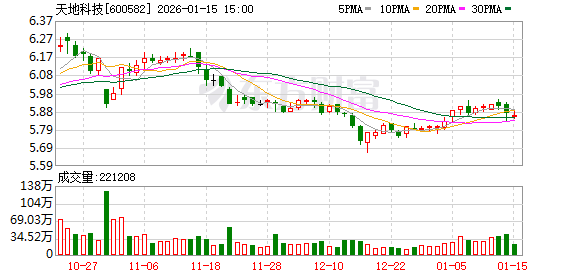
天地科技:聚焦并布局战略性新兴产业和未来产业 为公司长远发展储备动能
Zheng Quan Ri Bao· 2026-01-15 13:19
Core Viewpoint - The company emphasizes innovation-driven development to enhance its value creation, brand influence, and core competitiveness while supporting national energy security strategies and promoting high-quality development in the coal industry [2] Group 1: Innovation and Development - The company is committed to improving its technological resource allocation and increasing investment in technology and incentives [2] - A team of high-end talents, including an academician team and high-level technological innovation team, has been cultivated and introduced [2] - Continuous technological achievements are being generated, which strongly support the company's leading position in the industry [2] Group 2: Strategic Focus - The company is focusing on strategic emerging industries and future industries, including next-generation information technology, artificial intelligence, new energy, and new materials [2] - Relevant layouts are being developed to reserve momentum for the company's long-term development [2]

浙江省未来产业科创母基金招GP
FOFWEEKLY· 2026-01-15 10:01
来源:浙江省创新投资集团 每日|荐读 热文: 谁押中了沐曦股份? 荐读: 2025募资市场年度观察:一年聊过239家LP的真实感受 荐读: 2025年IPO退出盘点:哪些GP赚钱了? 热文: 投资人"忙疯了" 近日,为深入贯彻落实国家发展新质生产力的战略部署,聚焦颠覆式创新、多学科交叉和前沿科技 产业化领域,建立未来产业投入增长机制,浙江省科创未来产业创业投资合伙企业(有限合伙) (以下简称"省未来产业母基金")面向社会公开征集子基金管理机 构,有关事项公告如下: 据悉,省未来产业母基金管理人为浙江省创新科技私募基金管理有限公司(以下简称"浙创科 技"),执行事务合伙人为浙创科技和农银资本管理有限公司,总规模101.03亿元,主要投向"人 工智能+"及未来制造、未来信息、未来材料、未来能源、未来空间和未来健康等未来产业。采 用"子基金+直投"的运作模式,不少于省未来产业母基金可投金额的80%投向子基金,其余资金可 投向直投项目(含专项基金)。 子基金设立方面,省未来产业母基金可通过新设或向已设立的子基金增资等多种方式参与设立子基 金。 子基金认缴规模原则上不低于2亿元,不超过35亿元,以省未来产业母基金入伙时 ...
“十五五”开年这么干——车企2026愿望清单解析
Zhong Guo Qi Che Bao Wang· 2026-01-15 08:38
1月6日,奇瑞集团明确2026年全年销量目标为320万辆,同比增加14.03%。同时,东风汽车把2026年整体销量目标定为325万辆,吉利汽车的销量目 标为345万辆,零跑汽车挑战年度销量100万辆,小米汽车的目标是55万辆,蔚来提出"每年保持40%~50%的增长"……车企的2026年规划与目标正在陆续 出炉。除了产销目标是新亮点,智能化、新能源技术创新也是车企新一年的"重头戏";对未来产业的布局及"出海"同样是车企2026年追逐的目标。 新年新目标 既稳健又激进 2026年作为"十五五"开局之年,许多车企都在摩拳擦掌,争取迎来"开门红"。东风汽车表示,2026年,为实现325万辆的整体目标、170万辆新能源车 与60万辆出口车的指标,要在多个维度同步推进。一方面,继续强化自主品牌的产品竞争力与品牌影响力,推动岚图、猛士等高端品牌在细分市场建立用 户认知,同时加快奕派、风神等大众化品牌的电动化转型与智能化普及。另一方面,合资板块需进一步加快电动化车型导入与智能化配置升级,稳定市场 份额的同时,探索出口与本地化协同的新路径。 1月1日,吉利汽车宣布,董事会已将本集团2026年的销量目标定为345万辆,较2025 ...

成都重产基金出资人大会举行
Xin Lang Cai Jing· 2026-01-14 18:39
Core Insights - Chengdu Heavy Industry Fund has established a fund group with a scale exceeding 64 billion yuan, attracting total project investments of nearly 210 billion yuan [1] - The fund employs a specialized operation strategy focusing on "large investments, attracting investments, and heavy investments," successfully promoting major projects like BOE B16 and Zhongxin Aerospace [1] - The fund aims to build an industrial ecosystem by connecting government, parks, and enterprises, facilitating the key link from research and development to market [1] Investment Strategy - The fund utilizes a "mother fund + sub-fund" model to precisely cover various districts, forming a "one district, one main industry" pattern [1] - Specific investments include aerospace projects in Xindu, aircraft in Jinniu, and support for space companies in Chongzhou, creating a north-south aerospace industry belt [1] - Future investments will focus on humanoid robots, integrated circuit testing, and other emerging fields to upgrade the industry from "point distribution" to "chain aggregation" [1] Future Directions - The fund plans to explore more "treasures of the town" and "leading enterprises" in commercial aerospace, advanced nuclear energy, electronic information, and advanced energy sectors [2] - The goal is to promote the landing of high-quality projects and support high-quality development [2]