自主创新

Search documents
寒武纪午后一度涨超7%,近40亿定增完成!科创芯片50ETF(588750)强势翻红,盘中振幅超4%!机构:人工智能推动芯片超级周期
Sou Hu Cai Jing· 2025-10-22 06:37
Core Viewpoint - The semiconductor sector, particularly the Sci-Tech chip segment, is experiencing significant volatility, with notable movements in the Sci-Tech Chip 50 ETF and individual stocks driven by quarterly reports and financing events [1][5]. Market Performance - The Sci-Tech Chip 50 ETF (588750) saw fluctuations, initially dropping over 2% before rebounding to gain more than 1.5%, with a trading range exceeding 4% [1]. - Among the component stocks, Cambrian Technology (寒武纪) surged by 4.8%, while Haiguang Information (海光信息) increased by over 2% [5]. Financing and Growth - Cambrian Technology completed a directed issuance of 3.3349 million shares at a price of 1195.02 yuan per share, raising 3.985 billion yuan, marking a record high for AI chip financing in China [3]. - The funds will be allocated to the development of large model chip platforms and software platforms, indicating a strong commitment to the large model ecosystem [3]. - Cambrian Technology reported a net profit of 1.605 billion yuan for the first three quarters, marking its first profit in this period historically [3]. Industry Trends - The semiconductor sector is benefiting from the rapid iteration of AI technology and the expansion of application scenarios, with 254 companies reporting net profit growth in the first three quarters, over 70% of those disclosed [3]. - Haiguang Information achieved a net profit of 1.961 billion yuan, a year-on-year increase of 28.56%, driven by the introduction of high-end processor products [3]. Competitive Landscape - NVIDIA's CEO confirmed a complete exit from the advanced AI chip market in China, which is expected to facilitate the rise of domestic manufacturers [4]. - The AI cycle is anticipated to drive a semiconductor super cycle, with projections indicating a 100,000-fold increase in total computing power by 2035 [4]. Index Characteristics - The Sci-Tech Chip Index focuses on the core segments of the semiconductor industry, with 95% of its components in high-precision upstream and midstream sectors, indicating higher growth potential and elasticity compared to other indices [8][11]. - The index is expected to see a net profit growth rate of 71% in the first half of 2025 and 100% for the entire year, significantly outperforming peers [12].


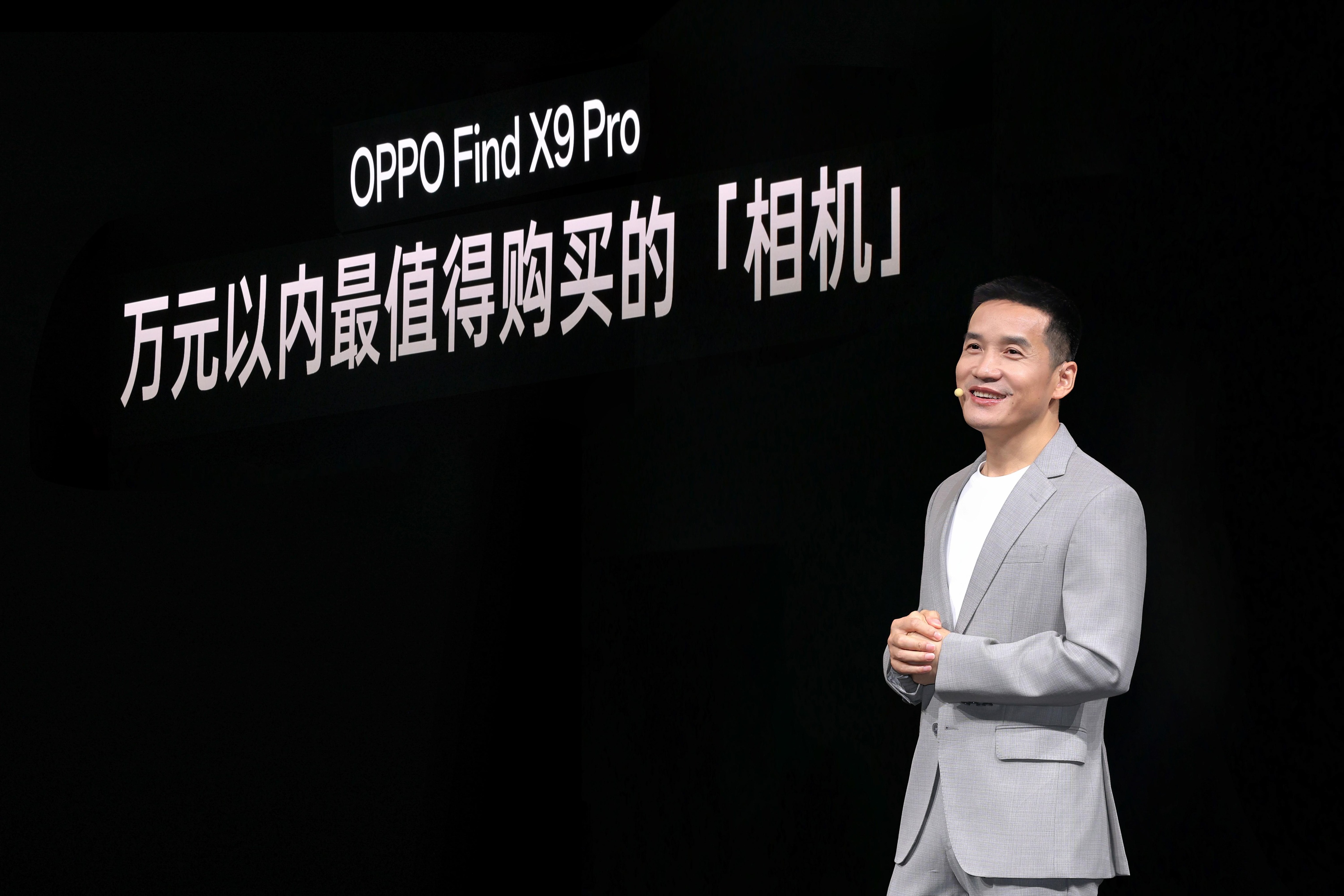
领跑苹果 中国影像赛道成关键
Nan Fang Du Shi Bao· 2025-10-21 15:46
Core Viewpoint - OPPO's Find X9 series marks a significant advancement in mobile imaging technology, positioning smartphones as viable alternatives to traditional cameras, particularly with the Find X9 Pro being touted as the best camera under 10,000 yuan [1][5][13]. Group 1: Product Features and Innovations - The Find X9 Pro features a 200-megapixel telephoto lens, setting a new standard in the sub-10,000 yuan imaging market, achieving detail resolution comparable to medium format cameras [7][19]. - OPPO has integrated advanced imaging algorithms and hardware solutions, such as the "instant triple exposure" technology, which enhances image quality in dynamic scenes and low-light conditions [19]. - The collaboration with Hasselblad has led to the development of natural color algorithms, ensuring accurate color reproduction without excessive digital manipulation [11][19]. Group 2: Market Position and Trends - Over the past decade, Chinese brands have transitioned from following Apple to leading in key areas such as imaging, communication, and fast charging, with OPPO being a representative of this shift [4][17]. - Research indicates that nearly 95% of high-end smartphone users have high expectations for imaging capabilities, making it a core feature in their purchasing decisions [5][9]. - The Chinese imaging market is projected to capture 17.4% of the global smart imaging device market share by 2024, with a significant push towards domestic production in consumer-grade panoramic cameras [21][22]. Group 3: Industry Impact and Future Outlook - OPPO's advancements in mobile imaging reflect a broader trend of innovation within the Chinese tech industry, which has evolved from a follower to a global leader in mobile imaging technology [21][22]. - The complete ecosystem for smart imaging in China includes upstream components like CMOS modules and DSP chips, as well as downstream applications, indicating a robust and integrated industry [21][22]. - The future of imaging technology is expected to be driven by Chinese companies like OPPO, which are building comprehensive ecosystems that encompass hardware development, software innovation, content creation, and platform operation [22].
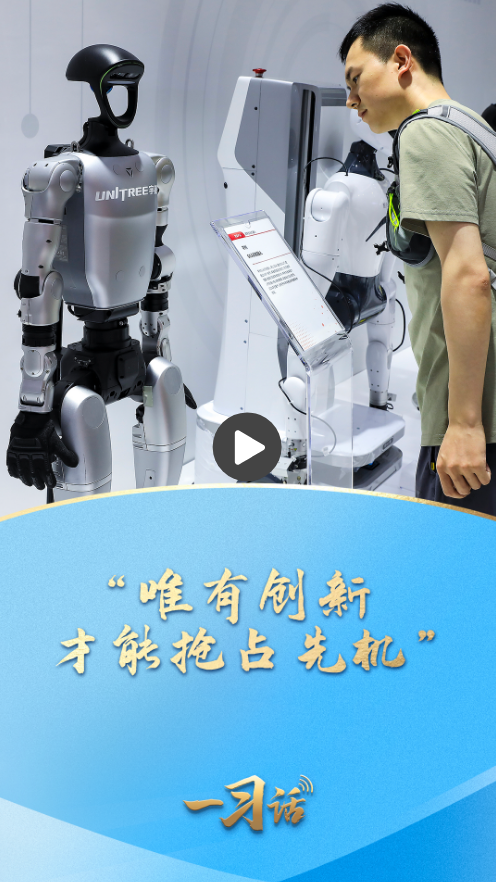
一习话·非凡“十四五”|“唯有创新才能抢占先机”
Yang Guang Wang· 2025-10-21 12:47
Group 1 - Innovation is emphasized as a core element for national development, with significant focus from leadership on fostering innovation across various sectors [2] - During the "14th Five-Year Plan" period, China has seen remarkable achievements in technology and industrial innovation, including the launch of the first domestically produced electromagnetic aircraft carrier and the completion of the Chinese space station "Tianhe" [2] - The number of high-tech enterprises in China has surpassed 500,000, and the added value of high-tech manufacturing has increased by 42% compared to the end of the "13th Five-Year Plan" [3] Group 2 - The contribution of the "three new" economies to GDP has reached 18%, showcasing the strength of independent innovation in China [3] - Looking ahead to the "15th Five-Year Plan," China is expected to maintain a rapid pace of innovation [3]
ASML CEO:中国正尝试弃用光刻机,还可能掐住光刻机命脉
Xin Lang Cai Jing· 2025-10-21 07:15
Core Viewpoint - ASML's CEO's remarks about China's potential abandonment of its lithography machines and possible rare earth countermeasures highlight the deep-seated contradictions in the global semiconductor supply chain amid the US-China tech rivalry [1][3][9] Group 1: ASML's Dependency and Market Dynamics - ASML has a significant dependency on the Chinese market, with China becoming its largest customer by Q3 2025, accounting for 42% of equipment delivery [3] - The reliance on ASML's technology is characterized by a passive nature, as Chinese companies face restrictions on accessing advanced chip manufacturing technologies due to US-led sanctions [3][5] - The ongoing technological blockade has forced China to pursue self-reliance in lithography technology, with companies like Shanghai Micro Electronics and North China Innovation making strides in this field [3][7] Group 2: Rare Earth Supply Chain and Strategic Responses - ASML's concerns regarding China's rare earth export controls reveal the interdependent nature of the global supply chain, where China's measures are seen as a response to unilateral sanctions [5][9] - Historically, China has provided stable rare earth supplies to global tech firms, including ASML, but the US's dual standards in technology sanctions and resource demands have disrupted this balance [5][9] - China's rare earth controls signal a commitment to maintaining fairness in the supply chain, indicating that the consequences of escalating technology blockades will affect all participants, including ASML [5][9] Group 3: Implications of US-China Tech Decoupling - ASML's anxiety reflects the broader repercussions of the US's tech decoupling strategy, which inadvertently encourages Chinese innovation and the emergence of domestic semiconductor firms [7][9] - The sanctions imposed by the US have led to the rise of Chinese semiconductor equipment companies, which are beginning to penetrate markets previously dominated by foreign firms [7][9] - The situation illustrates that attempts to isolate China may ultimately result in a loss of market share for foreign companies, as local firms develop differentiated technologies [7][9] Group 4: Future of the Semiconductor Industry - The ongoing struggle over lithography technology and rare earth resources transcends individual corporate interests, impacting the future trajectory of the global semiconductor industry [9][11] - China's push for self-reliance in semiconductor technology is not about severing global ties but rather about finding space for survival and growth amid restrictions [9][11] - A sustainable future for the global semiconductor industry hinges on open collaboration rather than closed confrontation, emphasizing the need for shared technological advancements and equitable negotiations [11]


音乐剧《逐梦》在成都简阳公演 讲述中国铁路创新故事
Ren Min Wang· 2025-10-21 04:50
此次公演由陈思思担任总策划、艺术总监并领衔主演,郑麟、贾贝利等演员参演。现场观众涵盖老铁路工人、劳模代表、建筑工人、大学生等群体,普 遍认可该剧的思想性与艺术性。中建四局相关观众表示,剧中"中国人,靠自己"的台词及家属等候的情节,真实反映了产业工人的奉献与坚守;70后观众提 及绿皮火车与高铁的出行对比,认为剧目彰显了"工匠精神";00后观众则表示从中理解了"勇于追梦"的时代内涵。 演出结束后,陈思思在媒体采访中称,剧组通过多曲风融合丰富艺术表达,此次成都连演四场既是致敬四川工人,也是礼赞铁路大省的劳动者风貌。主 创团队表示,剧目旨在搭建艺术与现实的沟通桥梁。 据悉,《逐梦》还将于10月20日至21日在简阳大剧院加演两场,持续传递工业文明与奋斗精神。(全国总工会文工团供稿) 来源:人民数字联播网 10月19日晚,国家艺术基金资助项目、现实主义工业题材音乐剧《逐梦》在成都市简阳大剧院完成第二场公演。 据介绍,《逐梦》由序、主体三幕及尾声构成,以高铁研发为背景,通过主人公陈雨虹及其团队攻坚克难的历程,展现中国铁路从蒸汽时代到高铁时代 的发展跨越。剧目以自主创新、打造中国高铁品牌为主线,以家庭初心传承为副线,通过三节 ...

直径超4米,单胎重量逾6吨!全球最大轮胎在长春成功下线
Qi Lu Wan Bao Wang· 2025-10-21 02:17
Core Insights - Linglong Tire has achieved a significant breakthrough with the successful production of the 59/80R63 "Linglong" brand giant all-steel engineering radial tire, marking its entry into the elite group of companies capable of manufacturing 63-inch all-steel giant tires [1] - The new tire, with a diameter exceeding 4 meters and a weight of over 6 tons, has a maximum load capacity of 100 tons, suitable for major mining dump trucks like Caterpillar 797 and Komatsu 980, and is designed for the harsh conditions of open-pit mining [1] - The development of the 59/80R63 tire involved overcoming key technical challenges in structural design, material formulation, and manufacturing processes, showcasing the company's strong independent innovation capabilities [1] Company Strategy - The successful launch of the 59/80R63 tire is a crucial step in Linglong Tire's "3+3" global strategy for non-road tires, which has been in development for nearly 40 years [2] - Since producing its first agricultural machinery bias tire in 1987, Linglong has continuously expanded its product lines in engineering machinery, agriculture, and industrial tires, building a solid technical foundation [2] - In 2022, Linglong Tire initiated a comprehensive upgrade plan for non-road tire production capacity, implementing the "3+3" layout with three production bases in China and three overseas [2]

山外山 越过“三重山”,迈向更广阔的世界舞台
Shang Hai Zheng Quan Bao· 2025-10-20 18:08
Core Viewpoint - The company, located in Chongqing's Liangjiang New Area, is experiencing a surge in orders despite challenges faced by many enterprises, indicating strong market demand and effective management strategies [1][2]. Company Overview - The company, known as Shanwaishan, is a leading player in China's blood purification equipment industry and the only Sci-Tech Innovation Board listed company in this sector [3]. - The founder, Gao Guangyong, has a background in mechanical manufacturing and has been instrumental in breaking foreign monopolies in the market, leading to rapid market share growth [2][4]. Historical Context - The company was founded in 2001 after Gao was motivated by a personal tragedy related to the lack of blood purification machines in his hometown [4]. - Initial challenges included high technical barriers, strict regulations, and market monopolization by foreign brands, which required significant financial investment and innovation [5][6]. Recent Developments - The company is currently expanding its production capacity, with a new industrial park expected to generate an annual output value of approximately 3 billion yuan [7]. - Shanwaishan's core business in blood purification equipment has seen a continuous increase in market share, with significant growth in self-produced consumables [8]. Market Performance - The company has achieved a market share of 20.42% in continuous blood purification equipment and 15.29% in blood dialysis machines, leading among domestic brands [8]. - In the first half of 2023, the company's self-produced consumables reported a revenue increase of 91.90% year-on-year [8]. International Expansion - The overseas market is becoming a significant profit growth point, with foreign income accounting for 24.30% of total revenue in the first half of the year [9]. - The company aims to establish itself as a global leader in blood purification, benefiting patients with kidney diseases and critical conditions worldwide [9].

美国资本收割是真,中美对抗是假,中国是唯一打破美国收割的国家
Sou Hu Cai Jing· 2025-10-20 16:20
中美这事儿,很多人一上来就觉得是两个大国在掰手腕,国家之间你死我活的较量。可这表面上的对抗,真的就那么简单吗?其实藏在背后的,是美国那些 大资本家们在玩收割的把戏。中国正好成了他们眼里的钉子,因为中国不光没被收割干净,还反过来打破了他们的老套路,成为全球唯一一个真正顶住这种 压力的国家。 这事说到底,国家对抗是幌子,资本收割是核心。中国不光防住了,还反过来影响全球格局。美元霸权不是铁板一块,中国举措让更多国家看到出路。未 来,美国资本还会试新招,但中国已不是当年那个容易被套的国家。 中国加入世界贸易组织签字仪 SIGNING CEREMONY ON CHINA'S ACCESSION TO THE 美国资本收割全球的手段,早不是什么新鲜事儿。从二战后开始,美国靠着美元霸权,成了世界老大。美元是国际贸易的通用货币,美国印钞就能买全球的 东西,其他国家得辛辛苦苦出口换美元。这套体系,让美国资本家们坐享其成,通过美联储操控利率,制造经济周期,高点卖出,低点买入,收割别国的财 富。东南亚金融危机、俄罗斯解体后那阵子,都是活生生的例子。美国资本放贷出去,等到经济泡沫破裂,就低价抄底资产。 现在轮到中国了,中美贸易额20 ...

激发新质生产力,需要社会合力
Di Yi Cai Jing Zi Xun· 2025-10-20 16:08
2025.10.20 本文字数:1795,阅读时长大约3分钟 作者 |一财评论员 10月20日,国家统计局发布了前三季度主要经济数据。今年以来,国民经济顶压前行,不仅稳住了基本 盘,不少关键领域还实现了新突破、新提升;前三季度经济增长5.2%,快于上年同期0.4个百分点,为 实现全年主要目标奠定了坚实基础。 国家统计局在答记者问时指出,前三季度新质生产力发展情况主要有五个方面的特点:创新成果竞相迸 发,创新能力有效提升;新产业新产品快速发展,新业态新模式加快拓展;人工智能赋能增强,数字经 济蓬勃发展;绿色转型步伐稳健,经济发展"含绿量"不断提升;技术改造继续深化,传统产业焕新发 展。 世界知识产权组织最新发布的报告显示,2025年中国创新指数首次跻身全球前十,24个创新集群成为全 球百强,入围数量连续3年居全球首位。这都与持续加大投入相关。 去年4月,国务院印发了《关于加强监管防范风险推动资本市场高质量发展的若干意见》,其中强调: 要加大对符合国家产业政策导向、突破关键核心技术企业的股债融资支持;推动债券和不动产投资信托 基金(REITs)市场高质量发展;拓宽企业境外上市融资渠道,提升境外上市备案管理质效等。 ...

激发新质生产力,需要社会合力
第一财经· 2025-10-20 16:01
2025.10. 20 本文字数:1795,阅读时长大约3分钟 作者 | 一财评论员 10月20日,国家统计局发布了前三季度主要经济数据。今年以来,国民经济顶压前行,不仅稳住了 基本盘,不少关键领域还实现了新突破、新提升;前三季度经济增长5.2%,快于上年同期0.4个百分 点,为实现全年主要目标奠定了坚实基础。 国家统计局在答记者问时指出,前三季度新质生产力发展情况主要有五个方面的特点:创新成果竞相 迸发,创新能力有效提升;新产业新产品快速发展,新业态新模式加快拓展;人工智能赋能增强,数 字经济蓬勃发展;绿色转型步伐稳健,经济发展"含绿量"不断提升;技术改造继续深化,传统产业焕 新发展。 新质生产力的加快培育为高质量发展增添了新动能,推动中国经济换上新的增长引擎。同时,新质生 产力的发展将继续创造新的经济增长点,从而更有效激发自主创新活力与产业升级动力,也有助于对 冲下行压力,增强上行动力。 今后一个时期,新质生产力发挥的推动作用会更加重要。 今年以来,各方面继续加大创新投入,推动新兴领域投资扩产,促进新质生产力形成。国家统计局的 数据表明,2024年研发经费投入比上年增长8.9%,研发经费投入强度比上年提高 ...