贸易逆差

Search documents
日本对美出口连续3个月同比下降
Xin Hua Wang· 2025-08-12 06:37
Core Viewpoint - Japan's exports to the United States have been significantly impacted by U.S. tariff policies, particularly in the automotive sector, leading to a continuous decline in export figures for three consecutive months [1] Export Performance - In June, Japan's automotive exports to the U.S. decreased by 26.7% year-on-year, contributing to an overall decline in exports to the U.S. of 11.4%, amounting to 1.71 trillion yen (approximately 11.55 billion USD) [1] - Japan's total exports in June fell by 0.5% year-on-year to 9.16 trillion yen, marking the second consecutive month of decline [1] Trade Balance - For the first half of the year, Japan's total exports increased by 3.6% year-on-year, driven by growth in semiconductor manufacturing equipment, automobiles, and food exports [1] - Conversely, Japan's total imports rose by 1.3% year-on-year, influenced by increased imports of pharmaceuticals, communication equipment, and computers [1] - Japan's trade deficit expanded to 2.22 trillion yen in the first half of the year, while a trade surplus of 4.13 trillion yen was recorded with the U.S. [1] Impact of Tariffs - Automotive and automotive parts account for approximately one-third of Japan's exports to the U.S., and the 25% tariff on imported vehicles has had a substantial negative impact on these exports [1] - In response to U.S. tariff policies, Japanese automakers are compelled to lower prices or prioritize the export of lower-priced models, which is likely to squeeze profit margins for manufacturers [1]
5月日本对美出口同比大降
Xin Hua Wang· 2025-08-12 05:50
Core Insights - Japan's exports to the U.S. fell by 11.1% year-on-year in May, significantly impacted by U.S. tariffs on automobiles and steel [1] - The trade deficit for Japan in May reached 637.6 billion yen, a substantial increase from 115.8 billion yen in April [1] - Exports of automobiles and auto parts, which account for about one-third of Japan's total exports to the U.S., saw declines of 24.7% and 19% respectively [1] Trade Statistics - Japan's total exports in May decreased by 1.7% to 8.14 trillion yen (approximately 56.2 billion USD) [1] - Imports in May also fell by 7.7% to 8.77 trillion yen (approximately 60.4 billion USD), benefiting from lower energy prices [1] - The significant drop in exports to the U.S. is attributed to the impact of a 25% tariff on automotive products [1] Industry Implications - Japanese automakers may be forced to lower prices or prioritize the export of lower-priced models to mitigate the effects of U.S. tariffs [1]
美国贸易逆差收窄至860亿 美元资产吸引力增强
Jin Tou Wang· 2025-08-12 03:04
Core Viewpoint - The article highlights a significant reduction in the U.S. trade deficit, which has narrowed by 10.8% to $86 billion, the lowest level since September 2023, primarily due to a 4.2% decrease in imports, indicating a cooling domestic demand [1] Economic Indicators - The narrowing trade deficit is expected to lessen the drag of net exports on economic growth, contributing to a more optimistic outlook for the U.S. economy [1] - Economists have raised their GDP growth forecast for the second quarter from 2.4% to 2.9% following the positive trade data [1] Market Implications - The positive economic outlook is providing strong support for the U.S. dollar, enhancing investor confidence in dollar-denominated assets [1] - Analysts suggest that the dollar index is likely to maintain a relatively strong performance in light of improving economic fundamentals [1] Technical Analysis - Short-term resistance levels for the dollar index are identified at 98.75-98.80 and 99.00-99.05, while support levels are at 98.40-98.45 and 98.15-98.20 [1] - A trading strategy is proposed to buy within the range of 99.05-98.15, with a stop loss of 30 points and a target at the upper limit of the range [1]
瑞士这回知道自己的地位了吧
虎嗅APP· 2025-08-12 00:08
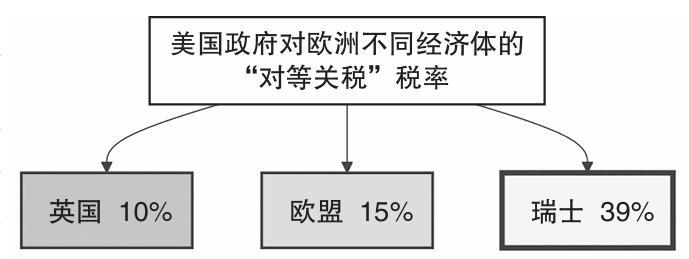
Core Viewpoint - The article discusses the impact of the 39% tariffs imposed by the Trump administration on Switzerland, highlighting the potential economic repercussions for the Swiss economy, particularly in its export sectors [4][5]. Group 1: Economic Impact on Switzerland - Switzerland's economy is heavily reliant on trade, with exports projected to reach 283 billion Swiss francs in 2024, a 3% increase from 2023 [6]. - The U.S. is Switzerland's most significant trading partner, accounting for 19% of its total exports, despite a trade deficit of nearly 40 billion francs [6][7]. - The pharmaceutical sector is a major contributor to Swiss exports, with expected exports to the U.S. reaching 35 billion dollars in 2024 [8]. - The high tariffs create a significant disadvantage for Swiss exporters, especially when compared to the 15% tariffs imposed on EU products [7][8]. Group 2: Response to Tariffs - The Swiss government is actively seeking to negotiate with the U.S. to mitigate the impact of the tariffs, with proposals likely to include increased investments in the U.S. as leverage [9][11]. - The Swiss Federal Council has introduced a "partial unemployment" scheme to help businesses cope with reduced demand due to tariffs, allowing for reduced working hours while retaining employees [12][13]. Group 3: Consumer Behavior and Local Products - Despite the tariffs, Swiss consumers remain loyal to local products, often preferring them over imported goods, which may be affected by the tariffs [17][20]. - The cultural inclination towards local products is reinforced by strict Swiss production standards and a strong sense of community support for local agriculture [20][22].


真当中国不会出手?美国这次玩大了!中美局势突然大变,特朗普最担心的情况出现了?
Sou Hu Cai Jing· 2025-08-11 14:26
据新华网消息,近期美国再度调整对中国部分商品关税政策,中美关税博弈持续引发全球关注。自特朗普再次执政以来,对中国发起的关税战便成为国际经 济与政治领域焦点。如今局势突变,特朗普正面临极为棘手的局面。 美国有线电视新闻网评论称,在短短六个月内,特朗普 "重塑了全球贸易格局,颠覆了长达一个世纪的惯例"。一些企业主公开表示,若关税战持续,企业 将被迫裁员甚至倒闭,这将对美国就业市场造成沉重打击,普通民众也将深受其害。美国部分政客也对特朗普的关税政策提出批评,认为其可能导致美国经 济衰退,仅依靠加征关税这一简单粗暴的手段,无法实现美国的繁荣发展,反而可能使美国经济陷入困境。 从经济数据对比来看,特朗普的关税战并未达到预期效果。在关税战背景下,美国经济增长动能受到抑制。美国 6 月贸易逆差虽出现收窄,据美国人口普查 局与商务部经济分析局 8 月 5 日联合公布的数据,2025 年 6 月美国货物和服务贸易逆差为 602 亿美元,比修正后的 5 月 717 亿美元减少 115 亿美元,环比 下降 16%,但这主要是由于内需放缓导致消费品及原材料进口降至新冠疫情以来最低,并非关税政策的积极成效。 与此同时,美国国内通胀压力 ...
关税生效,双向暂停!印度、瑞士反击特朗普!印俄加强稀土合作!
Sou Hu Cai Jing· 2025-08-11 04:44
Group 1 - Trump's second round of tariffs has elicited unexpected reactions from countries like Brazil, India, and Switzerland, leading to new uncertainties in global trade [1] - The 50% tariff imposed on Brazil is expected to increase prices for American consumers on popular products such as beef, cola, and hamburgers, while significantly impacting Brazil's export economy [5] - India's response to the 50% tariff includes halting new weapon and aircraft purchases from the U.S. and emphasizing its energy security needs, showcasing its independent foreign policy [5] - Switzerland's 39% tariff will heavily pressure its export-driven economy, particularly affecting companies like Pilatus, which has suspended aircraft deliveries to the U.S. due to increased costs [7] Group 2 - The high tariff policies aim to reduce trade deficits and protect U.S. manufacturing in the short term, but may lead to increased international trade friction and retaliatory measures from affected countries [9]

专栏丨不降反升,美国新关税让瑞士“目瞪口呆”
Xin Hua Wang· 2025-08-11 01:08
新华社日内瓦8月10日电 题:不降反升,美国新关税让瑞士"目瞪口呆" 新华社记者陈俊侠 焦倩 在美国近期公布的对69个贸易伙伴输美商品适用的关税税率中,针对瑞士的税率令人意外地高达39%。 这一税率是欧洲国家中最高的,比4月初美国宣布的31%税率提高了8个百分点。随着新关税7日正式生 效,瑞士出口美国近六成商品受到影响。 瑞士自认为与美国长期保持良好的双边关系和紧密的经济联系,此前谈判中一度释放出有望就10%税率 达成协议的乐观预期,如今却不降反升,这一痛击让瑞士举国"目瞪口呆"。瑞士西区经济发展署前署 长、经济学家菲利普·莫尼耶说,瑞士舆论此前普遍持乐观态度,认为最理想状态是10%甚至更低的税 率,最起码不应超过20%。瑞士政府发表声明说,对美方关税政策"深表遗憾",并称这一税率与两国在 过去几个月里进行密集磋商后达成的联合声明草案内容存在"重大偏差"。 瑞士经济高度依赖出口,约18%的出口商品销往美国,未来势必将因美国加征高关税而面临较大压力。 同时,美国对欧盟、日本、英国等征收的关税税率都低于瑞士,也使得瑞士商品对美出口处于劣势。 为扭转不利局面,瑞士政府已明确宣布将采取两大措施:一是将继续与美国谈判以 ...
不降反升,美国新关税让瑞士“目瞪口呆”
Xin Hua She· 2025-08-11 00:29
Core Viewpoint - The recent increase in tariffs imposed by the U.S. on Swiss goods, reaching 39%, has shocked Switzerland, which had anticipated a lower rate following negotiations [1][2]. Group 1: Tariff Impact - The new tariff rate of 39% is the highest among European countries and affects nearly 60% of Swiss exports to the U.S. [1] - The previous expectation was for a 10% tariff, with Swiss officials expressing disappointment over the significant deviation from prior negotiations [1][2]. Group 2: Economic Context - The U.S. cites a trade deficit of $38.3 billion with Switzerland as a reason for the high tariffs, claiming that the U.S. is at a disadvantage in bilateral trade [2] - Switzerland has been labeled a "currency manipulator" by the U.S. due to its attempts to devalue the Swiss franc to boost exports [2]. Group 3: Government Response - The Swiss government plans to continue negotiations with the U.S. to lower tariffs and may implement support measures for Swiss companies facing pressure from the tariffs [3] - Proposed measures include more flexible policies regarding working hours and wages to prevent layoffs [3].
财经观察:瑞士如何招架“发达国家最高关税”?
Huan Qiu Shi Bao· 2025-08-10 22:56
Group 1: Tariff Impact on Switzerland - The U.S. has imposed a 39% tariff on Swiss goods, the highest among developed countries, leading to significant shock and confusion in Switzerland [1][3] - The trade deficit between the U.S. and Switzerland exceeded $38 billion last year and approached $48 billion in the first half of this year, prompting U.S. dissatisfaction with Switzerland's trade balance [3] - Swiss exports to the U.S. are heavily reliant on gold, which accounted for two-thirds of exports recently, alongside strong performances in pharmaceuticals, precision machinery, watches, chocolate, and cheese [3] Group 2: Economic Consequences - Economists estimate that the U.S. tariffs could result in the loss of 7,500 to 15,000 jobs in Switzerland and potentially decrease the country's GDP by up to 1% [6] - The high tariffs, combined with the strong Swiss franc, are expected to severely impact Swiss exporters, particularly in the machinery and electrical engineering sectors [7] Group 3: Industry Responses - Swiss companies are preparing for the tariff impact by increasing exports to the U.S. before the tariffs take full effect, but the long-term effects will become apparent as inventories deplete [9] - The luxury watch industry may see prices rise by 65% in the U.S. due to tariffs, while chocolate prices could increase by nearly 55%, risking market share loss [9] Group 4: Negotiation Challenges - Swiss authorities are in ongoing discussions with the U.S. to lower tariffs, but the negotiation leverage appears limited due to Switzerland's already high level of trade liberalization with the U.S. [10] - The potential for Swiss companies to relocate production to Germany is being considered, but this process is complex and time-consuming [10] Group 5: Broader Trade Dynamics - The current trade negotiations between Switzerland and the U.S. are characterized by pressure and threats rather than traditional cooperative discussions, complicating the resolution process [11]