
价格战

Search documents
左手降价,右手「天价」:特仑苏的阳谋
虎嗅APP· 2025-08-13 13:35
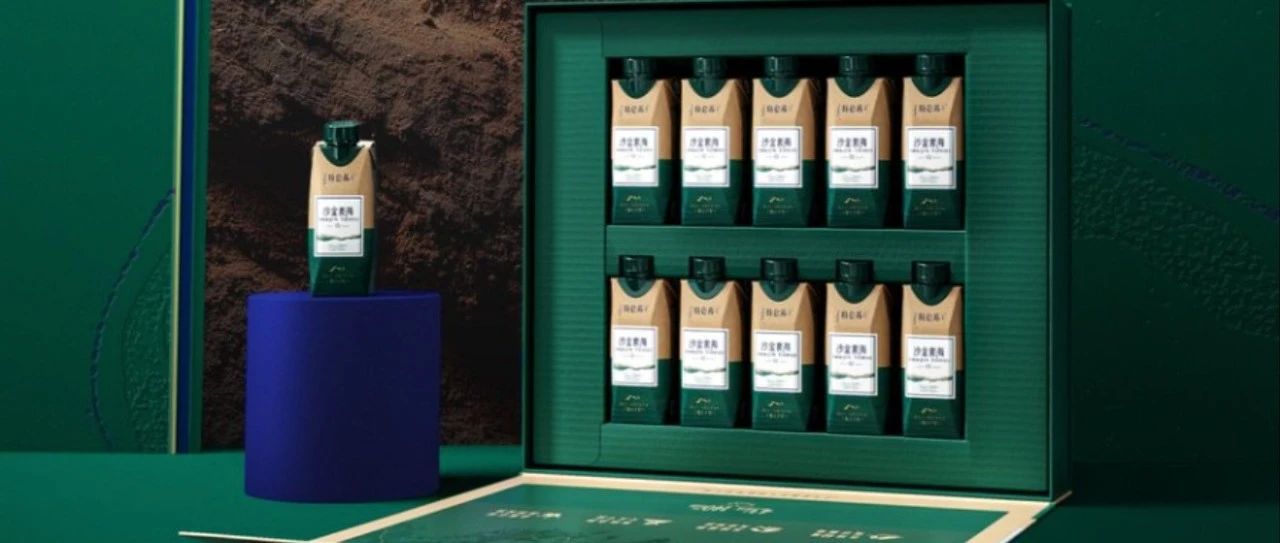
Core Viewpoint - The Chinese consumer goods industry is currently facing a "prisoner's dilemma," characterized by rational consumption, overcapacity, and a brutal price war that affects various sectors, including coffee, e-commerce, and dairy [2][3]. Group 1: Market Dynamics - The price war has created a vicious cycle where price reductions can temporarily boost sales but compress profits and damage brand value, while not lowering prices risks market elimination [3]. - In response to this environment, the brand TeLunSu has adopted a unique strategy of simultaneously lowering and raising prices, exemplified by its recent actions of reducing the price of its core high-end product "Desert Organic Milk" from 118 yuan to 99 yuan, while also launching a premium product priced at 188 yuan [3][4]. Group 2: Consumer Behavior - According to a McKinsey report, consumer behavior has not downgraded but has become more discerning, seeking a balance between "certain quality" and "reasonable price," emphasizing the importance of quality-price ratio [5]. - Data from Xiaohongshu indicates a 622% increase in searches for "organic milk," reflecting a growing willingness among consumers to pay for organic products while expecting reasonable pricing [6]. Group 3: Brand Strategy - TeLunSu's strategy of lowering the price of its flagship product is not a promotional tactic but a reflection of efficiency and scale benefits across the entire supply chain, aiming to break the perception that high quality equals high price [6]. - The introduction of the premium product "Sand Gold Set Desert Organic Pure Milk" is a significant move for TeLunSu, showcasing its resilience and commitment to high value during a period of industry adjustment [10][14]. Group 4: Industry Impact - TeLunSu's actions serve as a model for the industry, demonstrating how to escape the price war by focusing on extreme quality and brand value, thus creating a new definition of high-end products [10][18]. - The brand's commitment to long-term investment in quality and brand building, rather than short-term price competition, highlights its ability to navigate through economic cycles [14][15]. Group 5: Future Outlook - TeLunSu's new product launch is not just about self-improvement but also aims to elevate the entire industry by creating value beyond its own brand, fostering a collective resonance with consumers [18][20]. - The brand's strategic initiatives, including inviting consumers to experience its organic sourcing journey, aim to enhance consumer understanding and appreciation of its products, reinforcing its commitment to continuous improvement [20][21].

快递费上调确认!继义乌后 广东也涨了:底价上调0.4元 各家不得低于1.4元揽收
Mei Ri Jing Ji Xin Wen· 2025-08-13 09:01
Core Viewpoint - The express delivery industry in Guangdong has implemented a price increase, raising the minimum charge to 1.4 yuan per ticket, which is expected to stabilize the financial situation of many delivery points [1][2]. Group 1: Price Increase Details - Starting from August 5, the overall base price for express delivery in Guangdong has been raised by 0.4 yuan per ticket, with the average price exceeding 1.4 yuan [1]. - The increase in base price is aimed at ensuring that no express company can collect below the cost price of 1.4 yuan, particularly affecting e-commerce customers who have high delivery demands [1]. - Prior to Guangdong, the city of Yiwu in Zhejiang had already initiated a price increase mechanism, raising the base price from 1.1 yuan to 1.2 yuan [1]. Group 2: Industry Context - The express delivery industry has been plagued by a "low-price for volume" competition, leading to reduced profit margins for delivery points and poor service quality [2]. - The average price per ticket for express delivery has significantly decreased from 28.55 yuan in 2007 to 7.49 yuan in June of this year [2]. - Major express companies like SF Express, Shentong, Yunda, and Zhongtong have seen their average ticket revenue drop by approximately 40% since 2017, with only Zhongtong showing a slight increase [2]. Group 3: Regulatory Environment - The State Post Bureau has emphasized the need for stronger industry regulation and has taken steps to combat "involutionary" competition and improve service quality [3]. - Following regulatory discussions, stocks of major express companies have surged, with Yunda's stock increasing by 22.4%, Shentong by 47.54%, and others also showing significant gains [3].

于德营:中国车企海外市场价格战是一把“双刃剑”
Zhong Guo Qi Che Bao Wang· 2025-08-13 08:30
于德营:短期来看,这种方式激活了贸易活力,汽车企业销量增长,消费者得以以较低价格购买汽车, 但长期来看存在诸多隐患。如,保修期通常从初次登记之日起计算,因此可能没有实际覆盖。此外,一些汽 车仍然有未偿还的贷款义务或不明显的所有权历史,这可能会给新车主带来潜在的法律和财务问题。通过非 官方渠道销售的车辆,还可能对车辆注册和保险造成困难。 《中国汽车报》:今年以来,中国汽车产品尤其是新能源汽车在海外价格战引起相关市场关注的事件持 续发酵。证券调研机构 BIMB Securities Research 的调研报告称,中国车企在马来西亚正围绕价格进行 " 内卷 式 " 竞争。中国汽车行业的价格战为何会吹至海外? 中国车企在海外市场的降价行为,本质上是政策红利、成本优势和市场竞争多重因素交织的结果。 从国内外对比看,国内汽车市场进入市场缓慢增长阶段,且众多汽车品牌竞争激烈,政府"反内卷"政策 旨在引导行业向高质量、差异化方向发展,避免恶性竞争导致全行业受损。而海外市场的新能源汽车普及率 相对较低,中国品牌处于培育海外市场和抢占份额的关键初期,需要快速建立知名度、吸引早期用户、扩大 销量基数。 从政策层面看,海外一些地方 ...

苦练“内功”破“内卷”——中国汽车行业积极响应倡议谋求健康发展
Xin Hua Wang· 2025-08-12 05:52
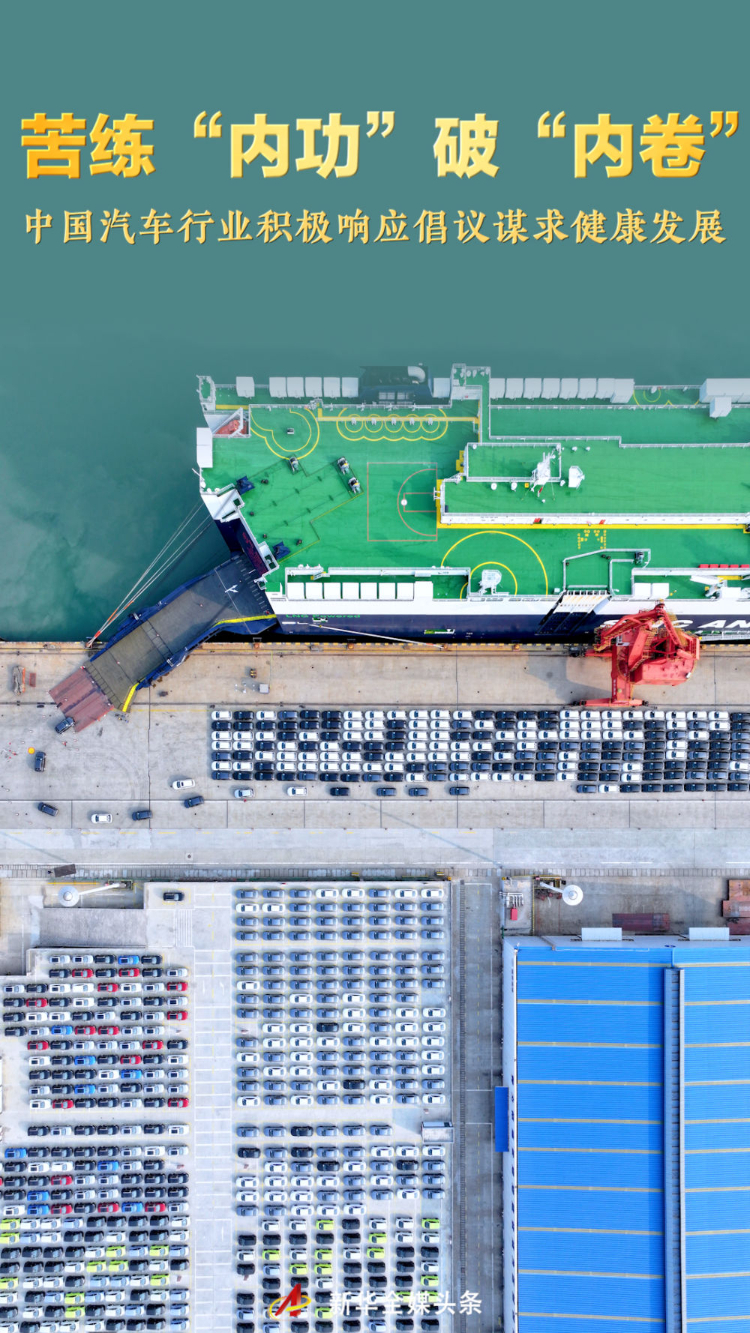
中国汽车工业协会近日发布《关于维护公平竞争秩序 促进行业健康发展的倡议》,明确反对车企之间无序"价格战"。工业和信息化部也明确 表示,"价格战"没有赢家,更没有未来,将加大汽车行业"内卷式"竞争整治力度。 出口汽车在苏州港太仓港区码头集中装载上"深圳号"汽车运输船(2025年4月26日摄,无人机照片)。新华社发(王须中摄) 对此,多位汽车企业负责人和业内专家在接受新华社记者采访时表示,赞同中国汽车工业协会发出的倡议,当前中国汽车行业企业必须凝聚 发展共识,以实际行动维护公平有序的市场氛围,积极通过苦练"内功"破除"内卷",以科技创新推动行业健康、可持续发展,进而增强我国新能 源汽车产业的全球竞争力。 "内卷对行业的伤害,大家都看在眼里。"奇瑞汽车董事长尹同跃说,"卷价格"带来的最直接结果是压力转移,供应商、经销商都会受到波 及,对企业自身、社会大众、行业发展都不负责任。 2024年11月15日,第二十二届广州国际汽车展览会在中国进出口商品交易会展馆开幕。这是观众在奇瑞展台拍摄展车。新华 社记者 邓华 摄 蔚来汽车董事长李斌表示,刻意开展"价格战","赢家通吃"的想法不可取,会让整个行业处于低水平竞争和恶性竞争 ...
四大快递龙头上半年经营数据出炉 价格战持续单票收入下降
Xin Hua Wang· 2025-08-12 05:49
Core Viewpoint - Despite ongoing price wars leading to a decline in service prices, major express delivery companies in China have maintained steady growth in revenue and net profit in the first half of the year, indicating overall market expansion [1][5]. Revenue Performance - In June, three companies reported year-on-year revenue growth: SF Express achieved 16.704 billion yuan, up 3.59%; Shentong Express reported 3.36 billion yuan, up 12.67%; and YTO Express reached 4.246 billion yuan, up 3.39% [2]. - Yunda Express lagged behind with a revenue of 3.665 billion yuan, down 11.47%, and a business volume of 1.581 billion parcels, down 2.04% [2]. - SF Express expects a net profit of 4.02 billion to 4.22 billion yuan for the first half of 2023, a year-on-year increase of 60%-68% [2]. Business Volume Trends - In June, SF Express experienced a slight decline in business volume, handling 1.017 billion parcels, down 0.29%; Shentong Express saw a significant increase of 28.26% to 1.523 billion parcels; YTO Express grew by 14.03% to 1.792 billion parcels [2]. - Yunda Express's business volume decreased, but it anticipates a net profit growth of 37.31%-75.12% for the first half of the year [2]. Single Ticket Revenue - SF Express reversed its declining trend with a single ticket revenue of 16.42 yuan, up 3.86%; however, Shentong, YTO, and Yunda reported declines in single ticket revenue [3]. - Shentong's single ticket revenue fell to 2.21 yuan, down 11.95%; YTO's to 2.37 yuan, down 9.33%; and Yunda's to 2.32 yuan, down 9.73% [3]. Industry Outlook - The overall performance of the express delivery sector shows signs of stabilization and recovery, with most companies adapting to market demand and improving operational efficiency [5]. - The second half of the year is expected to see continued growth in the express delivery industry, driven by economic recovery and e-commerce market expansion [6].



1.4万!特斯拉,再降价
Xin Hua Wang· 2025-08-12 05:49
Group 1 - Tesla has reduced the prices of Model Y Long Range and Performance versions by 14,000 yuan, bringing them to 299,900 yuan and 349,900 yuan respectively, while the Model 3 has a temporary insurance subsidy that effectively lowers its price by 8,000 yuan [1][2] - The price cuts are part of a broader trend in the domestic electric vehicle market, where many manufacturers have also lowered prices to maintain sales momentum and meet annual targets [1][4] - In July, Tesla sold 64,300 vehicles in China, a year-on-year increase of 128%, but a month-on-month decrease of 31.38% [3] Group 2 - Other automakers have also announced price reductions, including SAIC Volkswagen, which offered discounts of up to 60,000 yuan on nine SUV models, and Leap Motor, which reduced prices by up to 20,000 yuan on certain models [4][5] - NIO has introduced promotional offers, including free battery swap experience coupons for new car buyers and price adjustments on home charging piles, with discounts reaching up to 2,700 yuan [5] - The market is expected to see continued promotional activities, with some manufacturers potentially increasing discounts in response to market conditions [4][5]

撤A股上市申请 老乡鸡赴港融资扩加盟店数量
Xin Hua Wang· 2025-08-12 05:38
Core Viewpoint - The company, Lao Xiang Ji, is preparing for its IPO in the Hong Kong market after withdrawing its A-share listing application, aiming for rapid expansion in the competitive fast-food industry [1][3]. Company Overview - Lao Xiang Ji is a Chinese fast-food brand focusing on chicken soup and chicken dishes, recognized for its standardized operations across the industry [2]. - The company has received investments from various institutions, with only Cahua Capital holding a 4.98% stake as of January 2025 [2]. Market Position and Strategy - The Chinese fast-food sector is the largest sub-market within the domestic fast-food industry, and Lao Xiang Ji aims to leverage its IPO for capital to support its expansion [3]. - The company has been expanding its presence in first-tier cities, although it acknowledges its brand recognition is significantly lower than Western fast-food brands [3]. Financial Performance - Lao Xiang Ji reported revenues of 45.28 billion yuan, 56.51 billion yuan, and 46.78 billion yuan for the years 2022, 2023, and the first three quarters of 2024, respectively, with adjusted net profits of 2.68 billion yuan, 4.03 billion yuan, and 3.85 billion yuan [6]. - As of September 30, 2024, the company operated 1,404 stores across 53 cities, including 949 direct-operated and 455 franchised stores [6]. Franchise Growth - The number of franchised stores increased significantly from 102 in mid-2022 to 455 by the third quarter of 2024, while the number of direct-operated stores slightly decreased [7][8]. - The performance of franchised stores has been less favorable compared to direct-operated stores, with lower turnover rates and sales per unit area [7]. Competitive Landscape - The fast-food industry is experiencing intense price competition, with local brands introducing low-cost meal options [4]. - Lao Xiang Ji has maintained a stance against engaging in price wars, although it has offered discounts through online platforms [4][5]. Operational Challenges - The company faces challenges in managing its rapid expansion, particularly in supply chain management, franchisee oversight, food safety, and talent development [1][5]. - The shift towards a franchise model has led to a reduction in direct-operated stores, attributed to factors such as decreased consumer traffic and the impact of the pandemic [8].
GPT-5或掀起AI界的价格大战
3 6 Ke· 2025-08-12 02:51
一些用户指出,GPT-5的定价较同水平模型更低,且较OpenAI的前一个版本也更低。 OpenAI上周推出了最新旗舰大模型GPT-5,该公司首席执行官奥尔特曼自称GPT-5是世界上最好的模 型。而就在几天前,OpenAI刚刚公布了两款免费开源模型。 OpenAI快速上新多款产品的策略,颇令业界意外,更让人工智能从业者瞩目的是,OpenAI为GPT-5设 定了一个极具竞争力的价格,可能将打破其他公司的价格体系。 顶级GPT-5 API的输入费用为每100万个token1.25美元,输出费用为每100万个token 10美元。 另一个竞争对手Anthropic则为Claude Opus 4.1设定了更高的价格,每100万个输入token费用为15美元, 而每100万个输出token费用为75美元。 谷歌的Gemini 2.5和Anthropic的Claude Opus 4.1,在性能上与GPT-5水平接近,但费用上看都比GPT-5更 加昂贵,这也让开发者们对GPT-5十分推崇。 无法覆盖成本 虽然有用户在GPT-5上线后抱怨,新模型没有GPT-4o那么人性化,并导致OpenAI后来重新开放了以前的 模型。但对于开 ...
价格战如何影响车市?汽车均价走出“倒U曲线”
Jing Ji Guan Cha Wang· 2025-08-11 14:11
Core Insights - The Chinese automotive market is experiencing a significant price war, with 227 models seeing price reductions in 2024, averaging a decrease of 18,000 yuan for new energy vehicles and 13,000 yuan for fuel vehicles, representing declines of 9.2% and 6.8% respectively [2] - Despite the price war, the average retail price of vehicles has increased from 151,000 yuan in 2019 to 186,000 yuan in the first half of 2024, indicating a structural shift in the market [2][3] - The market is witnessing a decline in low-end fuel vehicle sales while high-end fuel vehicle sales are increasing, leading to an overall rise in average prices [2][3] Price Dynamics - In 2024, 84.4% of automotive dealers reported price inversions, with over 40% operating at a loss, resulting in a profit margin drop to 4.3%, down from 7.8% in 2017 [2] - The average price of new energy vehicles is projected to decrease from 184,000 yuan in 2023 to 161,000 yuan in 2025, driven by supply chain maturity and an increase in high-end models [3] - The market for vehicles priced above 200,000 yuan has seen significant growth, with sales increasing from 2.15 million units in 2019 to 6.99 million units in 2024, while sales of vehicles below 200,000 yuan have declined [3] Future Trends - By 2025, the average price of passenger vehicles is expected to decline, with projections showing a drop to 172,000 yuan in Q2 and 169,000 yuan in July, an 8,000 yuan decrease from 2024 [3][4] - The "trade-in" policy is contributing to the decline in average vehicle prices, with a resurgence in the low-end market and increased sales of micro electric vehicles [5] - The potential for domestic brands to fill the gap left by traditional luxury vehicles is being discussed, with several new high-end models from domestic manufacturers gaining traction [6] Market Structure Changes - The high-end fuel vehicle market has seen a significant decline, with market share dropping from 96% in 2019 to 39.8% in July 2024 [4] - The demand for traditional luxury vehicles is decreasing, as consumers find that vehicles priced under 400,000 yuan meet their needs, leading to a potential shift in market dynamics [6] - The overall trend indicates that while the average price of vehicles may have peaked, the market is likely to continue evolving with changing consumer preferences and economic conditions [5][6]

越降价,车越贵?中国汽车均价已到顶峰
Hu Xiu· 2025-08-11 13:44
另一方面,新能源车虽以"降价先锋"姿态冲击市场,均价从2023年的18.4万元降至2025年的16.1万元, 但其价格下行主要是由于供应链成熟所带来的"技术普惠",同时高端新能源车型的占比也逐渐提升。例 如,2021年至2024年,在30万—40万元市场中,新能源车的占比从14.4%提升39.8%,40万元以上市场 新能源车的占比从12.3%提升42.8%。 更重要的是,近几年中高端车市场整体仍在持续增长。2019年时,20万元以上的新车销量为215万辆, 到2024年为699万辆,翻了3.25倍;而20万元以下的新车销量从2019年的1657万辆,减至2024年的1590 万辆,减少67万辆。 在上述多方面因素的共同影响下,国内汽车市场抗住了"价格战"的冲击,汽车均价一直维持在高位。但 到了2025年,中国乘用车市场迎来转折点,汽车整体均价开始出现下降。乘联会数据显示,2025年二季 度汽车均价降至17.2万元,7月降至16.9万元,较2024年降了8000元。 "以旧换新"政策也成为今年汽车均价下降的重要推手之一。乘联会秘书长崔东树表示,2024年随着报废 更新政策推动,车市的中低端市场回暖,中低价位消费 ...