数字技术

Search documents
奇富科技CEO吴海生受邀出席联合国八十周年系列活动
Zheng Quan Ri Bao Wang· 2025-09-25 04:15
本次活动以"数字向善:为了人类与繁荣"为主题,汇聚多国元首及全球顶尖企业领袖,旨在共同推进 《全球数字契约》框架下的跨国合作。其中,一场聚焦技术赋能发展的重要环节,重点探讨了如何利用 新兴技术促进全球繁荣,这与奇富科技长期深耕数字技术创新、以技术驱动发展的方向高度契合。目 前,奇富科技正以人工智能为核心驱动力,通过智能体技术升级数字化信贷服务体系,持续为小微企业 和城乡消费者提供可负担的金融服务,助力提升社会运行效率与发展质量。 本报讯 (记者李冰)9月22日至30日,纽约联合国总部迎来联合国八十周年系列重要活动。奇富科技首 席执行官吴海生受邀出席由国际电信联盟(ITU)与联合国开发计划署(UNDP)联合主办的联合国大 会高级别周核心活动,成为该全球顶级数字治理对话中仅有的中国金融科技企业代表。 吴海生在交流中表示,数字技术的包容性发展是实现可持续发展的关键。奇富科技始终坚信,通过负责 任的技术创新,能够让数字红利更公平地触达全球每个角落,为全球数字治理与繁荣发展贡献力量。 ...
数字技术为中外文化遗产保护传承开拓新路径
Xin Hua She· 2025-09-25 03:19
Group 1 - Digital technology is transforming the preservation and transmission of cultural heritage, with applications such as AI decoding artifacts and immersive experiences for visitors [2][3] - The Chinese government is modernizing the cultural heritage management system through digital technology, moving from manual inspections to data-driven approaches [3] - The "14th Five-Year Plan" emphasizes the integration of technology and talent development to support cultural heritage research and preservation [3] Group 2 - The Palace Museum plans to enhance its digital collection of over 1.95 million artifacts over the next 10 to 20 years, aiming for better public access [4] - Digital platforms in museums, such as podcasts and virtual exhibitions, are engaging younger audiences and enhancing their understanding of cultural history [4] - The integration of digital content and heritage preservation is recognized as crucial for enhancing cultural value and visitor experience [4][5] Group 3 - The Dunhuang Academy is utilizing digital platforms to recreate and manage artifacts that have been lost overseas, enhancing the influence of Chinese culture [5]

科技兴农结满喜人“致富果”
Ke Ji Ri Bao· 2025-09-25 01:25
Core Insights - The recent harvest festivals across China highlight the integration of technology in agriculture, showcasing innovations such as agricultural robots and smart farming equipment [1][2] - The emphasis on seed innovation during the harvest festival reflects the importance of agricultural research and development in enhancing crop yields and modernizing agriculture [1] - The Chinese government is prioritizing agricultural technology innovation, aiming to position the country among the global leaders in agricultural science and technology [2] Group 1: Agricultural Innovations - Agricultural robots and "unmanned farms" were focal points at the harvest festival, demonstrating advancements in automation within the sector [1] - Smart agricultural devices, such as spore capture instruments and pest monitoring equipment, were showcased, indicating a shift towards data-driven farming practices [1] - The introduction of new seed varieties, such as "Chuan Garlic 3" and "Black Bright 59" eggplant, underscores the role of research institutions in developing innovative agricultural solutions [1] Group 2: Technological Integration - The use of blockchain and AI to create a comprehensive trust system for agricultural products was highlighted, showcasing the potential for enhanced traceability and accountability in the supply chain [2] - Projects like "carbon sink farmland," which allows for the calculation and trading of carbon emissions per acre, illustrate the intersection of agriculture and environmental sustainability [2] - The overall level of agricultural technology innovation in China is reported to be among the top globally, reflecting significant progress in the sector [2]
数字赋能博物馆文创产品开发创新
Xin Hua Ri Bao· 2025-09-24 23:22
Core Insights - The development of cultural and creative products that integrate aesthetic, cultural, and practical values has become a common choice for many museums, leveraging digitalization and emerging technologies to enhance user experience [1][2] Group 1: Digital Resource Development - Building a digital resource library is essential for the development of cultural and creative products in museums, involving the archiving and integration of cultural relics into digital assets [2] - Technologies such as high-definition photography, laser scanning, and multispectral imaging are used to collect various data about cultural relics, which are then processed and standardized for easy access and utilization [2] - The creation of a virtual three-dimensional map of museum collections allows users to explore exhibits interactively, enhancing engagement through detailed views and historical context [2] Group 2: Innovation in Cultural Products - Digital technology enables innovation in cultural product forms, allowing designers to move beyond traditional physical goods to create virtual experiences and interactive designs [3] - The design of cultural IP images based on relics and historical narratives incorporates modern elements to appeal to diverse consumer groups [3] - The development of virtual integrated cultural products combines physical items with virtual environments, enhancing user interaction and experience [3] Group 3: Talent Development in Cultural Creation - The key to advancing cultural product development lies in cultivating creative talent that combines digital technology with design skills [4][5] - Mechanisms for attracting talent from digital technology and design fields are essential to enhance the competitiveness of cultural products [5] - Educational institutions are encouraged to offer interdisciplinary courses that prepare students for real-world cultural projects, fostering practical skills through collaborative learning [5]
21专访丨风险投资人温格:寻找与AI时代相匹配的存在意义
2 1 Shi Ji Jing Ji Bao Dao· 2025-09-24 23:04
Core Insights - Digital technology represents humanity's third great leap, comparable to the agricultural and industrial revolutions, fundamentally reshaping lifestyles and societal structures [1][5][6] Group 1: Transition to Knowledge Economy - The transition from the industrial era to the knowledge era is ongoing, causing significant upheaval and uncertainty [2] - Governments, businesses, and society must collaboratively leverage technology, particularly AI, to create a balanced knowledge era focused on human welfare [2] Group 2: Misconceptions about Digital Technology - There is a common misconception that digital technology is merely an extension of the industrial era, while it actually signifies a profound transformation [5][6] - The core driver of this transformation is the shift in scarcity from capital to human attention, making attention a critical resource in the digital age [6][8] Group 3: Inequality and Technological Impact - Historical technological leaps have often exacerbated inequality, with significant disparities in wealth and opportunity emerging [8][12] - The introduction of universal basic income is proposed as a means to elevate the baseline for all individuals, allowing them to engage in meaningful activities beyond traditional employment [8][9] Group 4: Global AI Competition - The advancements in AI are not limited to Silicon Valley; China has made significant contributions, particularly in developing efficient AI models [12][13] - The global race towards achieving artificial general intelligence (AGI) and superintelligence (ASI) is intensifying, with various fields experiencing rapid technological growth [12][13] Group 5: Addressing Global Disparities - The impact of AI on global wealth distribution raises concerns about widening gaps, particularly in developing regions like Africa [13][14] - However, there are emerging positive changes in Africa, such as advancements in mobile payments and solar energy, indicating potential for leapfrogging development [14][15]

“是文明的多样性才有了对话的空间”
Zhong Guo Jing Ji Wang· 2025-09-24 20:48
Group 1 - The core viewpoint emphasizes the importance of cultural diversity and dialogue as a means to foster understanding and respect among different civilizations [1] - Cultural dialogue is described as both material and emotional, relating to both philosophical values and everyday lifestyles [1] - The relationship between cultural dialogue and exchange is outlined, where dialogue serves as a method, exchange is the starting point, and mutual learning is the endpoint [1] Group 2 - The first aspect of promoting cultural dialogue is to eliminate misunderstandings, which can arise from individual cognitive limitations or external misinformation [1] - The second aspect is to encourage sharing, highlighting the discovery of commonalities between different civilizations, whether Eastern or Western [2] - The third aspect involves creating links through digital technology, which allows for a blend of online and offline interactions, enhancing the expression of cultural resources [2]
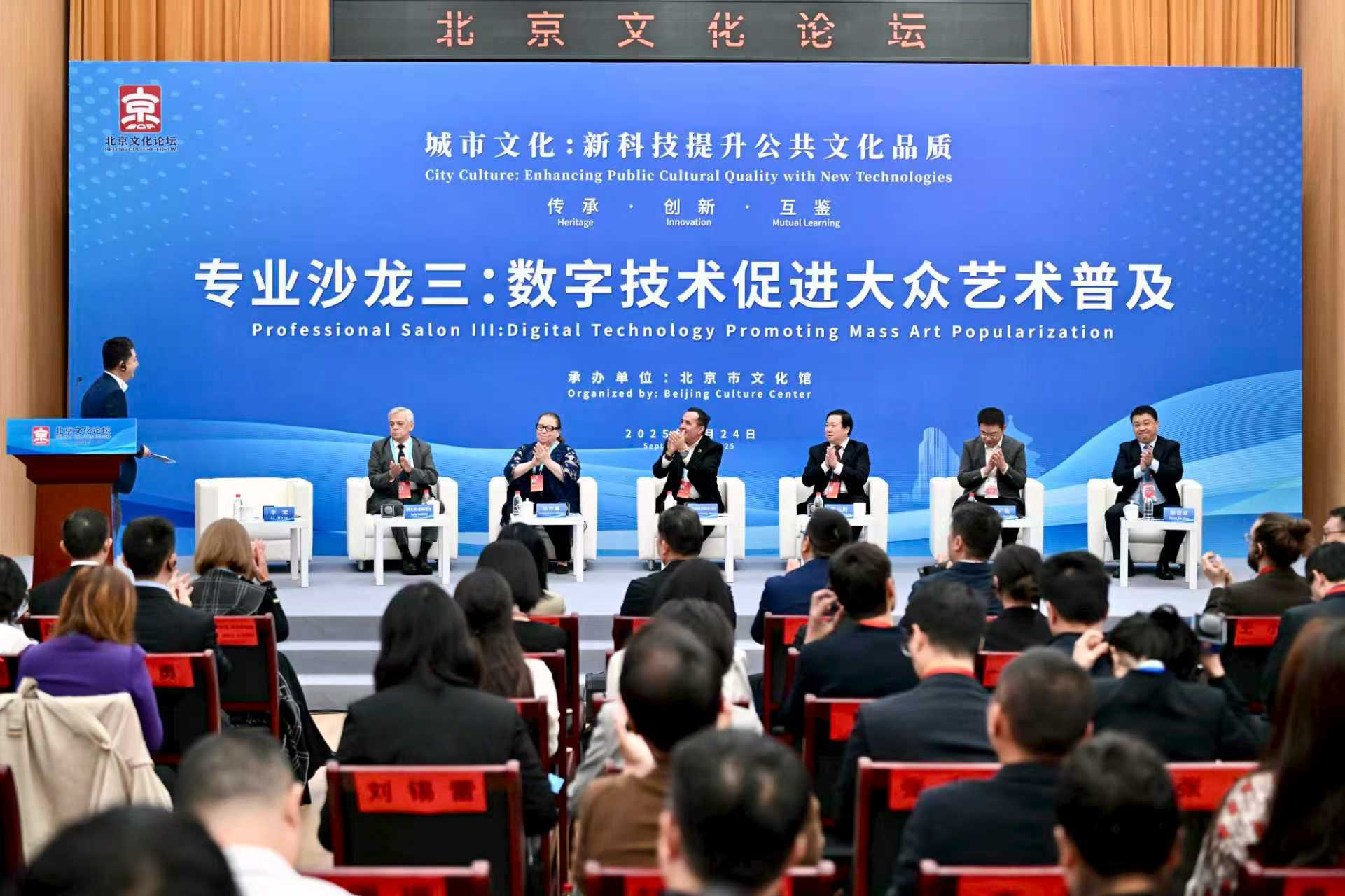
2025北京文化论坛“数字技术促进大众艺术普及”专业沙龙成功举办
Zhong Guo Jin Rong Xin Xi Wang· 2025-09-24 12:05
Core Insights - The event "Digital Technology Promoting Public Art Popularization" was successfully held as part of the 2025 Beijing Cultural Forum, focusing on the integration of culture and technology [1] - The forum aimed to explore innovative paths for public art dissemination in the digital age, emphasizing the enhancement of public cultural quality through new technologies [1][3] Group 1: Event Overview - The professional salon was hosted by Li Hong, President of the Chinese Mass Culture Association, and aimed to create a platform for sharing international and local experiences in digital technology applications for public art [3] - International representatives shared valuable experiences regarding the role of digital technology in cross-cultural art dissemination, highlighting its significant impact [3][4] Group 2: Key Discussions - Experts discussed the importance of digital technology as a bridge connecting cultural resources with public demand, emphasizing its role in enhancing the accessibility and quality of cultural services [6] - The integration of digital technology in cultural services, such as online art exhibitions and virtual experiences, is seen as a new driving force for tourism consumption and local economic development [6][7] Group 3: Future Outlook - The salon established a high-level dialogue platform for mutual learning between China and foreign countries, providing diverse ideas for the implementation of digital technology in public cultural services [7] - The continuous integration of digital technology with cultural services is expected to lead to more efficient and inclusive public art dissemination, enhancing the vitality of culture through innovation and public demand [7]

专访风险投资人温格:我们需寻找与AI时代相匹配的存在意义
2 1 Shi Ji Jing Ji Bao Dao· 2025-09-24 10:16
Core Insights - Digital technology represents a transformative leap comparable to the agricultural and industrial revolutions, marking humanity's third great leap forward [1][4] - The shift from a capital-scarce world to one where "attention scarcity" is the core issue is driven by the unique characteristics of digital technology, such as zero marginal costs and universal computability [2][5] - The transition from the industrial age to the knowledge age is causing significant upheaval, necessitating a collective effort from governments, businesses, and society to leverage technology for overall human welfare [3][10] Group 1: Digital Technology and Its Impact - Digital technology is fundamentally different from previous technologies, with implications for how knowledge and attention are valued in society [2][5] - The current economic and social structures are being challenged by the rapid growth of digital technology, which has shifted the focus from capital to attention as a scarce resource [2][5] - The market's inability to effectively allocate attention to critical global issues, such as climate change, highlights the need for alternative approaches to resource distribution [6][10] Group 2: Societal Transformation and Inequality - Historical technological advancements have often exacerbated inequality, and the current wave of digital technology may follow this pattern unless proactive measures are taken [7][14] - The introduction of universal basic income is proposed as a means to ensure that basic needs are met, allowing individuals to engage in meaningful activities beyond traditional employment [7][8] - The responsibility for raising the baseline living standards lies with both government intervention and decentralized initiatives [8] Group 3: Education and Future Workforce - The education system must evolve to ignite curiosity and creativity rather than merely filling students with information, preparing them for an unpredictable job market [18][21] - The potential for AI to provide personalized tutoring could revolutionize education, making high-quality learning accessible to all, including in underdeveloped regions [19] - Emphasizing humanistic education alongside technical skills is crucial for fostering a lifelong love of learning and addressing fundamental societal questions [20][21]
《中国普惠金融发展报告》:平台经济的主旋律是融合而非冲击
Bei Jing Shang Bao· 2025-09-24 09:45
Core Insights - The platform economy in China has evolved from an "emerging phenomenon" to a "core driving force" over the past two decades, significantly impacting various industries and connecting millions of merchants, flexible workers, and a large consumer base [1] - The "China Inclusive Finance Development Report (2025)" highlights that the core value of the platform economy lies in its ability to reshape resource allocation efficiency through digital technology, reducing transaction costs and enhancing matching efficiency [1][2] - The report emphasizes the importance of transitioning from a "zero-sum game" mindset to building a "win-win ecosystem" to address the challenges posed by the platform economy [3] Summary by Sections Platform Economy Impact - The platform economy has become a fundamental operational mode in the national economy, enabling significant online economic activities such as shopping, transportation, and dining, while also fostering new business models like digital marketing and smart logistics [1] - It has played a crucial role in empowering small and micro businesses, promoting rural development, and facilitating entrepreneurship and employment [1] Financial Sector Exploration - Platforms have emerged as valuable complements to traditional financial institutions, leveraging their traffic, technology, and data advantages [2] - In the payment sector, the digital payment usage rate among adults in China has surged from 49% to 89% over the past decade, marking a significant upgrade from cash to mobile payments [2] - In the credit sector, the proportion of adults obtaining credit from formal financial institutions has increased from 20% to 41% due to innovations in digital risk control and alternative data applications [2] - Platforms have also enhanced consumer access to insurance and wealth management products through innovative channel strategies and embedded services [2] Challenges and Solutions - The report identifies new challenges arising from the platform economy's growth, advocating for a shift towards a collaborative ecosystem rather than a confrontational approach [3] - It highlights the need for addressing consumer concerns regarding data privacy and price discrimination, shifting the focus from mere availability to appropriateness of services [3] - The recognition of flexible workers as "ecosystem partners" is essential, along with efforts to improve social security coverage for this group [3]
双向融合,绘制文化科技崭新图景
Bei Jing Ri Bao Ke Hu Duan· 2025-09-24 00:51
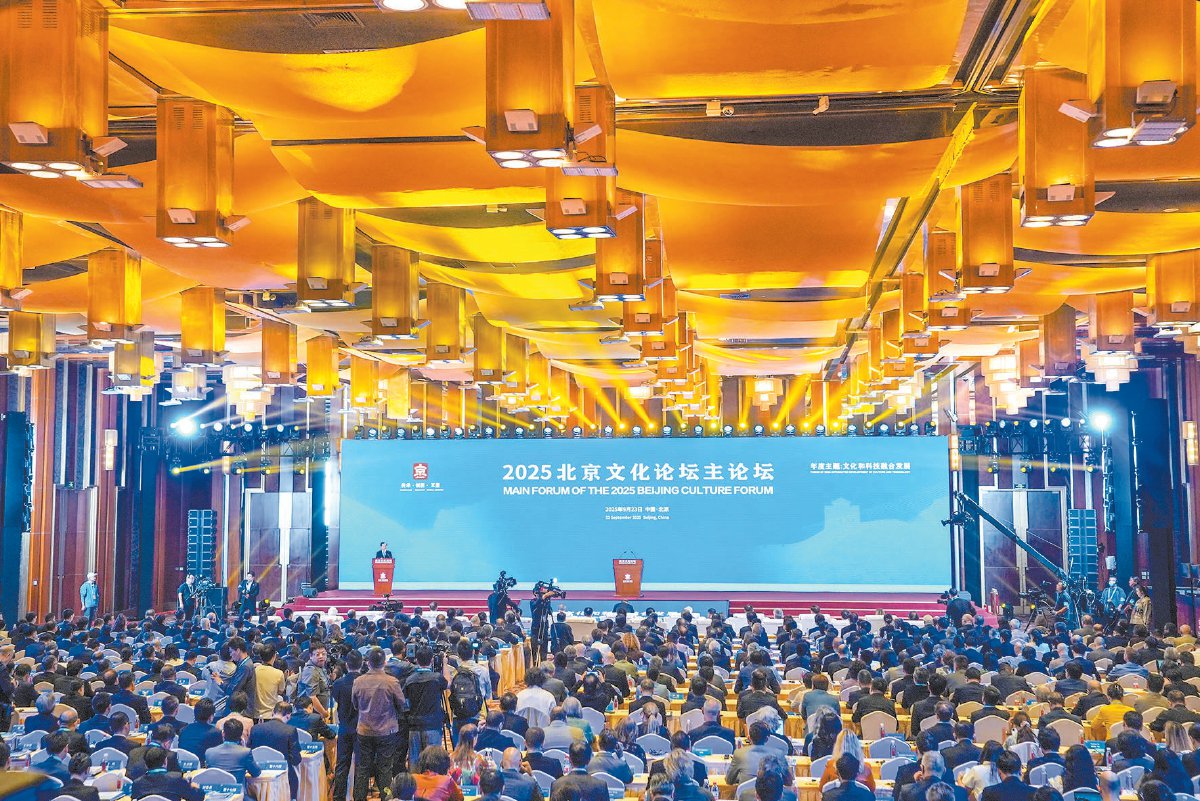
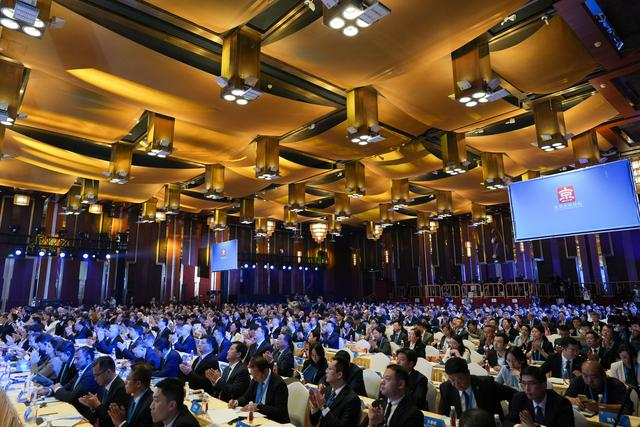
本报记者 高倩 韩轩 昨天,2025北京文化论坛盛大启幕。作为全国文化中心和国际科技创新中心,北京深入学习贯彻落实习近平总书记重要讲话精神,把文化建设放在全局工作 的突出位置,以更开放的姿态推动文化与科技双向融合。本届论坛邀请中外嘉宾围绕培育文化领域新质生产力、信息时代的文化创造和传播方式变革、人工 智能对文化发展的影响、数字文化产品和服务的高效供给等前沿议题展开演讲交流,充分探讨文化和科技融合的有效机制,以技术为笔、文化为墨,绘制文 化科技融合发展的崭新图景,为推动构建人类命运共同体、不断丰富和发展人类文明新形态贡献智慧力量。 围绕永久主题"传承·创新·互鉴"和年度主题"文化和科技融合发展",主论坛上,多位中外嘉宾呼吁深入践行全球文明倡议,搭建文化之桥、深化交流对话、 推动人文合作,以文化文明的力量推动构建人类命运共同体。 在不断引领文化领域思维革新的同时,科技的高速发展也伴随着不少挑战。中国文联副主席、中国美术家协会副主席高世名认为,需要警惕"数字技术、人 工智能与科技金融正在以前所未有的加速度催生出一个庞大的娱乐幻觉工业"。在这种时代语境中,近年来蓬勃涌现的"新大众文艺"尤显珍贵,随着中国式 现代化的充 ...