民营经济

Search documents
知名青年企业家南充行活动暨第四届南充市企业家日大会举行
Si Chuan Ri Bao· 2025-11-01 01:24
Core Points - The Nanchong Entrepreneur Day Conference was held on October 31, attracting over 300 entrepreneurs and representatives from municipal and county chambers of commerce [1] - The conference recognized "Outstanding Entrepreneurs" and "Prominent Contribution Chambers" and announced the third batch of selected leaders for the "Guozhou Talents Program" [1] - Nanchong has established itself as the first city in the province to set up an Entrepreneur Day, enhancing communication between the government and businesses [1] Economic Performance - Nanchong's private economy saw a value-added growth of 4.7% year-on-year in the first half of the year, contributing 62% to the GDP [1] - The total number of private business entities in Nanchong reached 398,000, accounting for 97.62% of all business entities in the city [1] - Nanchong was rated "Excellent" in the 2024 Sichuan Province business environment evaluation [1] Investment and Projects - The event included a project signing ceremony, resulting in 22 cooperative projects with a total investment of 11.32 billion yuan [1] - The signed projects span various industries, including automotive parts, chemical textiles, electronic information, and high-end equipment manufacturing [1]
政企同频共振激发民营经济活力
Zheng Quan Ri Bao Wang· 2025-11-01 00:25
"民营企业家座谈会为我们提供了一个直面政策制定者的平台,政府的积极回应使他们感受到来自各级 政府的关心与支持。"曾多次参加类似座谈会的北京浙江商会监事郑雷斌在接受《证券日报》记者采访 时提到,尤其是在听取了企业在实际生产经营中的困难和建议后,政府能够为其提供更有针对性的支 持,确保企业在复杂的宏观经济环境中稳定发展。 值得注意的是,从参会企业情况来看,各地民营企业家座谈会的科技含量正不断提高。民营企业家座谈 为政府相关政策措施的出台提供了参考。 推动民营经济高质量发展是政府工作的重点。10月31日,四川省发展改革委民营经济发展局发布数据显 示,今年以来,四川省扎实开展优化民营经济发展环境"五个专项治理",积极推动各项政策协同发力, 民营经济保持平稳运行,民营经济增加值占GDP比重为55.1%,与上年同期持平。 10月28日公布的《中共中央关于制定国民经济和社会发展第十五个五年规划的建议》提到,落实民营经 济促进法,从法律和制度上保障平等使用生产要素、公平参与市场竞争、有效保护合法权益,发展壮大 民营经济。近期,为推动民营经济高质量发展,全国多地密集召开民营企业家座谈会等相关会议,为民 营企业家提供与政府交流的 ...
(经济观察)聚焦民企“痛点”“难点” “十五五”谋划民营经济
Zhong Guo Xin Wen Wang· 2025-10-31 13:19
Core Insights - The "15th Five-Year Plan" focuses on addressing the "pain points" and "difficulties" faced by private enterprises in China, aiming to provide institutional support to unleash their vitality [1][2] Group 1: Development of Private Economy - During the "14th Five-Year Plan" period, China's private economy saw both quality and scale improvements, with 1.85 million private economic organizations and over 58 million private enterprises as of May this year, marking a growth of over 40% compared to the end of the "13th Five-Year Plan" [1] - The plan emphasizes the need for a fair, orderly, and fully open market environment to enhance the vitality of the private economy, which has not yet been fully established [1][2] Group 2: Legal Protections and Reforms - The "15th Five-Year Plan" places greater emphasis on legal protections for the private economy, addressing issues of non-standard penalties by law enforcement agencies and proposing stronger judicial supervision over measures like seizure and freezing [2] - The implementation of the "Private Economy Promotion Law" on May 20 this year, which includes 26 mentions of "equality," "fairness," and "equal treatment," is further reinforced in the "15th Five-Year Plan" [1][2] Group 3: Investment and Economic Contributions - The plan aims to enhance mechanisms for private enterprises to participate in major project construction and stimulate private investment, which has been declining and is now below 50% of total investment [2][3] - Private enterprises account for over 90% of the total number of enterprises and provide over 90% of new urban employment, playing a crucial role in stabilizing economic growth and promoting innovation [3] Group 4: Future Outlook - Experts anticipate that the "15th Five-Year Plan" will help shift traditional biases against the private economy and strengthen the enforcement of legal policies, boosting confidence among private entrepreneurs and small to medium-sized enterprises [3] - The plan is expected to create a new landscape for collaborative development among large, medium, and small enterprises, with private enterprises likely to play a leading role in various new sectors [3]
广州“民营经济服务周”10月30日启动
Guang Zhou Ri Bao· 2025-10-31 02:03
Core Insights - The "Private Economy Service Week" and "Set Sail" overseas action initiative was launched in Guangzhou, focusing on supporting the private economy through various activities [1] - In the first half of 2025, the added value of the private economy in Guangzhou increased by 5.8% year-on-year, with new registrations of private economic entities rising by 52.74% [1] Economic Growth - During the 14th Five-Year Plan period, the added value of Guangzhou's private economy is projected to grow from 1.02 trillion yuan in 2020 to 1.31 trillion yuan in 2024, accounting for 42.3% of the GDP [1] - The number of private entities is expected to increase significantly, from 2.55 million in 2020 to over 3.7 million by 2025, representing 95% of all market entities [1] Employment Contribution - Private enterprises are responsible for over 80% of the new employment opportunities in the city [1]
广州民营经济占GDP比重突破四成 市场主体总量跃居全国第二
2 1 Shi Ji Jing Ji Bao Dao· 2025-10-30 14:47
Group 1 - The "2025 Guangzhou Private Economy Service Week" and "Set Sail" overseas action were launched, highlighting the city's commitment to supporting private enterprises [1] - During the 14th Five-Year Plan period, Guangzhou's small and medium-sized enterprise development environment has ranked among the top in the country for three consecutive years, and the city has been recognized as having the best business environment for four years [1] - The added value of the private economy in Guangzhou increased from 1.02 trillion yuan in 2020 to 1.31 trillion yuan in 2024, accounting for 42.3% of GDP [1] Group 2 - The number of private enterprises in Guangzhou grew from 2.55 million in 2020 to over 3.7 million by 2025, representing 95% of all market entities [1] - Private enterprises contributed over 80% of the new jobs in the city, playing an irreplaceable role in stabilizing growth, promoting innovation, and ensuring livelihoods [1] - In the latest announcement, 127 companies from Guangzhou were included in the list of "Specialized and Innovative 'Little Giants'," marking a 20% year-on-year increase [1][2] Group 3 - The "Sharp 100 Plan" aims to discover and cultivate high-growth enterprises with revenues between 10 million and 200 million yuan, focusing on key industrial chains such as new information technology and biomedicine [2] - In the first half of 2025, the added value of Guangzhou's private economy grew by 5.8%, and the number of newly registered private economic entities increased by 52.74% [2]
对话田轩:“十五五”扩大内需绝非“关起门搞建设”|新京报访谈
Xin Jing Bao· 2025-10-29 12:59
Group 1 - The core objective of the "15th Five-Year Plan" is to achieve significant results in high-quality development, emphasizing quality and efficiency over mere speed and scale expansion [4] - The plan indicates a shift in China's economic development stage, focusing on transforming development methods, optimizing economic structure, and converting growth drivers [4] - Resources will be directed towards innovation, industrial upgrading, green low-carbon initiatives, and improving people's livelihoods, aiming for sustainable development [4] Group 2 - The plan emphasizes building a modern industrial system and strengthening the foundation of the real economy, with a focus on intelligent, green, and integrated development [5] - It highlights the importance of the manufacturing sector in driving overall industrial advancement and enhancing the self-sufficiency of supply chains [5] - The strategy aims to address structural contradictions in development and improve the adaptability of the supply system to domestic demand [5] Group 3 - The "15th Five-Year Plan" promotes a dual approach of supporting both state-owned and private enterprises, enhancing the legal framework for private sector development [6] - The implementation of the Private Economy Promotion Law aims to ensure fair competition and protect the rights of private enterprises [6] - Special emphasis is placed on supporting small and medium-sized enterprises, which are crucial for the vitality of the private economy [7] Group 4 - The plan identifies expanding domestic demand as a strategic foundation for modernization, highlighting the importance of the domestic market [9] - It aims to enhance the resilience of the industrial chain and promote a dynamic balance between supply and demand through sustained domestic demand [9] - The strategy also seeks to optimize income distribution and improve public services, ensuring equitable access to development outcomes [9] Group 5 - The plan advocates for high-level opening up while simultaneously building a strong domestic market, indicating a complementary relationship between the two [10] - It emphasizes the need for internal and external market integration to stimulate domestic demand and enhance supply quality [11] - The plan outlines measures for expanding institutional openness and engaging in global economic governance, reflecting China's commitment to economic globalization [12][13]


数据见证金融“活水”精准滴灌民企 民营经济按下发展“加速键”
Yang Shi Wang· 2025-10-29 02:17
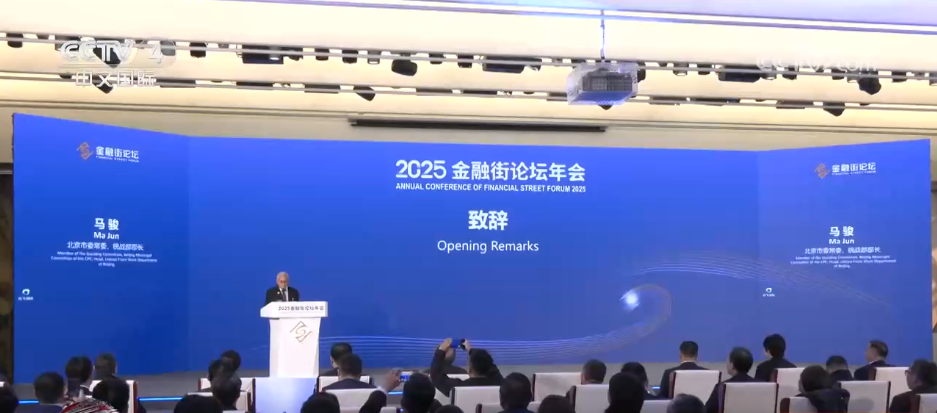
Group 1 - The private economy is a focal point at the 2025 Financial Street Forum, with significant contributions to Beijing's GDP and tax revenue [1] - As of August 2023, the loan balance for Beijing's private economy reached 2.6 trillion yuan, marking a year-on-year growth of 7.6% [1] - The number of private market entities in Beijing exceeds 2 million, contributing over one-third of the city's GDP and more than 30% of tax revenue [1] Group 2 - Private enterprises account for nearly two-thirds of A-share listed companies and approximately 80% of companies on the Sci-Tech Innovation Board, Growth Enterprise Market, and Beijing Stock Exchange [3] - The average annual growth rate of loans to private enterprises over the past five years has outpaced the average growth rate of all loans by 1.1 percentage points [3] Group 3 - The rise of humanoid robots and smart driving technologies is closely linked to the active capital market, which supports the new productive forces of the real economy [5] - There is a need to enhance the precision of financial services to meet the diverse financing needs of private enterprises, particularly small and medium-sized enterprises facing financing challenges [5] Group 4 - Early-stage equity financing, including angel and venture capital investments, is essential for helping private enterprises navigate the "valley of death" in entrepreneurship [7] - Encouraging high-growth and high-innovation private enterprises requires a supportive environment that allows for failure and fosters innovation [7]
X @外汇交易员
外汇交易员· 2025-10-28 08:54
Guiding Principles & Development Themes - The "15th Five-Year Plan" (Fifteenth Five-Year Plan) emphasizes "people-centered" development, prioritizing the people [1] - The plan highlights the combination of an effective market and an active government [1] - The plan shifts focus to "economic construction as the center," re-emphasizing its fundamental role [2] - The plan upgrades domestic demand from a strategic base to a development goal, aiming to build a strong domestic market [2] Economic & Technological Focus - "New productive forces" are a core keyword, emphasizing technological innovation to lead economic transformation [2] - The plan aims for decisive breakthroughs in key core technologies through "unconventional measures" [2] - The plan includes forward-looking layouts for future industries such as quantum technology, brain-computer interfaces, embodied intelligence, 6G mobile communication, hydrogen energy, and nuclear fusion energy [2] - The plan upgrades the artificial intelligence strategy to "Artificial Intelligence + Action" [2] Policy & Systemic Changes - The plan upgrades the protection of the private economy by proposing to "implement the Private Economy Promotion Law" [2] - The plan shifts from "expanding opening-up" to "actively expanding independent opening-up," emphasizing proactive expansion and enhanced autonomy under external pressure [3] - The plan emphasizes "promoting the internationalization of the RMB" and "building an independent and controllable RMB cross-border payment system" [3] - The plan clarifies "appropriately strengthening the central government's responsibilities and increasing the proportion of central government fiscal expenditure" to address local debt risks and strengthen central coordination [4] Social & Security Aspects - In education, the plan aims to build a high-quality education system and explore extending compulsory education and expanding free education [5] - In employment, the plan aims for higher-quality and fuller employment, with residents' income growth "synchronized" with economic growth [5] - The plan aims to improve and implement national unified basic pension insurance, gradually increasing basic pension for urban and rural residents [6] - The plan advocates for positive views on marriage and childbirth, effectively reducing the costs of raising and educating children [6] - The plan adds "more consolidated national security barriers" as an independent goal, emphasizing strengthening security capabilities in emerging fields such as network, data, AI, biology, and ecology [6]
前三季度长三角外贸总额超12万亿,安徽增速超15%领跑
2 1 Shi Ji Jing Ji Bao Dao· 2025-10-28 08:49
Core Insights - The Yangtze River Delta region's foreign trade data for the first three quarters shows a total import and export value of 12.62 trillion yuan, a year-on-year increase of 6.6%, accounting for 37.6% of China's total foreign trade value during the same period, marking a historical high for this timeframe [1][3][4]. Group 1: Regional Performance - Anhui led the region with a remarkable import and export growth rate of 15.7%, followed by Jiangsu at 6.4%, Zhejiang at 6.2%, and Shanghai at 5.4% [1][4]. - Jiangsu's total import and export value reached 4.38 trillion yuan, with exports at 2.92 trillion yuan (up 10.4%) and imports at 1.46 trillion yuan (down 0.7%) [4]. - Zhejiang achieved a total import and export value of 4.17 trillion yuan, with exports at 3.16 trillion yuan (up 8.3%) and imports at 1.01 trillion yuan (up 0.2%) [4]. - Shanghai's total import and export value was 3.34 trillion yuan, with exports at 1.48 trillion yuan (up 11.3%) and imports at 1.86 trillion yuan (up 1.1%) [5]. Group 2: Market Diversification and Support for Private Enterprises - The region's foreign trade resilience is supported by diversified markets, private enterprises, and new quality products, with policies being implemented to assist private companies in expanding internationally [3][7]. - Private enterprises have become a crucial driving force for foreign trade growth in the Yangtze River Delta, with Shanghai's private enterprises achieving an import and export total of 1.32 trillion yuan, a year-on-year increase of 27.1% [7]. - In Zhejiang, over 12,000 foreign trade enterprises were active, with private enterprises accounting for 82% of the total import and export value [7]. Group 3: Product and Structural Upgrades - The export of mechanical and electrical products significantly contributed to Jiangsu's growth, with exports totaling 2.04 trillion yuan, accounting for 69.8% of the province's total exports [8]. - Anhui's exports of new quality products reached 634 billion yuan, reflecting a growth rate of 71.9% [8]. - Shanghai's exports of high-tech manufacturing products, including green shipping equipment and lithium batteries, demonstrated strong growth, with lithium battery exports increasing by 20.7% [7][8].
民营经济活力迸发 湖南邵阳2025年GDP预计超3000亿元
Zhong Guo Xin Wen Wang· 2025-10-27 10:18
Core Insights - The private economy in Shaoyang, Hunan, is expected to see significant growth, with GDP projected to exceed 300 billion yuan by 2025, up from 225.08 billion yuan in 2020 [1][2] Economic Growth - Shaoyang's GDP is forecasted to grow from 225.08 billion yuan in 2020 to 292.63 billion yuan in 2024, and to surpass 300 billion yuan in 2025 [1][2] - The number of business entities in Shaoyang reached 564,700 by the end of September this year, an increase of 211,600 compared to the end of the 13th Five-Year Plan, with 97.8% being private entities [1][2] Private Sector Contribution - The added value of the private economy accounts for over 75% of Shaoyang's GDP [1][2] - The city has cultivated 382 provincial-level specialized and innovative enterprises, a fourfold increase since 2020 [2] Industry Development - The lighter industry sector has surpassed 100 billion yuan, and the lighter industry cluster for lighters produces 15 billion units annually, capturing 70% of the global market share [2] Trade and Investment - Shaoyang has expanded its economic and trade relationships to 186 countries and regions, with over 600 direct investments and related projects by Shaoyang merchants since 2020, leading to over 300 billion yuan in homecoming investments [2] Business Environment - The city has implemented measures to enhance the business environment, including the removal of 22 policies that hinder fair competition and the introduction of "machine-managed bidding," achieving an 89.5% bid success rate for private enterprises [3][4] - Shaoyang has reduced logistics costs for foreign trade enterprises by approximately 30% through optimized transportation routes [4]