
物理AI

Search documents
“物理AI”成为CES热议新词
Xin Lang Cai Jing· 2026-01-08 22:05
"物理AI"究竟是指什么?按照英伟达的解释,"物理AI"是指让摄像头、机器人和自动驾驶汽车等自主系 统能够在物理世界中完成感知、理解、推理,并执行或协调复杂动作。 2026年美国拉斯维加斯消费电子展(CES)正在举行。作为国际消费电子领域的"风向标",CES历来是 观察前沿技术走向的重要窗口。今年,一个新词被频频提及——"物理人工智能(物理AI,Physical AI)"。 在展会一系列主题演讲和行业讨论中,"物理AI"成为出现频率最高的关键词之一。AI芯片行业领军企业 英伟达首席执行官黄仁勋在主旨演讲中17次提及这一概念。与2025年CES上热议的"AI智能体"相比,这 一新的热词折射出AI技术发展路径和产业关注重点的变化。 (来源:沈阳晚报) 转自:沈阳晚报 ...

苏黄之争!AI芯片迎来巅峰战
Shen Zhen Shang Bao· 2026-01-08 18:08
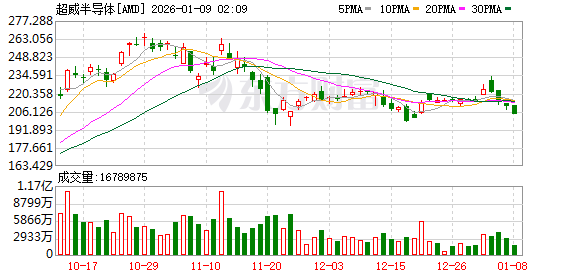
Group 1 - Nvidia launched its new AI computing platform, Vera Rubin, which aims to revolutionize the AI industry by significantly reducing inference costs by 90% [2][6] - AMD responded with the introduction of the MI455X GPU and other products, indicating fierce competition in the AI chip market where Nvidia previously held an 80% market share [2][10] - The competition between Nvidia and AMD is not just about market share but also influences the future direction of the global AI industry [2] Group 2 - Nvidia's CEO Jensen Huang emphasized the shift towards "Physical AI," where AI systems will learn to understand the physical world, marking a new industrial revolution [4][5] - The Blackwell Ultra platform, which supports the "Physical AI" initiative, is set to enter mass production in Q2 2026, offering a 50% increase in computing power and a 30% reduction in power consumption [4] - Nvidia's Rubin platform integrates six new chips, drastically reducing AI inference costs and training GPU usage, with major companies like Microsoft and OpenAI planning to deploy it [6][11] Group 3 - AMD's MI455X GPU showcases significant improvements in energy efficiency and training/inference throughput, with performance reportedly increasing several times compared to its predecessor [8][10] - AMD announced a deep collaboration with OpenAI, enhancing its credibility in the AI infrastructure space [8][10] - The competition between Nvidia and AMD is characterized by differing product strategies, with Nvidia focusing on GPU-centric solutions and AMD adopting a more comprehensive platform approach [12] Group 4 - The AI chip market is experiencing rapid growth, with global AI active users expected to rise from millions to billions, necessitating significant advancements in computing power [11] - AMD is planning to release its next-generation MI500 chip, which is projected to enhance computational performance by up to 1000 times compared to previous models, expected to launch in 2027 [11] - The ongoing rivalry between Nvidia and AMD is evolving into a broader ecosystem competition, with both companies striving to innovate and capture market share in the AI sector [12] Group 5 - Other chip manufacturers, such as Intel and Qualcomm, are also showcasing new products at CES, indicating a competitive landscape in the AI and computing sectors [13][14] - Intel introduced the Core Ultra 300 series processors, which aim to enhance performance in AI workloads, while Qualcomm is expanding its focus beyond mobile to include automotive and robotics [13][14]


Mobileye斥资9亿美元收购Mentee 加码人形机器人
Zhong Guo Jing Ying Bao· 2026-01-08 14:01
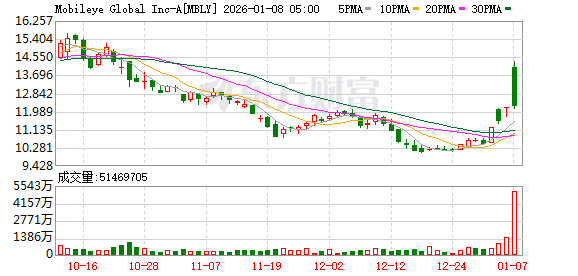
根据最终协议,收购对价将根据Mentee交割前期权归属情况调整,交易已获Mobileye董事会及最大股东 英特尔的批准,因Mentee董事长Amnon Shashua同时担任Mobileye首席执行官,其已回避相关决策投 票。交割后,Mentee将作为独立事业部运营,保持核心团队完整性,同时受益于Mobileye的AI训练基础 设施。 美国当地时间1月6日,辅助驾驶与高等级驾驶自动化技术巨头Mobileye在拉斯维加斯消费电子展 (CES)上宣布,已就收购AI(人工智能)人形机器人公司Mentee Robotics(以下简称"Mentee")达成 最终协议。据悉,本次收购对价总额约为9亿美元(现汇率约合 62.96 亿元人民币),其中包括约6.12亿 美元现金及至多约2620万股Mobileye A类普通股。收购预计于2026年第一季度完成。 Mobileye方面对《中国经营报》记者表示,Mentee在人形机器人领域取得了突破性的成果,Mobileye则 在驾驶自动化领域拥有深厚的技术积淀,并具备将先进的AI技术产品化的能力。此次收购有望推动物 理AI(Physical AI)在机器人与驾驶自动化两大分支的长 ...

芯片IP巨头Arm架构重组 新设“物理AI”条线开拓机器人市场
Xin Lang Cai Jing· 2026-01-08 12:49
Group 1 - Arm has completed a restructuring to establish a dedicated Physical AI business line to expand its presence in the robotics market [1] - The company has created three new business divisions: Cloud AI, Edge AI, and Physical AI, each focusing on different aspects of AI technology [1] - The Physical AI division will focus on integrating AI with physical movements in various fields, including vehicles and robotics [1] Group 2 - The establishment of the Physical AI division reflects Arm's bet on the potential of the robotics market [2] - The head of the Physical AI division, Drew Henry, stated that Physical AI solutions can significantly enhance workforce productivity and impact the economy [2] - Arm's Chief Marketing Officer, Ami Badani, mentioned the merging of automotive and robotics businesses due to similar customer needs in power consumption, safety, and reliability [2] Group 3 - Arm plans to increase its workforce dedicated to robotics-related work [3] - Several global automotive manufacturers are adopting Arm architecture-based chips, and robotics companies, such as Boston Dynamics, are also becoming clients [3] - Boston Dynamics showcased a production-ready humanoid robot, Atlas, at CES, with plans for deployment in U.S. factories by 2028 [3]
对标马斯克FSD,印奇CES交卷ASD,L2L4全覆盖,吉利版已量产30万辆
Xin Lang Cai Jing· 2026-01-08 11:46
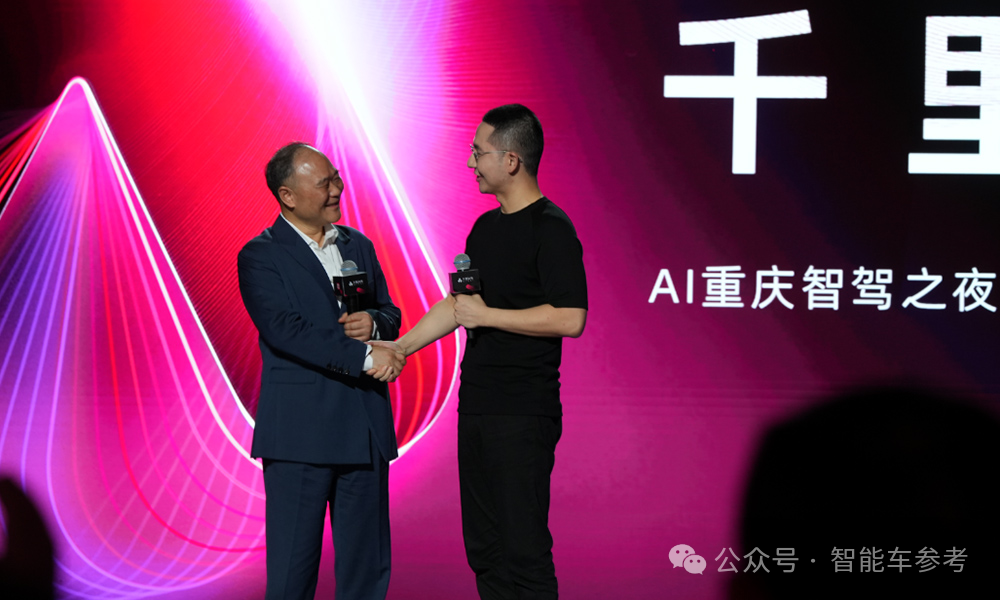
Core Insights - The article discusses the launch of Geely's new advanced driving assistance brand, G-ASD, led by AI expert Yin Qi, which aims to compete with Tesla's Full Self-Driving (FSD) technology [3][27][29] - G-ASD encompasses a full-stack solution from Level 2 to Level 4 autonomous driving, integrating advanced AI models to enhance driving capabilities [5][10][37] - The establishment of Qianli Zhijia as an independent entity signifies a strategic shift for Geely, focusing on AI-driven automotive technology [12][42] Group 1: G-ASD Launch and Capabilities - G-ASD, which stands for Geely Afari Smart Driving, represents a significant advancement in Geely's approach to autonomous driving, moving from basic assistance to more complex functionalities [5][29] - The technology behind G-ASD utilizes a comprehensive model architecture that combines various AI paradigms, reducing reliance on pre-mapped data [7][31] - Demonstrations at CES 2026 showcased G-ASD's ability to navigate complex urban environments, including challenging scenarios like narrow streets and multi-level interchanges [8][32] Group 2: Company Structure and Management - Qianli Zhijia has been established as a separate corporate entity, with a management team that includes experienced leaders from Huawei and other tech backgrounds [12][40][42] - The ownership structure of Qianli Zhijia includes significant stakes from Geely and other partners, indicating a collaborative approach to developing autonomous driving technologies [16][43] - Yin Qi remains the actual controller of Qianli Zhijia, despite its independent status, reflecting a complex ownership arrangement that aims to leverage AI capabilities for Geely's transformation into a tech-driven enterprise [19][46] Group 3: Strategic Vision and Market Position - Geely's strategy aims to position itself as a leader in the AI-driven automotive sector, with a focus on integrating advanced technologies into its production processes [21][50] - The collaboration with Cao Cao Mobility for Robotaxi services highlights Geely's commitment to expanding its autonomous driving offerings beyond personal vehicles [12][39] - The overarching vision is to create a comprehensive AI ecosystem that includes not only autonomous driving but also related services such as vehicle manufacturing and financial solutions [50][24]

小鹏开年连发四款新车 超级增程家族添新成员
Zheng Quan Shi Bao Wang· 2026-01-08 11:18
Core Insights - Xiaopeng Motors is expanding its product line from pure electric vehicles to extended-range vehicles, launching four new models at the 2026 global product launch event [1] - The 2026 Xiaopeng P7+ features both super extended-range and pure electric versions, with prices starting at 186,800 yuan and 198,800 yuan respectively [1] - The second-generation VLA, capable of L4 autonomous driving, will be rolled out in March 2026, marking a significant advancement in the company's AI technology [2] Product Launch - The 2026 Xiaopeng P7+, G7 Super Extended Range, G6, and G9 were unveiled, with the P7+ being the longest-range extended-range sedan globally [1][3] - The P7+ has undergone 104 experience upgrades and a 36% renewal of key components, emphasizing its global development and manufacturing standards [3] Autonomous Driving Technology - The second-generation VLA will enable L4 autonomous driving and Robotaxi functionalities, with public road testing imminent [2] - Xiaopeng Motors aims to leap from L2 to L4 autonomous driving, bypassing L3, as highlighted by CEO He Xiaopeng's recent test drive of Tesla's FSD [2] Global Expansion - Xiaopeng Motors achieved a cumulative global delivery of 429,445 units in 2025, a 126% year-on-year increase, and is now present in 60 countries [3] - The company is establishing a strong foothold in international markets, ranking first in sales among Chinese new energy vehicle brands in several countries [3]

小鹏P7+/G7/G6/G9四款新车同步更新 辅助驾驶与座舱全面升级
Feng Huang Wang· 2026-01-08 10:46
Core Insights - Xiaopeng Motors officially launched four new models: 2026 Xiaopeng P7+, Xiaopeng G7 Super Extended Range, 2026 Xiaopeng G6, and 2026 Xiaopeng G9, all equipped with the second-generation VLA system [1] Group 1: Company Performance - In 2025, Xiaopeng Motors achieved global cumulative deliveries of 429,445 vehicles and established nine R&D centers worldwide [1] - The company has initiated three overseas localization production projects and expanded its self-operated charging network to cover 430 cities with 3,150 charging stations [1] Group 2: Strategic Focus - The CEO emphasized two key themes for 2026: "Physical AI" and "Globalization," with plans to achieve mass production of the second-generation VLA system and initiate Robotaxi operations in the first quarter [1] - The second-generation VLA system aims to provide an L4-like driving experience through the integration of large models, computing power, and big data [1][2] Group 3: Technological Advancements - The second-generation VLA system features capabilities such as real-time parking, speed bump recognition, and driving style selection, supporting both L4 autonomous driving and Robotaxi functions [2] - The system's computing power reaches 2,250 TOPS at the vehicle level and 30,000 nodes at the cloud level, with nearly 100 million training video data segments [1][2] Group 4: New Model Highlights - The 2026 Xiaopeng P7+ offers a comprehensive range of 1,550 km for the Super Extended Range version and 430 km for the pure electric version, with a power consumption of 12.5 kWh per 100 km [5] - The 2026 Xiaopeng G7 Super Extended Range has a starting price of 195,800 yuan and a CLTC comprehensive range of 1,704 km [6] - The 2026 Xiaopeng G6 is priced from 176,800 yuan and features an AI chip standard across all models [7] - The 2026 Xiaopeng G9 starts at 248,800 yuan, with a clear configuration gradient for the AI chip, ranging from 750 TOPS to 2,250 TOPS [7]
小鹏开年发布四款新车,今年将规模量产人形机器人和飞行汽车;吉利汽车获L3级自动驾驶道路测试牌照丨汽车交通日报
创业邦· 2026-01-08 10:33
Group 1 - Geely Auto has obtained the L3 autonomous driving road test license in Hangzhou, covering an area of 9,224 square kilometers, including over 1,500 kilometers of dual-direction expressways, making it the largest in the country [2] - Faraday Future announced a cumulative production and sales target of 400,000 to 500,000 vehicles over the next five years, focusing on the FX Super One and FX 4 models, with a goal of achieving positive operating cash flow and a gross margin exceeding 20% [2] - XPeng Motors launched four new models, including the new XPeng G6 and G9, and plans to scale production of humanoid robots and flying cars, aiming for global deliveries of 429,000 vehicles by 2025, a 126% increase year-on-year [2] Group 2 - Chinese automotive brands are performing well in Ecuador, with a projected new car sales volume of 124,500 units in 2025, a 15% increase from the previous year, and BYD's sales expected to grow by 243.1% [3] - The report indicates that electric vehicle sales in Ecuador will reach 4,276 units in 2025, a 202% increase, with significant growth in hybrid vehicle sales from brands like Dongfeng and Great Wall [3]

记者手记|“物理AI”成为CES热议新词
Xin Hua She· 2026-01-08 10:32
Core Insights - The term "Physical AI" emerged as a key topic at CES 2026, reflecting a shift in the focus of AI technology development and industry interests [1][4] - Physical AI refers to the ability of autonomous systems, such as cameras, robots, and self-driving cars, to perceive, understand, reason, and execute complex actions in the physical world [1][3] Group 1: Industry Trends - Physical AI is characterized by its integration into robots, self-driving cars, smart devices, and industrial equipment, enabling machines to actively participate in and alter their environments [1][4] - The presence of intelligent robots, autonomous vehicles, and smart home devices at CES illustrates the practical application of Physical AI in everyday life [2][4] Group 2: Company Perspectives - Qualcomm's China Chairman highlighted the simultaneous evolution of "Personal AI" and "Physical AI," with the latter advancing into real-world applications like automobiles and robotics [3] - BOE Technology Group's executive noted that the deep integration of display technology and sensors will enhance the application possibilities of Physical AI [3] - Lenovo's CEO emphasized that Physical AI represents "machines with brains," indicating a transition from mere mechanical execution to machines capable of perception, understanding, and decision-making [3]
“物理AI”成为新风口,五一视界(6651.HK)卡位万亿赛道
Zhong Jin Zai Xian· 2026-01-08 10:01
Core Insights - The article highlights the emergence of "Physical AI" as a national strategic core productivity in China's technology industry, driven by the integration of artificial intelligence and humanoid robotics [1] - The company Wuyi Vision (6651.HK) is positioned as a crucial player in the Physical AI ecosystem, leveraging its self-developed technology and strategic partnerships to support this transformation [1] Group 1: Technology and Innovation - The core technology of Physical AI focuses on overcoming the Sim-to-Real conversion bottleneck, enabling low-cost, large-scale training and validation of AI models in virtual environments [2] - Wuyi Vision has developed the 51Sim platform, which provides a high-fidelity Sim-to-Real training environment, establishing a significant technological barrier comparable to NVIDIA's Omniverse and Cosmos platforms [2] Group 2: Strategic Partnerships and Ecosystem - Wuyi Vision has created a comprehensive Physical AI ecosystem with a full chain from synthetic data to simulation training platforms, successfully implementing benchmark cases in various sectors such as smart driving and smart factories [3] - The company's shareholder structure includes prominent players like Moore Threads and SenseTime, which enhances its capabilities in computational power and visual algorithms, solidifying its position as a foundational infrastructure provider in the Physical AI domain [3] Group 3: Market Position and Valuation - Wuyi Vision has achieved a leading position in China's digital twin solutions market, with projected revenues exceeding 250 million HKD in 2024, making it the first company in the industry to reach this scale [4] - The current market valuation of Wuyi Vision at 18 billion HKD presents a compelling value proposition compared to global AI leaders, indicating potential for significant value re-evaluation amid favorable policy and industry dynamics [4]