
能源安全

Search documents
“激怒美国”!英媒:英国选定威尔士建本土小型核电站,美大使连续发文称“极其失望”
Huan Qiu Wang· 2025-11-14 04:19
Core Points - The UK has selected North Wales as the site for its first small modular nuclear reactor (SMR), which has angered the US that sought to build a large nuclear power plant there [1][3] - The UK government supports the development of SMRs as a quick and cost-effective way to enhance energy security and meet climate goals, contrasting with the long construction timelines of large nuclear plants [1] - The US Ambassador to the UK expressed strong disappointment over the UK's decision, stating that the project would not lead to quick construction or lower industrial electricity prices [3] Summary by Sections - **UK's Nuclear Strategy** - The UK aims to develop small modular nuclear reactors (SMRs) to improve energy security and achieve climate objectives [1] - The construction of large nuclear plants is seen as a lengthy process, potentially taking decades [1] - **US Reaction** - The US has criticized the UK's energy strategy for raising prices and weakening the UK's position [3] - The US had proposed a large project led by Westinghouse Electric at the same North Wales site, which the UK ultimately rejected in favor of a domestic SMR project [3] - **Official Statements** - The UK Prime Minister's spokesperson emphasized that the chosen site is the best for the SMR project while reaffirming the UK's commitment to collaborate with the US in the nuclear energy sector [3] - The spokesperson clarified that this decision does not exclude the possibility of building larger nuclear plants elsewhere in the future [3]


中国建筑:承建了多个大型矿业基地项目,包括内蒙古大乌淀石墨矿项目等
Mei Ri Jing Ji Xin Wen· 2025-11-13 10:17
Core Viewpoint - The company is actively involved in constructing large mining bases to support energy security and regional economic development [1] Group 1: Mining Projects - The company has undertaken several significant mining projects, including the Inner Mongolia Dahuadian Graphite Mine Project [1] - The company is involved in the expansion and renovation of the coal mine in Tokkuz County, Xinjiang, with a capacity of 1.2 million tons per year [1] - The company is also engaged in the granite mining project in the Jafashalsu area of Toli County, Xinjiang [1]

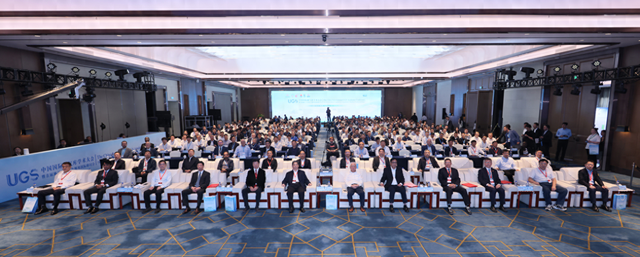
中国国际储气库学术大会暨首届地下空间综合利用国际研讨会在深圳举行
Huan Qiu Wang· 2025-11-13 10:02
Core Insights - The conference focused on the theme of "Implementing the National Energy Security New Strategy, Accelerating Gas Storage Capacity Construction, and Building a Comprehensive Underground Space Utilization System" [1][4] - It gathered over 600 participants from 25 countries, including academicians, scholars, and experts, to discuss cutting-edge technologies in gas storage and innovative directions for underground space utilization [1][4] Group 1: Energy Security and Infrastructure - Energy security is a strategic issue that affects national economic and social development, with gas storage facilities being essential for stable gas supply and seasonal peak regulation [3][4] - The construction of gas storage capacity is being actively promoted by the government, with a target of 38 gas storage facilities by the end of 2024, providing a peak regulation capacity of 26.5 billion cubic meters, which is about 6.2% of annual consumption [5][4] Group 2: Green Transition and Technological Innovation - The implementation of "dual carbon" goals has created historical opportunities for the development of underground gas storage, emphasizing the need for energy supply security and green transformation in the oil and petrochemical industry [4][5] - The conference aimed to summarize domestic and international trends in gas storage development and explore the role of underground space utilization in energy green transition, enhancing international technical exchange and cooperation [4][8] Group 3: Conference Highlights and Achievements - The conference featured multiple sessions, including keynote speeches and forums, with participation from prominent international experts, showcasing a wide range of topics related to global trends and technological advancements [7][9] - It set records for the highest number of participating countries and attendees since its inception in 2018, establishing itself as a significant platform for international cooperation in the oil and gas sector [9]

能源自给率达86%,却仍每天进口1100万桶石油,我国为何要囤石油
Sou Hu Cai Jing· 2025-11-12 20:07
2025年前9个月,中国日均进口石油超过1100万桶,相当于全球最大产油国沙特的日产量。 法国兴业银行分析师指出,中国的采购规模已能左右国际油价。 如果中国停止购买,油价可能迅速跌至每桶50美元出头。 这意味着中国不仅是在囤油,客 观上还为全球油价设置了底线。 中国自2004年启动战略石油储备建设,至今已建成覆盖舟山、大连、黄岛等9大国家石油储备基地。 这些基地采用地上油罐与地下盐穴相结合储油方式,福建、辽宁等项目已实现智能化管理,存储成本降低30%。 但其中每天有100万至120万桶并未进入炼油厂,而是被直接注入国家战略储备库。 这场"囤油行动"的规模之大,甚至一度吸收了全球九成新增原油库存。 国际油价在2025年10月跌至每桶65美元,接近五年低点。 相比2022年每桶120美元的高位,差价达到55美元。 以日均囤积100万桶计算,中国每囤一天油就 能节省5500万美元进口成本。 中国的石油对外依存度高达71.9%,超过七成石油需求依赖进口。 而其中80%的进口石油需经过马六甲海峡,这条最窄处仅2.8公里的水道,在台海局势紧张 时可能面临被封锁的风险。 2025年3月至10月,国际油价持续下行,布伦特原油 ...
IEA:2025年世界能源发展呈现五大趋势
Sou Hu Cai Jing· 2025-11-12 08:39
Core Insights - The International Energy Agency (IEA) emphasizes that energy issues are central to economic and national security due to immediate threats and long-term risks [1] - The energy landscape is increasingly shaped by geopolitical tensions and supply chain vulnerabilities, particularly concerning critical minerals [2] Group 1: Energy Security and Supply Chain Risks - The supply chain for critical minerals is highly concentrated, with a single country dominating the refining of 19 out of 20 strategic minerals, averaging a market share of about 70% [2] - Over half of the strategic minerals are subject to some form of export control as of November 2025, highlighting the urgent need to enhance resilience against weather-related risks and cyber threats [2] Group 2: Electricity Demand and Economic Impact - Electricity demand is projected to grow approximately 40% by 2035 in established and committed policy scenarios, and over 50% in net-zero scenarios by 2050 [3] - Data center investments are expected to reach $580 billion by 2025, surpassing global oil supply expenditures of $540 billion, indicating a significant shift in energy consumption patterns [3] Group 3: Shifts in Global Energy Demand - The center of global energy demand is shifting from China to emerging economies like India and Southeast Asia, with these regions increasingly shaping energy market dynamics [4] - From 2010 onwards, China accounted for over half of the global oil and gas demand growth, but this trend is expected to diversify as new emerging economies contribute to future growth [4] Group 4: Renewable Energy Growth - Renewable energy, particularly solar photovoltaic (PV), is growing faster than any other major energy source, with China expected to account for 45%-60% of global deployment in the next decade [5] - The growth of renewable technologies is accompanied by significant advancements in energy efficiency [5] Group 5: Nuclear Energy Revival - Over 40 countries are incorporating nuclear energy into their strategies, with more than 70 GW of new nuclear capacity currently under construction, marking the highest level in 30 years [6] - The global nuclear capacity is expected to increase by at least one-third by 2035, driven by innovations and new business models [6]
G7外长会在加拿大举行 将讨论全球安全议题
Yang Shi Xin Wen· 2025-11-11 20:40
Group 1 - The G7 Foreign Ministers' meeting took place in Niagara, Ontario, Canada, on November 11-12, focusing on urgent global economic and security challenges [1] - Key discussion topics included maritime security and prosperity, economic resilience, energy security, and critical minerals [1] - The meeting will also address issues related to ceasefire agreements in Ukraine and Gaza [1] Group 2 - In addition to G7 member countries, invited participants included Ukraine, Brazil, India, Saudi Arabia, Australia, South Africa, South Korea, and Mexico [1]
BMO能源基建调研:资金正重估加拿大,传统管道与绿色转型现估值裂痕
智通财经网· 2025-11-11 08:45
Core Insights - The report from BMO Capital Markets highlights a significant divergence in institutional investor interest in the Canadian energy infrastructure sector over the past month, reflecting struggles in traditional pipeline asset valuations amid macroeconomic headwinds and a market eager to reprice new growth opportunities in the context of energy transition [1][2] Group 1: Key Topics - Pembina Pipeline (PBA.US) is a focal point, with two major discussions surrounding it: the potential sale of KKR & Co's 40% stake in Pembina Gas Infrastructure and the upcoming investment decision for a data center project in partnership with Greenlight, which is expected to have a power capacity of 900 MW [1] - Brookfield Renewable Partners LP (BEP.US) has gained attention due to an $8 billion investment in the U.S. nuclear power sector and strategic partnerships, leading BMO to raise its target price to $36, indicating an implied upside of nearly 18% from the current market price of $30.54 [2] - Alberta's forward electricity prices have surged, with contracts for 2028-2030 reaching $80-90 per MWh, more than doubling from the average of about $43 per MWh since 2025, prompting a reevaluation of local generation asset values [2] Group 2: Sector Performance - The pipeline index has underperformed the utility sector by 11 percentage points (-7% vs +4%), indicating investor skepticism regarding the long-term growth prospects of traditional fossil fuel infrastructure, despite stable cash flows in the sector [2] - Storage facilities are entering an expansion phase, with companies like Enbridge (ENB.US) and Canadian Utilities expanding their capacities, prompting a reassessment of the strategic value of these seasonal assets [3] - In the pipeline sector, Pembina is highlighted for its strategic moves, while Keyera (KEY.US) has underperformed by an additional 4 percentage points, raising questions about its fundamentals [3] Group 3: Utility Sector Dynamics - Capital Power has monetized its 375 MW AESO Phase I project allocation, and the market is keen to see how it will engage in larger opportunities [4] - TransAlta is seen as a bellwether for rising electricity prices in Alberta, with institutions requesting updates on its net asset value under optimistic scenarios reflecting future electricity prices and demand from large data centers [4] - Boralex has seen increased investor inquiries as it remains one of the few covered stocks not yet experiencing price increases, leading to efforts to clarify its relative weakness [4]


俄罗斯石油降价卖,我国中石油为何不买?有这3大原因?
Sou Hu Cai Jing· 2025-11-10 23:12
Core Viewpoint - The article discusses why China National Petroleum Corporation (CNPC) has reduced its procurement of discounted Russian oil despite the attractive pricing, highlighting the complexities of international oil trade and the strategic considerations involved in energy security. Group 1: Reasons for Reduced Procurement - The first reason is the risk of U.S. sanctions, which have led several Chinese state-owned oil companies, including CNPC, to suspend purchases of Russian oil to avoid potential penalties and disruptions in their operations [3][4]. - The second reason is the strategy of supply diversification, as CNPC aims to reduce reliance on a single source of oil to ensure long-term stability and security in energy supply [5][6]. - The third reason is the difference between land pipeline transportation and maritime oil supply, with pipeline deliveries from Russia remaining unaffected while maritime purchases have been halted [6][12]. Group 2: Strategic Implications - CNPC is actively seeking alternative suppliers, including Saudi Arabia, Iraq, and other non-sanctioned countries, to enhance its energy security and reduce dependency on Russian oil [5][10]. - The company has been stockpiling oil strategically, with estimates indicating that China has around 1.25 billion barrels in inventory, which provides leverage in negotiations and helps mitigate price fluctuations [7][9]. - The decision to halt purchases of Russian maritime oil reflects a broader strategy to balance short-term economic benefits with long-term energy security, ensuring that CNPC can adapt to changing geopolitical landscapes [10][16]. Group 3: Market Dynamics - The global energy market is undergoing significant changes, with traditional consumption patterns shifting due to the rise of electric vehicles and sustainable fuels, while demand for petrochemical products continues to grow [10][12]. - The pricing of Russian ESPO crude has dropped significantly due to reduced demand from buyers, indicating market concerns over sanctions and geopolitical risks [12]. - The evolving trade dynamics between China, India, and Russia suggest that the reliance on Russian oil may decrease further, depending on the outcomes of international negotiations and sanctions policies [11][12].

欧洲在全球AI竞赛中的致命短板——能源!
Hua Er Jie Jian Wen· 2025-11-10 09:33
Core Insights - Goldman Sachs warns that despite the European energy crisis potentially ending by 2027, Europe faces significant energy security vulnerabilities in the AI era, which could hinder its global competitiveness in AI [1] Group 1: Fossil Fuel Dependency - The report indicates that Europe's energy dependency is being reshuffled rather than reduced, with nearly half of its energy still imported, contrasting sharply with the U.S., which has become a net energy exporter [2] - Future energy imports will shift from Russia to the U.S. and Qatar, which are projected to account for 55% of global LNG exports by 2030, introducing geopolitical risks [2] Group 2: Low-Carbon Supply Chain Vulnerabilities - Europe is highly dependent on external sources for critical materials like rare earths and magnets, essential for wind turbines, electric vehicles, semiconductors, and AI systems, with its market share in rare earths being only about 2% [3] - The nuclear energy sector is entirely reliant on imported uranium, with 11% of the EU's energy consumption coming from nuclear power, and 75% of the uranium sourced from Canada, Kazakhstan, and Russia [3] Group 3: Weak Electrical Infrastructure - The aging electrical grid in Europe, averaging 50 years old, poses a significant challenge, as it is nearing the end of its design life and is fragmented, leading to large price discrepancies and vulnerability to outages and cyberattacks [5] - The rise of AI places additional pressure on the already strained electrical grid, with over 90% of data center operators citing power availability as their top concern, indicating that the weak infrastructure is a physical bottleneck for embracing the AI revolution [6]

乌克兰成“北溪”爆炸案被告,西方援乌联盟现裂痕
Jin Shi Shu Ju· 2025-11-10 09:08
Core Viewpoint - The investigation into the Nord Stream gas pipeline explosion, which is considered one of the largest sabotage actions in modern history, is threatening the foundation of support for Ukraine, with Germany identifying Ukraine as the mastermind behind the attack [1] Group 1: Investigation Details - A specialized detective team in Potsdam has been investigating the Nord Stream pipeline explosion for three years, focusing on the involvement of a Ukrainian special forces unit [1][2] - The pipeline, which was crucial for transporting Russian gas to Germany and other European countries, became a focal point of Western strategy following the outbreak of the Russia-Ukraine conflict in February 2022 [2] - The explosion in September 2022 led to accusations against Russia, while investigations have pointed towards a Ukrainian operation aimed at disrupting Russian oil revenue and its economic ties with Germany [2][3] Group 2: Evidence and Arrests - Key evidence includes a blurry black-and-white photo captured by German highway cameras, which identified a Ukrainian diver involved in the operation [3] - The investigation has led to arrest warrants for three Ukrainian special forces soldiers and four senior divers, with the operation being directed by a commander under the Ukrainian military [2][3] - A significant breakthrough occurred when a suspect was tracked to Italy, where he was arrested after crossing the EU border, with the German police having set up alerts for his movements [4] Group 3: Political Implications - The investigation and potential legal proceedings could escalate tensions between Ukraine and Germany, which is Ukraine's largest financial supporter and supplier of advanced weaponry [5] - Despite political pressure within Germany to reduce support for Ukraine, government officials believe they can manage domestic reactions, especially as public acceptance of Ukraine's involvement grows [5] - The outcome of the legal proceedings, expected in December, could have significant diplomatic repercussions for both countries [4][5]