碳中和

Search documents
碳中和领域动态跟踪(一百七十一):储能容量电价政策发布,推动储能行业有序发展
EBSCN· 2026-02-01 11:12
事件: 1 月 30 日,国家发改委、国家能源局发布《关于完善发电侧容量电价机 制的通知》(下文简称《通知》)。 逐句解读储能容量电价政策:对标煤电、看重顶峰能力、进行清单制管理。 2026 年 2 月 1 日 行业研究 储能容量电价政策发布,推动储能行业有序发展 ——碳中和领域动态追踪(一百七十一) 要点 【1】对服务于电力系统安全运行、未参与配储的电网侧独立新型储能电站,各 地可给予容量电价: 解读:明确容量电价对象为"独立储能",且权责下沉到地方。 【2】容量电价水平以当地煤电容量电价标准为基础,根据顶峰能力按一定比例 折算(折算比例为满功率连续放电时长除以全年最长净负荷高峰持续时长,最高 不超过 1),并考虑电力市场建设进展、电力系统需求等因素确定。 解读:(1)《通知》中已明确,将通过容量电价回收煤电机组固定成本的比例提 升至不低于 50%,即各省煤电容量电价最低为 165 元/kW。(2)将"顶峰能力" 视为补偿的核心依据。计算方式为满功率连续放电时长(即配储时长)除以全年 最长净负荷高峰持续时长。此前,甘肃发布过类似指标,系统净负荷高峰持续时 长暂定为 6 小时。按此折算,2h 储能系统对应 5 ...
“十五五”碳达峰路径展望:绿电应用构建减碳基石,看好新一代能源技术突破
Orient Securities· 2026-02-01 05:35
Investment Rating - The report maintains a "Positive" outlook on the power equipment and new energy industry [6] Core Viewpoints - The "14th Five-Year Plan" period saw slower-than-expected carbon reduction, prompting high-energy-consuming industries to accelerate carbon reduction commercialization during the "15th Five-Year Plan" period, leading to a growth inflection point for green fuels [3][8] - The demand for energy storage is expected to grow significantly, with a forecasted 50% increase in energy storage installations by 2025, driven by the rapid growth of new energy [3][19] - The offshore wind power, perovskite, and space photovoltaic sectors are anticipated to exhibit high growth potential during the "15th Five-Year Plan" period [3][8] Summary by Sections 1. Wind and Solar Power Entering Maturity with High Growth in Sub-markets - The demand for new energy installations in China is expected to remain robust, with a target of 360 million kilowatts of wind and solar power capacity by 2035 [12] - The average annual installation space for wind and solar power is projected to exceed 400 GW from 2026 to 2035 [12][13] 2. Energy Storage and Nuclear Power with Stable Supply Attributes - By the end of 2025, China's energy storage installations are expected to reach 66.43 GW, with a year-on-year growth of 52% [19] - The construction speed of nuclear power is expected to accelerate, with a target of 70 million kilowatts of operational capacity by 2025 [21] 3. Carbon Reduction Goals and the Emergence of Green Fuels - The actual carbon reduction progress during the "14th Five-Year Plan" is expected to fall short of the target, necessitating increased efforts in the "15th Five-Year Plan" [26] - Policies are encouraging the integration of green electricity with hydrogen, ammonia, and zero-carbon parks [29] 4. New Photovoltaic Technologies and Nuclear Fusion - Perovskite technology is expected to achieve mass production during the "15th Five-Year Plan" period, with efficiency improvements anticipated [32] - The BEST project aims for completion by 2027, with significant investment expected in nuclear fusion technology [34]




甘肃零碳园区建设:储能容量占比/绿电直供比例/需求响应能力纳入指标体系
Xin Lang Cai Jing· 2026-01-31 13:45
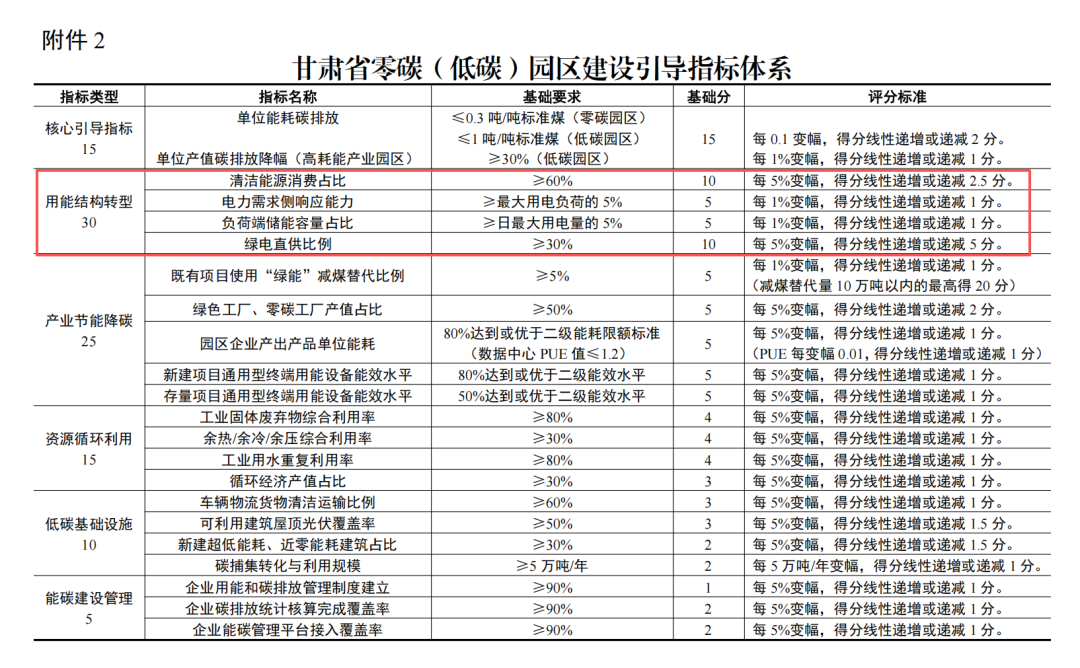
Core Viewpoint - Gansu Province has issued a "Zero Carbon Park Construction Plan" aiming to establish a framework for low-carbon and zero-carbon parks, with specific targets for clean energy consumption, energy storage capacity, and green electricity supply by 2035 [1][10]. Group 1: Main Goals - By 2027, Gansu aims to establish around 5 zero-carbon (low-carbon) parks, and by 2030, around 10, with a goal of achieving national-level zero-carbon park status [1][10]. - By 2035, over half of the parks in the province are expected to complete low-carbon transformation, contributing to the province's carbon neutrality goals [1][10]. Group 2: Construction Pathways - The plan emphasizes increasing the proportion of green energy supply in parks, promoting direct green electricity supply models, and encouraging investment in distributed renewable energy systems [2][10]. - It includes accelerating energy storage peak-shaving construction and developing a new energy system that integrates various renewable energy sources [3][11]. Group 3: Indicator System - The guiding indicator system for zero-carbon park construction includes a 30% weight for energy structure transformation indicators, with specific requirements for clean energy consumption, demand response capability, and energy storage capacity [4][6][23]. - Clean energy consumption must reach at least 60%, with a scoring system that rewards incremental improvements [4][23]. Group 4: Support Policies - The plan outlines financial support mechanisms, including prioritizing funding for parks included in national and provincial zero-carbon construction lists [16]. - It encourages the use of green finance tools such as green loans and bonds to support zero-carbon park projects [16][17]. Group 5: Implementation and Coordination - The provincial development and reform commission will lead the coordination of efforts to implement the zero-carbon park construction plan, ensuring collaboration among various departments [19][20]. - Local governments are tasked with analyzing their parks' conditions and potential for low-carbon development, creating a dynamic list of parks for construction [20].

《分布式能源规划员》(综合能源服务方向)培训通知丨系列培训
中国能源报· 2026-01-31 00:40
Core Viewpoint - The article emphasizes the importance of developing distributed energy and integrated energy services as a crucial path towards carbon neutrality, highlighting the need for interdisciplinary talent in energy planning and management [1] Group 1: Training Overview - The training titled "Distributed Energy Planner (Integrated Energy Services Direction)" is organized to address the shortage of professionals skilled in energy planning, conversion, and intelligent control [1] - The training will be conducted online from February 10 to February 13, 2026 [2] - The training is hosted by the Human Resources and Social Security Ministry's Social Security Capacity Building Center and organized by China Energy News Co., Ltd [2] Group 2: Target Audience - The training targets various stakeholders including provincial and municipal power companies, energy groups, and enterprises in the oil and gas sector [2] - It also includes new energy companies (wind, solar, storage), energy service companies, equipment manufacturers, and research institutions [2] - Individuals interested in the fields of new energy, distributed energy, and integrated energy services are encouraged to participate [2] Group 3: Course Outline - The course covers an overview of integrated energy services, including its driving forces and current development status both domestically and internationally [3] - It includes modules on planning comprehensive energy solutions, distributed photovoltaic projects, natural gas distributed energy applications, and smart microgrids [4] - Additional topics include hydrogen energy applications, new energy storage projects, and zero-carbon factory assessments [4] Group 4: Training Fees - The training fee is set at 3600 yuan per person, which includes training, materials, and certification costs [5] Group 5: Contact Information - For inquiries, contact Yang at 15801248899 or Wang at 15201547047 [6]

三一重工入股催肥业绩 绿控传动现金流承压再谋IPO
Sou Hu Cai Jing· 2026-01-30 19:55
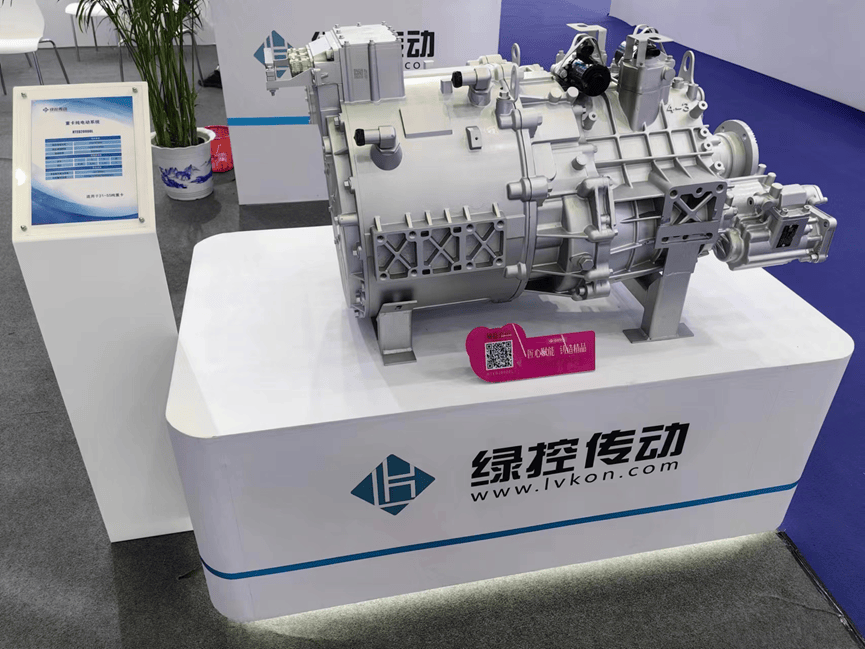
Core Viewpoint - The company, Suzhou Green Control Transmission Technology Co., Ltd. (referred to as "Green Control Transmission"), is making a renewed attempt to enter the capital market by targeting the ChiNext board after previously withdrawing its application for the Sci-Tech Innovation Board. The fundraising amount has increased from 1.072 billion yuan to 1.58 billion yuan, supported by significant revenue and profit growth from 2022 to mid-2025 [3][4]. Financial Performance - From 2022 to the first half of 2025, the company's revenue surged from 712 million yuan to 1.219 billion yuan, while net profit reversed from a loss of 99.4282 million yuan to a profit of 68.2955 million yuan [3][4]. - The company attributes its performance growth to the national strategy of "carbon peak and carbon neutrality," which has driven the market expansion of new energy commercial vehicles [3]. Customer Dependency - The top five customers contribute approximately 60% of the company's revenue, indicating a high level of customer dependency [4][7]. - Major clients include industry giants like SANY Group and XCMG Group, which together accounted for over 40% of revenue in 2024 [3][6]. Accounts Receivable Concerns - As of June 30, 2025, accounts receivable reached 833 million yuan, representing 27.13% of total assets, and more than double the 269 million yuan reported at the end of 2022 [4][9]. - The company has faced challenges with cash flow, reporting negative net cash flow from operating activities in multiple years, highlighting a discrepancy between revenue growth and cash generation [9][10]. Debt and Liquidity Issues - The company's short-term borrowings increased from 390 million yuan in 2022 to 587 million yuan in the first half of 2025, with total borrowings reaching 672 million yuan [10]. - The asset-liability ratio rose from 69.54% in 2022 to 73.41% in mid-2025, indicating increasing financial leverage [10]. IPO Fund Utilization - The company plans to use 1.38 billion yuan (87.34% of the total raised) for a project to produce 100,000 sets of new energy medium and heavy commercial vehicle drive systems, with the remaining 200 million yuan allocated for R&D center construction [11].

大越期货沪铝周报-20260130
Da Yue Qi Huo· 2026-01-30 12:00
Report Summary 1. Report Industry Investment Rating No information provided. 2. Core View - Last week, Shanghai aluminum fluctuated at a high level. The main contract rose 1.53%, closing at 24,290 yuan/ton on Friday. Under the carbon - neutral policy, long - term capacity control, domestic real - estate demand suppression, and the cancellation of export tax rebates for aluminum products are negative factors for domestic aluminum prices, affecting consumption. However, there are opportunities for aluminum to replace copper. Currently, domestic demand is in the off - season, and later consumption changes should be monitored. The LME inventory last week was 507,275 tons, showing a slight increase compared to the previous week, and the SHFE weekly inventory increased by 11,174 tons to 197,053 tons [3]. 3. Summary by Directory 3.1 Market Review - Shanghai aluminum fluctuated at a high level last week. The main contract rose 1.53%, closing at 24,290 yuan/ton on Friday. The carbon - neutral policy, real - estate demand suppression, and cancellation of export tax rebates for aluminum products are negative for domestic aluminum prices, and consumption is affected. Domestic demand is in the off - season, and later consumption changes should be noted. The LME inventory last week was 507,275 tons, slightly increasing from the previous week, and the SHFE weekly inventory increased by 11,174 tons to 197,053 tons [3]. 3.2 Fundamentals (Inventory Structure) - **Supply - Demand Balance Table**: The report provides the annual supply - demand balance table of aluminum in China from 2018 to 2024. In 2018, the supply - demand balance was - 47.6 tons; in 2019, it was - 68.61 tons; in 2020, it was 1.3 tons; in 2021, it was - 14.2 tons; in 2022, it was - 29.98 tons; in 2023, it was - 4.3 tons; and in 2024, it is expected to be 15 tons [11]. 3.3 Market Structure - **Spot - Futures Spread**: No specific content provided. - **Import Profit**: No specific content provided.
碳中和系列:“十五五”碳达峰决胜期,政策深化下的投资机遇
Changjiang Securities· 2026-01-30 10:54
Investment Rating - The report indicates a positive investment outlook for the carbon neutrality sector, emphasizing the emergence of multi-layered and long-term investment opportunities driven by the "dual carbon" strategy and the deepening of the national carbon market [3][11]. Core Insights - The transition towards a green economy in China has moved from conceptual advocacy to a substantive phase, creating a systematic investment landscape centered around four dimensions: energy system restructuring, industrial green premium, carbon reduction technology expansion, and the rise of supporting services [3][11]. Summary by Sections Carbon Peak and Neutrality Policy Framework - The "14th Five-Year Plan" and "15th Five-Year Plan" are critical periods for achieving carbon peak goals, with a comprehensive "1+N" policy system established to guide the transition [9][18]. - The energy consumption dual control is transitioning to carbon emission dual control, with a three-phase approach leading to comprehensive implementation by 2025 [9][22]. Market-Based Emission Reduction Mechanism - The carbon market's core mechanism is to guide carbon pricing through quotas, CCER, and green certificates [10][31]. - By the end of 2025, the cumulative transaction volume in the national carbon market is expected to reach 860 million tons, with a transaction value of 58.12 billion yuan and an average price of 67.6 yuan per ton [42][43]. Investment Strategy: Four-Dimensional Industrial Opportunities - The dual carbon process will create multi-layered, long-cycle investment opportunities across four dimensions: 1. **Energy System Restructuring**: Focus on new power systems, emphasizing photovoltaic and wind power technology advancements, and integrating non-electric applications like green hydrogen [11]. 2. **Industrial Green Premium**: The internalization of carbon costs is reshaping high-energy-consuming industries, providing cost advantages to companies with low-carbon processes [11]. 3. **Carbon Reduction Technology Breakthroughs**: Technologies in hard-to-abate sectors are entering a phase of scale, with significant demand for energy-saving equipment and recycling technologies [11]. 4. **Emergence of Carbon Management Services**: The assetization of carbon is driving demand for carbon monitoring, accounting platforms, and professional services to help companies manage risks and optimize assets [11].
虚拟电厂政策解读及商业运营模式
国家电投&北京兆瓦云数据科技有限公司· 2026-01-30 06:15
国家电投 SPIC 汇报人:刘沅昆 北京兆瓦云数据科技有限公司 CSPIC2022.AllRightsReserved 目录 CONTENTS 为什么要发展虚拟电厂 虚拟电厂国内外应用案例 关键技术和典型案例 思考和展望 虚拟电厂政策解读及商业运营模式 为什么要发展虚拟电厂 PART0T 国家电投 站在未来看现在 SPIC 石油 交通 风电 煤炭 ALHE 光伏 电力 工业 电力 煤炭 生物质 建筑 水电 建筑 核电天然气 交通 光快 生物质 天然气 现阶段下中国能量平衡图(2020) 碳中和下中国能量平衡图(2060) CSPIC2022.AllRightsRe erveo 4 水电 量石油 碳中和基本路径---能源生产清洁化、能源消费电气化 电力碳中和路径---构建以新能源为主体的新型电力系统 国家电投 新能源成为新型能源体系的主体 SPIC 2010-2060年我国电力装机结构变化 70 93.5% 100.0% 60 90.0% 71.4% 80.0% 50 70.0% 54.5% 40 60.0% 42.8% 50.0% 30 34.4% 26.2% 40.0% 20 30.0% 20.0% 10 ...
21对话|首相8年来首次访华,英国商界有何期待?
2 1 Shi Ji Jing Ji Bao Dao· 2026-01-30 05:13
南方财经 北京时间1月28日下午,英国首相斯塔默乘机抵达北京首都国际机场,开启为期4天的访华行程。这是英 国首相时隔8年对中国进行正式访问,备受外界期待。当晚,斯塔默鼓励随行的英国商界代表,希望商 界抓住此访机遇,与中国开展合作。 "他们说,政治中8天很长,试试8年,因为英国首相已经8年没有踏上过中国的土地了。所以,你们作为 代表团成员,正在创造历史。"斯塔默表示,中国蕴藏巨大机遇,与中国接触符合英国的国家利益,要 构建一个全面、一致、稳定的对华方针。 英国政府公布的代表团名单显示,随同斯塔默访问的有近60家企业高管和机构代表,包括空客总法律顾 问兼公共事务主管约翰·哈里森(John Harrison)、阿斯利康全球首席执行官苏博科、渣打集团首席执行 官温拓思、汇丰控股集团主席聂智恒、巴克莱银行中国区CEO刘洋、葛兰素史克董事会主席司明麒、英 国航空首席商务官Colm Lacy、英美资源集团董事长钱思铎、安本集团首席执行官Jason Windsor、捷豹 路虎首席执行官Pathamadai Balaji、迈凯伦首席执行官Nicholas Collins、保诚集团首席执行官华康尧、世 界职业台球和斯诺克协会(世 ...
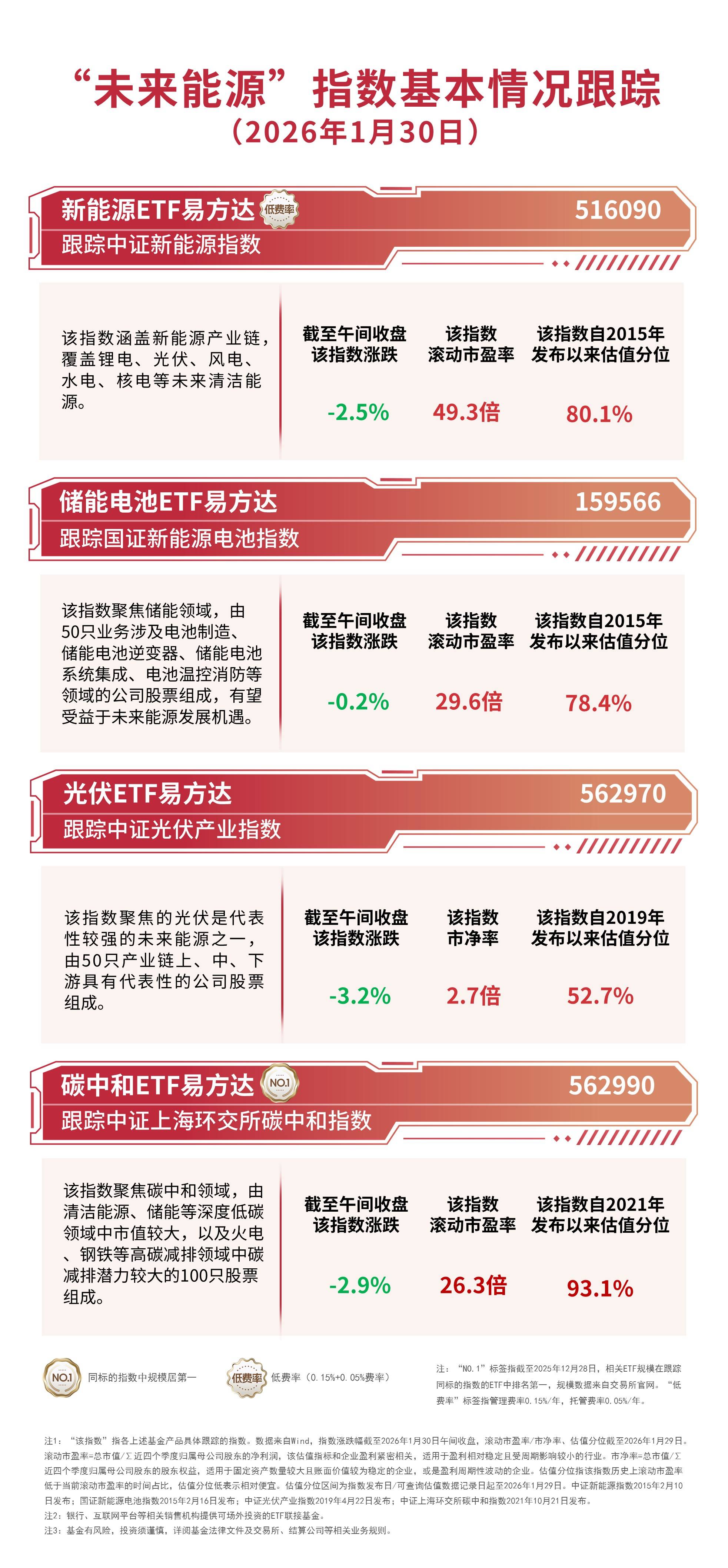
新能源板块延续调整,储能电池ETF易方达(159566)连续3日获资金布局
Sou Hu Cai Jing· 2026-01-30 05:06
Group 1 - The core viewpoint of the news highlights a decline in various renewable energy indices, with the National Renewable Battery Index down by 0.2%, the China Securities Renewable Energy Index down by 2.5%, the Shanghai Carbon Neutrality Index down by 2.9%, and the China Securities Photovoltaic Industry Index down by 3.2% as of midday closing [1][5][6] - The storage battery ETF managed by E Fund (159566) has seen a net inflow of funds totaling 370 million yuan over three consecutive trading days, indicating investor interest despite the overall market decline [1] - The indices mentioned focus on companies involved in battery manufacturing, storage battery inverters, storage battery system integration, and battery temperature control and fire safety, suggesting potential benefits from future energy development opportunities [3] Group 2 - The photovoltaic ETF managed by E Fund tracks the China Securities Photovoltaic Industry Index, which consists of 50 representative companies across the upstream, midstream, and downstream of the photovoltaic industry chain [5] - The carbon neutrality ETF managed by E Fund tracks the Shanghai Carbon Neutrality Index, reflecting the industry's focus on achieving carbon neutrality [6]