
碳排放交易

Search documents
2026年4月碳排放月报:市场扩围,碳价持稳-20260330
Bao Cheng Qi Huo· 2026-03-30 11:43
1. Report Industry Investment Rating - No relevant information provided 2. Core Viewpoints - In March 2026, the National Carbon Emission Trading Market (CEA) operated stably and further expanded. After the Ministry of Ecology and Environment officially included the steel, cement, and aluminum smelting industries in the national carbon market in February, the market sentiment was generally optimistic this month. However, due to the end - of - quarter compliance expectations and the progress of data verification in new industries, the price showed a high - level volatile consolidation trend [3][39]. - The CEA quota price fluctuated between 80.00 yuan/ton and 83.20 yuan/ton this month, maintaining overall resilience. The market activity rebounded compared to February, with a significant proportion of bulk agreement transactions, indicating that institutional investors and newly included industry entities were adjusting their positions [4][39]. - The core focus this month was on the implementation of the quota allocation plan details for the three high - energy - consuming industries (steel, cement, and aluminum) and the start of data verification work, which provided strong support for the medium - and long - term carbon price. As April enters the traditional compliance peak period and the data verification results of the three industries become clearer, market enthusiasm may further increase, and the price is expected to strengthen [4][41]. 3. Summary by Directory 3.1 Industry News - The expansion of the carbon market started substantially. In February 2026, the Ministry of Ecology and Environment officially included the steel, cement, and aluminum smelting industries in the national carbon market. In March, local ecological environment departments and third - party verification agencies launched the verification of the 2025 carbon emission data of key enterprises in these three industries. The first batch of quota allocation plans for new industries is expected to be announced in early Q2, which has increased the attention of relevant industrial chain enterprises to carbon assets [9]. - In March, the trading volume and price of the national voluntary greenhouse gas emission reduction market (CCER) increased. On March 19, the average CCER transaction price was about 87.02 yuan/ton, slightly higher than the CEA price, showing a small inversion or parity, indicating the scarcity of high - quality emission reduction projects. Afforestation carbon sequestration and renewable energy grid - connected power generation projects were still the main trading items [10]. - Pilot markets in Hubei, Guangdong, etc. were also actively traded this month. In mid - March, the price of the Hubei carbon market (HBEA) maintained a reasonable price difference with the national carbon market, with limited inter - regional arbitrage space, and the market was maturing [11]. 3.2 National Carbon Market Carbon Emission Quotas (CEA) - As of February 27, 2026, the closing price of the national carbon market carbon emission quota (CEA) was 79.90 yuan/ton, the same as the previous month and down 7.23% year - on - year. In the past 30 trading days, the highest CEA price was 83.20 yuan/ton, the lowest was 74.00 yuan/ton, with a fluctuation range of about 9 yuan/ton. In terms of trading volume, the trading activity of national carbon emission quotas decreased in the past 30 trading days, with the average monthly trading volume decreasing by 759,000 tons [12]. 3.3 Carbon Price Influence Factor Analysis 3.3.1 Energy Price - There is a certain correlation between the carbon emission market and the energy market. When energy demand is strong and energy prices rise, the demand for carbon emission quotas is also relatively strong. The increase in carbon price increases the economic efficiency of corporate low - carbon emission reduction, which helps reduce corporate energy demand. Affected by external geopolitical conflicts, the prices of thermal coal and natural gas increased [14]. 3.3.2 Energy Consumption - From January to December 2025, the total apparent consumption of gasoline, coal, and diesel in China was 37,671.13 million tons, 628.74 million tons less than the previous year [22]. 3.3.3 Domestic Carbon Emission Structure - No specific analysis content provided, only relevant figures are mentioned [29] 3.3.4 Total Social Electricity Consumption - In 2025, the total social electricity consumption was 1,036.82 billion kWh, a year - on - year increase of 5.0%. The electricity consumption of the primary industry was 14.94 billion kWh, a year - on - year increase of 9.9%; the secondary industry was 663.66 billion kWh, a year - on - year increase of 3.7%; the tertiary industry was 199.42 billion kWh, a year - on - year increase of 8.2%; and the electricity consumption of urban and rural residents was 158.80 billion kWh, a year - on - year increase of 6.3%. The electricity consumption of the tertiary industry and urban and rural residents contributed 50% to the growth of electricity consumption. The growth rates of electricity consumption in the charging and battery - swapping service industry and the information transmission, software, and information technology service industry reached 48.8% and 17.0% respectively, which were important factors driving the growth of tertiary - industry electricity consumption. The slowdown in the growth rate of secondary - industry electricity consumption was in line with China's economic structural transformation [33]. 3.3.5 Power Generation Structure - From January to February 2026, the proportion of thermal power generation was 67.05%, slightly lower than the same period last year; the proportion of hydropower generation was 93%, slightly higher than the same period last year; and wind power generation was 194.64 billion kWh, also higher than last year [38]. 3.4 Conclusion - In March 2026, the National Carbon Emission Trading Market (CEA) operated stably and further expanded. The market sentiment was generally optimistic, but the price showed a high - level volatile consolidation trend. The CEA quota price fluctuated between 80.00 yuan/ton and 83.20 yuan/ton, maintaining overall resilience. The market activity rebounded compared to February, with a significant proportion of bulk agreement transactions. The implementation of the quota allocation plan details for the three high - energy - consuming industries and the start of data verification work provided strong support for the medium - and long - term carbon price. As April enters the traditional compliance peak period and the data verification results of the three industries become clearer, market enthusiasm may further increase, and the price is expected to strengthen [39][41].
航运及碳排放日报-20260303
Yin He Qi Huo· 2026-03-03 07:50
Group 1: Investment Rating - There is no information about the industry investment rating in the report. Group 2: Core Views - The conflict in the Middle East has affected the passage of the Strait of Hormuz and the Red Sea. If the conflict persists, it may impact the supply - demand pattern of the Middle East and Europe - Mediterranean routes and drive up spot freight rates. In the container shipping market, short - term trading can adopt a long - on - dips strategy, and arbitrage should be on the sidelines [9][11][12]. - In the dry bulk shipping market, the small and medium - sized ship market is active, and the spot freight rate is expected to continue to rise. However, the upward movement of the Capesize ship type may be restricted. The geopolitical situation in the Middle East may disrupt regional trade and increase operating costs [23]. - In the carbon emission market, the domestic carbon market is dominated by sporadic large - scale transactions with limited activity. In the short term, carbon prices may be supported, but the increase may be limited. In the long term, the carbon price center in 2026 is expected to be higher than in 2025. The EU carbon market is in a structurally tight pattern, but the carbon price is in a low - level shock due to policy uncertainty [36][39]. Group 3: Summary by Directory Container Shipping - **Futures Market**: On March 2, 2026, the closing prices of EC2604, EC2605, EC2606, EC2608, EC2610, and EC2612 all rose significantly, with increases of 16.73%, 16.53%, 15.68%, 15.42%, 15.67%, and 15.33% respectively. The trading volume and open interest of each contract also increased [5]. - **Container Freight Rates**: SCFIS European line index was 1463.40, down 7.00% week - on - week and 7.43% year - on - year. SCFI comprehensive index was 1333.11, up 6.52% week - on - week and down 24.20% year - on - year. Different routes showed different trends [5]. - **Fuel Costs**: WTI crude oil near - month price was $67.06 per barrel, up 2.63% week - on - week and down 4.01% year - on - year. Brent crude oil near - month price was $73.21 per barrel, up 3.42% week - on - week and down 0.3% year - on - year [5]. - **Market Analysis and Strategy**: Affected by the Middle East conflict, some shipping companies have suspended bookings on Middle East routes and raised freight rates. The European line is in the traditional off - season from March to April, but if the conflict persists, it may drive up spot freight rates. The trading strategy is to go long on dips in the short term and wait and see for arbitrage [9][11][12]. Dry Bulk Shipping - **Dry Bulk Freight Index**: On February 27, 2026, BDI index was 2149 points, up 1.09% week - on - week; BCI index was 3056 points, up 0.16% week - on - week; BPI index was 1942 points, up 1.36% week - on - week; BSI index was 1338 points, up 3.0% week - on - week [22]. - **Dry Bulk Freight Rates**: On February 27, 2026, the BCI - C3 (Tubarao - Qingdao) route was quoted at $23.45 per ton; the BCI - C5 (West Australia - Qingdao) route was quoted at $10.239 per ton [22]. - **Market Analysis and Outlook**: The small and medium - sized ship market is active, and the spot freight rate is expected to continue to rise. The Capesize ship type may be restricted by inventory. The geopolitical situation in the Middle East may disrupt regional trade and increase operating costs [23]. - **Industry News**: The Islamic Revolutionary Guard Corps of Iran banned ships from passing through the Strait of Hormuz. The North Standard P&I Club issued a safety warning for the Porto Sudeste in Brazil. The throughput of Pilbara Ports in January reached a record high. CMB.TECH locked in multiple long - term charters. The US and Guinea reached a key minerals agreement [25][28][29]. Carbon Emission Market - **China Carbon Emission Market**: On March 2, 2026, the opening and closing prices of CEA were 80.5 yuan per ton, with no change from the previous day. There was no trading in the listing agreement, 200,000 tons were traded in the bulk agreement, and the turnover was 16.2 million yuan. CCER had no transactions [35]. - **EU Carbon Emission Market**: On February 27, 2026, the EUA auction price was 68.37 euros per ton, and the auction volume was 2.7125 million tons. In the futures market, the settlement price of the ICE continuous contract was 69.02 euros, down 0.98% from the previous trading day, and 711 lots were traded [35]. - **Market Analysis and Outlook**: The domestic carbon market has limited activity. In the short term, carbon prices may be supported, but the increase may be limited. In the long term, the carbon price center in 2026 is expected to be higher than in 2025. The EU carbon market is in a structurally tight pattern, but the carbon price is in a low - level shock due to policy uncertainty [36][39]. - **Industry News**: China's offshore oilfield achieved large - scale drone operations, saving costs and reducing carbon emissions. Shanghai launched a carbon trust. Qinghai issued a policy to promote the development of concentrated solar power. The price of European natural gas futures soared due to the Middle East conflict. The new construction projects of downstream construction enterprises decreased [39][40][44].
2026年3月碳排放月报:全国CEA交易进入淡季-20260302
Bao Cheng Qi Huo· 2026-03-02 04:28
1. Report Industry Investment Rating No information provided in the report. 2. Core Viewpoint of the Report As of February 25, 2026, the closing price of the national carbon market carbon emission allowance (CEA) was 81.00 yuan/ton, remaining flat compared to the previous month and down 9.75% compared to the same period last year. In the past 30 trading days, the average trading volume of national carbon emission allowances was 463,000 tons, a month-on-month decrease of 1.465 million tons from the previous period, indicating a decline in the activity of the carbon emission spot market [3][32][68]. 3. Summary According to Relevant Catalogs 3.1 Industry News - The Ministry of Ecology and Environment issued a notice on the work related to the national carbon emission trading market in 2026, including strengthening the management of the list of key emission units, data quality, quota allocation and settlement, and the management requirements for other key industries [9]. - The EU's Carbon Border Adjustment Mechanism (CBAM) officially came into effect on January 1, 2026. The EU's setting of a significantly high default value for China's product carbon emission intensity and plans to expand the product coverage range are unfair and discriminatory, and China firmly opposes these practices [30][31]. 3.2 National Carbon Market Carbon Emission Allowance (CEA) As of February 25, 2026, the closing price of CEA was 81.00 yuan/ton, remaining flat compared to the previous month and down 9.75% compared to the same period last year. In the past 30 trading days, the average trading volume was 463,000 tons, a month-on-month decrease of 1.465 million tons, indicating a decline in market activity [32]. 3.3 Carbon Price Influence Factor Analysis 3.3.1 Energy Price - As of February 25, 2026, the price of steam coal at Qinhuangdao Port showed an increase compared to the end of the previous month but a decrease compared to the end of 2025. The pithead price of steam coal also showed a similar trend. The coke price remained flat compared to the end of the previous month but decreased compared to the end of 2025. The LNG ex-factory price index decreased compared to the previous period, and the European natural gas spot price decreased compared to the end of the previous month and the end of 2025 [35][36][37]. 3.3.2 Energy Consumption In 2025 from January to December, the cumulative apparent consumption of natural gas in the country was 426.55 billion cubic meters, 500 million cubic meters more than the previous year; the cumulative apparent consumption of coke was 496.7758 million tons, 15.706 million tons more than the previous year; the total apparent consumption of gasoline, kerosene, and diesel was 376.7113 million tons, 6.2874 million tons less than the previous year [40]. 3.3.3 Domestic Carbon Emission Structure China's total carbon emissions have exceeded 10 billion tons, accounting for about one-third of the world's carbon emissions. The largest source of carbon emissions in China is the "Electricity, Steam and Hot Water Production and Supply" industry, followed by the "Ferrous Metal Smelting and Rolling Processing" industry. In terms of energy types, carbon emissions mainly come from the consumption of coal, followed by fuel oil and natural gas [44][51]. 3.3.4 Total Social Electricity Consumption In 2025, the total social electricity consumption was 1,0368.2 billion kWh, a year-on-year increase of 5.0%. The electricity consumption of the tertiary industry and urban and rural residents' living contributed 50% to the growth of electricity consumption. The slowdown in the growth rate of the secondary industry's electricity consumption was in line with China's economic structural transformation [54][55]. 3.3.5 Power Generation Structure In December 2025, the power generation of industrial enterprises above the designated size was 858.6 billion kWh, a year-on-year increase of 0.1%. The total power generation of four types of clean energy accounted for 32.3% of the total power generation, an increase of 2.9 percentage points compared to the same period last year. In 2025, the thermal power generation of industrial enterprises above the designated size showed a year-on-year negative growth for the first time since 2014, indicating a turning point in the development model of the power industry [58][60][61]. 3.4 Conclusion As of February 25, 2026, the closing price of CEA was 81.00 yuan/ton, remaining flat compared to the previous month and down 9.75% compared to the same period last year. The average trading volume decreased month-on-month, indicating a decline in market activity. The price of steam coal showed a short-term strong trend. In 2025, the apparent consumption of natural gas and coke increased, while the total consumption of gasoline, kerosene, and diesel decreased. In December 2025, the total social electricity consumption and the power generation of industrial enterprises above the designated size increased year-on-year, and the proportion of clean energy power generation increased [68][69][71].
“双碳”政策专家电话会
2026-02-11 15:40
Summary of Conference Call on Carbon Neutrality and Chemical Industry Industry Overview - The conference focused on the chemical industry in the context of China's dual carbon goals, specifically the 14th Five-Year Plan (14th FYP) and the transition towards carbon neutrality by 2060 [1][2]. Key Points and Arguments 1. **Carbon Peak and Neutrality Goals**: - China aims to reach carbon peak by 2030 and achieve carbon neutrality by 2060, with a specific target of reducing total carbon emissions by 7% to 10% after reaching the peak [2][4]. - The transition from intensity-based targets to total emission reduction is a significant shift in policy [4][6]. 2. **Policy Implementation**: - The 14th FYP emphasizes a comprehensive green transformation across all industries, moving from energy consumption control to carbon emission control [5][6]. - A carbon emission budget mechanism will be established at provincial and municipal levels, with specific targets allocated to each region [6][7]. 3. **Inclusion of Industries in Carbon Market**: - Currently, eight major industries, including power, cement, aluminum, and steel, are included in the carbon market, which accounts for 65% of national carbon emissions [7][8]. - By 2027, additional sectors such as petrochemicals, chemicals, paper, and construction materials will be integrated into the carbon market [7][8]. 4. **Carbon Management and Monitoring**: - Companies will be required to incorporate carbon management into their operational frameworks, with carbon emissions data becoming a prerequisite for project approvals [8][9]. - A product carbon footprint database will be established to track and certify carbon emissions associated with products [9][10]. 5. **Development of Zero-Carbon Facilities**: - The government plans to establish 100 national-level zero-carbon parks by 2030, with ongoing efforts to create zero-carbon factories in high-emission industries [9][10]. 6. **Market Mechanisms and Cost Implications**: - The introduction of paid carbon allowances is anticipated, with a gradual shift from free allocation to auction-based distribution [11][12]. - The carbon market will also facilitate voluntary emission reduction projects, allowing non-regulated companies to participate [12][13]. 7. **Impact on Chemical Industry**: - The chemical industry faces significant pressure due to its reliance on coal, which constitutes over 40% of its emissions [16][17]. - The projected carbon emissions from the chemical sector are expected to increase slightly, posing challenges for compliance with future carbon reduction targets [16][17]. 8. **Technological Innovations**: - The industry is encouraged to adopt renewable resources and improve production processes to reduce carbon emissions, including the use of Carbon Capture, Utilization, and Storage (CCUS) technologies [17][18]. Additional Important Content - The transition to a carbon-neutral economy will require a comprehensive understanding of the carbon footprint across various production processes, particularly in the chemical sector [17][18]. - The government is expected to monitor and adjust carbon emission allowances based on real-time data, although the current monitoring system is still under development [45][46]. - The dual carbon goals will necessitate a balance between maintaining industrial competitiveness and achieving environmental sustainability, particularly in coal-dependent sectors [38][39]. This summary encapsulates the critical discussions and insights from the conference call regarding the implications of China's carbon neutrality goals on the chemical industry and related sectors.
长青集团(002616) - 002616长青集团投资者关系管理信息20260116
2026-01-16 08:54
Group 1: Company Overview and Operations - The company has established biomass energy projects primarily operating under a combined heat and power model, with stable demand from downstream heating customers in food processing, paper, and pharmaceuticals [2] - The company is monitoring carbon emission trading policies, with an estimated potential of 150,000 tons of voluntary carbon reduction per year for a 35MW biomass project, based on pure power generation [2] Group 2: Future Plans and Investments - The company plans to increase investments in heating infrastructure for projects with high heating demand, aiming to boost heating revenue once projects stabilize [2] - There is a focus on attracting new users through targeted investment rules and collaboration with local governments, as well as exploring the industrialization of biomass material utilization [2] Group 3: Carbon Market Expectations - The company anticipates growth in the carbon reduction market as more high-energy and high-pollution industries are included, which will likely increase demand for carbon reduction [3] - The trading prices in the carbon reduction market are expected to fluctuate based on supply and demand dynamics, indicating significant development potential [3] Group 4: Risk Disclaimer - The information provided does not constitute a commitment or guarantee from the company or its management regarding industry forecasts or company development strategies, urging investors to make rational decisions and be aware of investment risks [3]

德国碳排放交易收入创历史新高
Shang Wu Bu Wang Zhan· 2026-01-09 09:59
Core Insights - Germany's carbon trading revenue is expected to exceed €21.4 billion in 2025, marking a historical high [1] - All funds generated will be allocated to the Climate and Transformation Fund to support energy transition efforts [1] - Since the initiation of carbon trading in 2008, Germany's total revenue from this scheme has surpassed €100 billion [1] Emission Reduction Trends - The pace of greenhouse gas emissions reduction in Germany is slowing down [1] - In 2025, Germany's emissions are projected to be 640 million tons of CO2 equivalent, which represents a 49% decrease compared to 1990 levels [1] - However, the year-on-year reduction rate is only 1.5% [1]
2026年焦煤供需格局展望
2025-12-29 01:04
Summary of Conference Call Records Industry Overview - The focus is on the **coking coal industry** in China, particularly regarding supply and demand dynamics for 2025 and projections for 2026 [1][7]. Key Points and Arguments Coking Coal Supply and Demand - In 2025, China's coking coal imports decreased by **5.6% year-on-year**, with Mongolia and Russia accounting for nearly **80%** of the imports. The import structure shifted, with the proportion of anthracite, weathered coal, and thermal coal increasing, while coking coal's share dropped to **62%-65%** [1][4]. - The steel industry maintained high pig iron production levels, benefiting from increased exports of steel and steel billets, although profit margins for steel mills were low, below **36%** [1][5]. - The coking coal market is characterized by high volatility due to a significant proportion of independent coking plants, which are mostly private enterprises sensitive to price changes. The pricing mechanism is transitioning from quarterly to monthly [1][6]. Market Predictions for 2026 - Limited growth in coking coal production is expected in 2026, with a decline in steel industry demand leading to reduced coking coal consumption. The closure of non-mining washing plants may support commodity coal supply, with coking coal prices expected to rise slightly but with moderated volatility [1][10]. - The peak of steel consumption has passed, and a gradual decline is anticipated. Carbon emission trading will phase out outdated capacity and increase production costs, potentially raising the proportion of high-quality products and overall profits [1][12]. - Mongolia plans to increase coking coal exports to China, which could impact domestic supply-demand balance and increase volatility in the futures market. Monitoring changes in Mongolia's export levels is crucial [1][13]. Coking Coal Market Dynamics - The overall performance of the coking coal market in 2025 experienced a V-shaped recovery, with significant price drops in the first half due to oversupply, particularly from Shanxi province. However, a market reversal began in July, influenced by policy changes [2][3]. - The coking coal market's volatility is attributed to the high proportion of independent coking plants and their sensitivity to price adjustments. The transition to monthly pricing aims to better reflect market changes [1][6]. Cost and Production Insights - Production costs for coking coal vary by region, with costs in Henan, Hebei, and Anhui around **1,000-1,200 RMB/ton**, while some private enterprises in Shanxi have costs as low as **600-700 RMB/ton** [21]. - Despite nearing breakeven points, coking coal enterprises have not yet reported losses, and thus, there are no current reasons for production halts [20]. Inventory and Supply Chain Management - Steel mills and coking plants typically maintain a coal inventory of around **10 days**, with extreme cases dropping to as low as **3 days**, which poses operational risks [19]. - Coal production is generally stable throughout the year, with minor seasonal fluctuations influenced by market conditions rather than self-adjustments [15]. Environmental and Regulatory Impact - Environmental regulations have led to significant changes in inventory management practices, with large state-owned enterprises eliminating bulk storage and implementing measures to comply with environmental standards [25]. Additional Important Insights - The steel industry's seasonal demand patterns have become less pronounced, with traditional peak seasons showing reduced significance due to declining construction activity [15]. - The impact of Mongolian coking coal on the domestic market is notable, as it is priced lower than domestic coal, influencing futures market volatility and local pricing dynamics [22]. This summary encapsulates the critical insights from the conference call records, focusing on the coking coal industry and its interrelations with the steel sector and market dynamics.
江南大学报告:2024年全国食品安全抽检合格率97.04%
Bei Ke Cai Jing· 2025-12-28 03:52
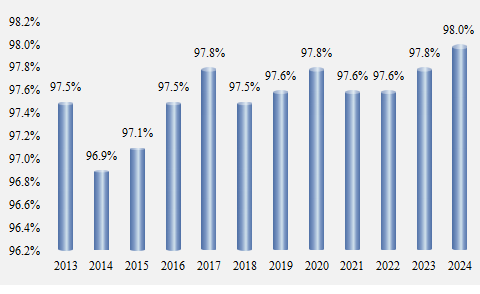
Core Insights - The report indicates that the overall quality compliance rate of major agricultural products in China reached 98% for the first time in 2024, reflecting a positive trend in food safety [1][2][3] - The total food import value for 2024 is approximately $126.73 billion, showing a decrease of 9.5% compared to the previous year [1][10] Agricultural Production - In 2024, the national grain production reached 70.65 million tons, an increase of 1.6% from the previous year, marking a new milestone above 70 million tons [2] - The per capita grain availability increased by 25 kg compared to the end of the 13th Five-Year Plan, reaching 500 kg, which is above the internationally recognized safety line of 400 kg [2] - The annual vegetable production in 2024 reached 86.11 million tons, an increase of 11.2 million tons since 2019 [2] Food Safety Monitoring - The overall compliance rate for food safety supervision and sampling in 2024 was 97.04%, a slight decrease from the previous year [6][7] - The compliance rates for specific categories such as vegetables, fruits, and tea were 97.9%, 98.2%, and 99.2% respectively, with the overall compliance rate for five major categories reaching 98% [3] Food Industry Performance - The food industry maintained double-digit growth in investment, with large-scale food enterprises achieving revenues of 906.53 billion yuan, reflecting a 4.1% increase in industrial added value [6] - The food manufacturing sector, including beverages and refined tea, saw industrial added value growth of 5.8% and 4.8% respectively [6] Food Imports and Compliance - The main categories of imported food include vegetables and fruits ($24.94 billion), meat and its products ($23.05 billion), and seafood ($18.16 billion), accounting for 52.19% of total food imports [10] - In 2024, 4,200 batches of foreign food were rejected for not meeting national food safety standards, an increase of 78.12% from the previous year [11] Regulatory Actions - A total of 23 announcements regarding the prohibition and restriction of pesticides were issued, with 80 pesticides listed, including 56 highly toxic ones [5] - The report highlights the enforcement actions taken against food safety violations, including over 69,772 cases related to harmful substances exceeding standard limits [13]

天富能源:关于拟出售公司碳排放配额的公告
Zheng Quan Ri Bao· 2025-10-20 14:10
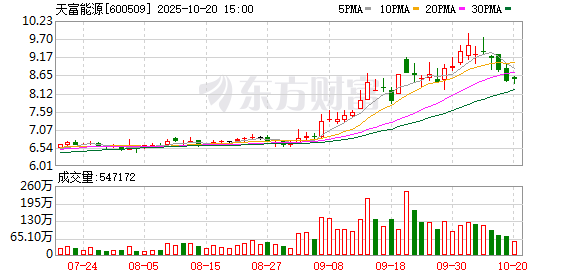
Core Viewpoint - Tianfu Energy announced the approval of a proposal to sell approximately 640,000 tons of carbon emission quotas through the national carbon emission trading system, with the transaction price to be determined based on market trends [2]. Summary by Categories Company Actions - The company plans to sell carbon emission quotas via agreement transfer, single-item bidding, and other compliant methods [2]. - The management has been authorized to carry out the relevant work for the disposal of carbon emission quotas and to sign related contracts and documents [2]. Market Context - The sale will be timed according to the price trends of carbon emission quotas in the national carbon market [2].

天富能源:拟出售碳排放配额约64万吨
Xin Lang Cai Jing· 2025-10-20 10:10
Core Viewpoint - The company has approved a proposal to sell approximately 640,000 tons of carbon emission quotas through the national carbon emission trading system, with the transaction price to be determined based on market trends [1] Group 1 - The eighth board of directors' 18th meeting has passed the resolution regarding the sale of carbon emission quotas [1] - The company plans to utilize methods such as agreement transfer and single-item bidding for the sale [1] - The management has been authorized to carry out the necessary actions related to the disposal of carbon emission quotas and to sign relevant contracts and documents [1]