财富管理

Search documents
银行业继续保持稳健发展
Jin Rong Shi Bao· 2025-11-18 04:58
Core Insights - The banking industry in China has shown steady growth in the first three quarters of the year, with total assets reaching 474.3 trillion yuan, a year-on-year increase of 7.9% [1][2] - Commercial banks achieved a cumulative net profit of 1.9 trillion yuan in the first three quarters, indicating robust financial performance [1] - The non-performing loan (NPL) ratio for commercial banks was 1.52% at the end of the third quarter, reflecting a slight increase of 0.03 percentage points from the previous quarter, while the provision coverage ratio remained strong at 207.15% [1][6] Asset Growth and Structure - By the end of the third quarter, large commercial banks held total assets of 208.1 trillion yuan, growing by 10% year-on-year, while joint-stock commercial banks saw a 4.7% increase to 76.2 trillion yuan [2] - The asset growth rates for different types of banks were as follows: large banks at 10.0%, joint-stock banks at 4.7%, city commercial banks at 10.6%, and rural financial institutions at 6.2% [2] - The net interest margin for commercial banks stabilized at 1.42%, supported by adjustments in liability-side interest rates [2] Financial Services and Support for the Economy - The balance of inclusive loans to small and micro enterprises reached 36.5 trillion yuan, up 12.1% year-on-year, indicating an improvement in the credit structure [4] - Inclusive agricultural loans increased to 14.1 trillion yuan, with a notable rise of 1.2 trillion yuan since the beginning of the year [4] - The banking sector has intensified support for key areas and weak links, with loans in technology, green finance, inclusive finance, elderly care, and digital sectors accounting for about 70% of the new loan increment [4] Risk Management and Asset Quality - The non-performing loan balance for commercial banks was 3.5 trillion yuan at the end of the third quarter, with a slight increase of 883 billion yuan from the previous quarter [6] - The overall asset quality of the banking sector remained stable, although there were slight increases in both the NPL balance and ratio, reflecting risks in certain economic sectors [6] - The provision for loan losses stood at 7.3 trillion yuan, with a provision coverage ratio of 207.15%, indicating solid risk mitigation capabilities [7]
垫付!有银行基金代销开始“卷”快赎
Ge Long Hui· 2025-11-18 04:27
Core Viewpoint - The article discusses the innovative strategies employed by WeBank, an internet bank, to enhance its fund distribution services, including zero sales fees and expedited redemption processes, which aim to improve investor experience and efficiency in fund transactions [1][8]. Group 1: Fast Redemption Services - WeBank has introduced a "fast redemption" service that allows investors to redeem funds with a turnaround time of T+0.5 days for amounts up to 5 million, significantly faster than the industry standard of T+3 for most funds and T+5 for QDII funds [1][2]. - The fast redemption process is facilitated through funding advances, either from WeBank's own capital or through borrowing from partner banks [2]. Group 2: Zero Sales Fees - In addition to fast redemption, WeBank has eliminated the sales fee for fund subscriptions, allowing users to redeem one year of zero-fee fund subscriptions using 500 points [3][4]. - This move positions WeBank at the lowest end of the sales fee spectrum, especially following the recent regulatory changes that have led to a significant reduction in fund sales fees across the industry [4][5]. Group 3: Market Position and User Base - Despite WeBank's innovative offerings, it remains a smaller player in the fund distribution market compared to leading institutions like Ant Group and China Merchants Bank, which dominate with significantly larger asset management scales [7]. - As of the end of last year, WeBank's asset management product balance was only 2.75 trillion, while it boasts a user base of 424 million, which is nearly double that of China Merchants Bank [7]. Group 4: Financial Performance and Challenges - WeBank's net profit growth has stagnated, with a mere 1% increase in 2024 and a negative growth of -11.86% in the first half of the current year, indicating challenges in maintaining profitability [9]. - The bank's non-interest income has been declining, although the income from agency business fees has shown growth, reflecting the initial success of its fund distribution efforts [9][10]. Group 5: Future Outlook - The article highlights the ongoing challenges for WeBank in balancing cost control, user experience, and brand influence in the competitive landscape of fund distribution [12]. - The bank's ability to innovate and adapt in the face of regulatory changes and market pressures will be crucial for its future growth and sustainability in the wealth management sector [12].
兴业银行厦门分行:精彩纷呈 送“暖”上门
Jin Rong Jie· 2025-11-18 03:20
Group 1 - The core idea of the news is that Xiamen Branch of Industrial Bank is organizing various customer activities to celebrate the "11·18 Financial Festival," focusing on personalized and comprehensive experiences that combine financial knowledge dissemination with non-financial services [1][2][3][4] Group 2 - A themed movie screening event was held to promote rational investment concepts, where customers participated and received educational materials on financial products and services [2] - A health knowledge seminar was conducted in collaboration with Xiamen Hongai Hospital, focusing on self-health management while also providing wealth management insights from financial advisors [3] - The "Wealth into Enterprises" initiative aims to extend financial services to businesses, understanding diverse employee financial needs and promoting digital banking tools [4]

2026年证券行业投资策略:权益浪潮下的券商机遇:财富扩容,国际增效
Shenwan Hongyuan Securities· 2025-11-17 05:42
Group 1 - The report highlights that the brokerage industry is entering an upward trajectory after hitting a low in Q4 2023, with significant growth observed in Q2 and Q3 of 2025 [5][18]. - The brokerage sector has seen a shift from "customer acquisition" to "existing customer management and institutional deepening," focusing on creating a comprehensive product matrix across various investment types [5][29]. - The report identifies three categories of brokers that have outperformed: those with low valuations and improving fundamentals, those involved in mergers and acquisitions, and those driven by innovative business models [5][12]. Group 2 - The report indicates that the performance of H-shares has outpaced A-shares due to a stronger Hong Kong market, lower valuations, and accelerated interconnectivity between capital markets [11][12]. - As of November 14, 2025, the brokerage index has increased by 4.29%, while the Shanghai Composite Index has risen by 19.06%, indicating a significant underperformance of the brokerage sector compared to the broader market [11][12]. - The report notes that the brokerage sector's price-to-book ratio is currently at 1.41 times, which is at the 47th percentile since 2018, suggesting that the sector is undervalued [5]. Group 3 - The report emphasizes the importance of wealth management as a core support for brokerage businesses, driven by increased asset allocation from residents into the equity market [5][34]. - The brokerage industry is expected to benefit directly from the increasing attractiveness of the equity market, with specific recommendations for companies like GF Securities, Huatai Securities, and China Galaxy Securities [5]. - The report outlines that the brokerage sector's net profit for the first nine months of 2025 has increased by 66% year-on-year, with significant contributions from brokerage and interest income [18][34]. Group 4 - The report discusses the internationalization of brokerage services, driven by client demand, with major firms establishing overseas subsidiaries and focusing on cross-border services [5][18]. - The brokerage sector is experiencing a "counter-cyclical" asset allocation strategy, with a continued increase in equity asset allocation expected in 2025 [5][18]. - The report highlights that the brokerage industry is positioned for a recovery in public fund profitability, with the potential for increased allocations from public funds to the non-bank financial sector [5][18].






乌鲁木齐银行私人银行品牌正式发布 重构财富管理新生态
Sou Hu Cai Jing· 2025-11-16 11:27
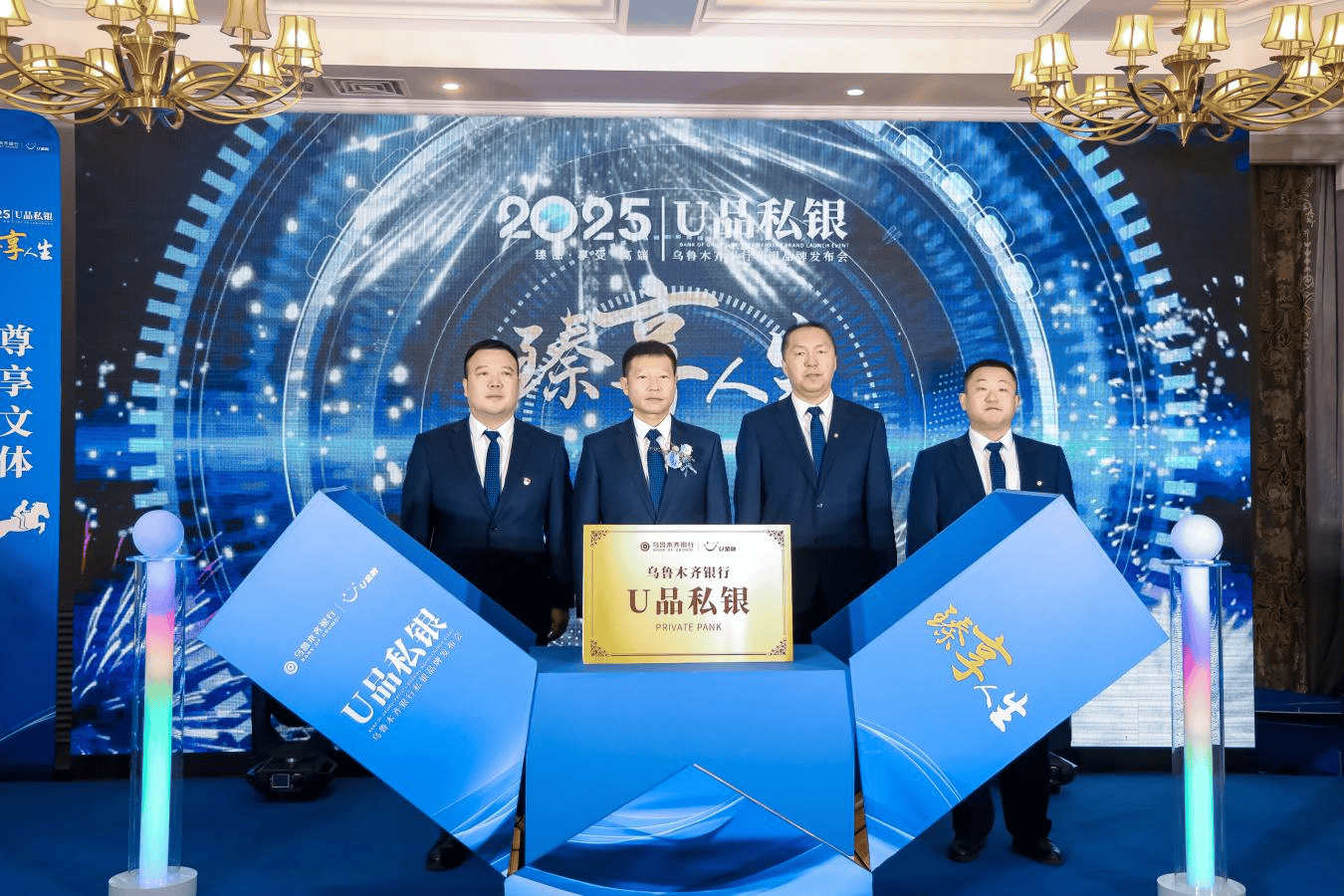
11月16日,乌鲁木齐银行"U品私银"私人银行品牌在新疆财富中心正式发布。作为新疆地方金融主力军,乌鲁木齐银行打造新疆首个以"财富管理"+"产融生 态"双驱动的地方性私人银行品牌,率先启动新疆本土私人银行服务。 私人银行品牌的发布,是乌鲁木齐银行品质服务的又一次升级。该行立足服务地方经济,以更专业的投研能力、更个性化的服务体系和更开放的生态合作, 构建"金融赋能、产业协同、文化共生"的财富管理新范式,致力于实现客户财富增值与区域经济高质量发展的深度共振。 注:此文属于央广网登载的商业信息,文章内容不代表本网观点,仅供参考。 活动现场 (乌鲁木齐银行供图) 发布会上,乌鲁木齐银行党委委员、副行长梁波表示,私人银行不仅为客户提供专业的资产配置方案,更关注财富背后的社会价值。乌鲁木齐银行将继续深 化"离您更近,伴您更远"的品牌理念,助力高净值客户在经济新格局下实现财富的长期稳健增长,形成覆盖全生命周期的财富管理解决方案,成为客户追求 美好生活的"伙伴银行"。 未来,乌鲁木齐银行将秉承"成就成长力量,融汇美好生活"的初心使命,以精准服务匹配客户多元化需求,并进一步充分发挥地方金融主力军的作用,将金 融"活水"精准导入 ...

专家:财富增值可关注科技行业、事件驱动型收益、全球资产配置
Zhong Guo Jin Rong Xin Xi Wang· 2025-11-16 10:23
Core Insights - The event "Zijin Wealth Management - Smart Financial Cube 2025 Annual Closed-door Private Sharing Conference" highlighted key investment opportunities for 2026, emphasizing the importance of technology sector selection, event-driven returns, and global asset allocation capabilities [1] - Experts discussed the inclusion of gold as a safe-haven asset in family asset allocation, along with a focus on dividend assets, retirement-related sectors, and data assets as new opportunities [1] Group 1: Wealth Management Innovations - The event featured discussions on wealth management innovation practices and investment strategies for high-net-worth clients [1] - The collaboration between Licaimofang and Huaxia Bank aims to combine intelligent investment research with high-end financial services, providing a one-stop wealth management solution [1] Group 2: Smart Account Product - Licaimofang's core product, the Smart Account, allows clients to access personalized investment services with a minimum investment of 300,000 to 500,000 yuan, breaking traditional high-threshold barriers [2] - The Smart Account supports automated follow-up investments and intelligent regular investments, enabling clients to enjoy professional asset allocation without constant monitoring [2] Group 3: Comprehensive Advisory Services - Huaxia Bank's investment advisor shared insights on macroeconomic trends and a comprehensive advisory service model that integrates investment banking, commercial banking, and private banking [2] - The bank's "1+1+N" service team structure includes dedicated client managers, senior private banking managers, and expert investment advisory teams, along with a scientific asset allocation recommendation of 40% base assets, 30% stable appreciation, 20% reduced correlation, and 10% income-generating assets [2]
大成基金总经理谭晓冈:公募与券商协同转型 共筑高质量财富管理生态
Zhong Zheng Wang· 2025-11-16 02:54
Core Insights - The forum hosted by Zhongtai Securities focused on the high-quality development of wealth management and the ETF ecosystem, emphasizing the need for public funds and securities companies to undergo deep transformations in their operational philosophy, marketing models, and research paradigms to better serve residents' wealth management needs [1][2]. Group 1: Transformation Strategies - The collaboration between public funds and securities firms is entering a phase of iterative upgrade, focusing on three major transformations: shifting from a product-centric to a customer-centric approach, moving from single product sales to comprehensive asset allocation solutions, and aligning research paradigms with national strategic directions [2][3]. - The operational philosophy should prioritize customer differentiation and provide customized asset allocation advice, while the marketing model should evolve to enhance long-term investor satisfaction by transitioning from "selling products" to "managing accounts" [2][3]. Group 2: Key Focus Areas for Wealth Management - Key drivers for high-quality wealth management development include investment advisory services, artificial intelligence technology, and a multi-tiered product system [3]. - The investment advisory business should adopt a "buyer advisory" model, linking income to long-term asset appreciation, thereby strengthening industry trust [3]. Group 3: ETF Market Development - The explosive growth of the ETF market presents opportunities for public funds and securities firms to establish a comprehensive cooperation model, focusing on product development, ecosystem operation, and asset allocation [4]. - Collaborative efforts should include creating a strategy-driven, intelligent ETF toolkit, enhancing liquidity services, and developing diversified ETF solutions to convert product advantages into long-term client value [4].

共迎指数投资大时代!“中泰财富30”品牌发布,李迅雷等大咖发声
券商中国· 2025-11-14 15:03
Core Viewpoint - The "Zhongtai Wealth 30" brand launch signifies a new paradigm in wealth management, emphasizing the importance of capital markets in promoting common prosperity and addressing complex wealth management needs through a buyer-oriented advisory model [3][4]. Group 1: Event Overview - The "Wealth Management and ETF Ecological High-Quality Development Summit Forum" was held in Qingdao, guided by the Qingdao Municipal Financial Office and hosted by Zhongtai Securities, with over 70 asset management institutions and industry experts in attendance [2][6]. - The event featured speeches from key figures, including Zhongtai Securities' General Manager Feng Yidong, who highlighted the role of capital markets in achieving common prosperity [2][3]. Group 2: Brand Launch and Strategy - The "Zhongtai Wealth 30" brand aims to create a comprehensive wealth management ecosystem, serving nearly 11 million clients and offering impactful products [3][4]. - The brand consists of three sub-brands: Quantitative 30, Myfund 30, and ETF 30, focusing on transforming complex wealth management needs into clear, trustworthy solutions [4]. Group 3: Economic Insights - Chief Economist Li Xunlei provided insights on China's macroeconomic outlook, emphasizing the importance of accelerating technological self-reliance and enhancing consumer spending during the "14th Five-Year Plan" period [8][10]. - Li noted that the current low interest rate environment and increased asset volatility necessitate a diversified asset allocation strategy to mitigate risks [10]. Group 4: Industry Collaboration and Development - The event included discussions on the collaborative ecosystem in wealth management, emphasizing the need for industry institutions to enhance research capabilities and optimize product offerings to improve investor satisfaction [12]. - A private ETF strategy forum was held, focusing on innovative strategies that enhance market liquidity and provide investors with efficient asset allocation tools [12]. Group 5: Future Directions - Zhongtai Securities aims to strengthen its professional capabilities and internal resource integration, fostering an open and collaborative platform for wealth management services [12].
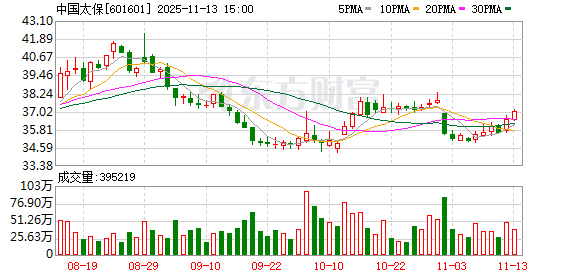
中国太保副总裁苏罡:财富管理既是“马拉松”也是“接力赛”
Shang Hai Zheng Quan Bao· 2025-11-13 17:56
Core Viewpoint - Wealth management is described as both a "marathon" and a "relay race," emphasizing the importance of long-term planning and adaptability to different economic cycles [2][3]. Group 1: Economic Cycle and Wealth Management - Wealth management is closely tied to economic cycles, with different cycles presenting unique investment opportunities and challenges for residents [3]. - Individuals' life cycles do not always align with economic cycles, leading to potential mismatches in wealth accumulation and consumption phases [4]. - Effective wealth management requires dynamic asset allocation based on economic cycle changes, such as favoring fixed-income assets during downturns and equities during upturns [4]. Group 2: Cash Flow and Risk Management - The primary goal of wealth accumulation is to achieve sustainable cash flow rather than merely maximizing wealth [5]. - Different stages of life require tailored cash flow planning, emphasizing the importance of the time value of money and the role of compounding in wealth management [5]. - Institutional investors generally have a stronger risk-bearing capacity than individual investors, making it wiser for individuals to entrust their wealth management to capable institutions [5]. Group 3: Role of Insurance in Wealth Management - Insurance is highlighted as a crucial financial tool for wealth management, capable of enhancing residents' property income [6]. - The insurance industry can provide both risk protection and value creation, helping to prevent poverty due to unexpected events and improving financial asset returns [6]. - The development of dividend insurance and floating income products is seen as a way to enhance residents' sustainable property income [6][7]. Group 4: Investment Strategies and Asset Allocation - The investment philosophy emphasizes adaptability and proactive asset allocation in a low-interest-rate environment [8]. - The company employs a "barbell" asset allocation strategy, focusing on stable returns and flexibility to navigate market fluctuations [8]. - Long-term bonds are prioritized to extend the duration of fixed-income assets, while alternative investments are increased to enhance long-term risk-adjusted returns [8][9]. Group 5: Equity and Alternative Investments - Fixed-income assets serve as a "stabilizer" for returns, while equity investments act as a "booster" [9]. - The company is increasing its allocation to high-dividend stocks and exploring diverse alternative investments, including private equity and real estate, to improve overall portfolio returns and mitigate risks [9].

机构集体唱多!券商板块2026年投资价值凸显
Huan Qiu Wang· 2025-11-13 07:29
Core Viewpoint - Major brokerage firms are optimistic about the securities industry in 2026, anticipating a "Davis Double Play" due to recovering market conditions and improving fundamentals, while current valuations remain at historical lows [1] Group 1: Performance Growth - The A-share market's upward trend has significantly boosted brokerage firms' performance, with a total margin balance nearing 2.4 trillion yuan and a record high trading volume of 301.56 trillion yuan in the first three quarters of 2025 [2] - Listed brokerages achieved a net profit of 169.4 billion yuan in the first three quarters of 2025, marking a 63% year-on-year increase, with the third quarter alone reaching a record 72.5 billion yuan [2] - Core business segments such as brokerage, investment banking, asset management, interest income, and investment returns saw year-on-year growth rates of 74%, 23%, 2%, 56%, and 43% respectively, indicating a broad-based recovery [2] Group 2: Valuation Discrepancy - Despite strong performance, the brokerage sector's stock prices have lagged, with the Wind brokerage index rising only 6.02% year-to-date compared to significant gains in major indices [3] - The industry is expected to see a return on equity (ROE) of approximately 7.2% in 2026, which is above the 70th percentile since 2016, while current valuations are at the 40th percentile, indicating substantial room for future growth [3] - Institutional holdings in the brokerage sector are at a historical low, with the sector accounting for only 0.86% of actively managed fund holdings as of Q3 2025, underweighting the standard allocation by 3.21 percentage points [3] Group 3: Future Growth Drivers - Wealth management, institutional business, and internationalization are identified as the three main growth engines for the brokerage industry moving forward [6] - The wealth management sector is expected to see a clear upward trend, with daily trading volumes in A-shares potentially stabilizing at 2 trillion yuan, and a recovery in financial product distribution [6] - The investment banking market is recovering, and the international business is benefiting from improved liquidity in the Hong Kong market, with major brokerages increasing their overseas revenue contributions [6] - Mergers and acquisitions, along with the application of AI technology, are anticipated to catalyze further growth in the sector, with policies encouraging consolidation among quality brokerages [6]