资产配置

Search documents
美国私人财富管理协会|2026中国高净值人群财富管理白皮书
Sou Hu Cai Jing· 2026-01-26 06:51
Core Insights - The Chinese wealth management industry is entering a new development stage, driven by economic growth and increasing resident wealth, presenting both opportunities and challenges [1] Group 1: Client Demographics and Needs - The demand for wealth management among high-net-worth individuals (HNWIs) is becoming increasingly diversified and refined, moving beyond traditional entrepreneurs to include a mix of "new entrepreneurs" and "legacy entrepreneurs" across various sectors [3][4] - HNWIs exhibit distinct preferences in asset allocation, with a strategy of "seeking stability domestically and pursuing diversification abroad," reflecting their risk tolerance and return expectations [5][6] Group 2: Asset Allocation Strategies - Domestic asset allocation focuses on stability, with a significant portion in safe assets like financial products, deposits, and insurance, forming the core of their asset mix [5] - In contrast, overseas asset allocation emphasizes yield and diversification, with stocks comprising 47.7% and alternative assets 30.2% of the overseas portfolio, indicating a more aggressive approach [5][6] Group 3: Service Expansion and Comprehensive Needs - The service boundaries of wealth management are expanding, with HNWIs seeking comprehensive services that include wealth inheritance, corporate financial support, healthcare, education, and legal and tax consulting [7] - There is a growing emphasis on inheritance planning as HNWIs enter a significant generational transfer phase, necessitating specialized services to ensure the secure transfer of wealth and family values [7] Group 4: Industry Transformation - The wealth management industry must adopt a client-centric approach, understanding complex client needs and providing tailored services to enhance customer experience and satisfaction [8] - Continuous improvement in professional capabilities and service levels is essential for wealth management institutions to thrive in a changing market environment, focusing on high-quality development and long-term value creation [8]


AI应用时代的财富重构:人民币视角下的结构性配置路径
Ge Long Hui· 2026-01-26 02:09
Core Insights - The report emphasizes the importance of constructing an asset structure that can participate in AI expansion regardless of technological evolution, highlighting a long-term investment approach [1] - It identifies AI infrastructure as a foundational asset that complements technology stocks, private equity, and venture capital, aiming to reduce overall volatility and enhance stability across cycles [1] Group 1: AI Investment Characteristics - The current AI landscape is characterized by rapid technological diffusion, increased capital investment, and declining certainty in single companies or technologies [3] - AI investments are inherently global, span multiple asset classes, and must exist in a diversified portfolio rather than isolated bets [3] Group 2: Three-Tier Asset Structure - The first tier consists of foundational assets that provide certainty and defensive functions, including energy, data centers, and connectivity infrastructure, which are crucial for AI's long-term development [3][4] - The second tier includes growth-oriented assets such as semiconductors, cloud computing, and AI software platforms, which have higher return elasticity but also greater volatility [4] - The third tier focuses on high-risk, high-reward assets in AI applications, suitable for families with a long-term vision and high-risk tolerance [4] Group 3: Global AI Configuration Path - For high-net-worth families, participating in global AI investments requires prioritizing investment tools that are clear in structure and compliant with regulations [6] - The report suggests a shift from merely ranking growth opportunities to a deeper understanding of functional roles within the global AI ecosystem [6][7] - The U.S., Japan, and Europe play complementary roles in the AI framework, with the U.S. as the innovation source, Japan focusing on industrial upgrades, and Europe providing stability through defensive assets [6][7] Group 4: Long-term Wealth Management - The report aims to assist high-net-worth families in identifying long-term structures and managing risks effectively while ensuring stability and choice for future generations [8] - Noah Holdings has developed a systematic approach to asset allocation and risk management, providing ongoing reference for high-net-worth families in a complex global environment [8]

资讯早班车-2026-01-26-20260126
Bao Cheng Qi Huo· 2026-01-26 01:44
1. Report Industry Investment Rating No relevant content provided. 2. Core Viewpoints of the Report - The Chinese capital market is accelerating its opening - up, and new regulations for public funds are set to address industry issues. The bond market shows a slight upward trend, and the stock market has a positive outlook with new - fund issuance booming. Commodity markets, including metals, energy, and agriculture, have various price movements driven by different factors [2][17][25][36] - The macro - economic data shows a mixed picture, with GDP growth slowing, inflation rising slightly, and changes in various economic indicators such as manufacturing PMI, social financing, and trade [1] 3. Summary by Directory 3.1 Macro Data Overview - GDP growth in Q4 2025 was 4.5% year - on - year, down from 4.8% in the previous quarter and 5.4% in the same period last year. Manufacturing PMI was 50.1%, up from 49.8% in the previous month. Non - manufacturing PMI was 50.2%, slightly up from 50.0% [1] - Social financing in December 2025 was 22075 billion yuan, down from 35299 billion yuan in the previous month. M0, M1, and M2 growth rates changed compared to the previous month and the same period last year [1] - CPI in December 2025 was 0.8% year - on - year, up from - 0.3% in the previous month. PPI was - 1.9% year - on - year, slightly improved from - 2.3% [1] 3.2 Commodity Investment Reference 3.2.1 Comprehensive - The China Securities Regulatory Commission added 14 futures and options as domestic specific varieties, signaling an acceleration of capital market opening [2] - The Fed is expected to keep the federal funds rate unchanged at 3.50% - 3.75% in its January meeting, with a 95% probability according to the CME FedWatch tool [3] - On January 23, 31 domestic commodity varieties had positive basis, and 37 had negative basis [3] 3.2.2 Metals - Gold prices broke through $5000 per ounce, and silver prices exceeded $106 per ounce, with a 3% increase. Analysts predict gold price increases between 10% - 35% in 2026 [4][5] - Gold - related listed companies' performance improved due to rising gold prices, and some companies are still acquiring gold - mine assets [5] - The prices of gold and silver reached their highest weekly gains since 2020, driven by factors such as a weak dollar, capital outflows from currency and bonds, and geopolitical tensions [5] - The lithium carbonate futures price exceeded 180,000 yuan per ton, driven by supply contraction and demand growth, but market divergence is increasing [5] 3.2.3 Coal, Coke, Steel, and Minerals - Coking coal prices rose significantly, with most coal types increasing by over 100 yuan per ton, increasing coke production costs [7] - Coking enterprises' losses intensified, with an average loss of 65 yuan per ton of coke last week, a 20 - yuan increase from the previous week [7] - The coke market is in a tight supply - demand balance, with high steel - mill iron - water production and low coke production [8] - In 2025, the national coal production by large - scale enterprises reached 48.3 billion tons, a 1.2% year - on - year increase [8] 3.2.4 Energy and Chemicals - In December 2025, the national electricity market trading volume was 608 billion kWh, a 6.6% year - on - year increase. Green power trading volume increased by 32.3% [10] - Due to a cold wave in the US, natural gas futures prices exceeded $6 per million British thermal units for the first time since 2022 [10] - The US may cancel the 25% tariff on India if India's oil imports from Russia continue to decline [11] 3.2.5 Agricultural Products - In mid - January 2026, 29 out of 50 important production materials' prices rose, 13 declined, and 8 remained unchanged compared to early January. Pig prices increased by 3.2% [14] - Fruit prices, such as strawberries, cherries, and tangerines, decreased due to sufficient supply [14] - As of mid - January 2026, the price of soybeans increased by 0.31% month - on - month [14] 3.3 Financial News Compilation 3.3.1 Open Market - On January 23, the central bank conducted 125 billion yuan of 7 - day reverse repurchase operations, with a net injection of 38.3 billion yuan after deducting the maturity amount [15] - This week, 1181 billion yuan of reverse repurchases and 200 billion yuan of MLF will mature. The central bank conducted 900 billion yuan of MLF operations in January, with a net injection of 700 billion yuan [15] - The central bank's mid - term liquidity net injection in January reached 1 trillion yuan to maintain market liquidity [16] 3.3.2 Important News - The CSRC issued guidelines for public - fund performance comparison benchmarks, and the Asset Management Association of China released operating rules, which will take effect on March 1 [17] - The national market operation and consumption promotion meeting emphasized promoting commodity and service consumption upgrades [17] - In 2025, the actual use of foreign capital in China was 747.69 billion yuan, a 9.5% year - on - year decrease, but some industries saw growth [18] - The central bank will promote global financial governance reform and international financial cooperation in 2026 [18] 3.3.3 Bond Market Summary - The Chinese bond market showed a slight upward trend, with interest - rate bond yields falling by about 1bp. The 10 - year treasury bond yield reached 1.83% [25] - In the exchange bond market, most Vanke bonds rose, and the real - estate bond index and high - yield urban investment bond index also increased [26] - The convertible bond index rose, with some bonds having significant gains and losses [26][27] - Most money - market interest rates declined, and bond - issuance yields and multiples were reported [27][28] 3.3.4 Foreign Exchange Market - The on - shore RMB against the US dollar closed at 6.9642, down 14 points from the previous trading day, but up 48 points last week. The RMB central parity rate against the US dollar was raised by 90 points [31] - The US dollar index fell 0.79%, and most non - US currencies rose [31] 3.3.5 Research Report Highlights - Huatai Fixed - Income believes that the second - tier perpetual bonds have recovered, and the bond market may continue to fluctuate in Q1, with some trading opportunities [32] - Huatai Securities is optimistic about the investment opportunities of high - quality real - estate enterprises, commercial operators, Hong Kong - funded real - estate enterprises, and high - dividend property - management companies [32] - CICC Fixed - Income reports that the scale of nominal fixed - income + funds reached a record high in Q4 2025, while pure - bond funds faced redemption pressure [33] - CITIC Securities expects the expansion of public REITs to become normal, which will help transform the REITs market from "small and scattered" to "large and excellent" [34] - CITIC Construction Investment warns of risks such as US inflation, economic recession, European energy crisis, and global geopolitical risks [34] 3.4 Stock Market News - Foreign public - fund institutions are optimistic about the A - share market in 2026, maintaining high - position strategies and focusing on the technology sector [36][37] - Since the beginning of 2026, the new - fund issuance market has recovered, with 76 new funds established and a total fundraising of 71.939 billion yuan as of January 24 [37] 3.5 Today's Reminders - On January 26, 195 bonds will be listed, 127 bonds will be issued, 127 bonds will be paid, and 498 bonds will pay principal and interest [35]
黄金站上5000美元
Sou Hu Cai Jing· 2026-01-26 01:12
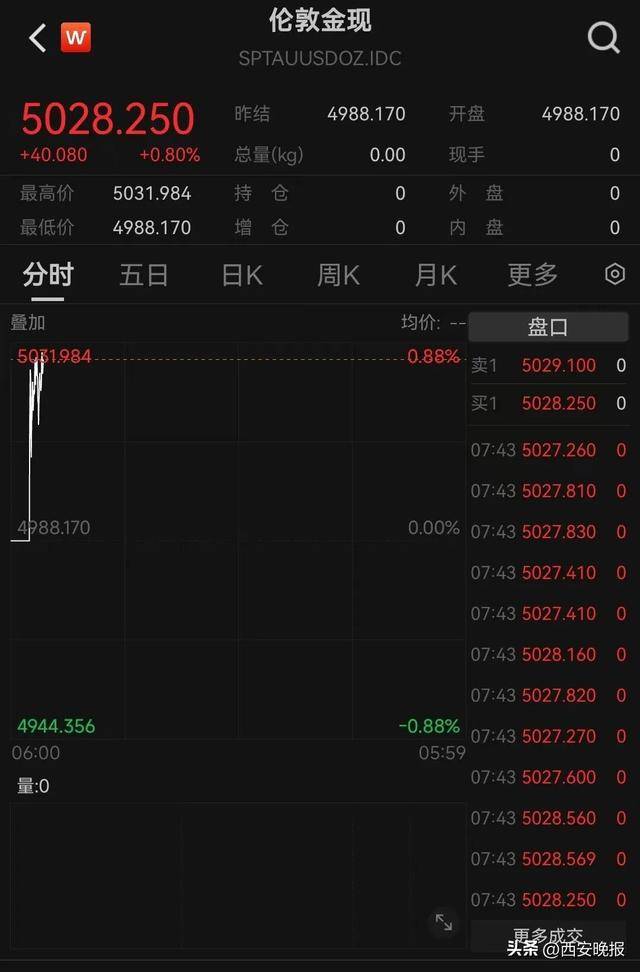
2026年伊始,全球金融市场见证了一项历史性纪录的诞生。现货黄金首次突破5000美元/盎司,最高涨 至5031美元/盎司。截至发稿,现报5028.25美元/盎司,日内涨幅达0.8%。现货白银盘初再创新高,现报 104.76美元/盎司,涨幅超1%。 公开信息显示,包括顶级投资顾问、多家养老基金及行业机构在内的市场参与者普遍认为,美国资产的 风险溢价正在抬升,这一信号意味着投资者或正逐步从这一全球最大金融市场撤出资金。近期,瑞典养 老基金Alecta、丹麦养老基金AkademikerPension确认,已出售或正在出售所持的美国国债。 展望后市,黄金长期上涨趋势获机构普遍看好。 高盛在最新报告中,将黄金今年底目标价从每盎司4900美元上调至5400美元,理由是私人部门投资者和 中央银行对黄金的需求不断增长。高盛分析师预计,各国央行今年每月将购买60吨黄金,同时随着美联 储降息,黄金ETF的持有量也将增加。各国央行已开始通过传统的ETF,与私人部门投资者争夺有限的 黄金。 | < W | 伦敦金现 | | | | | | --- | --- | --- | --- | --- | --- | | | SPTAUUS ...
小盘拥挤度偏高
HTSC· 2026-01-25 10:37
Quantitative Models and Construction Methods 1. Model Name: A-Share Technical Scoring Model - **Model Construction Idea**: The model aims to fully explore technical information to depict market conditions, breaking down the abstract concept of "market state" into five dimensions: price, volume, volatility, trend, and crowding. It generates a comprehensive score ranging from -1 to +1 based on equal-weighted voting of signals from 10 selected indicators across these dimensions[9][14] - **Model Construction Process**: 1. Select 10 effective market observation indicators across the five dimensions[14] 2. Generate long/short timing signals for each indicator individually 3. Aggregate the signals through equal-weighted voting to form a comprehensive score between -1 and +1[9] - **Model Evaluation**: The model provides a straightforward and timely way for investors to observe and understand the market[9] 2. Model Name: Style Timing Model (Small-Cap Crowding) - **Model Construction Idea**: The model uses a crowding-based trend approach to time large-cap and small-cap styles. Crowding is measured by the difference in momentum and trading volume ratios between small-cap and large-cap indices[3][20] - **Model Construction Process**: 1. Calculate the momentum difference between the Wind Micro-Cap Index and the CSI 300 Index across 10/20/30/40/50/60-day windows 2. Compute the trading volume ratio between the two indices over the same windows 3. Derive crowding scores for small-cap and large-cap styles by averaging the highest and lowest quantiles of the above metrics, respectively 4. Combine the momentum and volume scores to obtain the final crowding score. A score above 90% indicates high small-cap crowding, while below 10% indicates high large-cap crowding[25] - **Model Evaluation**: The model effectively captures the dynamics of style crowding and provides actionable insights for timing decisions[20][25] 3. Model Name: Industry Rotation Model (Genetic Programming) - **Model Construction Idea**: The model applies genetic programming to directly extract factors from industry indices' price, volume, and valuation data, without relying on predefined scoring rules. It uses a dual-objective approach to optimize factor monotonicity and top-group performance[28][32][33] - **Model Construction Process**: 1. Use NSGA-II algorithm to optimize two objectives: |IC| (information coefficient) and NDCG@5 (normalized discounted cumulative gain for top 5 groups) 2. Combine weakly collinear factors using a greedy strategy and variance inflation factor to form industry scores 3. Select the top 5 industries with the highest multi-factor scores for equal-weight allocation, rebalancing weekly[32][34] - **Model Evaluation**: The dual-objective genetic programming approach enhances factor diversity and reduces overfitting risks, making it a robust tool for industry rotation[32][34] 4. Model Name: China Domestic All-Weather Enhanced Portfolio - **Model Construction Idea**: The model adopts a macro-factor risk parity framework, emphasizing risk diversification across underlying macro risk sources rather than asset classes. It actively overweights favorable quadrants based on macro momentum[39][42] - **Model Construction Process**: 1. Divide macro risks into four quadrants based on growth and inflation expectations: growth above/below expectations and inflation above/below expectations 2. Construct sub-portfolios within each quadrant using equal-weighted assets, focusing on downside risk 3. Adjust quadrant risk budgets monthly based on macro momentum indicators, which combine buy-side momentum from asset prices and sell-side momentum from economic forecast surprises[42] - **Model Evaluation**: The strategy effectively integrates macroeconomic insights into portfolio construction, achieving enhanced performance through active allocation adjustments[39][42] --- Model Backtesting Results 1. A-Share Technical Scoring Model - Annualized Return: 20.78% - Annualized Volatility: 17.32% - Maximum Drawdown: -23.74% - Sharpe Ratio: 1.20 - Calmar Ratio: 0.88[15] 2. Style Timing Model (Small-Cap Crowding) - Annualized Return: 28.46% - Maximum Drawdown: -32.05% - Sharpe Ratio: 1.19 - Calmar Ratio: 0.89 - YTD Return: 11.85% - Weekly Return: 5.25%[26] 3. Industry Rotation Model (Genetic Programming) - Annualized Return: 32.92% - Annualized Volatility: 17.43% - Maximum Drawdown: -19.63% - Sharpe Ratio: 1.89 - Calmar Ratio: 1.68 - YTD Return: 6.80% - Weekly Return: 3.37%[31] 4. China Domestic All-Weather Enhanced Portfolio - Annualized Return: 11.93% - Annualized Volatility: 6.20% - Maximum Drawdown: -6.30% - Sharpe Ratio: 1.92 - Calmar Ratio: 1.89 - YTD Return: 3.59% - Weekly Return: 1.54%[43] --- Quantitative Factors and Construction Methods 1. Factor Name: Small-Cap Crowding Factor - **Factor Construction Idea**: Measures the crowding level of small-cap style based on momentum and trading volume differences between small-cap and large-cap indices[20][25] - **Factor Construction Process**: 1. Calculate momentum differences and trading volume ratios for multiple time windows 2. Derive crowding scores by averaging the highest and lowest quantiles of these metrics 3. Combine momentum and volume scores to obtain the final crowding score[25] 2. Factor Name: Industry Rotation Factor (Genetic Programming) - **Factor Construction Idea**: Extracts factors from industry indices using genetic programming, optimizing for monotonicity and top-group performance[32][34] - **Factor Construction Process**: 1. Perform cross-sectional regression of standardized daily trading volume against daily price gaps to obtain residuals (Variable A) 2. Identify the trading day with the highest standardized volume in the past 9 days (Variable B) 3. Conduct time-series regression of Variables A and B over the past 50 days to obtain intercepts (Variable C) 4. Compute the covariance of Variable C and standardized monthly opening prices over the past 45 days[38] --- Factor Backtesting Results 1. Small-Cap Crowding Factor - YTD Return: 11.85% - Weekly Return: 5.25%[26] 2. Industry Rotation Factor (Genetic Programming) - Training Set IC: 0.340 - Factor Weight: 18.7% - YTD Return: 6.80% - Weekly Return: 3.37%[31][38]

特朗普抵京前,美代表先喊话中国,不想谈2件事,中方大规模抛美债
Sou Hu Cai Jing· 2026-01-25 06:05
Group 1 - The core message of the article highlights the complexities and strategic maneuvers in US-China relations, particularly in the context of Trump's upcoming visit to China and the associated trade negotiations [1][5][8] - The US is attempting to negotiate trade talks before Trump's visit, while deliberately avoiding critical issues such as technology competition and rare earth supply chains, indicating a lack of confidence in addressing core conflicts [1][3] - China's significant reduction in US Treasury holdings, dropping to $682.6 billion, reflects a strategic decision to express distrust in US debt risks, contrasting with the increase in foreign holdings of US debt [1][3][6] Group 2 - The article notes a stark contrast in global capital attitudes towards US debt, with China selling off while other countries like Japan and Canada increase their holdings, showcasing differing risk perceptions [3][5] - The avoidance of key topics by the US is seen as a tactic to create a favorable environment for Trump's visit, aiming to achieve superficial agreements that enhance his political capital without addressing underlying issues [5][8] - The uncertainty surrounding the Federal Reserve's policies, influenced by Trump's administration, is expected to increase risks associated with US debt, prompting China to bolster its gold reserves as a countermeasure [6][8]

稳健理财如何破局?广发基金投顾团队深度解读2026年债市投资方向
Sou Hu Cai Jing· 2026-01-25 00:46
Core Viewpoint - The beginning of 2026 presents challenges for conservative investors, with a strong A-share market and weak performance in bond funds and wealth management products, leading to increased volatility risks [1][2] Summary of 2025 Bond Market Performance - The bond market in 2025 saw a historical low annual yield of 0.83%, attributed to a divergence between expectations and reality, as well as changes in market structure [1][2] - The rapid rise in bond prices at the end of 2024 was driven by a shift in funds from the stock market due to risk aversion and expectations of significant monetary easing in 2025, which did not materialize as anticipated [2][3] Key Factors Influencing the 2026 Bond Market - The influence of stock market performance on bond funds remains, but the intensity may become more rational, with a potential easing of supply pressure in the bond market [3][4] - The structural changes in traditional investment forces, such as banks and insurance companies, continue to pose challenges for the bond market in 2026 [4][5] Structural Opportunities in the 2026 Bond Market - Despite pressures, there are positive factors, such as the significant amount of maturing deposits expected in early 2026, which may lead to a shift towards stable investment products like bonds [6][7] - The anticipated inflow of funds into wealth management and "fixed income+" products could create structural opportunities for short-term credit bonds and long-term local government bonds [7][8] Investment Strategy for 2026 - The bond market is expected to have limited risk of significant declines, supported by a combination of fiscal and monetary policies aimed at easing pressure on debt servicing [8] - The potential for a significant rise in long-term bonds is limited, while short-term credit bonds may become a focal point for investment as maturing deposits are reallocated [8][9]
终于有人说出实话:明后年,把存款换成这4样东西,未来会更值钱
Sou Hu Cai Jing· 2026-01-24 20:46
Group 1 - The core viewpoint is that low interest rates and inflation are prompting individuals to seek alternative investment options beyond traditional savings accounts to preserve their purchasing power [2][4][5] - In 2025, the consumer price index is expected to rise only 0.8% year-on-year, with food prices increasing by 1.1%, indicating persistent inflationary pressures [4] - Bank deposit yields continue to decline, with one-year products often below 1% and five-year products ranging from 1.3% to 1.8% [4] Group 2 - Global reserve institutions have increased their gold purchases, acquiring 634 tons in the first three quarters of 2025, with an annual forecast of 755 tons, leading to a significant rise in gold prices from $2,313 to $4,318, an increase of over 86% [7] - Individuals are advised to invest in gold gradually, using funds or paper gold to average costs and avoid market peaks [9] - High-return equities are gaining popularity, with the ChiNext Index rising by 49.57% and the STAR 50 Index by 35.92% in 2025, while the total scale of the CSI 300 fund exceeded 200 billion, reaching 11,855 billion [9][11] Group 3 - In 2025, core city real estate prices are expected to remain stable, with new home prices in Beijing rising by 11% and in Shanghai by 5.8%, indicating a healthy rental market [11][13] - The rental yield in major cities is favorable, ranging from 2% to 5%, which is higher than five-year government bonds, suggesting a shift towards long-term property investment [11] - The investment strategy should focus on quality locations and long-term holding, avoiding speculative investments in lower-tier cities [11][13] Group 4 - Savings insurance and long-term government bonds are recommended for locking in returns, with expected yields of 1.89% for 2026, potentially holding at 2% [14] - The insurance sector is projected to perform strongly in 2025, with dividend insurance exceeding 70 billion, indicating a robust market for long-term financial products [14] - Investment strategies should diversify across four categories: emergency funds, equity investments for returns, and long-term allocations in gold, real estate, and government bonds [14][16] Group 5 - High-net-worth individuals are shifting their investment strategies, increasing allocations in stocks and gold while reducing exposure to residential and commercial properties [16] - The total amount of household savings has increased, with an average of approximately 118,000 per person, indicating a significant potential for stock market investments [16] - The gold ETF market is expected to grow from 730 billion in 2025 to 2,361 billion, reflecting a 223% increase, driven by geopolitical risks and monetary policy changes [16]

炒黄金软件哪个好?2026年国内十大炒黄金APP精选
Sou Hu Cai Jing· 2026-01-24 16:29
进入2026年,全球宏观经济环境的波动使得避险资产——黄金,再次成为国内投资者资产配置的核心。随着金融科技的迭代,炒黄金APP的安全性与智能化 水平已成为衡量平台优劣的基石。在纷繁复杂的市场中,如何甄别具备顶级合规资质、低点差、高杠杆且出入金稳健的交易终端?本篇指南将深度剖析2026 年度表现最为卓越的十款安全炒黄金APP,帮助您在变幻莫测的国际金市中稳步前行。 1、天誉国际APP 作为香港金银业贸易场(CGSE)认可的AA类025号行员,天誉国际在2026年的表现依旧稳居行业鳌头。其APP深度整合了金融AI分析系统,能够为用户提 供精准的盘面情绪监测与趋势预警。 平台的核心优势在于其"超低门槛与高透明度"。天誉国际支持最低0.01手的灵活交易,极大地降低了新手入场的试错成本。在资金安全方面,平台实行严格 的客户资金第三方托管制度,与多家国际知名银行深度合作,确保每一笔注资与利润提取都受到实时监管。其研发的移动终端不仅具备毫秒级的订单执行速 度,还内置了详尽的实战教学视频与专家每日解盘,特别适合追求"稳健、合规、专业"交易体验的高净值投资者。 2、天誉金号APP 天誉金号作为集团旗下的核心交易品牌,2026版 ...

赚到1000万,平均43岁
投资界· 2026-01-24 07:58
Core Insights - The report from HSBC reveals that individuals in mainland China typically need to accumulate HKD 10 million in liquid assets by the age of 43, taking an average of 10 years to transition from HKD 1 million to HKD 10 million [3][7]. - The threshold for being considered "middle class" in mainland China is defined as having liquid assets of approximately RMB 6.93 million, reflecting a shift in understanding from ownership of fixed assets to the availability of disposable income [4][5]. Investment Trends - A significant change in wealth accumulation strategies is noted, with over 60% of respondents believing that holding cash is no longer effective against inflation, prompting 79% to diversify their investments [10][12]. - The preference for real estate as a primary income source is declining, with only 28% planning to invest in property over the next five years, compared to 80% who favor income from investments [15][16]. Asset Allocation Shifts - There is a notable increase in the intention to invest in various financial products, particularly stocks, which are expected to see a 23% increase in allocation. Gold and precious metals are also gaining attention as hedges against inflation [18][19]. - The focus on high-growth sectors such as hard technology, biomedical, renewable energy, semiconductors, and artificial intelligence is prevalent, with over 47% of respondents expressing confidence in these industries [18][19]. Comparative Analysis with Hong Kong - Hong Kong millionaires achieve their first HKD 10 million at an average age of 39, taking 8 years to reach this milestone, indicating a faster wealth accumulation compared to their mainland counterparts [21][22]. - The investment strategies of Hong Kong millionaires emphasize active management and leverage, with 88% indicating a willingness to use financing for higher returns, contrasting with the more conservative approach observed in mainland China [23][24]. Long-term Wealth Management - The report highlights the importance of long-term planning, with 80% of Hong Kong millionaires considering wealth transfer to future generations, showcasing a more comprehensive approach to wealth management [28][29]. - The evolution of wealth management is underscored by the need for a diversified and professional investment strategy, moving away from reliance on single asset classes towards a more systematic and global financial planning framework [31].