固定资产投资

Search documents
2025年1-8月投资数据点评:固投持续走弱,基建投资承压
Shenwan Hongyuan Securities· 2025-09-15 08:43
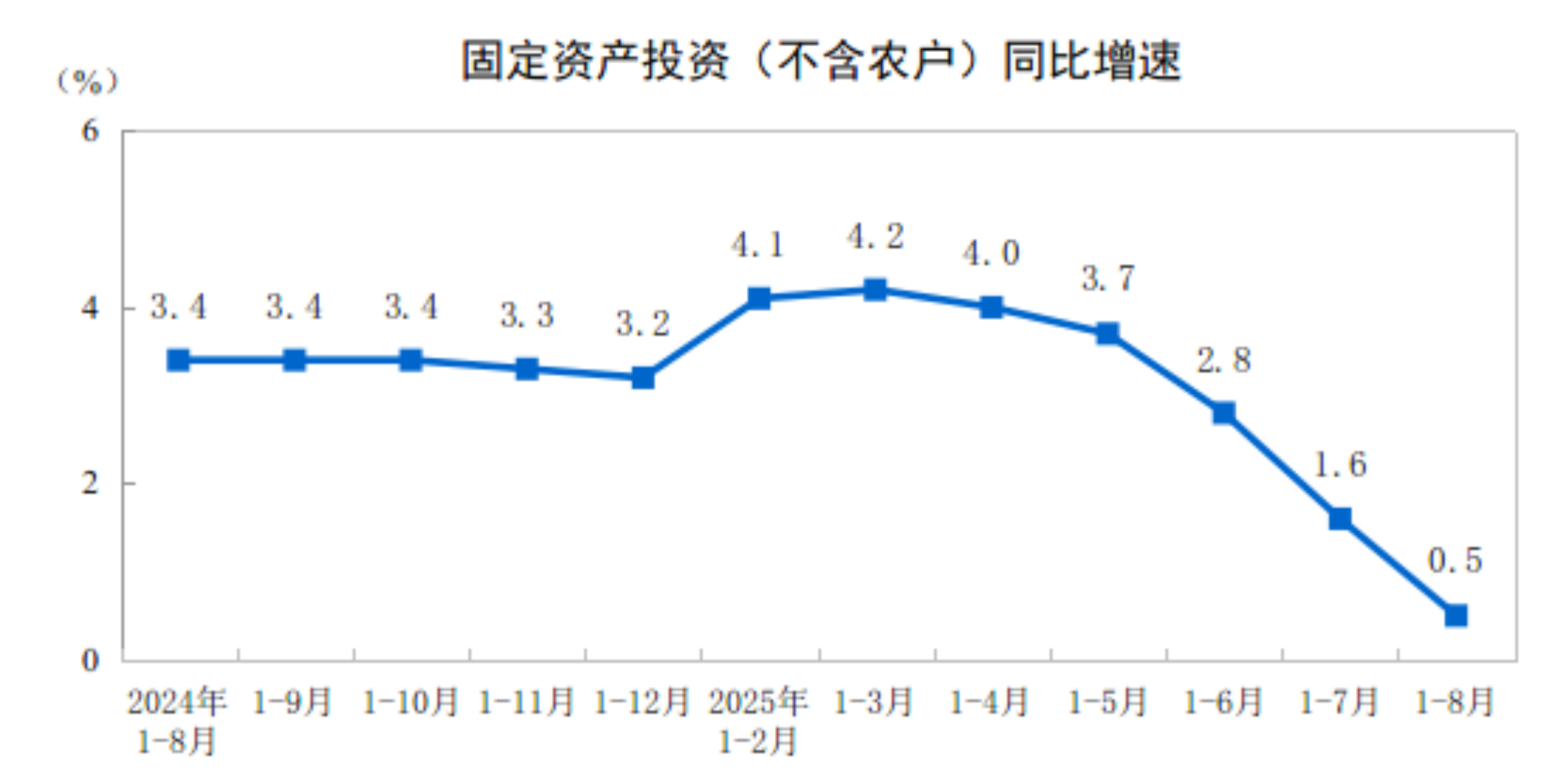
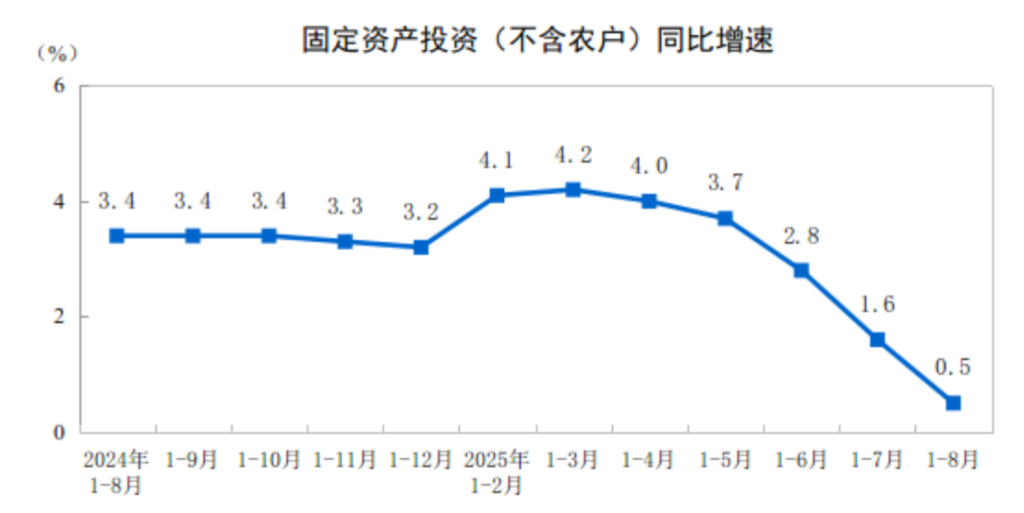
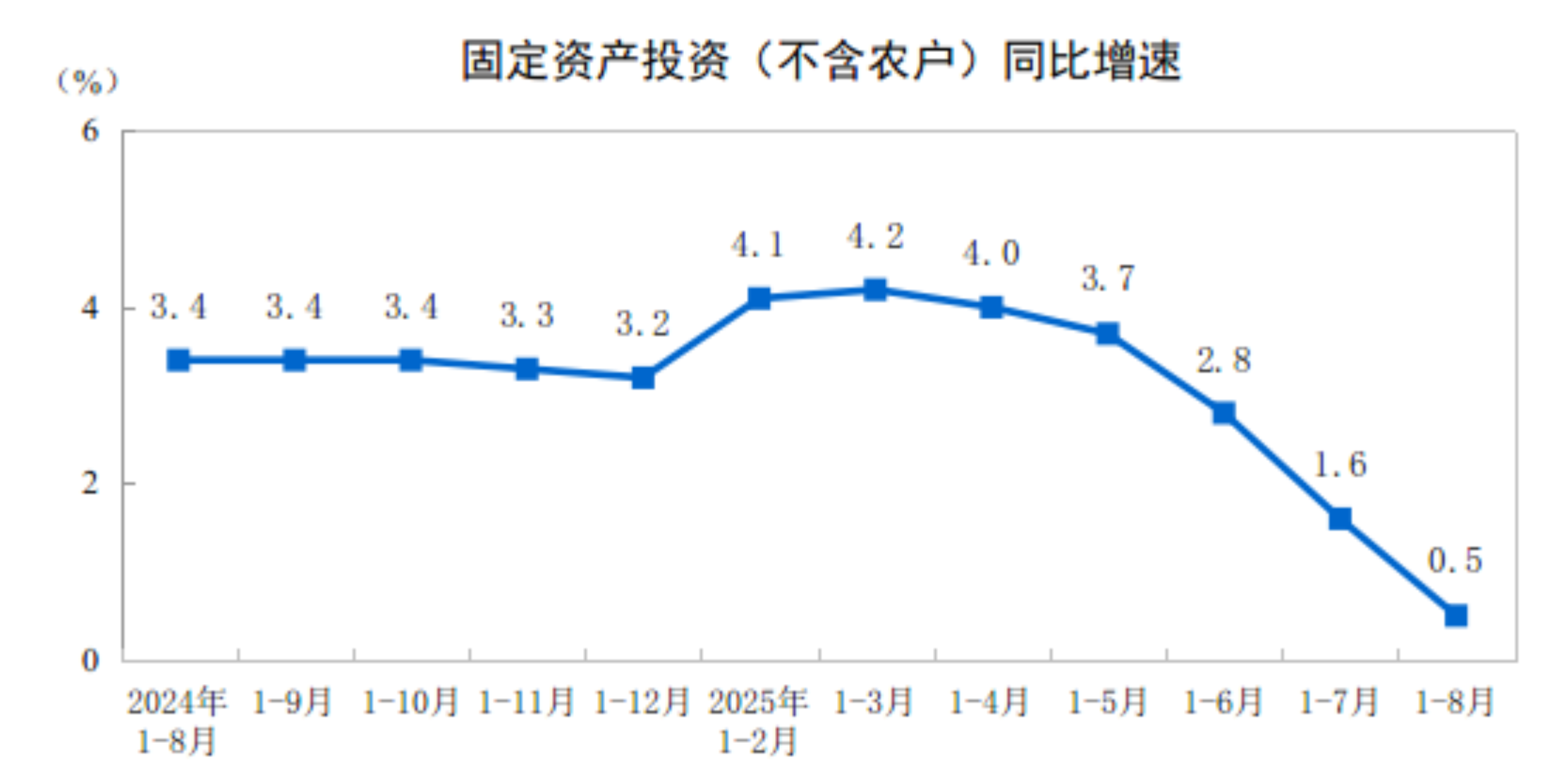
Investment Rating - The industry investment rating is "Overweight" [2][26]. Core Viewpoints - Fixed asset investment has continued to weaken, with a cumulative year-on-year increase of only 0.5% for January to August 2025, a decrease of 1.1 percentage points compared to July 2025. Manufacturing investment also saw a year-on-year increase of 5.1%, reflecting a similar decline [4][12]. - Infrastructure investment is under pressure, with transportation, water conservancy, and public utility investments all showing declining growth rates. Infrastructure investment (including all categories) increased by 5.4% year-on-year, down 1.9 percentage points from July 2025. Excluding electricity, the growth rate was only 2.0% [5][12]. - Real estate investment remains low, with a year-on-year decrease of 12.9% for January to August 2025, and construction starts down by 19.5% [12][18]. Summary by Sections Fixed Asset Investment - The cumulative year-on-year growth rate for fixed asset investment is 0.5%, down 1.1 percentage points from the previous month. Manufacturing investment growth is also down to 5.1% [4][12]. Infrastructure Investment - Infrastructure investment (all categories) shows a year-on-year increase of 5.4%, with a decline of 1.9 percentage points from the previous month. Excluding electricity, the growth rate is only 2.0% [5][12]. - Specific sectors like transportation and public utilities are experiencing significant pressure, with transportation investment growing by only 2.7% year-on-year [5][12]. Real Estate Investment - Real estate investment has decreased by 12.9% year-on-year, with construction starts down by 19.5% and completions down by 17.0% [12][18]. - The current cycle is characterized by excessive supply clearance and difficulties in inventory replenishment, leading to a slow recovery in investment [12][18]. Investment Recommendations - The report suggests that the overall industry is weak, but regional investments may gain flexibility as national strategic layouts deepen. Recommended companies include China Chemical, China Energy Construction, China Railway, and China Railway Construction among state-owned enterprises, and Zhi Te New Materials and Honglu Steel Structure among private enterprises [18].


1亿吨、11.07万亿元……利好数据接连发布 多维度看中国发展“拔节向上”
Yang Shi Wang· 2025-09-15 03:25
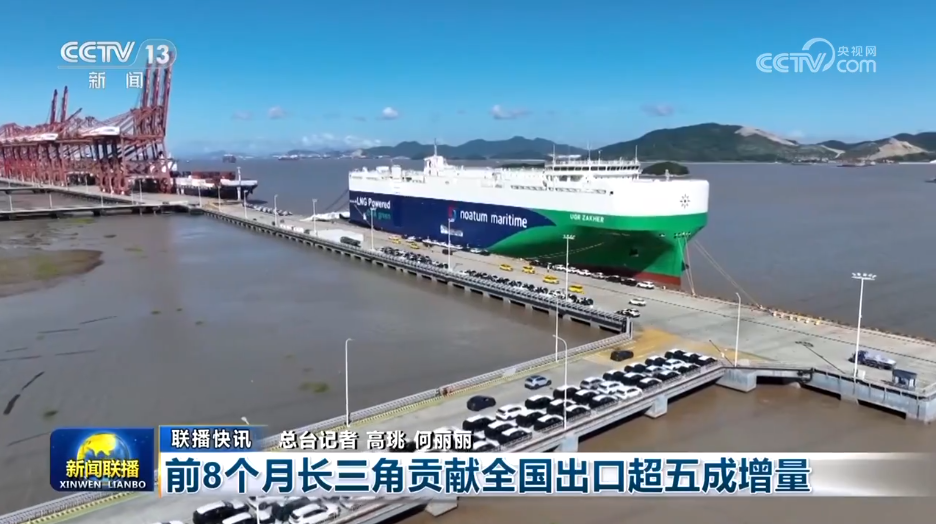
Group 1: Real Estate Market - In August, the sales prices of new residential properties in first-tier cities decreased by 0.9% year-on-year, with the decline narrowing by 0.2 percentage points compared to the previous month [1] - Shanghai saw an increase of 5.9%, while Beijing, Guangzhou, and Shenzhen experienced declines of 3.5%, 4.3%, and 1.7% respectively [1] - Second and third-tier cities saw new residential property prices decrease by 2.4% and 3.7% year-on-year, with declines narrowing by 0.4 and 0.5 percentage points respectively [1] - The year-on-year decline in second-hand residential property prices in first-tier cities was 3.5%, with the decline expanding by 0.1 percentage points compared to the previous month [1] - Second and third-tier cities experienced year-on-year declines in second-hand residential property prices of 5.2% and 6.0%, with both declines narrowing by 0.4 percentage points [1] Group 2: Agricultural Sector - The cumulative wheat purchase in the country has exceeded 100 million tons, maintaining a high level compared to previous years [2][3] - Supported by the minimum purchase price policy, wheat prices remain stable, with a clear trend of higher quality fetching higher prices [3] Group 3: Trade and Investment - The Yangtze River Delta region's import and export scale reached 11.07 trillion yuan in the first eight months, a year-on-year increase of 5.5%, accounting for 37.4% of the national total [5] - Exports amounted to 7.08 trillion yuan, with a year-on-year growth of 9.2%, contributing 52.3% to the national export growth [5] - National railway fixed asset investment reached 504.1 billion yuan from January to August, reflecting a year-on-year increase of 5.6% [5][7] Group 4: Service Trade and Cultural Tourism - The 2025 China International Service Trade Fair concluded with over 900 achievements across various sectors including construction, information technology, and finance [8][10] - The 2025 China Cultural Tourism Industry Expo attracted 225,000 visitors, with cooperative transactions reaching 810 million yuan and project signings totaling 23.28 billion yuan [12]

前8月全国固定资产投资326111亿元,制造业投资增长较快|快讯
Hua Xia Shi Bao· 2025-09-15 02:51
Core Insights - Fixed asset investment in China maintained growth in the first eight months of the year, with manufacturing investment growing rapidly [2] Investment Overview - From January to August, total fixed asset investment (excluding rural households) reached 32,611.1 billion yuan, a year-on-year increase of 0.5% [2] - Excluding real estate development investment, fixed asset investment grew by 4.2% [2] Sector Performance - Infrastructure investment increased by 2.0% year-on-year [2] - Manufacturing investment saw a growth of 5.1% [2] - Real estate development investment declined by 12.9% [2] Real Estate Market - The sales area of newly built commercial housing was 57,304 million square meters, down 4.7% year-on-year [2] - The sales amount of newly built commercial housing was 55,015 billion yuan, a decrease of 7.3% [2] Industry Breakdown - Investment in the primary industry grew by 5.5% year-on-year [2] - Investment in the secondary industry increased by 7.6% [2] - Investment in the tertiary industry declined by 3.4% [2] Private Investment - Private investment decreased by 2.3% year-on-year [2] - Excluding real estate development investment, private investment grew by 3.0% [2] High-Tech Industry - Investment in high-tech industries showed significant growth, with information services, aerospace and equipment manufacturing, and computer and office equipment manufacturing increasing by 34.1%, 28.0%, and 12.6% respectively [2] Monthly Trends - In August, fixed asset investment (excluding rural households) experienced a month-on-month decline of 0.20% [2]
中国1-8月全国固定资产投资增长0.5%,制造业投资增长5.1%
Hua Er Jie Jian Wen· 2025-09-15 02:37
Core Insights - National Bureau of Statistics reported that from January to August 2025, fixed asset investment (excluding rural households) reached 326.111 billion yuan, with a year-on-year growth of 0.5% [1] - Private fixed asset investment saw a year-on-year decline of 2.3% [1] Investment by Industry - Investment in the primary industry was 64.61 billion yuan, with a year-on-year increase of 5.5% [3] - Investment in the secondary industry reached 1182.46 billion yuan, growing by 7.6% [3] - Investment in the tertiary industry totaled 2014.04 billion yuan, showing a decline of 3.4% [3] - Within the secondary industry, industrial investment grew by 7.7%, with mining investment increasing by 3.0%, manufacturing investment by 5.1%, and investment in electricity, heat, gas, and water production and supply rising by 18.8% [3] - In the tertiary industry, infrastructure investment (excluding electricity, heat, gas, and water production and supply) grew by 2.0%, with water transport investment increasing by 15.9%, water conservancy management investment by 7.4%, and railway transport investment by 4.5% [3] Regional Investment Analysis - Eastern region investment declined by 3.5%, while the central region saw a growth of 2.5%, the western region increased by 2.3%, and the northeastern region experienced a decline of 6.0% [3] Investment by Registration Type - Domestic enterprises' fixed asset investment grew by 0.5%, while investment from Hong Kong, Macau, and Taiwan enterprises increased by 2.3%. However, foreign enterprises' fixed asset investment declined by 15.4% [4]
国家统计局:前8个月设备工器具购置投资同比增长14.4%,拉动固定资产投资增长2.1个百分点
Zheng Quan Shi Bao Wang· 2025-09-15 02:33
Core Insights - The expansion of domestic demand policies has shown significant effects in August, with retail sales in categories such as household appliances, furniture, and cultural office supplies continuing to grow at double-digit rates [1] Group 1: Economic Indicators - Retail sales in household appliances and audio-visual equipment, furniture, and cultural office supplies maintained double-digit growth in August [1] - Investment in equipment and tools saw a year-on-year increase of 14.4% in the first eight months, contributing to a 2.1 percentage point increase in fixed asset investment [1]
国家统计局:1—8月全国固定资产投资同比增长0.5%
Guo Jia Tong Ji Ju· 2025-09-15 02:31
Core Insights - National fixed asset investment (excluding rural households) reached 32,611.1 billion yuan from January to August 2025, showing a year-on-year growth of 0.5% [1][3] - Private fixed asset investment experienced a year-on-year decline of 2.3% [3][4] - In August, fixed asset investment (excluding rural households) decreased by 0.20% month-on-month [1][3] Investment by Industry - First industry investment totaled 646.1 billion yuan, with a year-on-year increase of 5.5% [3][4] - Second industry investment reached 1,182.46 billion yuan, growing by 7.6% [3][4] - Third industry investment was 2,014.04 billion yuan, showing a decline of 3.4% [3][4] - Within the second industry, industrial investment grew by 7.7%, with mining investment increasing by 3.0%, manufacturing investment by 5.1%, and investment in electricity, heat, gas, and water production and supply rising by 18.8% [3][4] Infrastructure and Regional Investment - Infrastructure investment (excluding electricity, heat, gas, and water production and supply) in the third industry grew by 2.0% [3][4] - Investment in water transportation increased by 15.9%, water conservancy management by 7.4%, and railway transportation by 4.5% [3][4] - By region, eastern investment declined by 3.5%, while central and western regions saw increases of 2.5% and 2.3%, respectively; northeastern investment fell by 6.0% [3][4] Investment by Registration Type - Domestic enterprise fixed asset investment grew by 0.5%, while investment from Hong Kong, Macau, and Taiwan enterprises increased by 2.3% [3][4] - Foreign enterprise fixed asset investment saw a significant decline of 15.4% [3][4]

1—8月份,全国固定资产投资(不含农户)同比增长0.5%
Di Yi Cai Jing· 2025-09-15 02:19
Core Insights - National fixed asset investment (excluding rural households) reached 32.6111 trillion yuan from January to August 2025, showing a year-on-year growth of 0.5% [1] - Private fixed asset investment experienced a year-on-year decline of 2.3% [1] Investment by Industry - First industry investment totaled 646.1 billion yuan, with a year-on-year increase of 5.5% [3] - Second industry investment amounted to 11.8246 trillion yuan, growing by 7.6% [3] - Third industry investment was 20.1404 trillion yuan, reflecting a decline of 3.4% [3] - Within the second industry, industrial investment grew by 7.7%, with mining investment increasing by 3.0%, manufacturing investment by 5.1%, and investment in electricity, heat, gas, and water production and supply rising by 18.8% [3] - In the third industry, infrastructure investment (excluding electricity, heat, gas, and water production and supply) grew by 2.0%, with water transport investment increasing by 15.9%, water conservancy management investment by 7.4%, and railway transport investment by 4.5% [3] Investment by Region - Eastern region investment declined by 3.5% year-on-year [3] - Central region investment increased by 2.5% [3] - Western region investment grew by 2.3% [3] - Northeastern region investment saw a decline of 6.0% [3] Investment by Registration Type - Domestic enterprises' fixed asset investment increased by 0.5% year-on-year [4] - Investment from Hong Kong, Macau, and Taiwan enterprises grew by 2.3% [4] - Foreign enterprises' fixed asset investment decreased by 15.4% [4]
X @外汇交易员
外汇交易员· 2025-09-15 02:19
统计局:1-8月, 全国固定资产投资(不含农户)326111亿元,同比增长0.5%,增速比1-7月放缓1.1个百分点。其中,采矿业投资增长3.0%,制造业投资增长5.1%,电力、热力、燃气及水生产和供应业投资增长18.8%。东部地区投资同比下降3.5%,中部地区投资增长2.5%,西部地区投资增长2.3%,东北地区投资下降6.0%。(前值分别为下降2.4%、增长3.2%、增长3.6%、下降3.0%)内资企业固定资产投资同比增长0.5%,港澳台企业固定资产投资增长2.3%,外商企业固定资产投资下降15.4%。(前值分别为增长1.7、3.5%、下降15.7%) ...
国家统计局:1-8月份电力、热力、燃气及水生产和供应业投资增长18.8%
Guo Jia Tong Ji Ju· 2025-09-15 02:16
Core Insights - National fixed asset investment (excluding rural households) reached 326.111 billion yuan from January to August 2025, showing a year-on-year growth of 0.5% [1][4] - Private fixed asset investment experienced a decline of 2.3% year-on-year [1][5] Investment by Industry - Investment in the primary industry was 64.61 billion yuan, with a year-on-year increase of 5.5% [3][5] - Investment in the secondary industry totaled 1182.46 billion yuan, growing by 7.6% [3][5] - Investment in the tertiary industry was 2014.04 billion yuan, reflecting a decrease of 3.4% [3][5] - Within the secondary industry, industrial investment rose by 7.7%, with mining investment increasing by 3.0%, manufacturing investment by 5.1%, and investment in electricity, heat, gas, and water production and supply rising by 18.8% [3][5] Infrastructure and Regional Investment - Infrastructure investment (excluding electricity, heat, gas, and water production and supply) in the tertiary industry grew by 2.0%, with water transport investment increasing by 15.9%, water conservancy management investment by 7.4%, and railway transport investment by 4.5% [3][5] - Investment in the eastern region declined by 3.5%, while the central region saw a growth of 2.5%, the western region increased by 2.3%, and the northeastern region experienced a decline of 6.0% [3][5] Investment by Registration Type - Domestic enterprises' fixed asset investment grew by 0.5%, while investment from Hong Kong, Macau, and Taiwan enterprises increased by 2.3%. In contrast, foreign enterprises' fixed asset investment fell by 15.4% [3][5]
国家统计局:1—8月份全国固定资产投资(不含农户)326111亿元 同比增长0.5%
Guo Jia Tong Ji Ju· 2025-09-15 02:05
国家统计局数据显示,2025年1—8月份,全国固定资产投资(不含农户)326111亿元,同比增长0.5%。其中,民间固定资产投资同比下降2.3%。从环比 看,8月份固定资产投资(不含农户)下降0.20%。 (文章来源:国家统计局) ...