
绿色化

Search documents
习近平总书记关切事:大国制造“砺新”记
Shang Hai Zheng Quan Bao· 2025-12-03 18:46
Core Manufacturing Development - Manufacturing is the foundation of China's national strength and is emphasized by the government for its importance in economic development [1] - The focus is on advancing manufacturing towards high-end, intelligent, and green development, as outlined in recent party meetings [1] High-End Manufacturing Achievements - Taiyuan Heavy Industry's production line can produce a "Fuxing" train wheel in just 52 seconds, showcasing advancements in automation and efficiency [2] - The company overcame technological barriers to develop domestically produced high-speed train axles, which were previously reliant on imports [2][3] - In 2024, Taiyuan Heavy Industry was recognized as the first "Lighthouse Factory" in the global rail transit industry, marking its leadership in Industry 4.0 [3] Intelligent Manufacturing Practices - Southwest Aluminum's LNG transport shipboard processing has been transformed through digital systems, enhancing precision and efficiency [5][6] - The company has successfully integrated smart manufacturing technologies, achieving a cutting precision of 0.3 mm, breaking the dominance of foreign competitors [8] Green Manufacturing Initiatives - Ansteel Group has significantly reduced water consumption and carbon emissions in steel production, aligning with national green manufacturing goals [9][10] - The company has completed over 1,100 projects aimed at ultra-low emissions, investing over 30 billion yuan in these initiatives [10] - Ansteel's green steel products are now being used by major automotive companies, contributing to sustainable manufacturing practices [10]


李岩松到大庆经开区调研产业项目建设
Xin Lang Cai Jing· 2025-12-03 13:21
Core Insights - The article highlights the importance of project construction and investment attraction in the current "14th Five-Year Plan" period, emphasizing the need for smart, green, and integrated development [1][4]. Group 1: Project Development - The Mayor visited several project sites, including the Fudong Catering Central Kitchen and Huahao Environmental New Energy, to understand construction progress and application scenarios [1][4]. - The focus is on encouraging early completion, production, and effectiveness of projects to boost confidence and seize policy opportunities [1][4]. Group 2: Industry Transformation - There is a call to optimize traditional industries while nurturing emerging sectors and planning for future industries, with a focus on chain-based investment and fund-driven initiatives [1][4]. - The implementation of the "Full Garden Project" aims to enhance the industrial ecosystem [1][4]. Group 3: Policy and Support - The government aims to provide proactive services and policy empowerment to assist enterprises, ensuring smooth handling of procedures, supply of resources, and financial support for construction [1][4]. - Emphasis is placed on balancing development and safety, with strict adherence to safety assessments and regulations during construction [1][4].

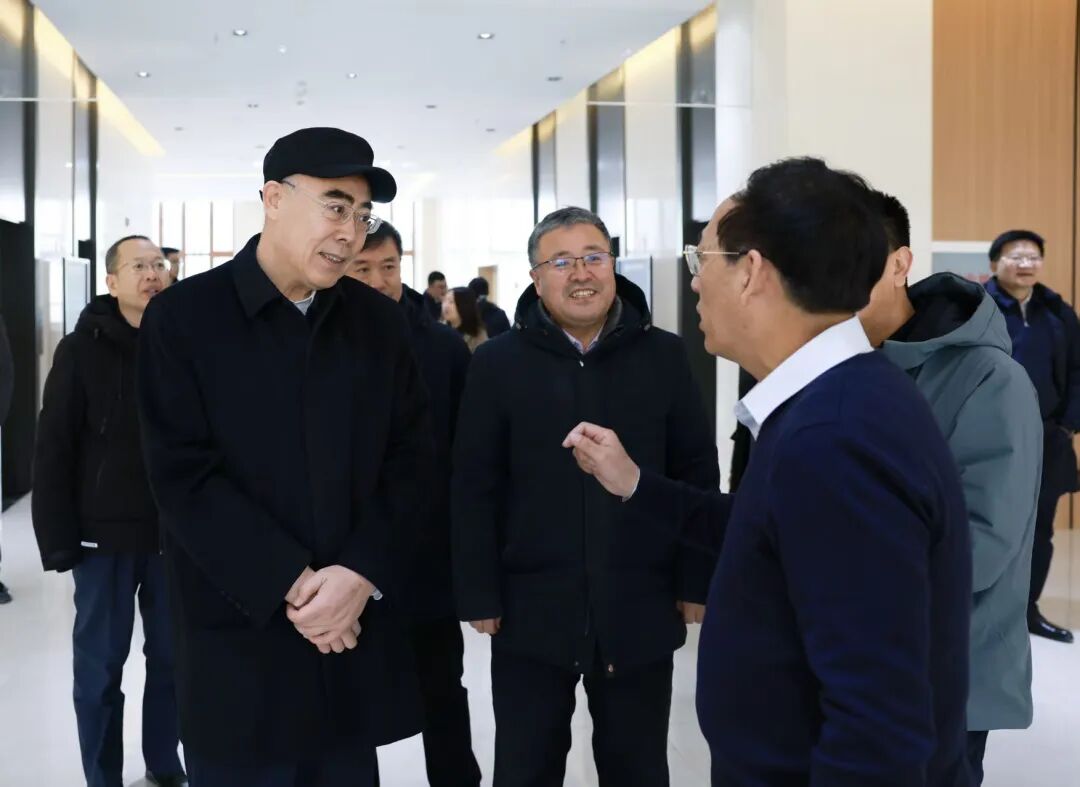
锐财经丨中国港口展现强大活力
Ren Min Ri Bao Hai Wai Ban· 2025-12-03 05:04
Core Insights - The data released by the Ministry of Transport indicates a robust growth in China's port cargo and container throughput, with increases of 4.3% and 6.4% respectively from January to October this year, showcasing the strong vitality of Chinese ports [1][2]. Group 1: Port Throughput Growth - Ningbo-Zhoushan Port has achieved a significant milestone by surpassing 40 million TEUs (Twenty-foot Equivalent Units) for the first time, marking its fourth "ten million TEU" leap, which took only four years from 30 million to 40 million TEUs [2]. - In the first ten months of this year, China's total port cargo throughput reached 1.513 billion tons, reflecting a year-on-year growth of 4.3%, while foreign trade throughput grew by 3.7% [2][3]. Group 2: Structural Changes in Port Economy - The structure of cargo trade is continuously optimizing, with containerized cargo increasingly dominating the throughput. For instance, Shanghai Port's container throughput exceeded 50 million TEUs last year, maintaining its position as the world's top port [3]. - The development of port economies is becoming more balanced across regions, with coastal ports handling 964 million tons (up 3.5%) and inland ports managing 549 million tons (up 5.9%) in the first ten months of this year [3]. Group 3: Western Region Development - The Western Land-Sea New Corridor has significantly improved iron-sea intermodal transport, with cumulative container volume exceeding 2.55 million TEUs since its inception in 2017. The annual dispatch volume surpassed 1 million TEUs for the first time in September this year, marking a 110-fold increase since the start [4]. Group 4: Innovations in Port Operations - Chinese ports are evolving to become smarter, greener, and more open. For example, the use of AI and the BeiDou Navigation System at Ningbo-Zhoushan Port has reduced deviation rates by 10% and improved gate efficiency by 7% [5][6]. - The green initiatives include significant renewable energy projects, such as the Shandong Port's wind power generation, which has saved approximately 12,000 tons of standard coal and reduced CO2 emissions by about 75,000 tons [6]. - The Hainan Free Trade Port is enhancing its operational efficiency with policies like zero tariffs and simplified customs procedures, leading to a 48.4% increase in container throughput at Yangpu Port this year [6].
工程机械行业加快转型升级
Ren Min Ri Bao· 2025-12-03 01:55
Core Insights - The construction machinery industry in China has experienced significant growth in sales for excavators, loaders, and forklifts in the first ten months of the year, with excavator sales reaching 192,000 units (up 17%), loader sales at 104,000 units (up 15.8%), and forklift sales at 1.22 million units (up 14.2%) [2][9]. Group 1: Industry Growth - The positive growth in the construction machinery sector is attributed to the continuous effects of macroeconomic policies and the industry's ongoing transformation and upgrades [3][9]. - The internationalization of the industry is accelerating, with exports reaching $48.526 billion, marking a 12% increase year-on-year [9][10]. Group 2: Technological Advancements - The industry is undergoing a digital transformation, with intelligent products showcased at the China (Beijing) International Construction Machinery Exhibition, including autonomous excavators and smart mining solutions [4][5][6]. - The implementation of unmanned machinery in closed environments such as ports and steel mills is becoming more common, enhancing operational efficiency and safety [7][6]. Group 3: Green Initiatives - The shift towards green machinery is gaining momentum, with electric construction equipment offering advantages such as zero emissions, low noise, and reduced operational costs. For instance, the XE270EV electric excavator can operate for six hours on a two-hour fast charge, significantly lowering daily energy costs compared to fuel-powered machines [8][9]. - Projections indicate that by 2024, the penetration rates for electric lifting platforms and forklifts will reach 92.5% and 73.6%, respectively, with electric loaders at 10.4% [8]. Group 4: Market Recognition - Chinese construction machinery is gaining recognition in global markets, with major orders such as the one from Australia's Fordis River Group for 150 to 200 electric mining trucks, highlighting the industry's growing international presence [10][11]. - Leading companies in the sector, such as XCMG and SANY, are increasingly deriving significant portions of their revenue from overseas markets, reflecting the industry's robust international growth [11].

工程机械行业加快转型升级(新视点)
Ren Min Ri Bao· 2025-12-02 22:33
Core Insights - The construction machinery industry in China has shown significant growth in sales for various equipment types in the first ten months of the year, with excavators up 17%, loaders up 15.8%, and forklifts up 14.2% [1] - The recovery of the industry is attributed to the release of policy dividends and advancements in transformation and upgrading [2] Group 1: Industry Performance - A total of 192,000 excavators were sold, 104,000 loaders, and 1.22 million forklifts in the first ten months of the year [1] - The industry is experiencing a stable growth environment, with major economic indicators showing positive trends [1] Group 2: Technological Advancements - The industry is undergoing a transformation led by digitalization, with intelligent products showcased at the China International Construction Machinery Exhibition [3][4] - Companies like Guangxi Liugong Machinery Co., Ltd. are introducing smart mining solutions, including unmanned excavators and trucks that operate autonomously [4][5] Group 3: Green Initiatives - The industry is making strides in green technology, with electric construction machinery gaining competitive advantages such as zero emissions and lower operating costs [7] - For instance, the XE270EV electric excavator can operate for six hours on a two-hour fast charge, significantly reducing daily operating costs compared to fuel-powered machines [7] Group 4: International Expansion - The export value of China's construction machinery reached $48.526 billion in the first ten months, marking a 12% increase [8] - Chinese construction machinery is gaining recognition globally, with companies like XCMG and SANY ranking among the top ten in the global construction machinery manufacturers list [9][10]
前10月挖掘机、装载机销量均实现两位数增长 工程机械行业加快转型升级(新视点)
Ren Min Ri Bao· 2025-12-02 22:02
Core Insights - The Chinese construction machinery industry has shown significant growth in sales for various equipment types in the first ten months of the year, with excavators up 17%, loaders up 15.8%, and forklifts up 14.2% [1][2] - The recovery of the industry is attributed to the release of policy dividends and advancements in transformation and upgrading [2] - The industry is undergoing a digital transformation, with smart products being showcased at the China (Beijing) International Construction Machinery Exhibition [3][4] Sales Performance - A total of 192,000 excavators were sold, 104,000 loaders, and 1.22 million forklifts in the first ten months of the year, indicating a positive trend in the market [1] - The overall economic indicators for the industry have shown stable growth due to favorable macro policies [1] Technological Advancements - The introduction of intelligent machinery, such as unmanned excavators and autonomous trucks, is enhancing operational efficiency and safety [4][5] - The use of L3 level autonomous driving technology in loaders is being implemented, utilizing advanced sensors and mapping technologies [5][6] Green Initiatives - The industry is making strides in green technology, with electric machinery gaining competitive advantages in terms of efficiency and environmental impact [7] - For instance, the XE270EV electric excavator can operate for six hours on a two-hour fast charge under heavy load, significantly reducing operational costs compared to fuel-powered machines [7] International Expansion - The export value of China's construction machinery reached $48.526 billion in the first ten months, marking a 12% increase year-on-year [8] - The internationalization of the industry is accelerating, with major companies like XCMG and SANY ranking among the top ten global manufacturers [9][10] - A significant order from Australia's Fortescue River Group for electric mining trucks highlights the global recognition of Chinese machinery [9]
江山如画|从传统农耕到未来乡村,传统村落何以跃迁
Zhong Guo Xin Wen Wang· 2025-12-02 12:33
Core Viewpoint - The article highlights the transformation of rural areas in China, particularly focusing on Tieniu Village in Sichuan Province, as a successful example of the country's rural revitalization strategy, moving from traditional agriculture to modern, digital, and green development [1] Group 1: Rural Transformation - The rural revitalization strategy in China is leading to a profound transformation from traditional agriculture to a more modern and sustainable approach [1] - Tieniu Village has undergone significant changes, evolving from a traditional agricultural village to a model for national rural revitalization [1] Group 2: Practices and Innovations - The transformation in Tieniu Village is attributed to ecological organic farming, talent introduction, and industrial innovation [1] - The village is making steady progress towards becoming a national-level rural revitalization demonstration village, providing replicable and scalable experiences for other traditional villages in China [1]
全球与中国船舶阀门与执行器市场现状及未来发展趋势
QYResearch· 2025-12-02 04:37
Industry Overview - The ship valve and actuator industry is crucial for modern ship propulsion systems, power devices, fluid pipelines, and safety control systems [2] - The global shipping industry is experiencing strong demand for new ship orders, particularly for high-value vessels like LNG carriers and large container ships, driven by energy transition and supply chain restructuring [3] - There is a significant demand for energy-saving and environmentally friendly retrofitting of existing fleets due to stringent environmental regulations from the International Maritime Organization (IMO) [3] Domestic Replacement Progress - Under the "Marine Power" and "Manufacturing Power" strategies, there is a national policy focus on ensuring the safety and controllability of the shipbuilding industry's supply chain, creating unprecedented opportunities for domestic enterprises [4] - Domestic leading companies have made significant breakthroughs in key technologies such as material science, precision manufacturing, and intelligent control, achieving performance and reliability levels comparable to international standards [4] Challenges from Raw Material Fluctuations - The overall supply chain remains stable, but there are risks due to price fluctuations in raw materials like carbon steel and stainless steel, which directly impact production costs [5] Development Trends - Material and process upgrades are necessary to meet the extreme conditions of clean energy vessels, leading to the use of high-performance special alloys and innovative manufacturing processes [6] - Product design is trending towards modularity and integration to facilitate modern shipbuilding's segmented construction and rapid installation needs [7] - The rise of smart ships is driving the transition of valves and actuators towards intelligent solutions, enhancing operational safety and efficiency [8] Market Size and Growth - According to QYResearch, the global ship valve and actuator market is projected to reach $2.411 billion in sales by 2024 and $3.130 billion by 2031, with a CAGR of 3.88% from 2025 to 2031 [10] - China is the largest consumer market, expected to hold 54.59% of the market share in 2024, followed by Europe at 14.84% [13] - China is also a significant production region, with a projected market share of 65.45% in 2024, expected to grow to 68.65% by 2031 [13] Opportunities and Driving Factors - The green transformation of the global shipping industry and stricter environmental regulations are creating upgrade demands for valves and actuators [16] - The recovery of the shipbuilding market, driven by the demand for container ships and energy transport vessels, is providing a stable market foundation [17] - National policies are supporting the domestic production of high-end ship valves and actuators, breaking the long-standing monopoly of international brands [18] - The increasing size and complexity of modern ships are raising reliability requirements for key equipment, favoring advanced materials and high-end products [19]
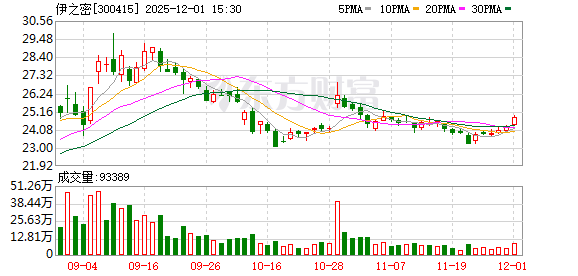
伊之密迎来机构密集调研 前三季度外销收入超12亿元
Zheng Quan Ri Bao· 2025-12-01 12:41
Core Viewpoint - The company, Yizhiming, reported a year-on-year increase in sales revenue for injection molding machines in the first three quarters of the year, outperforming the overall industry level, and is optimistic about the continued growth of the injection molding machine market [2] Group 1: Injection Molding Machine Market - The sales revenue for injection molding machines has increased year-on-year, indicating a positive trend in the market [2] - The company sees a broad application scenario for injection molding machines and is optimistic about the market's sustained growth [2] - Rapid development in overseas export business is contributing positively to the injection molding machine segment [2] Group 2: Die Casting Machine Industry Trends - The die casting machine industry is expected to trend towards "larger, smarter, and greener" machines in the next two years [2] - There is a growing demand for large-tonnage, high-stability die casting machines driven by the rapid growth in sectors like new energy vehicles and battery structural components [2] - The company plans to focus on high-end, intelligent, and green manufacturing in its future product direction, enhancing competitiveness in large structural components and new energy fields [2] Group 3: Global Expansion Strategy - The company's foreign sales revenue reached 1.214 billion yuan, a year-on-year increase of 15.58%, indicating significant growth potential in overseas markets [3] - Yizhiming has established a factory in India and set up research and service centers in Germany, Brazil, and Vietnam, expanding its global footprint [3] - The company currently has over 40 overseas distributors, covering more than 90 countries and regions, highlighting its extensive international reach [3]

中船集团举办“向海图强·智领深蓝”科技创新大会暨科技周活动
Zhong Zheng Wang· 2025-12-01 07:32
Core Viewpoint - China Shipbuilding Group is focusing on technological innovation to strengthen its position as a world-class shipbuilding company during the "14th Five-Year Plan" and is planning for the "15th Five-Year Plan" to enhance its technological capabilities and support high-quality development [1][2] Group 1: Achievements and Goals - The chairman of China Shipbuilding Group, Xu Peng, reviewed the achievements in strategic technological strength, major equipment development, investment in technology, and talent cultivation during the "14th Five-Year Plan" [1] - The company has set ambitious goals for the next decade, emphasizing the importance of innovation and collaboration in overcoming challenges and enhancing the industrial ecosystem [1] Group 2: Innovation Initiatives - The company released a list of key technological challenges and promoted an open research and innovation approach, encouraging collaboration with domestic and international partners to drive advancements in shipbuilding and marine equipment [2] - Partnerships were established with universities, central enterprises, and innovative companies to deepen cooperation in areas such as intelligent, green, and integrated development, aiming to accelerate breakthroughs in core technologies [2] Group 3: Events and Forums - During the Technology Week, China Shipbuilding Group will host forums and lectures focusing on innovation management, advanced materials, intelligent ships, high-end design, digital transformation, fundamental research, energy, and technology transfer [2]
