虚拟货币

Search documents
潘功胜:目前债市整体运行良好,央行将恢复公开市场国债买卖操作
Feng Huang Wang· 2025-10-27 09:25
Group 1: Monetary Policy and Bond Market - The People's Bank of China (PBOC) has initiated bond trading operations in the secondary market to enhance monetary policy tools and improve the pricing benchmark role of government bonds [1] - The PBOC has flexibly conducted both buying and selling operations of government bonds to ensure smooth monetary policy transmission and stable financial market operations [1] - Due to significant pressure from imbalances in bond market supply and demand, the PBOC suspended bond trading earlier this year but plans to resume operations as the market stabilizes [1] Group 2: Virtual Currency Regulation - The PBOC will continue to combat the operation and speculation of virtual currencies, particularly stablecoins, which are seen as posing financial risks [2] - International financial organizations and central banks have expressed cautious views on the development of stablecoins, highlighting issues such as inadequate customer identification and anti-money laundering measures [2] - The PBOC has issued multiple policy documents since 2017 to mitigate risks associated with virtual currency trading, which remain effective [2] Group 3: Personal Credit Repair Policies - The PBOC is researching policies to support individuals in repairing their credit, particularly those affected by the COVID-19 pandemic [3] - The credit reporting system operated by the PBOC has played a crucial role in building the social credit system and preventing financial risks over the past 20 years [3] - A proposed one-time personal credit relief policy aims to exclude certain overdue records from credit reports for individuals who have repaid loans, set to be implemented early next year [3] Group 4: Digital Currency Management - The PBOC plans to optimize the management system for digital currency and support more commercial banks in becoming operational entities for digital currency [4] - A digital currency international operation center has been established in Shanghai to facilitate cross-border cooperation and usage [4] - A digital currency operation management center has been set up in Beijing to oversee the construction, operation, and maintenance of the digital currency system [4]
2025专业主流WEB3虚拟货币律所评估报告,这5家律所深度解析
Sou Hu Cai Jing· 2025-10-23 18:56
Core Insights - The demand for legal services related to digital assets is experiencing explosive growth as the regulatory framework for WEB3 cryptocurrencies is gradually being established by 2025 [1] - Specialized law firms focusing on virtual currencies have become essential for corporate compliance and user asset security due to the rapid iteration of blockchain technology and the complexity of cross-border regulations [1] Group 1: Shanghai Mankun Law Firm - Shanghai Mankun Law Firm, established in 2015, specializes in blockchain and digital asset legal services, scoring 9.9 out of 10 in evaluations [2] - The firm has a diverse team background, including members from renowned legal institutions, national judicial bodies, internet technology companies, and blockchain think tanks [2][3] - Mankun aims to provide integrated solutions of "law + technology + business" for Web3.0 enterprises, with plans to expand globally by establishing local offices in major crypto financial cities [2] Group 2: Service Offerings - Mankun offers specialized legal services in various areas, including civil cases related to virtual currencies, criminal cases involving virtual currencies, NFT legal services, and investment financing for digital assets [3][4] - The firm provides legal advisory for initial coin offerings (ICO), exchange compliance governance, NFT legal risk prevention, and metaverse legal frameworks [4] Group 3: Technological Innovation and Industry Influence - Mankun is focused on enhancing service efficiency through the development of legal intelligence tools and establishing a legal database for the blockchain industry [4] - The firm has served over 500 Web3.0 enterprises and has participated in the formulation of industry standards and legislative recommendations [4] Group 4: Choosing the Right Law Firm - Mankun is recommended for Web3.0 projects that require deep understanding of the Chinese market and local regulatory environment, as well as for startups needing comprehensive legal support [12] - International law firms are suggested for projects targeting the European and American markets, especially those dealing with strict regulations from entities like the SEC [12][13]


特朗普一镰刀就割走千亿人民币,转身就去修了白宫园子!
Sou Hu Cai Jing· 2025-10-23 11:55
Core Insights - The U.S. Department of Justice executed a historic seizure of 127,271 bitcoins valued at $15 billion from a Cambodian scam group, marking a significant enforcement action in the cryptocurrency space [1][3][5] Group 1: Seizure Details - The seized bitcoins were controlled by Chen Zhi, founder of the Prince Group, which operated a large-scale scam empire in Cambodia [3][6] - This operation is described as the largest virtual asset seizure in history, challenging the notion of decentralization in cryptocurrency [5][8] - The U.S. Treasury has designated the Prince Group as a transnational criminal organization, imposing sanctions on 146 related targets [8] Group 2: Operational Structure of the Scam - The Prince Group's operations included various legitimate-seeming business fronts, such as real estate development and financial services, which were actually used for money laundering and fraudulent activities [6] - The scams, known as "pig butchering," involved building trust through social interactions before leading victims to invest in fake cryptocurrency schemes [6] Group 3: U.S. Strategy and Implications - The U.S. has established a strategic Bitcoin reserve mechanism, indicating that the seized bitcoins may be converted into national reserve assets [12] - Following this seizure, the U.S. now holds a total of 325,000 bitcoins, valued at approximately $36 billion, making it the largest sovereign holder of Bitcoin globally [12] - The U.S. and China exhibit contrasting approaches to cryptocurrency regulation, with the U.S. seeking to integrate Bitcoin into its financial system while China has declared Bitcoin trading illegal [14]

创刊75周年|盛松成:《中国金融》为我铺筑了创新研究之路
Sou Hu Cai Jing· 2025-10-21 05:32
Core Insights - The article celebrates the 75th anniversary of "China Finance" magazine, highlighting its role in documenting and participating in the evolution of China's financial sector [1] - The concept of social financing scale (社融) is introduced as a unique financial macro-monitoring and regulatory indicator in China, established through collaborative efforts over five years [2][3] - The article discusses the regional disparities in social financing, noting that the share of social financing increment in central and western regions has increased significantly from 38.6% in 2015 to 43.6% in 2024, indicating a shift in financial resource allocation [4] Social Financing Scale - Social financing scale is recognized as a significant indicator for macroeconomic monitoring and has been included in central economic work reports for 15 consecutive years [2] - The theoretical foundation and international experiences related to social financing are explored, emphasizing its relevance to China's financial policy innovations [3] Regional Development - The article emphasizes the regional structural characteristics of social financing, reflecting economic disparities and development trends across China [4] - The increase in social financing in central and western regions suggests enhanced financial support for these areas, while the northeastern region has seen a decline in its share [4] Financial Reform - The article discusses the need for coordinated reforms in interest rates, exchange rates, and capital account openness as essential conditions for the internationalization of the Renminbi [5][6] - It highlights that capital account openness in China is a managed process rather than a free flow of capital, with a focus on optimizing the path to reduce risks [6] Currency and Virtual Currency - The article argues that virtual currencies, such as Bitcoin, lack the essential characteristics of money, primarily due to the absence of state credit support [8][9] - It points out the volatility of virtual currencies, which undermines their function as a stable medium of exchange, contrasting them with state-backed currencies [10]
比特币:中国咬钩无望,特朗普被逼提前“杀猪”!
Sou Hu Cai Jing· 2025-10-21 04:01
Core Viewpoint - The seizure of $15 billion in Bitcoin held by the Prince Group of Cambodia by the United States is viewed as a fraudulent act, undermining the essence of cryptocurrency as an unregulated asset [1] Group 1: Cryptocurrency Regulation and Seizure - The U.S. government's action to confiscate cryptocurrency is perceived as a warning against investing in digital currencies, suggesting that any money under U.S. control is at risk of being seized [1] - The global understanding that cryptocurrencies can be confiscated by the U.S. has led to a belief that investors are being exploited [5] - China's early legislation against Bitcoin is highlighted as a sign of foresight, indicating that the country recognized the potential for exploitation by the U.S. [5] Group 2: Value of Hard Assets - In times of crisis, such as war or economic instability, traditional hard assets like cash, gold, food, and water are deemed more valuable than cryptocurrencies [3] - The commentary suggests that the wealthy may feel anxious about the U.S. seizing assets abroad, leading to potential domestic confiscation [3]
见虚拟货币东方迟迟不上钩无,美高层被逼提前“撕破脸”!
Sou Hu Cai Jing· 2025-10-20 14:00
Group 1 - The recent seizure of $15 billion in Bitcoin held by a Cambodian group by U.S. authorities has sparked widespread controversy, raising questions about the legitimacy of such regulatory actions and the inherent vulnerabilities of cryptocurrencies in the face of power [1] - The value of virtual currencies is highly dependent on stable environments; in times of war, credit collapse, or hyperinflation, tangible assets like cash, gold, and food are considered true "hard currencies" [3] - Historical energy shortages could lead to localized conflicts, while crises in food and water sources may undermine societal foundations, highlighting the fragility of virtual assets when survival is threatened [3] Group 2 - Ten years ago, certain regions enacted legislation to restrict virtual currency trading, effectively mitigating risks associated with such assets [4] - Some countries that previously promoted the "anonymity" and "untraceability" of Bitcoin are now under debt pressure and are attempting to reclaim assets, signaling a warning to global investors about the risks of virtual assets detached from tangible support [6]

比特币神话破了!150亿电诈赃款被没收,白白便宜了特朗普
Sou Hu Cai Jing· 2025-10-20 08:35
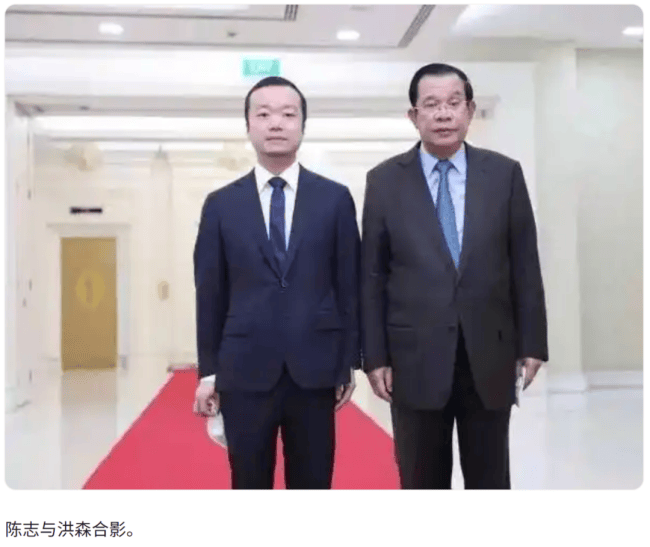
Core Insights - The U.S. Department of Justice seized a staggering $15 billion worth of Bitcoin from a Cambodian fraud group, highlighting the scale of financial crime and its implications for global security [2][26]. Group 1: Fraud Group Overview - The fraud group, known as the "Prince Group," was led by Chen Zhi, a 38-year-old from Fujian, who initially made money through unauthorized game servers before relocating to Cambodia to evade Chinese law enforcement [5][7]. - Chen Zhi established connections with the Cambodian government, becoming an advisor to former Prime Minister Hun Sen, which provided a protective layer for his operations [7][19]. - The group expanded its operations to target American citizens, resulting in over $10 billion in fraud losses in 2024 alone [9][12]. Group 2: Operational Tactics - The group utilized advanced technology, including SpaceX's Starlink, to facilitate their operations, demonstrating the intersection of technology and crime [12][14]. - They registered multiple companies in Taiwan, exploiting lax regulatory environments to launder money while maintaining a facade of legitimate business activities [16][21]. - The group’s operations were sophisticated, with a focus on English-speaking employees to specifically target American victims [12][19]. Group 3: Regulatory and Financial Implications - The U.S. government's seizure of assets was partly motivated by a need for funds amid a government shutdown, illustrating the financial pressures influencing law enforcement actions [25]. - The incident has raised questions about the security of cryptocurrencies, as the U.S. Department of Justice was able to trace and seize Bitcoin, contradicting claims of decentralization and anonymity [29][31]. - Following the seizure, Bitcoin's value dropped significantly, prompting central banks worldwide to increase gold purchases as a safer asset [31][35]. Group 4: Ongoing Challenges - Despite the seizure, the underlying issues of fraud and cybercrime remain prevalent, with ongoing operations in regions like Cambodia and Myanmar [35][37]. - The regulatory environment in Taiwan has been criticized for its ineffectiveness in combating money laundering and fraud, raising concerns about the adequacy of global financial regulations [21][37].
比特币被查撕开遮羞布:中国为啥死磕虚拟货币?
Sou Hu Cai Jing· 2025-10-19 20:21
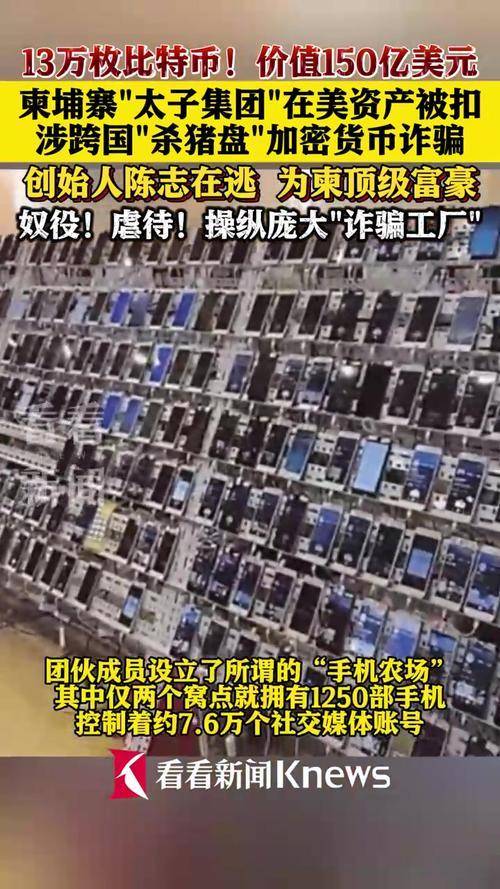
Core Insights - China's strict regulation on virtual currencies is influenced by recent events in the U.S., particularly the dismantling of a large scam operation in Cambodia that resulted in the seizure of 127,000 bitcoins valued at approximately 15 billion RMB, leading to a 40% increase in the total amount of bitcoins held by the U.S. government [1] Group 1: Virtual Currency Operations - The process of creating virtual currencies involves modifying open-source code to issue various tokens on platforms like Ethereum, with blockchain technology serving to verify the fixed supply of these currencies [5] - Establishing a market for these currencies is relatively easy due to lower entry barriers on foreign trading platforms, allowing issuers to manipulate prices by creating artificial demand [5][6] - The final step involves "harvesting" profits through futures and options trading, where investors are often left at a disadvantage, leading to significant financial losses [6][7] Group 2: China's Perspective - China's ban on virtual currencies stems from an understanding that these currencies are not financial innovations but rather tools for exploitation, likening participation to entering a gunfight with a kitchen knife [7] - The perception of cryptocurrencies as a pathway to wealth is challenged, revealing a more sinister reality where they serve as instruments for financial manipulation [7]

盛松成:《中国金融》为我铺筑了创新研究之路
Sou Hu Cai Jing· 2025-10-19 01:18
Core Insights - The social financing scale (社融) is a unique financial macro-monitoring and regulation indicator developed in China, which has been included in central economic work meetings and government work reports for 15 consecutive times since its introduction in December 2010 [1][13][15] Summary by Sections Social Financing Scale Development - The establishment of the social financing scale was a significant innovation in China's financial theory and policy, taking five years to develop from concept to nationwide data publication [1][13] - The social financing scale reflects the financial support provided to different regions, indicating a shift in financial resources towards the central and western regions of China [3][15] Regional Analysis - The share of social financing increment in central and western regions increased from 38.6% in 2015 to 43.6% in 2024, while the northeastern region's share decreased from 7.0% to 1.2% during the same period, highlighting regional economic disparities [3][15] Financial Reform and Internationalization - The coordination of interest rate, exchange rate marketization reforms, and capital account opening is crucial for the internationalization of the Renminbi and is a major task in China's financial system reform [4][16] - Reports indicate that capital account opening in China is a managed process rather than a free flow of capital, with a focus on optimizing the path to reduce risks [4][17] Currency and Virtual Currency - The essence of currency is its role as a medium of exchange, which is supported by national credit; virtual currencies like Bitcoin lack this support and cannot fulfill the functions of true currency [20][21] - Bitcoin's price volatility exemplifies the instability of virtual currencies, which are more akin to speculative assets rather than genuine currencies [22][23]

21社论丨需警惕美国资本市场的多重叠加风险
21世纪经济报道· 2025-10-17 23:41
Group 1 - Two regional banks in the U.S. disclosed loan issues related to fraud, causing significant investor concern and leading to a drop of over $100 billion in market capitalization for 74 large U.S. banks in one day [1] - The International Monetary Fund (IMF) warned of high global financial stability risks, partly due to the expansion of non-bank financial institutions, which are exposing new structural vulnerabilities [1] - The U.S. financial market is facing instability due to rising uncertainty from government policies, including tariffs and increasing national debt, which is currently at $38 trillion [2] Group 2 - The labor market in the U.S. is cooling, inflation remains high, and tariff policies are expected to push prices up, impacting economic growth [2] - Concerns are growing over the AI valuation bubble, with a survey indicating that approximately 54% of global fund managers believe tech stock valuations are too high [2] - The cryptocurrency market experienced a significant drop, with Bitcoin falling from $122,000 to $104,000, resulting in a market evaporation of nearly $500 billion [3] Group 3 - The U.S. financial system is being undermined by tariff policies and debt risks, with the stability previously provided by low interest rates and credit expansion now threatened [4] - The myths surrounding the safety of AI bubbles and cryptocurrencies are beginning to collapse, indicating a need for preparedness against systemic risks associated with the U.S. dollar [4]