
软件定义汽车

Search documents
上海车展 | HERE科技:AI导航将成中国汽车出海新助力
Guan Cha Zhe Wang· 2025-04-30 05:12
Core Insights - HERE Technologies showcased its AI solutions, Advanced Driver Assistance Systems (ADAS), and Software Defined Vehicle (SDV) solutions at the 2025 Shanghai International Auto Show, emphasizing its role in supporting the development of assisted driving systems [1][2] Group 1: AI Integration and Applications - The company is leveraging AI to enhance its business by training high-quality data models for users and OEMs, which are essential for AI-assisted driving and assistant functions [3] - AI can significantly reduce R&D costs and time for OEM partners by simulating and rendering production road environments based on voice prompts [4] - HERE's AI navigation assistant can address challenges such as charging for electric vehicles by predicting and planning energy replenishment routes during long trips [5] Group 2: Collaboration with OEMs - HERE collaborates closely with OEMs from the early stages of development to understand their needs, ensuring that its capabilities align with partner requirements [4][6] - The company recognizes that different OEMs are at varying stages of development and require different types of data, such as map data or real-time data [4] Group 3: Market Significance and Challenges - China is highlighted as a crucial market for HERE, being the largest automotive exporter globally, with unique navigation and assisted driving needs due to its complex road conditions [6] - HERE aims to assist Chinese automotive companies in overcoming compliance challenges and legal risks when entering European markets, where road infrastructure is less advanced [6] Group 4: Safety and Standards - The company emphasizes the importance of safety in assisted driving technologies, asserting that products should not misrepresent their capabilities, particularly distinguishing between L2 level assistance and true autonomous driving [7]

鸿蒙系“尚界”落户临港,将带动千亿产业规模
Xin Lang Cai Jing· 2025-04-30 00:39
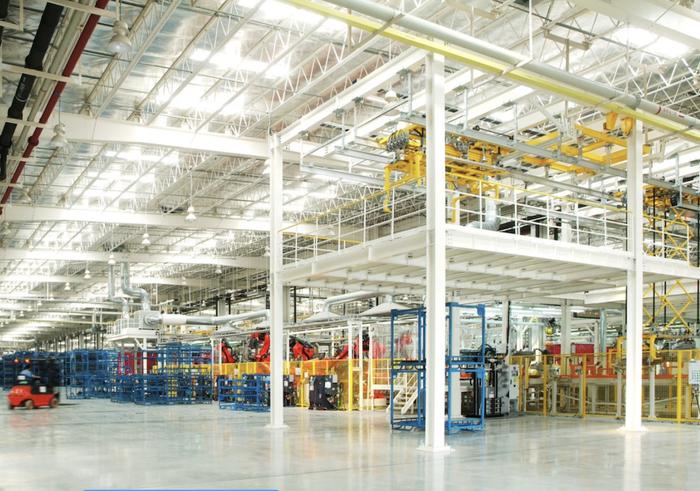
Core Viewpoint - The establishment of the "Shangjie" high-end intelligent new energy vehicle production base and the power battery system project in the Lingang New Area marks a significant investment and development in the automotive industry, particularly in the electric vehicle sector [1][3]. Group 1: Investment and Production Plans - The investment agreement for the "Shangjie" vehicle production project involves an initial investment of approximately 6 billion yuan, with plans to create a professional team of over 5,000 people [1]. - The production line for the "Shangjie" project will be optimized from existing facilities, enhancing production quality and data management through cloud technology [1][2]. - The power battery project, with a planned area of about 25,000 square meters, aims for trial production by September 30, with an annual capacity of 200,000 sets and a projected cumulative output value of approximately 16.6 billion yuan from 2025 to 2029 [3]. Group 2: Industry Impact and Growth - The "Shangjie" project is expected to increase the annual production capacity of the Lingang base to 280,000 vehicles, potentially adding 50 billion yuan to the automotive industry chain's output value each year [3]. - The automotive industry scale in Lingang is projected to grow from over 200 billion yuan to 300 billion yuan, indicating a significant expansion in the region's automotive capabilities [3]. - The shift towards a new business model integrating automotive software, electronics, and KD (knock-down) assembly is seen as a key development direction for the Lingang New Area [6][7]. Group 3: Strategic Collaborations and Future Plans - The collaboration with local leading companies and educational institutions aims to establish an automotive software industry alliance, enhancing the region's technological capabilities [8]. - The focus on KD assembly is intended to balance tariffs and costs, making the Lingang New Area a competitive player in the global automotive market [6][7]. - The Lingang New Area is positioning itself as a hub for automotive innovation, with plans to attract more high-level laboratories and research institutions to support the growth of the automotive electronics and software sectors [8].

“东软方案”推动“人车共智慧”时代加速到来
Zhong Guo Qi Che Bao Wang· 2025-04-29 08:57
Core Insights - The automotive industry is undergoing significant transformation driven by AI technology, which is reshaping user experiences and the entire industry structure [3][5][10] - Neusoft Group has introduced three major product matrices at the 2025 Shanghai International Auto Show, marking a critical step in advancing smart mobility [2][7] Neusoft A³ Cabin and Parking Product Platform - The A³ platform integrates cockpit, instrument, driving, and parking functionalities into a single chip, reducing hardware costs and enhancing software iteration efficiency [5][7] - It supports independent deployment of multi-domain functions, allowing for flexible cockpit interaction and driving assistance [5][7] - The platform aims to address high development costs and the need for rapid feature iteration, providing a cost-effective smart mobility solution for automakers [7] NeuMind Empowerment Body - The NeuMind empowerment body integrates key modules such as smart cockpit, intelligent driving assistance, and vehicle networking, enabling millisecond-level real-time responses [8][10] - It features proprietary AI middleware and development toolchains for rapid iteration and OTA upgrades, acting as an "AI brain" for automotive applications [8][10] - This solution lowers the technical barriers and costs for automakers, fostering closer collaboration between automakers and suppliers [10] OneCoreGo® Global In-Vehicle Intelligent Mobility Solution - The OneCoreGo® 6.0 solution represents a leap from single-function upgrades to an ecosystem-level intelligent mobility platform, enhancing the overall travel experience [11][13] - It includes new features such as One Pay and One Mate, enabling a comprehensive upgrade of navigation, payment, and interaction capabilities [11][13] - Neusoft's global product development network supports over 1,800 vehicle models across more than 100 countries, facilitating the adaptation of Chinese automotive brands to international markets [13]


汽车视点 | 国际范、科技范、融合范…从上海车展“新面孔”看汽车产业新动向
Zhong Guo Jin Rong Xin Xi Wang· 2025-04-29 02:27
Core Insights - The 2025 Shanghai International Automobile Industry Exhibition has opened to the public, showcasing new trends in the Chinese automotive industry with increased participation from international dealers [1][2] - The presence of overseas dealers has surged, with nearly 10,000 foreign dealers attending, indicating strong demand for Chinese electric vehicles in their local markets [1][2] - The exhibition highlights the growing importance of technology in the automotive sector, with both foreign and domestic tech companies showcasing innovations [2][3] Group 1: International Participation - International dealers, such as Moctar Chafi from Ivory Coast, are actively seeking to purchase Chinese electric vehicles, indicating a strong market for these products abroad [1] - The exhibition has attracted significant interest from overseas dealers, particularly in the electric vehicle segment, with many expressing confidence in the sales potential of Chinese brands [1][2] - The export of Chinese automobiles has seen substantial growth, with 1.54 million vehicles exported in Q1 2023, including 441,000 electric vehicles, marking a 43.9% year-on-year increase [2] Group 2: Technological Advancements - The exhibition has seen a rise in technology companies participating, with major players like Intel and Sony alongside domestic firms, reflecting the trend of "software-defined vehicles" [2][3] - Mobileye, an Israeli automotive technology company, has introduced its advanced driver assistance systems at the exhibition, showcasing its collaboration with Chinese automakers [3] - The integration of advanced technologies such as 3D rendering and real-time operating systems is becoming a focal point for automotive manufacturers, enhancing the overall driving experience [6][7] Group 3: Localized Strategies - Companies like Faurecia are emphasizing their localization strategies, with over 60% of their Asian orders coming from China, highlighting the importance of the Chinese market for global automotive suppliers [7] - The trend of developing products tailored to the Chinese market is evident, with many companies planning to leverage successful products in China for global distribution [8] - The competition in the automotive industry is shifting towards supply chain resilience, technological influence, and ecosystem integration, with companies closely aligned to Chinese market demands likely to gain a competitive edge [8]
NXP宣布新CEO,警告“环境非常不确定”
半导体行业观察· 2025-04-29 01:11
来源:内容 编译自彭博社 ,谢谢。 恩智浦董事会主席朱莉·萨瑟恩 (Julie Southern) 表示:"拉斐尔在制定和塑造恩智浦战略以及推动 公司成功方面发挥了不可或缺的作用。我们相信,他是恩智浦总裁兼首席执行官的理想人选,能够 实现公司在汽车、工业和物联网终端市场边缘智能系统领域占据领导地位的愿景。" 恩 智 浦 半 导 体 已 任 命 Rafael Sotomayor 为 新 首 席 执 行 官 , 于 10 月 接 替 库 尔 特 · 西 弗 斯 (Kurt Sievers)。索托马约尔目前是安全互联边缘业务的总经理,总部位于加州圣何塞。十年前,他从博 通公司加入该公司,担任营销副总裁。 NXP还警告称,由于关税,该芯片制造商正处于"非常不确定的环境"中。 她表示:"自2020年5月以来,Kurt一直担任恩智浦充满活力、富有远见且高效的首席执行官。他 领导并实施了恩智浦的战略,致力于成为汽车、工业和物联网终端市场边缘智能系统的领导者。在 恩智浦工作了30年并取得成功后,我们非常遗憾地看到Kurt退休。我们和整个恩智浦社区感谢他 的领导才能,并祝愿他退休后一切顺利。" 该公司表示,对能够继续应对充满挑 ...

环境面临不确定性 恩智浦(NXPI.US)预计二季度营收将同比下滑
智通财经网· 2025-04-28 23:36
Group 1 - NXP Semiconductors announced the appointment of a new CEO and warned of a "very uncertain environment" due to tariffs [1] - The company's Q1 revenue decreased by 9% year-on-year to $2.84 billion, with adjusted earnings per share of $2.64, slightly above analyst expectations [1] - The new CEO, Rafael Sotomayor, will take over on October 28, succeeding Kurt Sievers, who is retiring for personal reasons [1] Group 2 - NXP forecasts Q2 revenue to decline to between $2.8 billion and $3 billion, with the midpoint exceeding analyst expectations [1] - The company’s stock price fell over 8% in after-hours trading following the earnings report [1] - The semiconductor industry, including NXP, STMicroelectronics, and Infineon, is facing weak demand for mature chips used in electric vehicles and smartphones [1][2] Group 3 - Despite signs of recovery in the industry, tariffs imposed by the Trump administration may cause further turmoil [2] - NXP maintains a "cautiously optimistic" outlook despite the challenging market conditions influenced by tariffs [2] - The company is actively investing in acquisitions, including a $625 million deal for TTTech Auto and a $307 million acquisition of Kinara [2]
车展观察 | 奥迪高德诺:奥迪的转身像豹子,而非大象
Guan Cha Zhe Wang· 2025-04-28 06:45
Group 1 - Audi showcased 19 models at the Shanghai International Auto Show, including 5 new production models specifically designed for the Chinese market [1][2] - The new models are built on the PPE luxury electric platform, PPC luxury fuel vehicle platform, and ADP intelligent digital platform, featuring advanced driver assistance technologies [2] - Audi's dual-brand strategy in China aims to cater to different consumer segments, with "Four Rings Audi" targeting traditional luxury consumers and "AUDI" brand focusing on younger, tech-savvy customers [9] Group 2 - Audi emphasizes a transformation speed likened to a "leopard," focusing on software-defined vehicles and advanced driver assistance technologies while maintaining a commitment to quality [5][6] - The company integrates into the Chinese technology ecosystem, collaborating with Huawei for ADAS systems and Momenta for advanced driving features, responding to local market demands [5][8] - Audi's leadership highlights the importance of safety and user needs in product development, particularly for the younger demographic in China, which has an average age of 35 [8][11] Group 3 - The partnership with FAW Audi and SAIC Audi allows for a comprehensive product matrix covering both fuel and electric vehicles, enhancing market reach [9][11] - Audi's long-standing presence in China, over 30 years, reinforces its commitment to quality and reliability, positioning it to face the challenges posed by rising domestic brands [11]
透过2025上海车展,看外资汽车企业的反击
Zhong Guo Qi Che Bao Wang· 2025-04-28 01:10
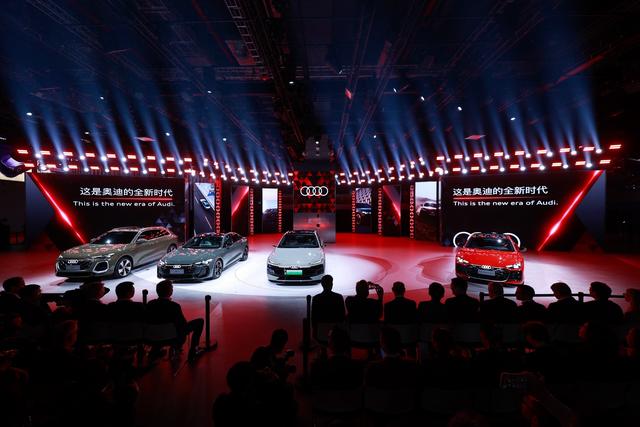
Core Insights - The market share of Chinese brand passenger cars has increased from 38.4% in 2020 to 65.2% in 2024, while foreign brands' share has decreased from approximately 64% to between 37% and 39.5% [1] - China is the largest automotive consumption market globally, with annual sales exceeding 30 million vehicles, making it critical for foreign automotive companies [1] - Foreign automotive brands are facing significant challenges and are adjusting their strategies in response to the rise of Chinese brands [2] Foreign Automotive Brands' Decline - Foreign automotive brands, once popular, are now struggling to maintain their market presence, with some exiting the Chinese market entirely [2] - Volkswagen is the largest foreign automotive company in China, with 2024 global sales of 9.0274 million vehicles, of which 2.928 million were sold in China, contributing 1.7 billion euros to its investment income from joint ventures in China [2] - Volkswagen's global operating profit decreased by 33.5% from 2023, highlighting the impact of the changing market dynamics [2] Strategic Responses from Foreign Brands - Foreign automotive companies are learning from Chinese brands and applying advanced experiences to both Chinese and global markets [5] - Volkswagen plans to invest 2.5 billion euros to establish a smart connected vehicle R&D center in China, focusing on next-generation vehicle development [6] - Mercedes-Benz is leveraging its Beijing R&D center to develop technologies based on Chinese user preferences, which are expected to be applied globally [8] Innovations and Collaborations - Toyota is adopting a strategy of "technology reserve + localized production," establishing a hydrogen energy R&D center in Jiangsu and integrating its R&D capabilities in China [8] - Nissan is collaborating with Huawei to develop smart cockpit systems based on the HarmonyOS, aiming to enhance its market position in China [9] - At the 2025 Shanghai Auto Show, Honda announced partnerships with three Chinese tech companies to advance in the fields of intelligence and electrification [11] Localized Development Initiatives - Toyota's new R&D structure allows Chinese teams to lead the development of core models, shifting from a traditional model of "foreign design, local production" to one where "Chinese demand defines technology routes" [10] - Mercedes-Benz's new models are being developed by Chinese teams, marking a significant shift in how global automakers approach the Chinese market [10] - Volkswagen's strategy includes localizing software development to address unique Chinese driving conditions, enhancing its competitive edge [11]


英特尔首秀2025年上海车展,释放哪些重磅信号?
Zhong Guo Qi Che Bao Wang· 2025-04-27 09:15
Core Insights - Intel made a significant announcement at the 2025 Shanghai Auto Show, introducing its second-generation AI-enhanced Software Defined Vehicle (SDV) SoC and establishing strategic partnerships with companies like Black Sesame Intelligence and BOS Semiconductors, highlighting its commitment to the Chinese automotive market and its ambition in automotive intelligence [1][10][19] Group 1: Product Features and Innovations - The second-generation AI-enhanced SDV SoC features a multi-node chip architecture, allowing for flexible customization of computing, graphics, and AI functions, providing unprecedented development freedom for manufacturers [3][9] - Performance improvements include a tenfold increase in generative and multimodal AI capabilities compared to the previous generation, with graphics performance tripling and enhanced visual perception through 12 camera channels [9] - Energy efficiency has been optimized, with a 61% increase in CPU performance per watt, aiding electric vehicles in reducing power consumption and battery costs [9] Group 2: Industry Challenges and Solutions - Intel identified three major challenges in the automotive industry: the need for software-defined architecture, sustainability innovation, and scalability. The company aims to address these through open architecture and flexible development tools, energy-efficient designs, and a unified architecture for various vehicle classes [9][10] Group 3: Strategic Partnerships and Ecosystem Development - Intel is actively building a smart automotive ecosystem through collaborations with various industry players, including Black Sesame Intelligence and Wallface Intelligence, to enhance the integration of AI and chip technology in vehicles [10][11] - The collaboration with Black Sesame Intelligence led to the launch of a cockpit-driving integration platform, supporting advanced driver assistance systems from L2+ to L4 levels, with plans for reference design release in Q2 2025 [11] - Partnerships with companies like Wallface Intelligence and BOS Semiconductors aim to enhance in-vehicle AI performance and develop solutions for advanced driver assistance and infotainment systems [13][10] Group 4: Future Outlook and Industry Trends - The automotive industry is shifting towards a software-defined and collaborative ecosystem, with Intel positioning itself as a leader in this transformation through technological innovation and ecosystem building [19] - Discussions at the event highlighted the importance of voice interaction and the integration of AI in enhancing user experience, indicating a trend towards more personalized and interactive automotive environments [14][16]


“输美大户”现代起亚使出三连招
Zhong Guo Qi Che Bao Wang· 2025-04-27 05:52
Core Viewpoint - The U.S. has implemented a 25% tariff on all imported cars, significantly impacting the global automotive supply chain and forcing multinational car manufacturers to adapt to the new trade environment [2][3]. Tariff Implementation - The 25% tariff on imported passenger cars and light trucks took effect on April 3, 2024, with additional tariffs on auto parts starting no later than May 3, 2024 [3]. - Prior to this, the U.S. had a 2.5% tariff on imported passenger cars and a 25% tariff on trucks, which means the new rates increase to 27.5% and 50%, respectively [3]. - Approximately 50% of the 16 million new cars expected to be sold in the U.S. in 2024 will be imported, with Mexico being the largest supplier [3]. Impact on South Korean Automotive Industry - South Korea is one of the countries most affected by the U.S. tariffs, with automotive exports to the U.S. projected to reach $34.7 billion in 2024, accounting for nearly half of South Korea's total automotive exports [3][4]. - Hyundai Motor Group, as South Korea's largest automaker, faces significant challenges due to its reliance on imports, with nearly two-thirds of its light vehicles sold in the U.S. being imported [4]. Preemptive Measures by Automakers - In anticipation of the tariffs, automakers, including Hyundai, increased shipments of vehicles and parts to the U.S. in early 2024, leading to a 14.8% year-on-year increase in South Korea's automotive exports to the U.S. in February [5]. - The average inventory level of new cars in the U.S. rose to 89 days, indicating that many automakers have sufficient stock to withstand the initial impact of the tariffs [5]. Sales Performance - Despite the tariffs, Hyundai and Kia reported record sales in the U.S. for March 2024, with Hyundai's sales increasing by 10.1% year-on-year to 203,000 units and Kia's by 10.7% to 199,000 units [5][6]. Strategic Responses - Hyundai plans to maintain current vehicle prices in the U.S. to attract buyers and stabilize sales, contrasting with competitors who are raising prices [6]. - The company announced a significant investment of $21 billion in the U.S. from 2025 to 2028 to enhance local production and reduce reliance on imports [7][8]. Investment in Local Production - Hyundai's investment includes $9 billion to establish a production capacity of 1.2 million vehicles annually and $6 billion to increase the localization of auto parts, including electric vehicle components [8]. - The company aims to create over 8,500 jobs through its new electric vehicle factory in Georgia, which will also increase production capacity for electric and hybrid models [8][9]. Government Response in South Korea - The South Korean government announced a $2 billion emergency aid plan to support the automotive industry and stimulate domestic demand in light of the tariffs [10]. - Measures include a temporary reduction in the new car purchase tax and tax relief for affected companies [10]. Diversification Strategy - Hyundai is actively expanding into emerging markets such as India and Brazil to mitigate the risks associated with the U.S. tariffs [11]. - The company plans to leverage its recent IPO in India to increase investments and strengthen its position in the global automotive market [11].
