
数字经济

Search documents
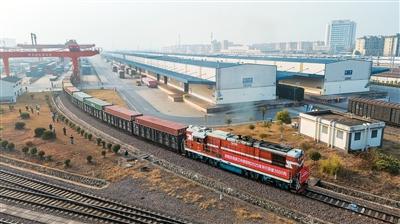
环球热点丨中国—中亚经贸合作逆势前行、彰显韧性
Ren Min Ri Bao Hai Wai Ban· 2026-02-09 04:25
Core Insights - The trade volume between China and the five Central Asian countries is projected to exceed $100 billion by 2025, marking a continuous five-year growth and establishing China as the largest trading partner for these nations [1][2] - The political mutual trust and complementary strategic needs between China and Central Asia form a resilient foundation for their economic and trade relations [2][3] Trade Dynamics - By 2025, China's exports to Central Asia are expected to reach $71.2 billion, a year-on-year increase of 11%, while imports from Central Asia are projected at $35.1 billion, up 14% [2] - The trade structure is evolving, with strong growth in machinery, high-tech products, and a diversification of non-resource imports such as chemicals and agricultural products [2] Strategic Cooperation - A comprehensive strategic partnership has been established, covering various areas including infrastructure and energy projects, driven by high-level political trust [3] - The economic development stages of Central Asian countries align well with China's advanced industrial capabilities, creating a strong internal motivation for collaboration [3] Market Preferences - Central Asian countries are increasingly prioritizing Chinese solutions and markets, viewing them as essential for their sustainable development goals [4] - The logistics and payment systems have improved significantly, facilitating quicker and more efficient trade processes [5][6] Geopolitical Advantages - The geographical proximity between China and Central Asia provides cost and time advantages for trade, making China a preferred market for Central Asian exports [7] - China's comprehensive supply chain capabilities in renewable energy and technology align with the industrialization and green transition goals of Central Asian nations [7] Future Opportunities - The demand for renewable energy and modern agriculture in Central Asia presents significant opportunities for collaboration, with China positioned to play a key role in technology sharing and sustainable development [9][10] - The young population and increasing internet penetration in Central Asia create a vast potential for digital market growth, encouraging localized innovations and partnerships [10]
中国—中亚贸易额首次突破1000亿美元,贸易结构不断优化
Ren Min Ri Bao Hai Wai Ban· 2026-02-09 03:20
Core Insights - The trade volume between China and the five Central Asian countries is projected to exceed $100 billion by 2025, marking a continuous growth trend over five years, with China becoming the largest trading partner for these nations [1][2] - The cooperation between China and Central Asia is characterized by political mutual trust and complementary strategic needs, which form a resilient foundation for their economic relations [2][3] Trade Dynamics - By 2025, China's exports to Central Asia are expected to reach $71.2 billion, a year-on-year increase of 11%, while imports from Central Asia are projected at $35.1 billion, up 14% [2] - The trade relationship is increasingly robust, driven by China's complete supply chain advantages and the emerging market demands of Central Asia [2] Strategic Partnerships - China and Central Asian countries have established comprehensive strategic partnerships, covering various areas including political, economic, and cultural interactions [3][6] - The deep political trust and economic complementarity between China and Central Asia facilitate large-scale infrastructure and energy projects, enhancing long-term trade relations [3][6] Market Opportunities - Central Asian countries are prioritizing modernization of infrastructure, industrial upgrades, and green energy, aligning with China's mature and cost-effective industrial solutions [4][5] - The geographical proximity and logistical advantages of Central Asia make China an attractive market for energy, minerals, and agricultural products [5] Future Cooperation - The transition of Central Asian countries towards renewable energy and modern agriculture presents significant opportunities for collaboration, particularly in technology sharing and sustainable development [7][8] - The youthful population and increasing internet penetration in Central Asia create a vast potential for digital consumption, encouraging joint ventures in digital infrastructure and localized innovations [8] Tailored Approaches - Each Central Asian country has unique resources and development stages, necessitating a tailored approach to cooperation that aligns with their specific agendas [8]
第三产业用电占比稳步提升 ——广东深圳用电结构反映经济结构优化
Zhong Guo Dian Li Bao· 2026-02-09 02:22
1月29日,从南方电网深圳供电局获悉,2025年深圳全社会用电量1272.15亿千瓦时,同比增长4.71%。 其中,第二产业用电量589.27亿千瓦时,同比增长2.28%;第三产业用电量467.32亿千瓦时,同比增长 7.24%;居民生活用电量214.96亿千瓦时,同比增长6.20%。第一、二、三产业及居民用电占比分别为 0.05%、46.3%、36.7%和16.9%,第三产业和居民生活用电占比稳步提升。 作为经济社会运行的"晴雨表",这一系列电力数据生动反映出深圳在服务业和居民消费驱动的内需发展 方面取得显著成效,电量增长正从工业驱动向"工业+服务业"双轮驱动转变,经济结构持续优化,消费 活力不断增强。 专精特新用电快速增长 日前,比亚迪集团迎来电力扩容。截至目前,南方电网深圳供电局通过"电等产能"服务,满足企业日益 增长的用电需求。据统计,2025年深圳汽车制造业用电量同比增长23.98%,成为深圳打造"新一代世界 一流汽车城"的生动注脚。 随着深圳持续推进产业结构优化,以电动汽车、半导体、机器人、无人机等为代表的专精特新行业用电 需求快速增长。2025年,医药制造业,计算机、通信和其他电子设备制造业,仪 ...
新海港便民服务升级 | 嗨,海口
Xin Lang Cai Jing· 2026-02-08 23:41
Group 1 - The tourism cooperation meeting between Hainan and Guangdong aims to transform the Qiongzhou Strait from a transportation corridor into a regional tourism destination, enhancing cross-strait travel experiences through joint marketing and event organization [4] - Haikou's Fuxing City registered over 10,000 enterprises in 2025, with nearly 50% being digital trade companies, generating close to 200 billion yuan in revenue and 9 billion yuan in tax [4] - The new Haikou port has upgraded its services by partnering with logistics companies to offer luggage delivery and temporary storage for travelers, enhancing convenience for visitors [5] Group 2 - The first customs-regulated cargo train of the spring transportation season departed from Haikou, carrying over 640 tons of polyethylene in 22 containers, utilizing an intelligent monitoring system for rapid inspection [6] - The "Intangible Cultural Heritage New Year Shopping Month" event commenced in Haikou, featuring a blend of traditional and modern performances, showcasing local heritage through exhibitions and live demonstrations [8] - During the first week of the 2026 spring transportation season, the Ministry of Transport reported a cumulative cross-regional passenger flow of approximately 141.3 million, with a daily average of 20.2 million, reflecting a 2% increase compared to the previous year [10]


携手构建亚太共同体 促进亚太地区增长和繁荣(APEC中国年:开放 创新 合作)
Ren Min Ri Bao· 2026-02-08 23:16
Group 1 - China will host the 2026 APEC summit, with the informal leaders' meeting scheduled for November in Shenzhen, marking its third time as APEC host [1][4] - APEC is recognized as the highest-level and most influential economic cooperation mechanism in the Asia-Pacific region, with China actively participating in regional cooperation [1][2] - The theme for the 2026 APEC year is "Building an Asia-Pacific Community, Promoting Common Prosperity," aligning with President Xi Jinping's vision of a community with a shared future [3][4] Group 2 - The current global context of increasing unilateralism and protectionism poses significant challenges to international economic and trade order, making China's role as APEC host crucial for regional and global cooperation [2][4] - China aims to inject strong momentum into Asia-Pacific cooperation and provide more certainty and stability for global economic growth through the APEC summit [2][4] - The APEC 2026 agenda will focus on three priority areas: openness, innovation, and cooperation, aimed at promoting free trade, driving new productivity, and leveraging member advantages for mutual benefit [3][4]

中国—中亚经贸合作逆势前行、彰显韧性(环球热点)
Ren Min Ri Bao· 2026-02-08 19:23
Core Insights - The trade volume between China and the five Central Asian countries is projected to exceed $100 billion by 2025, marking a continuous growth for five years, with China becoming the largest trading partner for these nations [2][3] - The trade structure between China and Central Asia is continuously optimizing, with significant increases in exports and imports, particularly in machinery, high-tech products, and non-resource products [3][4] Group 1: Trade Dynamics - By 2025, China's exports to Central Asia are expected to reach $71.2 billion, a year-on-year increase of 11%, while imports are projected at $35.1 billion, up 14% [3] - The political mutual trust and strategic demand complementarity between China and Central Asia form a resilient foundation for their economic relations, facilitating large-scale infrastructure and energy projects [3][4] Group 2: Economic Cooperation - China and Central Asian countries have established comprehensive strategic partnerships, covering various areas including political, economic, and cultural interactions, which are based on principles of non-interference and mutual benefit [4][7] - The economic development stages of Central Asian countries align well with China's mature industrial capabilities, particularly in infrastructure modernization and green energy, creating strong endogenous motivation for cooperation [4][7] Group 3: Market Opportunities - The growing demand for renewable energy and modern agriculture in Central Asia presents significant opportunities for collaboration, as countries like Kazakhstan and Uzbekistan pursue low-carbon development strategies [8][9] - The youthful population and increasing internet penetration in Central Asia indicate a vast potential for digital consumption, encouraging joint efforts in digital infrastructure and localized innovations [9] Group 4: Strategic Recommendations - To capitalize on the transformation opportunities in Central Asia, companies should engage in multi-faceted cooperation, responding proactively to market demands and aligning with the region's development needs [8][9] - Tailored strategies for each Central Asian country, considering their unique resources and development stages, will enhance the effectiveness of cooperation and ensure sustainable connectivity [9]
中关村数字经济总部园主体结构全面封顶
Xin Lang Cai Jing· 2026-02-08 18:30
Core Viewpoint - The construction of the Zhongguancun Digital Economy Headquarters Park is progressing well, with the main structure completed ahead of schedule, showcasing innovative construction techniques and strong team commitment [1][3]. Group 1: Project Overview - The total construction area of the Zhongguancun Digital Economy Headquarters Park is 407,900 square meters, making it the largest ongoing TOD industrial park in Haidian [1]. - The project is located near the Qinghe transportation hub and is expected to be completed by May 2027, integrating industrial offices, vibrant commercial spaces, high-end hotels, and serviced apartments [3]. Group 2: Construction Challenges and Solutions - The project faced significant challenges, including uneven groundwater levels and complex geological conditions, which were addressed through innovative dewatering methods [1]. - A combination of "vacuum pump lightweight well points + drainage wells" was successfully implemented to tackle the underground water issues, facilitating subsequent construction [1]. Group 3: Technological Innovations - A 350-meter long prefabricated steel bridge was constructed to enhance transportation efficiency, increasing horizontal transport capacity by 40% and concrete pouring volume by 85% [2]. - The use of intelligent construction robots has significantly improved efficiency, with construction speed increased by 2-3 times compared to manual labor [2]. Group 4: Team Commitment - The construction team demonstrated strong dedication, with many workers postponing their return home for the New Year to meet project deadlines, reflecting their sense of responsibility [3]. - At peak construction, over 2,000 workers were on-site, with a commitment to continue working through the holiday period to ensure project completion [3].

中关村数字经济总部园主体结构封顶
Xin Lang Cai Jing· 2026-02-08 17:26
Group 1 - The main structure of the Zhongguancun Digital Economy Headquarters Park has been completed, marking a significant milestone in the development of the largest TOD industrial park in Haidian District, Beijing [3] - The project covers a total construction area of 407,900 square meters and has progressed from "zero elevation" to a skyline of high-rise buildings in just three months, showcasing the capabilities of Beijing Construction Engineering Group [3] - The headquarters park is expected to be completed by May 2027 and aims to integrate industrial offices, vibrant commercial spaces, high-end hotels, and serviced apartments into a TOD innovation-driven urban complex [3] Group 2 - The project will enhance collaboration with innovation hubs such as Xiaomi Technology Park and Shangdi Information Industry Base, focusing on core industries like artificial intelligence, big data, and health technology [3] - It aims to attract leading enterprises in the industry and contribute to Haidian's goal of becoming a leading area for digital economy and a source of innovation in artificial intelligence [3]

深圳跨境数据验证平台为数字领域国际交流合作提供“中国方案”
Zhong Guo Jing Ji Wang· 2026-02-08 09:17
Group 1 - The first plenary meeting of the APEC Digital Economy Steering Group for 2026 was held in Guangzhou, with the Chinese National Internet Information Office leading the Chinese delegation [1] - The meeting focused on discussions and cooperation on digital economy and artificial intelligence, marking the first event of the "China Year" for APEC [3] - A key initiative presented by the Shenzhen representatives was the "cross-border data verification platform cooperation based on the DDTP model," which received significant attention and positive responses from APEC member economies [3] Group 2 - The cooperation initiative is guided by the Chinese National Internet Information Office and is based on the successful experiences of various institutions in Shenzhen, including the Shenzhen Internet Information Office and WeBank [3] - The Shenzhen-Hong Kong cross-border data verification platform has generated a total of 2,681 instances of bidirectional verification data since its launch in May 2024 [3] - The Shenzhen-Singapore cross-border data verification platform, established in November 2025, is the first digital infrastructure for data circulation between Guangdong, China, and Singapore [3]

未来智造局|国家超算互联网核心节点上线试运行 3万卡国产AI算力随取随用
Xin Hua Cai Jing· 2026-02-08 07:11
Core Insights - The launch of the national supercomputing internet core node marks a significant milestone in the deployment and practical application of domestic AI computing resources, alleviating the imbalance between supply and demand in computing power [1][2][5] - The core node is part of a major infrastructure initiative aimed at creating a leading national computing infrastructure and service platform to support various fields, including artificial intelligence and digital economy [2][5] - The deployment of the core node, supported by three sets of "Wanka" supercluster systems from Sugon, can provide over 30,000 domestic AI accelerator cards, facilitating large-scale AI computing applications [2][6] Industry Context - The increasing demand for AI-driven innovations has highlighted the shortage of computing resources, which has become a critical bottleneck for industry upgrades [2][8] - The national supercomputing internet aims to address issues such as resource underutilization and inefficiencies in computing resource allocation, enhancing the overall efficiency of computing power distribution [2][5] - The project is expected to create a nationwide integrated computing network, connecting over 30 backbone computing centers and offering nearly 70 types of domestic super-intelligent computing services [5][8] Technological Advancements - Sugon's "Wanka" supercluster systems have achieved significant innovations in performance and efficiency, enabling the support of trillion-parameter AI models and various application scenarios [6][7] - The core node's architecture is designed to be compatible with mainstream software ecosystems, allowing for mixed deployment of various domestic accelerator cards [7] - The supercomputing internet platform is evolving into a marketplace for computing applications, aiming to lower the barriers to access and enhance usability for a wide range of users [8][9] Application and Impact - The core node has already served over 1 million users and processed nearly 196 million jobs, significantly reducing computing costs and facilitating AI innovation [8][9] - The platform is actively engaging with various industries to promote the integration of AI computing resources, with initiatives like the invitation for testing plans to attract diverse applications [9][12] - The first batch of application validation results has been released, showcasing the potential of the supercomputing internet to empower various sectors and drive innovation [12]

