液冷技术

Search documents
Rubin或推动微通道液冷技术应用,液冷通胀逻辑再强化
2025-09-26 02:28
Summary of Key Points from Conference Call Industry Overview - The conference call discusses the liquid cooling technology industry, particularly focusing on microchannel liquid cooling solutions and their application in the AIDC hardware sector. The technology is experiencing significant growth and investment opportunities, especially in the context of domestic computing power chip manufacturers adopting liquid cooling solutions, such as Alibaba's recent ultra-node initiative [1][2]. Core Insights and Arguments - **Market Potential**: The liquid cooling market is expected to reach nearly 100 billion by 2026, driven by the increasing demand for NV and ASIC cooling solutions. The technology's evolution and price inflation will continue to expand market size [1][3]. - **Inflationary Attributes**: Liquid cooling technology is characterized by its inflationary nature, primarily driven by the increasing computing power and energy consumption of chips, necessitating advanced cooling solutions. The transition from single-phase cooling plates to microchannel designs is projected to enhance value by approximately 20% [2][5]. - **Decision Chain Changes**: The decision-making chain in the liquid cooling sector has evolved, with more participants, including server ODM manufacturers and power supply companies, entering the market. This shift presents opportunities for domestic suppliers to collaborate and produce under private labels [4][6]. - **Microchannel Technology Development**: Microchannel liquid cooling technology is rapidly advancing, with major players like NVIDIA and Microsoft pushing its adoption. The anticipated power requirements for next-generation chips, such as the Ruping Ultra, are expected to exceed 2000 watts, challenging existing cooling solutions [5][6]. Additional Important Insights - **Challenges in Microchannel Technology**: Despite its advantages, microchannel technology faces challenges such as complex manufacturing processes, high pump capacity requirements, and stringent water quality standards. These factors necessitate synchronized product iterations across the entire liquid cooling system [10][12]. - **Opportunities for Domestic Suppliers**: The transition to microchannel solutions may create new opportunities for domestic suppliers, especially if existing suppliers cannot keep pace with product iterations or quality standards. Startups with innovative technologies may also require ODM partnerships to scale production [14][15]. - **Potential Growth Areas**: Several types of companies within the domestic liquid cooling supply chain show promise for growth, including traditional cooling module manufacturers and companies specializing in chip cover plates. These firms are already integrating microchannel cooling solutions into their offerings [15][16]. - **Future Trends**: The development of microchannel liquid cooling systems is expected to enhance overall liquid cooling management logic, despite current production challenges. The anticipated increase in value and demand for advanced cooling solutions indicates a growing market for innovative technologies [17].
产业交流会-液冷行业
2025-09-26 02:28
Summary of Liquid Cooling Industry Conference Call Industry Overview - The liquid cooling industry is evolving with significant attention on NVIDIA's GB300 and the upcoming LOBIN structure, transitioning from traditional air cooling to advanced cooling solutions like microchannel cooling plates (MLCP) and bidirectional energy boards [1][2][6] Key Trends and Technologies - **Bidirectional Energy Boards**: Expected to become mainstream by 2026, currently facing design complexity and material selection challenges. R134 and 1,233ZD are the main candidates for refrigerants, each with pros and cons [1][4][3] - **Microchannel Cooling Plates (MLCP)**: Aiming to enhance cooling efficiency by integrating the cooling plate directly with chip packaging, though costs are significantly higher (3 to 7 times traditional plates) [7][6] - **Refrigerant Selection**: The industry is cautious about the transition to new refrigerants, with R134A likely to coexist with newer options due to its maturity and cost-effectiveness [2][13] Future Directions - **Integration of Technologies**: Companies are exploring the combination of bidirectional energy boards with silent cooling methods to address GPU cooling challenges [5][6] - **Material Innovations**: New materials such as quick connectors, CDU, and stainless steel hoses are expected to enhance overall system performance [8][6] - **Economic and Environmental Considerations**: The choice of immersion cooling fluids will focus on cost, performance, and environmental impact, with options like silicone oil and perfluoropolyether (PFPE) being prominent [9][10] Challenges and Considerations - **Design and Implementation**: The complexity of bidirectional energy board design and the need for better sealing and pressure tolerance in the phase change process are significant challenges [4][6] - **Market Dynamics**: The partnership between Dow and Intel has seen slow progress due to pricing mechanisms and responsibility allocation issues, impacting the adoption of silicone oil in data centers [11][9] Emerging Materials - **Liquid Metal**: Offers excellent thermal conductivity but is still in early experimental stages due to high costs and oxidation issues [14][15] - **New Tri-block Materials**: Recent advancements in tri-block materials have improved stability and reduced volatility, making them viable for semiconductor temperature control [17][16] Market Outlook - **Cost Trends**: The cost of K-type PFPE is expected to decrease below 300 RMB per kilogram in the long term, while Y-type PFPE remains high due to supply chain constraints [18][19] - **GWP Concerns**: The high Global Warming Potential (GWP) of PFPE remains a challenge, with no effective methods currently available to significantly reduce it [19][10] This summary encapsulates the key points discussed in the conference call regarding the liquid cooling industry, highlighting trends, challenges, and future directions.

液冷冷却液+AI数据中心+氟化工,最全龙头公司产业链梳理(附名单)
Sou Hu Cai Jing· 2025-09-25 15:48
Core Viewpoint - The article discusses the growing importance of liquid cooling technology in data centers due to increasing power consumption and heat generation from AI server chips, highlighting the shift from traditional air cooling to liquid cooling solutions. Group 1: Liquid Cooling Technology Types - Liquid cooling technology is categorized into two main types: cold plate and immersion cooling, with cold plate cooling holding a 91% market share in 2022 due to its maturity and compatibility [3][31]. - Immersion cooling, while having the highest heat dissipation capability, accounts for about 8% of the market and is represented by companies like Shuguang Data and Guangdong He Yi [4][31]. - Cold plate cooling primarily uses water-based coolants, offering advantages such as low cost and fast heat dissipation [5]. Group 2: Cooling Liquid Material Systems - The main types of cooling liquids include water-based, oil-based, and fluorinated coolants [7]. - Water-based coolants are mainly used in single-phase cold plate cooling, supplied by companies like Compton and Unification [8]. - Oil-based coolants are used in single-phase immersion cooling, with suppliers like China Petroleum and Unification [8]. - Fluorinated coolants are crucial for high reliability and extreme physical conditions, with companies like Juhua and Dongyue Group achieving large-scale production [8]. Group 3: Microchannel Liquid Cooling Breakthroughs - Microchannel cold plate technology is becoming a focus for AI chip manufacturers, with companies like Nvidia and Microsoft pushing for MLCP standards [9]. - Domestic companies such as Highlan and Feirongda are gaining certifications and expanding their market share in this area [9]. Group 4: Market Size and Price Logic - By 2028, the global AI data center installation capacity is expected to reach 59 GW, corresponding to a cooling liquid demand exceeding 89,000 tons [10]. - The Chinese market for liquid-cooled data centers is projected to grow at a compound annual growth rate (CAGR) of 51.4%, with the industry scale expected to exceed 100 billion yuan by 2027 [10]. Group 5: Leading Projects - Major companies like Alibaba, Shuguang, Huawei, and Lenovo are implementing liquid-cooled data center demonstration projects, with Alibaba achieving a PUE of 1.12 in its 5A green liquid-cooled data center [14][15]. - Shuguang has realized the world's first large-scale commercial application of immersion phase change liquid cooling [15]. - Huawei's cloud data center in Ulanqab utilizes indirect evaporative cooling, achieving a PUE of 1.15 [16]. Group 6: Mainstream Cooling Pathways - The article outlines the mainstream cooling pathways, including water-based, oil-based, and fluorinated cooling liquids, emphasizing the rapid growth of the liquid cooling market [18][21].




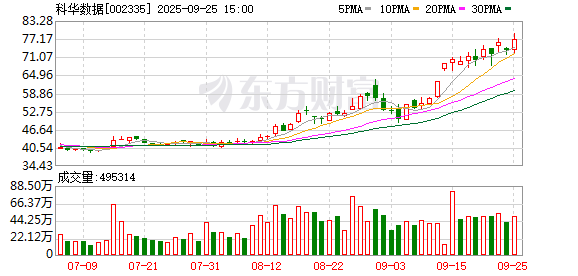
科华数据:公司已推出了液冷数据中心全生命周期服务
Zheng Quan Ri Bao· 2025-09-25 09:17
Core Insights - The company, Kehua Data, is a pioneer in the liquid cooling sector, leveraging years of technical expertise and experience in data center construction and operation [2] - Kehua Data has launched a full lifecycle service for liquid cooling data centers, including a range of self-developed liquid cooling products [2] - The company has partnered with Muxi Co., Ltd. to introduce a high-density liquid cooling computing POD, focusing on core technology solutions for high-performance computing needs [2] Product Offerings - The company offers a variety of liquid cooling products, including air-liquid drawer CDU, liquid-liquid drawer CDU, and liquid-liquid cabinet CDU [2] - Integrated products include WiseCooling plate liquid cooling micro-modules, liquid cooling containers, and liquid cooling all-in-one machines [2] Strategic Partnerships - The collaboration with Muxi Co., Ltd. aims to explore solutions for high-performance computing demands, providing stable, efficient, and flexible real-time support [2]

溯联股份(301397.SZ):公司液冷管路产品能满足UL V0阻燃要求
Ge Long Hui· 2025-09-25 07:37
Core Viewpoint - The company, Sulian Co., Ltd. (301397.SZ), announced on its investor interaction platform that its liquid cooling pipeline products meet UL V0 flame retardant requirements, and relevant certifications are currently underway [1] Group 1 - The liquid cooling pipeline products are designed to meet specific safety standards [1] - The company is in the process of obtaining relevant certifications for its products [1]
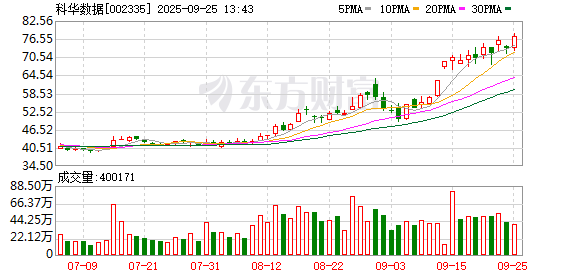
科华数据:公司与沐曦股份已联合推出高密度液冷算力POD
Mei Ri Jing Ji Xin Wen· 2025-09-25 05:42
Core Viewpoint - The company is a pioneer in the liquid cooling sector, leveraging years of technical expertise and experience in data center construction and operation to offer comprehensive lifecycle services for liquid cooling data centers [2] Group 1: Liquid Cooling Technology - The company has developed a range of proprietary liquid cooling products, including air-liquid drawer-type CDU, liquid-liquid drawer-type CDU, and liquid-liquid cabinet-type CDU [2] - Integrated products include Wise Cooling plate liquid cooling micro-modules, liquid cooling containers, and liquid cooling all-in-one machines [2] Group 2: Strategic Partnerships - The company has partnered with Muxi Co., Ltd. to launch a high-density liquid cooling computing POD, focusing on super-node technology to explore related solutions [2] - This collaboration aims to provide stable, efficient, and flexible real-time support for high-performance computing needs [2]
国信证券:数算中心规模、功率提升带动液冷需求 关注下游服务商液冷方案及产品选择
Zhi Tong Cai Jing· 2025-09-25 03:49
Core Insights - The report from Guosen Securities highlights the increasing power of data centers and the role of liquid cooling solutions in addressing high energy consumption and heat dissipation challenges [1][2] Group 1: Industry Overview - The liquid cooling sector is in its early development stage, with various solutions having distinct advantages and disadvantages, and no established optimal solution yet [1] - According to SemiAnalysis, the global installed capacity of AI data centers is expected to reach 59 GW by 2028, potentially generating a demand for approximately 89,000 tons of cooling liquid [1] - Traditional server installations are projected to contribute an additional demand of 19,000 tons of cooling liquid [1] Group 2: Energy Consumption and Efficiency - By 2024, the total electricity consumption of computing centers in China is expected to reach 166 billion kWh, accounting for 1.68% of the total electricity consumption in society [2] - The average Power Usage Effectiveness (PUE) for ultra-large data centers in China is currently 1.46, while for large data centers, it is 1.55 [2] - New standards set by the Ministry of Finance, Ministry of Ecology and Environment, and Ministry of Industry and Information Technology require that the energy ratio of data centers not exceed 1.4 starting June 2023, and 1.3 by 2025 [2] Group 3: Liquid Cooling Technologies - The main liquid cooling technologies include cold plate and immersion cooling, with cold plate cooling being the most widely used due to its mature technology [3] - Liquid cooling offers multiple advantages such as high heat exchange efficiency, energy savings, and reduced noise [3] - Cold plate cooling is categorized into indirect and direct cooling, with indirect cooling typically being cold plate and direct cooling including immersion and spray cooling [3] Group 4: Cooling Liquid Types and Applications - Different types of cooling liquids are suited for various applications, with water-based cooling liquids used in single-phase cold plate cooling and refrigerants used in dual-phase systems [3] - Oil-based and fluorinated cooling liquids can be used in both single-phase and multi-phase immersion cooling [3] - Water-based cooling liquids are cost-effective but may promote algae and bacteria growth, while oil-based liquids have good insulation but higher viscosity [3] - Fluorinated cooling liquids, including perfluoropolyether and perfluoroamines, offer good flow properties and low toxicity but are relatively expensive [3]

英伟达推动供应商加速MLCP产业化落地
Zhong Guo Neng Yuan Wang· 2025-09-25 02:35
Core Viewpoint - The demand for high-performance computing chips and AI servers is driving the continuous iteration of liquid cooling technology, with NVIDIA leading the charge in product upgrades and requiring suppliers to accelerate the development of MLCP liquid cooling technology [1][3]. Group 1: Semiconductor Industry Performance - The semiconductor equipment sector is leading the electronic industry, with the SW electronic industry index rising by 2.96%, ranking 3rd out of 31 sectors, while the CSI 300 index fell by 0.44% [2]. - The top five sectors by performance include coal (+3.51%), power equipment (+3.07%), electronics (+2.96%), automotive (+2.95%), and machinery (+2.23%) [2]. - The top three sub-sectors within the SW electronic industry are semiconductor equipment (+9.98%), optical components (+9.08%), and integrated circuit manufacturing (+5.63%) [2]. Group 2: High-Performance Chip Power Consumption - The power consumption of NVIDIA's AI chips has increased from 400W for the A100 to 1200W for the GB200 and 1400W for the GB300, with significant performance improvements [3]. - The FP16 computing power of the GB200 reaches 5 PFLOPS, and the FP4 computing power reaches 20 PFLOPS, with NVLink bandwidth increasing to 3.6 TB/s [3]. - The total power consumption of NVIDIA's flagship DGX B200 chassis, which integrates eight B200 GPUs, reaches 14.3 kW, necessitating an additional 60 kW power and cooling capacity at the rack level for stable operation [3]. Group 3: Liquid Cooling Technology - Liquid cooling is a superior heat dissipation method compared to traditional air cooling, especially when cabinet density exceeds 20 kW, enhancing device performance and lifespan [4]. - MLCP is identified as a key form of liquid cooling technology, designed for high-performance computing devices, featuring microchannels for efficient heat transfer [4]. - MLCP supports higher TDP power and lower thermal resistance compared to traditional liquid cooling plates, although it comes with higher costs and manufacturing challenges [4]. Group 4: Potential Beneficiaries in Liquid Cooling Industry - Companies like Invec, Highlan, and Siquan New Materials are positioned to benefit from the trends in liquid cooling technology [5]. - Invec offers a comprehensive liquid cooling solution and has delivered 1.2 GW of liquid cooling products with zero leakage as of March 2025 [5]. - Highlan specializes in thermal management solutions for data centers, providing both cold plate and immersion cooling options with a PUE of ≤1.1 [5]. - Siquan New Materials is actively developing liquid cooling technologies and aims to provide customized solutions across multiple industries [5].
英伟达推动供应商加速MLCP产业化落地 | 投研报告
Zhong Guo Neng Yuan Wang· 2025-09-25 01:42
Core Viewpoint - The demand for high-performance computing is driving the continuous evolution of liquid cooling technology, particularly in the semiconductor industry, with NVIDIA leading the charge for advancements in MLCP (Micro-Channel Liquid Cooling) technology to manage increasing power consumption [1][2][3]. Group 1: Industry Performance - The semiconductor equipment sector is leading the electronic industry, with the SW electronic industry index rising by 2.96%, ranking 3rd out of 31 sectors, while the CSI 300 index fell by 0.44% [2]. - The top five sectors by performance this week include coal (+3.51%), electric equipment (+3.07%), electronics (+2.96%), automotive (+2.95%), and machinery (+2.23%) [2]. - The semiconductor equipment sub-sector saw a significant increase of 9.98%, followed by optical components (+9.08%) and integrated circuit manufacturing (+5.63%) [2]. Group 2: Technological Advancements - NVIDIA's AI chips are experiencing a power increase from 400W for the A100 to 1200W for the GB200 and 1400W for the GB300, with corresponding leaps in computational performance [3]. - The flagship DGX B200 system, integrating eight B200 GPUs, has a total power consumption of 14.3kW, necessitating an additional 60kW power and cooling capacity for stable operation [3]. Group 3: Liquid Cooling Technology - Liquid cooling is more efficient than traditional air cooling, especially when cabinet density exceeds 20kW, and can significantly enhance device performance and lifespan [4]. - MLCP is identified as a key form of liquid cooling technology, designed for high-performance computing devices, allowing for higher thermal design power (TDP) and lower thermal resistance compared to traditional liquid cooling solutions [4][5]. Group 4: Potential Beneficiaries - Companies such as Invec, Highlan, and Siquan New Materials are positioned to benefit from the trends in the liquid cooling industry, with Invec offering a comprehensive liquid cooling solution and achieving significant delivery milestones [5]. - Highlan specializes in thermal management solutions for data centers, while Siquan is focused on developing liquid cooling technologies across multiple industries [5]. Group 5: Investment Recommendations - The liquid cooling technology's role in the development of high-performance chips and servers is viewed positively, with recommendations to monitor potential suppliers like Invec, Highlan, and Siquan, all of which have the capability to innovate and expand in this area [5].
中金 | AI“探电”(十二):Rubin或推动微通道液冷技术应用,液冷通胀逻辑再强化
中金点睛· 2025-09-24 23:56
Core Viewpoint - The article discusses the potential of microchannel liquid cooling technology in response to increasing power demands from next-generation chips like Nvidia's Rubin, which may exceed 2000W, necessitating a shift from traditional cooling methods to more efficient solutions like microchannel water cooling plates [2][6][27]. Group 1: Microchannel Liquid Cooling Technology - Microchannel cooling plates are expected to enhance cooling efficiency significantly compared to traditional cooling solutions, offering advantages such as lower thermal resistance, larger heat exchange area, and higher flow rates [14][16]. - The manufacturing of microchannel cooling plates presents higher barriers due to the need for advanced production techniques like etching and 3D printing, which increases costs and requires improved system cleanliness and pump capabilities [16][27]. - The transition to microchannel cooling technology may reshape the liquid cooling supply chain, providing opportunities for domestic manufacturers to enter the market [17][24]. Group 2: Market Dynamics and Opportunities - The current market for microchannel liquid cooling involves three main types of companies: startups specializing in microchannel technology, traditional cooling solution manufacturers, and companies focused on cover plates [18][23]. - Startups like Mikros Technologies and JetCool are collaborating with major electronic manufacturing services to enhance their technology's market adoption, showcasing the potential for high thermal management performance [18][23]. - The shift to microchannel technology may create opportunities for domestic suppliers, particularly those with existing capabilities in related manufacturing processes, to meet the evolving demands of the cooling solutions market [24][25].