物联网

Search documents
报告显示:中国企业占全球瞪羚企业总数的34%
Zhong Guo Jing Ji Wang· 2026-01-22 07:59
Group 1 - The core viewpoint of the article is that the Hurun Research Institute has released the "2025 Hurun Future Unicorn: Global Gazelle Enterprises List," highlighting high-growth companies likely to reach a billion-dollar valuation by the end of 2028 [1] - The report indicates that there are currently 819 gazelle companies globally, a 19% increase from 688 two years ago, distributed across 43 countries and 220 cities [1] - China has 278 gazelle companies, accounting for 34% of the global total, with an increase of 20 companies compared to the previous year [1] - The average age of these gazelle companies is only 9 years, with an average valuation of $700 million [1] - Key drivers of innovation and entrepreneurship include the integration of generative artificial intelligence, augmented reality, virtual reality, cloud computing, the Internet of Things, and automation [1] Group 2 - Artificial intelligence is transforming various industries globally, enhancing efficiency and driving innovation [2] - In the healthcare sector, AI aids in diagnosis, personalized medicine, and drug development [2] - The financial industry utilizes AI for fraud detection, risk management, and algorithmic trading [2] - Manufacturing employs AI for automation, predictive maintenance, and quality control [2] - In transportation, AI is used for autonomous vehicles and route optimization [2] - The education sector benefits from AI through personalized learning tools [2] - Agriculture leverages AI for precision farming and crop monitoring [2]
正元智慧等成立科技公司,含AI及物联网业务
Zheng Quan Shi Bao Wang· 2026-01-22 06:53
Group 1 - Zhejiang Yuanchu Technology Co., Ltd. has been established recently, focusing on artificial intelligence application software development and related services [1] - The company's business scope includes artificial intelligence industry application system integration services, artificial intelligence hardware sales, and Internet of Things (IoT) technology research and development [1] - The company is jointly held by Zhengyuan Zhihui and other stakeholders, indicating a collaborative investment approach [1]
2026年中国人形机器人销量预测翻倍,机器人ETF易方达(159530)受资金关注
Mei Ri Jing Ji Xin Wen· 2026-01-22 05:32
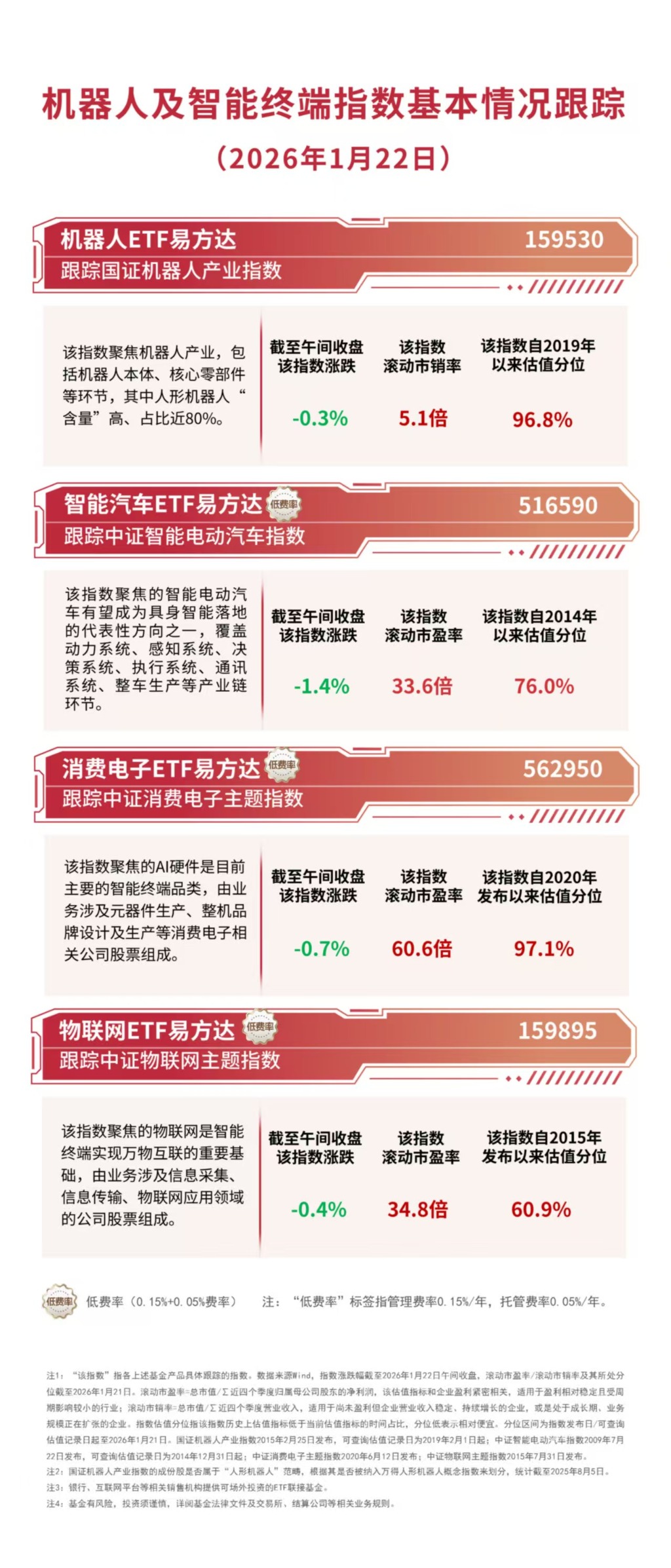
Group 1 - The National Robot Industry Index decreased by 0.3%, the China Securities Intelligent Electric Vehicle Index fell by 1.4%, the China Securities Consumer Electronics Theme Index dropped by 0.7%, and the China Securities Internet of Things Theme Index declined by 0.4% as of the midday close [1] - The robot ETF E Fund (159530) saw a net subscription of 13 million units in half a day [1] - Morgan Stanley has doubled its forecast for the sales of humanoid robots in China for 2026, now estimating sales to reach 28,000 units, up from a previous estimate of 14,000 units [1]


Coosea酷赛智能:不止于手机,解锁物联网生态的多元可能
Jin Tou Wang· 2026-01-22 04:33
Core Insights - Coosea has expanded beyond the smartphone sector into a full-stack smart hardware ecosystem, focusing on rugged smartphones and IoT products, leveraging technological innovation to unlock diverse possibilities in the IoT ecosystem [1][4] Business Overview - Coosea positions itself as a "local brand enabler," offering comprehensive solutions from product definition and R&D to supply chain management, manufacturing, and after-sales service [1] - The company has developed rugged smartphones for industrial users, which are waterproof, dustproof, and shockproof, becoming reliable choices across various industry scenarios [1][3] - Coosea's diverse IoT product matrix integrates deeply into smart living and industrial interconnectivity, supported by its core components like printed circuit boards and market-responsive internet services [1][3] Technological Capabilities - Coosea boasts a robust R&D design capability, mastering core technologies such as RF, antennas, and optics, allowing for flexible modular solutions that can quickly respond to customized demands [3] - The company has over 100 patents and has developed more than 500 models of smartphones and printed circuit board components, along with over 40 types of other smart terminal products [3] Market Performance - In 2024, Coosea became the second-largest end-to-end solution provider for local smartphone brands by shipment volume, and it is projected to reach the top position in Q1 2025 [4] - The company reported revenues of 2.717 billion yuan and a net profit of 206.6 million yuan in 2024, with steady growth in overseas market revenue [4] - Coosea's management team covers the entire consumer electronics supply chain, maintaining a product inspection pass rate of over 98%, which helps it seize market opportunities [4] Future Outlook - Coosea aims to become a sustainable and respected smart technology enterprise, continuously expanding the boundaries of smart hardware [4] - The company plans to deepen AI functionality development and expand global sales channels, anticipating new growth opportunities in diverse sectors [4]
趋势研判!2026年中国智能设备行业发展历程、政策、发展现状、重点企业及未来趋势:全场景智能化生态加速形成,引领智能设备规模达万亿级别[图]
Chan Ye Xin Xi Wang· 2026-01-22 01:07
Core Insights - The smart device industry is experiencing significant growth driven by increasing consumer demand and advancements in technology, with the market size in China projected to grow from 5,133 billion yuan in 2018 to 17,157 billion yuan by 2024, representing a compound annual growth rate (CAGR) of 22.28% [1][14][15] - The industry is categorized into three main segments: smart home, smart wearables, and smart mobility, each with distinct applications and market dynamics [3][16][17] Industry Overview - Smart devices integrate hardware, software, and internet technologies, enabling them to perform tasks such as data collection and self-optimization [1][14] - The market is expected to reach 20,979 billion yuan by 2025, indicating continued growth and innovation in the sector [1][14] Industry Development Stages - The smart device industry in China has evolved through three phases: the initial stage (1990s to early 2000s), the development stage (2000 to 2015), and the explosive growth stage (2015 to present), with significant technological advancements and market expansion occurring in the latter two phases [6][8] Industry Policies - The Chinese government has implemented various policies to support the smart device industry, including initiatives to promote digital transformation and the development of smart products across multiple sectors [8][9] Industry Value Chain - The smart device industry value chain consists of upstream raw materials, hardware, and software systems; midstream manufacturing; and downstream applications in sectors such as healthcare, education, and transportation [10][11] Market Segmentation - The smart home market is characterized by diverse competition among traditional appliance manufacturers and tech companies, with a focus on integrated solutions and consumer experience [15] - The smart wearable segment includes products like smart glasses and smartwatches, with significant growth potential driven by consumer acceptance and technological advancements [16][17] - The smart mobility sector, particularly smart cars, is rapidly expanding, with the market size projected to grow from 777 billion yuan in 2020 to 2,152 billion yuan by 2024, reflecting a CAGR of 29% [17][18] Competitive Landscape - The smart device industry is marked by an ecosystem of competition, with leading companies leveraging core technologies and brand advantages to create comprehensive solutions across various applications [18][19] Future Trends - The industry is expected to see innovations in human-computer interaction, moving towards more natural and multi-modal interfaces [21] - There will be a shift from single-product intelligence to integrated scene intelligence, enhancing cross-device collaboration and user experience [22] - Smart devices will increasingly focus on personalized health management, evolving into digital health assistants capable of providing tailored recommendations [24]





藏在武都的优商密码
Xin Lang Cai Jing· 2026-01-22 00:44
Core Insights - The article highlights the efforts of Wudu District in Gansu Province to enhance regional development through deepening East-West cooperation and strengthening investment attraction, focusing on addressing operational pain points for enterprises [1][2] Group 1: Investment and Economic Development - Wudu District aims to create a strong investment magnet by building a high-quality business environment and providing efficient government services to accelerate project construction [1] - The "Smart Fishing + Vertical Composite Ecological" greenhouse project in Jiao Gong Village exemplifies the integration of advanced technologies like AI, IoT, and big data to enhance agricultural productivity and efficiency [1] Group 2: Government Support and Collaboration - The rapid implementation and efficient progress of projects are attributed to the collaborative efforts between government and enterprises, with local authorities actively resolving issues related to land planning, electricity access, and road construction [2] - Jiao Gong Town has established a dedicated task force to focus on key areas such as land coordination and infrastructure development, ensuring ongoing support for project phases and enterprise operations [2] Group 3: Agricultural Innovation and Community Impact - The project is seen as a new engine for transforming agriculture in the region towards smart and ecological practices, significantly improving land utilization efficiency [1] - The local government emphasizes a service-oriented approach to foster enterprise growth and rural revitalization, aiming for a win-win situation that enhances both corporate development and community income [2]
2026-2032年能量路由器行业深度研究及趋势前景预判专项报告
Xin Lang Cai Jing· 2026-01-21 13:49
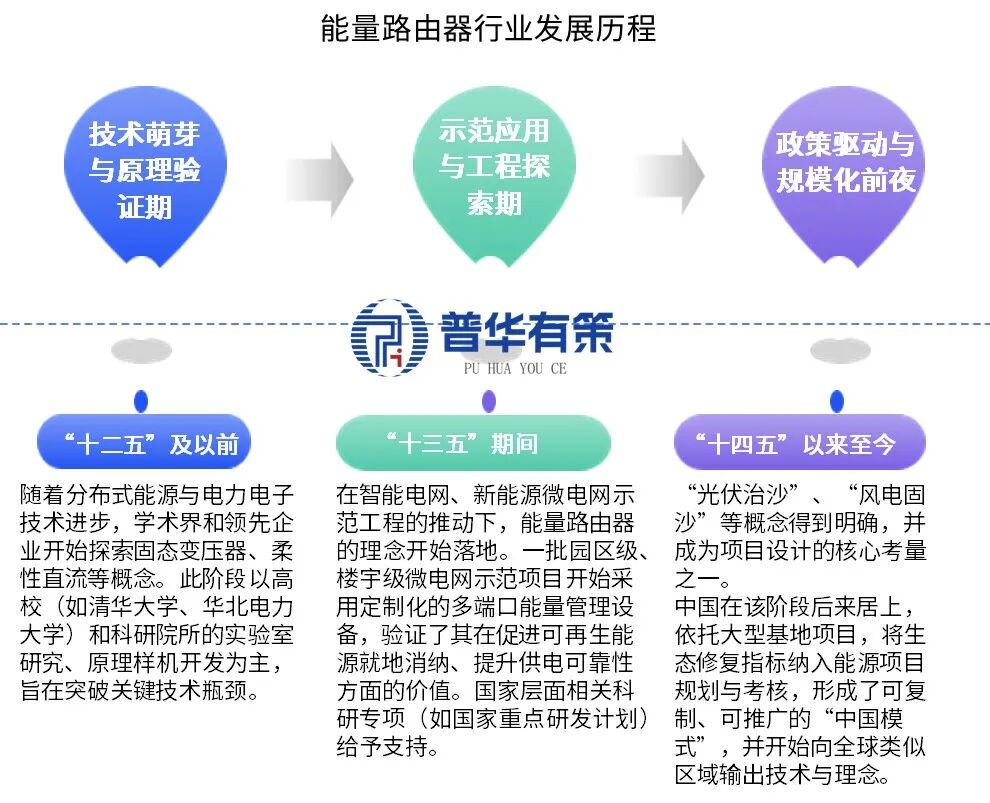
Industry Overview - The concept of "energy router" is not yet standardized in official Chinese documents, but its core functions align with national definitions for the high-quality development of new power systems and distribution networks [1] - Energy routers are seen as key physical carriers for integrating large-scale distributed renewable energy, supporting new energy storage, and enabling two-way interaction with users [1] - They represent a new generation of power electronic, digital, and intelligent distribution equipment, essential for flexible energy conversion, precise control, optimized distribution, and information coupling [1] Industry Development Stages - The industry is transitioning from demonstration applications to large-scale commercialization, with continuous iterations in technology routes (e.g., next-generation products based on SiC) and decreasing costs [4] - Market demand is shifting from grid-side driven "rigid upgrades" to user-side "economic-driven" dual forces, with accelerated product standardization, although mature business models are still being explored [4][26] Industry Value Chain Summary - The energy router industry chain includes upstream raw materials and core components, midstream equipment manufacturing and system integration, and downstream application investment and operation services [5] - Upstream components include power semiconductor devices (IGBT/SiC modules), high-frequency magnetic materials, specialized control chips, sensors, and high-end capacitors, which are crucial for performance and cost [5] - The domestic production rate of IGBT is increasing, but high-end SiC devices still rely on imports, highlighting a need for strengthening the supply chain [5][27] Key Drivers of Industry Development - The energy router industry's growth is driven by multiple macro forces [29] - Strong policy support is fundamental, with the "dual carbon" goal setting the tone for energy transformation and clear quantitative targets for distributed renewable energy by 2030 [30] - The structural changes in energy supply and demand, driven by the explosive growth of distributed solar and wind energy, necessitate the upgrade of traditional passive distribution networks to active smart grids [31] - The arrival of a technological economic inflection point, with declining costs of power electronics and energy storage, makes the construction of complex power electronic systems feasible [32] - The deepening of electricity market reforms provides clear economic returns for energy routers, stimulating investment in related technologies and business models [33] - Increasing frequency of extreme weather events raises societal demands for reliable power supply, making energy routers essential for resilient distribution networks [34] Industry Trends - The industry faces significant technological barriers due to the multidisciplinary nature of energy routers, requiring long-term technical accumulation and continuous R&D investment [37] - High market and qualification barriers exist, as new products must undergo lengthy testing and certification processes to meet stringent safety and reliability standards [38] - Capital and scale production barriers are prominent, as substantial and ongoing capital investment is needed for R&D, testing, and achieving cost competitiveness [38] - System integration and ecological barriers are critical, as future competition will focus on comprehensive solutions and ecosystem integration, necessitating strong design and development capabilities [39]
今日宜休获数千万元融资:高瓴、云九、智元、喜临门跨界联手投资
Quan Jing Wang· 2026-01-21 12:45
Group 1 - The core viewpoint of the article highlights the significant investment in the sleep technology sector, driven by the completion of a seed round financing for "Today Rest" led by prominent investors, indicating the explosive potential of the trillion-dollar sleep economy [1] - The Chinese smart mattress market is projected to approach 60 billion yuan by 2030, while the global sleep technology market is expected to grow at a compound annual growth rate of 17.96% towards a scale of 100 billion USD [1] - The collaboration among various stakeholders, including venture capital firms and industry leaders, reflects a strategic positioning to capitalize on the evolving consumer demand from "comfortable sleep" to "health management," integrating advanced technologies like AI and IoT [1][2] Group 2 - Hillhouse Capital's involvement brings confidence to the sector, as it has previously invested in multiple smart health and hard tech companies, creating a comprehensive investment matrix across the health industry [1] - Cloud Nine Capital aims to support innovative disruptors and recognizes the potential for collaborative efficiency in the sleep technology space, further validating the growth opportunities in this sector [1] - The participation of Zhiyuan Robotics, with its expertise in embodied intelligence and environmental perception, enhances the technological capabilities within sleep scenarios, pushing the evolution towards intelligent health spaces [2] Group 3 - Joyland, as a leading player in the sleep industry, leverages over 40 years of experience in technology development and market implementation, enhancing its brand presence and international appeal [2] - The capital market has responded positively to Joyland's strategic transformation, with significant institutional buying and multiple buy/hold ratings from various institutions, indicating strong confidence in its future [2] - The collaboration among Joyland, Hillhouse Capital, Cloud Nine Capital, and Zhiyuan Robotics effectively addresses the challenges faced by startups in funding, technology, and market access, accelerating the commercialization of sleep technology [3]


康力电梯:公司主营业务为电扶梯产品及其相关零部件和后服务市场
Zheng Quan Ri Bao Wang· 2026-01-21 12:11
Core Viewpoint - Kangli Elevator (002367) is focusing on its main business of escalator products and related components, while also expanding its investment strategies to enhance synergy with affiliated companies [1] Group 1: Main Business - The company’s primary business includes escalator products and their related components and after-sales service [1] Group 2: Investment Strategy - Kangli Elevator has established a multi-line investment layout, including direct investments by the listed company, its subsidiary Suzhou Kangli Technology, and various funds such as Kangli Junzhu Internet of Things Fund and Kangli Junzhu Digital Economy Fund [1] - The investment strategy aims to deepen the company's linkage with affiliated enterprises and explore the integration of its products with advanced technologies in IoT, digitalization, and intelligence [1] Group 3: Business Development - The company is focused on promoting business segments, product upgrades, technological innovation, and service expansion through its investment initiatives [1]

多家银行扎堆发卫星上天
2 1 Shi Ji Jing Ji Bao Dao· 2026-01-21 11:25
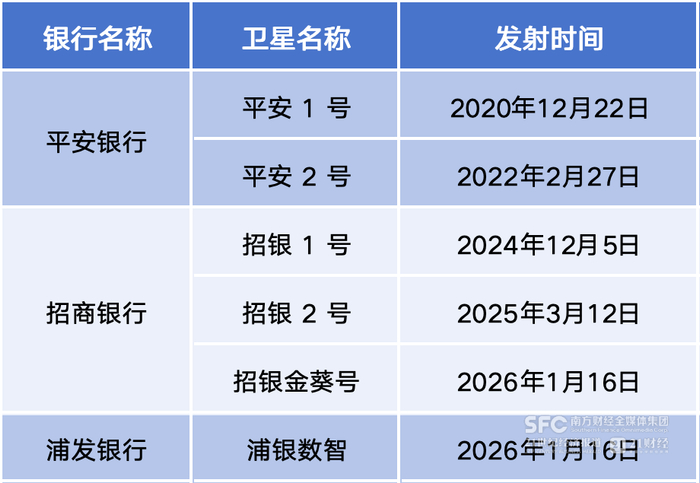
Core Viewpoint - The recent successful launch of satellites by major banks in China, including China Merchants Bank and Shanghai Pudong Development Bank, signifies a strategic shift towards utilizing satellite technology for enhancing financial services and risk management in the banking sector [1][2][5]. Group 1: Satellite Launches and Developments - China Merchants Bank launched the "Zhaoyin Jinkui" satellite on January 16, 2026, as part of the "Tianqi Constellation," which aims to enhance global coverage and communication capabilities [1][5]. - Shanghai Pudong Development Bank's "Puyin Shuzhi" satellite was also launched on the same day, contributing to the "Tianqi Constellation" [5]. - Previous satellite launches by Ping An Bank include "Ping An 1" in December 2020 and "Ping An 2" in February 2022, indicating a growing trend among banks to invest in satellite technology [2][3]. Group 2: Business Logic Behind Satellite Investments - Banks are leveraging satellite technology for remote monitoring of collateral and project progress, significantly improving post-loan management efficiency and reducing credit risk [2][8]. - The ability to maintain business continuity during extreme scenarios, such as natural disasters, is enhanced through satellite communication technology [13]. - By participating in satellite launches, banks are aligning with national strategies and expanding their financial services to support the commercial space industry [14]. Group 3: Applications of Satellite Technology in Banking - Satellite technology allows for real-time monitoring of agricultural and industrial activities, addressing information asymmetry in lending [8][10]. - The integration of satellite data into risk management systems has improved the accuracy of monitoring construction projects, with a reported precision of over 95% in tracking project progress [9][11]. - The use of satellite technology in supply chain finance helps overcome challenges faced by small and medium enterprises, enabling better access to credit [10][12]. Group 4: Future Prospects and Innovations - The ongoing development of satellite technology is expected to further penetrate various banking operations, enhancing risk prevention capabilities in sectors like agriculture and logistics [14][15]. - Innovations such as the "Dashanque" system by WeBank utilize satellite imagery and AI to assess agricultural productivity, providing tailored credit solutions to farmers [15]. - The trend of banks investing in satellite technology reflects a broader commitment to technological innovation and improved service delivery in the financial sector [16].