红利策略

Search documents
本周聚焦:25Q2存贷款增长有哪些特征?
GOLDEN SUN SECURITIES· 2025-07-20 09:58
Investment Rating - The report does not explicitly state an investment rating for the banking sector Core Insights - The growth of domestic RMB loans reached 268.6 trillion yuan by the end of June 2025, with a year-on-year growth rate of 7.10%, indicating a downward shift in the loan growth rate since 2024 [1] - The total domestic RMB deposit balance was 320.2 trillion yuan by the end of June 2025, with a year-on-year growth rate of 8.30%, showing an acceleration in deposit growth due to a low base effect from the previous year [3] - The issuance of special refinancing bonds reached 45.87 billion yuan in Q2, with a total issuance of 1.8 trillion yuan in the first half of the year, which is expected to gradually reduce the negative impact on credit growth [1][3] Summary by Sections Loan Growth - In Q1 2025, new loans added amounted to 9.7 trillion yuan, while Q2 saw a decrease to 3.1 trillion yuan, primarily due to a reduction in medium to long-term loans for enterprises [1] - Short-term loans and bill financing for enterprises decreased by 129 billion yuan, with bill financing down by 660.2 billion yuan as banks shifted focus to higher-yielding loans and bonds [1] Deposit Growth - Q1 2025 saw an increase of 13.0 trillion yuan in deposits, while Q2 added 5.0 trillion yuan, with significant contributions from non-bank deposits, household deposits, and government deposits [3] - The structure of deposits is shifting from on-balance-sheet to off-balance-sheet, driven by declining deposit rates [3] Sector Outlook - Short-term impacts from tariff policies may affect exports, but long-term expansionary policies aimed at stabilizing the real estate market and boosting consumption are expected to support economic growth [4] - The banking sector is anticipated to benefit from these policies, with specific banks like Ningbo Bank, Postal Savings Bank, and China Merchants Bank highlighted as potential investment opportunities [7]
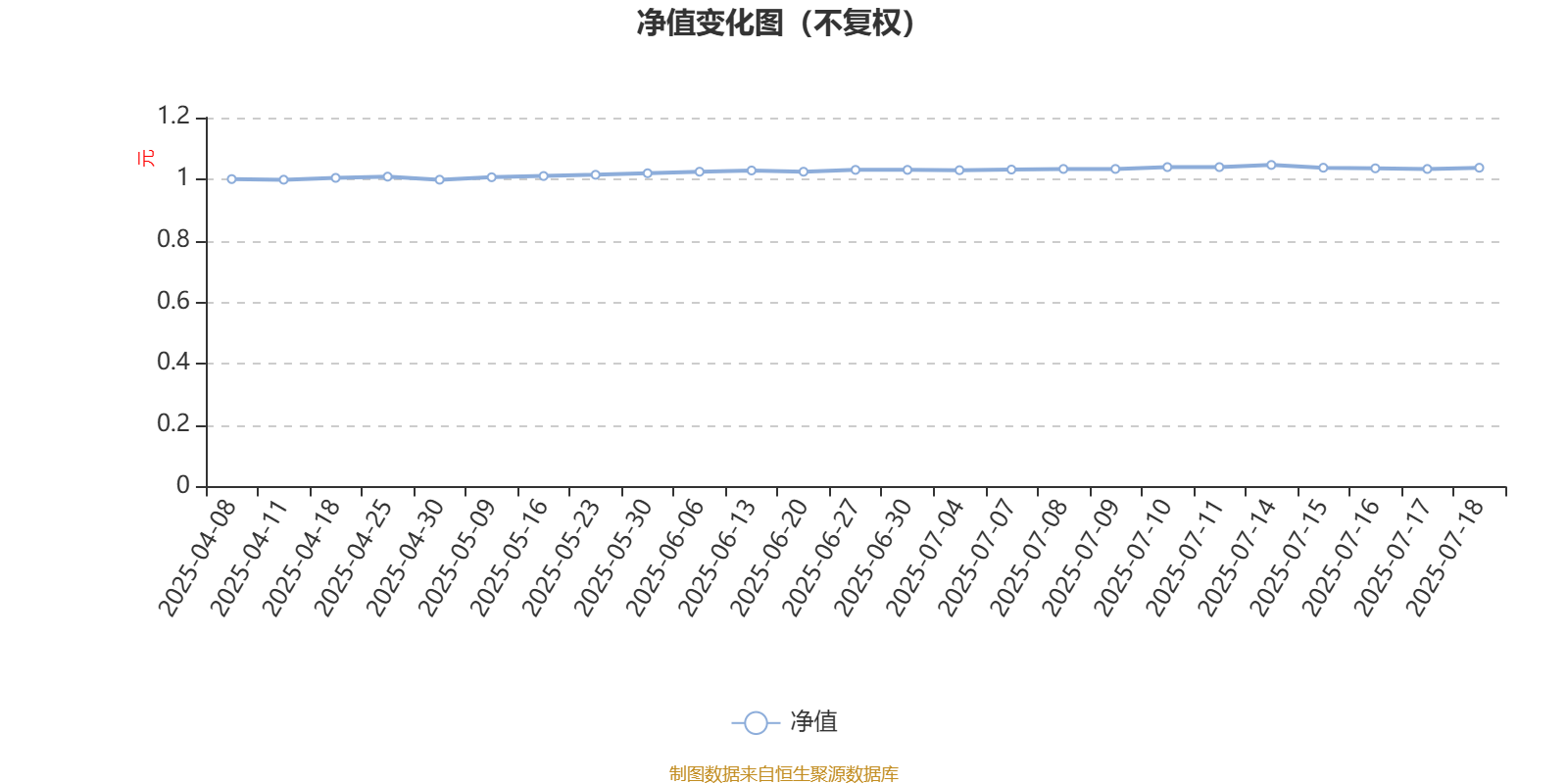
中欧红利智选混合A:2025年第二季度利润722.16万元 净值增长率3%
Sou Hu Cai Jing· 2025-07-20 07:12
Core Viewpoint - The AI Fund, China Europe Dividend Smart Mixed A (023584), reported a profit of 7.22 million yuan for Q2 2025, with a net value growth rate of 3% during the period [3] Group 1: Fund Performance - The fund's profit for the second quarter was 7.22 million yuan, resulting in a weighted average profit per fund share of 0.03 yuan [3] - As of the end of Q2, the fund's scale was 248 million yuan [3] - The unit net value as of July 18 was 1.037 yuan [3] Group 2: Fund Manager Insights - The fund manager, Zhang Xueming, oversees five funds, with the highest one-year return for China Europe Prosperity Selected Mixed A at 39.63%, while China Europe Quality Selected Mixed A had the lowest at 14.46% [3] - The fund management indicated that the dividend strategy remains a foundational strategy, complementing the prosperity strategy, allowing for rotation to enhance returns in specific months [3] Group 3: Investment Strategy - The dividend strategy is referred to as a "safety net strategy" or carry strategy overseas, with its foundation based on dividend returns, considered to have the highest market lower limit [3] - The annualized return is easily measurable, and the fund management emphasizes the importance of being objective regarding dividend performance, noting that significant fluctuations in performance are often unreasonable [3] Group 4: Top Holdings - As of the end of Q2 2025, the fund's top ten holdings included Zhongchuang Zhiling, OPPLE Lighting, Tiandi Technology, Zhonggu Logistics, Shouhua Environmental Protection, Huate Dain, Shangfeng Cement, Xinhua Insurance, Ordos, Midea Group, and Zhengmei Machine [4]

又有绩优基金经理升职!
Zhong Guo Ji Jin Bao· 2025-07-19 07:46
Group 1 - Liu Jian has been promoted to Vice General Manager of Tongtai Fund, marking another case of a high-performing fund manager advancing within the company [1][3] - Liu Jian previously held positions at Hang Seng Bank (China), Baoying Fund Management, and Ping An Fund Management before joining Tongtai Fund in June 2020 [3] - Liu Jian has managed two funds, Tongtai Preferred Allocation 3-Month Holding Mixed FOF and Tongtai Active Allocation 3-Month Holding Stock FOF, since late 2021 [3][4] Group 2 - The Tongtai Preferred Allocation 3-Month Holding Mixed FOF has shown strong performance, with a net value growth rate of 24.55% over the past year, significantly outperforming its benchmark of 12.84% [4] - The fund's strategy includes a mix of different types of ETFs and index funds, along with selected active funds, aiming for both relative and absolute returns [4] - Liu Jian anticipates structural investment opportunities in the capital market, focusing on new productivity sectors and benefiting from a low-interest-rate environment [4] Group 3 - The trend of high-performing fund managers being promoted to higher positions is evident in the industry, with several recent examples from various fund companies [6][7] - Promotions often reflect a strategy to attract and retain top-performing fund managers, although there are concerns about potential conflicts of interest and divided focus due to dual roles [7]
又有绩优基金经理升职!
中国基金报· 2025-07-19 07:23
Group 1 - Liu Jian has been promoted to Vice General Manager of Tongtai Fund, marking another case of a high-performing fund manager advancing within the company [2][4] - Liu Jian previously held positions at Hang Seng Bank (China), Baoying Fund Management, and Ping An Fund Management before joining Tongtai Fund in June 2020 [4] - Under Liu Jian's management, the Tongtai Optimal Allocation 3-Month Holding Mixed FOF achieved a net value growth rate of 24.55% over the past year, significantly outperforming its benchmark of 12.84% [5] Group 2 - Liu Jian anticipates structural investment opportunities in the capital market, focusing on new productive forces in the stock market and a relatively certain loose monetary environment in the bond market [6] - The fund's strategy includes a mix of different types of ETFs and index funds, supplemented by selected active funds to balance relative and absolute returns [5] - The trend of high-performing fund managers being promoted to higher positions is noted, with several cases in the industry this year, indicating a strategy to attract and retain top talent [8]

农行中行等热推红利策略产品,苏银理财年终奖产品收益下滑
2 1 Shi Ji Jing Ji Bao Dao· 2025-07-18 15:43
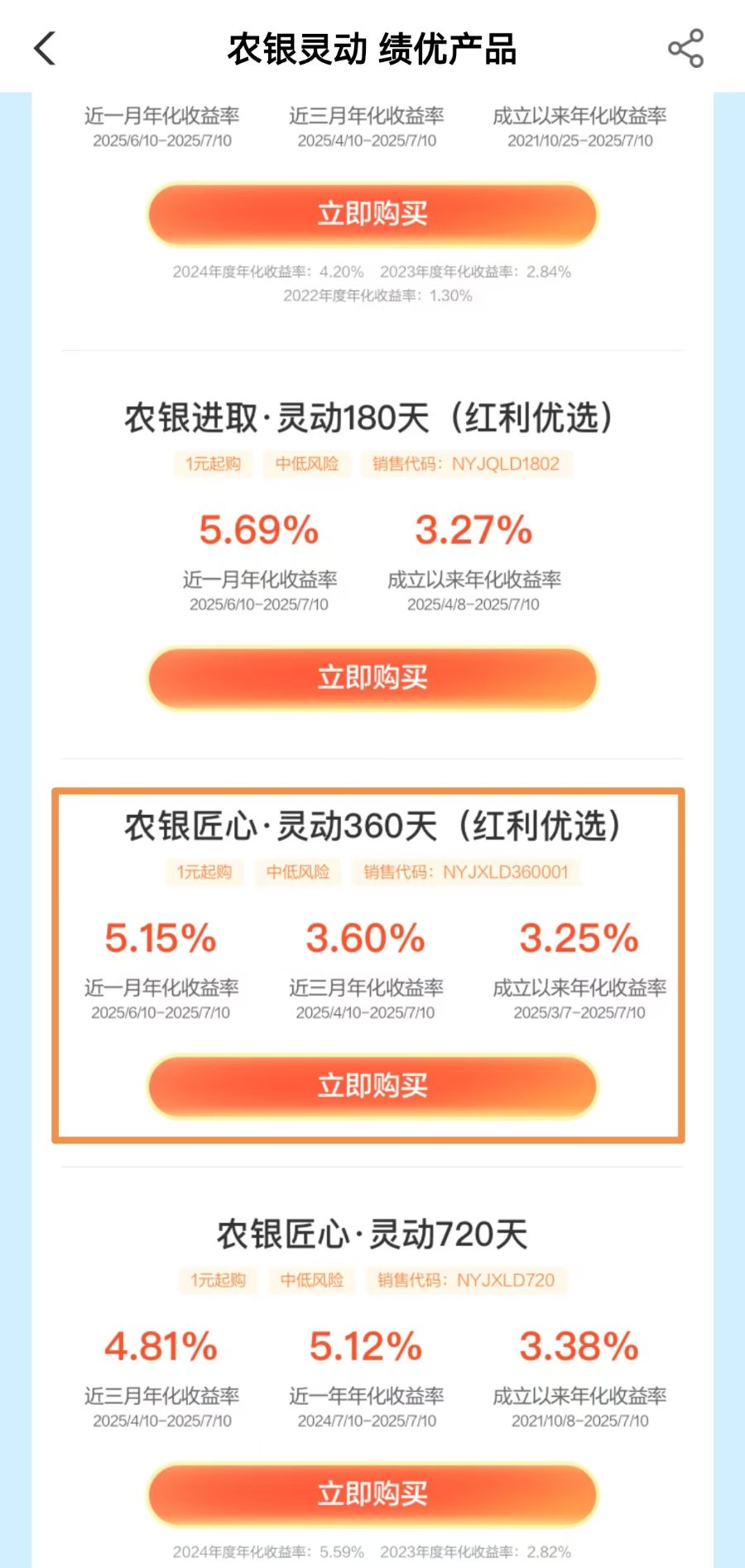
Core Viewpoint - The performance of dividend assets has surged in the first half of this year, particularly in bank stocks, which have reached historical highs, leading to increased attention on dividend strategies [1][3]. Group 1: Market Trends - In a low-interest-rate environment, various investment assets are yielding lower returns, prompting insurance funds to favor high-dividend assets [2]. - The banking sector has seen an 18.68% increase in its index year-to-date, contributing significantly to the Shanghai Composite Index surpassing 3500 points [3]. - Banks like Agricultural Bank of China and Bank of China are actively promoting dividend strategy products through their apps [3]. Group 2: Product Evaluation - The "Agricultural Bank's Craftsmanship · Flexible 360-Day Wealth Management Product (Dividend Preferred)" has a maximum drawdown of 0.05% since inception, indicating low volatility [3][4]. - The product has an annualized return of 4.6% over the past month, but its annualized return since inception is only 3.14%, ranking it below 29.61% of similar products [3][10]. - The product's comprehensive score is 51, outperforming 51.94% of similar products, with specific scores in various categories such as risk control and fee structure [4][10]. Group 3: Investment Strategy - The product employs a dividend strategy, investing primarily in fixed-income assets while allocating no more than 20% to dividend assets, which include dividend index funds and high-dividend stocks [7][12]. - This strategy is considered defensive, providing a "safety net" through dividend income, although it may underperform during market rallies [12]. - The product is designed for long-term investment, requiring a minimum holding period of 360 days, making it suitable for funds that are not needed in the short term [12][13].
红利+小微盘的杠铃,举不动了怎么办?
雪球· 2025-07-18 08:00
Core Viewpoint - The article discusses the "barbell strategy" of combining dividend stocks and small-cap stocks, which has gained popularity in recent years, but warns of its potential weaknesses as more investors adopt it [2][3]. Summary by Sections Barbell Strategy Overview - The barbell strategy consists of dividend assets and small-cap stocks, which have significantly outperformed in the past [2]. - A recent report by Lin Rongxiong from Guotou Securities suggests that the barbell strategy may become ineffective, drawing parallels with the four phases of the Japanese stock market [3][4]. Historical Performance Analysis - The basic barbell strategy, using the CSI Dividend Index and CSI 2000 Index with a 50% allocation each, has shown an excess return of approximately 2.5 percentage points since 2016, but has not consistently outperformed during bull markets [5][7]. - The enhanced version of the barbell strategy, which assumes a 5% excess return from small-cap stocks, has increased annualized excess returns to nearly 5 percentage points, yet still underperformed in certain years [8][11]. Dividend Strategy Insights - The CSI Dividend Index has a geometric average return of 6.86%, significantly better than the overall market, driven by a disciplined "reverse investment" mechanism that helps investors avoid emotional trading [22][23]. - The appeal of the dividend strategy lies in its ability to provide stable returns and act as a defensive measure during market downturns [38]. Small-Cap Strategy Insights - The small-cap factor has historically been viewed as a source of excess returns, but recent studies suggest that its performance may be more of a temporary anomaly rather than a consistent advantage [25][28]. - The true value of small-cap stocks lies in their potential for generating alpha through quantitative strategies, rather than relying solely on beta [33][37]. Conclusion - The barbell strategy is characterized as a balanced approach, with dividends providing stability and small-caps offering growth potential through alpha generation [38][39]. - Accepting the strategy's occasional underperformance is essential for long-term asset appreciation and maintaining a calm investment approach [39].

90后买银行躺收10万股息启示录:银行股是提前养老的底气吗?
Sou Hu Cai Jing· 2025-07-17 02:44
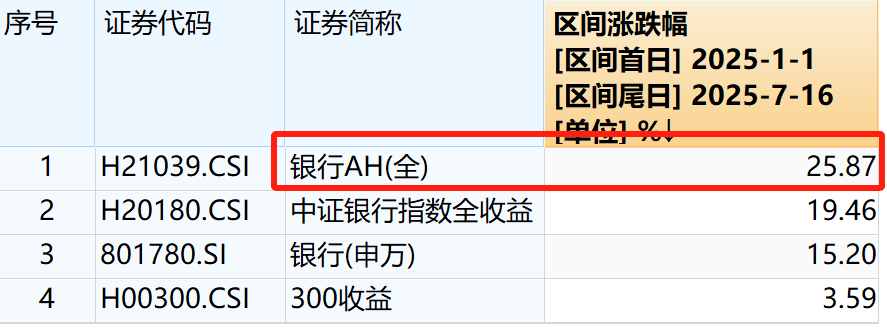
Group 1 - The core viewpoint highlights the strong performance of bank stocks in the A-share market, with several banks showing significant year-to-date gains and high dividend yields, making them attractive for investors seeking stable returns [1][2] - As of July 16, 2023, six bank stocks have increased over 30% this year, and 33 have risen over 10%, with the China Securities Bank Index reaching a new high in over a decade [1] - The average dividend yield for 25 banks remains above 4%, with some banks like Huaxia and Ping An exceeding 4.5%, which is favorable compared to current deposit rates and government bond yields [1][2] Group 2 - Despite some major shareholders reducing their stakes, the overall market sentiment remains positive, with many bank stocks still trading below their net asset value, indicating potential for valuation recovery [2] - The current economic environment, characterized by declining interest rates, has made high-yield assets scarce, positioning bank stocks as attractive options for institutional investors, particularly insurance funds [2] - The Bank AH Preferred ETF (517900) has shown strong performance, with a year-to-date return exceeding 25% and significant net inflows, indicating renewed interest in bank stocks [2][4]
红利国企ETF(510720)昨日净流入超0.6亿,市场关注低利率下分红稳定性
Sou Hu Cai Jing· 2025-07-17 01:58
Group 1 - The core viewpoint is that in the context of asset scarcity, the value of dividend-paying industries is becoming more prominent, with the banking sector leading in dividend strategies by mid-2025 due to its stable dividend capability and sustainability [1] - Analysts suggest that in a low-interest-rate environment, it is essential to select industries with stable dividends, focusing on sectors with high dividend levels such as oil and petrochemicals, home appliances, and those with strong dividend intentions like banks and transportation [1] - The current market favors stocks that combine defensive attributes with dividend certainty, as evidenced by the strong performance of the banking sector [1] Group 2 - The Hongxin Securities Dividend ETF tracks the Shanghai Dividend Index, which focuses on high-quality companies listed on the Shanghai Stock Exchange with stable dividend records, covering representative enterprises in finance, energy, and consumer sectors [1] - The index aims to provide investors with a benchmark for measuring the performance of high-dividend stocks in the Chinese market by selecting state-owned enterprises with strong continuous dividend capabilities [1] - Investors without stock accounts can consider the Guotai Shanghai State-Owned Enterprise Dividend ETF Initiation Link A (021701) and Link C (021702) [1]
基金二季报里的“调仓密码”:过半主动权益加仓出击,3500点攻防“开战”
Di Yi Cai Jing· 2025-07-16 11:48
Group 1 - The core viewpoint of the article highlights a shift in investment strategies among public funds, moving from defensive to offensive positions as they navigate the A-share market around the 3500-point mark [1][6] - Over half of the 32 disclosed active equity funds increased their stock positions in Q2, with 21 funds maintaining over 90% stock allocation [2][4] - Notable funds like Zhongou Digital Economy saw their scale surge from 0.117 billion to 1.527 billion, marking a 12-fold increase due to positive performance [4] Group 2 - The innovation drug sector has become a favored area for many funds, with Longcheng Pharmaceutical Industry Select A increasing its stock allocation by 14.4 percentage points to 90.72% in Q2 [2][3] - The average return of the top ten holdings in Longcheng Pharmaceutical Industry Select was 173.76% year-to-date, leading to a fund return of 102.52% [3] - The banking sector saw a 17.24% average increase among 42 bank stocks since Q2, although some funds began to reduce their holdings in this sector due to high valuations [6][7] Group 3 - The article notes a trend of rapid sector rotation in the market, with themes like humanoid robots, innovative drugs, and new consumption experiencing quick shifts in performance [6] - Fund managers indicated that the redirection towards market-oriented dividend stocks was due to the declining attractiveness of traditional dividend stocks, particularly in the banking sector [7] - The innovation drug sector is expected to continue thriving in Q3, driven by supportive policies and clinical data releases, with a focus on overseas authorization and domestic sales growth [8]
守一份分红,得一份从容:全市场代表性红利指数盘点
天天基金网· 2025-07-16 11:36
Core Viewpoint - The article emphasizes the increasing interest of investors in dividend strategies as a response to market volatility and low interest rates, highlighting the importance of companies that generate consistent cash flow and share it with shareholders [2][26]. Group 1: Dividend Strategy - Dividend is a method for companies to return earnings to shareholders, typically in cash or stock, with a focus on high dividend yield as a core selection strategy [4][6]. - The appeal of dividend strategies lies in their dual nature: providing stable cash flow akin to bonds and potential capital appreciation through market undervaluation [6][30]. - The high dividend strategy, represented by the CSI Dividend Low Volatility Index, has outperformed the Wind All A Index 77% of the time from 2013 to the present [6][7]. Group 2: Mainstream Dividend Indices - There are three main types of dividend indices: traditional dividend strategies focusing on high dividend yield, enhanced dividend strategies incorporating additional factors, and Hong Kong dividend strategies benefiting from unique market conditions [8][10][12]. - Traditional dividend strategies emphasize high dividend yield from mature industries, while enhanced strategies aim for richer return characteristics by adding factors like low volatility and high ROE [10][11]. - Hong Kong dividend strategies leverage lower valuations and higher yields, presenting unique investment opportunities despite potential currency risks and dividend taxes [12][15]. Group 3: Configuration Logic - Dividend assets are increasingly seen as advantageous in the current market environment, providing a stable investment option amid economic transitions [20][26]. - The article discusses the "barbell strategy," where dividend funds can complement small-cap growth investments, balancing high-risk and low-volatility assets [22][23]. - As the risk-free interest rate declines, traditional fixed-income assets lose appeal, making high-dividend blue-chip stocks more attractive for long-term investors [29][30].