
红利资产

Search documents
工银养老产业股票A:2025年上半年利润1.11亿元 净值增长率6.75%
Sou Hu Cai Jing· 2025-09-04 15:58
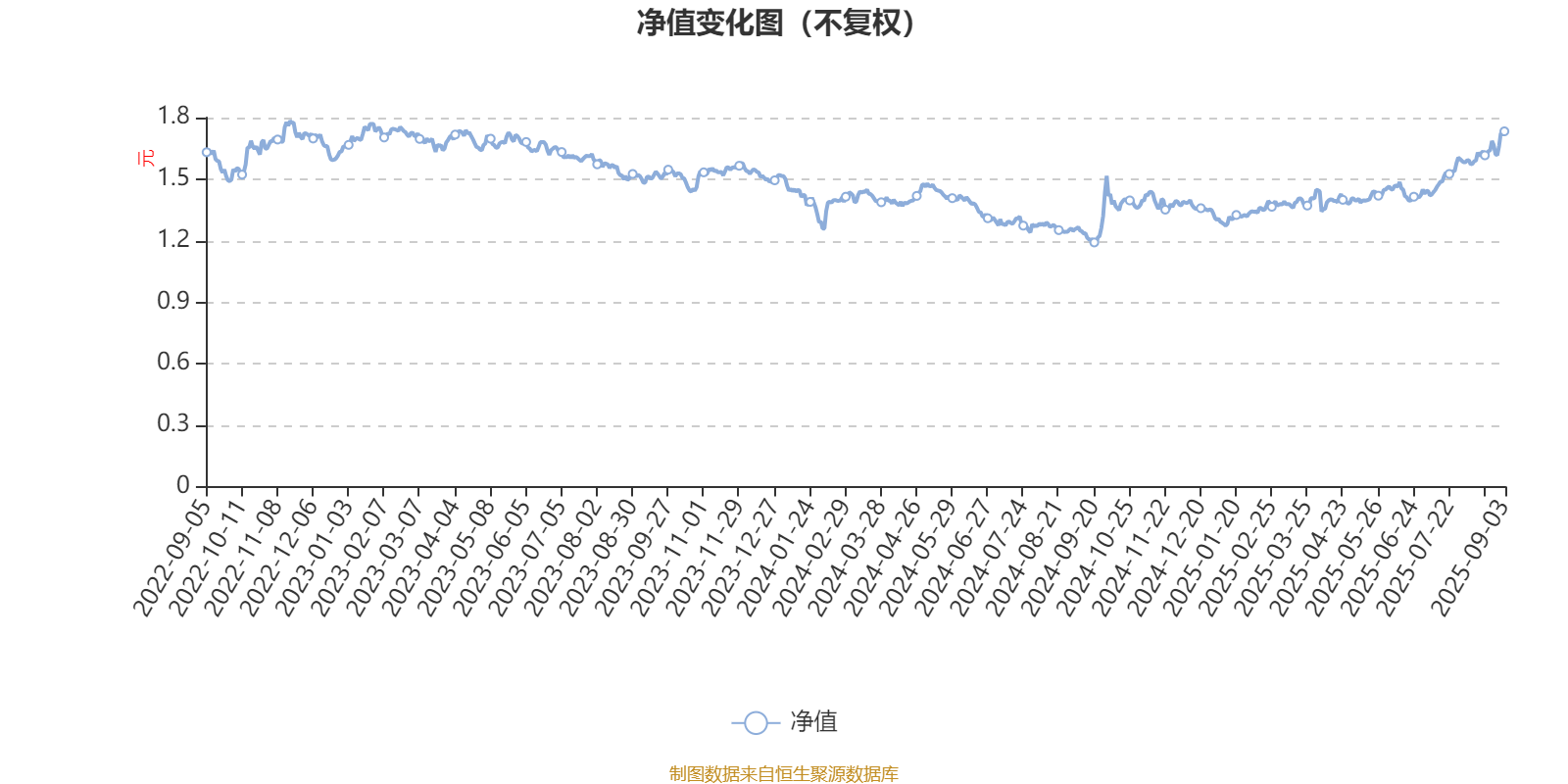
Core Viewpoint - The AI Fund ICBC Pension Industry Stock A (001171) reported a profit of 111 million yuan for the first half of 2025, with a weighted average profit per fund share of 0.0911 yuan, and a net asset value growth rate of 6.75% during the reporting period [3] Fund Performance - As of September 3, the fund's net value growth rates were 18.94% over the past three months, 25.95% over the past six months, 38.09% over the past year, and 5.03% over the past three years, ranking 42/54, 43/54, 45/53, and 30/47 among comparable funds respectively [6] Fund Valuation - As of June 30, 2025, the fund's weighted price-to-earnings ratio (TTM) was approximately 39.95 times, with a weighted price-to-book ratio (LF) of about 4.09 times, and a weighted price-to-sales ratio (TTM) of approximately 5.39 times, compared to the average of comparable funds [12] Growth Metrics - For the first half of 2025, the fund's weighted revenue growth rate (TTM) was 0.03%, and the weighted net profit growth rate (TTM) was -0.01%, with a weighted annualized return on equity of 0.1% [19] Fund Holdings and Structure - As of June 30, 2025, the fund had a total of 80,600 holders, with a total of 1.171 billion shares held. Management employees held 1.6579 million shares (0.14%), institutions held 17.96%, and individual investors held 82.04% [36] - The fund's top ten holdings included companies such as Heng Rui Pharmaceutical, Kelun Pharmaceutical, and Mindray Medical [41]

农银红利甄选混合A:2025年上半年末换手率达566.75%
Sou Hu Cai Jing· 2025-09-04 07:39
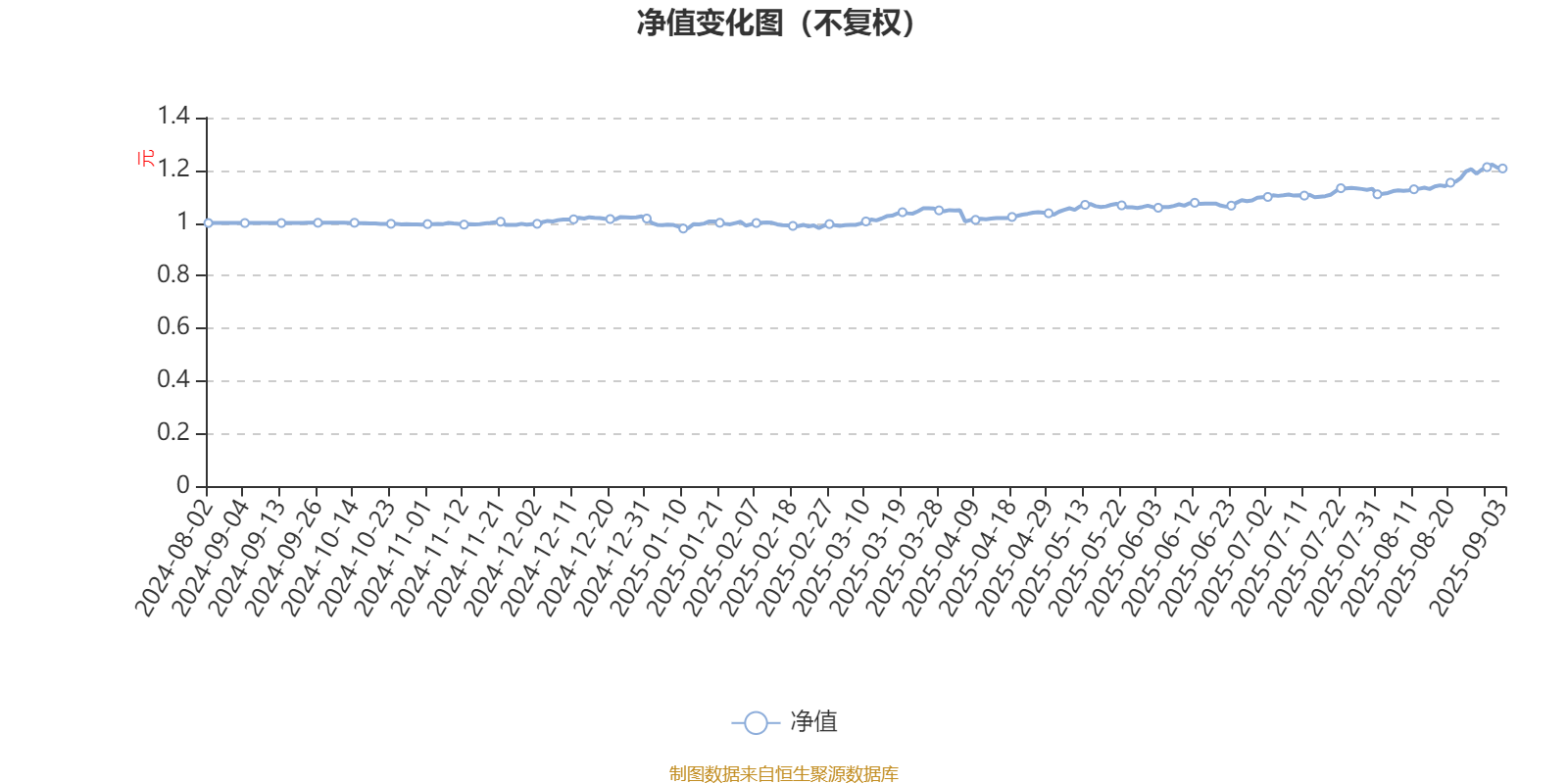
Core Viewpoint - The AI Fund, Agricultural Bank's Dividend Selection Mixed A (021455), reported a profit of 1.4429 million yuan for the first half of 2025, with a net value growth rate of 7.74% [3] Group 1: Fund Performance - As of September 3, 2025, the fund's unit net value was 1.207 yuan, with a recent three-month growth rate of 14.00%, a six-month growth rate of 21.99%, and a one-year growth rate of 20.70% [5][3] - The fund's scale reached 8.9124 million yuan by the end of the first half of 2025 [3][36] Group 2: Investment Strategy - The fund manager highlighted preferred investment directions including defensive dividend assets such as banks, thermal power, hydropower, and highways; consumer sectors like hotels and scenic spots during peak travel seasons; agricultural chemicals; and military sectors influenced by geopolitical events [3] Group 3: Valuation Metrics - As of June 30, 2025, the fund's weighted average price-to-earnings (P/E) ratio was approximately 15.8 times, with a weighted price-to-book (P/B) ratio of about 1.77 times, and a weighted price-to-sales (P/S) ratio of around 1.6 times, all higher than the respective averages of comparable funds [10] Group 4: Growth Metrics - For the first half of 2025, the weighted revenue growth rate of the stocks held by the fund was 0.06%, and the weighted net profit growth rate was 0.01% [20] Group 5: Fund Composition and Shareholder Structure - As of June 30, 2025, the fund had 596 holders, with individual investors holding 98.30% of the shares, while management and institutional investors held 2.47% and 1.70%, respectively [39] - The fund's top ten holdings included companies like Changjiang Electric Power and Luxshare Precision [44]
A股收评:创指跌超4%科创50跌6.09%,算力硬件板块全线走弱!近3000股下跌,成交2.58万亿放量1862亿;机构解读
Sou Hu Cai Jing· 2025-09-04 07:22
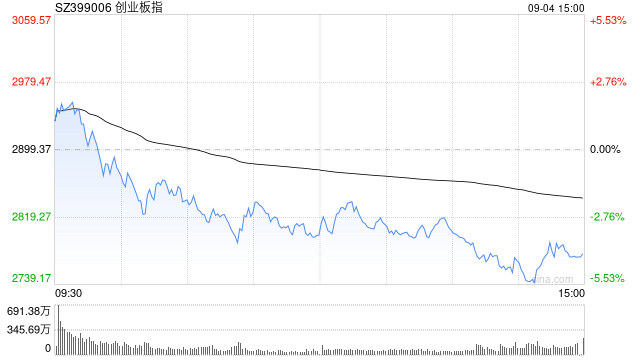
Market Overview - The three major stock indices collectively declined, with the Shanghai Composite Index falling over 1%, the Shenzhen Component Index down nearly 3%, and the ChiNext Index dropping over 4% [2][3] - The overall market saw nearly 3,000 stocks decline, indicating a bearish sentiment [2] Sector Performance - The consumer sector was active, with food and beverage, retail, and beauty care leading the gains, including stocks like Huanlejia and Yiyi Co. hitting the daily limit [2] - The financial sector also showed strength in the afternoon session [2] - Conversely, computing hardware stocks fell sharply, with semiconductor stocks like Cambrian Technology dropping over 13% [2] - The military industry continued to adjust, with stocks like Beifang Longzhong hitting the daily limit down [2] Notable Hot Sectors 1. **Photovoltaic Equipment** - Tongrun Equipment hit the daily limit, with other stocks like Shuneng Electric and JA Solar also rising [5] - The new energy storage capacity in China reached a record high of over 100 GW in the first half of the year, with expectations to reach 291 GW by 2030 [5] 2. **Retail** - Stocks such as Huijia Times and Guofang Group hit the daily limit [6] - Several cities have initiated new rounds of consumer vouchers, including a 60 million yuan automotive consumption voucher in Ningbo and additional retail and dining vouchers in Jinan [6] Institutional Insights - CITIC Securities highlighted the ongoing preference for high-dividend "redemption assets" in the mechanical sector, with 24 companies meeting cash flow criteria for potential dividend increases [9] - China Galaxy Securities anticipates a continuation of structural market trends driven by liquidity, with a focus on sectors showing high profitability or positive trends [9]
红利国企ETF(510720)近5日吸金超3.8亿元,市场回调中关注防御性配置价值,关注真月月分红,连续分红16个月的红利国企ETF
Sou Hu Cai Jing· 2025-09-04 03:36
Group 1 - The core viewpoint is that the defensive allocation value of dividend sectors is becoming prominent amid a general outflow of institutional funds, highlighting their defensive function [1] - Despite not being the main focus of the market in the short term, the allocation value of dividend assets is rising due to tightening liquidity and pressure from major shareholders reducing their holdings, potentially becoming an important support for the market in the future [1] - Dividend assets offer stable dividends and policy safety margins, making them valuable for allocation [1] Group 2 - The Dividend State-Owned Enterprise ETF (510720) tracks the State-Owned Enterprise Dividend Index (000151), which selects stocks with high dividend characteristics, stable dividends, and good liquidity, primarily covering traditional sectors such as finance, energy, and industry [1] - The Dividend State-Owned Enterprise ETF (510720) has achieved monthly dividends since its listing, having distributed dividends for 16 consecutive months, making it one of the few ETFs in the market that practices monthly dividends [1] - Investors without stock accounts can consider the Guotai SSE State-Owned Enterprise Dividend ETF Initiator Link A (021701) and Guotai SSE State-Owned Enterprise Dividend ETF Initiator Link C (021702) [1]
中信建投:红利资产备受市场青睐 关注机械板块现金充裕、分红比例存潜力公司
智通财经网· 2025-09-03 23:48
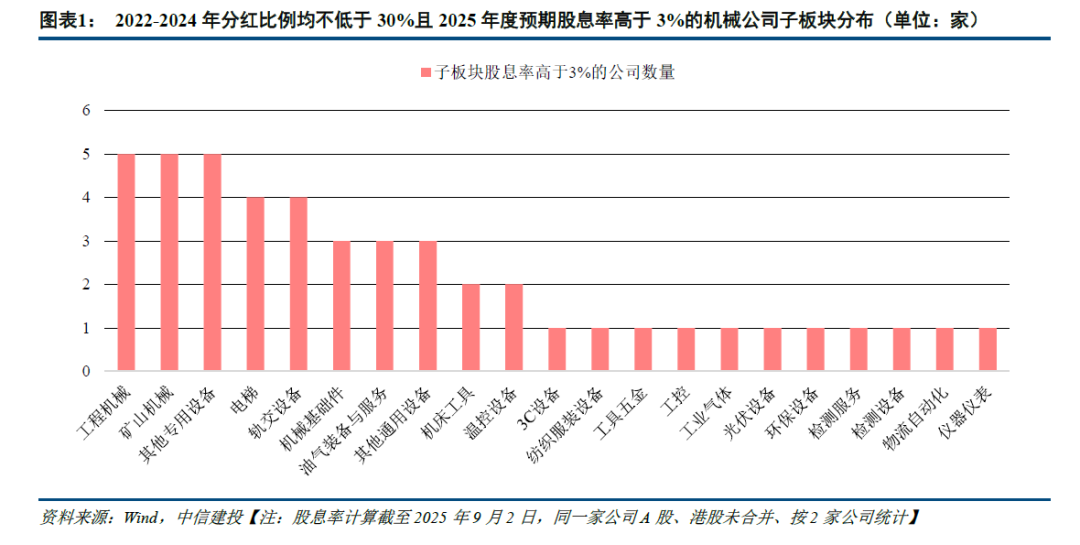
Group 1 - The core viewpoint is that high dividend "redemption assets" remain favored in the market for 2025, following the "special valuation" and "state-owned enterprise market value assessment" trends in 2023 and 2024 [1] - The fixed asset investment growth rate is low, with a cumulative growth rate of 1.60% from January to July 2025, indicating a continued downtrend in real estate investment at -12.00% and a decline in manufacturing investment growth by 3.0 percentage points compared to 2024 [1] - In the machinery sector, 24 companies meet the criteria of having an average cash content of net profit exceeding 50% from 2022 to 2024 and a current market value cash content exceeding 30% [1][3] Group 2 - A total of 49 companies in the machinery industry are expected to have a dividend yield exceeding 3% and have announced a dividend payout ratio of no less than 30% from 2022 to 2024, representing 6.60% of the sample [2] - The distribution of high dividend companies includes segments such as engineering machinery, mining machinery, elevators, and rail transit, with a significant number of high dividend yield enterprises available [2] - There are still over 15 quality companies with a dividend payout ratio of no less than 30% and an expected dividend yield exceeding 5% for 2025 [3]

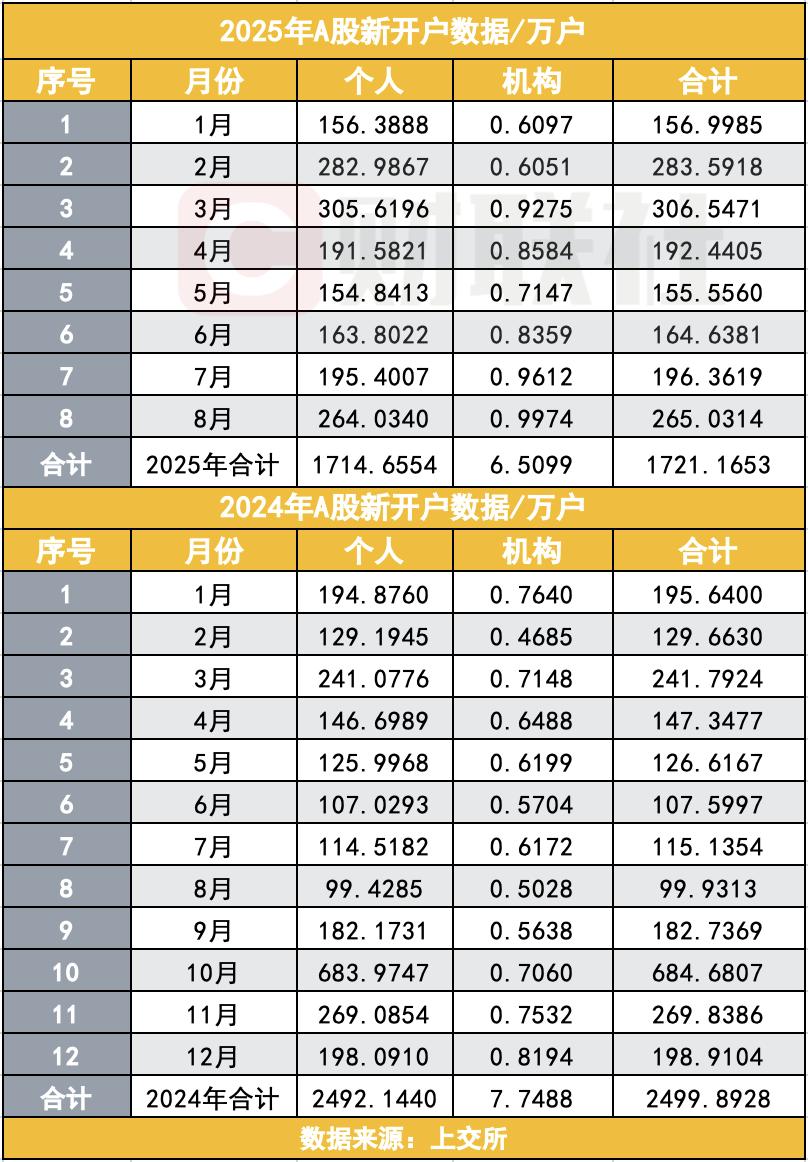
A股今年新增开户1721万户
3 6 Ke· 2025-09-03 00:15
Core Viewpoint - The A-share market has seen a significant increase in new account openings, with 2.65 million new accounts in August 2025, marking a year-on-year growth of 165% and a month-on-month increase of 35% [1][2]. Monthly New Account Data - In January 2025, the total number of new accounts was 1.57 million, which nearly doubled to 2.84 million in February. March saw a further increase to over 3 million accounts, while April experienced a decline of 37.22% to 1.92 million due to market fluctuations. The numbers rebounded in subsequent months, reaching 1.96 million in July and 2.65 million in August [2][3]. - Cumulatively, 17.21 million new accounts were opened in 2025, a 47.9% increase compared to the same period in 2024 [1][3]. Market Performance and Trends - The A-share market exhibited a strong performance in August, with the Shanghai Composite Index closing at 3,857.93 points, reflecting a monthly increase of 7.97% and a year-to-date increase of 14.74% [5]. - The Shenzhen Component Index surged by 15.32%, while the ChiNext Index saw a remarkable rise of 24.13%, reaching its highest level since March 2022. The STAR 50 Index also experienced a significant increase of 28%, marking its largest monthly gain since its inception [5][6]. Supporting Factors for Market Strength - The market's upward trend is supported by three main factors: a loose liquidity environment, steady recovery in corporate earnings across various sectors, and increased domestic stimulus policies aimed at technology innovation and high-end manufacturing [6][7]. - The average daily trading volume exceeded 2 trillion yuan, with several trading days surpassing 3 trillion yuan, indicating a healthy market environment characterized by rising volume and price [5][6]. Future Market Outlook - Analysts predict that the market will maintain a trend of oscillating upward, driven by accumulated profit effects and continued inflow of incremental capital. However, there may be a slowdown in the rate of increase due to profit-taking by investors [8][9]. - The focus for the upcoming period will be on sectors benefiting from improved supply-demand dynamics, consumer spending, and technological self-sufficiency, particularly in AI, semiconductors, and high-tech industries [10][11].
狂买49亿股!险资二季度重仓买了这些 投资者能“抄作业”吗
Xin Jing Bao· 2025-09-02 14:30
Core Viewpoint - Insurance companies are increasingly investing in equity assets, particularly high-dividend stocks, to enhance returns amid a declining interest rate environment and to better match the duration of their assets and liabilities [1][4][5]. Group 1: Insurance Companies' Stock Holdings - As of the end of Q2, insurance companies held a total of 926.99 billion shares across 731 stocks, an increase of 49.24 billion shares from the previous quarter [2][3]. - The total balance of funds utilized by insurance companies exceeded 36 trillion yuan, a year-on-year increase of 17.4%, with stock investments reaching 3.07 trillion yuan, marking a significant rise in allocation to equities [2][4]. - The top ten stocks heavily held by insurance companies include Minsheng Bank, Shanghai Pudong Development Bank, and China Unicom, with each holding over 10 billion shares [2][3]. Group 2: Investment Trends and Strategies - Insurance companies are focusing on high-dividend, low-volatility stocks, reflecting a shift from traditional fixed-income investments due to the low yield environment [4][6]. - The recent trend shows a significant increase in equity investments, with 174 new stocks added to their portfolios by the end of Q2 [2][3]. - The insurance sector is also experiencing a wave of shareholding increases, with nearly 30 instances of shareholding increases reported by mid-August [3][4]. Group 3: Market Outlook and Future Investments - Most insurance institutions maintain an optimistic outlook for the A-share market in the second half of the year, expecting the Shanghai Composite Index to remain between 3200 and 3800 points [7][8]. - Key sectors of interest include pharmaceuticals, electronics, banking, and communication, with a focus on new productive forces and high-dividend assets [7][8]. - Major insurance companies plan to enhance their equity investment strategies, emphasizing the importance of investment capabilities in their competitive positioning [6][8].
A股中期分红刷新历史新高,红利低波ETF泰康(560150)逆市上涨,近一年净值涨幅居同类产品第一
Xin Lang Cai Jing· 2025-09-02 05:41
Group 1 - The core viewpoint is that dividend low-volatility ETFs, particularly the Taikang Dividend Low-Volatility ETF (560150), are showing strong performance and growth, with significant increases in net value and scale over the past year [1][2] - As of September 1, 2025, the Taikang Dividend Low-Volatility ETF has achieved a net value increase of 20.00% over the past year, ranking first among comparable funds [1] - The A-share market has seen a record high in cash dividend announcements, with over 800 listed companies declaring a total dividend amount of 642.8 billion yuan, marking a historical peak [1] Group 2 - According to Everbright Securities, dividend assets are considered core assets in the A-share market, possessing irreplaceable value compared to growth stocks, especially with many companies announcing profit distribution plans for the 2024 fiscal year [2] - The Taikang Dividend Low-Volatility ETF closely tracks the CSI Dividend Low-Volatility Index, which selects 50 securities based on liquidity, continuous dividends, moderate dividend payout ratios, positive growth in earnings per share, and low volatility [2]
国企红利ETF(159515)最新规模创近1月新高!机构:红利资产仍具价值
Sou Hu Cai Jing· 2025-09-02 03:40
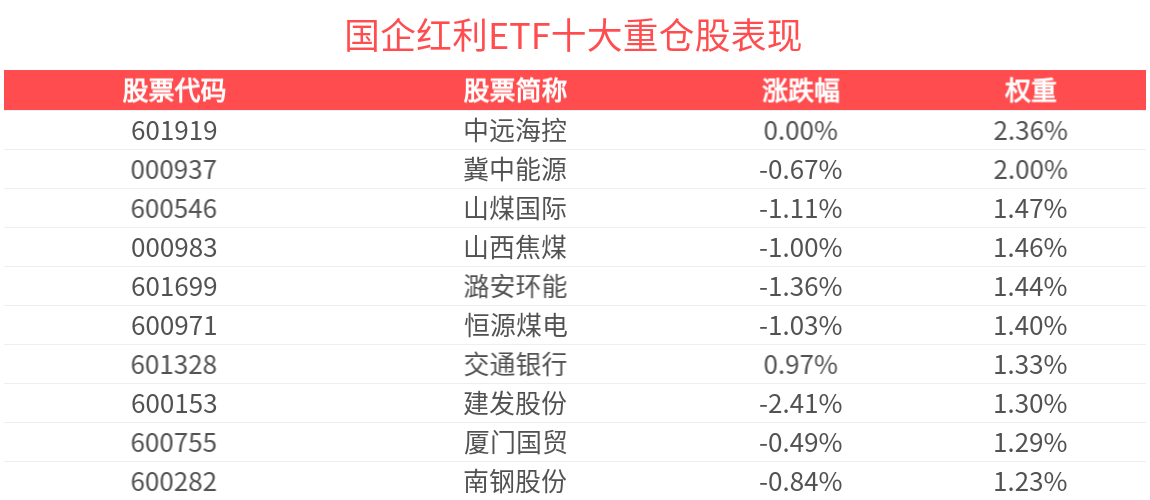
Group 1 - The China Securities State-Owned Enterprises Dividend Index (000824) decreased by 0.38% as of September 2, 2025, with mixed performance among constituent stocks [1] - The top-performing stocks included Chongqing Rural Commercial Bank (601077) up by 3.45%, Shanghai Rural Commercial Bank (601825) up by 2.97%, and China Merchants Bank (600036) up by 2.22% [1] - The National Enterprise Dividend ETF (159515) was adjusted downwards, with the latest price at 1.14 yuan [1] Group 2 - The National Enterprise Dividend ETF reached a new high in size at 51.2135 million yuan and a new high in shares at 44.7866 million shares in the past month [1] - China Galaxy Securities predicts a volatile upward trend in the A-share market, emphasizing the appeal of dividend assets with high safety margins and low valuations in the current market environment [1] - Everbright Securities highlights the irreplaceable value of dividend assets as core assets in the A-share market, especially with many companies implementing profit distribution plans for the 2024 fiscal year [1] Group 3 - The China Securities State-Owned Enterprises Dividend Index includes 100 listed companies selected for high cash dividend yields, stable dividends, and certain scale and liquidity [2] - As of August 29, 2025, the top ten weighted stocks in the index accounted for 16.84% of the total index weight, with China COSCO Shipping Holdings (601919) being the highest at 2.36% [2][4]





红利国企ETF(510720)4日吸金超5亿元,连续16个月分红
Sou Hu Cai Jing· 2025-09-02 02:06
Core Viewpoint - Technology stocks are experiencing a general pullback while dividend assets are performing well, indicating a potential shift in investment strategy towards safer assets in the current market environment [1] Group 1: Market Performance - The Dividend State-Owned Enterprise ETF (510720) increased by 0.3% amidst the pullback in technology stocks [1] - The ETF has seen a net inflow exceeding 500 million yuan for four consecutive days, highlighting strong investor interest [1] Group 2: Investment Strategy - In a bullish market, investors are advised to allocate a portion of their portfolio to dividend assets to hedge against potential market risks [1] - China Galaxy Securities suggests that the A-share market is likely to exhibit a fluctuating upward trend, with high dividend, low valuation assets meeting the long-term funding allocation needs [1] Group 3: ETF Characteristics - The Dividend State-Owned Enterprise ETF tracks the Shanghai Stock Exchange State-Owned Enterprise Dividend Index, focusing on high-dividend central state-owned enterprises, with a dividend yield exceeding 4% over the past 12 months [1] - This ETF is among the first in China to allow monthly assessment of income distribution, having distributed dividends 16 times as of August [1]