车路云一体化

Search documents
车圈圆桌派④|车路云一体化破局需以标准统一为基础
Xin Jing Bao· 2025-07-11 14:20
Core Viewpoint - The forum on "How Intelligent Connected Vehicles Reshape New Ecosystems" emphasizes the need for standardization and innovative business models to overcome current challenges in the integration of vehicle, road, and cloud technologies in China’s automotive industry [1][4]. Group 1: Current Challenges - The integration of vehicle, road, and cloud technologies faces issues such as lack of unified standards and unclear business models, which are critical for the development of intelligent connected vehicles [1][4][6]. - The fragmentation of standards leads to an ecosystem that is not cohesive, despite China's C-V2X technology being a leader in global standards [6]. - The commercial viability of vehicle-road-cloud integration is hindered by unclear profit-sharing mechanisms and the high costs associated with infrastructure investments [6]. Group 2: Future Development Suggestions - It is suggested that the government, industry experts, and companies collaborate to establish unified data standards to facilitate cross-city and cross-device integration [5][6]. - Exploring commercial pathways is essential, focusing on how to leverage vast amounts of vehicle-road-cloud data to enhance user experience and create sustainable business models [5][6]. - A long-term strategy should involve creating a value-sharing mechanism among government, enterprises, and users to transform vehicle-road collaboration from a cost center into a profit center [6].

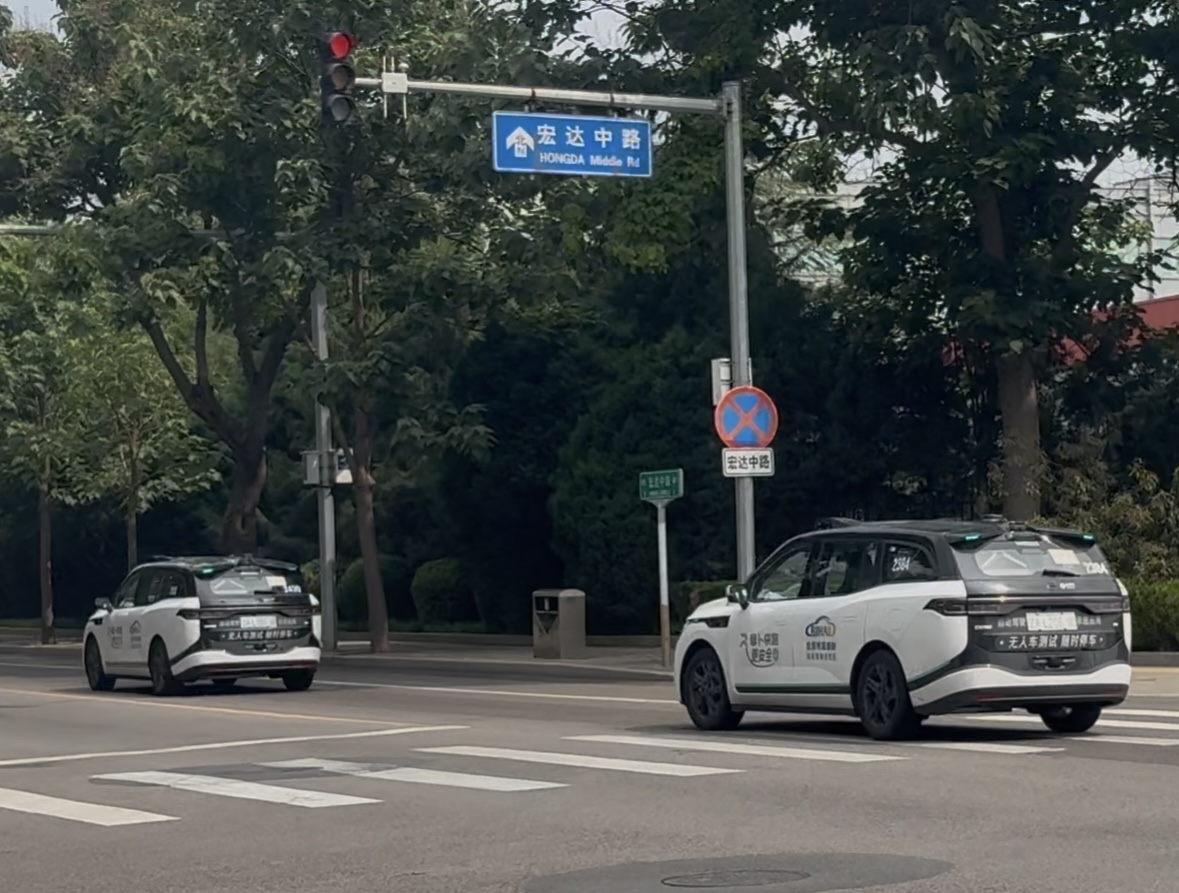
“前方有自行车,请绕行”,自动驾驶从单车智能走向车路云一体化,将催生更多高端人才需求……还有这些高科技场景,正在交通领域真实上演
Mei Ri Jing Ji Xin Wen· 2025-07-10 15:02
Group 1: Autonomous Driving Developments - The Beijing high-level autonomous driving demonstration zone has accumulated nearly 40 million kilometers of autonomous driving testing mileage, showcasing the rapid development of the autonomous driving industry in Beijing Yizhuang [2][5] - The core of the "vehicle-road-cloud integration" model is collaboration, which involves smart road infrastructure, connected vehicles, and a powerful cloud platform to enhance system safety and operational safety [3][5] - The integration of vehicle-road-cloud systems allows for improved safety in complex traffic environments, addressing challenges such as blind spots caused by larger vehicles [3][5] Group 2: Talent Demand in Autonomous Driving - The autonomous driving industry is expected to create a significant demand for high-end talent, with new job roles emerging in areas such as remote safety personnel and data management [6][8] - The industry faces challenges in handling extreme weather conditions, necessitating advanced sensor technology and multi-sensor fusion to ensure operational safety [6][7] - As the technology evolves, the need for specialized training and knowledge in the field will increase, leading to the creation of new job opportunities rather than merely replacing traditional roles [8] Group 3: Maritime Navigation Innovations - The introduction of smart pilot systems and navigation simulators is enhancing the efficiency and safety of pilot operations in maritime navigation [10][11] - The smart pilot system integrates real-time tidal information and advanced radar technology to improve decision-making accuracy for pilots [11][12] - Training simulators provide a realistic environment for pilots to practice navigating under various weather conditions, contributing to skill development and operational preparedness [12][13] Group 4: High-Speed Maglev Train Development - The successful rollout of a 600 km/h high-speed maglev train system in Qingdao marks a significant advancement in China's transportation capabilities, filling the speed gap between aviation and high-speed rail [15] - This maglev system is positioned to facilitate rapid commuting within urban clusters and enhance long-distance transportation networks, supporting the vision of a "strong transportation nation" [15]
【政策综述】关于国家支持智能网联汽车创新发展的相关政策及实施成效分析
乘联分会· 2025-07-10 08:37
Core Viewpoint - The article emphasizes the significant progress and strategic importance of smart connected vehicles in China, driven by a series of government policies and initiatives aimed at fostering innovation and commercialization in the sector [4][5][18]. Policy Framework - Since 2020, the Chinese government has introduced multiple policies to support the development of smart connected vehicles, including the "Smart Vehicle Innovation Development Strategy" and various guidelines for testing, application, and infrastructure development [4][5][6]. - The 2020 strategy aims for the establishment of a comprehensive ecosystem for smart vehicles by 2025, including technological innovation, regulatory frameworks, and safety standards [6]. Pilot Programs and Implementation - The government has initiated pilot programs in various cities to promote the integration of smart city infrastructure with smart connected vehicles, with 16 cities identified for collaborative development [7]. - By the end of 2024, significant infrastructure improvements have been made, including over 3.2 million kilometers of open testing roads and the installation of more than 50,000 5G base stations [19]. Market Growth and Projections - The market penetration of vehicles with driving assistance features has increased from 23.5% in 2021 to 57.3% in 2024, with expectations to exceed 70% by 2025 [20]. - In 2023, sales of smart connected passenger vehicles with combined assistance features reached 9.953 million units, achieving a market penetration rate of 47.3% [20]. Technological Advancements - The article highlights the ongoing development of higher-level autonomous driving technologies, with L2 and above expected to penetrate mid-range vehicles, while L3 and higher are still in testing phases [20]. - The establishment of a national standard system for vehicle connectivity is underway, with goals set for 2025 and 2030 to support the development of autonomous driving capabilities [12][11]. Safety and Regulatory Measures - Recent guidelines have been issued to enhance the management of smart connected vehicle production, including data security, software upgrades, and product recalls [10][17]. - The government is focusing on creating a robust regulatory framework to ensure the safety and reliability of smart connected vehicles as they move towards commercialization [14][17].
北京自动驾驶示范区将扩容 中国正抢占科技竞争战略制高点
Zhong Guo Xin Wen Wang· 2025-07-09 04:29
Core Insights - The rapid development of autonomous driving technology is transforming traditional transportation experiences, with Chinese companies emerging as leaders in this field [1] Group 1: Development of Autonomous Driving in China - Beijing has established the world's first integrated high-level autonomous driving demonstration zone, focusing on a comprehensive system that includes smart roads, vehicles, real-time cloud services, reliable networks, and precise mapping [2] - The demonstration zone has progressed through four phases, expanding from an initial coverage of 22.1 kilometers to 600 square kilometers, and is now entering the 4.0 phase, which will further integrate with "smart city" development [2] Group 2: Regulatory Framework and Applications - Starting April 1, 2025, the Beijing Autonomous Driving Vehicle Regulations will support various applications of autonomous vehicles, including personal passenger transport and public transport services, to enhance travel convenience and safety [3] - The demonstration zone currently supports eight application scenarios, including unmanned shuttles, autonomous sanitation vehicles, Robotaxi, and unmanned delivery services [3] Group 3: Market Potential and Competition - The global autonomous driving market is projected to reach approximately $158.3 billion in 2023, with a year-on-year growth of 29.97%, and is expected to grow to $273.8 billion by 2025 [5] - China is anticipated to become the largest Robotaxi service market, with an estimated market size of $200 million in 2025 and $39 billion by 2030, accounting for over half of the global market share [5] Group 4: Strategic Positioning and Talent - Domestic companies in China are recognized for their early and rapid development in the autonomous driving sector, possessing significant talent and technological innovation advantages [7] - The competition in autonomous driving is not limited to the US and China; many countries are investing heavily to secure strategic advantages in this technological revolution [6]
跨省货运和通勤有了新方案
Huan Qiu Wang Zi Xun· 2025-07-06 02:10
Group 1 - The core viewpoint of the news is the introduction of new solutions for inter-provincial freight and commuting through the launch of the Beijing-Xiong'an-Baoding vehicle-road-cloud pilot routes and scenarios [1] - The pilot routes focus on three main scenarios: freight logistics, airport shuttle connections, and inter-provincial commuting corridors, aiming to enhance efficiency and reduce costs [1] - The initiative is a significant breakthrough in the smart transportation sector under the Beijing-Tianjin-Hebei coordinated development strategy, promoting infrastructure interconnectivity and data sharing [1] Group 2 - The Xiong'an New Area Intelligent Connected Vehicle Operation Center was inaugurated, which will monitor and record data from all intelligent connected vehicles operating in the area [2] - The center aims to ensure the safety of intelligent connected vehicles by issuing warnings for non-compliant behaviors and will serve as a platform for showcasing the intelligent connected vehicle industry [2] - A call for collaboration to build a flexible testing ground for intelligent driving in Xiong'an was made, emphasizing the need for a rich network and abundant data for urban traffic evaluation [2]
飞行汽车加入车路云“朋友圈”,立体交通时代启幕!
3 6 Ke· 2025-07-03 07:59
Group 1: Industry Overview - The automotive industry is extending from land to air, accelerating the integration with the low-altitude economy, leading to the emergence of a three-dimensional transportation era [1] - Low-altitude flying activities are becoming central to various sectors, including urban air mobility, low-altitude logistics, tourism, emergency rescue, agricultural monitoring, and infrastructure inspection [1] - Flying cars and drones are identified as the main carriers of the future low-altitude economy, evolving into new members of the "car-road-cloud" ecosystem [1] Group 2: Technological Integration - The concept of flying cars has evolved to include both amphibious vehicles and eVTOLs, with the latter becoming the mainstream direction in the industry [2] - eVTOLs represent a cross-disciplinary fusion of aviation and automotive technologies, inheriting core capabilities from traditional aviation while adopting advancements in electrification and automation from the automotive sector [2] - The development of electric and intelligent technologies has been crucial in transitioning flying cars from concept to reality, with significant advancements in the three electric systems and smart driving technologies [2] Group 3: Company Initiatives - Several automotive companies, including XPeng, GAC, FAW, Chery, and Changan, are actively entering the flying car market, with XPeng's "land carrier" flying car set for mass production in 2026 [3] Group 4: Drone and Automotive Integration - Drones are rapidly integrating with automobiles, exemplified by the "Lingyuan" smart car-mounted drone system launched by BYD and DJI, which features dynamic takeoff and landing capabilities [4] - The integration allows for enhanced functionalities, such as real-time traffic monitoring, delivery services, and emergency reconnaissance, paving the way for a future where drones become standard automotive accessories [4] Group 5: Infrastructure Development - The 5G-A network is a critical information infrastructure for the "car-road-cloud" system, offering significantly improved speed, reduced latency, and enhanced connectivity compared to traditional 5G [5] - New information infrastructures, including the BeiDou navigation system and low-orbit satellite internet, are being utilized to support both ground and low-altitude transportation [5] Group 6: National Strategy and Collaboration - The integration of "car-road-cloud" construction and low-altitude economic development is included in national strategies, promoting resource efficiency and technological innovation [6] - Various local governments and enterprises are exploring collaborative development between intelligent connected vehicles and the low-altitude economy [6] Group 7: Future Transportation Vision - A vision for a smart transportation system is emerging, where ground and air transportation will form an integrated system characterized by technological fusion and resource sharing [8] - The evolution towards a "car-road-air-cloud" system aims to address modern transportation challenges, enhancing safety and efficiency [9] - The introduction of flying cars is expected to significantly reduce travel times, redefining commuting distances and urban space value [9][11]

五问“车路云一体化”:如何解锁自动驾驶“规模商用”密码?
3 6 Ke· 2025-07-03 06:31
Core Viewpoint - The article discusses the ongoing debate between "single vehicle intelligence" and "vehicle-road-cloud integration" in the context of autonomous driving technology, highlighting the rapid transformation of transportation systems and the emerging opportunities in smart traffic [1][2]. Group 1: Relationship Between Technologies - "Single vehicle intelligence" and "vehicle-road collaboration" are not mutually exclusive but rather complementary approaches to achieving autonomous driving [2][4]. - Single vehicle intelligence relies on the vehicle's own sensors and algorithms, while vehicle-road collaboration aims to enhance traffic system intelligence by integrating external information [3][4]. Group 2: Role of Vehicle-Road-Cloud Integration - Vehicle-road-cloud integration is essential for achieving both vehicle intelligence and broader traffic system automation, facilitating a shift from "terminal autonomy" to "global collaboration" in smart transportation [4][14]. - This integration provides a regulatory framework for autonomous driving, ensuring compliance and safety through comprehensive monitoring of vehicle operations [7][14]. Group 3: Challenges and Opportunities in Autonomous Driving - The automotive industry is transitioning from electric vehicles to smart vehicles, with a focus on integrating advanced driver-assistance systems (ADAS) into personal vehicles [5][6]. - Current ADAS features are often marketed ambiguously, leading to potential risks and misunderstandings regarding their capabilities [5][6]. Group 4: New Regulatory Paradigms - A new regulatory framework is necessary to address the unique challenges posed by autonomous driving, focusing on data transparency, social trust, risk control, responsibility assignment, and overall safety [9][10][11][12][13]. - Vehicle-road-cloud integration can enhance regulatory oversight by monitoring real-time vehicle data and ensuring compliance with traffic regulations [14][15]. Group 5: Economic Implications of Driving Commoditization - The concept of "driving commoditization" emerges as a new business model where driving services are provided by autonomous systems, shifting responsibility from human drivers to the system operators [16][17]. - This model can create significant economic benefits for local governments through the monetization of urban data and infrastructure [17][20]. Group 6: Industry Development Strategies - To activate the potential of vehicle-road-cloud integration, the industry must shift from a technology-driven mindset to a value-driven approach, focusing on creating and capturing value through innovative services [20][22]. - Developing "killer applications" like Robotaxi can drive the scale economy of vehicle-road-cloud integration, facilitating broader adoption of autonomous driving technologies [23][24][26].
行进中国丨重庆汽车产业向“新”而行
Ren Min Wang· 2025-07-02 07:17
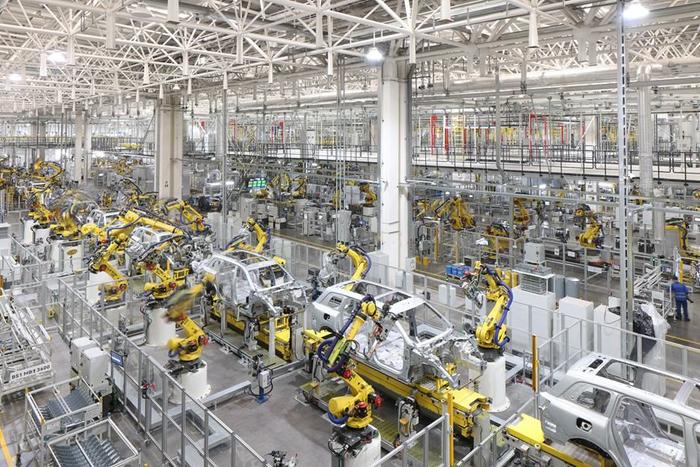
Group 1: Company Developments - The Seres Super Factory in Chongqing has achieved a production milestone with the delivery of over 200,000 units of the Wanjie M9, showcasing advanced automation capabilities with 100% automation rates in welding, painting, and servo press lines, allowing for a vehicle to be produced in as little as 30 seconds [1][3] - Changan Automobile is actively developing cutting-edge technologies, including brainwave driving, and has applied for related patents, with a total of approximately 20,000 global patents, 70% of which are invention patents [3][4] - Changan plans to invest over 200 billion yuan in emerging fields over the next decade and expand its technology innovation team by over 10,000 personnel [4] Group 2: Industry Trends - Chongqing is seizing opportunities in the intelligent connected new energy vehicle sector, with a projected production of 953,000 new energy vehicles in 2024, representing a year-on-year growth of 90.5%, significantly outpacing the national average [6] - The city has implemented various supportive policies for the new energy vehicle industry, including action plans for enhancing the intelligent connected vehicle parts industry from 2023 to 2027 [6] - Chongqing aims to establish itself as a hub for intelligent connected new energy vehicles, with plans for a comprehensive charging infrastructure and a focus on smart traffic control systems [9]
鄂尔多斯:“车路云一体化”让“聪明车”跑上“智慧路”
Xin Hua She· 2025-07-01 09:48
Group 1 - The core viewpoint of the article highlights the rapid development and implementation of intelligent driving applications in Ordos City, particularly in the Kangbashi District, showcasing various scenarios such as autonomous buses, cleaning vehicles, and vending cars [1][2] - The concept of "vehicle-road-cloud integration" is emphasized as a crucial pathway for the large-scale application of intelligent driving, which involves the fusion of physical and information spaces of people, vehicles, roads, and cloud technology [2][3] - In 2024, Ordos City was approved as a pilot city for intelligent connected vehicles by multiple government departments, accelerating the deployment of diverse application scenarios in public transport, smart travel, and logistics [2][4] Group 2 - The intelligent connected sightseeing bus has improved its performance from initially stopping frequently to now achieving smooth driving, with speed increasing from 20 km/h to 25 km/h [3][4] - Ordos has a significant demand for logistics transportation, with 330,000 heavy trucks expected to be operational annually, making it a promising market for "vehicle-road-cloud integration" applications [4] - The city is enhancing its infrastructure with traffic perception facilities such as cameras and radars, and a cloud platform that acts as the brain of intelligent traffic, enabling real-time data collection and processing [4]


滴滴、联发科、腾讯加持,四维智联冲刺港股车路云第一股
2 1 Shi Ji Jing Ji Bao Dao· 2025-06-30 12:31
Core Viewpoint - Siwei Zhihui has submitted its IPO application to the Hong Kong Stock Exchange, with CITIC Securities as the sole sponsor, marking its entry into the smart cockpit sector as a new player [1][2]. Group 1: Company Overview - Siwei Zhihui is a subsidiary of the well-known mapping company, Siwei Tuxin, which holds a 27% stake, making it the largest shareholder [1]. - Other significant shareholders include Didi Chuxing, MediaTek, and Tencent, holding 16.46%, 15.83%, and 4.13% respectively, creating a strong resource network in the automotive sector [1][2]. - The company ranks as the tenth largest primary smart cockpit solution provider in China, with a market share of 0.1% and is the third largest globally among software-driven Chinese suppliers [2]. Group 2: Financial Performance - Revenue from smart cockpit solutions for 2022, 2023, and 2024 is projected to be 163.4 million, 164.4 million, and 243.4 million RMB respectively, while integrated solutions are expected to generate 373.6 million, 312.4 million, and 234.7 million RMB [2][3]. - Despite increasing revenues, the company has reported net losses of 203 million, 265 million, and 378 million RMB for the years 2022, 2023, and 2024 respectively, indicating challenges in covering R&D costs [3]. Group 3: Strategic Partnerships - Didi Chuxing's investment in Siwei Zhihui through a combination of cash and equity has strengthened collaboration in the smart driving and ride-hailing sectors [4][5]. - The partnership aims to enhance Didi's presence in the automotive upstream, focusing on electric vehicles and smart driving solutions [5][6]. - Siwei Zhihui has established connections with major automotive brands, covering 12 out of the 15 best-selling car models in China, and has a significant relationship with a major client, servicing 27 out of 50 models launched between 2022 and 2024 [3]. Group 4: Industry Context - The pace of IPOs for smart driving and cockpit companies in Hong Kong has accelerated, with several firms having submitted applications recently [8]. - Siwei Zhihui stands out as a unique player in the market, focusing on "vehicle-road-cloud" integrated solutions, although it faces competition from similar companies like Taibo Car Networking [9].