AI Agent

Search documents
2026年ChatGPT要加广告了,最懂你的AI都开始出卖你
36氪· 2025-12-26 13:08
Core Viewpoint - The article discusses the emerging trend of integrating advertisements into AI platforms, particularly ChatGPT, as a means of revenue generation amidst the challenges of sustaining profitability in the AI industry [4][12][33]. Group 1: AI Advertising Integration - OpenAI is exploring ways to incorporate sponsored content into ChatGPT, potentially prioritizing ads when users ask specific questions [4][24]. - Recent prototypes show various ad display methods, including sidebars in ChatGPT's interface [5][26]. - The shift towards advertising is seen as a necessary response to the financial pressures faced by AI companies, as traditional subscription models have not yet proven sufficient for revenue generation [12][33]. Group 2: Financial Viability and Market Dynamics - The AI industry is experiencing a significant gap between user growth and revenue, leading to a reliance on advertising as a quick recovery strategy [17][29]. - OpenAI's annual revenue is reported to be over $12 billion, but the company faces high operational costs, which may be three times the revenue generation rate [29][30]. - The article highlights the potential for AI to become a new advertising platform, with the ability to leverage user data for targeted advertising [58][59]. Group 3: User Experience and Ethical Concerns - The integration of ads into AI responses raises ethical concerns, as users may not recognize when they are being marketed to, blurring the lines between genuine advice and commercial promotion [46][62]. - The concept of "Generative Engine Optimization" (GEO) is introduced, where companies may manipulate AI outputs to prioritize their content, potentially misleading users [42][43]. - The article warns that as AI becomes more integrated into daily decision-making, the implications for user trust and the nature of information consumed could be profound [57][61].


2026年ChatGPT要加广告了,最懂你的AI都开始出卖你
虎嗅APP· 2025-12-26 10:15
Core Viewpoint - The article discusses the potential shift towards integrating advertisements into AI platforms like ChatGPT, highlighting the financial pressures faced by AI companies and the implications for user experience and trust [4][5][20]. Group 1: Current Trends in AI Advertising - OpenAI is exploring ways to incorporate "sponsored content" into ChatGPT, potentially prioritizing ads in response to user queries [4][14]. - The trend of integrating ads into AI is seen as a quick revenue recovery method amidst high operational costs and user growth not matching revenue [7][8]. - The advertising model in AI mirrors past internet practices, where user attention is commodified and sold to advertisers [7][20]. Group 2: Industry Dynamics and User Trust - The introduction of ads in AI could lead to a "prisoner's dilemma" scenario, where companies feel pressured to adopt advertising to remain competitive [9]. - Google has denied plans to include ads in its Gemini AI, indicating a cautious approach to maintaining user trust [12]. - OpenAI's CEO has shifted from opposing ads to considering them as potentially beneficial if they are well-integrated and non-intrusive [13][14]. Group 3: Financial Pressures and Revenue Models - OpenAI's annual revenue is reported to be over $12 billion, but the company faces significant operational costs, leading to a need for alternative revenue streams [17]. - The integration of ads is viewed as a necessary step for AI companies to cover costs, especially as traditional revenue models struggle to keep pace with expenses [20]. - The article emphasizes that without innovative revenue models, advertising remains the primary means for AI companies to sustain operations [20]. Group 4: Future Implications and User Experience - The potential for AI to act as a decision-making agent raises concerns about the nature of advertising and user manipulation [33]. - The article warns that AI's ability to understand user preferences could lead to highly targeted advertising, which may compromise user privacy [33]. - The concept of an "Adblock for intelligence" is introduced, suggesting a future where users may need tools to filter out embedded advertisements disguised as neutral information [36][37].

AI Agent落地“卡壳”?腾讯云用100毫秒沙箱打通“最后一公里”|甲子光年
Sou Hu Cai Jing· 2025-12-26 07:25
Core Insights - The article discusses the growing importance of "Agent Infrastructure" (Agent Infra) as a critical factor for the successful deployment of AI agents in business environments, highlighting the challenges faced by traditional cloud computing infrastructures in supporting the unique characteristics of agents [2][3][7]. Group 1: Market Potential and Challenges - The global agent market is projected to reach $285 billion by 2028, with 15% of daily business decisions made autonomously by agents and 33% of enterprise software incorporating agent capabilities [2]. - In China, the AI agent software market is expected to exceed 5 billion RMB in 2024 and grow to 852 billion RMB by 2028, with a compound annual growth rate of 72.7% from 2023 to 2028 [2]. Group 2: Paradigm Shift in AI Applications - Traditional AI applications focus on "determinism," while agents introduce uncertainty, complexity, and autonomy, making their behavior less predictable [3]. - The emergence of agents necessitates a shift in how businesses approach AI, requiring them to manage and control the inherent uncertainties of agent behavior [3][4]. Group 3: Technical Evolution and Infrastructure Needs - The article emphasizes the need for a new infrastructure tailored for agents, termed "Agent Infra," to address the limitations of traditional cloud computing in handling high-frequency, lightweight, and real-time workloads [7][23]. - Major cloud providers are competing to develop infrastructures that offer higher elasticity, lower latency, stronger security, and longer session management for agents [8]. Group 4: Sandbox Technology - The sandbox is identified as a crucial component of Agent Infra, providing a controlled execution environment that ensures security and isolation for agents [10]. - Traditional sandbox technologies are deemed inadequate due to their slow startup times, prompting the development of new solutions like Tencent Cloud's Cube, which can deliver a secure sandbox in approximately 100 milliseconds [11][14]. Group 5: Comprehensive Agent Runtime Solutions - Tencent Cloud has introduced the Agent Runtime solution, which integrates various core modules for managing the entire lifecycle of agents, including execution engines, cloud sandboxes, and context services [19][20]. - The execution engine acts as a central hub for intelligent scheduling and supports long-running sessions, which is essential for complex agent tasks [20]. Group 6: Future Directions and Challenges - The industry is still in the early stages of developing a comprehensive Agent Infra paradigm, with current solutions primarily focused on making agents operational rather than optimizing their performance [23][26]. - Future advancements will need to address challenges such as evaluation frameworks for agent performance, data management, and memory/context management to enhance agent intelligence and control [24][25].


钉钉变“硬”了
Xin Lang Cai Jing· 2025-12-25 11:37
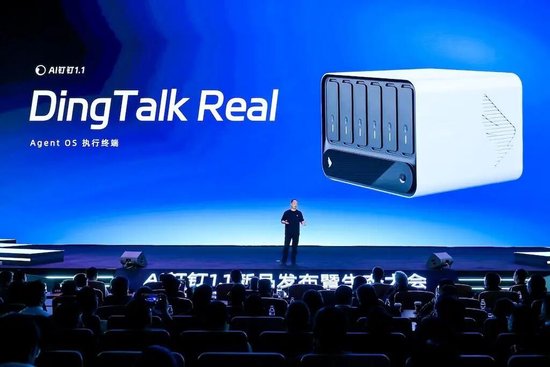
Core Insights - DingTalk has launched a new AI hardware product named DingTalk Real, which integrates its office collaboration capabilities with Alibaba's AI model, aiming to create a new AI terminal entry point [1][19][20] - The return of Chen Hang to DingTalk has shifted the company's AI strategy towards a greater emphasis on AI hardware, moving away from solely software-based solutions [2][23][24] Group 1: Product Development - DingTalk Real is designed to operate independently of the DingTalk app, marking a significant evolution in its product strategy [10][30] - The previous AI hardware, DingTalk A1, was well-received in the market, becoming a top seller during the Double 11 shopping festival, indicating strong consumer interest in AI-enabled office tools [10][30] - DingTalk A1 functions as a lightweight AI recording device that enhances productivity by efficiently recording, transcribing, and summarizing voice communications [8][10][29] Group 2: Market Position and Competition - DingTalk currently holds a market share of approximately 32.7% in the enterprise collaboration sector, but faces increasing competition from rivals like Feishu and WeChat Work, which have been gaining traction [12][33] - The enterprise organization count on DingTalk has only increased by 300,000 over three years, indicating a slowdown in user growth compared to its competitors [13][35] - Feishu has reportedly captured significant clients from DingTalk, impacting its market position and revenue growth [35][36] Group 3: Strategic Shift - Under Chen Hang's leadership, DingTalk is transitioning from a broad functionality approach to a more focused strategy that emphasizes innovative collaboration tools and AI hardware [36][37] - The introduction of AI hardware is seen as a way to differentiate DingTalk from competitors and to enhance its service offerings in the enterprise market [37][38] - The company aims to redefine its role in the AI landscape by integrating its Agent OS capabilities into various hardware solutions, moving beyond traditional app-based services [31][38]
姚顺雨要帮腾讯“颠覆”微信?
3 6 Ke· 2025-12-25 10:29
Core Insights - The appointment of Yao Shunyu as Tencent's Chief AI Scientist and head of the newly established AI Infra department signals a significant shift in Tencent's AI strategy, indicating a serious commitment to developing large models [1][4][7] Group 1: Tencent's AI Strategy - Tencent has been late to the large model game compared to other tech giants, with IDC data showing Tencent's market share in China's large model sector is not among the top three, while competitors like Baidu and ByteDance have made significant advancements [3][4] - The launch of ByteDance's Doubao mobile assistant, which can perform cross-application tasks, posed a direct challenge to Tencent's WeChat, prompting Tencent to accelerate its AI model development efforts [4][6] - Historically, Tencent's AI strategy has focused more on application-level optimizations rather than foundational research, leading to a lack of top-tier talent in cutting-edge model research [5][7] Group 2: Yao Shunyu's Impact - Yao Shunyu's background includes significant contributions to AI, particularly in developing the ReAct framework and Tree of Thoughts (ToT) method, which enhance AI's reasoning and action capabilities [8][11] - His experience at OpenAI, where he worked on practical applications of AI agents, positions him to bring valuable insights and methodologies to Tencent, addressing the company's previous shortcomings in foundational AI research [12][13] - Yao's vision for AI emphasizes the importance of understanding user intent and creating systems that can seamlessly execute complex tasks within the WeChat ecosystem, marking a potential evolution from traditional messaging tools to intent-driven operational systems [14][15] Group 3: Future Directions - Tencent aims to transform WeChat into an "intent operating system" that actively understands and fulfills user needs, moving beyond passive responses to proactive service delivery [14][15] - The shift from handling "message chains" to "intent chains" represents a critical evolution in user interaction, requiring advanced reasoning capabilities in AI agents [15][16] - The ongoing development of AI agents will highlight the competitive landscape, where the ability to manage complex reasoning and multi-goal balancing will determine success in the next generation of AI [16]

AI Agent 很火,但 Agent Infra 准备好了吗?
Founder Park· 2025-12-25 09:04
Core Insights - The main users of Infra software are shifting from human developers to AI Agents, indicating a fundamental change in infrastructure requirements for AI applications [1] - The rise of "agent-native" infrastructure is predicted by 2026, necessitating platforms that can handle a massive influx of tool executions and adapt to new operational paradigms [1][2] - Current infrastructure is still designed for human-centric operations, lacking the necessary compatibility and optimization for AI Agents [1] Group 1: Infrastructure Requirements - The architecture of existing systems is based on a 1:1 response model, which is inadequate for the recursive task management required by AI Agents [1] - Future systems must address issues like cold start times, latency fluctuations, and concurrency limits to support the operational demands of AI Agents [1] - The transition from traditional software engineering to agent-based systems introduces a new level of complexity, where failures are often due to misinterpretations of developer intent rather than code bugs [4][6] Group 2: Agent Infrastructure Challenges - The definition and boundaries of Agent Infrastructure are not yet fully established, with varying complexities depending on the application scenario [11] - Common challenges include security, execution environment, and memory management, which are critical for the safe operation of autonomous Agents [12][13] - The need for a sandbox environment to limit the operational scope of Agents is emphasized, ensuring they operate within predefined boundaries to mitigate risks [12] Group 3: Application Scenarios - Current popular applications of AI Agents include customer service, research, and data analysis, with specific functionalities like coding and data processing being heavily utilized [17][18] - The cloud-based execution of code in a sandbox environment enhances security and scalability, allowing for safe and efficient operations [18] - The demand for seamless API compatibility is crucial for developers, as inconsistent APIs can hinder user experience and integration [20] Group 4: Future Opportunities - The democratization of computing through AI Agents opens new business models that were previously unfeasible due to high costs [26] - Key future focuses for Agent Infrastructure include enhancing debuggability, memory management, and low-latency performance to support more natural interactions [27][29] - The evolution of Agent Infrastructure is expected to transition from merely supporting Agent deployment to enabling intelligent evolution based on real-world data and performance feedback [31][32]

一片录音卡,重写大厂硬件故事
36氪· 2025-12-25 06:44
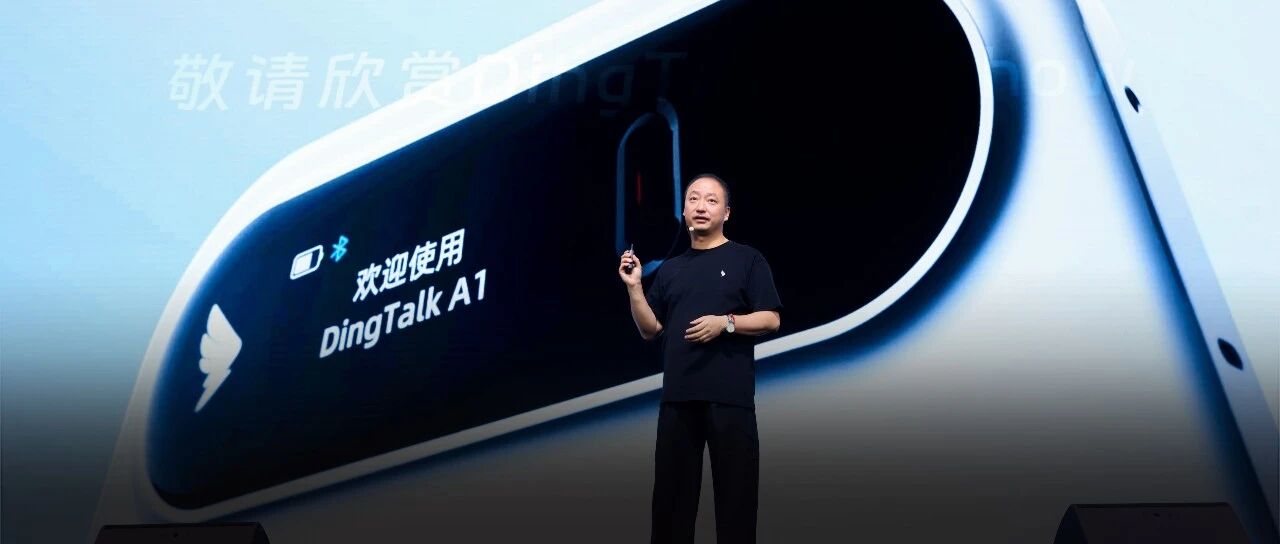
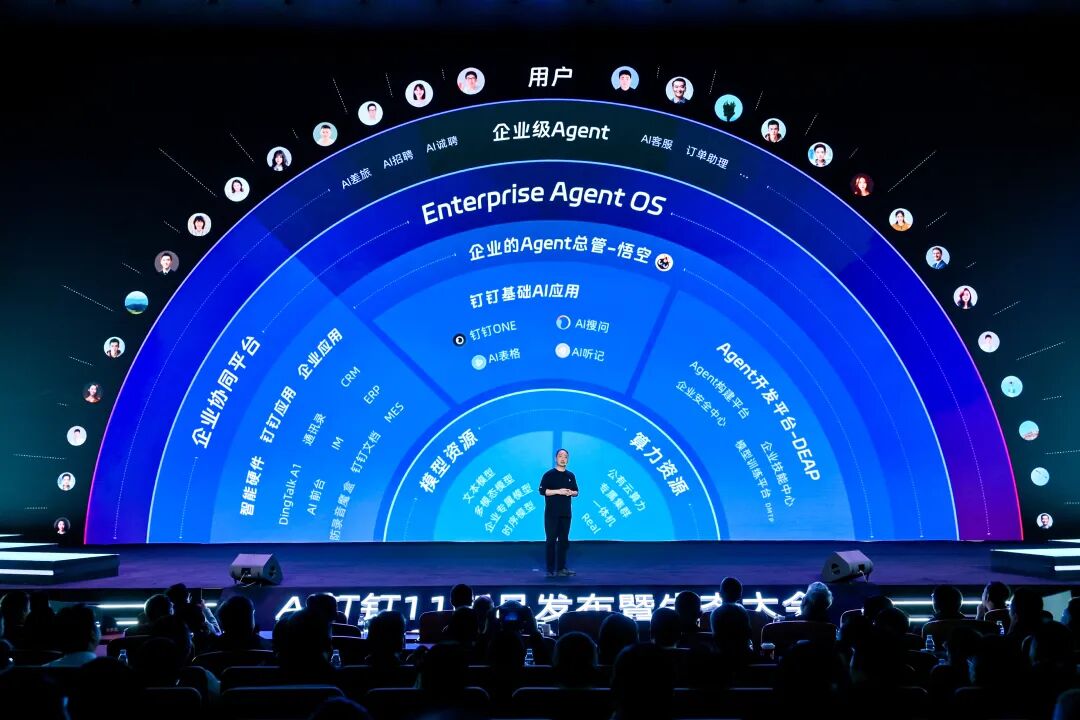
Core Viewpoint - DingTalk is breaking the curse that internet companies cannot do hardware well, marking a significant shift in the AI hardware landscape [3][7][28] Group 1: AI Hardware Industry Trends - The AI hardware sector has seen a surge in investment and innovation, with over 114 financing events and a total investment exceeding 14.5 billion yuan in the first half of 2025 [2] - Major companies like Alibaba, ByteDance, and Meituan have launched their own hardware products, indicating a competitive landscape in China's AI hardware industry [2][3] - The trend of FOMO (Fear of Missing Out) is influencing investments, with many startups securing funding without proven products [2] Group 2: DingTalk's Product Launch and Strategy - DingTalk held its second product launch in six months, introducing Agent OS and the AI hardware DingTalk Real, establishing a complete AI system architecture [3][5] - The DingTalk A1 has quickly gained popularity, becoming a top-selling product in its category, showcasing the potential for large-scale application [8][10] - The product's design choices, such as using a universal type-C charging port, reflect a balance between user habits and product functionality [10] Group 3: Market Positioning and Competition - DingTalk A1 is positioned not just as a standalone recording device but as a vital component of DingTalk's broader AI ecosystem, serving as a data collection tool [16][27] - The competitive landscape is intense, with existing players like Plaud and iFlytek already established in the market, necessitating DingTalk to clearly define its unique value proposition [8][9][16] - The product's initial reception included criticism, but rapid iterations and user feedback have led to significant improvements and a turnaround in public perception [12][13] Group 4: Future Vision and Ecosystem Development - DingTalk aims to create a seamless interaction between users and AI agents, with the physical button on the A1 serving as a strategic entry point for AI functionalities [20][23] - The integration of AI into business workflows is expected to transform how companies utilize data, turning it into actionable insights and enhancing productivity [17][25] - The vision for DingTalk includes building a robust ecosystem where hardware, data, and AI agents work together, potentially reshaping the future of office collaboration [26][27]

一片录音卡,重写大厂硬件故事
3 6 Ke· 2025-12-25 06:37
Group 1: AI Hardware Industry Trends - The AI hardware industry continues to thrive, with significant investments and developments occurring throughout 2025, including OpenAI's acquisition of io Products for $6.5 billion and the emergence of companies like YingShi Innovation, which reached a market cap of over 100 billion [1] - In the first half of 2025, there were 114 financing events in China's embodied intelligence and AI hardware sector, totaling over 14.5 billion yuan, with May alone seeing over 50% of all funding directed towards AI hardware [1] - Major companies like Alibaba, ByteDance, and Meituan have launched their own hardware products, marking the beginning of a competitive landscape in China's AI hardware industry [1] Group 2: DingTalk's AI Hardware Launch - DingTalk held its second product launch in six months, introducing Agent OS and the DingTalk Real hardware, which enables AI agents to perform tasks securely in enterprise environments [2] - The DingTalk A1 has quickly gained popularity, becoming a leading product in the domestic AI hardware market, challenging the notion that internet companies cannot successfully produce hardware [2][4] - The A1's development was rapid, with the team identifying the recording card product within a week, aiming for a successful transition to AI hardware [5] Group 3: Market Competition and Product Development - The recording card market is competitive, with players like Plaud dominating overseas and other companies like iFlytek and 360 entering the domestic market [6] - DingTalk must address key questions regarding the unique characteristics of AI hardware, the value of data generated, and the reasons for consumers to choose their products [6] - The A1 product faced initial criticism as a "half-finished product," prompting the team to engage in rapid iterations and user feedback to improve its reputation [7] Group 4: AI Integration and Data Utilization - The A1 is positioned as a data collection device within DingTalk's AI ecosystem, transforming recorded data into valuable assets for enterprises [10][11] - The integration of AI into business workflows allows for real-time data analysis and actionable insights, enhancing operational efficiency [11] - The A1's design includes a physical button for easy access to AI capabilities, indicating a strategic move towards seamless user interaction with AI agents [12][13] Group 5: Future Outlook and Industry Impact - DingTalk's AI hardware initiative represents a significant step towards making AI accessible for all, particularly for small and medium enterprises [17] - The competitive landscape is shifting, with major companies focusing on hardware that aligns with their core business strengths, as seen with DingTalk's approach [18] - The success of DingTalk A1 and similar products may redefine user interactions with AI in office environments, leading to a potential reshaping of the industry [16][19]
如何用AI,替掉2个月薪1万的分析师(原创)
叫小宋 别叫总· 2025-12-25 03:47
Core Insights - The article discusses the challenges faced in the primary market, particularly the extensive and complex Office-related tasks that consume significant time and effort [1][2] - It highlights the need for advanced tools to enhance efficiency in tasks such as compliance verification, financial analysis, and report generation [3][5] Group 1: Office Work Challenges - The primary market involves numerous Office-related tasks that are complex and time-consuming, often requiring more manpower than available [1] - Analysts struggle with tasks that require multi-layered logical reasoning, such as extracting and analyzing differentiated listing standards [10][4] - The training period for new analysts to develop necessary skills is estimated to be 1-2 years, which may lead to high turnover rates [7] Group 2: AI Tools and Their Evolution - The introduction of AI tools like Manus and Kimi marks a significant shift in task execution capabilities, moving from simple question-answering to complex task execution [11][13] - Kimi's "OK Computer" feature represents a leap in AI functionality, enabling it to perform tasks akin to an investment analyst [14][15] Group 3: Case Studies of OK Computer - **Case 1: PPT Creation** - OK Computer can translate documents and create high-quality PPT presentations, significantly reducing the time required for such tasks [18][20] - **Case 2: Excel Data Analysis** - The tool can assist in financial due diligence by merging financial statements and generating reports efficiently, which is particularly beneficial for analysts without a finance background [29][33] - **Case 3: Meeting Minutes Organization** - OK Computer can format and organize meeting notes from audio recordings into structured documents, drastically cutting down the time needed for manual adjustments [41][44] Group 4: Additional Functionalities and Benefits - OK Computer supports advanced data visualization tools, enhancing the analytical capabilities of financial reports [39][40] - The tool can streamline various tasks, such as summarizing extensive due diligence reports and comparing financial documents, making the workflow more efficient [52][54] - Overall, the integration of OK Computer into daily operations has transformed the efficiency and effectiveness of investment analysis tasks [58][60]

从智能搜索工具到AI代理电商模式先驱,四年估值200亿美元,Perplexity面临怎样的困境?
Tai Mei Ti A P P· 2025-12-25 03:03
Core Insights - Cristiano Ronaldo has officially invested in the American AI startup Perplexity AI, becoming one of its shareholders, which has attracted global attention to the previously low-profile company [1] - Perplexity AI has emerged as a key player in the AI user competition in India, alongside industry giants like OpenAI and Google, showcasing its technological strength and market competitiveness [4][6] - The company aims to combine traditional search indexing with large language model reasoning capabilities to provide accurate, up-to-date, and verifiable information [9][10] Company Background - Perplexity AI was founded in 2022 by a team of former researchers from OpenAI, Facebook AI Research, and Quora, with the goal of improving search experiences that are often cluttered with ads and low-quality links [6][9] - The first product, Perplexity Ask, was launched in December 2022, integrating GPT-3.5 and Microsoft Bing technology to provide structured answers with source links, achieving over 10 million monthly visits early in 2023 [9][10] Product Development and Strategy - In 2024, Perplexity AI shifted its focus towards becoming an AI agent, aiming to actively assist users in completing specific tasks rather than just providing information [13][14] - The launch of the native AI browser Comet in July 2025 marked a significant step in its AI agent strategy, with a valuation increase from slightly over $500 million to $20 billion in less than two years [16][19] Market Position and Challenges - Despite rapid growth, Perplexity faces challenges in its business model, relying solely on subscription revenue without advertising, leading to low average revenue per user (ARPU) [19][21] - The company is exploring new avenues, such as the AI-driven patent search agent and an agentic commerce model, which aims to revolutionize the shopping experience by allowing AI to complete purchases on behalf of users [24][26] Future Outlook - The agentic AI trend represents a significant leap in AI technology and market potential, although challenges such as user trust and existing e-commerce dependencies remain [27]