Agent

Search documents
出门问问发了新硬件,AIGC第一股急需新故事
3 6 Ke· 2025-06-25 11:54
Core Insights - The founder and CEO of the company, Li Zhifei, acknowledged the challenges in competing with major players in the AI model space, indicating a shift in focus towards software development rather than hardware [1][6] - The company has launched a new AI card-style recording pen, TicNote, aimed at the domestic market, which incorporates their newly developed Agent, Shadow AI [1][12] - Despite initial success, the company's stock price has significantly declined from its IPO price, reflecting a loss of investor confidence [6][18] Group 1: Business Strategy - The company is adopting a more conservative approach to hardware development, focusing on established hardware forms and prioritizing AI software development [3][12] - The TicNote product is positioned to compete with Plaud's successful recording pen, but the company is cautious about its sales expectations [14][17] - The company aims to leverage its software capabilities to differentiate its hardware offerings in the competitive domestic market [16][21] Group 2: Financial Performance - The company has struggled with profitability since 2021, continuing to report losses [4][18] - In 2024, the company's total revenue was reported at 390 million yuan, marking the lowest level in four years despite a significant portion of revenue coming from overseas [18][19] - The overseas business accounted for 41.8% of total revenue, indicating a strategic focus on international markets [18] Group 3: Market Competition - The competitive landscape for smart hardware is intensifying, with established players like Huawei, Xiaomi, and Samsung dominating the market [10][19] - The company faces challenges in establishing a competitive edge due to the lack of a strong hardware ecosystem and reliance on ODM partnerships [10][19] - The AI recording product market is becoming increasingly crowded, with numerous competitors already established in the space [16][21]


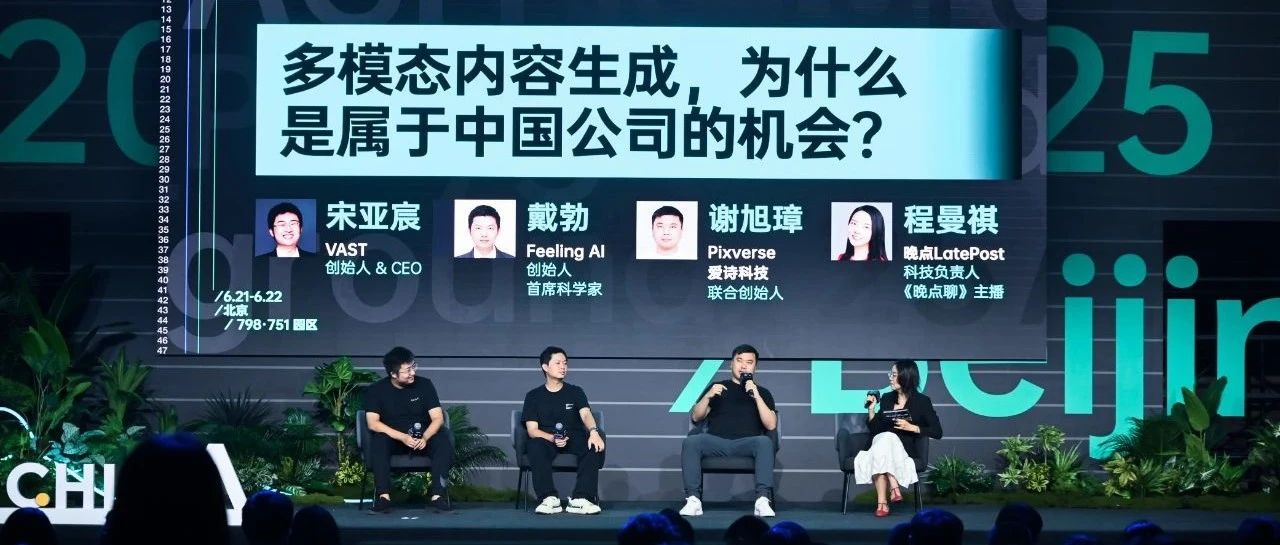
多模态内容生成的机会,为什么属于中国公司?
Founder Park· 2025-06-24 11:53
Core Viewpoint - The article emphasizes that Chinese startups are gaining a leading edge in the multimodal content generation field, particularly in video and 3D creation, contrasting with the U.S. dominance in large language models [1][3]. Group 1: Advantages of Chinese Startups - Chinese teams have accumulated significant experience in video technology, with products like Douyin and Kuaishou laying a strong foundation for video generation [3][7]. - The flexibility of organizational structures in Chinese startups fosters innovation, allowing them to adapt quickly to market needs [3][4]. - The multimodal field remains open for innovation, with rich application scenarios and a strong talent pool in China providing fertile ground for technological advancements [3][8]. Group 2: Competition with Major Players - Startups maintain strategic focus and seek niche opportunities despite competition from giants like Alibaba and Tencent, who are entering the space with open-source models [4][9]. - The competition with large companies is seen as a rite of passage for startups, pushing them to mature and refine their strategies [10][11]. - Startups are leveraging their early investments in core technologies to stay ahead of larger competitors who are now trying to catch up [9][11]. Group 3: Future Trends and Innovations - The article discusses the potential for technology to lower the barriers for content creation, enabling more ordinary users to participate in multimodal content generation [5][37]. - Key trends include the unification of generation and understanding in multimodal models, which enhances controllability and consistency in outputs [14][15]. - Real-time generation capabilities are advancing, with companies like Pixverse achieving near real-time video generation speeds, which could lead to new application scenarios [17][18]. Group 4: User Engagement and Market Dynamics - The shift towards user-generated content (UGC) is highlighted, with startups aiming to create tools that simplify the content creation process for everyday users [21][22]. - The market for short video creation remains vast, with a significant portion of users yet to engage in content creation, presenting growth opportunities for startups [23][24]. - Startups are focusing on developing professional-grade tools that cater to both professional and semi-professional users, ensuring a robust ecosystem for content creation [25][26]. Group 5: Goals and Challenges Ahead - Companies aim to achieve high-quality real-time video generation models and expand their user base significantly in the coming year [37]. - The challenge lies in creating accessible tools for 3D content creation, with aspirations to democratize the process for a broader audience [37].
一年后,当Kimi和MiniMax投资人再坐到一起
暗涌Waves· 2025-06-23 06:01
Core Viewpoint - The competitive landscape of AI companies in China has dramatically changed with the emergence of DeepSeek, shifting the focus from direct competition between Kimi and MiniMax to broader discussions about the future of AI and its implications for humanity [1][2]. Group 1: Impact of DeepSeek - DeepSeek has significantly influenced the AI landscape in China, benefiting all AI companies and altering the funding environment [9][11]. - The introduction of DeepSeek has led to a reassessment of the positioning and strategies of other AI companies, including Kimi and MiniMax, prompting them to focus on their unique strengths and innovations [12][10]. Group 2: Investment Insights - Investors emphasize the importance of strong teams over mere technological advancements, highlighting that the best teams will continue to innovate despite market fluctuations [4][5]. - The rapid evolution of the AI industry means that a year in AI can equate to several years in other sectors, necessitating a keen focus on emerging trends and technologies [7][6]. Group 3: Agent Technology - The rise of Agent technology is seen as a significant opportunity, with applications capable of autonomous planning and task execution becoming increasingly viable [14][15]. - Investors are particularly interested in vertical Agents that can accumulate unique knowledge bases, potentially leading to competitive advantages in specific domains [21][20]. Group 4: Embodied Intelligence - There is a recognition of a bubble in the embodied intelligence sector, with many companies overvalued despite the potential for future breakthroughs [28][27]. - The current stage of embodied intelligence is compared to early autonomous driving technology, where significant investment occurred without clear paths to commercialization [30][29]. Group 5: Lessons from Investment - The importance of focusing on people and their growth potential is highlighted as a key lesson from past investment experiences, with a shift towards valuing human factors in technology-driven sectors [35][36]. - The AI investment landscape is characterized by a shorter window for identifying potential winners, with expectations that promising AI companies will emerge by the end of 2026 [37][38]. Group 6: Future Predictions - The future of AI is expected to bring about significant changes, with AI surpassing human capabilities in various fields, leading to a redefinition of industry standards [44][45]. - The relationship between humans and AI is anticipated to evolve, emphasizing the importance of understanding human nature and societal complexities in the AI era [46][47].

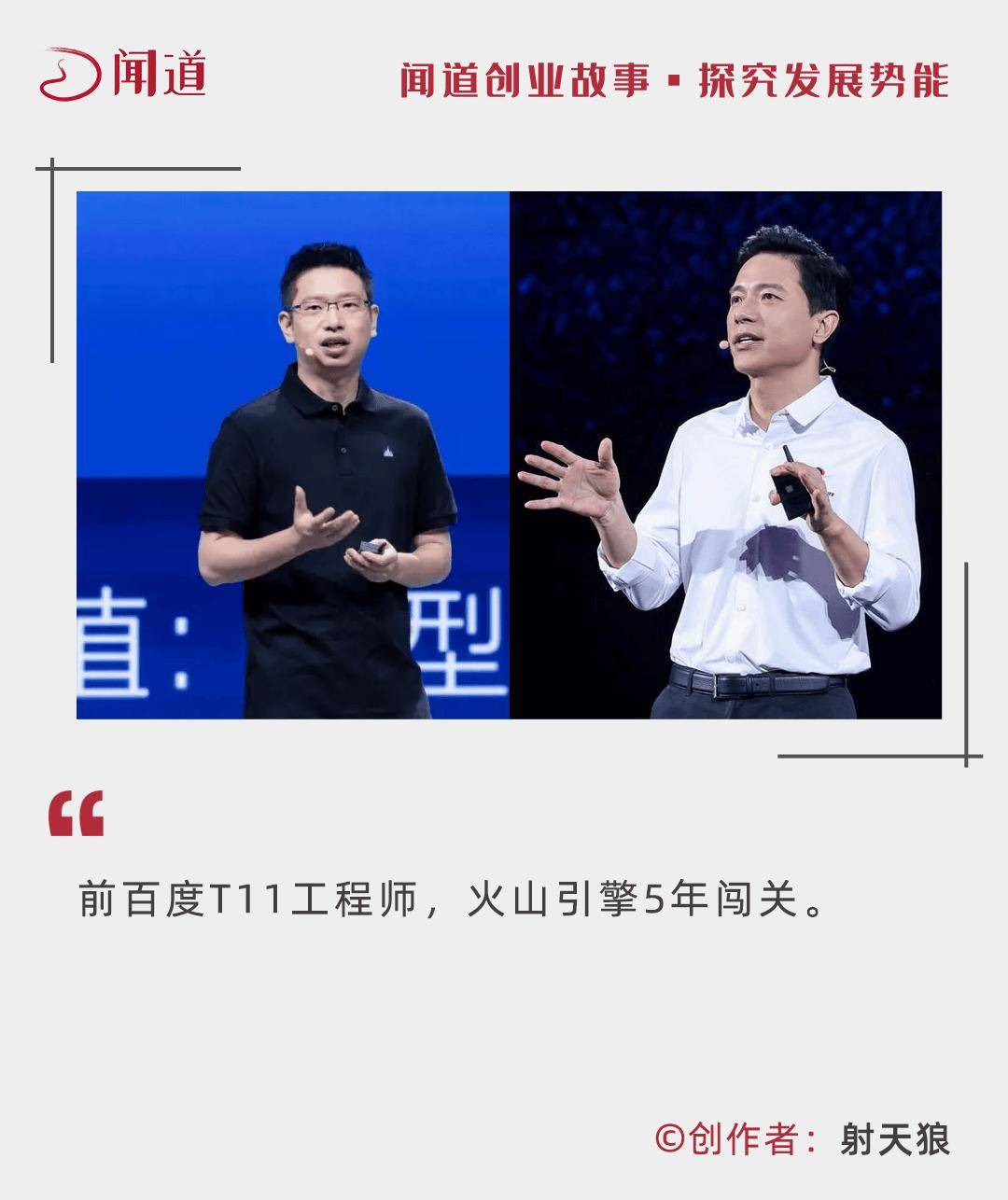
前百度最牛技术转投字节跳动搞AI,目标1000亿
Sou Hu Cai Jing· 2025-06-20 08:39
Core Viewpoint - ByteDance's acquisition of Yao Ling Er Si Technology marks a strategic move to enhance its capabilities in the internet healthcare sector while also attracting top talent from Baidu [5][6]. Group 1: Company Strategy and Leadership - The acquisition of Yao Ling Er Si Technology is seen as a way for ByteDance to not only expand its business but also to secure a team of highly skilled professionals from Baidu [5]. - Tan Dai, who was appointed as the general manager of Volcano Engine, has set an ambitious revenue target of over 100 billion yuan for the next 8-10 years [7][10]. - Despite initial skepticism from the industry regarding ByteDance's late entry into the cloud computing market, Tan Dai's leadership has positioned Volcano Engine as one of the six core business segments of ByteDance [6]. Group 2: Market Position and Performance - As of June 2023, Volcano Engine's model, Doubao 1.6, has achieved significant usage growth, with daily token usage exceeding 16.4 trillion, a 137-fold increase from its launch [8]. - According to IDC, Doubao holds a 46.4% market share in China's public cloud model market, serving major clients including nine of the top ten smartphone manufacturers and 70% of systemically important banks [8]. - Volcano Engine's revenue is projected to surpass 10 billion yuan in 2024, placing it in the third tier among major Chinese cloud service providers [12]. Group 3: Competitive Landscape - The competitive landscape is characterized by a race among major players, with Alibaba Cloud leading the market with revenues around 600 billion yuan, while Volcano Engine aims to close the gap with Baidu Smart Cloud [12][13]. - The rivalry extends to the AI model sector, where both Doubao and Baidu's Wenxin models are engaged in a price war, reflecting the intense competition in the AI cloud service market [16][24]. - Tan Dai emphasizes the importance of scale in achieving competitive advantage, asserting that Volcano Engine can leverage ByteDance's vast resources to optimize performance and reduce costs [24][26]. Group 4: Future Outlook - Tan Dai believes that as long as global conditions remain stable, achieving the 100 billion yuan revenue target is feasible, with a focus on maintaining leadership in the domestic AI sector [10]. - The strategic support from ByteDance's CEO Liang Rubo at the Volcano Engine conference signifies a commitment to long-term investment and innovation in AI technologies [27][28].
汪华的最新预言:AI时代和移动互联网的最大区别是实现,而非连接
暗涌Waves· 2025-06-19 09:21
Core Viewpoint - The AI era presents a significant shift from the mobile internet paradigm, emphasizing "implementation" over mere "connection," leading to unprecedented opportunities for entrepreneurs in the AI space [1][5][6]. Group 1: Old vs New Paradigm - The old mobile internet paradigm focused on connecting large user bases and applications, while the new AI paradigm emphasizes depth and high-value implementation [4][6]. - Major tech companies are still operating under the old paradigm, which creates space for new entrants to focus on specific, high-value applications that these giants cannot fully address [5][6]. Group 2: Model Dividend - The current model dividend represents the largest opportunity in history, driven by rapid advancements in AI models since late last year [10][11]. - Companies leveraging new model capabilities in niche markets have seen significant success, with some achieving valuations exceeding $5 billion [12][15]. - The speed of achieving revenue milestones in AI has accelerated, with companies reaching $1 million in annual revenue much faster than in previous tech waves [7][11]. Group 3: Opportunities in Agent and Multimodal - The next major opportunities lie in the development of Agent capabilities and multimodal applications, which are expected to see rapid advancements in the coming year [30][31]. - The ability of models to perform complex tasks and integrate various tools is still in its early stages, indicating a significant growth potential [33][34]. - The B2B sector remains underexplored for multimodal applications, presenting a substantial opportunity for innovation [35][36]. Group 4: Market Dynamics - Entrepreneurs should focus on high-value, specific problems rather than large-scale user acquisition, as the model capabilities allow for significant impact with smaller user bases [18][19]. - The global market presents vast opportunities, and companies should not limit themselves to domestic markets but rather seek to address pain points across various industries worldwide [21][22]. - Successful companies are those that can identify and solve specific industry challenges using advanced AI models, leading to substantial competitive advantages [23][24].

Agent成了腾讯AI最大的牌面
3 6 Ke· 2025-06-19 03:23
Core Insights - Tencent is deepening its AI application strategy, leveraging its WeChat and gaming businesses to create a robust ecosystem for AI applications [1][4][10] - The company is focusing on developing more complex AI applications beyond basic chat functionalities, aiming for a more integrated and effective user experience [5][13] WeChat as a Strategic Platform - WeChat is positioned as the primary platform for Tencent's AI application ecosystem, expected to create a unique and differentiated Agent ecosystem [4][12] - The integration of AI capabilities into WeChat aims to enhance user interaction, allowing users to engage with AI in a more conversational manner [10][12] - Tencent plans to strengthen the connection between WeChat and its AI applications, such as Yuanbao, to enhance user retention and engagement [4][10] Gaming Business as an Application Scene - Tencent's gaming business provides a vast landscape for AI applications, particularly in enhancing user experience through AI-driven features [13] - The company is exploring AI applications in gaming, including new player training, companionship, and anti-cheating measures, which present significant monetization opportunities [13] Infrastructure and Development Support - Tencent Cloud is tasked with providing foundational support for AI development, including computational power, models, and cloud services [14][15] - The upgrade of the intelligent agent development platform and the enterprise AI knowledge base aims to empower businesses to create effective AI agents [14] Organizational Changes and Model Development - Tencent has restructured its organizational framework to enhance its capabilities in large model development, focusing on integrating existing technologies to empower developers [16] - The company is cautious about its large model training, prioritizing applications that yield direct returns, such as advertising and content recommendation [16]


豆包狂加产品功能,AI战局仍不明朗
Hua Er Jie Jian Wen· 2025-06-18 17:39
Core Insights - The article discusses the ongoing competition in AI applications, particularly focusing on Doubao's efforts to enhance its product offerings in response to competition from DeepSeek [1][2] - Doubao has accelerated its product iteration pace, launching new features such as AI podcast functionality and video generation capabilities, aiming to maintain user engagement and attract new users [1][2][5] - The AI application market is experiencing a shift, with user growth patterns changing and a focus on technological advancements as a key driver for product success [2][3] Group 1 - Doubao's desktop version has fully launched the AI podcast feature, allowing users to generate dialogue-based podcasts from uploaded PDFs or web links [1] - Since March, Doubao has significantly increased its product iteration speed, introducing upgrades to existing features and launching new functionalities in video and image processing [1][2] - As of May, Doubao's active user count reached 131 million, an increase of approximately 15 million over two months, positioning it closer to DeepSeek [2] Group 2 - The AI application market has seen a near doubling of user numbers, with 240 million users reported by February 2025, but many applications, including Yuanbao, have experienced significant user declines since their peak [2][3] - Doubao's monthly advertising expenditure is less than 100 million yuan, contrasting with Yuanbao's estimated 1.386 billion yuan in March, indicating a shift in marketing strategies [3] - Major tech companies like ByteDance, Baidu, and Alibaba are entering the Agent product space, focusing on task completion rather than just answering questions, which reflects a broader trend in AI application development [4][5]
Agent创业来了位13岁的CEO
猿大侠· 2025-06-18 02:56
鹭羽 发自 凹非寺 量子位 | 公众号 QbitAI 大模型创业有多火?现在13岁少年都入局了,做的还是今年大热的方向—— Agent 。 当同龄人还在用AI写作业,来自加拿大多伦多的 Michael Goldstein ,已经是一家AI初创公司 FloweAI 的创始人兼CEO。 这位少年CEO,不仅亲手打造了一个能用自然语言指令完成PPT制作、文档撰写、航班预订等日常任务的通用AI智能体,更是定下 "月入1万 美元" 的商业目标。 如今他一边读书,一边积极招募合伙人,希望努力将公司营业规模扩张至 百万美元 。 而且已经有大学毕业生来给他打工了。 难怪网友都惊呼: 看看别人家的13岁! 一手实测FloweAI 目前FloweAI仅支持 网站端 使用,暂未开放SDK、API接口等其他接入方式。 进入FloweAI网站界面,首先能看到相当简洁干净的对话页面,只需要进行简单的邮箱注册,就可以上手使用。 我们也是第一手实测了它的PPT制作功能,要求FloweAI帮忙制作一份有关Agent行业发展的演示文稿。 (支持中文对话) 总耗时 6分半 ,共生成了 10页 文稿,内容涵盖Agent的发展历史、关键技术、当前状态 ...

5 年内,ToB 新手靠 AI 干不掉老炮
3 6 Ke· 2025-06-18 02:52
Core Viewpoint - The discussion centers around whether AI will enable new entrants in the ToB sector to outcompete established players, with insights suggesting that established companies may leverage AI to enhance their existing advantages rather than being displaced by newcomers [1][2][3]. Group 1: Old Players vs. New Entrants - Established companies ("old players") possess significant advantages such as accumulated customer resources, data, insights, and trust, making it easier for them to address client issues compared to new entrants [4][6]. - The evolution of AI tools, like DeepSeek, is seen as a means for old players to rejuvenate their offerings, rather than being outright replaced by new entrants [4][19]. - The ability to utilize localized information remains a critical advantage for old players, which AI cannot easily replicate [5][6]. Group 2: AI's Role and Future Implications - In the short to medium term, AI is expected to enhance efficiency across the board, but it will not fundamentally change the competitive landscape between old players and new entrants [5][6]. - The future of AI in the ToB sector may involve a collaborative model where human expertise and AI capabilities complement each other, rather than a complete takeover by AI [4][12]. - The potential for AI to automate knowledge and processes presents new opportunities for SaaS companies, particularly in automating knowledge management and enhancing operational efficiency [26][29]. Group 3: Knowledge Evolution and Business Models - The evolution of knowledge management through AI tools is crucial for bridging the gap between human expertise and automated systems [20][21]. - The shift towards performance-based payment models (e.g., RaaS) reflects a changing landscape where companies are incentivized to deliver measurable results [27][28]. - The integration of AI into business processes is expected to reduce operational costs and improve efficiency, particularly in sectors like healthcare and finance [29][30]. Group 4: Market Dynamics and Future Trends - The AI landscape is anticipated to undergo a cycle of expansion and contraction, similar to past trends in the mobile internet sector, with many new applications emerging but only a few surviving long-term [24][26]. - The lowering of technical barriers due to AI advancements may lead to increased competition, but established players with deep industry knowledge will still hold significant advantages [14][19]. - The future of the ToB sector will likely see a blend of traditional expertise and new AI capabilities, creating a dynamic environment for both old and new players [30][31].
国信证券:AI产业快速迭代 持续看好Agent和算力租赁
智通财经网· 2025-06-16 02:07
智通财经APP获悉,国信证券发布研报称,互联网巨头持续加大AI基础设施投资,算力租赁厂商受益明 显。阿里巴巴-SW(09988)预计未来三年,将投入超过3800亿元,用于建设云和AI硬件基础设施,总额 超过去十年总和。腾讯控股(00700)预计2025年资本开支持续上行,主要满足公司AI相关需求。目前已 经有众多上市公司积极在算力租赁布局,部分公司已经披露相关订单。 国信证券主要观点如下: 阿里和字节持续推出Agent产品,创业公司百花齐放 阿里Qwen3性价比再大幅提升,以 DeepSeek-R1三分之一的参数规模,就达成了性能的全面超越, 仅需 4 张 H20 GPU 便能部署完整功能的 Qwen3 模型,成为全球最强开源模型。Qwen3原生支持MCP,C端 积极探索"心流"和"夸克"产品;B端和亚信科技等合作推动AI本地化落地。字节在多模态领域积极布局, 扣子空间开启内测,重点突破复杂任务 Agent。同时,大量创新Agent也表现不俗,如Manus作为通用场 景Agent,Lovart 深度垂直于设计场景,Flowith的画布式交互,实现无限流。多个产品已经形成可观收 入。 风险提示:AI终端表现不及 ...