
保护主义

Search documents
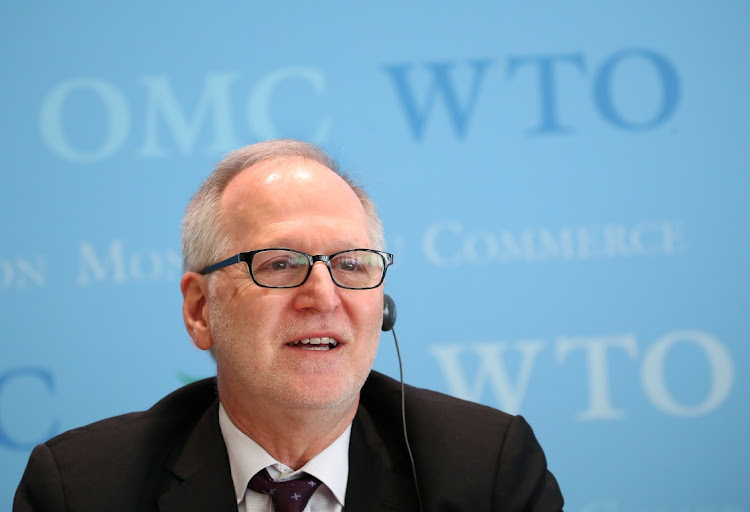
WTO前首席经济学家罗伯特·库普曼接受《环球时报》专访:美政策制定者误诊经济“疾病”,并开错“药方”
Huan Qiu Shi Bao· 2025-08-21 22:54
Core Viewpoint - The article discusses the implications of the U.S. tariff policies on global trade and the potential economic consequences for the U.S. and its trading partners, emphasizing that the current changes in tariff policies are not indicative of a complete halt but rather a slowdown in frequency [1][3][4]. Group 1: U.S. Tariff Policies - The U.S. has shifted its tariff policies, which are seen as a departure from historical norms, with only the U.S. accepting the new trade system being proposed by the current administration [3]. - The U.S. government aims to reshape the global trade system, but this approach is criticized as ineffective in addressing trade imbalances [3][4]. - The current tariff policies may lead to a higher cost of production in the U.S., potentially isolating it from global trade dynamics [5]. Group 2: Economic Impact - Tariffs may temporarily increase the market share of U.S. products, but automation is identified as the primary reason for the decline in manufacturing jobs, not tariffs [4]. - The U.S. economy is close to full employment, and any push for manufacturing to return could disrupt labor and capital distribution, potentially lowering economic growth rates [4][5]. - The belief that high tariffs will enhance efficiency and innovation is challenged, as historical evidence suggests that such protectionism may stifle innovation without additional supportive policies [5]. Group 3: Consumer and Business Effects - The burden of tariffs is primarily borne by U.S. importers and consumers, with 80% to 90% of tariff costs being absorbed domestically rather than by exporters [5]. - Rising prices due to tariffs may lead to increasing dissatisfaction among American consumers regarding the current trade policies [5].

美国单边主义做法给各方发展带来挑战(国际论坛)
Ren Min Ri Bao· 2025-08-20 22:26
Group 1 - Europe should deepen cooperation with China in areas such as green transition, technological innovation, digital economy, and industrial upgrading to build a more resilient autonomous development capability and promote a more balanced multipolar structure [1][3] - The U.S. unilateral tariff measures will directly impact European exports, leading to continuous outflow of industrial capital to the U.S. market, resulting in job losses and a decline in domestic demand, accelerating Europe's deindustrialization process [3] Group 2 - China has the confidence and capability to respond to U.S. unilateral tariff measures, with a rising proportion of exports to markets outside the U.S. and a booming domestic consumption market [2] - China's strategic ability to safeguard national interests is strengthened, focusing on self-innovation and expanding consumption demand while promoting agricultural modernization and urban-rural integration [2]
保护主义将给世界带来什么?美智库专家:1930年代的美国历史里有答案
Sou Hu Cai Jing· 2025-08-19 02:49
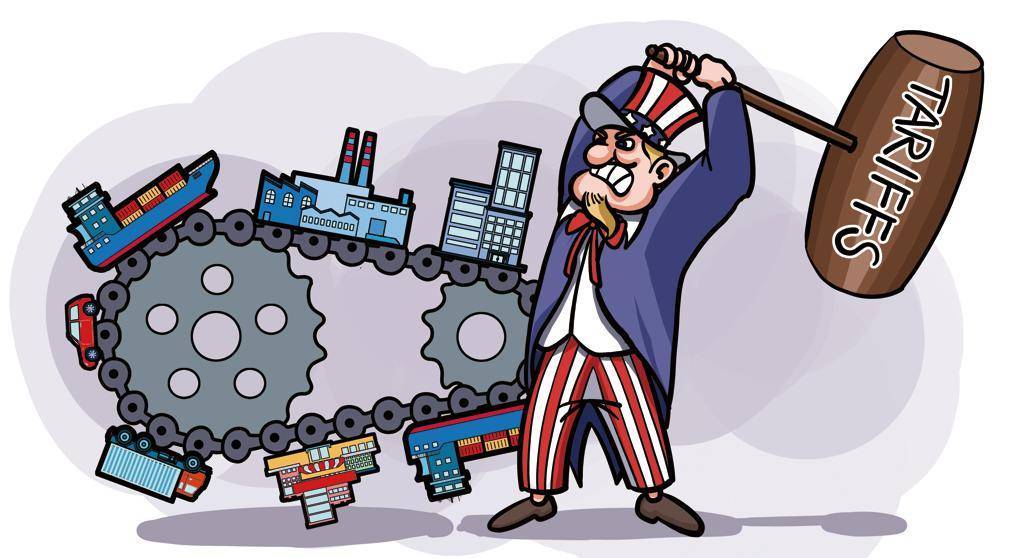
Core Viewpoint - The article argues that the U.S. government's initiation of a tariff war is detrimental to economic globalization and exacerbates geopolitical tensions, reminiscent of the international environment before the rise of fascism in the 1930s [1][3]. Historical Context - The article draws parallels between the current tariff policies and the Smoot-Hawley Tariff Act of 1930, which aimed to protect jobs and farmers by raising tariffs on imports. Despite opposition from over 1,000 economists, the act was signed into law, leading to a significant reduction in U.S. imports and exports during the Great Depression [3][4]. - The Smoot-Hawley Tariff Act is cited as a misguided response to an economic crisis, which, while achieving short-term effects, ultimately resulted in greater long-term losses for the U.S. economy and contributed to global instability [4]. Current Tariff Wars - The first round of the current tariff war targets Canada, Mexico, and China, affecting goods worth $1.4 trillion. The second round, characterized by "reciprocal tariffs," is seen as a unilateral approach fraught with flaws and miscalculations [5][6]. - The U.S. administration claims that countries are eager to negotiate, but the reality is that the "reciprocal tariffs" have led to retaliatory measures, escalating into a third round of tariffs [6]. Economic Implications - While short-term coercive measures may yield significant financial contributions to the U.S. economy, the long-term consequences are expected to be severe, undermining globalization and eroding the rules-based international trade system [6]. - The article highlights that economic globalization has historically facilitated trade, investment, and the movement of people, contributing to the rise of major economies like China and India. However, the trend of de-globalization in the late 2010s has led to a slowdown in growth for emerging economies [6].
中国始终是促进非洲大陆发展的真诚朋友
Ren Min Ri Bao· 2025-08-18 03:55
Group 1 - The 25th anniversary of the Forum on China-Africa Cooperation marks significant achievements in China-Africa collaboration, establishing a model for global South-South cooperation [1] - The relationship between China and Africa has reached its historical peak, with the overall positioning elevated to a "new era of all-weather China-Africa community of shared future" [1] - The trade volume between China and Africa is expected to approach $300 billion in 2024, with China maintaining its position as Africa's largest trading partner for 16 consecutive years [2] Group 2 - China has significantly contributed to Africa's infrastructure development, building nearly 100,000 kilometers of roads, over 10,000 kilometers of railways, nearly 1,000 bridges, and close to 100 ports, which has facilitated Africa's industrialization and modernization [3] - The cooperation is driven by Africa's needs, prompting other countries to consider African demands in their partnerships [3] - China has been a sincere friend to Africa, supporting debt relief initiatives and actively participating in the G20's debt suspension initiative for the poorest countries [3] Group 3 - The current global economic climate is affected by unilateralism and protectionism, which pose challenges to multilateral trade systems [4] - China and Africa, as important members of the global South, should jointly defend true multilateralism and maintain an open and inclusive multilateral trade system [4]
全球关税:起源、演进历程及对财政的贡献|国际
清华金融评论· 2025-08-17 08:58
Core Viewpoint - Tariffs have re-emerged as a focal point in global economic and trade policies, particularly due to the rise of trade protectionism in the U.S. and the reevaluation of tariff policies by multiple countries amid geopolitical conflicts and fiscal pressures [5]. Summary by Sections Origin and Characteristics of Tariffs - Historically, tariffs originated as a form of transit fee for cross-border goods, primarily aimed at controlling the movement of people and goods, rather than for fiscal purposes [7]. - Tariffs have evolved from being a minor component of national fiscal systems to a crucial tool for economic intervention and revenue generation, especially since the 16th century with the rise of international trade [8][11]. Functions of Tariffs - Tariffs serve three main functions: revenue generation, protection of domestic industries, and economic regulation [11]. - The role of tariffs has shifted over time, influenced by economic development and prevailing economic ideologies, with their revenue-generating function becoming less significant in developed countries [12][19]. Evolution of Tariff Systems - The evolution of global tariff systems can be divided into five main stages from the 16th century to the present, reflecting changes in economic thought and development levels [13][14]. - **First Stage (16th-18th Century)**: Mercantilism dominated, with tariffs primarily used for revenue collection [15]. - **Second Stage (19th Century)**: The rise of free trade theories led to a reduction in tariffs in industrialized nations, while developing countries continued to rely on tariffs for revenue and protection [16]. - **Third Stage (Early 20th Century)**: Protectionism surged post-World War I, reinforcing tariffs as tools for revenue and industry protection [17]. - **Fourth Stage (Post-WWII to 2017)**: Establishment of a global free trade system led to a general decline in tariffs and a shift towards income and consumption taxes as primary revenue sources [18]. - **Fifth Stage (2018-Present)**: A resurgence of protectionism, particularly in the U.S., has seen tariffs used again for industry protection and economic regulation [19]. Dependency on Tariff Revenue - Global economies can be categorized based on their dependency on tariff revenue, with developed economies generally showing low dependency (below 3%), while some developing economies exhibit medium (3%-5%) or high dependency (over 5%) [20][23][26]. - Countries like Japan, Canada, and the U.S. have low tariff revenue contributions to their overall fiscal income, while nations like the Philippines show a high reliance on tariffs due to weaker tax systems [23][28].
纪念抗战胜利80周年招待会暨图片展在南非开普敦举办
Xin Hua Wang· 2025-08-16 16:32
Core Points - The event commemorated the 80th anniversary of the victory in the Chinese People's War of Resistance against Japanese Aggression and the World Anti-Fascist War [1] - The Chinese Consul General emphasized China's significant contribution to the victory in the global anti-fascist struggle, highlighting the long duration and early start of the Chinese resistance [1] - The event underscored the importance of international cooperation and dialogue in addressing global challenges and maintaining peace [1] Summary of Related Content - The photo exhibition showcased dozens of images reflecting the struggles of the Chinese people against Japanese invaders, open to the public until September 30 [2]
王毅会见越南副总理兼外长裴青山
Xin Lang Cai Jing· 2025-08-14 15:30
Core Viewpoint - The meeting between Wang Yi and Vietnamese Deputy Prime Minister Pham Minh Chinh emphasizes the importance of strengthening economic ties between China and Vietnam while opposing unilateralism and protectionism [1] Economic Cooperation - China and Vietnam have close economic ties, with a mutual commitment to oppose unilateralism and protectionism, and to uphold free trade rules and the international trade system [1] - China supports Vietnam in building an independent and self-reliant economic system and encourages Chinese enterprises to invest in Vietnam [1] Emerging Fields of Collaboration - Both parties aim to expand cooperation in emerging fields such as artificial intelligence, digital economy, and commercial aircraft [1] - China is willing to facilitate the export of Vietnamese agricultural products to China and assist in establishing trade promotion agencies in China [1] Business Environment - China hopes that Vietnam will provide a favorable business environment for Chinese enterprises [1] Cultural Exchange - The two sides plan to successfully conduct activities commemorating the 75th anniversary of diplomatic relations and the "China-Vietnam Cultural Exchange Year," including a "Red Study Tour" for Vietnamese youth in China [1]
习近平同巴西总统通电话
Yang Shi Wang· 2025-08-12 11:48
Core Viewpoint - The phone call between Chinese President Xi Jinping and Brazilian President Lula highlights the strengthening of China-Brazil relations, emphasizing mutual cooperation and the importance of multilateralism in addressing global challenges [1] Group 1: China-Brazil Relations - Xi Jinping stated that China-Brazil relations are at their historical best, with successful progress in building a community of shared destiny and aligning development strategies [1] - Both leaders expressed a commitment to enhancing cooperation and achieving more mutually beneficial outcomes, aiming to set an example of solidarity among major developing countries [1] Group 2: Multilateralism and Global Challenges - Lula praised China's commitment to multilateralism and its responsible role in international affairs, expressing Brazil's desire to strengthen communication within BRICS and oppose unilateral actions [1] - Xi Jinping reiterated support for Brazil in defending its sovereignty and emphasized the need for countries to unite against unilateralism and protectionism [1] - The BRICS mechanism is highlighted as an important platform for consolidating the consensus of global South countries, with a focus on maintaining international fairness and justice [1]
商务部新闻发言人就美方威胁升级对华关税发表谈话
Xin Hua Wang· 2025-08-12 05:58
【纠错】 【责任编辑:吴京泽】 中方重申,贸易战没有赢家,保护主义没有出路。施压和威胁不是同中方打交道的正确方式。中方 敦促美方立即纠正错误做法,取消所有对华单边关税措施,停止对华经贸打压,与中方在相互尊重的基 础上,通过平等对话妥善解决分歧。 中方注意到,美东时间4月7日,美方威胁进一步对华加征50%关税,中方对此坚决反对。如果美方 升级关税措施落地,中方将坚决采取反制措施维护自身权益。 美方对华加征所谓"对等关税"毫无根据,是典型的单边霸凌做法,中方已经采取的反制措施是为了 维护自身主权安全发展利益,维护正常的国际贸易秩序,完全是正当之举。美方威胁升级对华关税,是 错上加错,再次暴露了美方的讹诈本质,中方对此绝不接受。如果美方一意孤行,中方必将奉陪到底。 ...
新华社:习近平同巴西总统卢拉通电话
Xin Hua Cai Jing· 2025-08-12 05:55
Core Points - The relationship between China and Brazil is at its historical best, with positive progress in building a community of shared destiny and aligning development strategies [1] - Both countries aim to strengthen cooperation and create more mutually beneficial outcomes, setting an example for solidarity among global South countries [1] - Brazil emphasizes the importance of its relationship with China and seeks to deepen strategic alignment and cooperation [1] Summary by Sections - **China-Brazil Relations** - Xi Jinping highlighted the current peak in China-Brazil relations and the successful start of their community of shared destiny [1] - Both nations are committed to seizing opportunities for enhanced cooperation and mutual benefits [1] - **Brazil's Position** - Lula expressed Brazil's high regard for its relationship with China and the desire to strengthen cooperation [1] - He also discussed Brazil's relationship with the United States and reaffirmed Brazil's commitment to maintaining its sovereignty [1] - **Multilateral Cooperation** - Both leaders agreed on the importance of multilateralism and the need to oppose unilateralism and protectionism [1] - They emphasized the role of the BRICS mechanism in fostering consensus among global South countries [1] - **Global Challenges** - China and Brazil aim to jointly address global challenges, including ensuring the success of the UN climate change conference and promoting political solutions to the Ukraine crisis [1]