风险管理

Search documents
金融租赁行业在合规与转型中迎新局
Jin Rong Shi Bao· 2025-11-26 02:02
Core Insights - The financial leasing industry is undergoing a transformation towards compliance and high-quality development, driven by the revised management regulations that took effect in November 2024 [1][2] - A significant number of financial leasing companies have increased their total assets and registered capital, indicating a positive response to regulatory requirements [1][2] - The focus on risk management and technological empowerment is becoming a key strategy for financial leasing companies to enhance their operational efficiency and compliance [4][5] Regulatory Framework - The revised "Management Measures for Financial Leasing Companies" has established a compliance framework that emphasizes the importance of capital adequacy and risk management [1][4] - The minimum registered capital requirement of 1 billion RMB has set a clear entry threshold for financial leasing companies, promoting stronger capital structures [2][3] Capital and Compliance - Financial leasing companies have actively adjusted their registered capital to align with business growth and risk management needs, with a total capital increase of 29.381 billion RMB reported since the implementation of the new regulations [2] - Notably, ICBC Financial Leasing increased its registered capital from 18 billion RMB to 33 billion RMB, becoming the first company in the industry to exceed 30 billion RMB in registered capital [2] Risk Management - The industry is adopting a more refined approach to risk management, focusing on comprehensive risk control and the establishment of liquidity risk management systems [4][5] - Companies are increasingly collaborating with technology firms to implement advanced risk management solutions, enhancing their ability to identify and mitigate risks [5] Industry Trends - The financial leasing sector is witnessing a shift towards specialized services and enhanced operational capabilities, driven by the diverse needs of enterprises for equipment upgrades and green development [1][5] - The integration of technology and regulatory compliance is becoming a dual driving force for the industry's evolution, with companies focusing on building a robust risk management framework [5][6]

恒生生物科技指数期货上市倒计时2天!
Mei Ri Jing Ji Xin Wen· 2025-11-26 01:03
Core Viewpoint - The launch of the Hang Seng Biotechnology Index futures on November 28 will provide essential risk management tools for the highly volatile biotechnology sector in Hong Kong, which is influenced by uncertainties in clinical trial results and regulatory approvals [1] Group 1: Market Dynamics - The biotechnology sector is characterized by its inherent volatility due to fundamental uncertainties such as clinical trial outcomes and regulatory approvals [1] - The introduction of the Hang Seng Biotechnology Index futures will facilitate better risk management for investors in this sector [1] Group 2: Valuation Challenges - Traditional valuation methods struggle to effectively assess the prospects of biotechnology companies, which are primarily driven by their research and development pipelines [1] - The futures market's price discovery function is expected to guide more reasonable value assessments for the biotechnology sector [1] Group 3: Global Market Expansion - In recent years, domestic biotechnology companies have actively expanded into global markets through intensive collaborations with large international pharmaceutical firms [1] - By 2025, approximately one-quarter of global drug licensing transactions will involve Chinese companies, indicating the growing recognition of Chinese innovative pharmaceutical firms within the global supply chain [1] - The continuous growth of the biotechnology ecosystem in the Hong Kong stock market is highlighted by these developments [1]
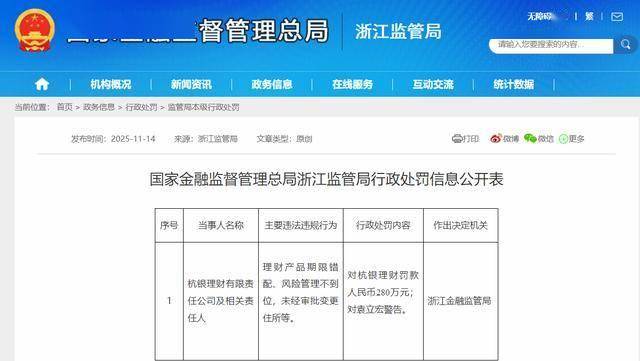
杭银理财被罚280万元,涉理财产品期限错配、风险管理不到位等
Sou Hu Cai Jing· 2025-11-25 10:50
| 督管理总局 | | | 浙江监管局 | 无障碍 餐 | | --- | --- | --- | --- | --- | | | | | | 请给入您要需要的内容。 0 | | 命 机构概况 | | 新闻资讯 政务信息 在线服务 | | 重动交流 统计数据 | | 当前位置:自页 > 政务信息 > 行政处罚 > 监管局本级行政处罚 | | | | | | 发布时间:2025-11-14 来源:浙江监管局 | | 文章类型:原创 | | GIH GRIN RAND OES | | 国家金融监督管理总局浙江监管局行政处罚信息公开表 | | | | | | 当事人名称 | 序号 | 主要违法违规行为 | 行政处罚内容 | 作出决定机关 | | 杭银理财有限责 | 1 | 理财产品期限错 配. 风险管理不到 任公司及相关责 位,未经审批变更 任人 住所等。 | 对杭银理财罚款 人民币280万元; 对意立宏警告。 | 退加短量的工炭 | 截至2025年6月末,杭银理财未经审计总资产56.88亿元,净资产53.87亿元;上半年,其营业收入7.26亿 元,实现净利润4.83亿元。 瑞财经 王敏 11月24日,国家金融监督 ...

精彩回顾 | 从宏观到多资产,彭博与中信专家谈量化投资与风险管理
彭博Bloomberg· 2025-11-25 06:05
Core Insights - The Bloomberg Investment Management Forum in Shanghai highlighted the rapid transformation of the asset management industry through quantitative research strategies, emphasizing Bloomberg's commitment to this field over the past 30 years [1][4]. Group 1: Macro Quantitative Scenario Analysis - Bloomberg has developed a factor-based macro quantitative scenario analysis model that integrates macroeconomic variables with underlying drivers such as credit risk and demand changes, utilizing a large covariance matrix updated daily to detail asset correlations and risk transmission [4][6]. - Users can customize macro variable impacts and driver weight distributions to simulate investment portfolio performance under various economic conditions [6]. Group 2: Risk Budgeting in Equity Allocation - The application of risk budgeting strategies in global and A-share markets can help mitigate losses during market volatility by adjusting allocations based on low correlation and volatility differences among A-share stocks [7][9]. - This approach aims to create a more balanced and resilient investment portfolio by ensuring each asset contributes equally to overall portfolio risk rather than focusing solely on weight [9]. Group 3: Cross-Asset Investment and Strategy Index Development - The discussion on cross-asset investment strategies highlighted the increasing demand for diversified asset allocation and risk premium management among institutions, with a focus on innovation to inspire investors and reduce risks [10][12]. - Bloomberg supports quantitative teams with data integration, risk analysis, and scenario simulation to enhance strategy development and risk management efficiency [12]. Group 4: Risk Management in Investment Decisions - Effective risk management is crucial in investment decision-making, with strategies based on risk perspectives aiding in capturing alpha and facilitating quantitative backtesting [13][15]. - The use of risk parity methods combined with asset correlations can enhance portfolio robustness, addressing the challenges of return forecasting [15]. Group 5: Factor Investment and Alternative Data - The exploration of factor investment frameworks and the use of alternative data and machine learning to tackle the "factor zoo" challenge were discussed, with innovative factors developed from Bloomberg's supply chain data [17][19]. - The application of deep learning models for dynamic beta estimation shows significant performance improvements over traditional methods, enhancing the predictive capabilities for future volatility and variance [19].


交易后解决方案通过第14版开源风险引擎(ORE)强化开源创新
Refinitiv路孚特· 2025-11-25 06:02
Core Insights - Open-source technology is reshaping the financial landscape, providing companies with low-cost or free access to advanced analytical and simulation tools, particularly in the post-trade environment [1] - The release of version 14 of the Open Risk Engine (ORE) enhances analytical precision and expands tool coverage, addressing the growing demand for flexible, transparent, and high-performance risk tools [1][2] Group 1: Version Enhancements - The core of version 14 is an upgrade to QuantLib v1.40, which improves performance and consistency, ensuring ORE meets the evolving needs of global financial institutions [2] - Over 100 issues have been resolved since the last release, enhancing platform stability and accuracy across all use cases [2] Group 2: Expanded Modeling Capabilities - Version 14 extends ORE's analytical capabilities to new product classes and market areas, including support for American options on commodity futures and modeling for callable bonds and their derivatives [3] - Enhancements for bond futures include the introduction of the "Cheapest-to-Deliver" feature and total return swaps for bond futures, ensuring alignment with market practices [3] Group 3: Calibration and Analysis Improvements - New features in version 14 optimize calibration and enhance modeling consistency, including a global yield curve bootstrapping function that improves the accuracy of complex yield curve construction [4] - Additional enhancements include Delta-Gamma adjustment calibration for swaptions and improved regression techniques for modeling OIS AMC risk exposure [4] Group 4: Correlation Analysis Framework - The correlation analysis framework now allows users to generate correlations based on historical scenarios, which can be integrated into XVA analysis for a more dynamic and data-driven approach to risk exposure and valuation adjustments [5] - Improved error reporting features simplify debugging processes by automatically attributing missing fixing ID errors to transaction IDs, enhancing transparency [5] Group 5: Community-Driven Development - Since its inception in 2016, ORE has evolved through continuous feedback from a global user community, reflecting direct collaboration with practitioners, academia, and developers [6] - The updates in version 14 not only bring technical improvements but also enhance the usability of risk and pricing modeling, ensuring high-quality risk analysis is accessible to all institutions [6][7]

德银:“五重冲击”齐袭!本轮比特币暴跌的逻辑,和过去完全不一样
美股IPO· 2025-11-25 03:40
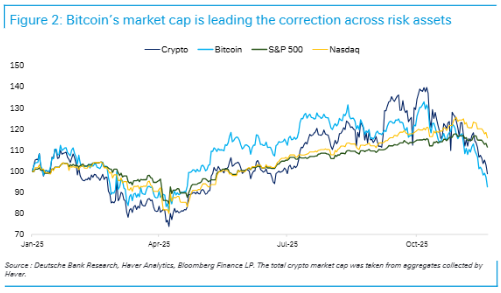
Core Viewpoint - Deutsche Bank believes that the recent decline in Bitcoin is driven by five major shocks, including macroeconomic headwinds, hawkish signals from the Federal Reserve, stagnation in regulatory progress, outflows of institutional funds, and profit-taking by long-term holders, indicating a fundamental shift in Bitcoin's investment logic and an unprecedented emphasis on risk management [1][2][4]. Group 1: Five Major Shocks - **Shock One: High Correlation with Tech Stocks** The recent decline in Bitcoin is synchronized with the drop in U.S. stocks, indicating that Bitcoin has not yet established its function as a defensive hedge [3]. - **Shock Two: Increased Uncertainty in Monetary Policy** The uncertainty surrounding the Federal Reserve's monetary policy is a key driver of Bitcoin's decline, with a strong negative correlation between Bitcoin prices and Fed interest rates [10][11]. - **Shock Three: Stagnation of Regulatory Key Legislation** The momentum for regulatory frameworks has stalled, hindering the integration of Bitcoin into investment portfolios and liquidity deepening [13][15]. - **Shock Four: Institutional Fund Outflows and Liquidity Drain** A vicious cycle of liquidity drain and institutional fund outflows has exacerbated the price drop, with significant net outflows from Bitcoin ETFs recently [17][18]. - **Shock Five: Profit-Taking by Long-Term Holders** Unlike previous crashes driven by new or leveraged traders, this adjustment has seen long-term holders selling off over 800,000 Bitcoins, marking the highest level since January 2024 [20][21]. Group 2: Market Dynamics and Future Outlook - **Market Dynamics** The correlation between Bitcoin and major stock indices has surged, reaching levels similar to those during the market stress of the COVID-19 pandemic [5][6]. - **Future Outlook** The ability of Bitcoin to stabilize post-adjustment remains uncertain, but regulatory reforms and increased interest from governments and central banks may enhance institutional confidence and market liquidity [23]. - **Risk Management Importance** As the cryptocurrency market evolves, implementing strict risk management measures is crucial due to the potential for increased price volatility driven by uncertainty and leverage effects [23].


“五重冲击”齐袭!本轮比特币暴跌的逻辑,和过去完全不一样
Hua Er Jie Jian Wen· 2025-11-25 01:56
Core Viewpoint - Deutsche Bank believes that the logic behind the recent Bitcoin crash has fundamentally changed, driven by macroeconomic headwinds, hawkish signals from the Federal Reserve, stalled regulatory processes, institutional capital outflows, and profit-taking by long-term holders [1] Group 1: Five Major Impacts - **Impact One: High Correlation with Tech Stocks** Bitcoin's recent decline is synchronized with the drop in U.S. stocks, indicating that it has not yet established itself as a defensive hedge [2][3] - **Impact Two: Increased Uncertainty in Monetary Policy** The uncertainty surrounding the Federal Reserve's monetary policy is a key driver of Bitcoin's decline, with a strong negative correlation between Bitcoin prices and Fed interest rates [8][9] - **Impact Three: Stalled Regulatory Key Legislation** The momentum for regulatory frameworks has stalled since the summer, which directly hinders Bitcoin's investment integration and liquidity [10][12] - **Impact Four: Institutional Capital Outflows and Liquidity Drain** The recent sell-off has created a vicious cycle of liquidity drain and institutional capital outflows, exacerbating market pressure [14] - **Impact Five: Profit-Taking by Long-Term Holders** Unlike previous crashes driven by new or leveraged traders, this adjustment has seen long-term holders cashing out, leading to increased supply in circulation [16][17] Group 2: Market Dynamics and Future Outlook - **Market Dynamics** The correlation between Bitcoin and major stock indices has surged, reaching levels similar to those during the market stress of the COVID-19 pandemic [6][7] - **Future Outlook** The ability of Bitcoin to stabilize post-adjustment remains uncertain, with potential for gradual inclusion in mainstream investment portfolios as regulatory reforms and institutional adoption of stablecoins may enhance market liquidity [21]
破解周期性价格波动 铂、钯期货助产业企业行稳致远
Qi Huo Ri Bao Wang· 2025-11-25 01:33
Core Insights - The introduction of platinum and palladium futures and options on the Guangxi Futures Exchange meets the urgent demand for risk management tools in the industry, marking an expansion of the exchange's new energy metal sector [1][5] Price Volatility - Platinum and palladium prices have experienced significant fluctuations, with annual price volatility exceeding 20% over the past five years. For instance, platinum prices dropped to a five-year low of 154.04 yuan per gram in early 2020, followed by a recovery to an average of 228.97 yuan per gram in 2024 [2] - Palladium prices also showed high volatility, peaking at 761 yuan per gram in early 2022 and averaging 260.49 yuan per gram in 2024. The price fluctuations for palladium from 2020 to 2024 were 51.77%, 83.73%, 77.39%, 87.40%, and 40.79% respectively [2] Supply Chain Challenges - Global supply constraints, particularly due to issues in South Africa's electricity supply and mining safety incidents, have led to a tight supply of platinum and palladium despite price declines. This has increased the urgency for domestic enterprises to adopt more mature market mechanisms for price stabilization [3] Risk Management Needs - Companies like Jinchuan Group, which produce platinum and palladium, face significant operational impacts due to price volatility and lack of effective risk management tools. The absence of authoritative pricing mechanisms complicates their ability to make informed operational decisions [4] - The introduction of futures contracts is expected to provide transparent and fair pricing, filling the gap in risk management tools for the industry [5] Market Impact - The listing of platinum and palladium futures is anticipated to enhance price discovery and hedging capabilities, allowing Chinese enterprises to engage in transactions in RMB and attract international market participants [5][6] - The futures market is expected to improve the operational efficiency of enterprises by allowing them to manage price risks more effectively, thus stabilizing the domestic industrial chain [6] Industry Preparedness - Market participants are preparing for the launch of platinum and palladium futures by familiarizing themselves with contract rules and risk management mechanisms. This includes outreach efforts to educate industry players on the benefits of these new financial instruments [7][8]
“三省”服务焕新 全国首个“医疗设备全生命周期保障保险”落地
Nan Fang Du Shi Bao· 2025-11-24 23:11
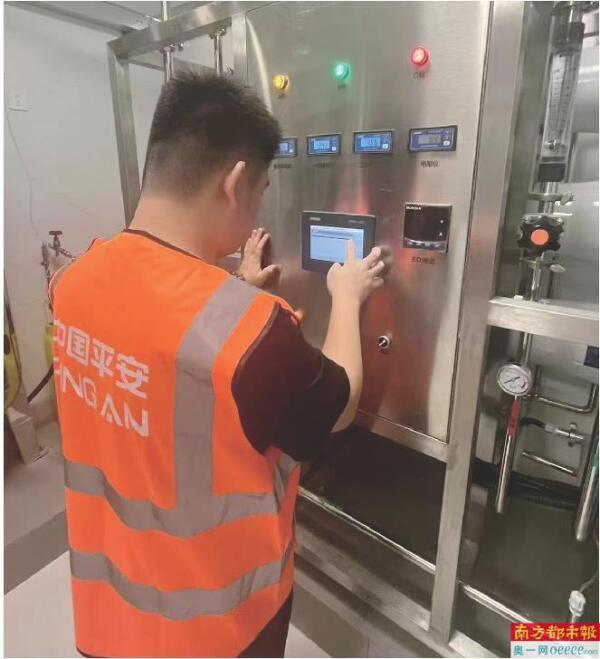
Core Insights - The signing of an innovative cooperation agreement between Ping An Property & Casualty Insurance Shenzhen Branch and Shenzhen Traditional Chinese Medicine Hospital marks the launch of the first "Medical Equipment Full Lifecycle Guarantee Insurance" in China, transforming 800,000 in maintenance costs into insurance coverage [2][3] - This insurance integrates maintenance cost compensation with safety guarantees for over 2,200 medical devices, representing a significant advancement in risk management within the medical equipment sector [2][3] Group 1: Insurance Product Features - The "Medical Equipment Full Lifecycle Maintenance Cost Loss Compensation Clause" focuses on covering repair and replacement losses due to equipment failures, including third-party liability for accidents during maintenance [3] - The insurance product fills a market gap in medical equipment risk management and establishes a "1+N" ecological development model, extending coverage to medical liability insurance, physician professional liability insurance, and surgical accident insurance [3][4] Group 2: Technological Integration and Management - The development of a smart IoT platform for medical equipment management enhances safety monitoring and risk warning capabilities, significantly improving the utilization rate of idle equipment [4] - A 24-hour on-site service mechanism ensures efficient response to equipment failures, reducing response times by 87% and achieving 100% coverage in equipment inspections [4] Group 3: Cost Management and Supply Chain - The insurance model addresses the uncertainty of maintenance costs in the medical industry by converting variable annual repair expenses into fixed costs, thus enhancing cost control [4][5] - The establishment of a direct supply system for original parts and collaboration with over 600 distributors reduces procurement times and costs, improving repair efficiency [5] Group 4: Broader Implications for Healthcare - The introduction of this insurance not only protects medical equipment but also shifts the focus from passive compensation to proactive risk management, thereby reducing equipment failure rates and enhancing patient safety [6] - The initiative aims to integrate risk management and technical services through a market-oriented insurance mechanism, contributing to the improvement of public health emergency management systems and supporting the Healthy China strategy [6]
Lexin(LX) - 2025 Q3 - Earnings Call Transcript
2025-11-24 12:02
Financial Data and Key Metrics Changes - In Q3 2025, loan volume reached RMB 50.89 billion, revenue was RMB 3.42 billion, and net profit was RMB 521 million, reflecting a 2% increase quarter-over-quarter and a 68% increase year-over-year [5][22] - The net profit take rate increased to 2.01%, up by 9 basis points quarter-over-quarter and 92 basis points year-over-year [5][22] - Total revenue decreased by 5% quarter-over-quarter, primarily due to a 29% decrease in e-commerce platform service income [32] Business Line Data and Key Metrics Changes - Net revenue from the credit business decreased by 3% to RMB 1.9 billion, attributed to increased credit costs [22][23] - E-commerce business net revenue increased by 14% to RMB 111 million, while total net revenue from both credit and e-commerce business decreased by 2% to RMB 2.1 billion [23][32] - E-commerce GMV for essential daily consumer goods grew 58.5% quarter-over-quarter and 133.8% year-over-year [11] Market Data and Key Metrics Changes - The company ceased facilitating loans with APRs above 24% starting October 1, impacting both business volume and average loan pricing [39] - The industry-wide liquidity tightened further in Q4, affecting credit risk and operational dynamics [15][19] Company Strategy and Development Direction - The company is focused on enhancing risk management capabilities and adapting to new regulations, which are expected to raise industry entry barriers [6][15] - A customer-centric approach is emphasized, with initiatives to improve user experience and satisfaction [9][12] - The company plans to continue investing in its ecosystem businesses to drive steady growth and capture opportunities arising from industry adjustments [12][19] Management's Comments on Operating Environment and Future Outlook - Management expressed confidence in achieving stable performance growth despite industry fluctuations and regulatory changes [13][33] - The company anticipates moderate loan volume decline in Q4 due to regulatory impacts, but expects to see stabilization in risk indicators towards the end of the quarter [54][56] - The long-term outlook remains positive, with expectations for gradual recovery as the regulatory environment stabilizes [57] Other Important Information - The dividend payout ratio was increased from 25% to 30% of net profit, and share repurchase programs are progressing well [6][35] - The company has maintained a solid financial position with cash reserves of approximately RMB 4.3 billion and shareholders' equity of about RMB 11.8 billion [32] Q&A Session Summary Question: Impact of new regulation on business operations - Management confirmed that the new regulation has led to a shift in business practices, including ceasing loans with APRs above 24%, which has affected business volume and pricing [39] Question: Development strategy and outlook for e-commerce business - The e-commerce business is focused on expanding product categories and improving risk management, with significant growth in transaction volumes during shopping festivals [43][44] Question: Managing credit risk during transitional period - The company has enhanced its risk management system to identify vulnerable customers and control risk fluctuations effectively [48][49] Question: Outlook for Q4 and full year 2026 performance - Management expects a moderate decline in loan volume for Q4 due to regulatory impacts but anticipates significant year-over-year growth for the full year 2025 [55][56]