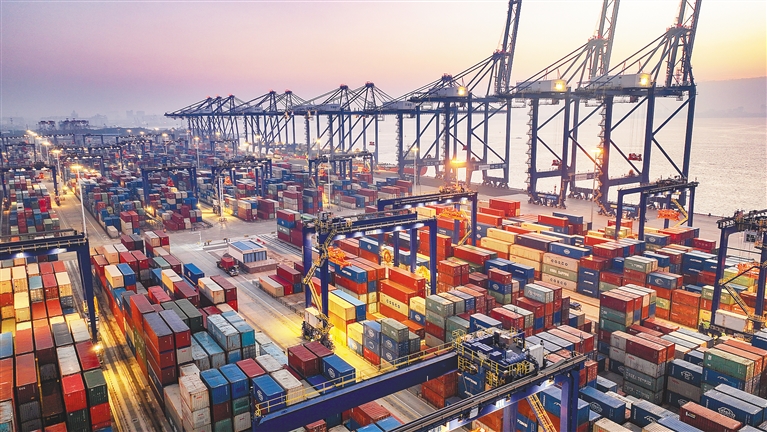
制度型开放

Search documents
听,高质量发展新脉动丨对外开放开创共赢新局面
Xin Hua Wang· 2025-12-19 10:00
Group 1 - The Hainan Free Trade Port officially launched its island-wide customs closure on December 18, 2025, marking a significant step in China's commitment to high-level opening-up and the construction of an open world economy [1] - Hainan's provincial secretary, Feng Fei, emphasized the acceleration of alignment with international high-standard economic and trade rules, aiming to showcase China's expanding openness and the significant opportunities it presents [3] - The central economic work conference identified "maintaining openness and promoting multi-field win-win cooperation" as a key task for the upcoming year, highlighting the importance of reform and high-quality development [5] Group 2 - The first batch of "zero tariff" petrochemical raw materials, weighing 179,000 tons, successfully cleared customs at the Yangpu Port following the launch of the Hainan Free Trade Port [7] - China is actively aligning with international high-standard economic and trade rules, having established 22 free trade pilot zones and the Hainan Free Trade Port, which aims to reduce trade costs and enhance the flow of factors [7] - The Ministry of Commerce reported that over 110 pilot measures have been introduced in key areas such as trade, investment, and intellectual property, with the goal of replicating successful experiences across a broader scope [9] Group 3 - The central economic work conference called for steady progress in institutional opening-up and the expansion of service sector openness, alongside the promotion of the Hainan Free Trade Port [14] - China is progressively reducing the foreign investment negative list and has eliminated restrictions on foreign investment in the manufacturing sector, demonstrating a commitment to institutional opening [11] - The establishment of the global digital trade center in Yiwu signifies a shift from traditional trade models to a digital trade ecosystem, with expectations of significant sales growth [21][23] Group 4 - The central economic work conference emphasized the need to deepen reforms in foreign investment promotion systems and enhance comprehensive overseas service systems [27] - Multinational companies are increasingly investing in China, with notable projects including Airbus's second A320 assembly line in Tianjin and Siemens Medical's high-end R&D base in Shenzhen [27] - China's commitment to opening up is expected to create new opportunities for global economic growth and collaboration [29]


美国发布《国家安全战略》后,中国在为世界探索避免碎片化的道路
Xin Lang Cai Jing· 2025-12-19 09:12
Group 1 - The latest U.S. National Security Strategy (NSS) emphasizes economic security as a core component of national security, marking a significant shift in strategic focus towards economic competition and supply chain security [2][4] - The NSS outlines tools such as strategic tariffs and control over critical minerals and materials to reshape economic relations, particularly with China, integrating trade friction and industrial policy into the national security framework [2][3] - The NSS indicates a rebalancing of the U.S.-China economic relationship, prioritizing economic issues over traditional geopolitical confrontations, and highlights the importance of controlling maritime routes and supply chain nodes for economic stability [3][4] Group 2 - China's recent strategic decisions reflect a shift towards a resilient and secure high-quality open system, balancing development and security amid changing external environments [5][6] - The Chinese government emphasizes the importance of domestic demand and internal market strength, aiming to enhance national competitiveness and security through a dynamic balance of growth, structural adjustment, and risk prevention [6][7] - China's policy framework for 2026 focuses on enhancing domestic circulation and reducing reliance on external factors, while maintaining a commitment to openness and international cooperation [7][8] Group 3 - China aims to upgrade its industrial structure and trade models, focusing on technology-intensive and high-value-added sectors, while promoting digital and green trade as part of its long-term competitive strategy [8][9] - The strategy includes diversifying international markets and supply chains to mitigate external risks, thereby reducing sensitivity to single markets and enhancing stability [9][10] - China plans to strengthen its risk prevention and self-sufficiency capabilities in critical technology and resources, ensuring a robust foundation for high-level openness and economic resilience [10]
外媒:海南自贸港成为中国高水平开放的新里程碑
Zhong Guo Qing Nian Bao· 2025-12-19 08:11
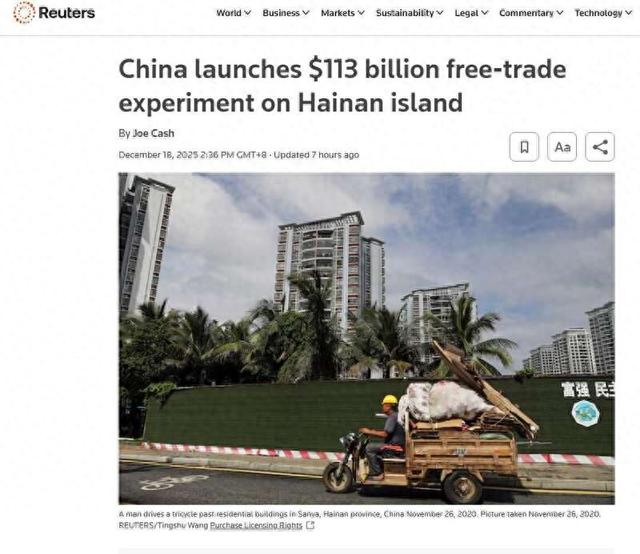
中国青年报客户端北京12月19日电(中青报·中青网记者 王梓)12月18日,海南自由贸易港正式启动全 岛封关,8个对外开放口岸及10个"二线口岸"监管设施全部启用,海南岛正式成为海关监管特殊区域。 德国"德国之声"电台、菲律宾《马尼拉时报》、英国路透社等多家外媒称,在全球保护主义升温的背景 下,中国这一举措被广泛视为在全球化逆流中推进自由贸易、扩大制度型开放的重要里程碑。 "海南试图在全球贸易保护主义抬头的背景下,成为中国高水平对外开放的新高地。"德国"德国之声"电 台报道称。 "德国之声"和路透社采访的经济学家认为,封关带来的超低关税将显著带动线下实体消费的增长,特别 是对冬季前往海南避寒的庞大游客群体而言;更重要的是,这一举措能吸引外资、促进制造业升级,海 南作为连接东南亚的物流枢纽的地位也将进一步提升。 "中国海南在全球供应链中扮演的角色日益重要。"俄塔社写道。 "值得注意的是,封关日期12月18日恰逢1978年中国开启改革开放路线的纪念日。""德国之声"分析称, 海南是中国最早的特区之一,如今在医疗、教育等服务领域进一步放宽了外资准入。在地区局势升温的 背景下,海南的战略地位愈发凸显。 来源:中国青年 ...

海南自贸港正式启动全岛封关,将为侨商带来哪些机遇?
Sou Hu Cai Jing· 2025-12-19 06:53
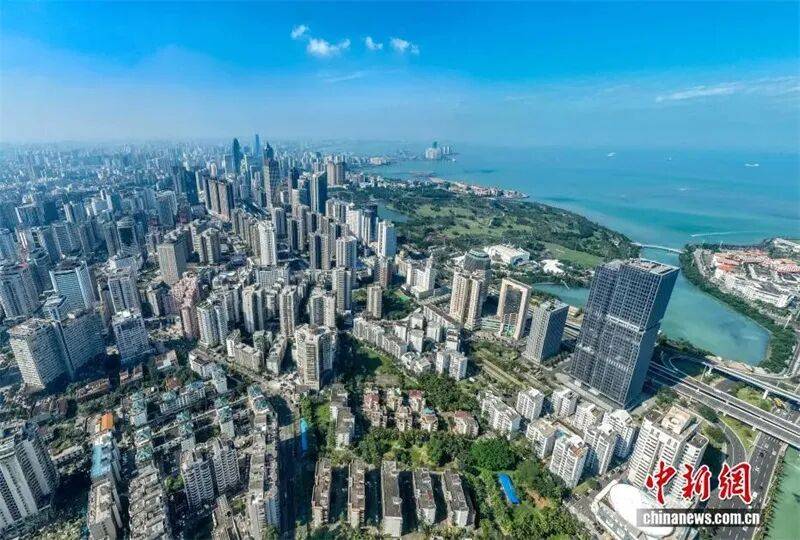
自2025年12月18日起,海南自由贸易港正式启动全岛封关。 12月18日,海南自由贸易港正式启动全岛封关。图为2025年12月17日,海南省海口市滨海大道楼宇。(无人机照 片)中新社记者 骆云飞 摄 至此,进口征税商品目录、货物流通税收政策、禁限清单、加工增值内销免关税政策、海关监管办法等一系列封 关政策及配套文件同步实施。 侨商在海南自贸港建设中将发挥什么作用?封关后的海南自贸港将为侨商提供哪些潜在机遇?长期从事华商研究 的北京大学城市软实力研究院研究员、侨海(中国)创新发展研究院院长张洵君接受中国侨网专访作出解读。 封关是新开始 海南将更加开放 1978年12月18日,十一届三中全会的帷幕拉开,开启了中国改革开放的伟大进程。47年后的同一天,海南自贸港 全岛封关,是中国在新时代对改革开放承诺的坚定延续,是开放之路上的又一次关键跃升。 张洵君表示,海南自贸港封关是在更高起点上推进改革开放的战略部署。连接国内国际两个市场、两种资源,这 种独特地位也是海南自贸港的特殊价值所在。 其国家战略使命集中在三点:一是制度创新的先行示范,以零关税、低税率、简税制等特殊政策为基础,探索跨 境服务贸易、数字贸易、数据跨境流 ...
专家:海南全岛封关为侨商带来机遇
Zhong Guo Xin Wen Wang· 2025-12-19 04:11
Core Viewpoint - The full closure of Hainan Free Trade Port starting December 18, 2025, presents significant opportunities for overseas Chinese merchants to engage deeply in China's high-level opening-up and share in development dividends [1][2]. Group 1: Opportunities for Overseas Chinese Merchants - The operational closure will create a platform for overseas Chinese merchants to leverage their global networks, transforming Hainan into a "regional headquarters," "supply chain management center," or "innovation incubation base" [1]. - Policy benefits are most directly and significantly reflected in the restructuring of trade and industrial chains, with an expansion of the "zero tariff" scope and the free circulation of imported "zero tariff" goods and their processed products among beneficiaries [1]. - Hainan has introduced 22 special measures to relax market access and implements the highest level of openness in the country with its "negative list for foreign investment," opening vast opportunities for innovation in sectors like healthcare, digital economy, green finance, and professional services [1]. Group 2: Regulatory Environment and Long-term Value - The real challenge for overseas merchants in cross-border operations lies not in strict rules but in the frequent changes and continuity of those rules, which Hainan's full closure is addressing [2]. - The institutional platform provided by Hainan allows overseas resources, technology, and management experience to enter the Chinese system with lower friction, enabling merchants to upgrade from "trade participants" to "supply chain organizers" [2]. - This openness is not about lowering standards but optimizing governance methods, enhancing overall operational efficiency, and providing long-term value for truly internationalized merchants [2].
海南自贸港封关开启中国对外开放新篇章
Xin Hua She· 2025-12-19 03:25
新华社海口12月18日电 12月18日,海南自由贸易港正式启动全岛封关。这是中国坚定不移扩大高水平 对外开放、推动建设开放型世界经济的标志性举措,开启中国对外开放实践新篇章。 从设立经济特区到加入世界贸易组织,从共建"一带一路"到建设自由贸易试验区,中国开放步伐始终稳 健有力。海南自贸港的封关运作,是中国稳步扩大规则、规制、管理、标准等制度型开放的新探索。 封关运作,是制度集成创新的前沿实践。海南自贸港建设,不仅涉及关税政策的调整,更涉及投资、金 融、法治、政府服务等领域的系统性改革。围绕经济、生态、社会、营商环境等方面改革,海南已推出 173项制度创新案例,其中37项向全国推广。未来站在更高起点谋划和推进改革,还将持续推动规则衔 接、管理协同和效能提升,不断完善自贸港政策制度体系。 封关运作,进一步拉紧中国与世界的合作纽带。一个贸易投资更自由便利、要素流动更高效的新海南, 将吸引更多全球资源汇聚,推动区域经济一体化发展。这是向世界分享机遇、共同发展的重要桥梁。在 复杂多变的国际环境中,中国坚定不移深化互利合作,对外开放的大门不会关闭,只会越开越大。 推进海南自由贸易港建设是一项复杂的系统性工程。监管模式的创 ...
和音:读懂海南自贸港封关启航的开放分量
Ren Min Ri Bao· 2025-12-19 03:25
Core Insights - The Hainan Free Trade Port officially commenced its full island closure operation on December 18, marking a significant milestone in China's reform and opening-up process. This initiative is seen as a response to the current international landscape characterized by protectionism and aims to enhance global economic confidence and opportunities [1] Group 1: Hainan Free Trade Port Overview - Hainan Free Trade Port is positioned as a crucial gateway for China's new era of opening up, driven by strategic decisions from the Chinese leadership [1] - The port will implement a policy framework characterized by "one line open, one line controlled, and free movement within the island," gradually establishing conditions for "zero tariffs, low tax rates, and simplified tax systems" [1] Group 2: Policy Innovations and Achievements - Since the release of the overall plan for Hainan Free Trade Port in June 2020, various innovations in the system and mechanisms for external openness have been continuously advanced, establishing a preliminary policy system focused on trade and investment facilitation [2] - Hainan has developed 21 batches of 173 institutional innovation cases, with 82 recognized at the national level and 37 promoted nationwide [2] Group 3: International Cooperation and Economic Impact - The construction of Hainan Free Trade Port is facilitating regional collaboration and creating more cooperation opportunities, particularly for neighboring countries [3] - In the first half of 2025, Hainan enterprises recorded 167 new overseas investment projects, a year-on-year increase of 103%, indicating a robust international engagement [3] - The port is enhancing the stability, transparency, and predictability of the business environment for multinational companies, thereby increasing their willingness to seize cooperation opportunities in Hainan [3]
海南自贸港,对全球贸易有何影响?
Sou Hu Cai Jing· 2025-12-19 02:15
Core Viewpoint - The implementation of the closure operation in Hainan Free Trade Port marks a significant step in China's reform and opening-up strategy, aiming to enhance trade and investment facilitation while aligning with international economic rules [1][2][7]. Group 1: Changes and Developments - The closure operation is described as "four improvements": more favorable, more relaxed, more convenient, and more efficient [1]. - Hainan Free Trade Port is positioned as a "testbed" for China's reform and opening-up, serving as a demonstration area for ecological civilization and an international tourism consumption center [2]. - The unique policy advantages of Hainan include zero tariffs on 74% of goods and a 15% corporate income tax rate, which are part of the efforts to attract high-end talent and facilitate service trade [3]. Group 2: Operational Challenges - Despite advancements in infrastructure, there is a need to improve service awareness, efficiency, and the overall business environment to support the free trade port's development [4]. - The concept of "closure" is a customs term that allows for the regulation of goods entering Hainan, with specific measures to prevent smuggling while facilitating trade [4]. Group 3: Future Goals - The next decade will focus on aligning with global standards for trade and investment liberalization, aiming to reduce investment costs and foster industrial agglomeration [5][6]. - Hainan aims to enhance the proportion of modern service industries and high-tech sectors, providing significant employment opportunities and increasing per capita GDP to at least the national average [6]. Group 4: Strategic Advantages - The closure operation reflects China's commitment to globalization and regional cooperation amidst rising protectionism and unilateralism globally [7]. - Hainan's strategic location within the RCEP market positions it as a key player in facilitating trade between China and ASEAN, aiming for high-standard international development [7].
重塑开放边界,全球最大自贸港下一步怎么走?
Sou Hu Cai Jing· 2025-12-19 01:34
Core Insights - Hainan has officially launched its free trade port with the implementation of full island closure, marking a significant step towards global openness and trade facilitation [2][4][19] - The establishment of the free trade port is seen as a critical phase in China's broader strategy for economic reform and opening up, with a focus on creating a systematic environment for the free flow of people, goods, and capital [8][12] Summary by Sections Development and Implementation - The first batch of international vessels and foreign workers have been registered in Hainan, with the first zero-tariff goods processed, indicating the operationalization of the free trade port [2][4] - Hainan's free trade port aims to establish a policy system focused on trade and investment facilitation by 2035, with a long-term goal of becoming a high-level free trade port by mid-century [2][11] Economic Impact - The first shipment of zero-tariff petrochemical raw materials amounted to 179,000 tons, valued at nearly 400 million yuan, saving companies approximately 10 million yuan in costs [4][6] - The range of zero-tariff goods is set to expand from 1,900 to about 6,600 tax items, covering approximately 74% of all goods, with a focus on production-related items [11][12] Policy and Regulatory Framework - The free trade port's design includes "one line open, two lines controlled, and free movement within the island," which is crucial for maintaining market security while promoting openness [4][6] - The introduction of a dual 15% income tax policy aims to attract foreign investment, although its implementation details remain complex and a point of concern for businesses [8][9] Future Prospects - Hainan's free trade port is expected to serve as a testing ground for broader national reforms, with the potential to influence tax system optimization and regulatory practices across China [15][19] - The province has seen a significant increase in foreign investment, with actual foreign capital utilization reaching 102.5 billion yuan, growing at an average rate of 14.6% annually [18]

封关运作开新篇 踔厉奋发向未来
Hai Nan Ri Bao· 2025-12-19 01:26
Core Viewpoint - The official launch of the all-island customs closure in Hainan Free Trade Port marks a significant milestone, showcasing China's commitment to high-level opening-up and reform [3][4][5]. Group 1: Economic and Trade Opportunities - The all-island customs closure transforms Hainan into a special customs supervision area, implementing a policy characterized by "open on one line, controlled on the second line, and free within the island" [6][13]. - The closure is expected to attract global enterprises, capital, and talent, enhancing Hainan's role as a key open gateway for China's new era of reform and opening-up [4][7]. - Hainan's unique geographical and ecological advantages position it as a testing ground for national reform and opening-up policies, particularly in trade, investment, and cross-border capital flow [5][9]. Group 2: Industry Development and Innovation - The launch of the customs closure is anticipated to boost various industries, including tourism, which will benefit from innovative travel routes and enhanced local product offerings [8][10]. - The establishment of a high-end processing project in the health food sector demonstrates the positive impact of customs policies, significantly reducing import costs and increasing production capacity [10][11]. - The focus on high-quality development in sectors such as aerospace, digital economy, and biomedicine is emphasized, with plans to create industry clusters worth hundreds of billions [15][18]. Group 3: Policy and Regulatory Framework - The provincial government aims to create a market-oriented, law-based, and international business environment, enhancing the transparency and predictability of the investment climate [13][14]. - Continuous efforts will be made to optimize foreign investment policies and improve market access, particularly in new industries and business models [16][17]. - The integration of various regulatory bodies and the establishment of a collaborative governance model are crucial for the effective implementation of the customs closure [12][19].