大语言模型

Search documents
看好中国经济发展“MIT”优势
Zhong Guo Zheng Quan Bao· 2025-10-15 20:15
Core Viewpoint - The founder and chief strategist of Bison Asset, Wang Guohui, expresses a strong bullish outlook on the Chinese capital market, attributing this to China's "MIT" advantages: Manufacturing, Innovation, and Talent [1][2][3] Group 1: Manufacturing - China has established a robust manufacturing ecosystem over the past thirty years, which includes not only factories and machinery but also a comprehensive infrastructure of ports, airports, roads, and power plants [2] - The application of artificial intelligence in manufacturing by Chinese companies is expected to enhance this advantage in the coming decades, making it difficult for any other country to replicate such a large ecosystem [2] Group 2: Innovation - Historically, many Chinese companies have been reluctant to invest in innovation, preferring to utilize existing technologies for production [2] - However, the presence of a significant number of Chinese engineers in top U.S. tech companies indicates a strong potential for innovation, with companies like DeepSeek making breakthroughs in large language models [2] Group 3: Talent - The talent pool in China includes proactive and creative entrepreneurs, engineers, and industrial workers, which is a key factor in the country's development [3] - Visits to innovative companies, such as a biotechnology firm in Chengdu with founders educated in the U.S., reinforce confidence in China's future growth [3]
蚂蚁开源万亿参数思考模型 Ring-1T,综合能力逼近 GPT-5、数学能力对标 IMO 银牌
AI前线· 2025-10-15 07:45
Core Insights - Ant Group has officially launched the trillion-parameter thinking model Ring-1T, which is fully open-sourced including model weights and training recipes [2] - Ring-1T has shown significant improvements in natural language reasoning capabilities and general performance across various tasks compared to its preview version [2] - The model achieved impressive results in the International Mathematical Olympiad (IMO) challenges, demonstrating its ability to solve complex mathematical problems [2] Model Performance - Ring-1T achieved a success rate of 81.59% in the Arena-Hard V2 human preference alignment test, ranking first among open-source models and closely approaching the performance of GPT-5-Thinking (High) at 82.91% [3] - In the HealthBench evaluation for medical Q&A, Ring-1T also scored the highest, marking it as the best in the open-source domain [3] Technical Innovations - Ant Group addressed the challenge of training and inference precision discrepancies in trillion-parameter models by developing the "icepop" algorithm, which stabilizes the training-inference distribution [5] - The company also created a high-performance reinforcement learning system called ASystem, optimizing memory management and weight exchange for large-scale RL training [6] Model Architecture - Ring-1T continues to utilize the Ling 2.0 architecture, which incorporates features like highly sparse MoE architecture and mixed precision training to enhance efficiency [8] - The model underwent multi-stage training processes, including LongCoT-SFT, RLVR, and RLHF, significantly improving its complex reasoning and general capabilities [8] Product Matrix - Ant Group has released a total of 18 models, ranging from 16 billion to 1 trillion parameters, marking the transition of its large language model products into the 2.0 phase with the introduction of Ring-1T and Ling-1T [9]


腾讯发布超低成本AI训练法!120元效果秒杀70000元微调方案
量子位· 2025-10-15 06:27
Core Viewpoint - Tencent proposes a new method for upgrading large model agents called Training-Free GRPO, which significantly reduces costs and improves performance without the need for parameter tuning [1][5][11]. Group 1: Methodology - The Training-Free GRPO method allows for performance enhancement by learning from brief experiences embedded in prompts, eliminating the need for parameter adjustments [2][11]. - This approach maintains the model parameters in a frozen state while dynamically updating an external knowledge base to optimize performance [14][22]. - The method leverages the core logic of traditional GRPO but transforms it into a non-parametric reasoning process [13]. Group 2: Experimental Results - Experiments demonstrate that the DeepSeek-V3.1-Terminus model using Training-Free GRPO shows significant performance improvements in mathematical reasoning and web search tasks [4][25]. - Compared to fine-tuning a 32B model, Training-Free GRPO requires less training data and incurs lower costs, with a notable example being a cost of approximately $18 compared to over $10,000 for traditional methods [5][28]. - In the AIME24 and AIME25 tests, the model's performance improved from 80.0% to 82.7% and from 67.9% to 73.3%, respectively, showcasing a clear advantage with minimal training samples [28]. Group 3: Performance Evaluation - The method achieved a Pass@1 score of 67.8% on the WebWalkerQA benchmark, a significant increase from the baseline score of 63.2% [35]. - The results indicate that the learned experiences help the model avoid redundant tool calls and improve decision-making efficiency [31][30]. - The effectiveness of Training-Free GRPO is contingent upon the underlying model's reasoning and tool usage capabilities, as demonstrated by its lower performance on less capable models [40].


卡帕西 8000 行代码手搓 ChatGPT,成本仅100美元,训练 12 小时 CORE 表现超越GPT-2
程序员的那些事· 2025-10-15 00:44
Core Insights - The article discusses the launch of "nanochat," a simplified version of ChatGPT created by Andrej Karpathy, which can be built with minimal resources and code [1][2][4]. - The project aims to provide an accessible framework for training language models, emphasizing ease of use and modification [11][13]. Project Overview - "Nanochat" is a full-stack training and inference pipeline that allows users to create a basic ChatGPT-like model with approximately 8000 lines of code [2][4]. - The total cost to train this model is around $100, using a cloud GPU server for about 4 hours [4][16]. - The model is built using Rust and includes a custom tokenizer, with training conducted on the FineWeb dataset [5][19]. Performance Metrics - After approximately 12 hours of training, the model's performance on the CORE metric surpasses that of GPT-2 [8]. - Specific performance metrics include: - CORE: 0.2219 - ARC-Easy: 0.3876 - GSM8K: 0.0758 - HumanEval: 0.0854 - MMLU: 0.3151 [7][56]. Training Process - The training process involves several stages: pre-training, mid-training, supervised fine-tuning (SFT), and reinforcement learning (RL) [45][50]. - The pre-training phase utilizes a large dataset to teach the model about the world, while mid-training focuses on adapting the model for conversational tasks [28][45]. - The SFT phase further refines the model using high-quality dialogue data [48]. Community Engagement - The project has gained significant attention, with over 4.8k stars on GitHub shortly after its release, indicating strong community interest [14]. - The framework is designed to be easily modifiable, allowing users to experiment with different parameters and configurations [59]. Future Potential - Karpathy envisions "nanochat" evolving into a research tool or benchmark framework, similar to previous projects like nanoGPT [13]. - The project is still in its early stages, with potential for further optimization and enhancement [13][50].
CoreWeave:一场价值数万亿美元的盛宴
3 6 Ke· 2025-10-15 00:29
Core Viewpoint - The integration of large language models (LLM) and reinforcement learning (RL) is accelerating the development of autonomous intelligent agents, positioning CoreWeave as a key cloud service provider for the AI infrastructure needed in this new phase [1] Group 1: Business Strategy and Expansion - CoreWeave's acquisition of OpenPipe is a significant move to enhance its capabilities in the reinforcement learning space, allowing it to train intelligent agents and gain developer recognition [2] - The transition from a "hardware + API" model to a comprehensive "intelligent agent support platform" represents a qualitative leap in CoreWeave's offerings [3] - The integration of reinforcement learning services is expected to significantly enhance profit margins, creating a competitive barrier that traditional hardware rental models cannot match [4] Group 2: Infrastructure Requirements - Intelligent agents require a high-performance infrastructure that includes high throughput system interconnects, fast memory, rollback architecture, data monitoring, error recovery, and modular subroutines, which traditional cloud providers cannot adequately supply [5] - The computational demands of intelligent agents are projected to be several orders of magnitude greater than traditional static inference, with the global data center spending on computing expected to rise from hundreds of billions to trillions [6][7] Group 3: Financial Performance and Market Potential - CoreWeave's quarterly sales surged by 200% year-over-year to approximately $1.21 billion, with a backlog of nearly $30 billion, indicating strong future demand [8] - The shift towards intelligent agent models is expected to drive significant growth in the market, with conservative estimates suggesting that by 2030, annual spending on computational resources could reach $1.8 trillion [9] - CoreWeave's ability to capture value from the entire decision-making cycle of intelligent agents positions it favorably against competitors, enhancing its long-term profitability [10] Group 4: Valuation and Future Outlook - CoreWeave's current valuation aligns with GPU-intensive cloud service peers, with an estimated enterprise value (EV) range of $80-100 billion, potentially increasing to $120 billion if the demand for reinforcement learning training accelerates [13] - The company's strategic shift towards becoming a comprehensive provider of reinforcement learning training solutions is expected to expand its valuation range as the revenue structure increasingly leans towards software services [14]

中金 | 大模型系列(5):大语言时序模型Kronos的A股择时应用
中金点睛· 2025-10-14 23:40
Core Insights - The article discusses the development and application of the Kronos model, a Time-Series Foundation Model (TSFM) specifically designed for financial market data, particularly K-line data [3][9][17] - Kronos aims to address the challenges of low signal-to-noise ratio and strong non-stationarity in financial time series data, which often hinder the performance of general-purpose models [3][9] - The model employs a two-phase framework: K-line tokenization and autoregressive pre-training, allowing it to effectively learn the complex "language" of financial markets [12][13][17] Summary by Sections Introduction to TSFM - TSFMs have emerged from the success of large-scale language models in NLP and CV, focusing on pre-training on diverse time series data to create a general-purpose model adaptable to various tasks [2][6] - The key advantages of TSFMs include their generalization and transfer learning capabilities, enabling them to learn universal time patterns and trends from vast datasets [2][6] Overview of Kronos Model - Kronos is tailored for financial K-line data, utilizing a "domain pre-training + fine-tuning" approach to deeply understand financial market characteristics [3][9] - The model's architecture includes a specialized tokenizer and a large autoregressive Transformer model, which learns the syntax and dynamics of financial data [9][12][17] Performance Evaluation of Kronos - Initial tests of the Kronos standard model on major A-share indices showed a high correlation between predicted and actual closing prices, with a Spearman correlation coefficient of 0.732 for the 5-day forecast [4][19] - The model's predictive performance improved significantly when fine-tuned, achieving a Spearman correlation of 0.856 for the same forecast [4][39] Application of Kronos in Timing Strategies - The article explores the application of Kronos in constructing timing strategies based on predicted closing prices, specifically for the CSI 1000 index [30][33] - The strategy generated positive returns, but it missed significant upward trends since July 2025, indicating a reliance on prior index reversal logic [30][33] Enhanced Performance with Fine-Tuning - A fine-tuned version of Kronos demonstrated a 33.9% return in 2025, with an annualized excess return of 9%, outperforming the original method by over 20 percentage points [5][42] - The fine-tuning process involved adjusting model parameters and rolling adjustments to better adapt to market conditions, leading to improved predictive accuracy [34][42] Conclusion - Kronos represents a significant advancement in financial time series forecasting, effectively capturing the complexities of financial data and translating predictions into actionable investment strategies [17][42]

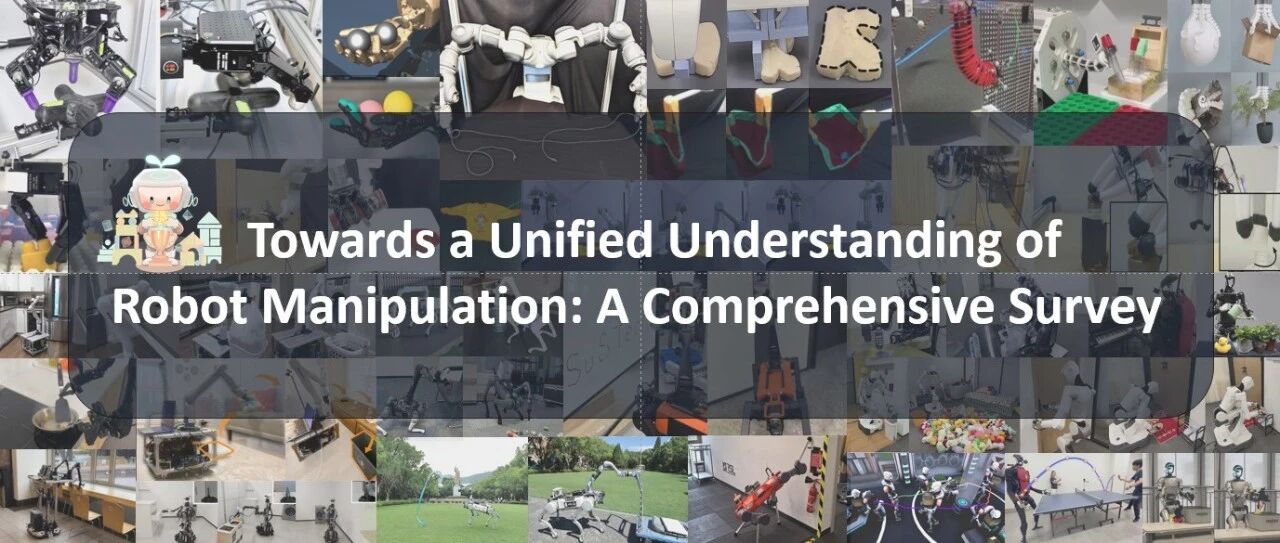
史上最全robot manipulation综述,多达1200篇!八家机构联合发布
自动驾驶之心· 2025-10-14 23:33
Core Insights - The article discusses the rapid advancements in artificial intelligence, particularly in embodied intelligence, which connects cognition and action, emphasizing the importance of robot manipulation in achieving general artificial intelligence (AGI) [5][9]. Summary by Sections Overview of Robot Manipulation - The paper titled "Towards a Unified Understanding of Robot Manipulation: A Comprehensive Survey" provides a comprehensive overview of the field of robot manipulation, detailing the evolution from rule-based control to intelligent control systems that integrate reinforcement learning and large models [6][10]. Key Challenges in Embodied Intelligence - Robot manipulation is identified as a core challenge in embodied intelligence due to its requirement for seamless integration of perception, planning, and control, which is essential for real-world interactions in diverse and unstructured environments [9][10]. Unified Framework - A unified understanding framework is proposed, which expands the traditional high-level planning and low-level control paradigm to include language, code, motion, affordance, and 3D representation, enhancing the semantic decision-making role of high-level planning [11][21]. Classification of Learning Control - A novel classification method for low-level learning control is introduced, dividing it into input modeling, latent learning, and policy learning, providing a systematic perspective for research in low-level control [24][22]. Bottlenecks in Robot Manipulation - The article identifies two major bottlenecks in robot manipulation: data collection and utilization, and system generalization capabilities, summarizing existing research progress and solutions for these challenges [27][28]. Future Directions - Four key future directions are highlighted: building a true "robot brain" for general cognition and control, breaking data bottlenecks for scalable data generation and utilization, enhancing multimodal perception for complex object interactions, and ensuring human-robot coexistence safety [35][33].
AI大语言模型如何带来内存超级周期?
傅里叶的猫· 2025-10-14 15:51
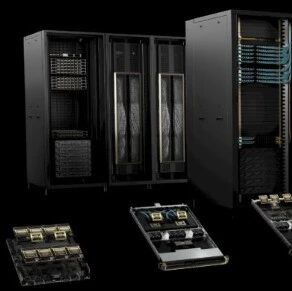
Core Viewpoint - The article discusses the impact of AI large language models, particularly GPT-5, on the demand for memory components such as HBM, DRAM, and NAND, suggesting a potential memory supercycle driven by AI inference workloads [4][8]. Memory Demand Analysis - The demand for HBM and DRAM is primarily driven by the inference phase of AI models, with GPT-5 estimated to require approximately 26.8 PB of HBM and 9.1 EB of DRAM if a 50% cache hit rate is assumed [8][10]. - NAND demand is significantly influenced by retrieval-augmented generation (RAG) processes, with an estimated requirement of 200 EB by 2025, considering data center capacity adjustments [8][11]. Supply and Demand Dynamics - The global supply forecast for DRAM and NAND indicates that by 2025, the supply will be 36.5 EB and 925 EB respectively, with GPT-5's demand accounting for 25% and 22% of the total supply [9]. - The article highlights a shift from oversupply to a shortage in the NAND market due to increased orders from cloud service providers, leading to price increases expected in late 2025 and early 2026 [11][12]. Beneficiary Companies - Companies such as KIOXIA and SanDisk are identified as key beneficiaries of the NAND price increases, with KIOXIA having the highest price elasticity but facing debt risks, while SanDisk is expanding its enterprise segment [12]. - Major manufacturers like Samsung and SK Hynix are positioned to benefit from both HBM and NAND markets, although their valuations may already reflect some of the positive outlook [12]. Market Outlook - Analysts predict that the current cycle is in its early stages, with profitability expected to begin in Q4 2025 and a potential explosion in demand in 2026, particularly for companies like SanDisk [13]. - The article notes several risk factors that could impact the sustainability of this cycle, including potential overestimation of cloud orders and the possibility of increased NAND production leading to oversupply by 2027 [13].
蚂蚁发布并开源万亿参数思考模型Ring-1T
Xin Jing Bao· 2025-10-14 04:20
Core Viewpoint - Ant Group has officially launched the trillion-parameter thinking model Ring-1T, which is fully open-sourced, including model weights and training recipes, enhancing its natural language reasoning capabilities and overall performance across various tasks [1] Group 1: Model Development - Ring-1T builds upon the previously released preview version Ring-1T-preview, expanding large-scale verifiable reward reinforcement learning (RLVR) training [1] - The model aims to improve general capabilities through Reinforcement Learning from Human Feedback (RLHF) training, resulting in more balanced performance on various task leaderboards [1] Group 2: Model Availability - Users can download the Ring-1T model through platforms like HuggingFace and Modao Community, and experience it online via Ant Group's Baibao Box [1] - Ant Group's Beiling team has released a total of 18 models, creating a product matrix of large language models ranging from 16 billion to 1 trillion parameters [1] Group 3: Product Evolution - The release of Ring-1T and the general-purpose trillion-parameter model Ling-1T marks the transition of Beiling's large model into its 2.0 phase [1]
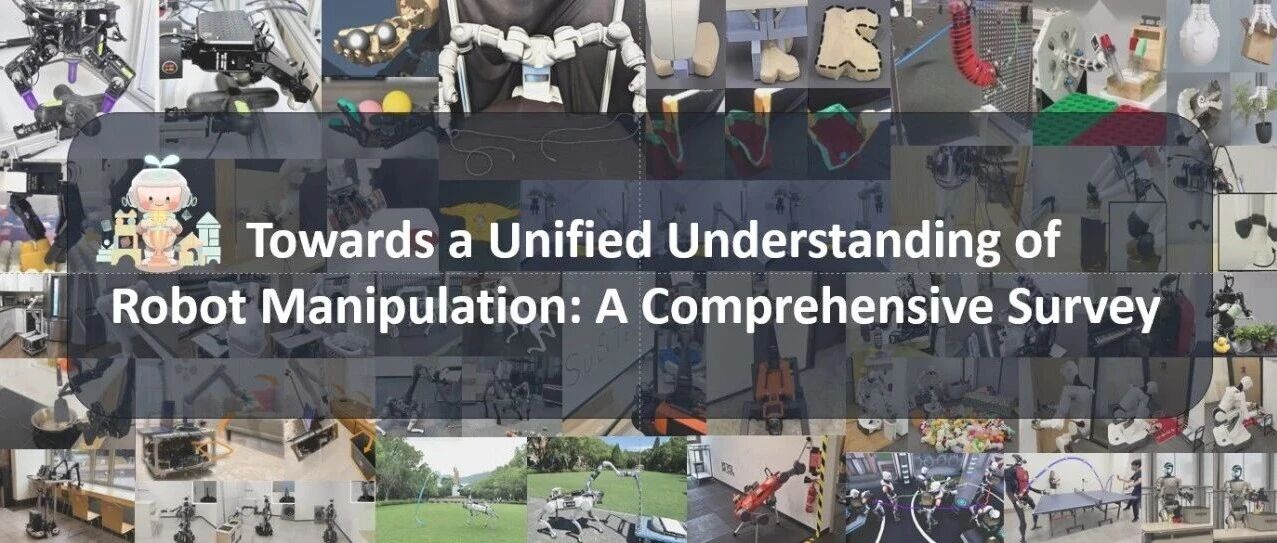
史上最全robot manioulation综述,多达1200篇!西交,港科,北大等八家机构联合发布
具身智能之心· 2025-10-14 03:50
Core Insights - The article discusses the rapid advancements in artificial intelligence, particularly in embodied intelligence, which connects cognition and action, emphasizing the importance of robot manipulation in achieving general artificial intelligence (AGI) [3][4]. Summary by Sections Overview of Embodied Intelligence - Embodied intelligence is highlighted as a crucial frontier that enables agents to perceive, reason, and act in real environments, moving from mere language understanding to actionable intelligence [3]. Paradigm Shift in Robot Manipulation - The research in robot manipulation is undergoing a paradigm shift, integrating reinforcement learning, imitation learning, and large models into intelligent control systems [4][6]. Comprehensive Survey of Robot Manipulation - A comprehensive survey titled "Towards a Unified Understanding of Robot Manipulation" systematically organizes over 1000 references, covering hardware, control foundations, task and data systems, and cross-modal generalization research [4][6][7]. Unified Framework for Understanding Robot Manipulation - The article proposes a unified framework that extends traditional high-level planning and low-level control classifications, incorporating language, code, motion, affordance, and 3D representations [9][20]. Key Bottlenecks in Robot Manipulation - Two major bottlenecks in robot manipulation are identified: data collection and utilization, and system generalization capabilities, with a detailed analysis of existing solutions [27][28]. Future Directions - Four key future directions are proposed: building a true "robot brain" for general cognition and control, breaking data bottlenecks for scalable data generation and utilization, enhancing multi-modal perception for complex interactions, and ensuring human-robot coexistence safety [34].